
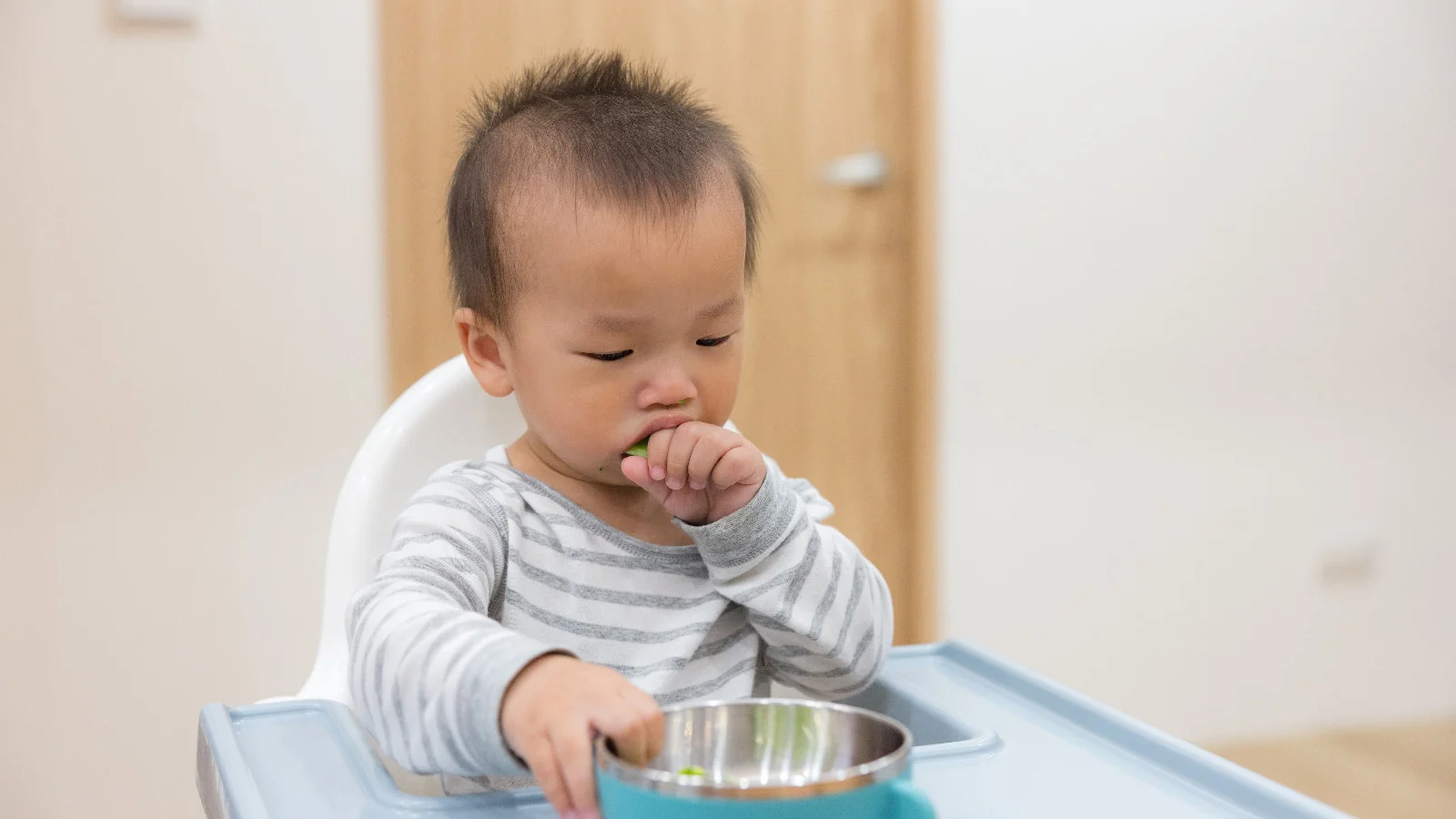
It’s the third night in a row. The buttered noodles your toddler happily finished last week sit untouched on the tray, and they’re pointing at the pantry, saying “cracker” like it’s the only word they know. You try the airplane spoon. You try one more bite. Their lips clamp shut, and the bowl goes over the side.
By the time you’ve wiped the floor, you’re pretty wiped yourself, and a quieter question has crept in: did I do something to cause this?
Probably not. Picky eating is so common at this age that the American Academy of Pediatrics (AAP) calls it “often the norm for toddlers.” If you’ve also cooked a backup dinner or promised dessert for three bites, you’re far from the only one. What I’d reach for first is a clearer split of jobs at the table, known as the division of responsibility in feeding. Once you know which half is yours, there’s a lot less to bargain over.
the division of responsibility, with set meal and snack times and one familiar food on every plate — it matches the AAP’s own picky-eater advice and takes the bargaining out of dinner.
you’re worried about your toddler’s growth or diet. Start with your pediatrician, who can check that your child is getting the nutrients they need.
Why does a toddler turn into a picky eater after their first birthday?
A toddler often turns into a picky eater after the first birthday because growth slows down, and appetite slows with it. The AAP says picky eating is usually a normal developmental stage for toddlers, one that levels out with time.
In the baby months, meals came around on a predictable eat, play, sleep loop, and your baby was growing fast. Babies usually triple in weight during infancy, the AAP notes, and after that a toddler’s growth rate and appetite tend to slow down. Its page on 1-year-olds, last updated in 2020, says you’ll probably notice “a sharp drop” in appetite after the first birthday, because your child doesn’t need as much food anymore.
The AAP’s tips for parents of picky eaters (last updated in 2018) fill in the rest of the picture. Food preferences get fickle, so a favorite food one day may hit the floor the next. And for weeks at a time, a toddler may eat one or two preferred foods and nothing else.
 Save
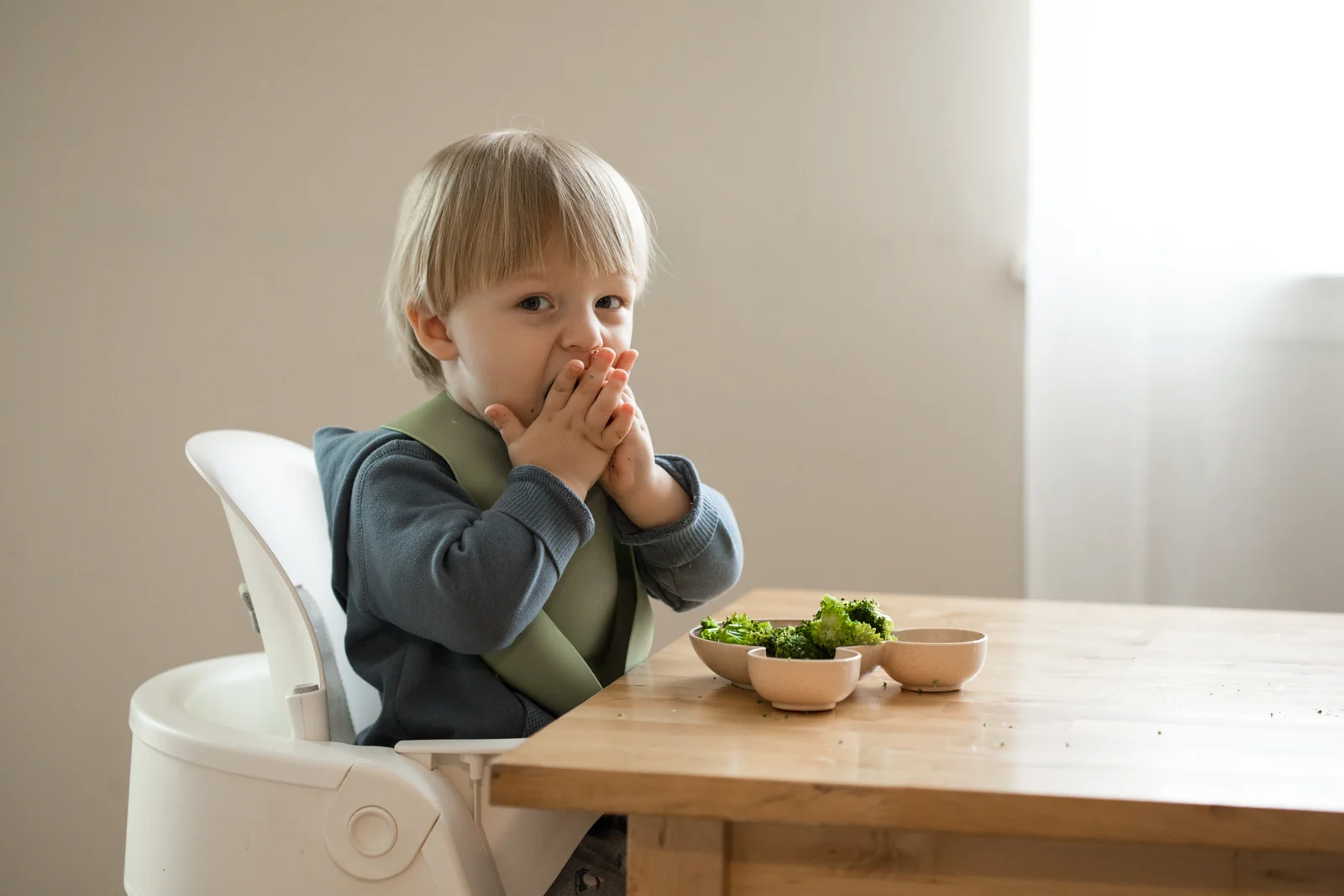
If your toddler also wants down after four bites, or drops broccoli over the side to watch where it lands, that’s the same age showing up at the table. The AAP’s toddler feeding page calls it “a stage that will pass.” Canadian pediatricians agree: a 2012 Canadian Paediatric Society statement says most children aged 1 to 5 who are brought in for refusing food are healthy, with an appetite that fits their age and growth rate.
The division of responsibility: what you decide, what your toddler decides
The division of responsibility is a feeding approach that gives you the what, when and where of meals and gives your toddler the whether and how much. You run the menu and the clock; they run their own appetite.
The Ellyn Satter Institute spells out the adult’s half in three plain lines: choose the food for family meals and snacks, serve them at regular times with “no food or drink handouts” in between, and choose a place to eat together (a table isn’t necessary, it adds). Your child’s half is shorter. They decide whether to eat the food you offer, and how much of it.
For ages 1 to 3, the institute’s Feeding At Every Age page keeps the same split and describes toddler eating as “cautious, erratic, picky, and fickle.” It also says erratic eating is normal at this stage, which might be the most useful sentence a tired parent can read at 6 p.m.


The institute’s promise is that when you stay in your lane and let your child stay in theirs, “mealtimes are pleasant and relaxing.” That’s a lot to ask of a weeknight with a 2-year-old. Still, the logic makes sense to me: once the menu, the time and the place are settled, everything left to argue about belongs to your toddler.
A toddler who eats three bites and asks to get down has done their half of the job.
Where it comes from: Ellyn Satter
Ellyn Satter, a dietitian and family therapist according to her institute’s bio, developed this approach. The bio says she worked first as a registered dietitian, then as a psychotherapist specializing in family-based treatment of eating disorders, and that she coined the term “feeding relationship” in a 1986 paper.
My background is accounting, so before I pass a framework along, I want to know how much evidence sits behind it. The honest version is short. A 2021 study that Satter co-authored tested a questionnaire measuring how closely parents of 2- to 6-year-olds follow the division of responsibility, and what parents reported mostly lined up with what researchers saw on in-home mealtime videos , though some of the questions held up better than others. So it’s an early step in showing the questionnaire works, and it leaves open whether the approach changes how children eat.
What makes me comfortable recommending it anyway is that the AAP’s own advice sounds a lot like Satter’s, without using her name. Its picky-eater page says, “It’s a parent’s responsibility to provide food, and the child’s decision to eat it.” Another AAP page says parents are the best judges of what children should eat and when, and children are the best judges of how much.
Division of responsibility for babies vs toddlers
The split shifts as your child grows. From birth to 6 months, the Satter Institute’s age-by-age page gives the adult only the “what”: breast milk, formula or both. The baby decides when, where, whether and how much, which is a long way of saying your baby’s hunger and fullness cues run the show. The AAP recommends only breast milk for about the first 6 months, and the Centers for Disease Control and Prevention (CDC) says a child can begin eating solid foods at about 6 months.
Once solids start, the adult takes over the when and where too, and the baby keeps whether and how much. From 1 to 3 years, the jobs stay right there. What’s new is that your toddler now has opinions, legs and a throwing arm.
With Jimmy due in March, I’ll be back at the “what only” stage soon myself. It’s the simplest version of the split, and a good reminder that your child has been in charge of their own hunger from the very start.
 Save
How to handle a picky eater with the division of responsibility
Set the times, cook one meal, put one safe food on the plate, serve small portions and keep offering. Then step back and let your toddler decide what happens on their side of the plate.
In a real week with a picky eater, the split comes down to six habits.
- Set meal and snack times. The AAP says scheduled meals and limited snacks can help make sure your child is hungry when a new food shows up. Another AAP page adds a practical line: offer only healthy snacks, and not too close to mealtime.
- Cook one meal for everyone, with one safe food on it. A safe food is parent shorthand for something your child reliably eats, like rice, bread or a fruit they always finish. The AAP says to serve one meal for the whole family, resist making another when your child refuses, and include at least one food your child likes at each meal. The Satter Institute puts it more bluntly: don’t become a short-order cook. If I could keep only one habit from this list, it would be this one.
- Serve small. Children eat when they’re hungry and usually stop when they’re full, says an older AAP page from 2012, a skill the AAP wants babies practicing from their first solid meals. The same page says child-sized portions help kids accept new foods: “Give less than you think your child will eat. Let your child ask for more if she is still hungry.”
- Offer it again. And again. Three AAP pages give three different numbers: 10 or more tastes, 15 to 20 tries, or 10 to 15 times over several months. So plan on anywhere from about 10 to 20 tries before a new food wins your toddler over. The accountant in me did the math: the picky-eater page suggests waiting at least a week or two before bringing the same food back, so ten tries can easily stretch across a few months of dinners. A try can be one small taste. Nobody has to finish anything.
- Add flavor, toddler-style. For toddlers, the AAP suggests trying different herbs and spices on simple meals to make them tastier. A pinch of cinnamon or cumin is an easy start.
- Eat together, screens off. The AAP says to share meals as a family with no TV or cell phones at the table, and a 2020 AAP page suggests at least one family meal a day, or 3 to 4 a week if that’s what your schedule allows. The AAP encourages family meals from the very first feeding. If you’re still sorting out where your toddler sits, there’s more on seating for family meals, weaning table included.
 Save
Meals, snacks and the hours in between
The CDC says children from 6 to 24 months may have about 3 meals and 2 to 3 snacks a day, and that routines help children know what to expect when it’s time to eat. Where those land depends on naps and wake-up times, and a 2-year-old’s daily schedule is a good place to sort that out.
The Satter Institute goes a step further. It suggests 3 meals at set times plus sit-down snacks every 2 to 3 hours, with only water in between, because children who graze on food and sweetened drinks (juice or milk) arrive at meals without much appetite. That water-only rule is the institute’s suggestion. The AAP’s milk page gives a similar tip for toddlers who lean on milk: offer water only between meals. Its drink guidance still includes cow’s milk for toddlers, so you don’t need to follow the rule to the letter.
Milk is worth a closer look if your toddler loves it. The AAP’s 2025 page on milk-loving toddlers recommends no more than 16 to 24 ounces a day after the first birthday, or roughly 2 to 3 cups, and notes that milk “fills little ones up quickly.” Its drinks page lists 16 ounces (2 cups) for ages 12 to 24 months, so 2 cups sits inside both. Some toddlers who drink a lot of it simply aren’t hungry when dinner rolls around. For drinks in general, the AAP’s 2023 drinks page also says no juice before age 1 and no added sugars before age 2.
 Save
Montessori for a picky eater: let them serve, pour and help
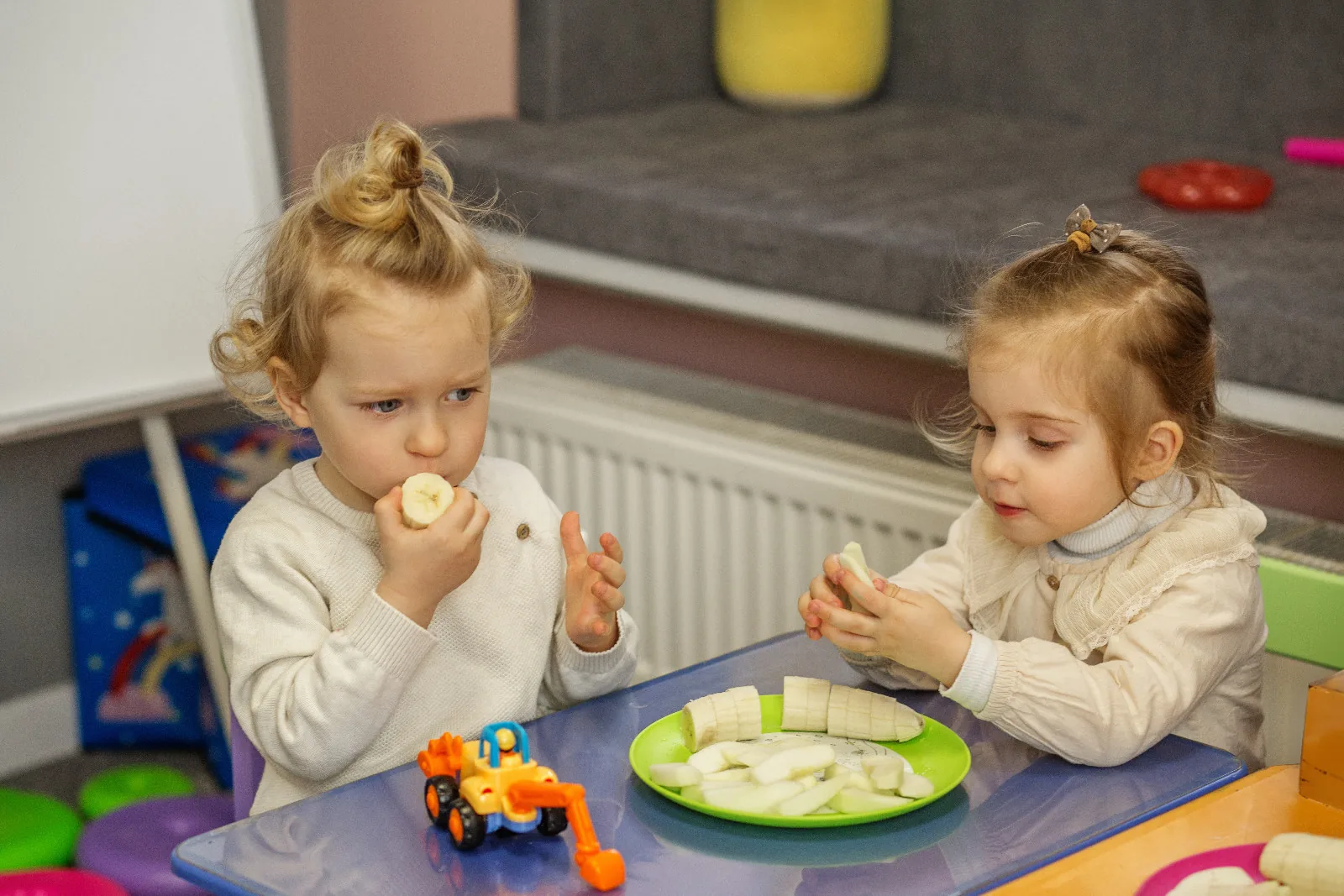
Your half of the split stays exactly the same in a Montessori home. What changes is how much of the doing you hand over: choosing between two vegetables, stirring the bowl, feeding themselves, pouring their own water.
Practical life is the Montessori name for real, everyday jobs like pouring, wiping and serving, and it’s where a Montessori picky eater approach starts. The AAP’s picky-eater page has a line I love here: put your toddler’s “growing interest in exercising control to good use.” We did baby-led weaning with Will, so handing food jobs to a small child feels natural to me, and a toddler who wants to be in charge of everything gets something real to be in charge of.
At Moje Montessori, we like to set the two halves of the split next to what a toddler can actually do at each one.
| Part of the meal | Who decides | How your toddler can take part |
|---|---|---|
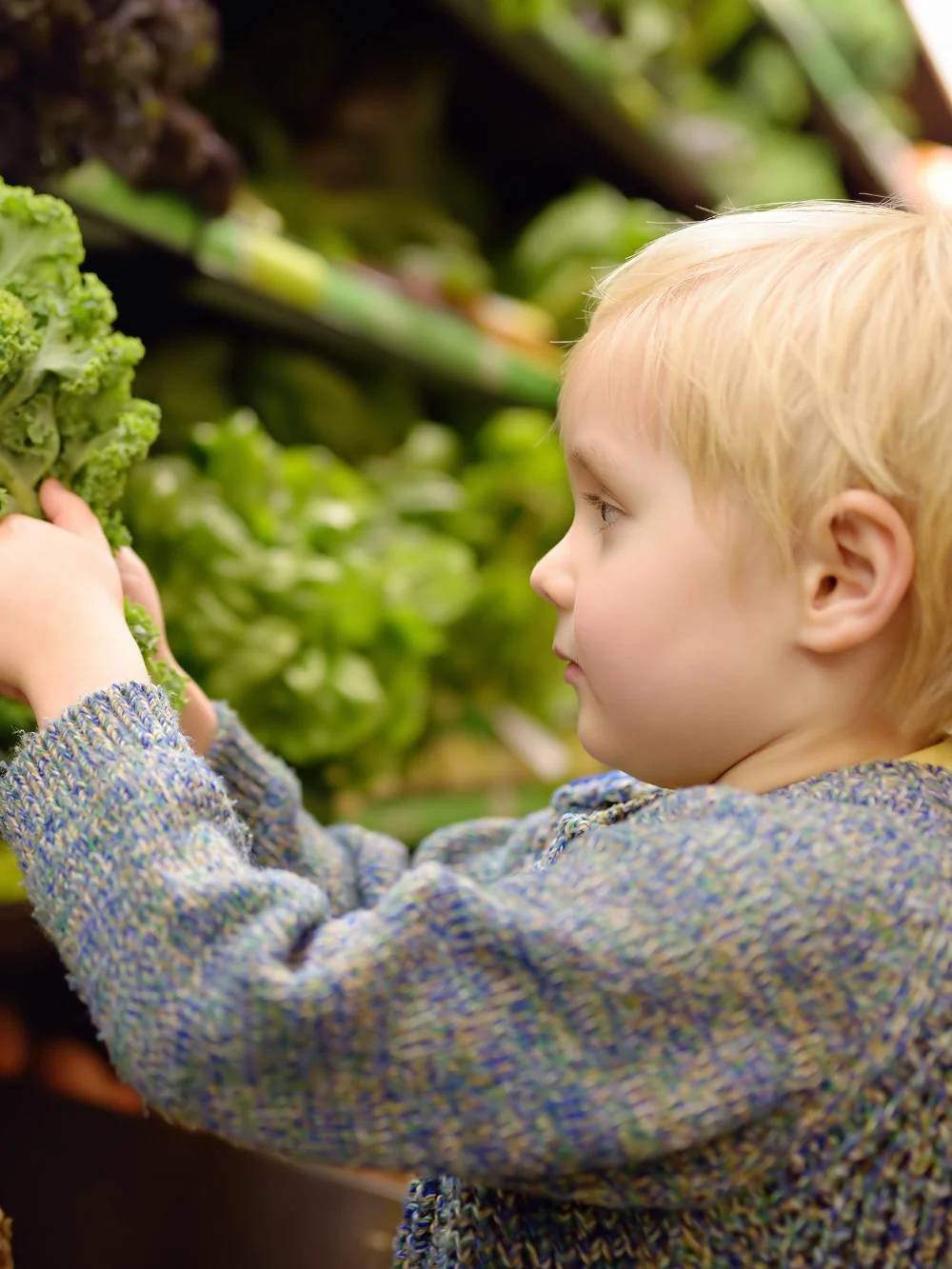
| What’s on the menu | You | Pick a fruit or vegetable at the store (AAP), or choose between two you’ve already picked |
| Getting it ready | You | Sift, stir, count ingredients, pick herbs or brush on oil, with lots of supervision (AAP) |
| When and where you eat | You | Come to the table at the usual time and eat with the family, screens off |
| Whether to eat | Your toddler | Feed themselves with their fingers and try a spoon; most children do both by 18 months (CDC) |
| How much | Your toddler | Start with a small serving and ask for more |
| What’s in the cup | You pick the drink; your toddler decides how much (AAP) | Drink from an open cup: with you holding it by 12 months, then with some spills by 18 months (CDC) |
In Montessori homes, you’ll also see toddlers serving themselves from a small bowl in the middle of the table, or pouring water from a child-size pitcher into an open cup. There’s no research on this at the family dinner table that I know of, so treat it as an idea to try. If the stirring jobs are the hit, a learning tower brings your toddler up to counter height, and cooking with a toddler has more jobs sorted by age.
Whatever your toddler serves themselves, cut solid foods into bite-size pieces they can easily eat on their own, small enough to avoid the risk of choking. The AAP’s choking-prevention page also says children should sit down to eat, never run, walk, play or lie down with food in their mouths, and that mealtimes for young children should be supervised. The baby-led weaning guide has the cutting details.
Kitchen jobs like stirring, sifting and brushing on oil are for toddlers with lots of supervision, the AAP says, which means an adult right there for the whole job.
 Save
 Save
For a 1- to 2-year-old, start with one job at one meal. Picking between two fruits at breakfast, or holding their own spoon at lunch, is plenty for the first week. The tricky part at this age is knowing which jobs fit right now, since what works at 14 months can look very different by 20.
What to skip: bribes, hidden veggies, “one more bite”
Pressure goes first on the skip list, in every form: treats for eating, punishments, deals and coaxing extra bites. AAP pages warn that this kind of pushing can backfire and make the foods you want them to try feel like a chore.
Bribes. Dessert for three bites of chicken sounds harmless. The AAP’s picky-eater page says bribing with treats can make the “prize” food even more exciting and turn the food you want them to try into “an unpleasant chore.” Its page on preventing food hassles says food is for nourishment, and that food rewards or bribes “usually create more problems than they solve.”
One more bite. This one is the hardest to drop, because it feels so reasonable. The AAP says pressuring kids to eat, or punishing them when they don’t, can make them actively dislike foods they might otherwise like. Its 2025 page on milk-loving toddlers adds: don’t punish a child for refusing a bite of something new, and avoid deal-making and lecturing. As it puts it, “No one wins in a power struggle involving food.”
Hidden veggies. Blending spinach into muffins is fine on its own terms, and an AAP page even suggests grated vegetables in muffins or soup. Here’s where I land, though: a hidden vegetable can’t count toward those 10 to 20 tries, because your toddler never gets to see or taste spinach as spinach. Serve the muffin, and put a little cooked spinach on the plate too. One parent on r/toddlers recently shared their “not so hidden” hidden veggie recipe success, which sounds like a happy middle ground.
 Save
Why the division of responsibility can seem not to work
If you’ve tried the split for a week and dinner still feels like a standoff, check for these four snags. Each one blurs the line between your half and your toddler’s.
| Snag | What’s going on | What to try | Evidence |
|---|---|---|---|
| Pressure sneaks back in | A coaxing “just try it” or a deal at the table. The Satter Institute says not to try in any way to get your child to eat more or less | Serve the meal and leave whether and how much to your toddler | Some research |
| Snacks drift all afternoon | A toddler who grazed all day comes to dinner without much appetite (AAP, Satter Institute) | Set snack times, and keep snacks away from meals | Some research |
| Milk fills the gap | Milk “fills little ones up quickly,” and a toddler who drinks a lot may not be hungry at meals (AAP) | Keep milk to about 2 cups (16 ounces) a day, which fits both AAP pages | Some research |
| The menu shrinks to favorites | Cooking only what they’ll accept is what the AAP calls catering to picky preferences | One familiar food, served with the family meal | Some research |
“Backed by research” means studies with babies or toddlers support that piece. “Some research” means part of it is supported. “Montessori philosophy (not tested at home)” means there’s little or no research on it in family homes yet.
None of these mean the approach failed. They’re the spots where old habits creep back in, and they’re easy to fix once you can see them.
What parents say actually helps
Expect the dip, then hand your toddler the spoon. Those two lessons come straight out of real parent threads, and both line up with what the AAP says.
One post on r/BabyLedWeaning sums up the dip in a single line:
“Baby who ate everything turned into toddler who eats nothing”
A parent on Redditr/BabyLedWeaning thread (2025)
If that’s your house right now, it matches the AAP’s picture almost exactly: appetite slows after infancy, a toddler may eat one or two foods for weeks, and with time, appetite and eating behaviors level out.
The second lesson starts younger, and it’s the Montessori one. In r/BabyLedWeaning, one parent described a baby who refused to be spoon-fed and insisted on holding the spoon. That drive to do it themselves only gets louder after the first birthday, which is why the jobs in Table 1 matter: they give it somewhere useful to go.
 Save
Reddit isn’t research, and a thread can’t tell you what your child needs. When parents and pediatricians describe the same thing, though, I pay attention.
When to worry about picky eating and call the pediatrician
Your pediatrician comes first any time you’re worried about your toddler’s diet or growth. A child who is growing well is getting enough to eat, the AAP says, so growth is the question worth bringing in.
AAP pages keep returning to the same advice: if you’re concerned about your child’s diet, talk with your pediatrician, who can help troubleshoot and make sure your child is getting the nutrients they need to grow. Being concerned is reason enough to bring it up.
A couple of situations are worth naming too. An older AAP page says missing out on a whole food group for a long time could keep a child from getting enough nutrients, and suggests talking with your child’s doctor or a registered dietitian. If your toddler leans heavily on milk, the AAP’s milk page says to check in if that hasn’t changed within a month of new routines, or if they still aren’t eating many more solids after about 2 months.
It may help to know what the visit looks like. That 2012 Canadian Paediatric Society statement says a detailed history and a general physical exam are needed to rule out illness. In plain terms, expect questions about how your toddler eats and grows, plus a check-up. If you leave with a healthy toddler and a toddler-sized appetite, you can let the rest of the picky stretch run its course.
Frequently Asked Questions
What is the division of responsibility in feeding?
The division of responsibility in feeding is Ellyn Satter’s way of splitting mealtime jobs between grown-ups and kids. Grown-ups handle what’s served, when and where; your child decides whether to eat and how much. For toddlers, the Satter Institute keeps the same two halves from age 1 to 3.
Does the division of responsibility work?
The research on whether the division of responsibility works is thin. The 2021 study Satter co-authored checked a questionnaire against home mealtime videos, and I haven’t seen a study that tests whether the approach changes how children eat. What gives me confidence is that AAP pages say the same things: you provide, your child decides, and pressure tends to backfire.
How do you get a picky eater to eat?
Getting a picky eater to eat starts with setting up the meal, then stepping back. Put one familiar food on the plate, serve new foods in small amounts, and keep offering them over weeks; AAP pages put it at about 10 to 20 tries. How much your toddler eats is their call, and some nights that’s three bites.
Conclusion
If dinner tonight ends with noodles on the floor and a small voice asking for crackers, you haven’t failed at anything. You picked the food, the time and the place, and that was your half. Tomorrow, do it again, and let the weeks do their slow work. We’re all just doing our best at this table, and your best is plenty.
Tonight, set one food they love beside the new one, then let your toddler decide. Choosing the menu was your job, and you already did it.
Miri
Fewer toys, deeper play.
Further Reading & Resources
See all 23 sources
- Picky eating: 10 Tips for Parents of Picky Eaters, How do I help my picky eater try more healthy foods?, Toddler Food & Feeding and Feeding & Nutrition Tips: Your 1-Year-Old (American Academy of Pediatrics, HealthyChildren.org) · The ‘picky eater’: The toddler or preschooler who does not eat (Canadian Paediatric Society, 2012)
- Amounts, milk and mealtimes: Making Sure Your Child is Eating Enough, How to Please Fussy Eaters, Your Toddler Only Wants Milk?, Recommended Drinks for Children Age 5 & Younger and Tips for Preventing Food Hassles (HealthyChildren.org) · Tips for Mealtime Routines (Centers for Disease Control and Prevention)
- Division of responsibility: The Satter Division of Responsibility in Feeding, Feeding At Every Age and About Ellyn Satter (Ellyn Satter Institute) · Use of an Observational Comparative Strategy Demonstrated Construct Validity of a Measure to Assess Adherence to the Satter Division of Responsibility in Feeding (Lohse & Satter, Journal of the Academy of Nutrition and Dietetics, 2021)
- Milestones, starting solids and choking: Choking Prevention for Babies & Children, Milestones by 18 Months, Milestones by 1 Year and When, What, and How to Introduce Solid Foods (CDC) · When Can Babies Start Solid Foods? (HealthyChildren.org)
- Real parents: Reddit: a toddler who eats nothing, holding the spoon, not so hidden veggies