
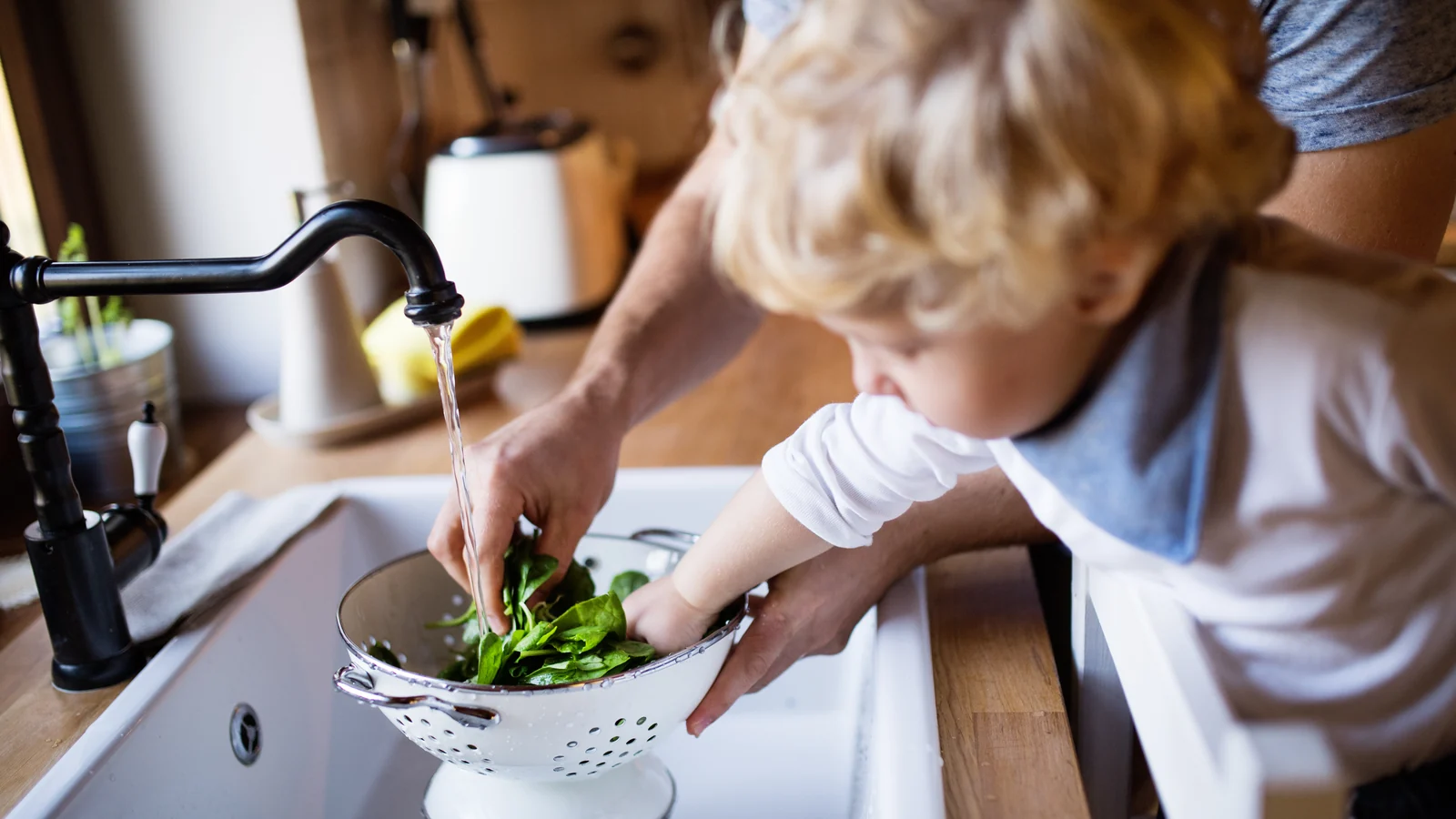
Half an onion sits on the cutting board. The pan is heating, you walked in the door not that long ago, and dinner is already running late. Then a small voice pipes up beside you: “Me! Me!” Two hands are stretching toward the counter, aimed straight at the knife.
It’s the witching hour, and your toddler has picked this exact moment to want in. Most of us slide the knife out of reach, hand over a wooden spoon and hope it buys four minutes. Sometimes it does. The wanting comes back tomorrow, though, at the same time, with the same two hands.
One parent in r/MontessoriForHome put the real question plainly while asking about young toddlers helping in the kitchen: what was the progression, and at what age? What follows sorts toddler kitchen activities by age, then covers the tools that worked in our kitchen, the safety pieces one at a time, and what to do on nights with no time to teach anything. It’s one slice of my simple week of Montessori activities at home.
 Save
Why bring a toddler into the kitchen on a busy night?
Cooking with toddlers on a weeknight means giving your child one real job beside you while dinner happens: rinsing, peeling, carrying, a little stirring. Toddlers want to copy what you’re doing, and at 6 p.m. you’re usually doing it in the kitchen.
The American Montessori Society (AMS) keeps its advice for families short: show and practice household tasks together. Its Montessori at Home page even points out that young kids can peel veggies, and for the kitchen it suggests a stool near the countertop so children can help with washing dishes and food prep.
In Montessori, this has a name. Practical life is the everyday work of caring for yourself, your home and the people you live with, and the kitchen is where a lot of it happens. For jobs beyond the kitchen, I laid them out month by month in my post on practical life activities.
Here’s what actually matters on a weeknight: one job is a real turn. A toddler who rinses three tomatoes and peels one banana has helped, and it’s done before the pasta water boils. Peeling is fiddly fine motor work for small fingers, too.
The first few nights will be slower than doing it yourself. Plan for one job per night and the slow part stays small.
 Save
Toddler kitchen activities by age
Ages are ranges here, and your toddler’s interest decides more than the calendar does. Start with the row that matches what your child already does on their own, then add one new job at a time.
The table pulls from the milestone checklists and tips of the Centers for Disease Control and Prevention (CDC), one Montessori blogger’s kitchen notes, and the jobs Will actually did in our kitchen. The first CDC row describes what most children (75% or more) do by 18 months, so treat it as something to watch for. The 2-year row is a CDC tip, not a milestone.
| Age (range) | Kitchen jobs to try | Where this comes from |
|---|---|---|
| By about 18 months | Hold out hands to be washed before cooking; copy you doing chores, like sweeping; practice with a spoon | CDC milestones by 18 months: copying chores, putting hands out to be washed, trying to use a spoon |
| Around 15 to 18 months | Peel a banana, pick over greens, rinse tomatoes | The first jobs Will did in our kitchen, around 15 months |
| 18 to 24 months | Slice soft food with a wavy chopper after you’ve cut it partway | Nicole Kavanaugh’s wavy chopper post (tagged 18 to 24 months) |
| Around 2 years | Carry plastic cups or napkins to the table | CDC tips for 2-year-olds (a tip, not a milestone) |
| 2 to 3 years | Slice banana, avocado and cucumber with a wavy crinkle cutter or a wooden knife; spread butter on toast | What Will moved on to once his hands got steadier. Spreading butter comes from Nicole Kavanaugh’s 2015 kitchen list, which gives no ages, so putting it here is my call |
Read the table as a menu. Your toddler may skip a row, or circle back to an easy job for weeks, and that’s fine. Stirring fits on almost any row. I’d just keep it to a cold bowl on the counter, well away from the stove.
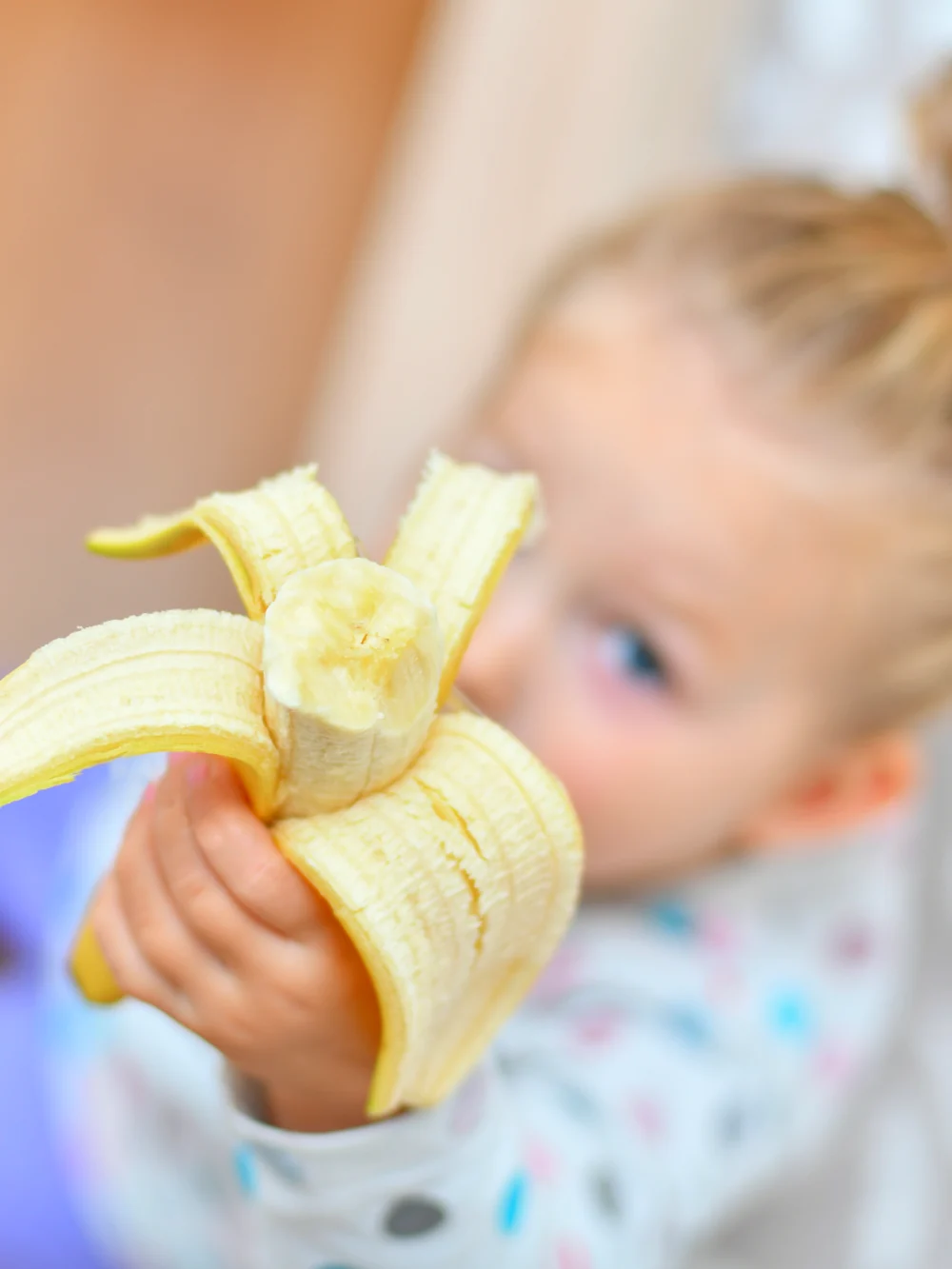
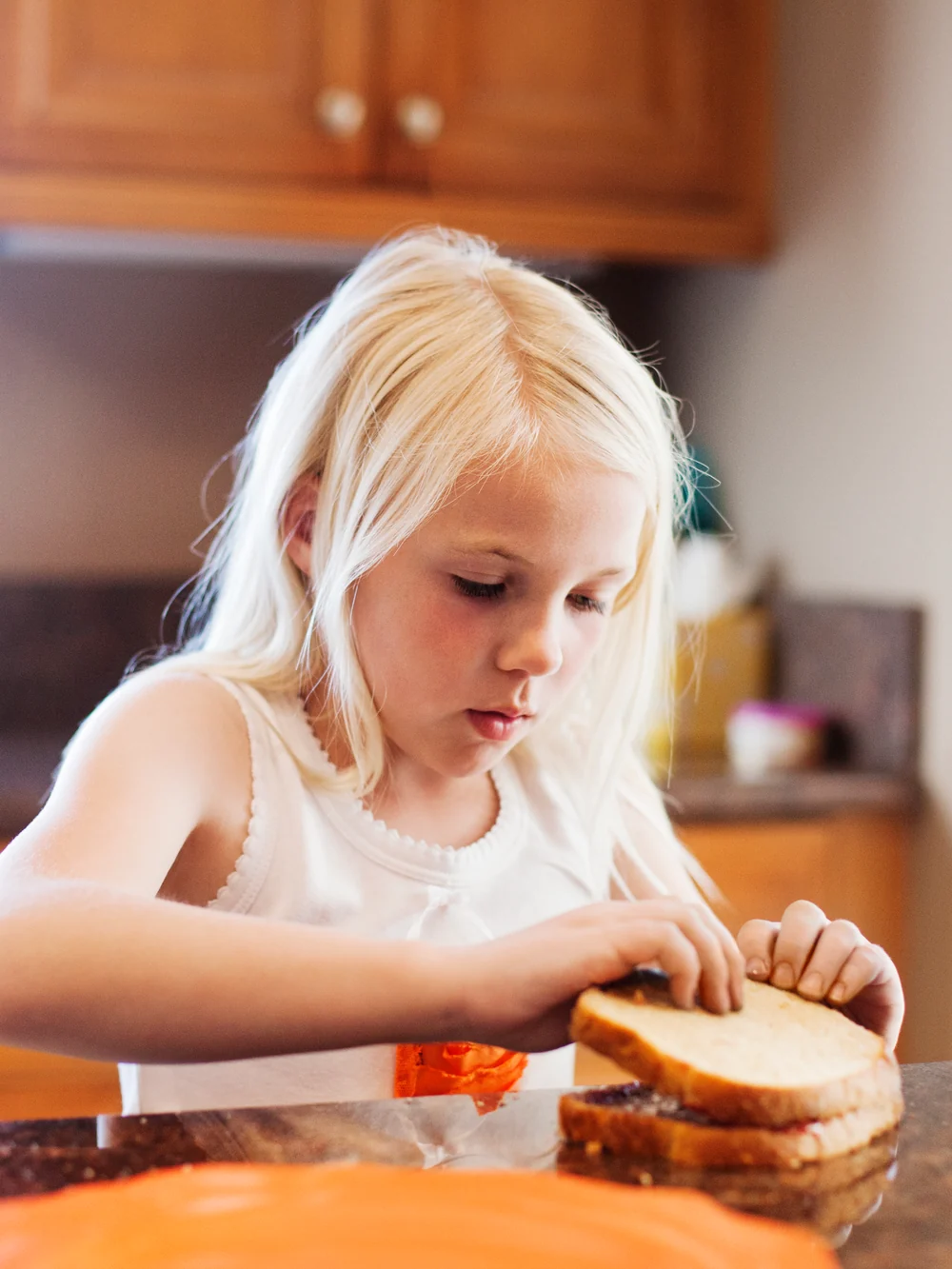
Peeling a banana is a whole job when your hands are this size. · Spreading something soft on bread is a job with a clear finish line.
If your toddler is somewhere between two and three and asks for a job every single night, give them one with an end point. Hand over a cucumber you’ve already halved, a wavy cutter and a small bowl. When the bowl is full, their job is finished, and so is your side dish.
What half a banana taught me
Expect to lose some of the food and some of the floor. The first jobs Will did in our kitchen ended with banana in his mouth and water all over the floor, and every one of them was still worth it.
Will was around 15 months when he started helping in our kitchen, with tiny jobs: peeling a banana, picking over greens, rinsing tomatoes. He was thrilled to be working right next to me, doing what the grown-ups do.
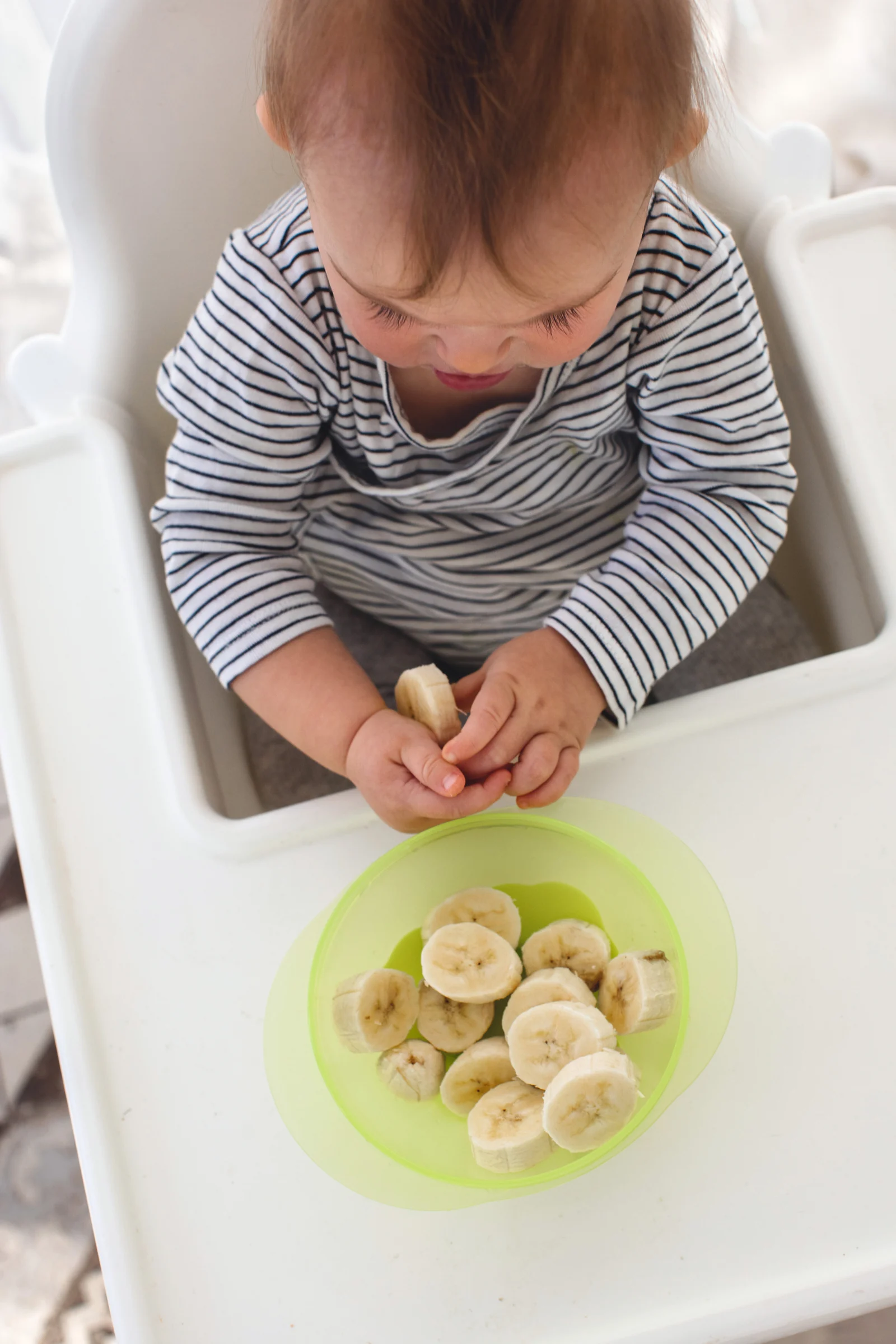
Once his hands got steadier, I moved him up to slicing. One day his job was banana, sliced for yogurt. I turned around to grab a bowl. When I turned back, welp: half the banana was in his mouth, and the other half had been squished across the counter and all the way down to the floor.
 Save
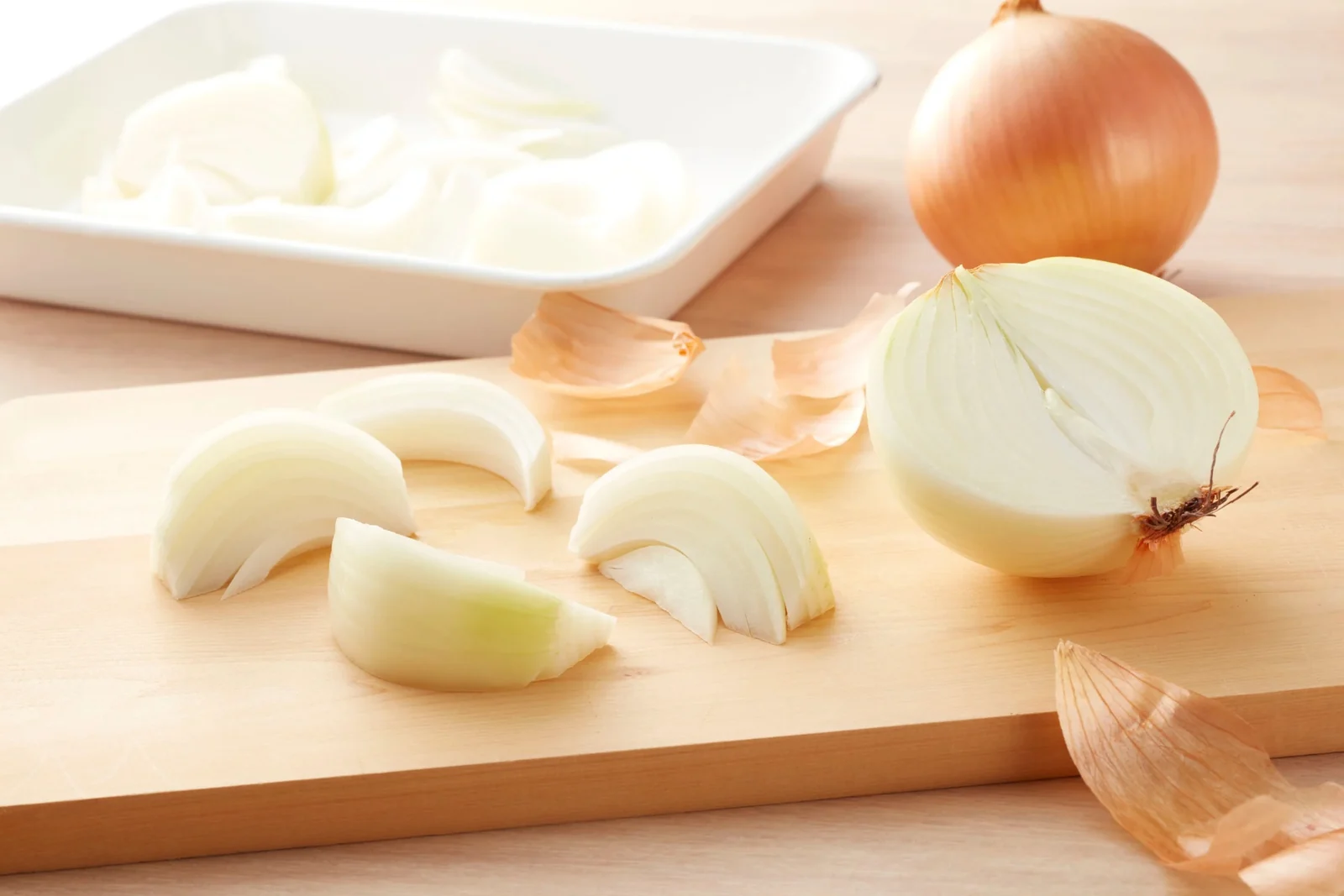
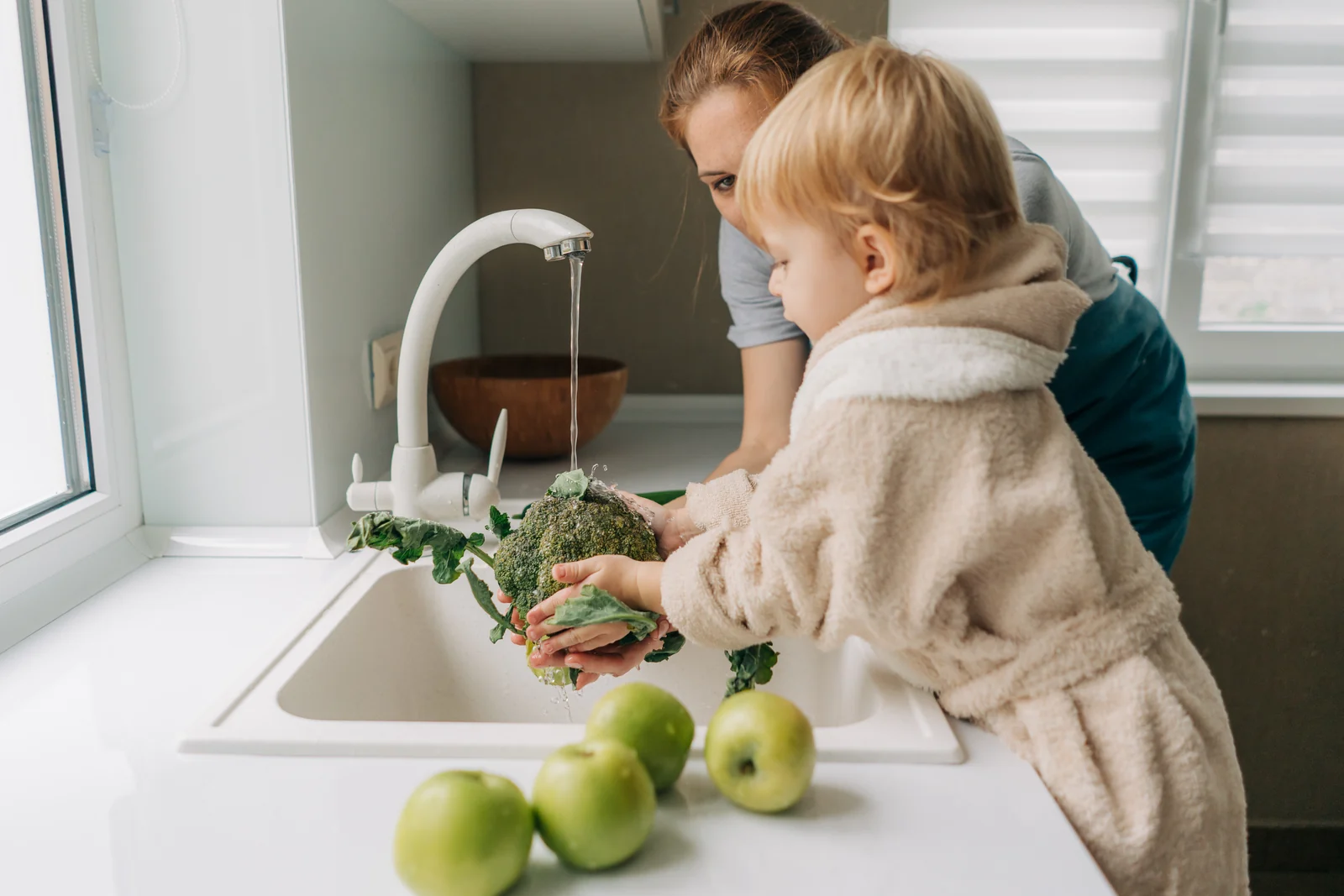
Rinsing vegetables went about the same way. Water everywhere, a toddler soaked from head to toe, and one near slip on the wet floor that ended in a change of clothes and a lot of mopping. If you’re starting this week, put a towel on the floor before the first tomato goes in the colander.
Call it a win if half the banana makes it into the bowl.
And then there’s the face. The serious little frown while he worked, and the proud look when he carried the bowl he’d helped fill over to the table himself. That look made every mop-up worth it.
Carrying is a good job to hand over on purpose. The CDC’s tips for 2-year-olds suggest letting your child carry things to the table, like plastic cups or napkins, and thanking them for helping.
 Save
Can a few nights at the cutting board turn a picky eater into an adventurous one? I can’t promise that, and picky eating from 12 to 36 months needs its own post. For now, aim for one job and one proud walk to the table.
What if your toddler isn’t interested in cooking?
Switch the job, try again in a week or two, and don’t push. A toddler who walks away from the cutting board today may want to rinse potatoes next month, or may simply prefer to watch you for now.
One parent in r/MontessoriForHome asked what an 18-month-old could do in the kitchen, then admitted their son wasn’t really interested. You’re far from the only one, and your setup is probably fine.
Interest in the kitchen ebbs and flows. Some toddlers want the cutting board, some want the sink, and some would rather sit on the floor and bang a pot while you cook. All of those count as being in the kitchen with you.
Case: Nicole Kavanaugh’s kitchen with a young toddler
Nicole Kavanaugh, a Montessori mom and blogger at The Kavanaugh Report, has two posts that fit this worry well: a 2015 list of kitchen work for young toddlers and a 2019 post with tips for introducing a wavy chopper. Put together, her approach comes down to three steps.
- Step 1: Follow what your child is drawn to. Her 2015 list of food prep jobs (spreading butter on toast is one) ends on exactly that point.
- Step 2: Start soft. In the wavy chopper post, which is tagged 18 to 24 months, she suggests beginning with softer foods, such as fruit.
- Step 3: Cut it partway first. She suggests cutting the food a bit before handing it over, so your child only needs a cut or two to finish.
“…always remember to follow your child in the kitchen and see what they are interested in.”
Nicole KavanaughMontessori mom and blogger, The Kavanaugh Report (2015)
Nicole’s line echoes Maria Montessori, who said her method “has been achieved by following the child and his psychology.” There’s more on how that idea looks at home in my activities guide.
One thing I’d add on my own: stay within arm’s reach whenever a cutter is in your toddler’s hand.
Toddler cooking tools that fit small hands
Real tools in a smaller size fit best: a wavy chopper or wooden knife for soft food, a mini cutting board, a light bowl your toddler can carry, and a steady place to stand at counter height.
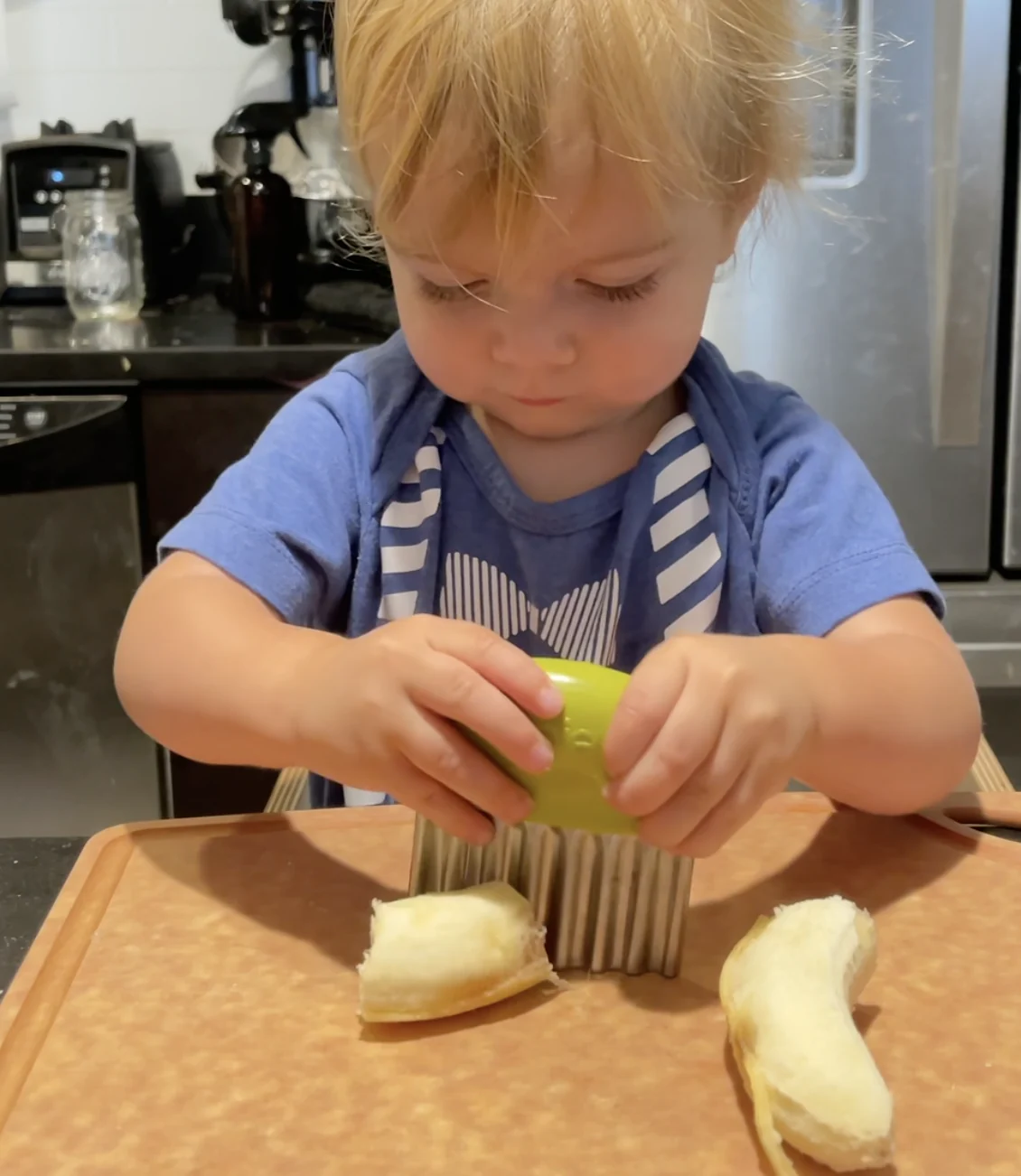
AMS suggests appropriately sized, real kitchen utensils rather than toy versions, and that matches what worked in our kitchen. For Will, I bought a stainless steel crinkle cutter (the wavy kind, with a dull edge) and a plain wooden Montessori-style knife, both with handles that fit a small hand. Pressing down, he could get through banana, avocado and cucumber. I added mini cutting boards and small, light plastic bowls and colanders so he could carry his own things.
Those two cutters felt so safe that I was very comfortable with Will using them. That’s my feeling, though, and no blade is finger-proof, so stay right beside your toddler whenever one is out.
 Save
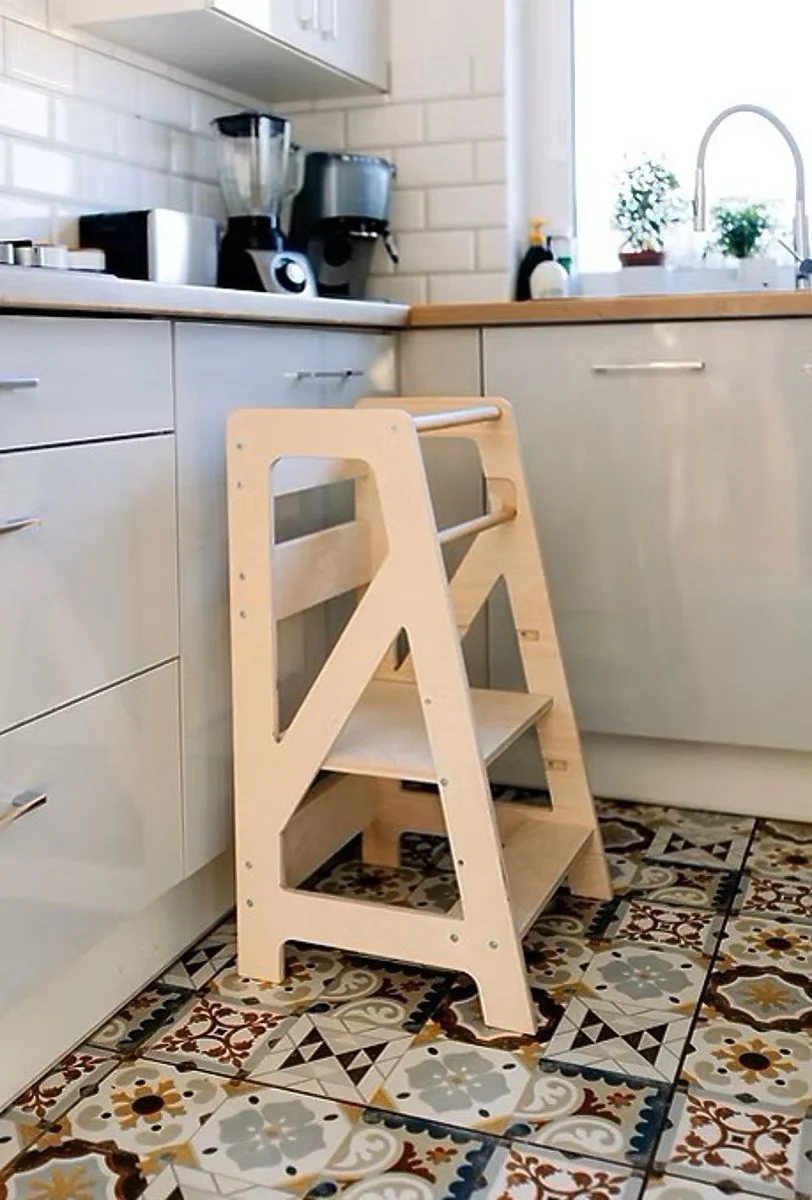
Next comes where your toddler stands: AMS’s stool by the counter, or a learning tower, which is a step stool with railings around the top. Piccalio, one tower maker, says in the FAQ on its Convertible Toddler Tower page that a toddler tower is for children 18 months through 6 years who can stand up independently, though some are ready earlier and some later. As of October 2026, that tower is on sale for $219 with a mini cutter included, and the same page notes that no mandatory safety standards exist for toddler towers.
Towers do get recalled. In July 2026, the U.S. Consumer Product Safety Commission (CPSC) posted a notice that TOMY was recalling the Boon PIVOT collapsible toddler tower because it can tip over while in use. Other recalled tower stools on the same page could collapse or tip over, or let a child’s torso fit through the openings on the front and back.
In our house, the tower goes back into the gap beside the fridge when we’re done, and Will only climbs up when a grown-up is standing right next to him. I wrote up the full rundown, from choosing a tower to those recalls, in my guide to the learning tower.
 Save
Toddler cooking sets and aprons are optional. An apron saves a few shirts on rinsing nights, and the rest can wait until you know which jobs your toddler actually likes.
For a first cutting job, I’d hand over a dull wavy crinkle cutter or a wooden knife and something soft, like banana, avocado or cucumber. Add a mini cutting board and a light bowl so your toddler can carry the finished pieces to the table on their own.
Miri’s Tip
Kitchen safety when your toddler is helping
Two rules come first: a grown-up stays within arm’s reach, and sharp tools and heat stay out of your toddler’s work space. Handwashing, bite-size pieces and raw dough all follow from there.
The American Academy of Pediatrics (AAP) covers the stove side in its HealthyChildren kitchen-safety tips: turn pot handles toward the back of the stove so your child can’t reach up and grab them, and when you’re walking with something hot, know where your child is and don’t carry them at the same time. Its burn-prevention tips add two more: don’t leave food cooking on the stove unattended, and set your water heater so the hottest water at the faucet is no more than 120°F (48.9°C).
For a gas stove, the AAP says to turn the dials firmly to off and remove the knobs when you aren’t cooking if they come off easily. If they don’t, use child-resistant knob covers. If the microwave is within your child’s reach, stay nearby while it runs, and never let your child open it or take out food that has just finished heating.
Knives get their own spot. The AAP says to keep knives, scissors and other sharp tools separate from “safe” utensils, and to store sharp appliances like food processors out of reach or in a locked cupboard. Your toddler’s crinkle cutter lives in one place, and your chef’s knife lives somewhere else.
Your helper will also eat some of the ingredients. (Ask me about the banana.) The AAP’s choking-prevention advice is to cut food for young children into pieces no larger than one-half inch. Round, firm foods like grapes and hot dogs can be served if they’re completely chopped into tiny pieces. Whole grapes, hot dogs, raw vegetables such as carrot sticks, raw fruit chunks such as apple pieces, and chunks of cheese are on its list of foods to avoid or modify. If a slice of cucumber or apple comes off the cutter bigger than that half inch, cut it down before it goes in a mouth, and plan the job around food that’s already safe for them to sneak.
Baking nights add one rule. The CDC says tasting raw dough or batter can put you at risk for food poisoning, and it tells parents not to let children play with or eat dough made with raw flour, homemade play dough included. Save the squishing for dough play made without raw flour.
Before anyone touches food, everyone washes hands. The CDC’s handwashing routine has five steps:
- Wet your hands with clean, running water (warm or cold), turn off the tap and add soap.
- Lather the backs of your hands, between your fingers and under your nails.
- Scrub for at least 20 seconds.
- Rinse well under clean, running water.
- Dry with a clean towel or an air dryer.
Putting hands out to be washed is on the CDC’s 18-month milestone list, so for a young toddler, this can be the whole first job of the night.
 Save
Keep your toddler’s cutter and board in their own spot, and keep sharp knives, scissors and the food processor separate and out of reach. Any time a cutter is in your child’s hand, you’re within arm’s reach.
Turn pot handles toward the back of the stove, never carry your child and something hot at the same time, and don’t leave food cooking unattended. If you use a learning tower, follow its age label, wait until your child can stand steadily on their own, and look the model up on the CPSC recall list before the first climb.
What do toddlers do while you cook?
Set up a kitchen drawer of safe things that belongs to your toddler, keep one small job waiting, and let them carry napkins to the table. Do it before you start cooking, so you’re never hunting for anything with a hot pan in hand.
Some nights there’s no time to teach a job, and for a lot of us that’s most weeknights. The AAP’s answer is simple: consider keeping a toy box or drawer of safe play items in the kitchen for your child. Pick one low drawer, away from the stove and the knives, and fill it with big, unbreakable things that are fine to bang on, like plastic bowls, a wooden spoon and a measuring cup.
The napkin run works here too. So does a job you leave unfinished on purpose. Tear half the lettuce for the salad and leave the rest, or set aside three potatoes for scrubbing. When the “Me! Me!” starts, the job is already waiting.
Some toddlers would rather cook next to you than with you. A small wooden play kitchen within sight of the real one lets them stir pretend soup while you stir the real pot.
 Save
Tonight, try just one: open the drawer, hand over the napkins, or set out one soft thing to slice. Watch what your toddler does with it, and let that decide tomorrow.
Frequently Asked Questions
What age can toddlers help in the kitchen?
Many toddlers are ready for a small kitchen job by about 18 months. The CDC lists copying chores and holding out hands to be washed among the things most children (75% or more) do by then, so a hand wash makes a good first job, and a napkin run can follow. With a learning tower, follow its age label and wait until your child stands steadily alone.
Can an 18 month old use a knife?
I couldn’t find an official answer on whether an 18-month-old can use a knife, so I won’t invent an age. One Montessori blogger’s wavy chopper tips, in a post tagged for 18 to 24 months, start with soft food cut partway first. Sharp knives stay separate, and you stay right beside any cutter.
Conclusion
You don’t have to turn dinner into a cooking class. One soft banana and one wavy cutter is plenty for tonight, or one drawer of bowls if tonight isn’t the night. Some of the banana will get eaten before it reaches the bowl, and the counter will need a wipe. Your toddler still gets what they were asking for when they said “Me! Me!”: a real turn, right beside you.
Pick one five-minute job tonight and let the rest wait. You’re already doing the hard part by saying yes to the small voice beside you.
Miri
Fewer toys, deeper play.
Further Reading & Resources
See all 13 sources
- Kitchen safety: Kitchen Safety: 10 Tips for Families With Young Children, Burn Treatment & Prevention Tips for Families and Choking Prevention for Babies & Children (American Academy of Pediatrics)
- Food safety and milestones: Raw Flour and Dough, About Handwashing, Milestones by 18 Months and Milestones by 2 Years (Centers for Disease Control and Prevention)
- Montessori at home: Montessori at Home (American Montessori Society) · Montessori Great Ideas (Association Montessori Internationale)
- Real parents: Young Montessori Toddlers in the Kitchen and Tips for Introducing a Wavy Chopper (The Kavanaugh Report)
- Towers, checked October 2026: Convertible Toddler Tower (Piccalio) · Boon PIVOT toddler tower recall (U.S. Consumer Product Safety Commission)