
One point seven hours. That’s the average time employed adults living with a child under 6 spent each day caring for and helping the kids in their household. The number comes from the American Time Use Survey by the U.S. Bureau of Labor Statistics (BLS), 2025 estimates. Baths and bedtime stories come out of that same number.
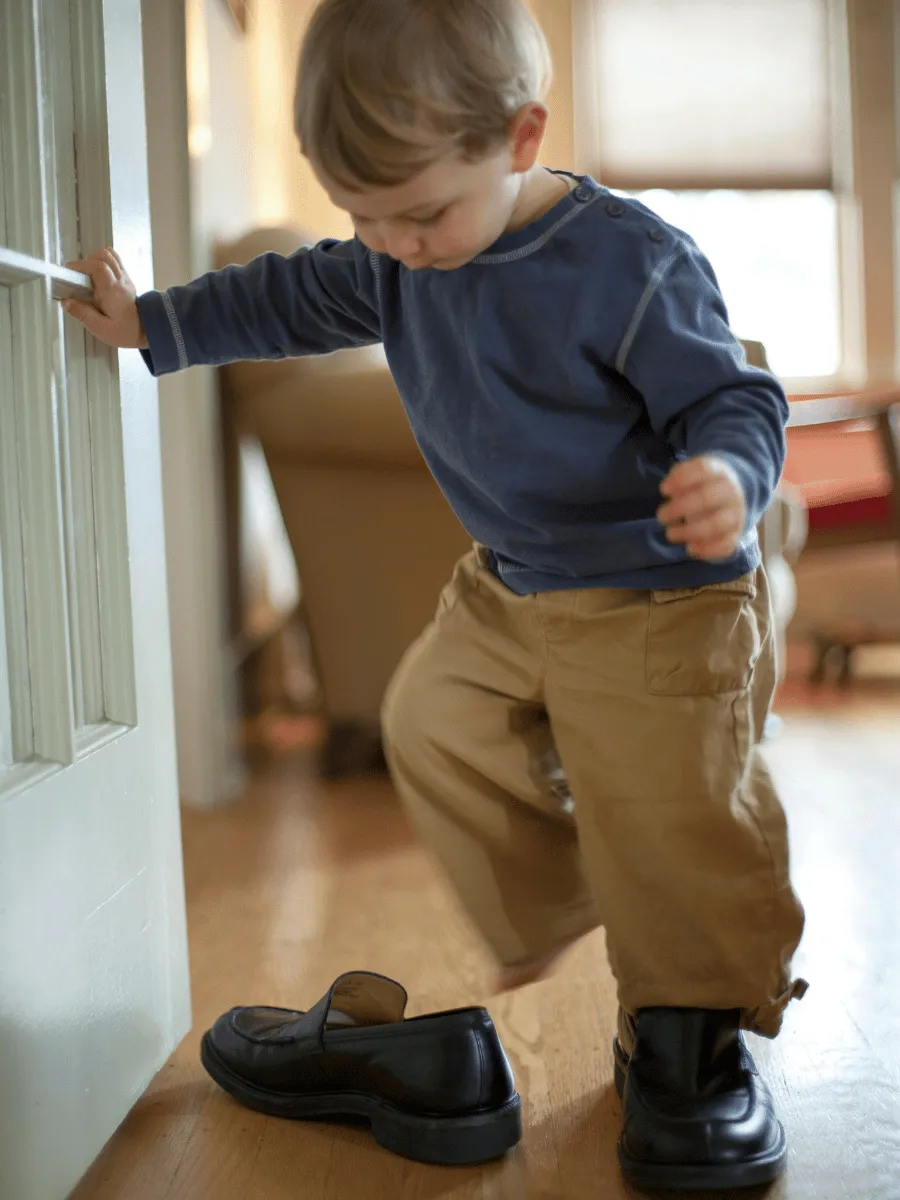
So it’s 6 p.m., your work bag is still on your shoulder, and the post you saved at lunch is called something like “100 Montessori Activities for Toddlers.” Number 14 needs a laminator. Number 37 needs a trip to the craft store. Your toddler, meanwhile, is pulling the shoes off the mat by the door, one at a time.
 Save
A hundred ideas is ninety-nine more than you need tonight. What helps is one idea a day that fits the time you actually have, made from things already in your house. That’s what this guide is: one simple week, an idea for each age from birth to 3, and one real thing my son Will did for each kind of activity. If you’d like the bigger picture first, from the low shelf to the mindset, my guide to Montessori at home starts there.
What are Montessori activities at home?
Montessori activities at home are short, hands-on things your child chooses to do with real objects, like carrying, pouring, scooping, wiping or scribbling, in a space you’ve arranged so they can do it themselves.
Maria Montessori built her approach on watching children closely. She said her method “has been achieved by following the child and his psychology,” in her 1946 London Lectures. “Follow the child” is the short version.
In Montessori classrooms, the Association Montessori Internationale (AMI) describes children from birth to 3 growing within an evolving framework of freedom and limits. At home, that can look like this: your toddler chooses between the sock basket and the crayons, and you decide that crayons stay on the paper.
Practical life is the Montessori name for everyday jobs like sweeping, wiping and setting the table. AMI describes these exercises of daily life as work that helps a child become “a contributing person in the community.” In a house, that’s the laundry basket and the dish towel.
 Save
You’ll also see “sensorial” and “language” activities on most lists. Under 3, I think of both loosely: touching and pouring things, and lots of talking about what you’re doing together while you cook or shop. Nothing about either needs a special purchase yet.
What are the benefits of Montessori learning at home?
Montessori writing points to independence and deep concentration. Research speaks more modestly, to two things: toddlers readily help with hands-on tasks, and babies under 18 months learn best from real-world interaction.
At Moje Montessori, we rate claims like these on how much evidence stands behind them, so you can see what’s been studied and what’s philosophy.
| Benefit | What the source says | Evidence |
|---|---|---|
| Independence | AMI defines independence as being “able to act and live by one’s own effort” | Montessori philosophy (not tested at home) |
| Concentration | AMI says young children who repeatedly get to concentrate on work they chose freely begin to show “a love of work” and of working alone | Montessori philosophy (not tested at home) |
| Wanting to help | In a 2010 lab study of 65 toddlers, aged 18 and 30 months, children at both ages readily helped an adult with action-based tasks | Some research |
| Real-world interaction for babies | In its guidance on screens, the American Academy of Pediatrics (AAP) says babies under 18 months learn best from real-world interactions | Backed by research |
“Backed by research” means studies with babies or toddlers support that piece. “Some research” means part of it is supported. “Montessori philosophy (not tested at home)” means there’s little or no research on it in family homes yet.
The concentration row comes with a word you may bump into: normalization. Montessori used it for that settled, focused way of working. It’s no kind of medical label, so there’s nothing to measure your child against.
The helping row is the one you’ll recognize. The toddlers in that study were helping with tasks a researcher set up in a lab, so it can’t tell us much about chores at home. Still, if your toddler grabs the dustpan every time you sweep, that eagerness will look familiar. The AAP guidance behind that last row also tells parents to watch and play alongside their kids when screens are involved. Take the screens out of that advice, and it’s much of what this week asks of you.
A simple week of Montessori activities at home
Give each day one kind of activity, pull the materials from your kitchen, closet or yard, and keep the whole thing to 10 to 20 minutes, setup and cleanup included. The table has one idea per age for every day.
Borrow from it however you like. It’s a framework, and most weeks don’t go to plan anyway. I’m home with Will most days, so our weeks run on a different clock than a workday. The last column holds one thing he actually did for each kind of activity, at whatever age it happened.
The 10 to 20 minutes is your time budget for setting up, playing and putting things away. How long your child stays with it is their call. Some days that’s two minutes, and two minutes still counts.
| Day | Kind of activity | 0–12 months | 1–2 years | 2–3 years | What Will did | Read next |
|---|---|---|---|---|---|---|
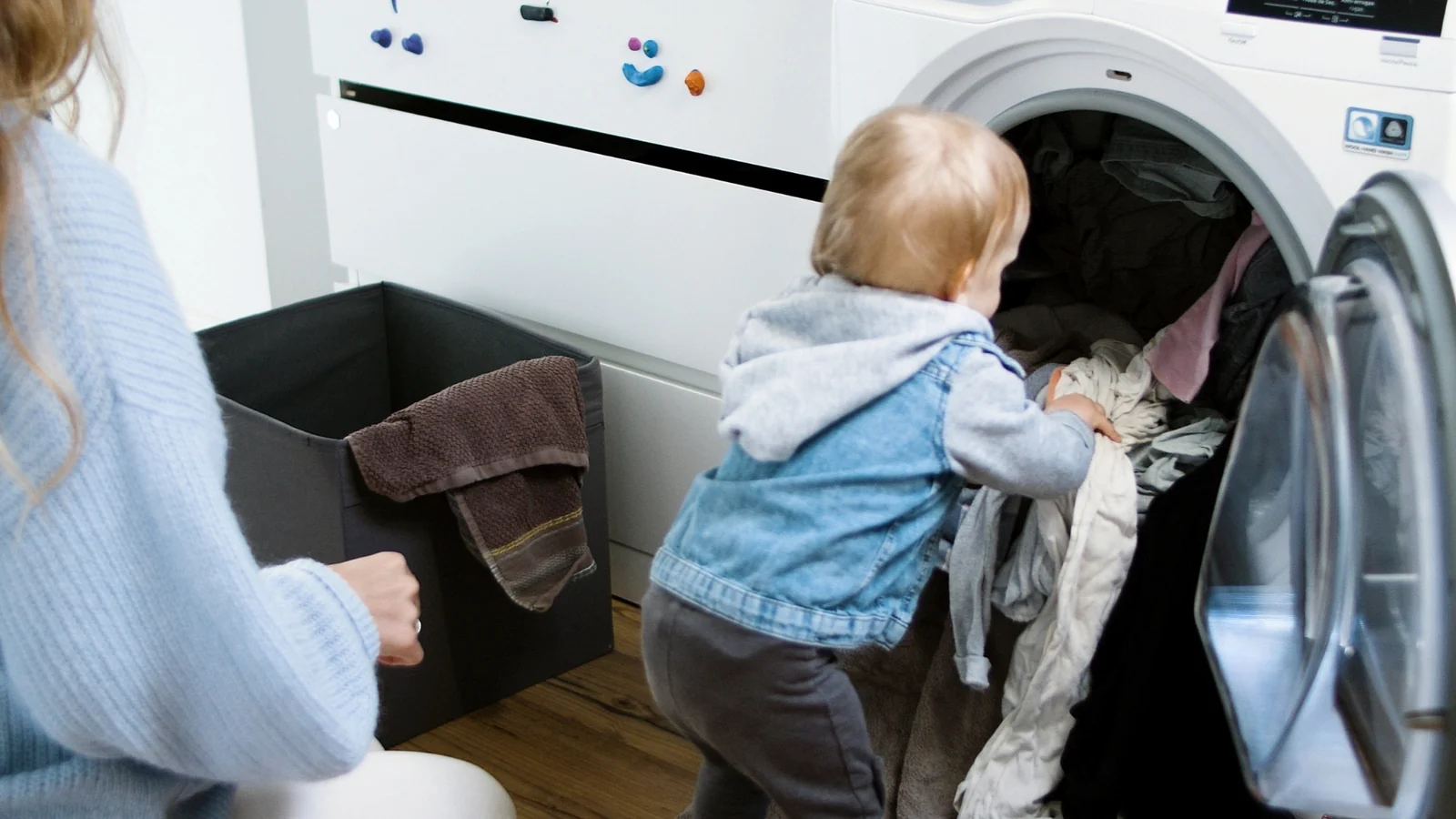
| Monday | Practical life | Watch you fold laundry from a blanket on the floor | Carry their own shoes to a low spot; drop socks in a basket | Carry napkins or plastic cups to the table | Around 15 months, he dropped balled-up socks into the basket and carried wet clothes from the washer to the dryer | Practical life activities by age |
| Tuesday | Kitchen | Watch you cook from a safe spot, holding a wooden spoon | Rinse fruit in a bowl of water; peel a banana | Tear lettuce, stir a bowl, wipe the counter after | At about 15 months, he peeled bananas, picked leaves off greens and rinsed tomatoes | Cooking with toddlers |
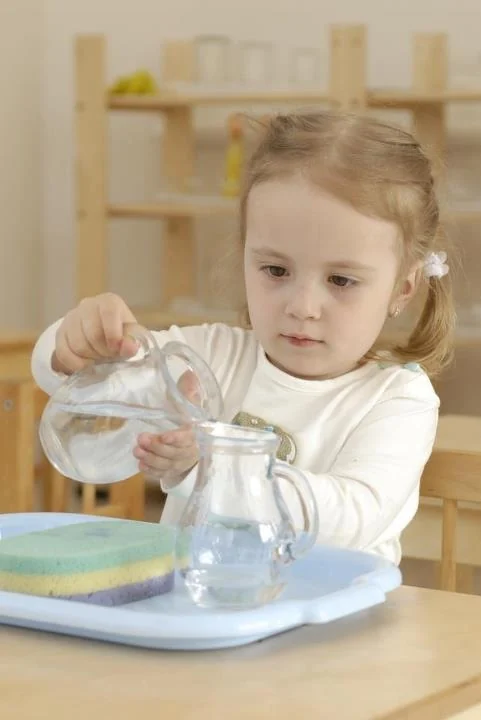
| Wednesday | Sensory | Touch a few fabrics while you hold them: a towel, a washcloth, a soft cotton sock with no loose threads | Pour water between two cups at the sink, with you right there | Scoop dry rice between bowls, with you sitting beside them | A big tray of rice and dried beans from the pantry, with a scoop, small bowls and toy animals hidden inside | Sensory activities for toddlers |
| Thursday | Outdoors | Floor time on a blanket in the shade; feel the grass | Walk on their own feet; collect leaves in a bag | A slow walk to the end of the block, at their pace | Most days, a walk along our sidewalks or to the little park nearby, on his own feet instead of in the stroller, picking up pine cones | Outdoor activities for toddlers |
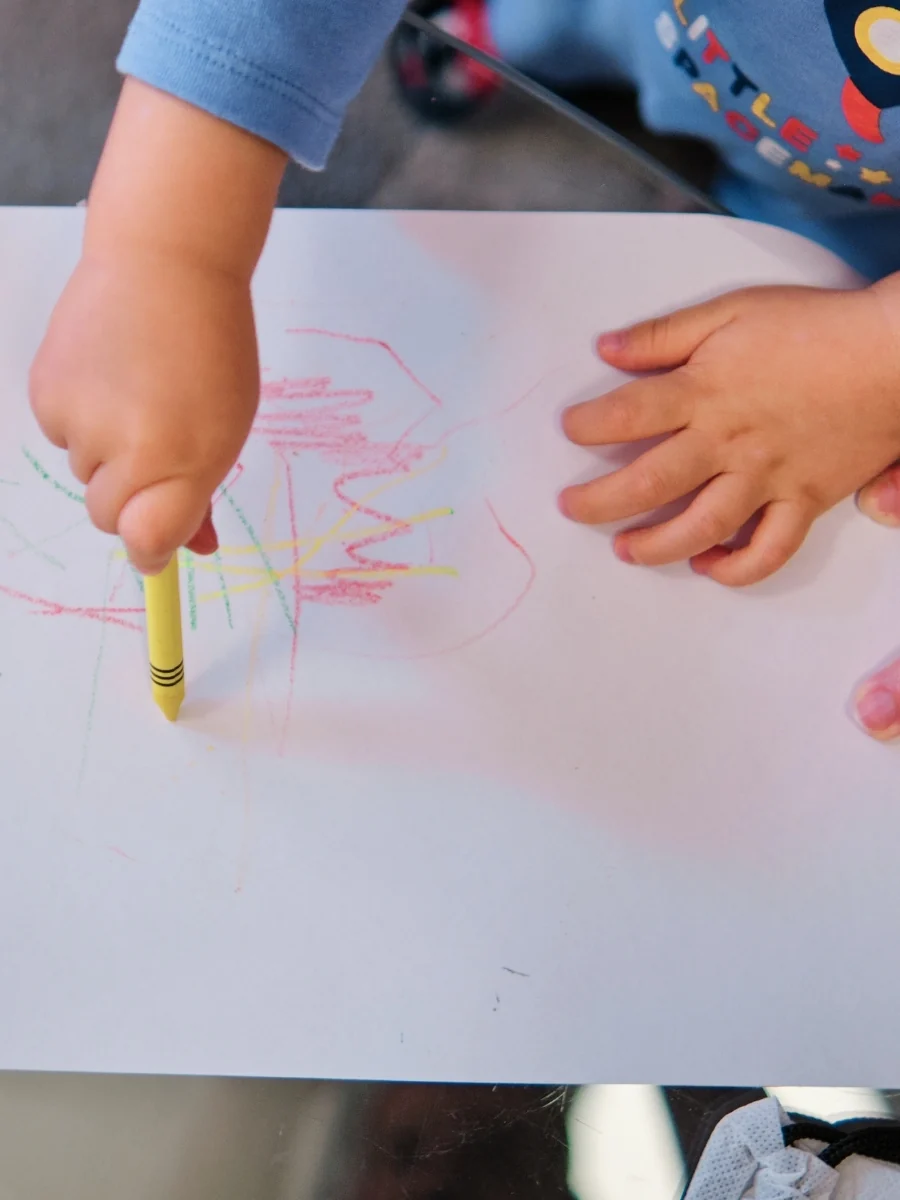
| Friday | Art | Mostly not yet; let them watch you draw | Chunky crayons, two or three colors, on big paper | Crayons, or tearing and gluing paper scraps | From about 14 months, chunky egg-shaped crayons, just three or four colors, on paper taped to the floor | Montessori art activities |
| Saturday | Stuck inside | Extra floor time: tummy time, rolling, reaching | Push a laundry basket or a box of books across the room | Carry a small watering can to the houseplants | On snow days, he pushed the laundry basket to the washer, then washed toy cars in a tub of warm water while I sat right beside him | Indoor activities for toddlers |
| Sunday | Out and about | Name what you see on a walk or at the store | Help put groceries in the cart | Play “find three things” on a drive: a dog, a red car, a bridge | On a drive of almost five hours to see his grandparents, we left at nap time, then brought out sticky notes for the window and pipe cleaners to poke into an empty bottle | Car ride activities |
Read across the row for your child’s age today, since the ages are rough and kids drift between columns.
Wednesday’s rice and beans are small enough to choke on. What follows is my own rule of thumb rather than an AAP line: keep them away from babies entirely. With a toddler, stay within arm’s reach, and skip the bin on any day they’re still mouthing things.
 Save
 Save
This series also covers nature walks with a scavenger hunt, DIY activities from household items, and quiet play for sick days. The harder part is rarely the idea itself. It’s remembering, at the end of a long day, which idea you picked for tonight.
Montessori activities for babies (0–12 months)
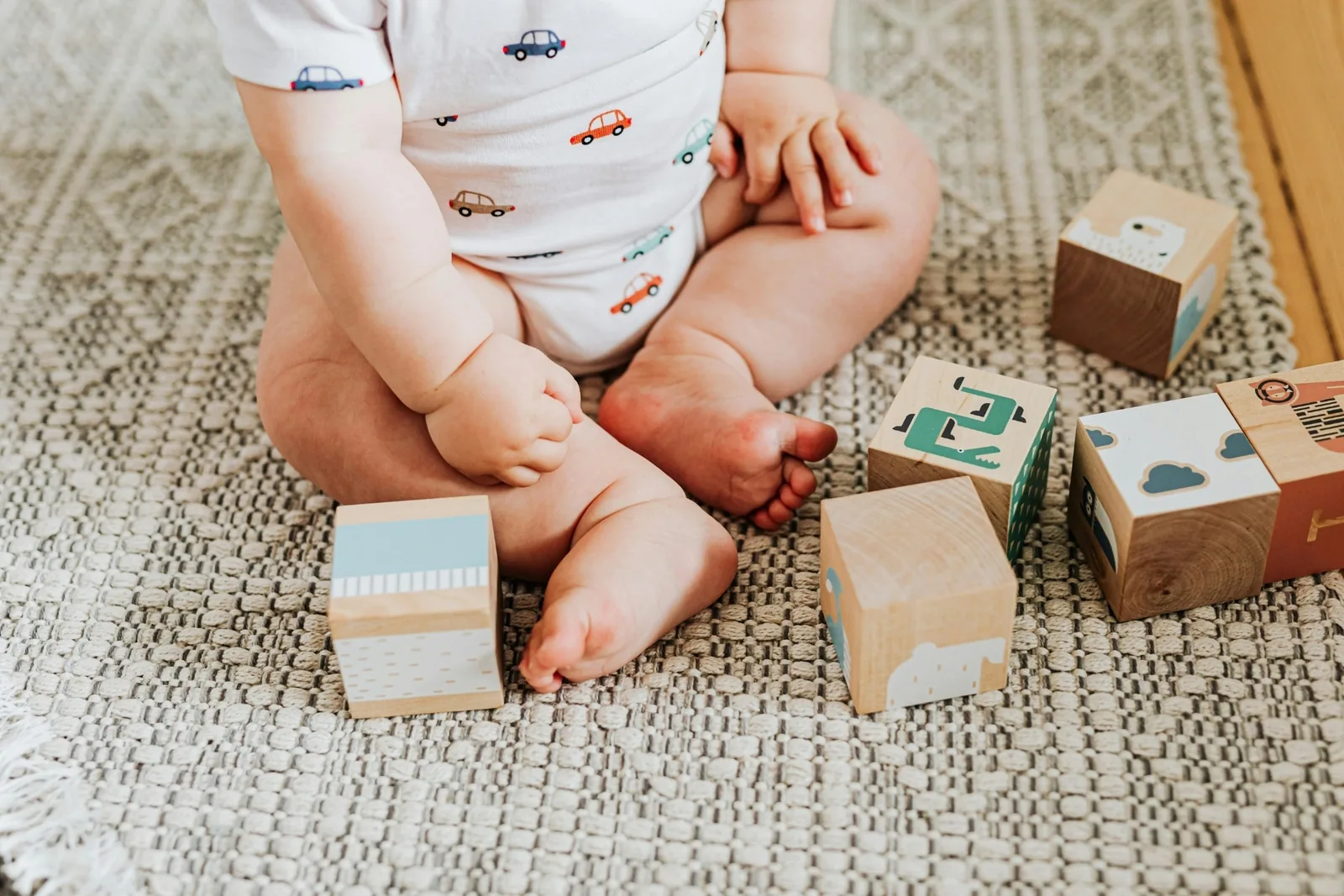
Floor time comes before everything else in year one. The World Health Organization (WHO) says babies under 1 should be active several times a day, especially through interactive floor-based play, so most baby activities happen on a blanket with you nearby.
For babies who aren’t crawling yet, the WHO’s 2019 guidelines also include at least 30 minutes of tummy time, spread through the day, while they’re awake. That’s a daily total, so it can come in short stretches: a few minutes after a diaper change, a few more while you fold laundry on the floor beside them.
 Save
The Centers for Disease Control and Prevention (CDC) lists two things most children (75% or more) can do by 1 year that turn easily into activities: putting something in a container, like a block in a cup, and picking things up between thumb and pointer finger. A metal cup and a few big wooden blocks from the toy bin cover the first one. The second is the reason small things need to stay out of reach.
With Jimmy due in March, this is the column I’ll be reading again myself. For toys in the first six months, my guide to Montessori toys for newborns goes month by month, and these activities that cost nothing use what’s already in your cabinets.
 Save
Tummy time happens only while your baby is awake and closely supervised, so stay right beside them.
The AAP says babies and toddlers have the highest choking risk because they explore the world by putting things in their mouths, and that many choking incidents happen when an older brother or sister gives a younger child a small toy or object. Keep coins, marbles, balloons and button batteries away from babies and young children, and follow the age labels on toy packages.
How do Montessori activities for toddlers change from 1 to 3?
Between 1 and 3, activities move from exploring objects toward real jobs, like carrying, wiping, pouring and helping at the table, done at whatever pace your toddler sets.
Ages 1–2: copying everything you do
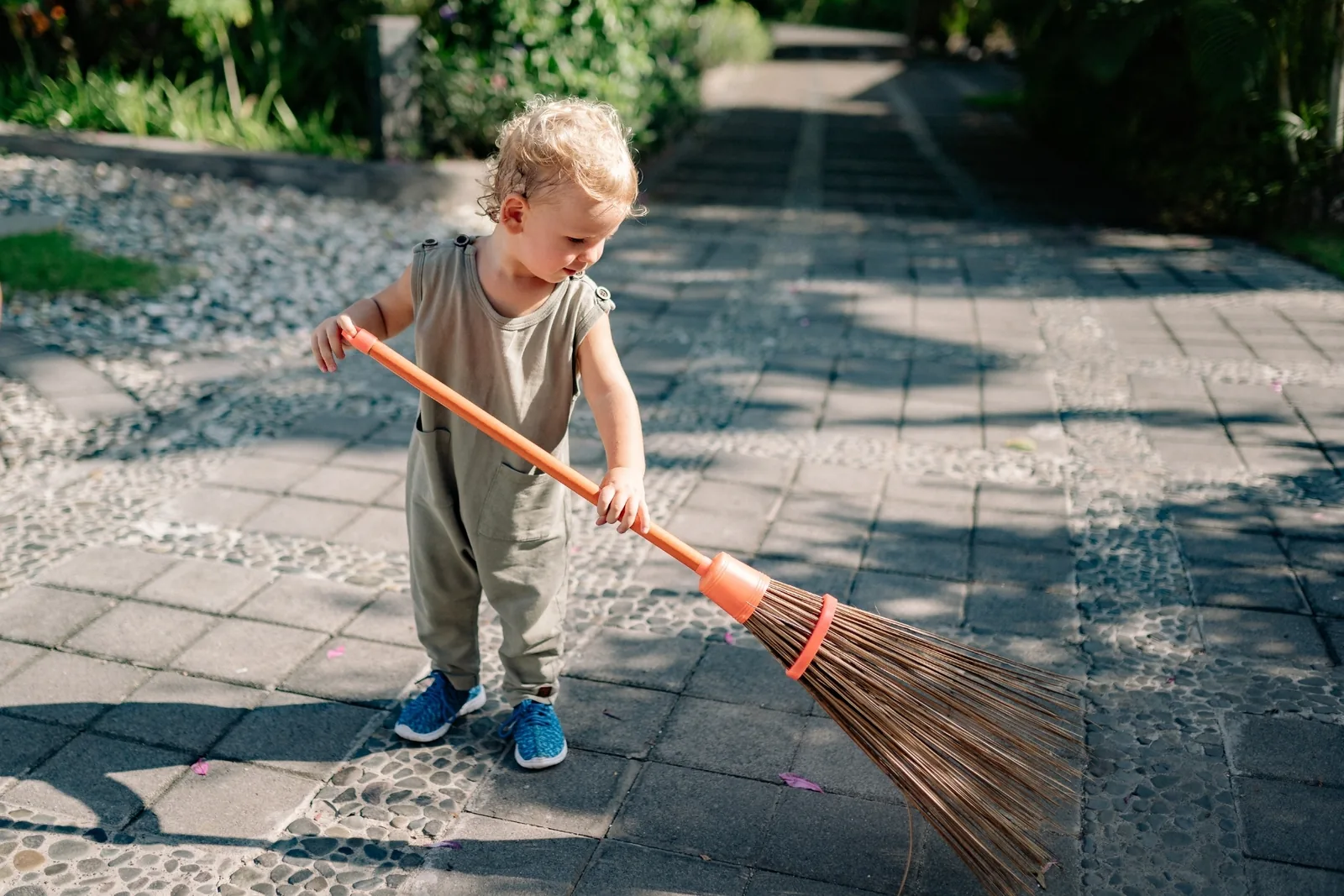
By 18 months, the CDC’s milestone list includes copying you doing chores like sweeping with a broom, scribbling, and trying to use a spoon. Most Montessori activities for 1 year olds come straight off your to-do list.
For a 1-year-old, your chores, slowed down and handed over, are the activity.
Movement matters at this age, too. The WHO’s guidelines say children 1 to 2 should get at least 180 minutes of physical activity a day, at any intensity, spread throughout the day. That sounds like a lot until you notice it counts every kind of moving: walking to the car, carrying a book to the couch, dancing in the kitchen while dinner heats up. Saturday’s laundry-basket push counts. So does Thursday’s slow walk, even when it covers half a block.
 Save
Ages 2–3: jobs with more than one step
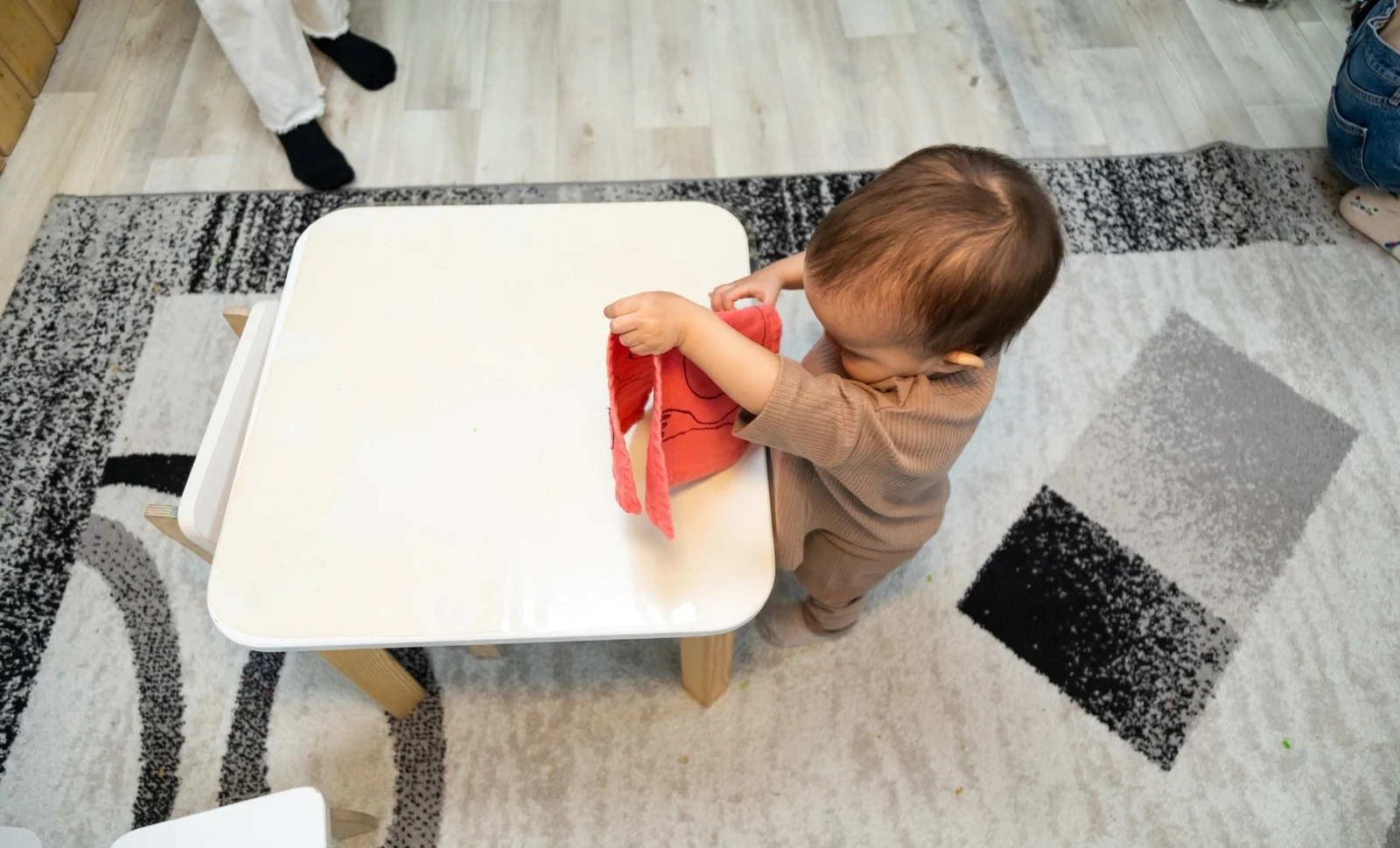
In its tips for parents of 2-year-olds, the CDC suggests letting your child help get ready for mealtime by carrying things to the table, such as plastic cups or napkins, thanking them for helping, and letting them do simple chores like putting toys or laundry in a basket. That’s a tips section, and the CDC doesn’t list it as a milestone, so treat it as an invitation.
Around this age, a job can start to have more than one step. Carry the napkins, then put one at each chair. Rinse the cup, then set it on the towel to dry. Often the pride shows up at the end, when they look at a finished table and know they did that part.
 Save
What does a Montessori-friendly home really need?
A Montessori-friendly home needs one low spot your child can reach, a few real things from your own kitchen and closets, and a little time to watch. Special materials and subscription kits are optional extras.
Look back at the week. Nearly every row runs on a basket, a cup, a towel, a crayon or a pair of shoes. The low spot can be a single shelf or the bottom drawer in the kitchen, as long as your child can reach it and put things back.
If you’d like someone else to do the choosing, subscriptions exist. As of October 2026, Lovevery’s Play Kits cost $88 per kit every 2 months for 0 to 12 months, and $132 per kit every 3 months for ages 1 to 3. The accountant in me ran the numbers: at four kits a year, that’s $528 per toddler year by my math, before tax and shipping. For a family short on time, that can be money well spent, and it’s also money you never have to spend to do this well.
If money is the worry keeping you up, my guide to Montessori on a budget walks through where spending actually matters. When you’re ready for a few toys, the best Montessori toys for 1-year-olds and for 2-year-olds each get their own guide.
How do you fit Montessori into a busy workday?
Attach each activity to something your day already includes, like dinner, laundry, bath time or the walk from the car, so it uses minutes you were going to spend together anyway.
In the same BLS survey, employed adults living with a child under 6 had 3.2 hours a day of leisure and sports, over an hour less than employed adults with no kids under 18 (4.5 hours). That leisure covers things like TV, seeing friends and exercise, and it’s already been squeezed. So the activity has to ride along with something you’re already doing, instead of eating into what little downtime is left.
Let’s be real: nobody is laminating activity cards on a Tuesday night. Pairings like these take almost no setup:
- Dinner: your toddler rinses the fruit or carries the napkins while you cook.
- Laundry: socks go into the basket, one at a time, while you fold.
- Bath: two cups and some pouring, with you kneeling right beside the tub.
- The walk from the car: they walk the last stretch on their own feet, at their own speed.
 Save
How a whole day fits together, from wake-up to bedtime, is a topic for its own post on daily routines. For this week, keep one thing in mind: you set out the basket, and your child decides what to do with it. That’s Maria Montessori’s “follow the child” in its smallest, most workday-friendly form.
On your most tired days, pick whichever activity is quickest to set up and clean up, and skip the rest of the row. It’s the same filter parents on r/MontessoriForHome ask for when they’re expecting again and worn out.
Miri’s Tip
A week like this works best when you don’t have to decide anything at 6 p.m. Choose the row on Sunday, and the week’s only decision is already made.
Frequently Asked Questions
What are some DIY Montessori activities?
DIY Montessori activities are ones you put together from things you already have: a basket of socks to match, a small pitcher and cup for pouring at the sink, a cardboard box to push across the floor, or chunky crayons on paper taped down. My list of free Montessori activities has more ideas, sorted by age.
Conclusion
You don’t need the whole table this week. Pick tomorrow’s row, read across to your child’s age, and see what happens in the ten minutes after you walk in the door. If this week finds you running on empty, Monday’s sock basket is plenty. Your child gets a real job, and you get a few quiet minutes of watching them figure it out.
One square of the table tonight is enough. You’re already doing the hard part: making room in a full day for your child to try things themselves.
Miri
Fewer toys, deeper play.
Further Reading & Resources
See all 17 sources
- Montessori background: Montessori Great Ideas, Freedom, Independence, Normalisation and Practical Life Exercises (Association Montessori Internationale)
- Child development: Milestones by 1 Year, 18 Months and 2 Years (Centers for Disease Control and Prevention) · Toddlers’ prosocial behavior (Svetlova et al., 2010)
- Play and safety: Guidelines on physical activity, sedentary behaviour and sleep for children under 5 (World Health Organization, 2019) · AAP Policy Explained, Back to Sleep, Tummy to Play and Choking Prevention (American Academy of Pediatrics)
- Parents’ time: American Time Use Survey Summary (U.S. Bureau of Labor Statistics)
- Real parents: Activities for 15mth old and Indoor things! (r/MontessoriForHome)
- Prices, checked October 2026: The Play Kits (Lovevery)