You spotted it in the toy aisle and knew it was the one: a big red car with flashing headlights and a horn that plays a little song. At the birthday party, it lights up in the middle of the living room. Your grandson stops crawling and stares. Your daughter says, “Wow, Mom,” about half a second too late.
Later, over cake, she mentions they’re “doing Montessori” at home now. You nod. On the drive back, you’re still turning it over. Does that mean wooden toys only? Is there a list somewhere? And what are you supposed to have at your house?
If you’re the parent in this story, you know that half-second pause from the inside. You love how much they love your kid. You just don’t know how to say “we’re trying something new” without it sounding like “you got it wrong.” If that sounds like you, you’re in good company.
It takes a village, and for a lot of families, the village starts with Grandma and Grandpa. The U.S. Census Bureau counted about 6.7 million people age 30 and over living with their grandchildren in 2021, and that only counts the ones under the same roof. So this post is for both of you, awkward conversation included.
one low shelf, one rug and six toys that match your grandchild’s age, plus a safety walk-through before each visit — it’s the smallest setup that still lets a toddler choose, play and put things back on their own.
your grandchild only drops by for a few hours a month; one basket of toys you bring out together is plenty.
What does Montessori at grandma’s house look like?
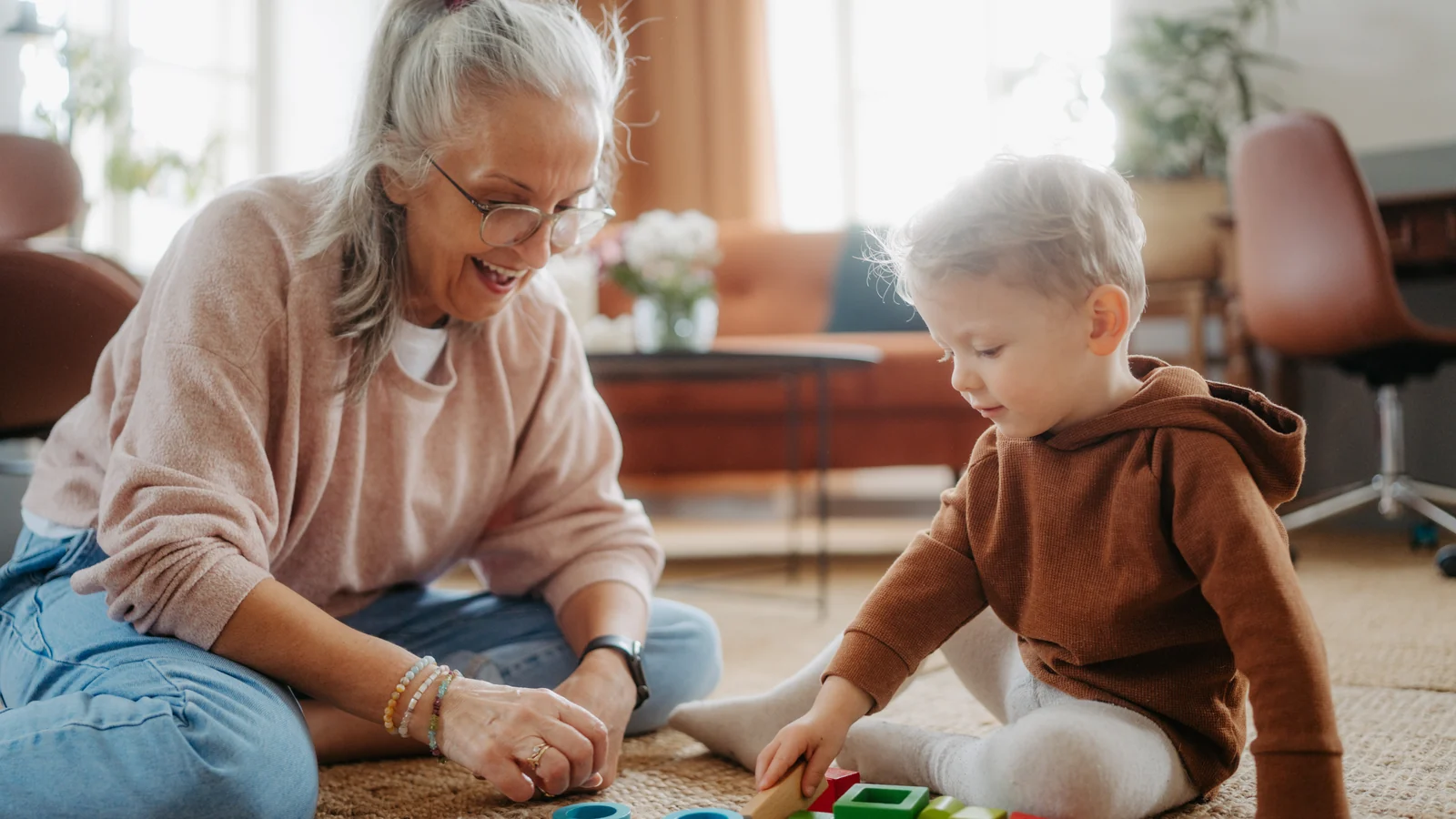
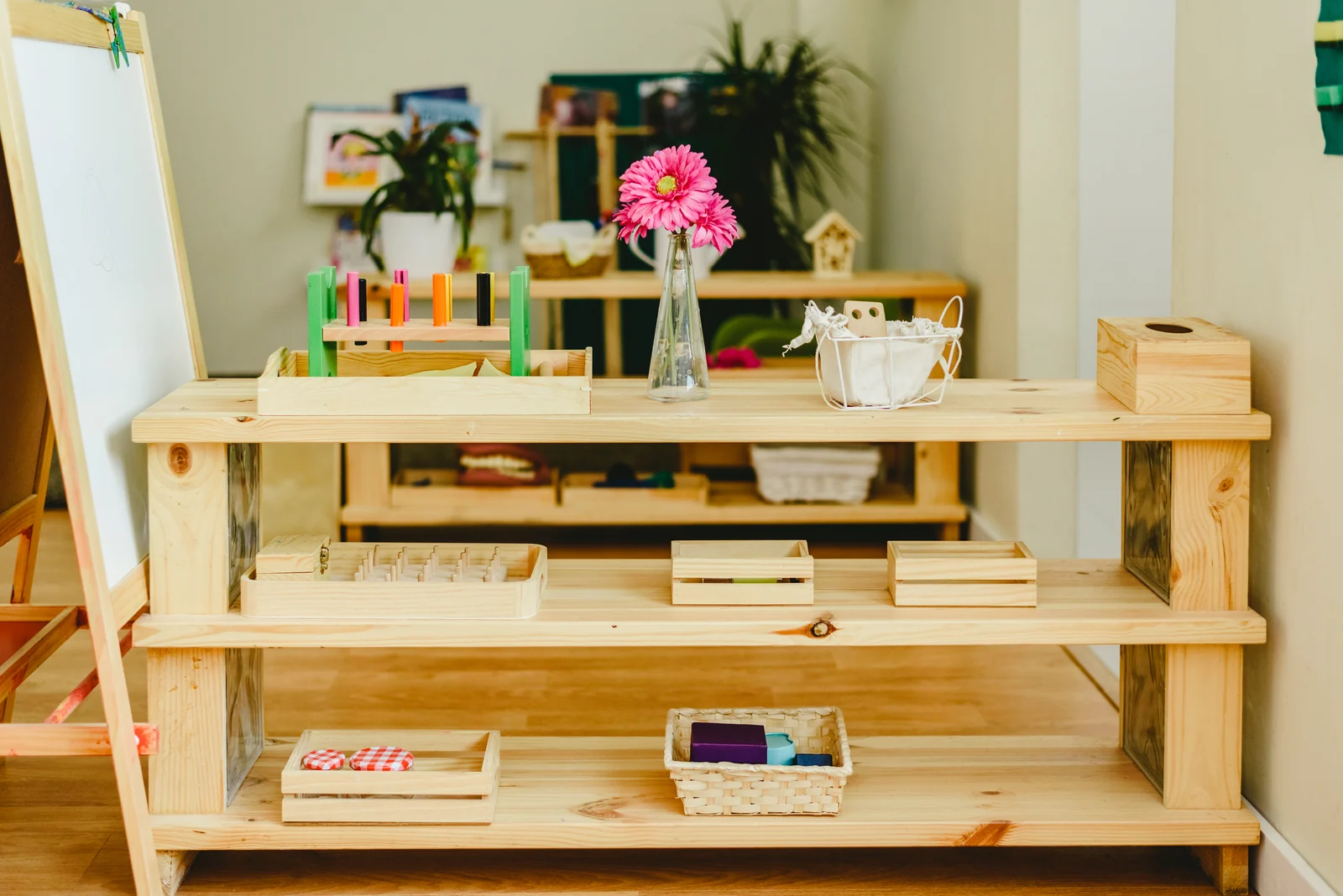
Montessori at grandma’s house can be one low shelf, a small rug and a couple of baskets your grandchild can reach without help. A corner of the living room is enough space for all of it.
Montessori is a way of raising and teaching young children that’s built around letting them do as much as they can for themselves. At home, a lot of it comes down to how the toys are set out. The American Montessori Society (AMS) suggests that families limit toy choices, use open shelves at the child’s eye level, sort small items into trays or baskets, and rotate extra toys.
On a low shelf, your grandchild can see everything that’s available, pick one thing, sit down with it, and (with a few reminders) put it back. They get to choose. You get a living room you can still walk across.
You don’t need a dedicated Montessori playroom for any of this. If your place is on the small side, the same small playroom ideas that help young families in tight spaces work at your house too.
 Save
Your house can feel different from your grandchild’s home and still feel familiar. A low place where the toys live, and the small habit of putting one thing back before taking out the next, is an easy thing for two houses to share. Everything else can be yours.
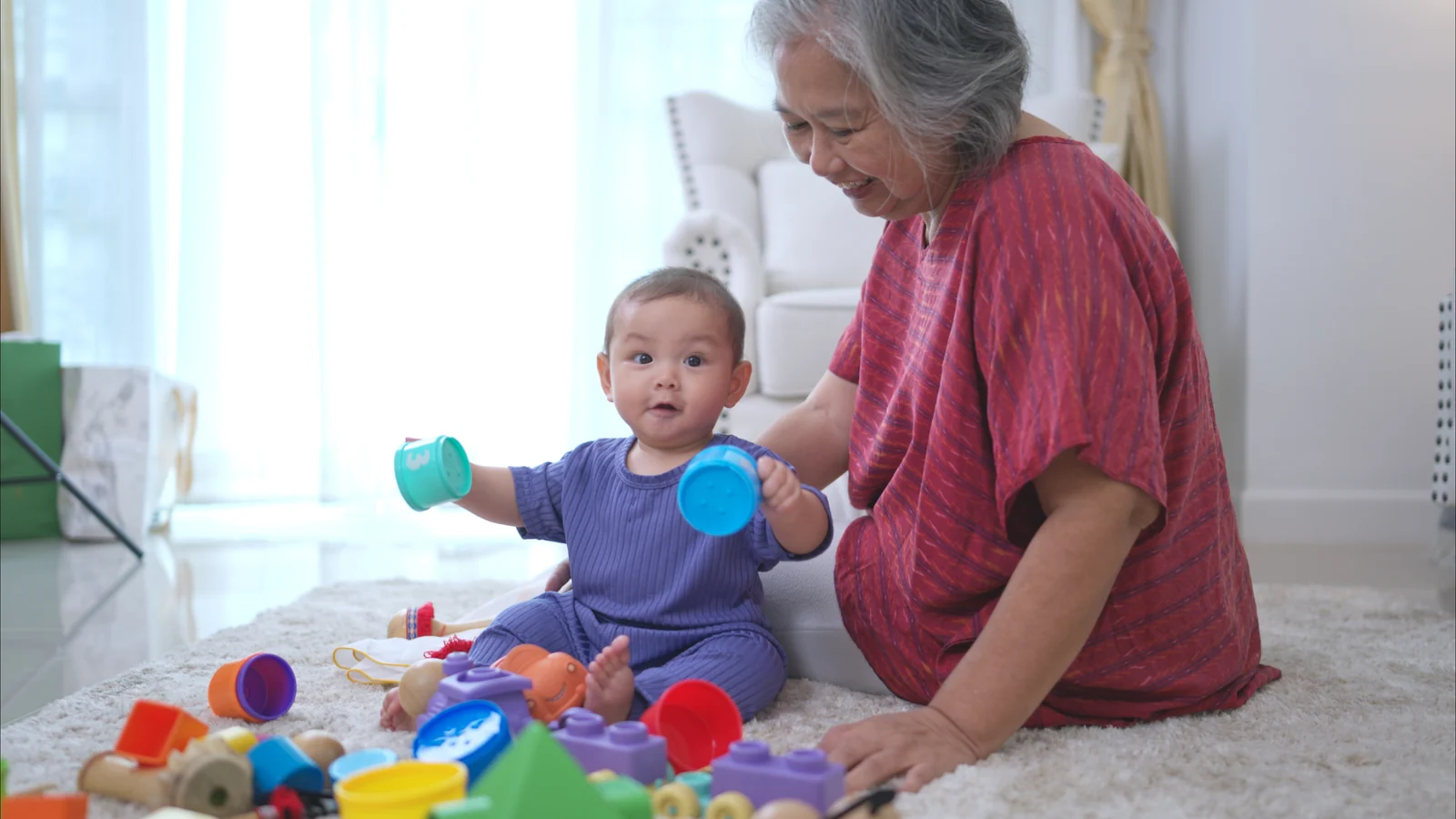
Plenty of Montessori at a grandparent’s house never touches a shelf, either. Stirring pancake batter at the counter. Watering the tomato plants. Folding dish towels into lumpy squares. The song you used to sing to your own kids at bath time. Toddlers want in on real work, and a grandparent’s unhurried afternoon has room for it.
Some of the best Montessori at grandma’s house is a mixing bowl, a wooden spoon and nobody in a hurry.
 Save
A one-shelf setup by age
Start with six things on one low shelf, chosen for what your grandchild is practicing right now, and swap a few each time they’ve clearly moved on. Ages below are approximate, so let the child, more than the birthday, decide the column.
When it comes to Montessori toys at grandma’s house, the first question is usually how many. The AMS advice above doesn’t give a number. Six is mine, and it comes from our own living room: our shelf at home holds 6–8 things at a time, and with that few out, Will settles into one toy instead of tossing them across the floor. Six is the easy end of that range, and easy is what a shelf between visits needs.
As for which six, the American Academy of Pediatrics (AAP) says the best toys match a child’s current skills and encourage new ones. So the list moves with age. Every item is a general type of toy, which means some of what’s already in your closet may count.
| Around 0–12 months | Around 12–24 months | Around 24–36 months |
|---|---|---|
| A wooden rattle or grasping ring | A handful of chunky wooden blocks | A bigger set of blocks for towers and roads |
| A basket of everyday objects, each too big to be a small part, with you sitting beside them | A knobbed puzzle with two or three pieces | A simple puzzle with a few large pieces |
| A box with a hole to drop a ball through | A shape sorter with a few shapes | A sorting set with large pieces |
| A soft fabric ball | A sturdy push toy for new walkers | Chunky crayons and big paper, with you at the table |
| Two or three board books | Board books with real photos | Picture books to read together |
| Stacking cups | Nesting cups or stacking rings | A wooden train with large cars |
One rule runs through every column. For a child under 3, nothing on the shelf should count as a small part. The U.S. Consumer Product Safety Commission (CPSC) defines that as anything that fits completely inside its small-parts cylinder, which is sized to approximate the fully expanded throat of a child under three. Toys handed down from older cousins deserve a second look for exactly this reason.
 Save
The shelf itself needs anchoring, even a low one. The CPSC advises families to anchor furniture like bookcases and dressers securely to the wall and to keep heavier items on lower shelves. There’s more on choosing and securing one in my guide to the Montessori shelf.
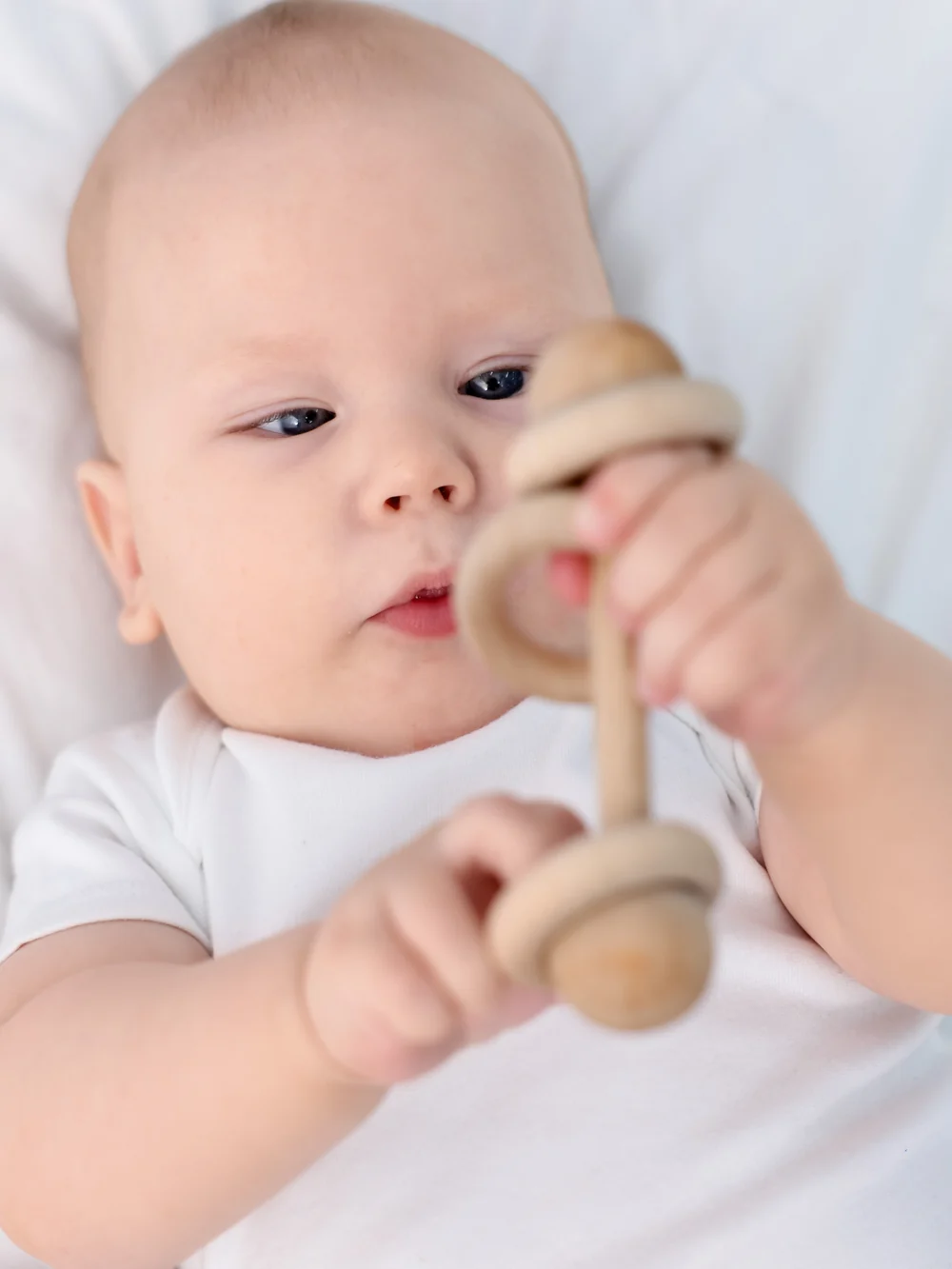
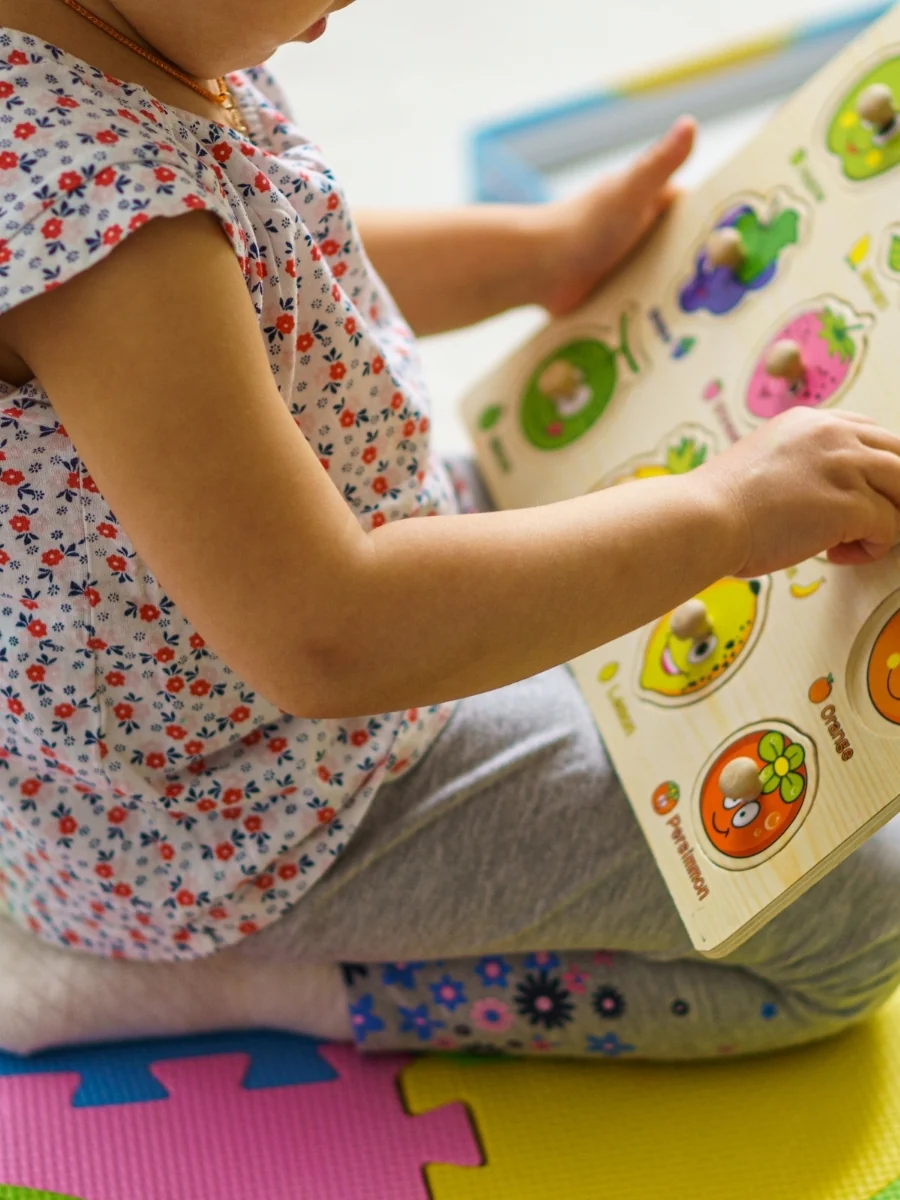
Something to grab, shake and drop.
Nothing on the shelf should fit inside a small-parts cylinder.
Watch first, then offer. If you want to start this weekend, pull six things from whatever toys you already have, set them on the lowest shelf in the house, and notice what your grandchild reaches for first. That tells you which column they’re really in.
How do you toddler-proof a grandparents’ house?
Before every visit, walk through the rooms your grandchild will use, at their eye level. Medicines, button batteries, small magnets, houseplants, stairs and old baby gear are the six things to check first.
A house that hasn’t had a toddler in it for a while fills up with things that were never a problem before: a pill organizer next to the coffee maker, a bowl of remotes on the side table, a key fob on the hook by the door. That’s just what a lived-in house looks like, and the fix takes one slow walk.
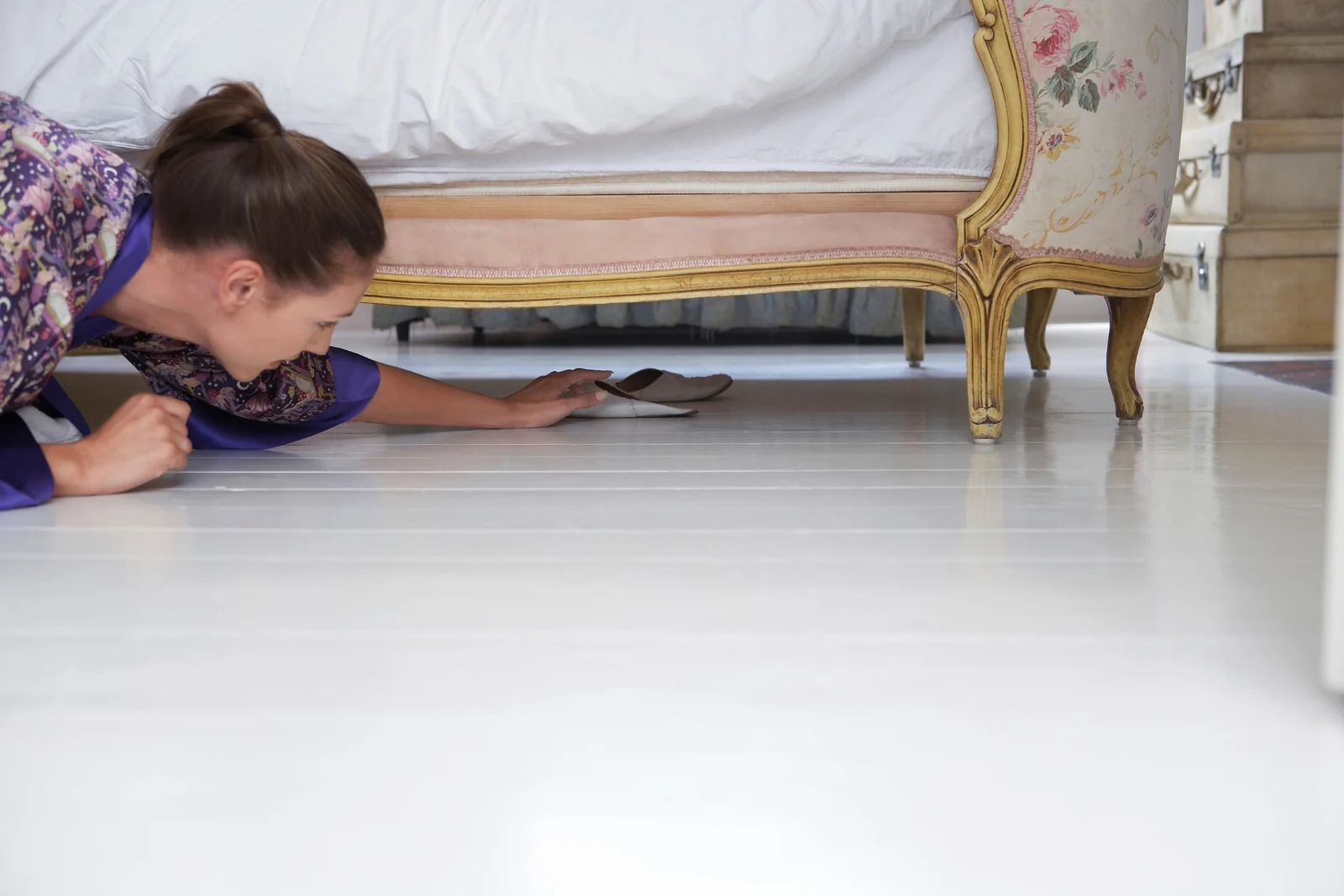
The AAP’s advice on floors is to check them often for small things that are dangerous to swallow, like coins, beads, buttons, pins and pills. It says the best way to look is to get down at your child’s level and see what’s there. So get down on the rug for a minute. The view from there is different.
 Save
- Medicines, wherever they live. The AAP says to keep all medications out of reach, including the ones you carry in your purse, and not to count on child-safety caps to keep a child out of a bottle. The Centers for Disease Control and Prevention (CDC) adds vitamins and other supplements, gummies included, in its “Up and Away” advice: put them away every time, never leave them on a kitchen counter or at a family member’s bedside, and pick a spot children can’t reach or see. Guests’ purses count too.
- Button batteries. The AAP says to know which things in your house run on button or lithium coin batteries and to keep them out of children’s reach. They hide in small remote controls, key fobs, garage door openers, flameless candles, watches, cameras, toys and hearing aids. Since October 23, 2023, a federal rule (16 CFR Part 1263) has required consumer products that use these batteries to meet requirements meant to keep children from getting at them. Any remote bought before 2023 predates it. On any toy that takes batteries, check that the battery door closes firmly and stays shut when you tug on it. Keep the National Battery Ingestion Hotline, 800-498-8666, with your emergency numbers.
- Small magnets. The CPSC’s advice is short: keep small magnets away from children. Gather up any you find at toddler height, wherever they are in the house. What happens if they’re swallowed is in the box below.
- Houseplants. Certain houseplants may be harmful, and the AAP says your regional Poison Help line (1-800-222-1222) has a list of plants to avoid. Anything you’re unsure about can go up high or into a room your grandchild won’t be in.
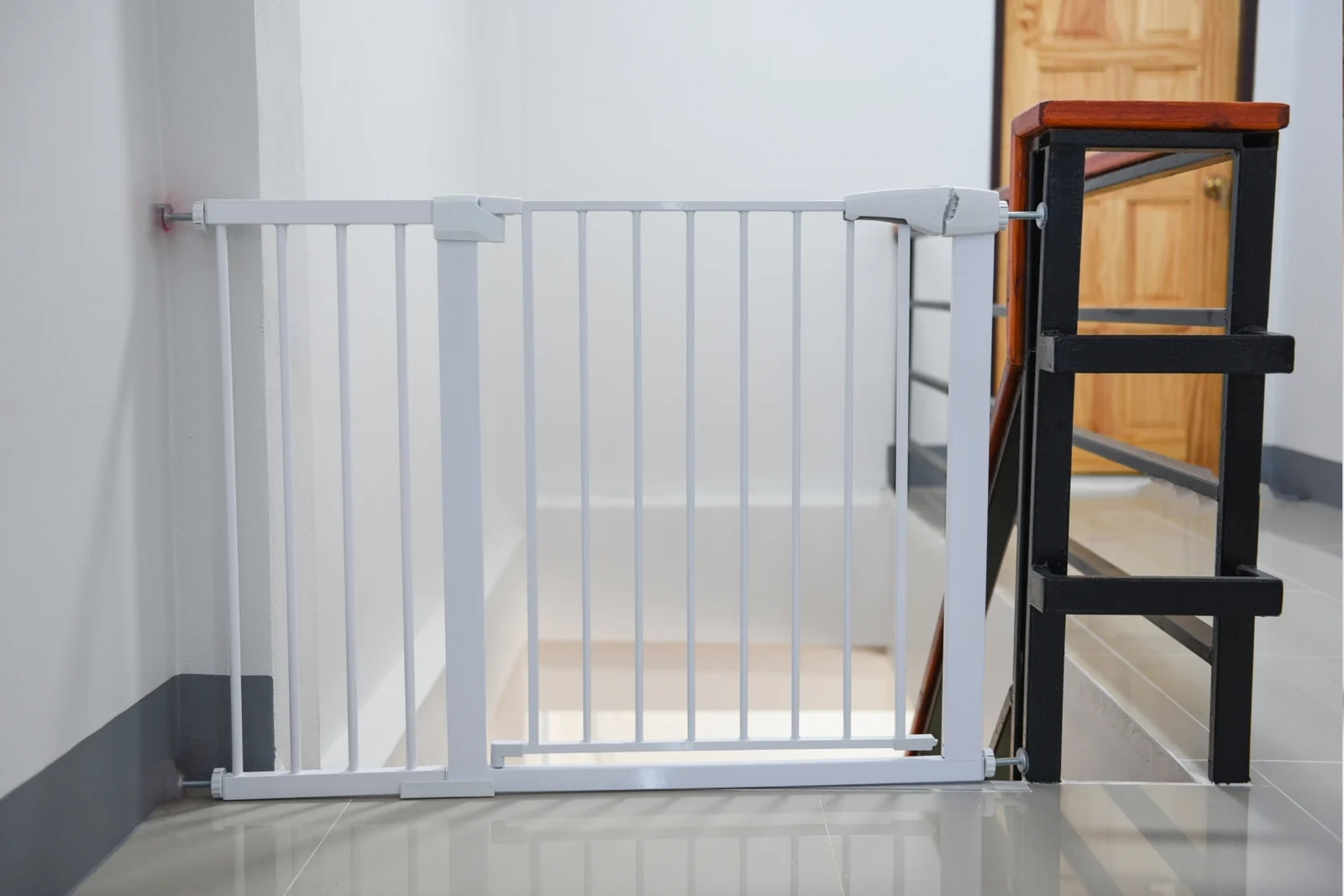
- Stairs. The AAP recommends safety gates at both the top and the bottom of stairs once a child is learning to crawl and walk. It recommends gates firmly mounted to the home’s studs, and says to avoid accordion-style gates, which can trap an arm or a neck. A gate also makes it easier to set up a yes space, one safe area where your grandchild can explore without hearing “no” every few minutes.
- The old crib and other saved baby gear. Federal crib standards took effect on June 28, 2011, and the CPSC’s guidance for child care providers says a crib bought before then without a tracking label or registration form is unlikely to have been certified to current standards. As the rules took effect in 2011, the CPSC also said a drop-side crib won’t meet them, even with an immobilizer (a piece that stops the side from moving). For anything else saved from your own kids, check the CPSC’s recall list first. Its guidance on secondhand products notes that used products have been the subject of numerous recalls, and that nursery products, especially cribs and bassinets, have caused deaths.
Treat button batteries like medicine: up, away and out of sight. When they’re swallowed or inhaled, the AAP says they can cause swift, life-threatening damage to the esophagus or intestines. If you think your grandchild swallowed one, the AAP says to go to the emergency room or call 911, with nothing else to eat or drink and no attempt to make them vomit.
Small magnets are the other one. When two or more are swallowed, the CPSC says they can attract each other inside the body, and many have ended in surgery to remove them. Watch for stomach pain, nausea, vomiting or diarrhea, and if you suspect a magnet was swallowed, seek immediate medical attention.
This list covers the big ones for a weekend visit. If your grandchild stays over often, or you’re helping with regular childcare, a full babyproofing pass of the whole house is worth an afternoon.
 Save
Once the walk-through is done, setting up the corner itself is the easy part. One rug, one low shelf and six things from the table above, and you’re ready for the next visit.
What gifts from grandparents actually get played with?
Pick a gift that fits what your grandchild is working on right now, something they use with their hands and, better yet, with you. Free, small or bigger, any budget can do that.
When Montessori gifts from grandparents come up, the AAP’s toy-buying advice makes a good filter. It says simple, traditional toys like blocks, shapes, puzzles and trains support fine motor skills and can improve language and brain development, and that art supplies make great gifts. It also says real human interaction is essential to a child’s growth and development, and that digital toys should never take the place of real, face-to-face play. That second part is good news for grandparents. Your time fits every age.
Three levels, no price tags required:
- Free: your time. Reading the same board book for the fifth time in a row. Letting them stir the batter. A slow walk down the block to see the neighbor’s dog.
- Small: one good thing for their hands. A board book, a set of chunky blocks, a knobbed puzzle, a shape sorter, or, for an older toddler, chunky crayons and a big pad of paper with you at the table. If you’re unsure whether something “counts,” there’s a longer answer in what makes a toy Montessori.
- Bigger: an experience or a long-term gift. A zoo membership, passes to a children’s museum, or a contribution to a college savings fund. Those are the ideas I suggested to Will’s grandparents before his first birthday, and there’s more on how that went below.
First and second birthdays are the big gift moments, and the same filter holds: one thing that fits the skill they’re practicing that month.
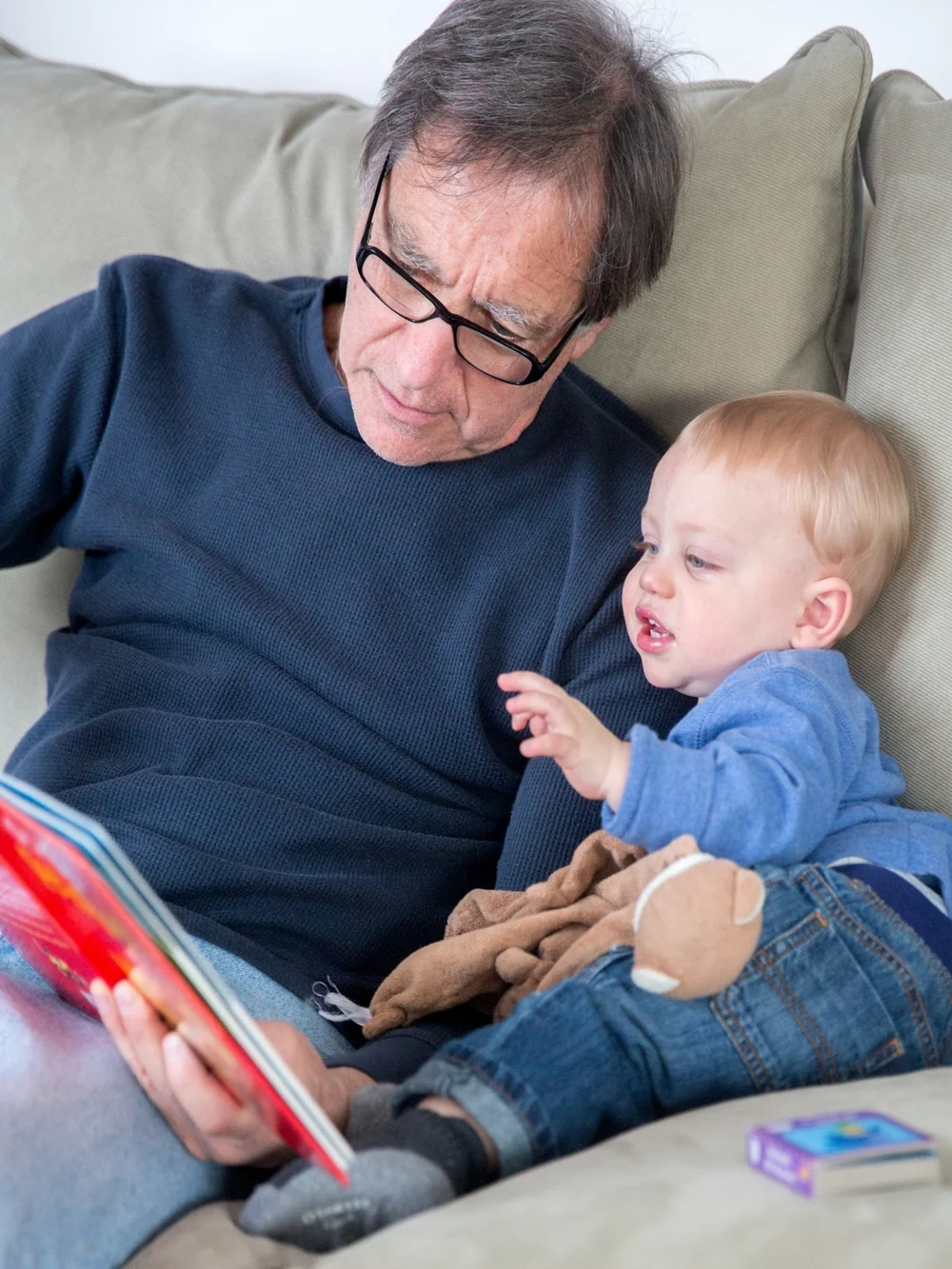

The same book, the fifth time in a row, still counts.
Some of the best gifts don’t need wrapping paper.
And a short list of what I’d skip:
- Toys with small parts for a child under 3. Under federal rules, most toys meant for kids ages 3 to 6 that have small parts have to carry a choking-hazard warning. Treat “Not for children under 3” on a box as a hard stop.
- Battery toys with a loose battery door, and anything with small magnets. Both belong on the safety list above for the same reasons, so check that any magnets in a toy are sealed inside, and take it away if a magnet or magnetic piece comes loose.
- A tablet or talking toy as a stand-in for you. The AAP says most tablets, computer games and apps advertised as “educational” really aren’t. A toy with buttons can still be fun at your house. It just can’t do the reading-on-your-lap part.
Some parents give grandparents a simple formula: one main present, one thing to wear, and one experience you do together. It keeps birthdays generous without filling every closet in the house.
Miri’s Tip
Talking about Montessori without a lecture
The easiest way to bring up Montessori with grandparents is to talk about the child. Thank them first, share what your toddler is into right now, and offer two gift ideas in place of a list of rules.
If you’re the parent reading this, you already know the toys are the easy part. The hard part is saying something to people who love your kid as much as you do, without it landing as criticism. I’ve been there.
 Save
How we worked it out with Will’s grandparents
Both sets of Will’s grandparents adore him, and for a while that love arrived as big plastic cars with flashing lights and battery toys that played loud music. Our house runs on a handful of toys at a time, so it stressed me out. I was also scared of hurting their feelings.
- Step 1: At first, I quietly packed the loudest ones away in storage.
- Step 2: Shortly before Will’s first birthday, we sat down and talked. I told them honestly that our space was tight and that Will was working on focusing, and asked if they’d go easier on the big toys that play music.
- Step 3: I offered other ideas: a zoo membership, children’s museum passes, storybooks, or a contribution to Will’s college savings fund.
- Step 4: We made a deal. Picking out toys for their grandson is one of the joys of this stage of their lives, and I wasn’t going to ask them to stop. So the noisy, bulky toys stay at their house, in a play corner that’s all Will’s.
That corner looks nothing like the setup I described above. It has no wooden shelf and no rotation, and it’s packed with flashing cars and trucks in every bright color. Will gets excited every time we head over on a weekend, like he’s visiting a secret treasure stash. His grandparents are happy, and I don’t have to bring any of it home.
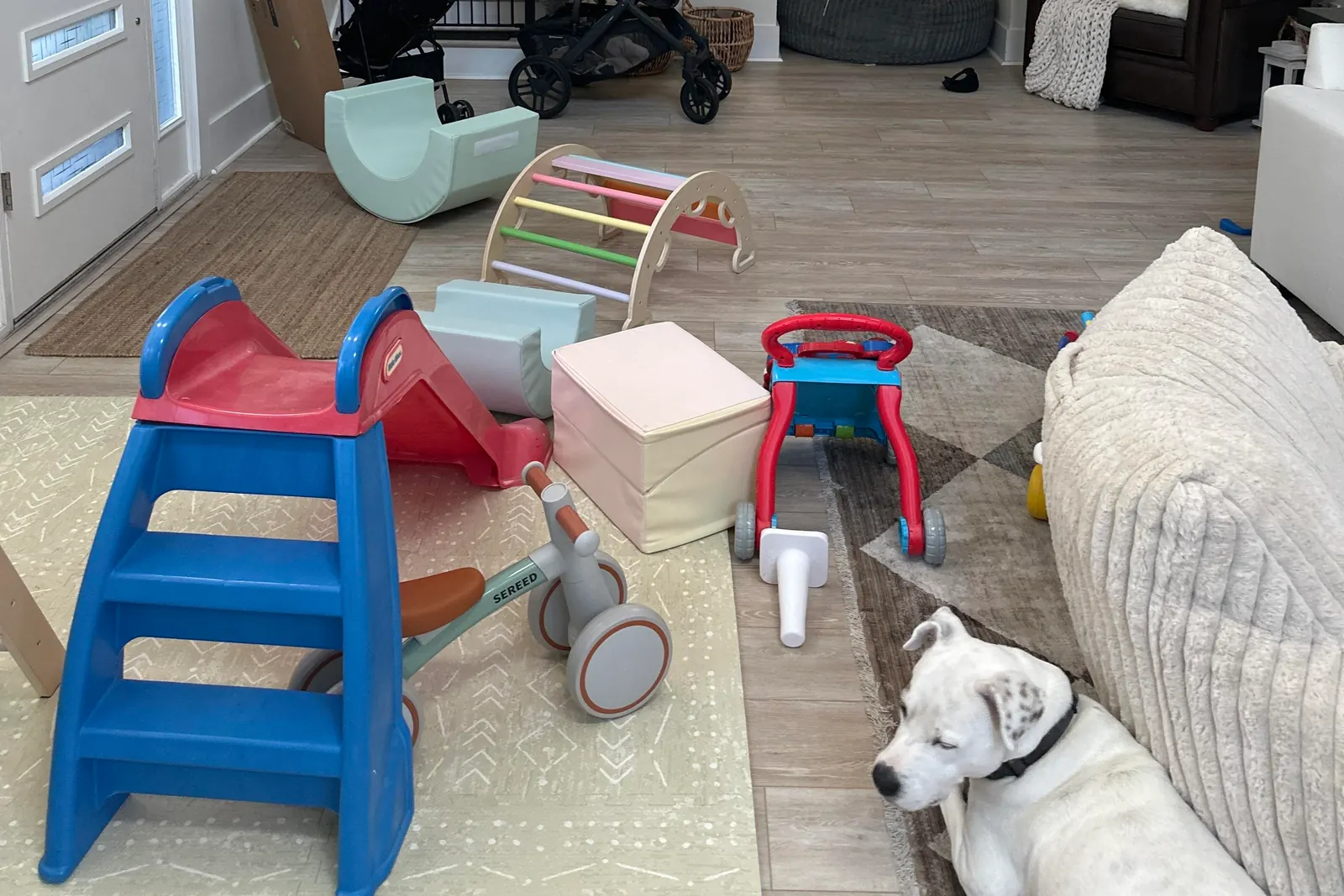 Save
A few lines you can borrow for your own version of that talk:
- “Thank you for always thinking of him. He’s really into putting things in and taking them out right now, so anything he can fill and dump would be a hit.”
- “Could the big red car live at your house? Then it’s his special thing when he visits.”
- “Would you rather do a zoo membership or a few new books this year?”
And if you’re the grandparent reading over someone’s shoulder, your house doesn’t need to run like theirs. Agreeing on a few things, like where the toys live and what’s off-limits for safety, goes further than matching every detail.
Two houses, two sets of toys, and one kid who’s thrilled to see you.
If you decide to set up a little shelf corner at your place, start with the rug and the shelf, then add from the table above as your grandchild grows.
Conclusion
Next time your grandchild is coming over, you don’t need to have Montessori figured out. Clear one low shelf and put out six things they can manage on their own. Spend a few minutes on your knees, looking at the floor from their height. Then sit down on the rug with them and see what they pick first. Your grandchild will show you the rest.
Wanting to get this right for your grandchild is already most of the work. Start with one shelf and one slow look at the floor this week.
Miri
Fewer toys, deeper play.
Further Reading & Resources
See all 14 sources
- Montessori at home: Montessori at Home (American Montessori Society)
- Home safety: Home Safety: Tips for Families With Young Children (American Academy of Pediatrics, HealthyChildren.org) · What Parents Need to Know about Button Batteries and Lithium Coin Batteries (HealthyChildren.org) · About the PROTECT Initiative (Up and Away) (Centers for Disease Control and Prevention) · Magnets (U.S. Consumer Product Safety Commission) · Ahead of Sunday’s Game, CPSC Reminds Families to Tackle the Deadly Hazard of TV and Furniture Tip-Overs (CPSC, 2024)
- Toys and gifts: Toy Buying Tips for Babies & Young Children: AAP Report Explained (HealthyChildren.org) · Small Parts (CPSC FAQ) · 16 CFR 1500.19 (eCFR)
- Batteries, cribs and used gear: 16 CFR Part 1263, Safety Standard for Button Cell or Coin Batteries (eCFR) · The New Crib Standard: Questions and Answers (CPSC, 2011) · Enforcement Guidance for Child Care Providers (CPSC) · Resale/Thrift Stores (CPSC)
- Grandparents in the U.S.: Southern States Had Higher Than Average Share of Adults Age 30 and Over Who Lived With Grandchildren in 2021 (U.S. Census Bureau, 2024)