You typed “Montessori toy” into the search bar a week before the birthday, and the screen filled up. Wooden rainbows, felt balls, busy boards, a talking robot or two, all wearing the same word. You want to get this right for the child. You’d also rather not spend real money on something that ends up in the back of a closet.
I know that feeling from the parent’s side.
A while back, I bought my son, Will, a wooden shape sorter and a set of knobbed cylinders (wooden cylinders in different sizes, each with a small knob on top, that slot into matching holes in a block). They weren’t cheap. I pictured him sitting quietly, fitting every piece into place. Instead, he tossed them into a corner and ran off to the kitchen.
What he wanted was in there. Plastic food containers. Lids from jars and bottles. Our pots and pans. He’d spend ages hunting for the lid that fit each container, twisting lids off and back on, then nesting the small pot inside the big one and banging on it. Of everything in the house, the kitchen things were what he loved most.
 Save
SaveLoose lids need a grown-up close by. The U.S. Consumer Product Safety Commission, the federal agency for product safety, counts anything that fits completely inside its small-parts test cylinder as a small part. That cylinder is about the size of the fully expanded throat of a child under 3.
If a lid or cap slides all the way into the cylinder without being squeezed, whichever way you turn it, keep it out of reach of a child under 3. The guide to free Montessori activities with things you already own shows how to check kitchen objects this way.
It isn’t just our house. On Reddit’s Montessori forum, one parent posted about a 1-year-old daughter who was, in the parent’s words,
“uninterested in any of the ‘montessori-aligned’ toys I’ve gotten her”
A parent on Redditr/Montessori thread (2025)
A toy can be beautiful, well made and labeled “Montessori,” and a child can still walk right past it. So the label can’t be the thing you shop by. The checklist below is what to use instead. It works on any product page, takes a few minutes, and doesn’t ask you to become a Montessori expert first.
The label tells you what the seller hopes. The child decides what the toy is worth.
What exactly makes something “Montessori”?
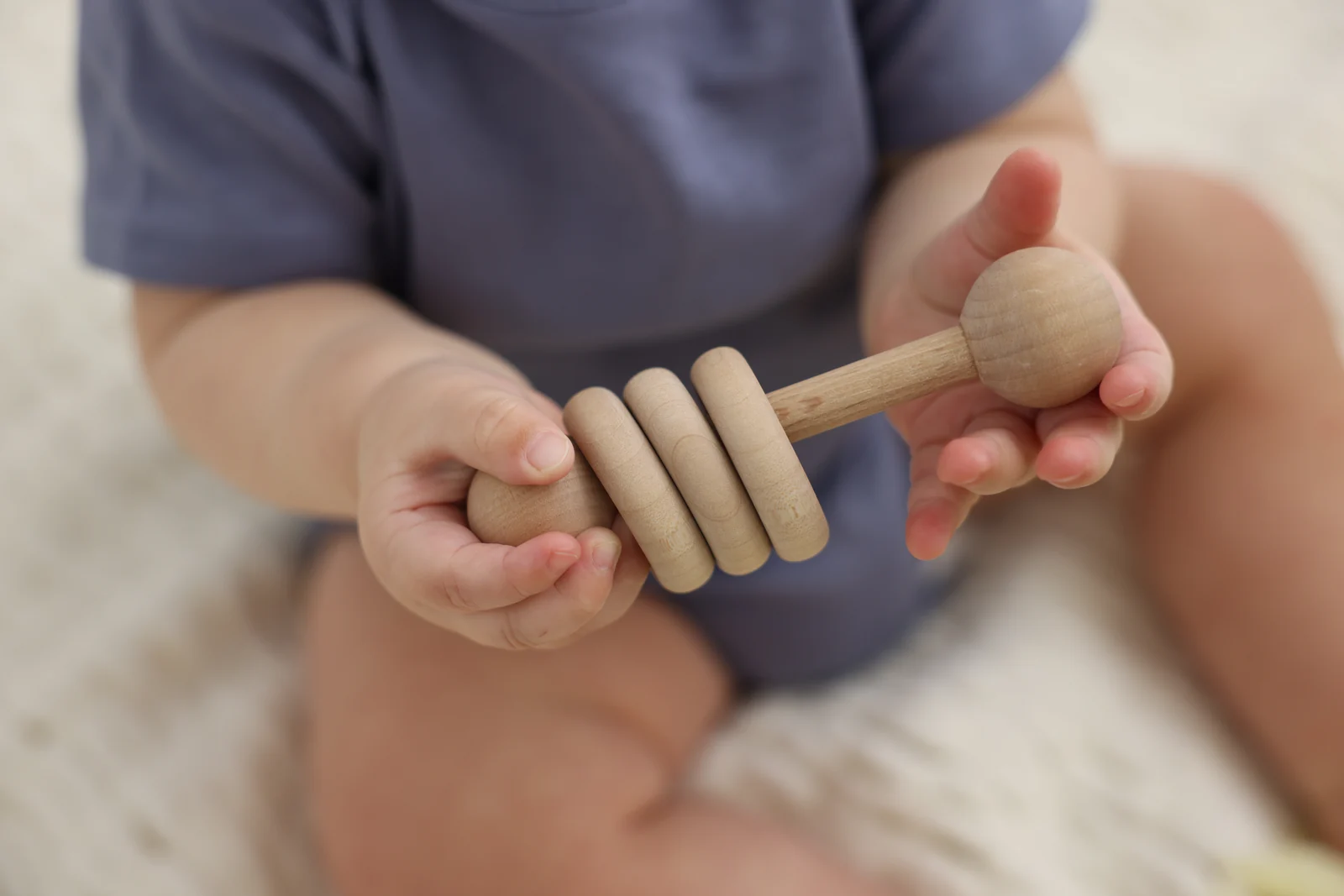
A toy earns the word “Montessori” by fitting the ideas behind the approach: it’s sized for small hands, has one clear purpose, and lets the child do the work. Montessori is a way of seeing children, not a brand, so a box can’t settle it.
The word comes from Maria Montessori, whose approach to teaching young children grew out of her classrooms. Her materials were made for those classrooms, long before anyone shipped a “Montessori toy” to a front porch. These days the word turns up on teethers, play kitchens, toddler furniture and almost everything in between.
Simone Davies, a longtime Montessori educator and the author of The Montessori Toddler, sums it up in one line:
“Montessori is not a brand. It is a philosophy, a way of seeing our children with a new lens.”
Simone DaviesMontessori educator, author of The Montessori Toddler, The Montessori Notebook (2024)
Even for whole schools, the name doesn’t guarantee much. A 2012 study of preschool children found that kids in classic Montessori programs made bigger gains over the school year than kids in Montessori programs that followed the method less closely, and bigger gains than kids in conventional programs. That study was about classrooms, not toys. The lesson still carries over: better results went with how closely the ideas were followed, not with the name on the door.
Two myths come up a lot. One is that a Montessori toy has to be wooden. The other is that the label means the toy is safer. Neither holds up, and each gets its own section below. For the bigger picture of what Montessori looks like in a family home, Montessori at home covers the basics.
So what makes a Montessori toy, if not the label? Six things you can actually check.
 Save
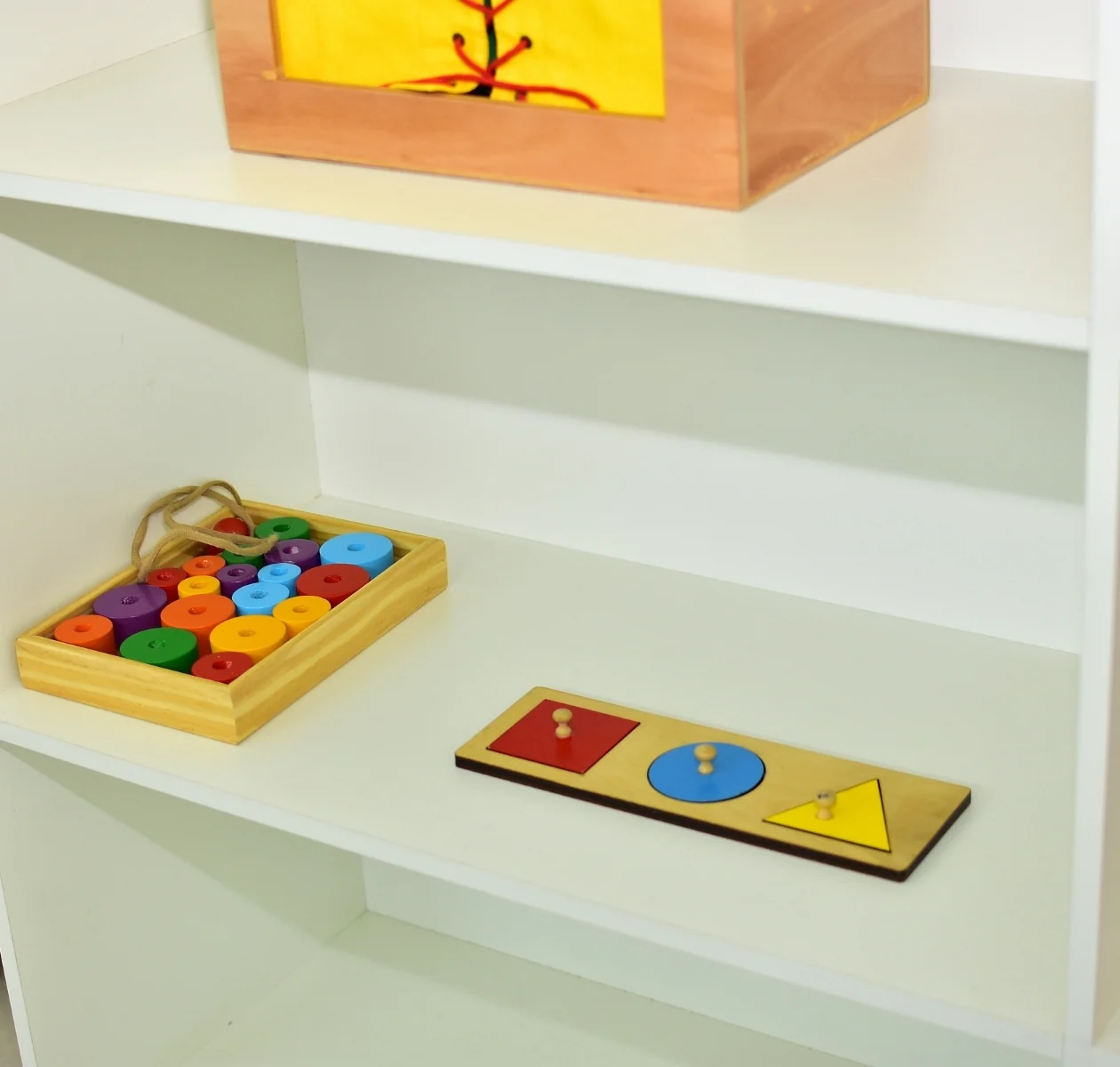
SaveMontessori toy criteria: the 6-point checklist
At Moje Montessori, we use six Montessori toy criteria: the toy fits small hands, does one clear thing, lets the child do the work, isn’t part of a giant bundle, is labeled safe for the child’s exact age, and looks like the real thing.
Think of it as a list you can hold up to any listing, whether you’re scrolling on your phone at night or standing in a toy store with a cart. A toy doesn’t need to ace all six. The one you never skip is number 5.
| # | The check | What to look for on the product page |
|---|---|---|
| 1 | It fits small hands and a low shelf | Size and weight listed; pieces a small child can grip and carry; simple enough to sit on a low shelf |
| 2 | It does one clear thing and shows the mistake | One job (fit, stack, post, match); a piece that only goes in its own spot |
| 3 | The child does the work | The child’s hands make it move or make a sound; few or no buttons that play on their own |
| 4 | It isn’t a giant bundle | One toy or a small set, not dozens of pieces in one box |
| 5 | It’s safe for this exact age | An age label that includes the child’s age; for under 3, no small parts and no “Not for children under 3 yrs.” warning; a seller who can tell you about the Children’s Product Certificate |
| 6 | Real-looking, natural materials (our preference) | The type of wood and the finish named; shapes and pictures that look like the real thing |
Each check below comes with a straight answer about how much stands behind it: research, Montessori philosophy, or simply our own preference. You deserve to know which is which.
1. It fits small hands and a low shelf
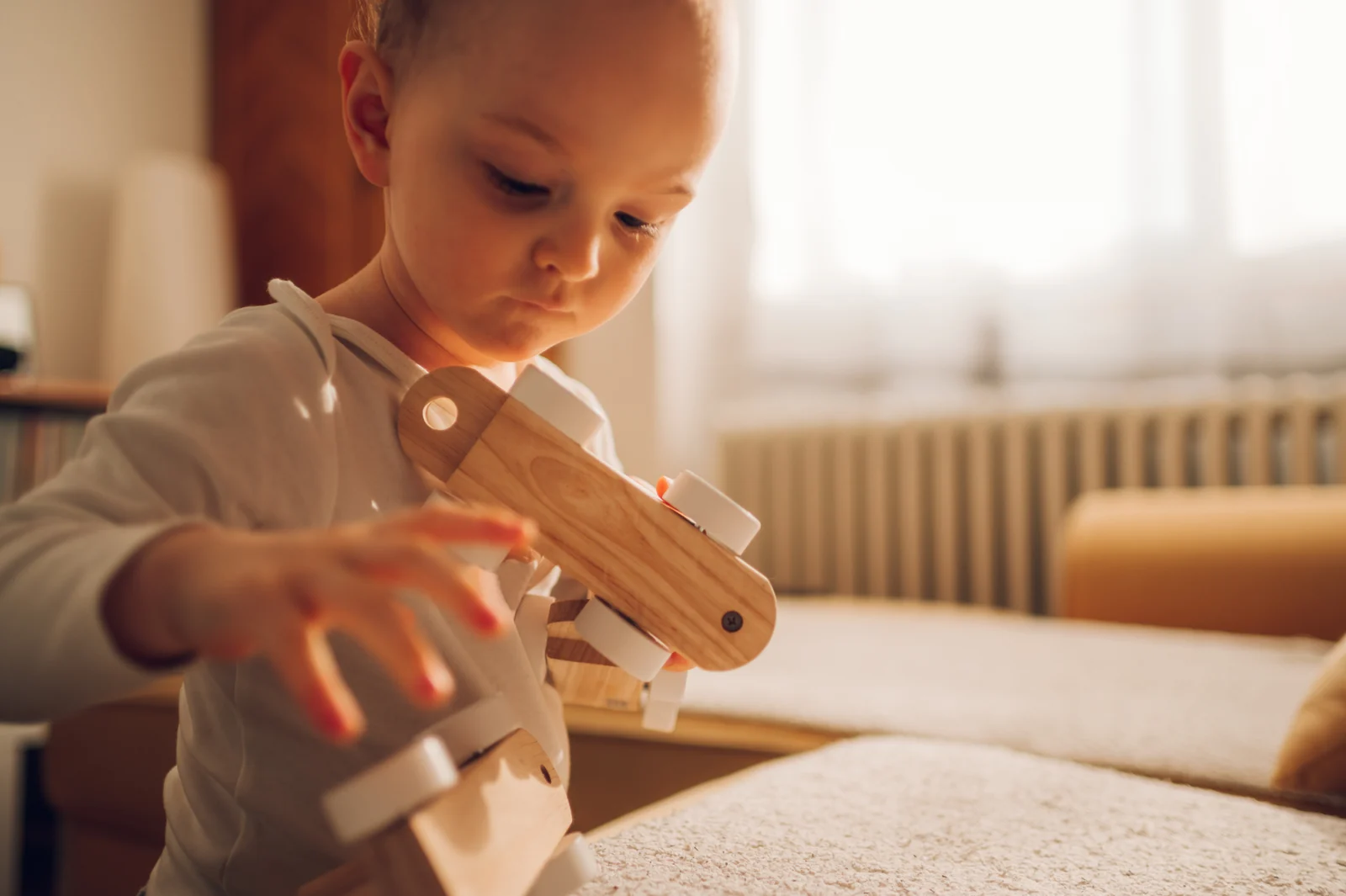
Picture the toy in a toddler’s hands, not in the product photo. Can they pick it up and carry it across the room? Could it sit on a low shelf where they can reach it without calling for help?
That’s the child-sized idea at the heart of Montessori. The American Montessori Society, a US Montessori organization, describes its infant and toddler programs this way: “Furniture and learning materials are child-size. Everything needed to complete tasks and achieve success is accessible.” A good Montessori-style toy works the same way at home. A child can get it, use it and put it back without help, and that small bit of independence is the point.
On the product page, look for the size and weight. Chunky blocks, a puzzle with big knobs, a ball sized for two small hands: those pass easily. A toy that needs a grown-up to lift it down, set it up or hold it steady doesn’t.
How much stands behind this one: Montessori philosophy. It hasn’t been tested in family homes.
 Save
Save2. It does one clear thing and shows the mistake
A lot of Montessori-style toys have a single job. A shape sorter is about fitting shapes. A stacker is about stacking. That focus is on purpose: when a toy does one thing, a child can tell whether they’ve done it.
Montessori calls this control of error. The Association Montessori Internationale, an international Montessori organization, defines it in its archive glossary as a way of giving a child instant feedback while they use a material, so they can correct their own mistakes independently. In real life, it’s a square block that simply won’t go through the round hole. Nobody has to say “try again.”
Will’s kitchen game worked a bit like that. A lid either fit the container or it didn’t, and he could see it right away. Plastic containers aren’t Montessori materials, but the feedback was just as clear. Passing this check doesn’t promise a child will choose the toy, though. Our wooden shape sorter stayed in its corner while the lids got all the attention.
Toys with one job are sometimes called one-skill toys. Their opposite is open-ended toys, like plain blocks, which can be a tower one day and a road the next. Both kinds have a place on a shelf.
This check stands on the same footing as the first one: Montessori philosophy, with no home studies behind it.
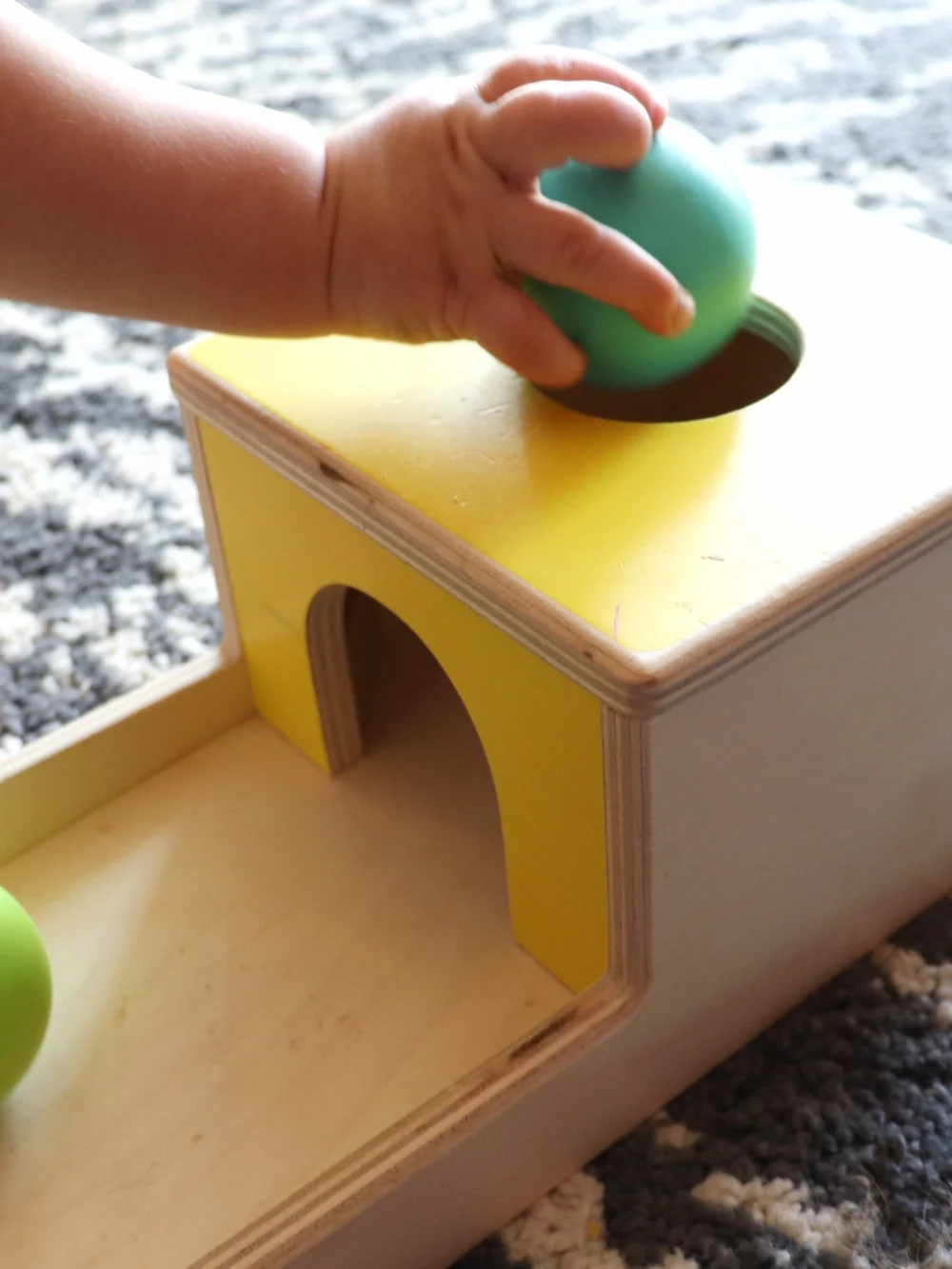
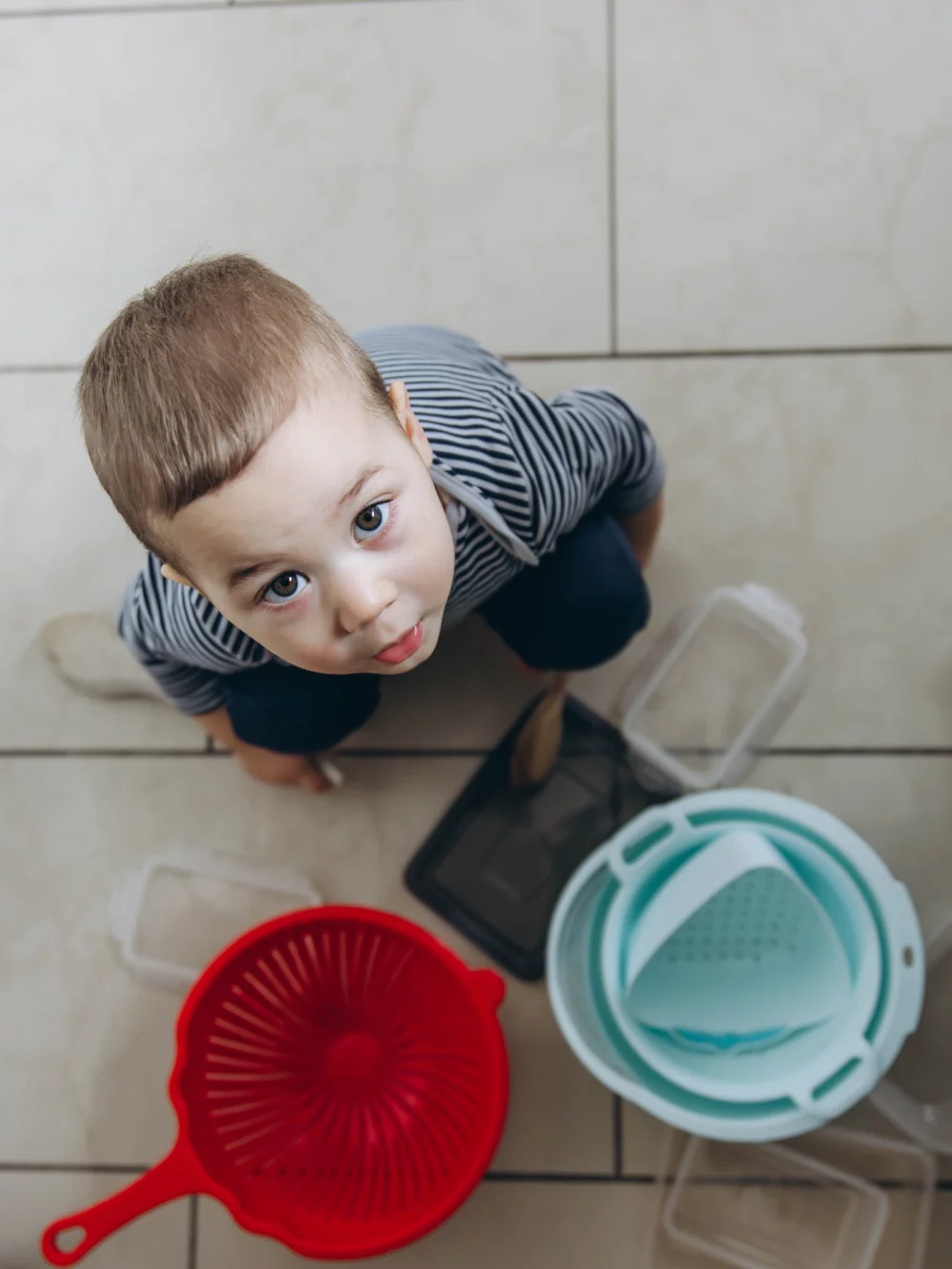
One clear job: the ball goes through the hole, or it doesn’t. The kitchen version gives the same instant feedback.
3. The child does the work, not the batteries
Some toys play while the child watches. One press and they sing, flash and count to ten. Others sit still until small hands make something happen: the ball rolls because it was pushed, the drum sounds because it was hit. In Montessori terms, the aim is concentration, a child absorbed in what their own hands are doing.
There’s some research on this. In one small study of 26 parents and their babies, ages 10 to 16 months, playing at home, parents said fewer words and had fewer back-and-forth exchanges with electronic toys than with traditional toys or books. It was a small study. Still, it’s worth knowing before you buy the one that talks.
The American Academy of Pediatrics, the group that writes US pediatricians’ guidelines, said in a 2019 report on choosing toys that toys work best when they bring adults and children together in play that builds language, pretend play, problem-solving and creativity. It also noted that digital toys lack comparable evidence of developmental benefit.
For you as the gift-giver, that’s lovely news. The best part of a simple toy might be the afternoon you spend on the floor playing with it together.
So this one has some research behind it, even if the home study was small.
 Save
Save4. Your grandchild doesn’t need many of them
Big bundles are tempting. Twenty pieces for the price of three feels like a deal, and a big box looks generous with a bow on top.
A 2018 study of 36 toddlers points the other way. Each toddler played in two settings, one with 4 toys and one with 16. With 4 toys, they played longer with each one and in more varied ways. Fewer things competing for attention seems to give each toy more of a chance.
Simone Davies goes further: “You do not need to buy anything to practice Montessori principles at home.” Plenty of good materials are already sitting in a kitchen drawer. If the parents like that idea, Montessori activities that cost nothing has more along those lines.
Some families keep just a few toys out and tuck the rest away, swapping now and then. Either way, save your money on the giant bundle. One good piece makes a better gift than twenty.
The “fewer toys” part has some research behind it. The “you don’t need to buy anything” part comes from a Montessori author, not a study.
 Save
Save5. It’s safe for this exact age
This is the one check that isn’t optional, and the one the word “Montessori” tells you nothing about.
Start with the age on the box. Federal law bans toys meant for children under 3 that present a choking, aspiration or ingestion hazard because of small parts (16 CFR 1501.1). In plain words: nothing small enough to choke on, breathe in or swallow. Toys for children ages 3 to under 6 that do contain small parts must carry this exact warning (16 CFR 1500.19): “WARNING: CHOKING HAZARD—Small parts. Not for children under 3 yrs.”
If you see that line and the child is under 3, put the toy back, however sweet the photos look. The safety section below goes through the other labels worth checking.
No philosophy needed for this one. It’s federal law.
6. Real-looking and natural materials (our buying preference)
This last check is ours. It doesn’t come from Maria Montessori or from any Montessori organization, and no study says a toddler needs it.
We lean toward toys that look like the real thing and are made from real materials: wood with a grain you can feel, cotton, metal, a basket that’s actually woven. A wooden apple that looks like an apple. A board book with photos instead of cartoons. These things have real weight and a real temperature, and they make a real sound when they’re tapped. I like what that gives small hands to notice.
On a product page, look for the type of wood and the finish named, not just “natural wood.” A toy can fail this check and still pass the other five. That’s fine. It’s a preference, not a rule.
Does “Montessori” on the label mean it’s safer?
A “Montessori” label doesn’t make a toy safer. In the US, toy safety rests on federal rules that apply to every children’s toy: the ASTM F963 safety standard, a Children’s Product Certificate, a limit on lead in paint, and small-parts rules and warnings.
It’s a fair question: what makes a toy “Montessori,” and is it actually safer? The honest answer is that the two aren’t connected. Alongside the small-parts rules from check 5, three things do the real safety work:
- The toy standard. ASTM F963 is the US safety standard for children’s toys. The federal product-safety agency explains on its toy safety page that a 2008 law, the Consumer Product Safety Improvement Act, made it mandatory.
- The certificate. Makers and importers must certify that a children’s toy meets the rules with a Children’s Product Certificate, or CPC. You can ask a seller for it.
- Lead in paint. Toys with lead-containing paint are banned. Since August 14, 2009, that means paint above 0.009 percent lead by weight, or 90 parts per million (16 CFR 1303.1).
None of these rules has a “Montessori” category. A toy with the word on the box and a toy without it are held to the same standard.
 Save
SaveOne more thing worth knowing. A home check, like tugging on parts and running a finger along the edges, is a good habit. It isn’t a certificate.
A toy that feels solid in your hands hasn’t been certified by your hands.
Before you wrap it, check three things. The age on the box includes the child’s age. If the child is under 3, there’s no small-parts warning and no piece that could come off and be small enough to choke on. And the seller can tell you whether the toy has a Children’s Product Certificate.
Once it’s unwrapped, look again. Broken or loose pieces and sharp or rough edges are reasons to set a toy aside until it’s fixed or replaced.
Are Montessori toys always wooden?
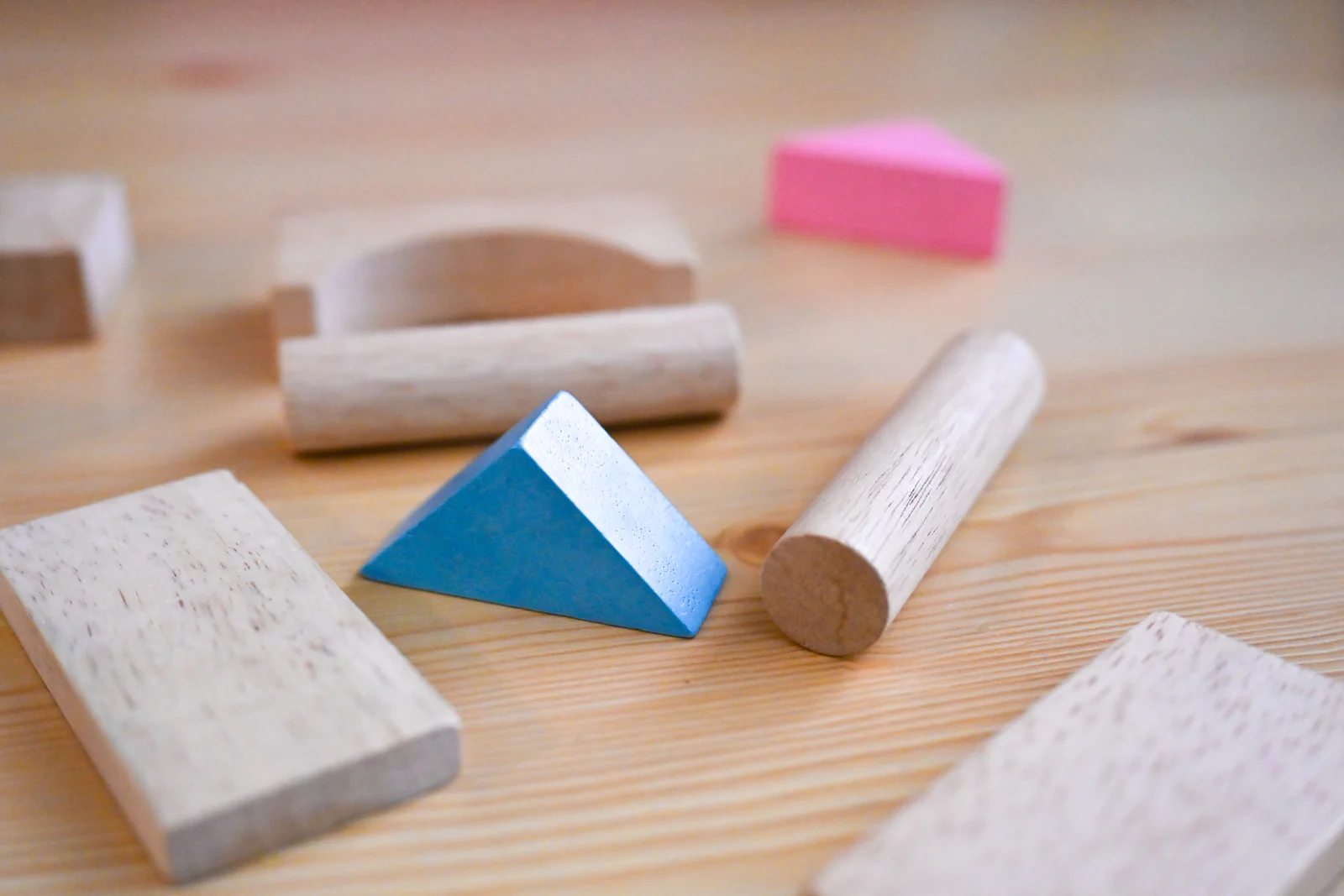
Montessori toys don’t have to be wooden, and wood isn’t automatically safer. Untreated wood is on a federal list of materials that don’t exceed lead limits, but painted or coated wood follows the same lead-paint rule as any other toy.
Browse any Montessori section and you’ll see a lot of wood. We like it too, for the reasons in check 6. But nothing about Montessori requires it, and the things Will loved most in our kitchen were plastic containers and pots. I’m not going to tell you plastic is the enemy.
Wood does get a bit of a safety halo it hasn’t fully earned. Under 16 CFR 1500.91, the federal product-safety agency lists wood among the materials that don’t exceed federal lead limits for children’s products, as long as it hasn’t been treated or mixed with anything that could add lead. That’s a statement about lead in plain, untreated wood. It says nothing about splinters, sharp edges, loose pieces or the paint on top.
Once a wooden toy is painted or coated, that paint falls under the same lead-paint limit as any other toy. So if you’re choosing wood, ask two questions: what kind of wood is it, and what’s the finish?
 Save
SaveDo Montessori toys work?
Nobody has studied “Montessori toys” as a group, so there’s no proof the label itself does anything. The research that does exist looks at kinds of toys and how many, and it lines up with the checklist rather than with any brand.
It’s the question behind every price tag: will this actually help?
The studies in this guide are about types of toys and how they’re used. Electronic toys versus traditional toys and books. Four toys versus sixteen. Grown-ups and children playing together. None of them tested a toy because it said “Montessori,” and I won’t dress them up as if they did.
On developmental benefits, I’ll be straight with you. I can’t promise any toy will make a child smarter, and I’d be wary of anyone who does. What a good toy can do is give a child something worth their attention, and give you a reason to sit down beside them.
And what do educators say? In the post quoted above, Simone Davies points away from products and back to the child. That’s a better guide than any label.
Red flags: “Montessori-washed” toys
A “Montessori-washed” toy borrows the word without the ideas. Watch for lights and sounds that do the playing, giant bundles, an age label that’s missing or vague, and small parts on anything meant for a child under 3.
You may have heard of greenwashing, when a product is made to look greener than it is. Montessori-washing is the same move with a different word. Turn the checklist upside down and you get a handy list of warning signs:
- It plays by itself. One press sets off lights, songs and counting while the child sits and watches.
- It’s a bundle of dozens. Lots of pieces, lots of activities, one big box.
- You can’t find the age. If the listing doesn’t say who the toy is for, you can’t run check 5.
- Small parts for a child under 3. Beads, pegs or pieces that could come off, or the “Not for children under 3 yrs.” warning on a toy pictured with a baby.
- “Montessori” is the whole pitch. The listing repeats the word but never says what the toy actually does.
Price isn’t a reliable signal in either direction. A costly toy can fail this checklist, and an inexpensive one can pass it. If budget is part of the worry, Montessori on a budget looks at where the money is worth spending. And wherever you shop, a seller who can answer “Does this toy have a Children’s Product Certificate?” is a good sign.
Picking Montessori-friendly toys by age
Montessori-friendly toys match what a child is doing right now, not just the age range on the box. Ask the parents what the child is working on this month, and for a child under 3, skip anything with small parts.
Age ranges on boxes are wide, and two children the same age can be working on completely different things.
The simplest way to get it right is to ask. What has the child been doing over and over lately? Putting things into containers, stacking, carrying, filling and dumping? A toy that lets them practice more of that has a good chance of being played with. Parents usually know exactly what their child is fixated on this week, and most will be glad you asked.
For babies, Montessori toys for newborns walks through what suits the first months. Whatever the age, check 5 still decides: the child’s age on the label, and nothing small enough to choke on for anyone under 3.
 Save
SaveFrequently Asked Questions
What does “self-correcting” mean in a Montessori toy?
A self-correcting Montessori toy shows the child their own mistake, so they can fix it without an adult stepping in. A square block won’t go through the round hole. A lid won’t close on the wrong container. In Montessori, this built-in, instant feedback is called control of error.
Are Montessori toys non-toxic?
Montessori toys aren’t non-toxic just because of the label, since “Montessori” isn’t a safety claim. What you can check is the same for any toy sold in the US: it has to meet the federal toy safety standard, painted toys must meet the lead-paint limit, and the maker or importer must issue a Children’s Product Certificate. Ask the seller about it.
Conclusion
In a toy aisle or on your phone late at night, with the birthday a week away, you don’t have to know everything about Montessori to choose well. Save the checklist on your phone, find the child’s age on the box, and ask the parents one question before you buy. A simple toy, chosen with care, is a good gift. Sometimes the best one is already sitting in the kitchen, which is a funny thing to learn after buying the beautiful wooden shape sorter. Ask me how I know.
Asking the parents before you buy isn’t cheating. It’s the most thoughtful part of the gift.
Miri
Fewer toys, deeper play.
Further Reading & Resources
See all 16 sources
- Toy safety rules: Toy Safety and Small Parts FAQ and Child Safety Protection Act Fact Sheet (U.S. Consumer Product Safety Commission) · 16 CFR 1303.1, 1500.19, 1500.91, 1501.1 and 1501.4 (Cornell Law School LII)
- Toys and play research: Sosa, JAMA Pediatrics (2016) · Dauch et al., Infant Behavior and Development (2018) · Selecting Appropriate Toys for Young Children in the Digital Era (American Academy of Pediatrics, 2019)
- Montessori background: Montessori Infant and Toddler Programs (American Montessori Society) · Control of Error (Association Montessori Internationale archives) · Is Montessori parenting a fairy-tale? (Simone Davies, The Montessori Notebook) · Lillard, Journal of School Psychology (2012)
- Real parents: “1 year old isn’t interested in any ‘Montessori toys’?” (r/Montessori, 2025)