Naptime. You have maybe forty minutes, and you just spent ten of them on the website of the Montessori school across town. You found the tuition page, read it twice, and quietly did the math against your rent. So you tried the home version instead and priced one of those low wooden shelves everyone in your feed seems to own. That number stung too. You put the phone down with a small, heavy thought: other babies get this, and mine won’t.
I know that feeling, because I spent Will’s whole first year trying to outrun it. We spent about $300 to $500 on Montessori materials, wooden toys, and shelves that year. It was pure FOMO. If something had a “Montessori” tag on it, I worried my son would miss out without it.
Looking back, the accountant in me isn’t bothered by the total so much as by where it went. A few of those purchases paid for themselves many times over. A couple were done almost before they started.
 Save
SaveIf the whole idea is new to you, start with our guide to Montessori at home. This post is the money side: what it actually costs, our first year on paper, and a spending plan at three levels, starting at $0.
What does affordable Montessori actually cost?
Affordable Montessori at home can start at $0. The method lives mostly in how you set up your space and how you treat your child, and Montessori author Simone Davies says you don’t even need a Montessori shelf or play kitchen.
Simone Davies has been a Montessori educator since 2004 and wrote The Montessori Toddler. On her blog, she put it plainly:
“We do not need a Montessori play kitchen or even a Montessori shelf (although we can if we want).”
Simone DaviesMontessori educator since 2004, The Montessori Notebook (2024)
She goes further: you don’t need to buy anything to practice Montessori principles at home. Montessori, she says, is not a brand. In practice, a lot of it is slowing down, letting your baby try things, and setting up a corner where they can reach what they need. Materials can help. They’re not the method.
The numbers that make Montessori feel out of reach usually come from schools and child care, a separate decision from what you do at home. For scale, the national average price of child care in 2025 was $13,184 a year, according to Child Care Aware of America, which tracks child care prices and supply across the country (2025 data, published May 2026). For an infant, the report’s “average of averages” came to $15,636 a year in a child care center and $11,673 in a family child care home. None of these are Montessori prices.
 Save
SaveLooking for a Montessori classroom on a budget? This guide is for homes with babies and toddlers, not classrooms. If you’re already thinking ahead to elementary school, public Montessori schools do exist. According to the National Center for Montessori in the Public Sector (NCMPS), more than 590 Montessori schools in the U.S. are public, including district, magnet, and charter schools.
What we spent in Will’s first year: worth it, and not
In Will’s first year, we spent about $300 to $500 on Montessori materials, wooden toys, and shelves. Two purchases earned their price many times over, and two barely got the use I’d pictured.
These are my estimates of what we paid back then: one family’s receipts, not today’s prices.
Worth it: the drop box. It’s a simple wooden box with a hole on top. Your baby drops a ball in, it disappears, and it rolls back out into a little tray. Some people call it an object permanence box. Ours cost about $15 to $25, and Will kept coming back to it from about 7 months to 18 months. Close to a year of use, from one of the cheapest things we bought.
Worth it: the Pikler triangle. A Pikler triangle is a wooden climbing frame shaped like a big letter A. Ours cost about $100 to $150. Will started using it to pull up to stand at 8 months. He’s 3 now and still uses it, as a slide and as a hide-and-seek tent.
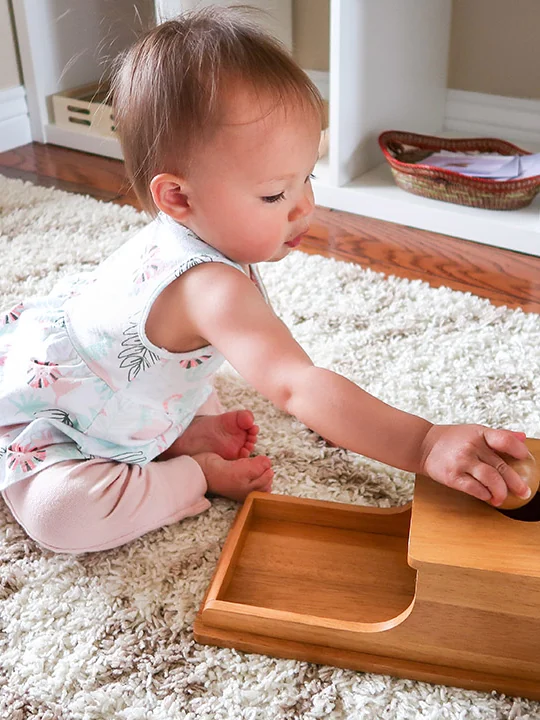
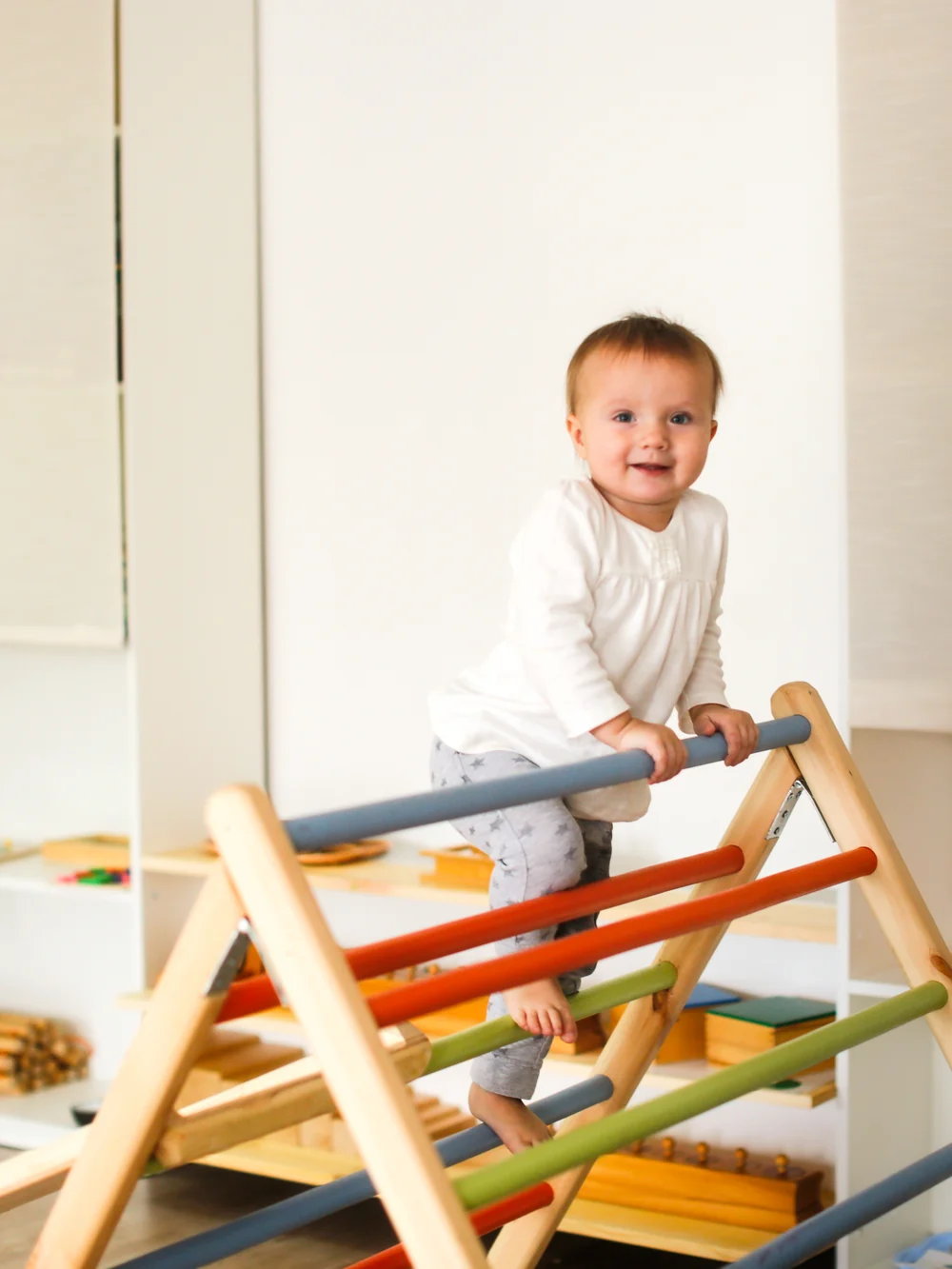
Left: A drop box is about as simple as a toy gets.. Right: A climbing triangle is the kind of big piece that can last well past the first year.
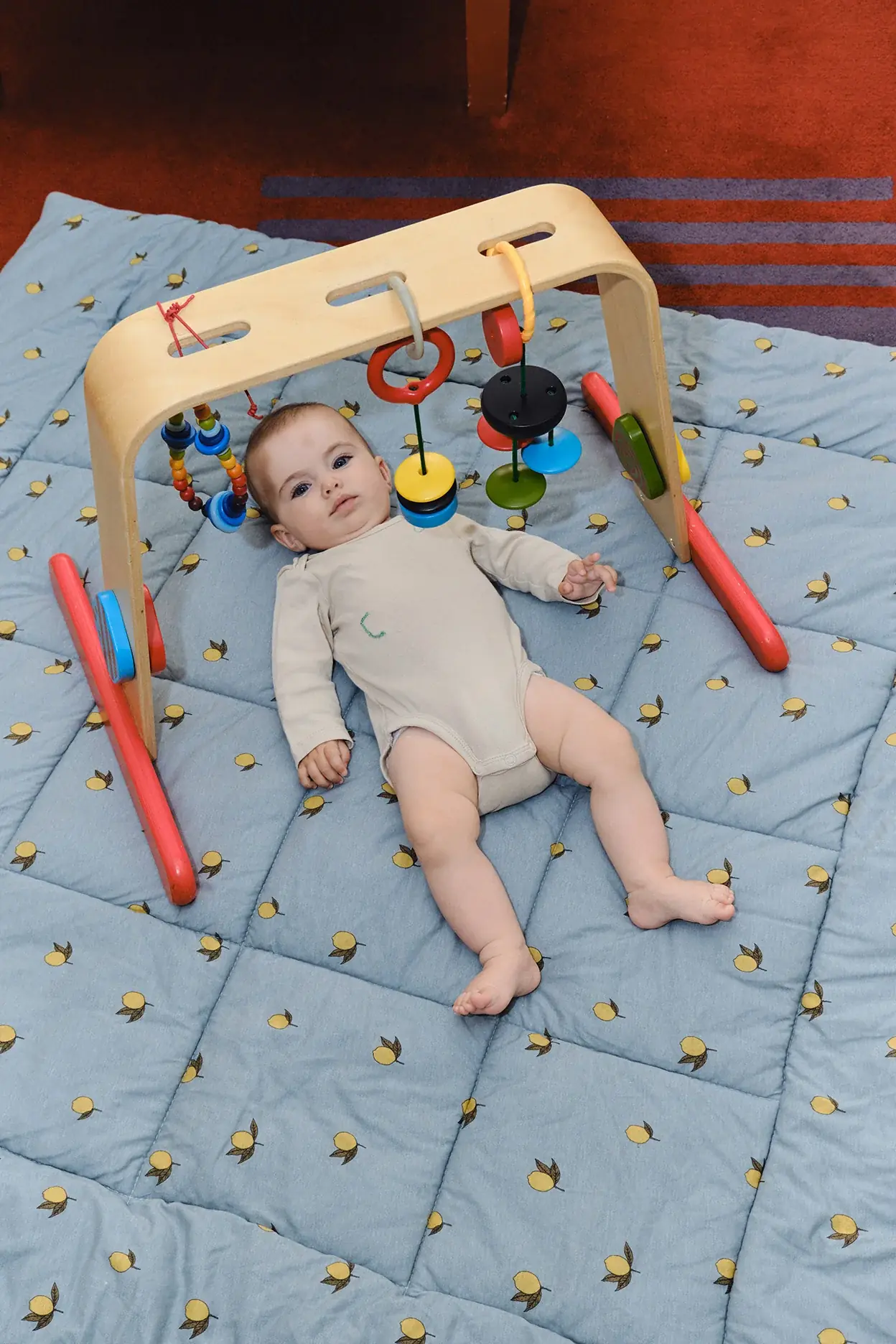
Not worth it for us: the mobile set. The Munari, the octahedron, the Gobbi: the classic Montessori mobiles, about $50 to $80 a set. They were beautiful and exactly by the book. Will lay there and watched them for the first month or two. By month three, he was reaching up to grab them. If mobiles are on your list, our guide to Montessori mobiles covers when to hang each one and when to take them down.
 Save
SaveNot worth it for us: the pricey wooden teether. We paid about $20 to $30 for a teether-rattle in plain, unfinished wood. What Will actually wanted in his mouth was the TV remote, a plastic flip-flop, and my phone charger. My takeaway: a regular silicone teether is usually enough. Those other things aren’t chew toys, though. The federal product-safety agency says to keep remotes and other electronics with button batteries away from children, because a swallowed button battery can burn through a child’s throat in as little as two hours. Keep phone chargers, with their cords, out of reach too.
| What we bought | What we paid (about) | How long Will used it | Rough cost per month |
|---|---|---|---|
| Drop box | $15–$25 | From about 7 to 18 months old | About $1.40–$2.30 |
| Pikler triangle | $100–$150 | From 8 months to 3 years, and counting | About $3.60–$5.40, still dropping |
| Mobile set | $50–$80 a set | The first 1–2 months | About $25–$80 |
| Wooden teether-rattle | $20–$30 | Lost out to things he’d rather chew | Hard to say |
The cheapest thing on that list was the best value, and the most beautiful set cost the most per month of use. What made the difference wasn’t wood or price. It was how many months, and how many different ways, Will used each one.
A price tag is what you pay once. Cost per month tells you whether it was worth it.
Where should a small Montessori budget go first?
A small Montessori budget should go to safety first, then to a few pieces your child will use for many months, then to simple storage. New toys come last, and you’ll need fewer of them than the catalogs suggest.
Montessori at home on a budget is mostly about order. Pay the bills that protect the household before anything fun, the same way you’d run any tight budget:
- Safety. Wall anchors for any shelf or dresser, and a recall check for anything secondhand. This is the one line I’d never cut.
- Long-use pieces. Things your child will use for many months and in more than one way, like the drop box and the triangle above.
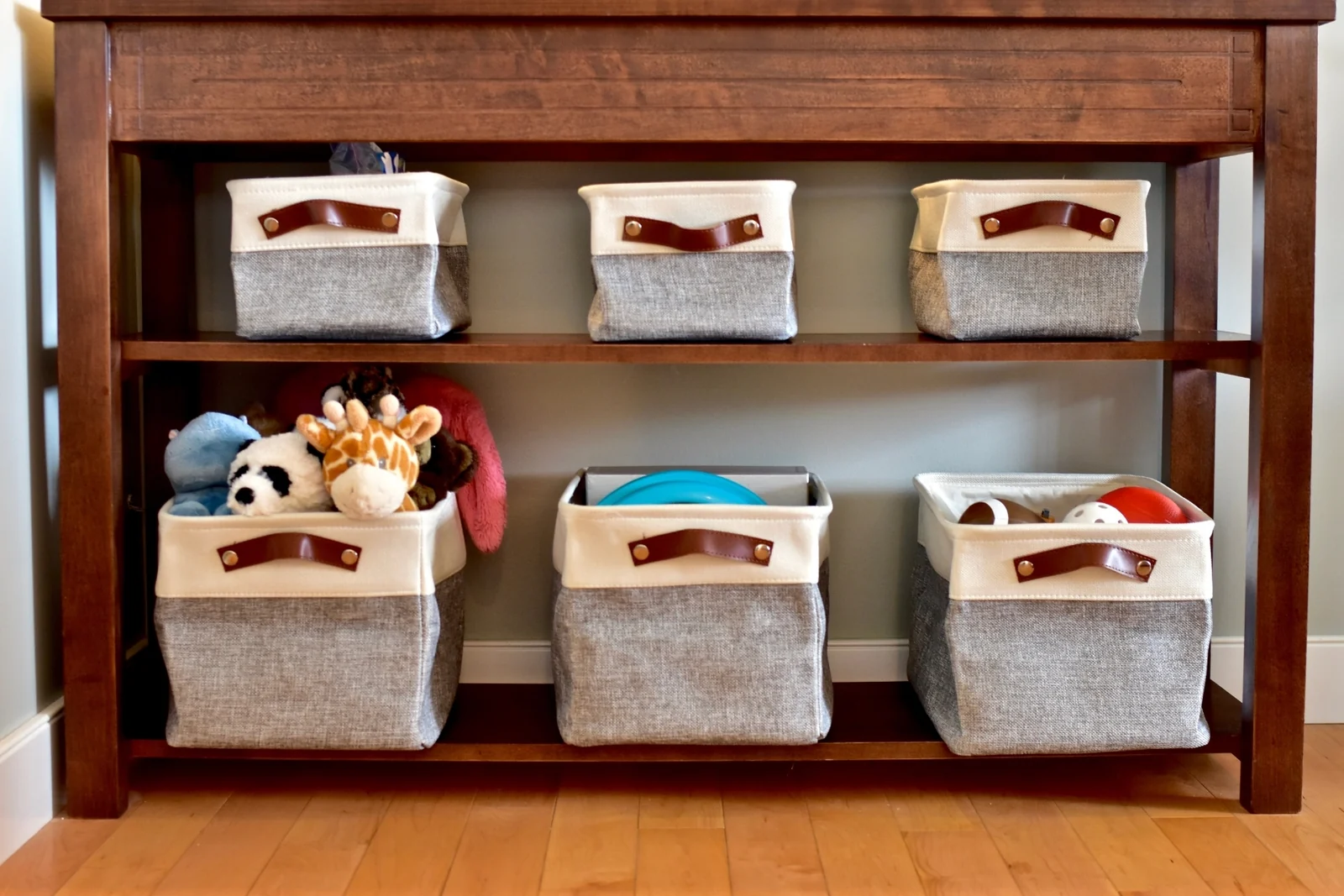
- Storage. A few baskets or trays and a low spot to put them. Storage is what turns a pile of stuff into a play space.
- Toys, a few at a time. Add them slowly, and only when you’ve watched what your child is actually working on.
 Save
SaveFewer toys out at once is also the cheaper way to do it. In one small study of 36 toddlers, those with 4 toys played longer with each toy, and in more varied ways, than those with 16 toys. That lines up with Montessori minimalism, and it’s why open-ended toys that can be used many ways tend to earn their keep.
Davies, writing about cooking with young kids, has a line any tired parent will get: “We learn to only put out as much as we want to clean up.” The same goes for toys. Keep a few things out, store the rest, and swap some in when interest fades. That’s toy rotation, and it keeps the shelf interesting without new purchases.
A first-year spending plan at three price levels
A first-year Montessori spending plan can run at three levels: $0, under $100, or about $300 to $500. Every level comes with its own safety steps, and the caps are planning numbers, not price quotes.
At Moje Montessori, we built these levels around one real first year: ours. Level 3 is roughly what we spent, aimed better. Prices change by store and season, so we haven’t priced every item, and nobody has to spend up to the cap.
| Level | Spend on | Skip | Safety steps |
|---|---|---|---|
| Level 1: $0 | Things you already own, real household jobs, time outdoors, a cleared low spot on a shelf you have | Anything sold as a “Montessori” must-buy | Keep anything that fits in a small-parts cylinder out of reach; anchor any shelf you use |
| Level 2: under $100 for the year | One or two long-use pieces (like a drop box), baskets or trays, a wishlist for gift-givers | Bundles, sets by month, labels with no clear use | Anchor any shelf or dresser to the wall; check recalls on anything used |
| Level 3: about $300 to $500 for the year | A low shelf, one big piece that lasts years (like a climbing triangle), a few good wooden toys | Pricey extras with a short window (for us, the mobile set) | Anchor the shelf; follow the age label and instructions on climbing toys; pass on used furniture that’s wobbly or missing parts |
Level 1: $0
Level 1 is where most of Montessori actually happens, and it costs nothing. Your baby can watch you fold laundry, hold a wooden spoon from the drawer, or sit in the grass and pull at it. A toddler can carry napkins to the table or wipe a spill with a small cloth. Montessori calls this practical life: real, everyday jobs sized for small hands. Our post on free Montessori activities has a whole list built from kitchen things.
 Save
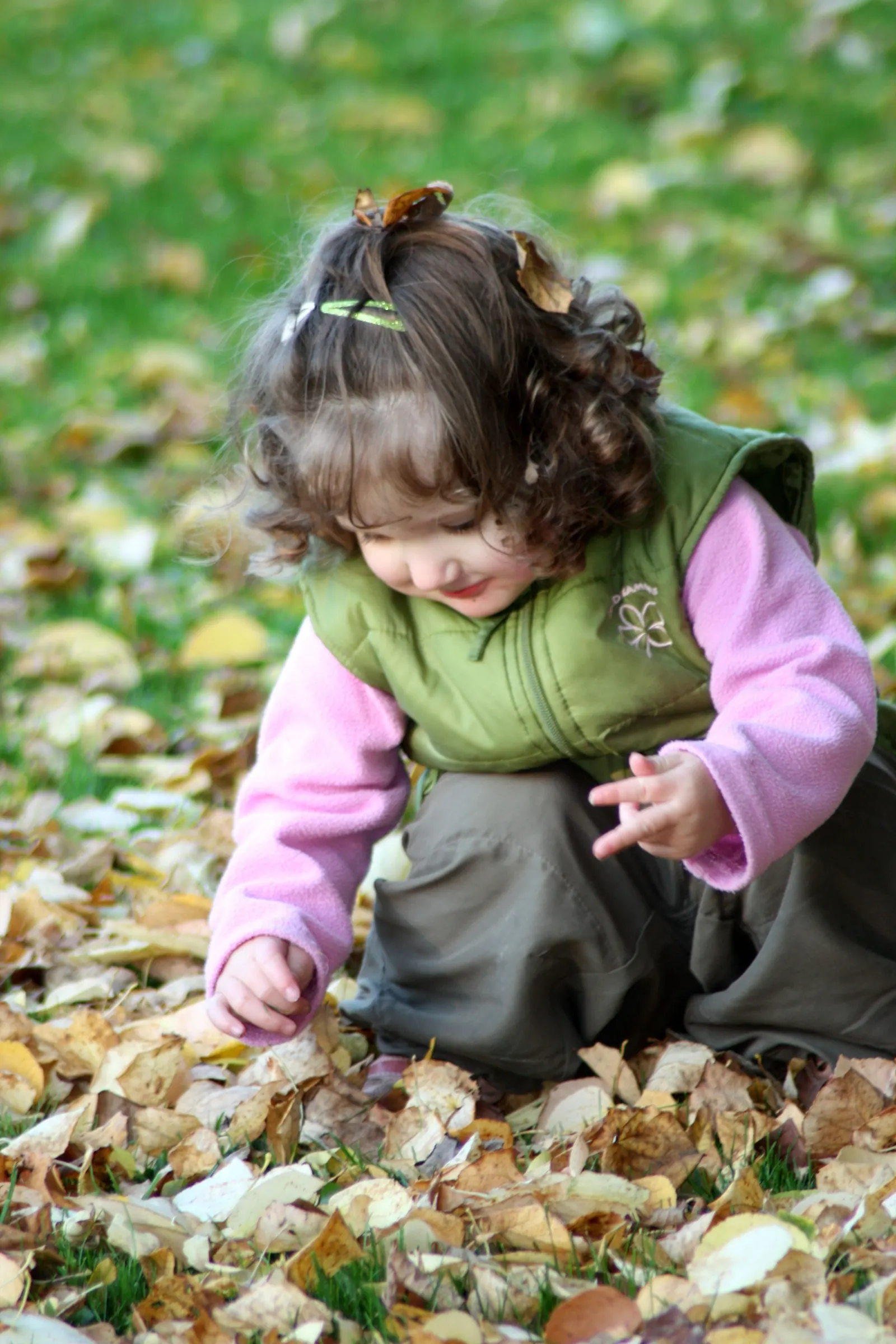
SaveOutside counts too: a walk where you stop every time your toddler stops, a pile of leaves, a puddle in rain boots. If you’re in the thick of the first months and money is tight, you can stay at Level 1 for as long as you like. Nothing about the method requires you to move up.
Free doesn’t mean anything goes. The U.S. Consumer Product Safety Commission (CPSC), the federal agency in charge of consumer product safety, defines a small part as anything that fits completely inside its small-parts cylinder, which approximates the fully expanded throat of a child under 3. As a rule of thumb, treat household objects that small as choking hazards. The American Academy of Pediatrics, the group that writes U.S. pediatricians’ guidelines, lists coins, marbles, and pen or marker caps among the household items to keep away from young children. Keep anything that small out of reach of children under 3.
Level 2: a small budget
With a small budget, the money goes where it stretches furthest. Our drop box is the model here: about $15 to $25 and close to a year of use. Look for one or two things like that, simple, sturdy, and good for more than one stage. A per-toy limit helps too. Pick a number, say $25, and make every toy earn its place.
Put the rest toward storage instead of materials. Two or three baskets and a tray can turn whatever low surface you already have into a shelf your baby can use. It’s less exciting than a new toy. It does more.
Then keep a wishlist on your phone of the next few things you’d actually buy. When a grandparent asks what to get for the first birthday, you’ll have an answer ready. And if those baskets sit on a bookcase or dresser, anchor it to the wall (more on that below).
Level 3: a bigger budget
This is roughly what we spent in Will’s first year, only this time spent on purpose. The money goes to three things.
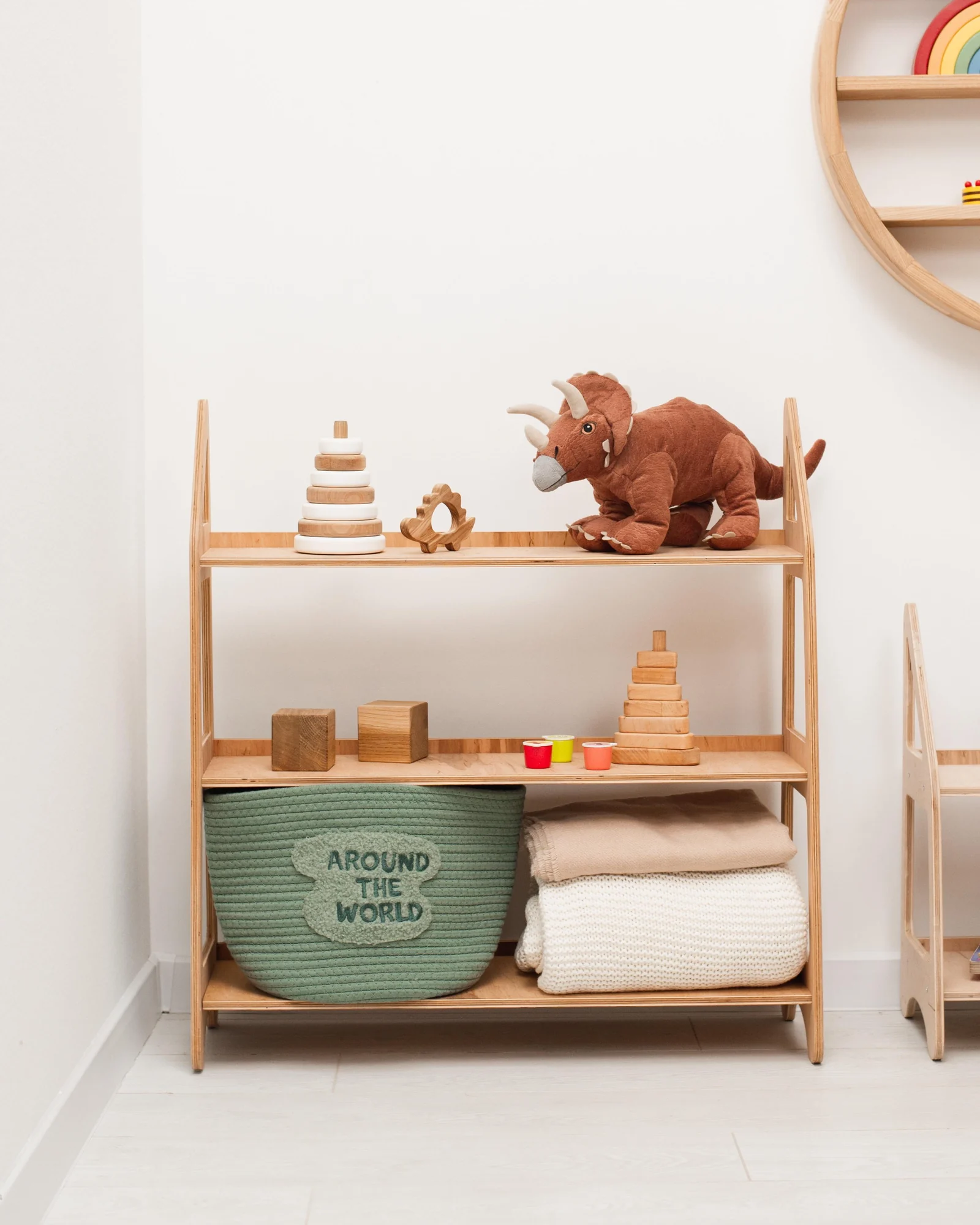
First, a low open shelf, if you want one. (Remember, it’s optional.) Our guide to choosing a Montessori shelf covers what to look for. Second, one big piece that lasts for years. For us, that was the Pikler triangle, used from 8 months to 3 years. Big pieces are where cost per month can really work in your favor, as long as your child will use them for a long stretch. With any climbing toy, follow the maker’s age label and setup instructions. Third, a few good wooden toys instead of many, rotated in and out.
 Save
SaveIf you come in under the cap, leave the rest in the bank. Nobody gets a prize for spending the whole budget.
What should you skip buying?
When money is tight, skip most products sold on the word “Montessori” alone, the idea that you need a special shelf or play kitchen, and pricey items with a short window. Put that money toward safety and long-use pieces.
- Most “Montessori” labels. The word on the box tells you very little. Our guide to what makes a toy Montessori shows what to look for instead.
- The “you need this” furniture. As Davies said, a Montessori shelf or play kitchen is optional. Use what you have first.
- Short-window splurges. For us, that was the mobile set and the pricey teether. Your version might be different. If something fits only a stage of a few weeks, borrow it or skip it.
- Toy subscription boxes. Before you sign up, ask whether each piece would earn a spot on your shelf on its own.
Are secondhand toys and furniture safe to buy?
Secondhand toys and furniture can be a smart way to do Montessori on a budget if you check for recalls first and pass on anything broken, wobbly, or missing parts. Then anchor any used shelf or dresser to the wall.
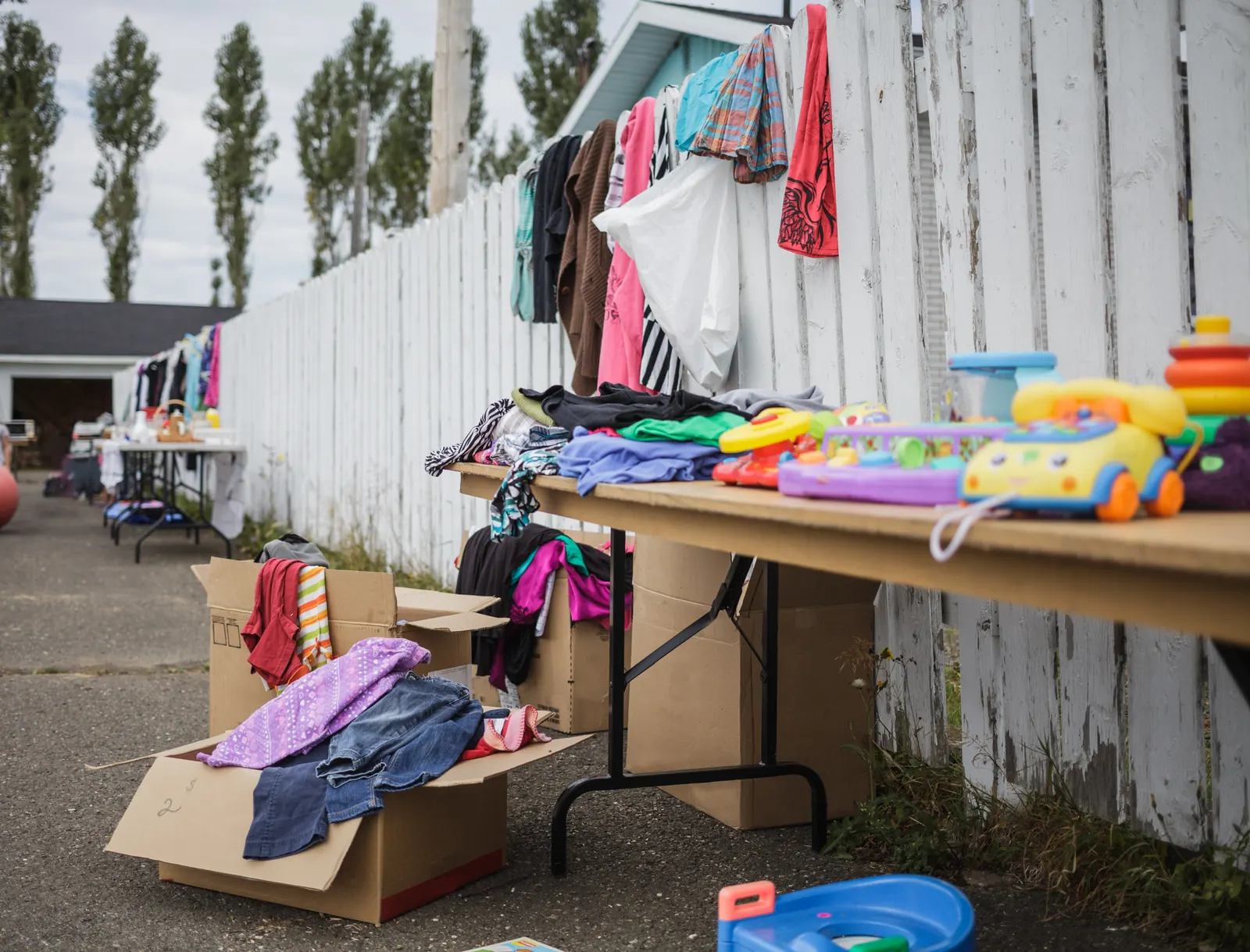
Bargain hunting is where a small budget goes furthest. Families find lightly used toys and furniture online, at consignment shops and at yard sales, and many pick up basics at big stores like IKEA and Target. Hand-me-downs from friends count too.
Used doesn’t have to mean unsafe, but it does mean you’re the one doing the checking. According to the federal product-safety agency’s guidance on resale, “Used products have caused injuries and deaths and have been the subject of numerous recalls.” Its rules apply to thrift stores, consignment shops, yard sales, and flea markets, not just big retailers.
 Save
SaveThat page is written for sellers. It tells them not to sell broken or wobbly nursery furniture, or baby gear that’s missing parts, even if it hasn’t been recalled, and it sums things up as “When in doubt, throw it out!” I read it as a buyer’s checklist too:
- Look up the exact product on the CPSC recalls page before you pay.
- Pass on anything broken, wobbly, or missing parts, recalled or not.
- Check small pieces against the small-parts rule from Level 1. Skip painted toys that are chipped or flaking for a baby who still mouths everything.
- Anchor any used shelf, bookcase, or dresser to the wall.
- If a product seems unsafe, you can report it at SaferProducts.gov.
One more thing about dressers. A federal rule under the STURDY Act, in effect since September 1, 2023, made a stability standard mandatory for new free-standing clothing storage units, like dressers and chests of drawers, that are 27 inches or taller, weigh 30 pounds or more, and have at least 3.2 cubic feet of enclosed storage. It covers clothing storage made after that date. A used dresser from before then isn’t covered, and neither is an open toy shelf.
Anchor every shelf, bookcase, and dresser to the wall, new or used, low or tall. The agency’s Anchor It! campaign says anchoring furniture with drawers, doors, and shelves to the wall prevents tip-over injuries and deaths.
Pass on used nursery furniture or baby gear that’s broken, wobbly, or missing parts, even if you can’t find a recall for it.
Can you DIY or borrow Montessori materials?
Yes, DIY Montessori materials and borrowed toys can stretch a small budget a long way. Put anything homemade or borrowed through the same checks as a store-bought toy: no small parts within reach of a child under 3, nothing broken or loose.
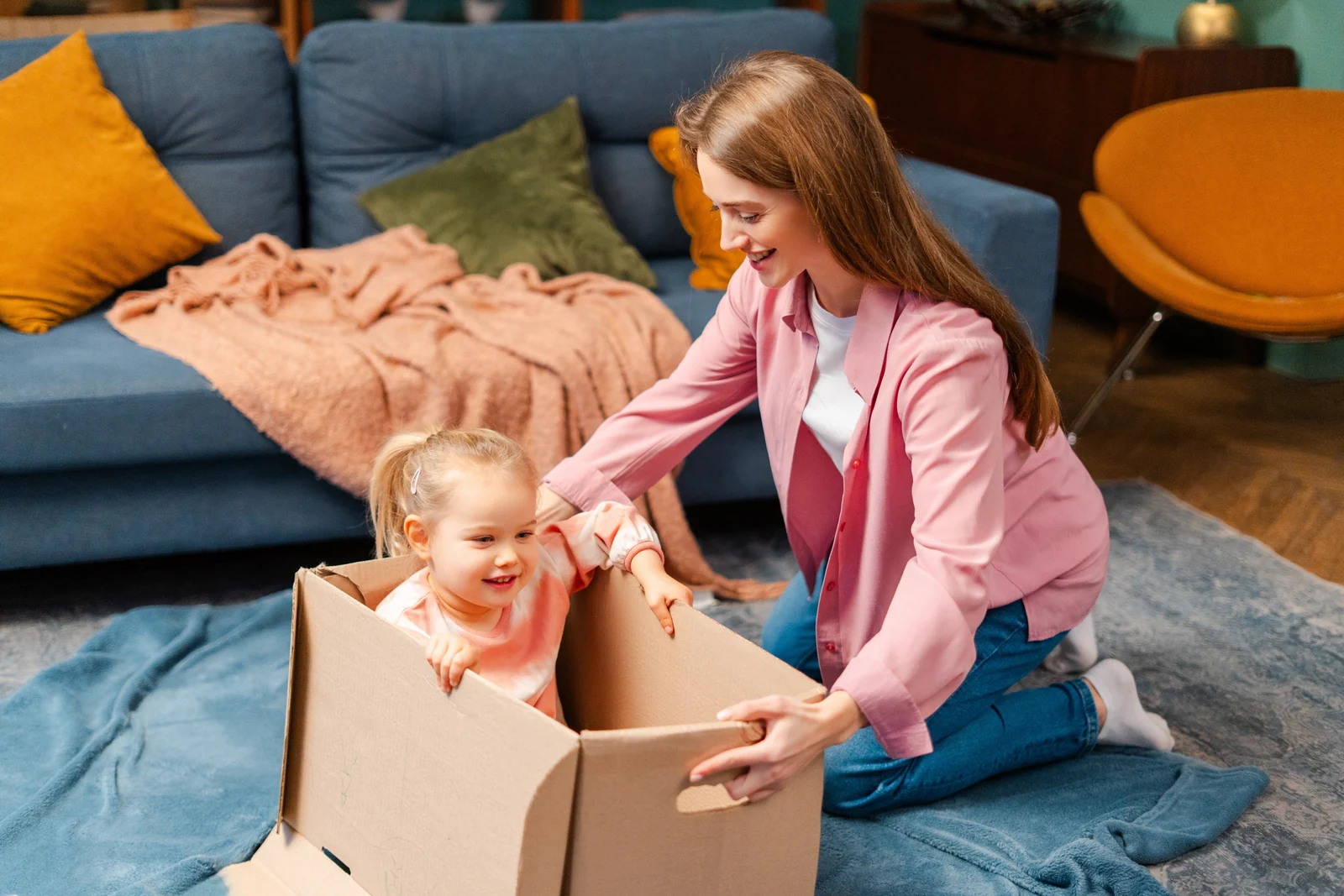
Making your own is the classic budget move. A shoebox with a round hole cut in the lid and a ball too big to pass through a 1.75-inch hole (the federal cutoff for balls meant for kids under 3) is a homemade drop box. A basket of a few washcloths in different textures makes a simple first treasure basket, a small collection of safe everyday things for your baby to explore. The IKEA hacks you see online, where parents turn basic store furniture into low shelves, follow the same rule as any shelf: if it holds weight or could tip, it gets anchored.
 Save
SaveBorrowing is the other half. Some communities have toy libraries, which lend toys the way a library lends books, so it’s worth asking at your library desk whether there’s one near you. Swapping with friends whose kids are a stage ahead of yours works the same way, for free.
Frequently Asked Questions
Is Montessori affordable if we can’t pay for a school?
Yes, Montessori is affordable at home, because you don’t need to buy anything to practice the principles, as Simone Davies points out. Start with household items, real jobs, and time outside. If you look at schools later, more than 590 Montessori schools in the U.S. are public, according to NCMPS.
Do I need a Montessori shelf?
No, you don’t need a Montessori shelf. Simone Davies says a Montessori shelf or play kitchen is optional. A low bookcase, or the bottom shelf of one you already own, works fine with a few baskets. Whatever you use, anchor it to the wall, even if it’s low.
Are secondhand toys safe for a baby?
Secondhand toys can be a good choice for a baby if you check them first. Look up the product on the CPSC recalls page, and pass on anything broken, wobbly, or missing parts, even if it hasn’t been recalled. Keep anything small enough to fit in a small-parts cylinder out of reach.
Conclusion
Pick the level that fits your family this month, not the one your feed is selling. If I could redo Will’s first year, I’d skip the mobile set and the fancy teether and keep the drop box and the climbing triangle. Same baby, less money. We’re all just doing our best with what we’ve got, and your baby is learning from the everyday stuff either way.
Clear one low spot this week and anchor whatever it sits on. Your baby won’t miss the price tags, but they’ll notice you down on the floor with them.
Miri
Fewer toys, deeper play.
Further Reading & Resources
See all 13 sources
- Montessori at home: Is Montessori parenting a fairy-tale? (Simone Davies, The Montessori Notebook)
- Child care prices: Child Care in America: 2025 Price & Supply (Child Care Aware of America)
- Montessori schools: Montessori (National Center for Montessori in the Public Sector, NCMPS)
- Secondhand and furniture safety: Resale/Thrift Stores, Small Parts FAQ and Recalls (U.S. Consumer Product Safety Commission, CPSC) · Anchor It! (CPSC) · SaferProducts.gov · Safety Standard for Clothing Storage Units (Federal Register, May 4, 2023)
- Household hazards: Choking Prevention (American Academy of Pediatrics) · Button batteries (CPSC) · Balls under 3 (16 CFR 1500.18)
- Research on toys: Dauch, Imwalle, Ocasio & Metz (2018) (Infant Behavior and Development)