
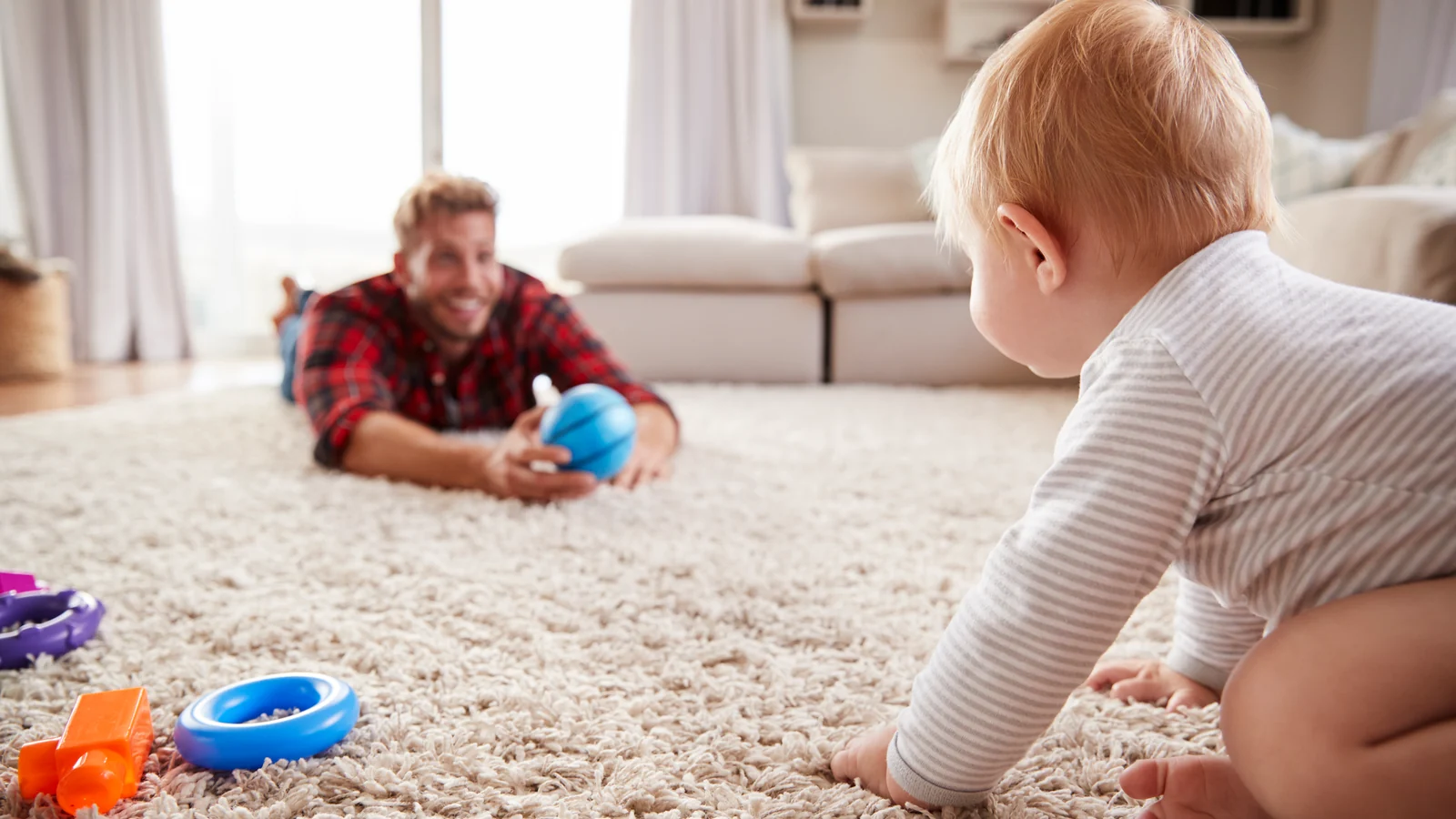
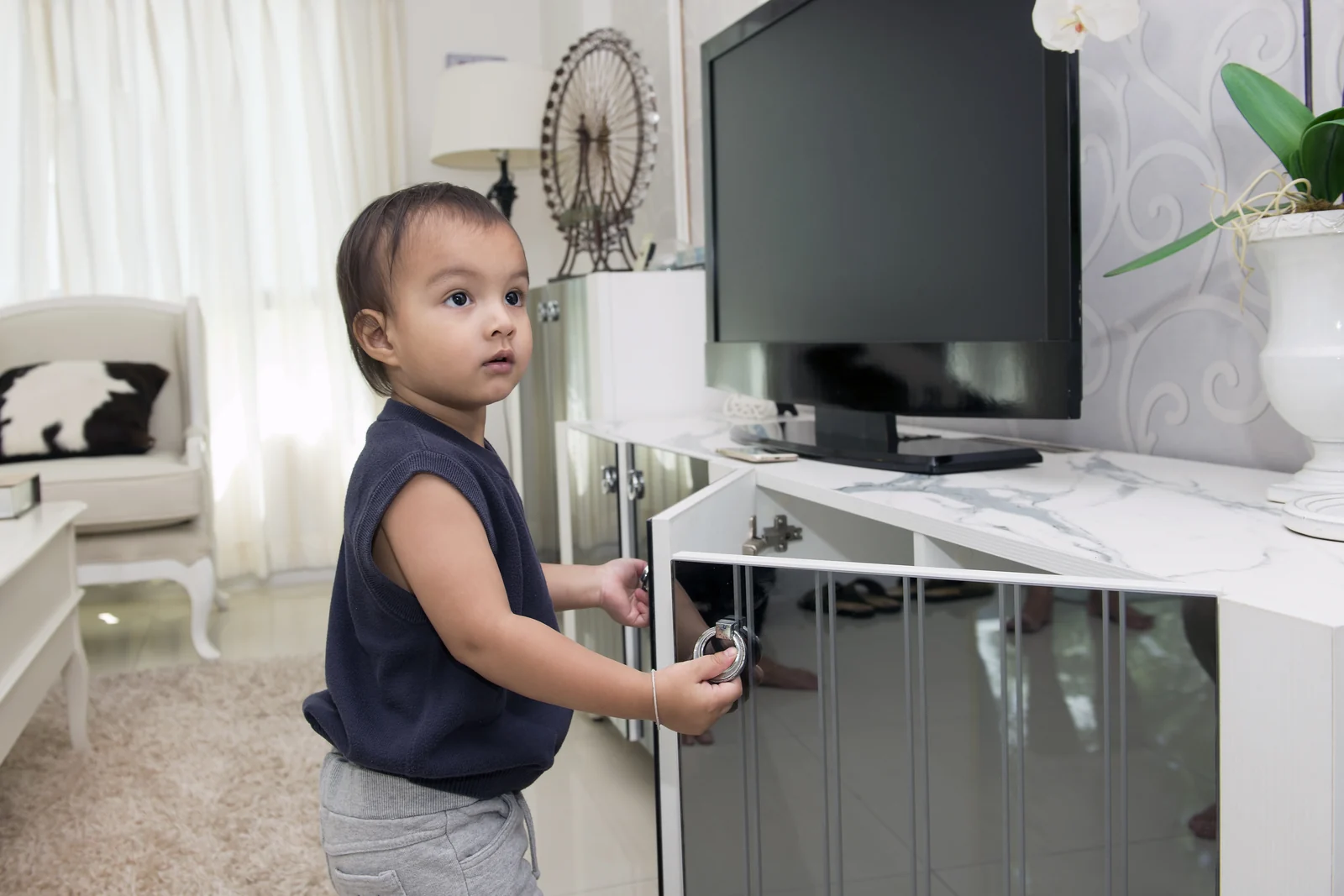
It’s barely 9 a.m., and you’ve already said “no” more times than you’ve had sips of coffee. No to the outlet. No to the TV remote. No to the dog’s water bowl, and then no to the outlet again. Somewhere around the twentieth one, you start to sound like a car alarm nobody can shut off, and your toddler starts treating every “no” like a dare.
By lunch you’re wiped, and a little guilty about how often you’ve heard your own voice. If that sounds like your house, you’re in good company. Your toddler is doing exactly what toddlers do. Most homes just weren’t set up for someone that curious at knee height.
 Save
A yes space changes that math. It’s one room, or even one corner, where everything your child can reach is safe to touch, so the answer is almost always yes. At our house there are two: Will’s bedroom and the toy-shelf corner of the living room.
What is a yes space?
A yes space is a phrase many parents use for a room or corner where everything within reach is safe for your child to touch, so they can move and explore freely and you can say yes far more often than no.
People who search for a Montessori yes space, or type it as yes space Montessori, are most likely after the same thing: a safe, uncluttered spot for a toddler in a home that borrows from Montessori.
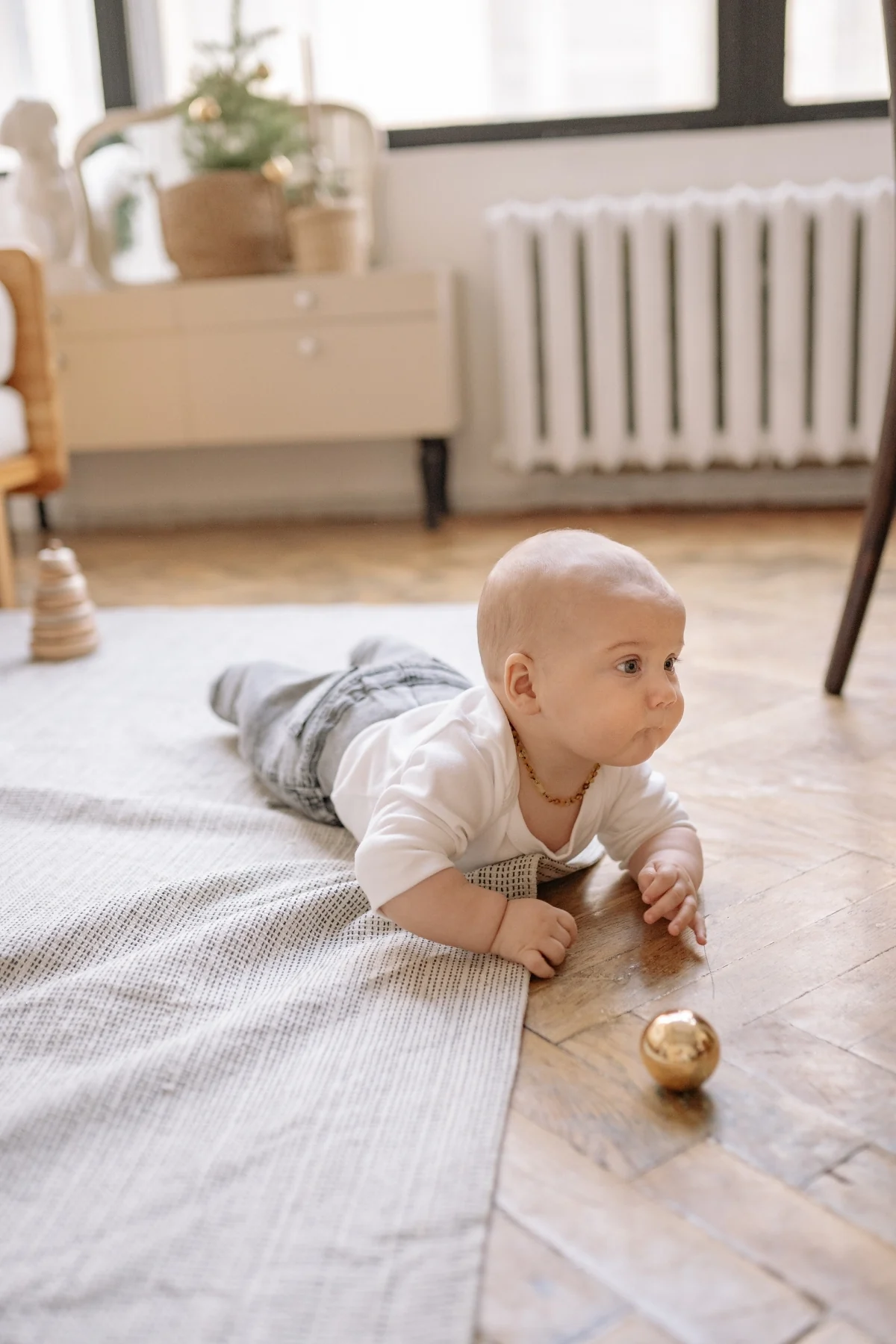
The Montessori connection runs through movement. The American Montessori Society (AMS) says that in Montessori infant and toddler programs, freedom of movement and choice supports neurological development, and children aren’t restricted to infant equipment. That’s written about classrooms, but at home I read it as a patch of floor where your child can roll, crawl, climb and choose without a grown-up stepping in every few seconds. On good days, that turns into a real stretch of independent play, and you get to sit down.
You may also have read about the prepared environment, Montessori’s name for an environment the adult prepares so a child can function independently. A yes space is the safety layer underneath it. The bigger picture, room by room, is in my guide to the Montessori playroom.
 Save
What does a yes space look like in a real home?
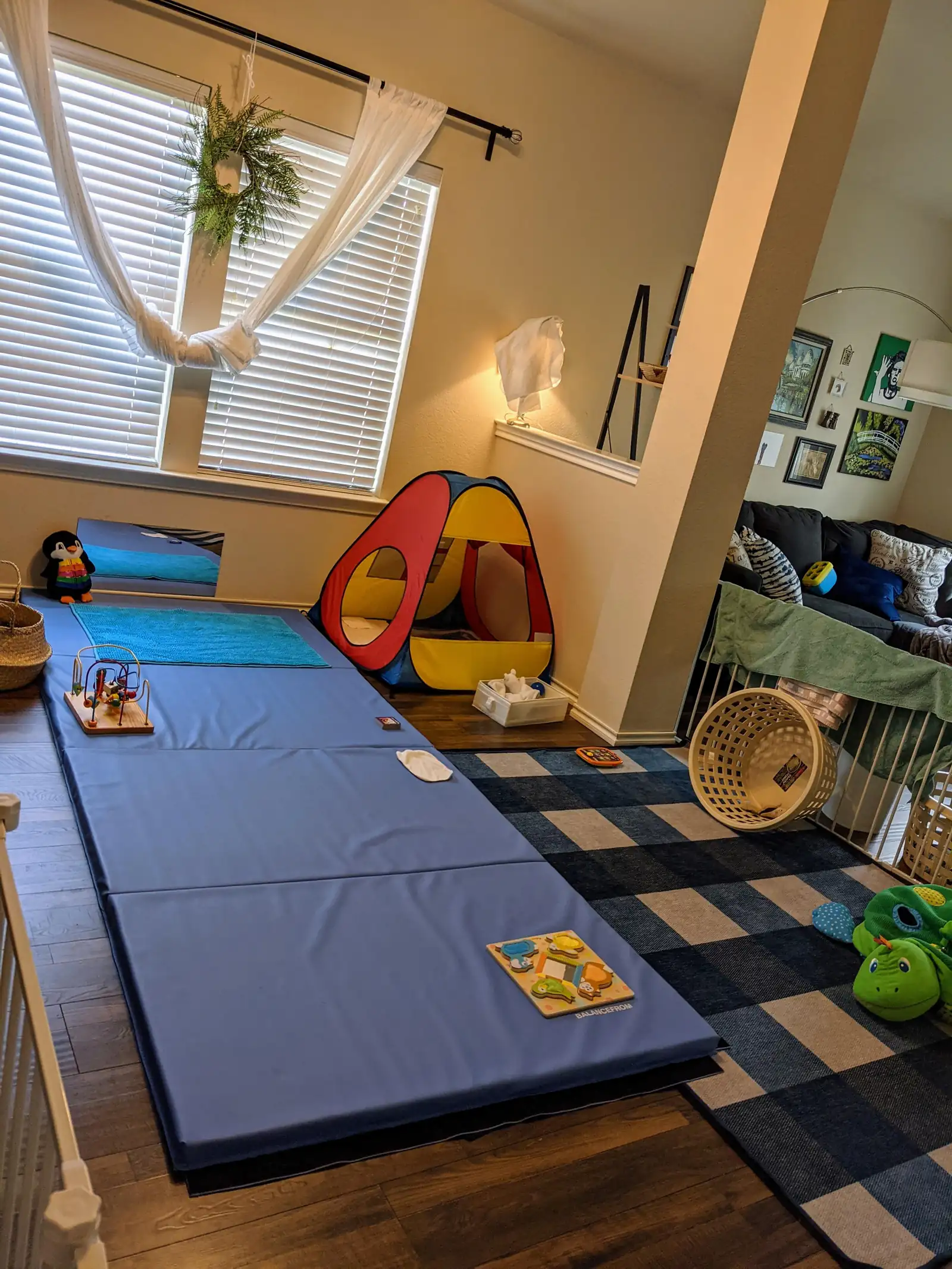
In a real home, a yes space can be as plain as ours: Will’s bedroom with his floor bed, and the corner of the living room where his toy shelf sits.
Will’s room has his floor bed, and a child who can climb out of bed alone needs the whole room to be safe.
In both spots, Will touches everything, climbs, and rolls around on the rug. He throws things. He sprawls out on the floor. And I sit nearby and watch, without stepping in and without a single “don’t touch that.”
 Save
You don’t need a spare room for any of this. One corner is enough, and if square footage is tight, these small playroom ideas help a yes space fit into a smaller home.
How to set up a safe play area for your baby
Start on the floor at your child’s eye level, then work through everything they can reach: small objects, outlets and cords, furniture, windows and stairs, plus the few things that belong outside the space entirely.
The goal is simple to say and fiddly to do: everything in reach is safe. Work through it in this order.
 Save
- Get down to your child’s eye level. The American Academy of Pediatrics (AAP) says the best way to check the floor for dangerous small things is to get down at your child’s level and see what’s there. That view works for the whole space, so crawl it slowly, corner by corner.
- Clear the floor of small things. Coins, beads, buttons, pins and pills can cause choking or poisoning if swallowed, and the AAP says to check floors constantly. One sweep of the rug each morning turns that into a habit.
- Plug the outlets and hide the cords. Every unused outlet needs a safety plug that isn’t a choking hazard, according to the AAP. If your child won’t leave an outlet alone, block it with furniture, and keep cords out of reach and out of sight. We covered our outlets with plastic plugs and tucked the TV cables into a cord cover.
- Anchor the furniture. The U.S. Consumer Product Safety Commission (CPSC) advises anchoring TVs and furniture, such as bookcases and dressers, securely to the wall, with heavier items on lower shelves. We anchored every cabinet and shelf. If you’re still shopping, the guide to choosing a Montessori shelf covers anchoring a low one, too.
- Keep climbables away from windows. The AAP is blunt about this one: never put chairs, sofas, low tables or anything else a child might climb on in front of a window. It also says to avoid window coverings with cords, because of the risk of strangulation.
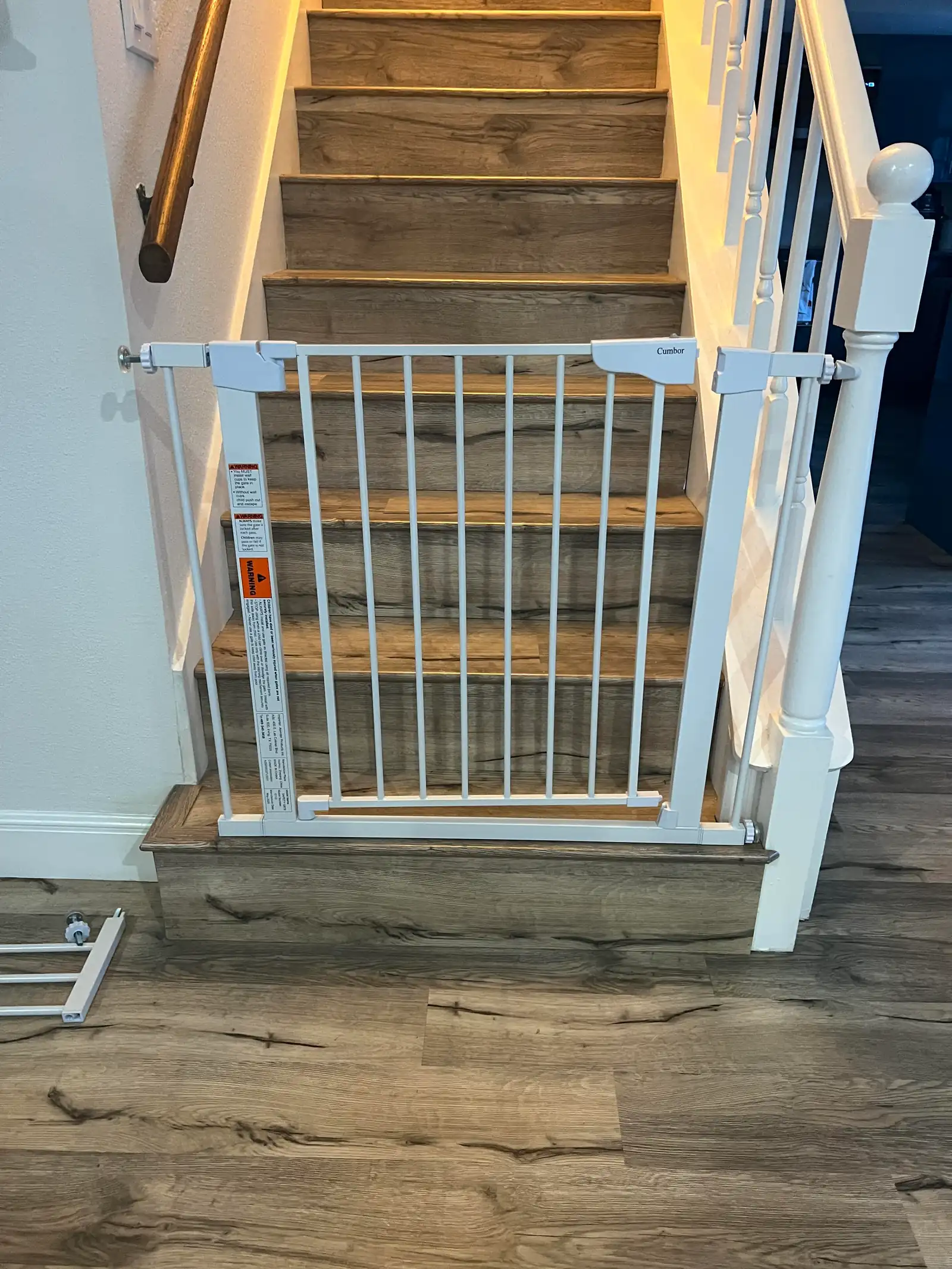
- Gate the stairs, top and bottom. The AAP says to install safety gates at both the top and bottom of stairs when your child is learning to crawl and walk. We have a basement, and the second we looked away, Will could be scaling those stairs like a tiny Spider-Man. The gate at the top of our basement stairs is metal and screwed into the wall, and it only opens when a grown-up squeezes the latch and lifts. There’s a gate at the bottom, too.
- Move a few things out of the space entirely. Keep all medicines out of reach, including the ones in your purse, and don’t count on child safety caps, the AAP says. It also says to know which things in your home use button or lithium coin batteries and keep them out of reach.
For stairs, the AAP recommends gates firmly mounted to the home’s studs, and it says to avoid accordion-style gates, which can trap an arm or a neck.
A window screen is not strong enough to stop a fall. The AAP recommends window guards that only an adult or older child can open from the inside, and opening windows from the top when you can.
There’s no prize for finishing all seven in one weekend. Do the crawl, write down what you find, and work down the list.
 Save
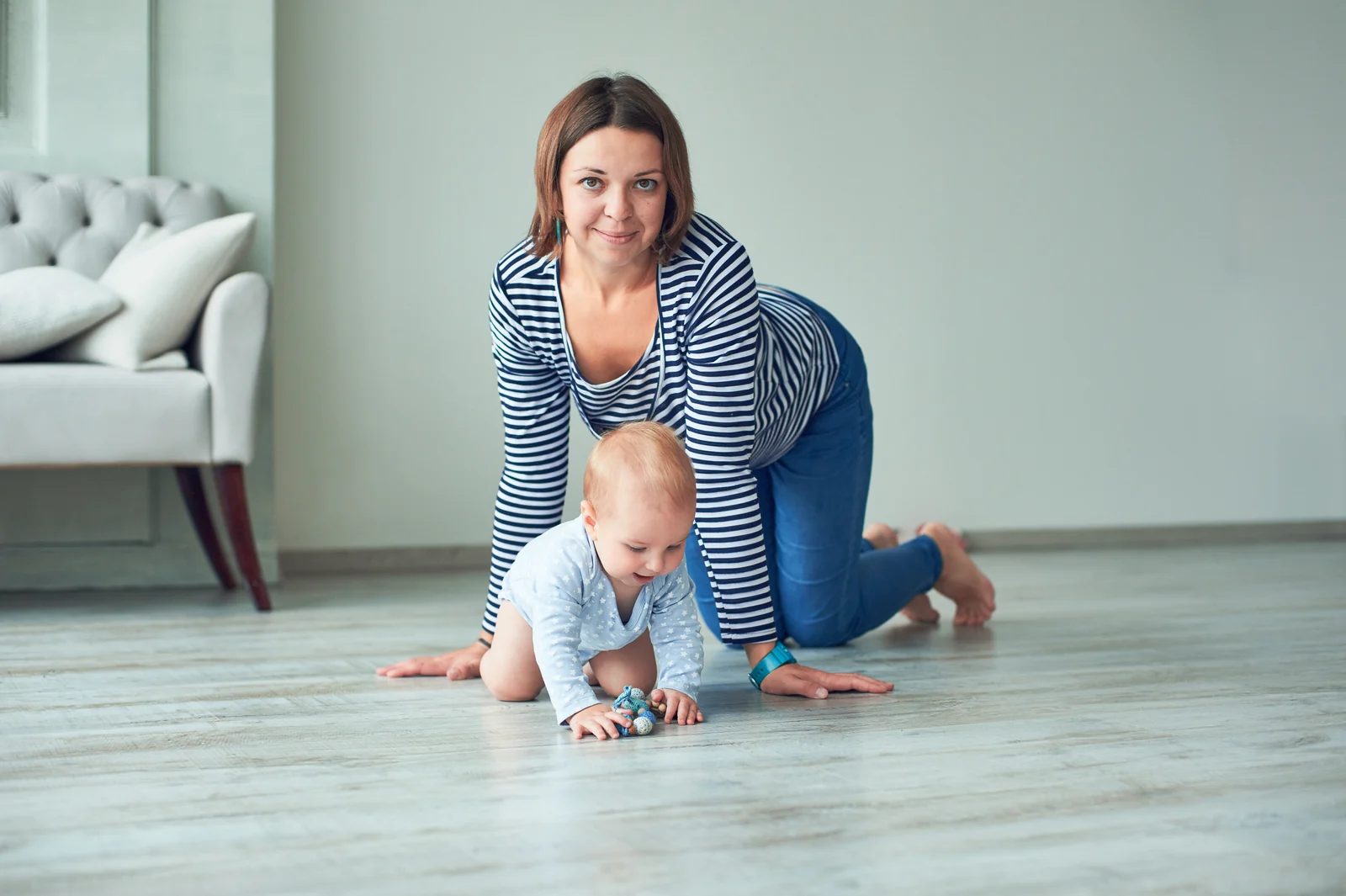
Before you call any spot a yes space, do one slow lap of it on your hands and knees. That’s how my husband and I set up Will’s, crawling across the floor at his eye level and checking every nook, and it’s the one step I’d never skip.
Miri’s Tip
Once the floor is safe, the next question is what goes on it, and how little you can get away with.
What goes inside a yes space?
Inside a yes space, keep it to a few things: a soft rug or mat, a low shelf with a handful of toys, a few safe books, and, once your child starts climbing, a place made for it.
Ours really is that short: a soft rug, a tidy toy shelf and books that are safe for Will to handle. Fewer things also means less to check on your morning sweep.
A few toys at a time is plenty, and when the shelf stops getting played with, swapping in a few from a bin keeps it fresh without buying more.
Then there’s climbing. Between 1 and 2, the AAP says, children walk well and start to climb, jump and run. You can spend that year peeling your toddler off the arm of the couch, or give the climbing a home inside the yes space: a low, sturdy climber made for toddlers, well away from any window, with you close by.

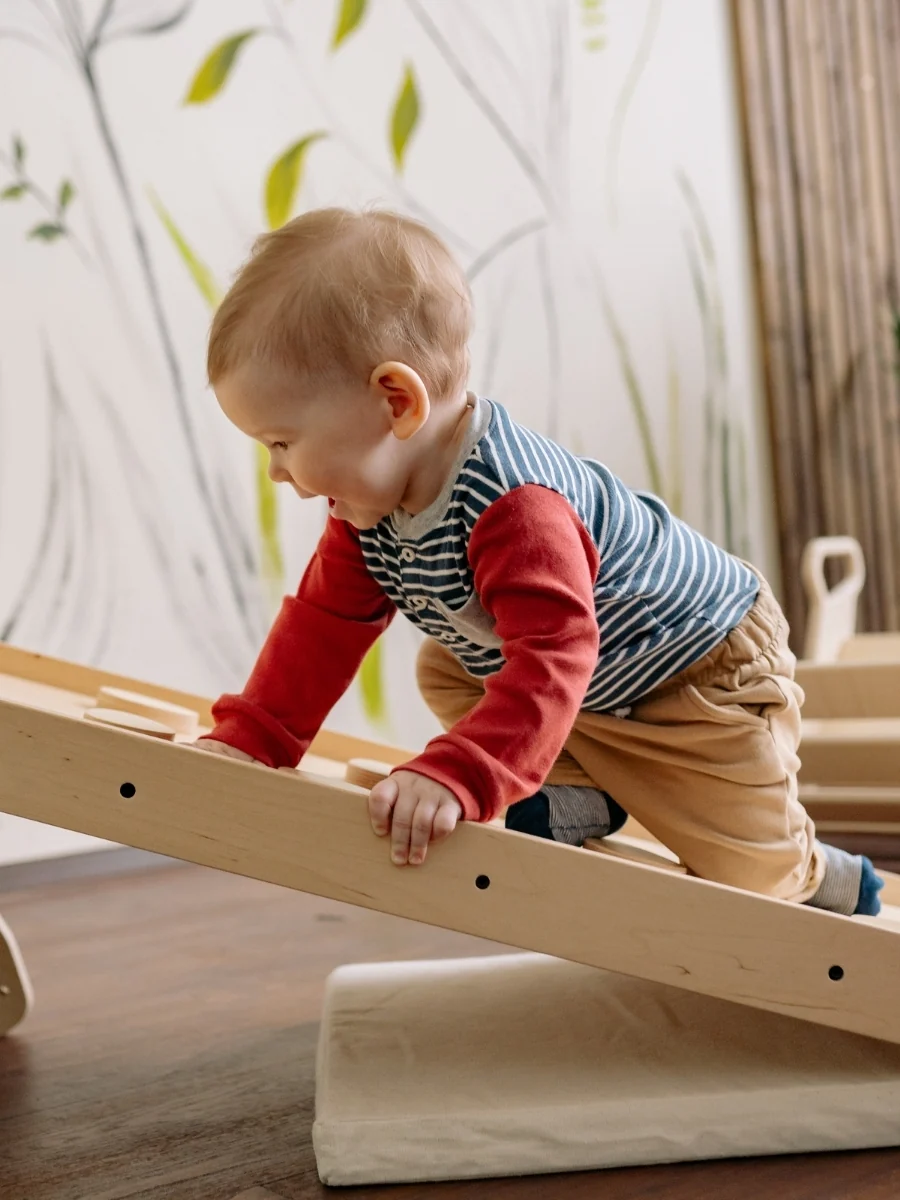
A soft rug, a few books and a low shelf cover most of it. Toddlers start climbing between 1 and 2. Give it a safe place to happen.
What I’d skip: a full toy box, and anything your toddler can see but can’t reach. The AAP’s page on preventing furniture tip-overs warns that toys, electronics and remotes kept up high can tempt kids to climb.
Does a yes space mean you never say no?
Every yes space still has limits, but they’re built into the room, so you say them out loud far less often. Your toddler still needs a grown-up within sight, and the rest of the house keeps its rules.
Think of it as freedom with limits, where the limits are made of metal and screws. The gate says no to the stairs and the plug says no to the outlet, so you can save your words for everything else.
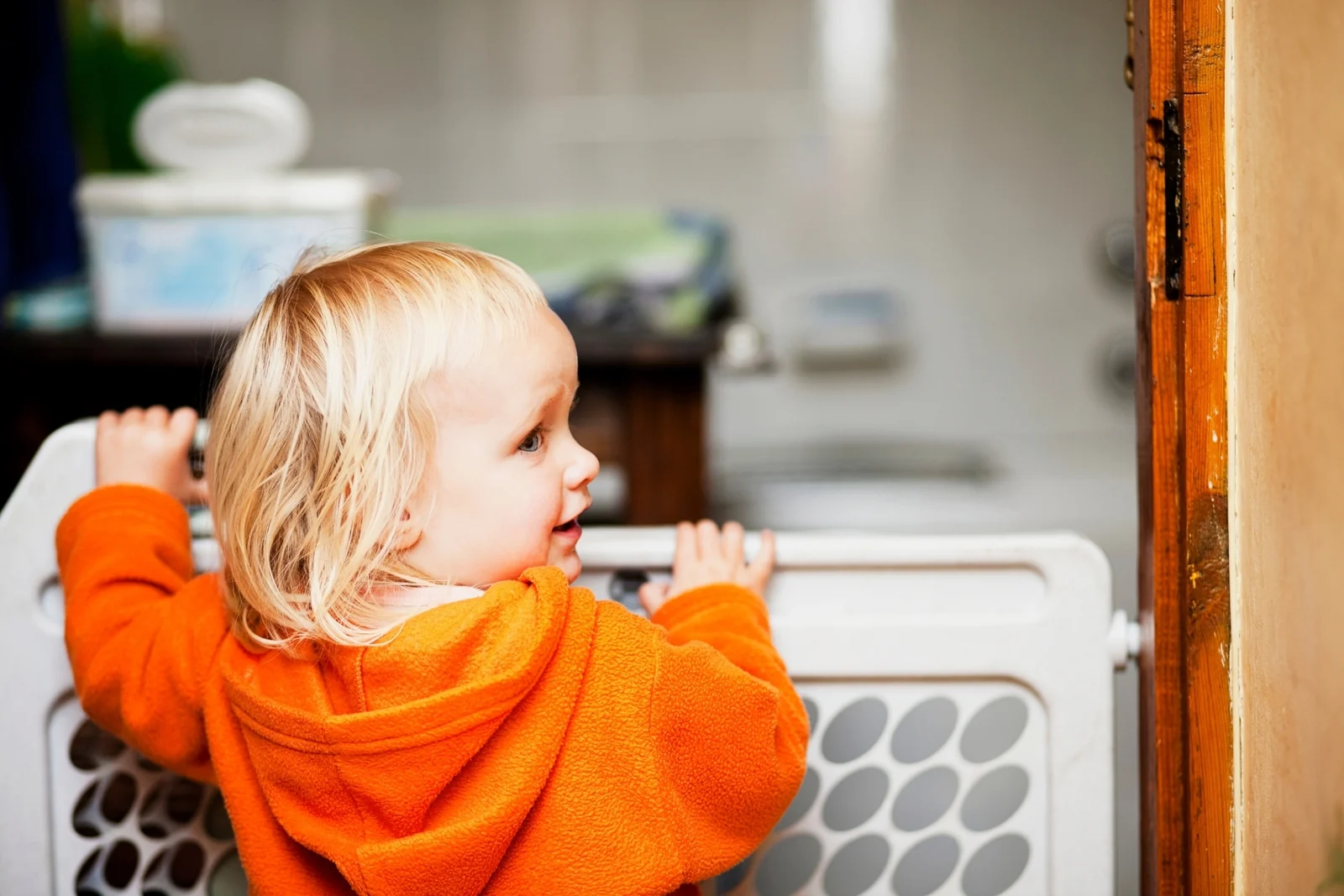
Outside our yes spaces, “no” still has a job. Some days, when I’m frying or chopping, a portable gate goes across the kitchen doorway. Those gates are a big reason I feel calmer when I have to dash to the bathroom or tidy up.
 Save
That calm is a feeling, though, and I wouldn’t turn it into a plan. The AAP’s page on safety for 1- to 2-year-olds puts it plainly: your child does not understand what is dangerous. So even a yes space you’ve crawled inch by inch is a place to play near you, within sight. If your child has a serious fall, or doesn’t act normally after one, the AAP says to call your doctor.
Let the gate be the one that says no, so you get to be the one who says yes.
 Save
When the room does most of the work, more of your day becomes sitting on the floor, watching what your toddler does with all that yes.
Conclusion
This afternoon, get down in the spot your toddler already loves and crawl one slow lap. It doesn’t take a new room or a free weekend. Plug what needs plugging and move what needs moving, and that corner becomes the first place in the house where the answer is yes.
All those no’s don’t make you a strict parent. Your toddler is curious and your house hasn’t caught up yet, and one safe corner is enough to start.
Miri
Fewer toys, deeper play.
Further Reading & Resources
See all 6 sources
- Home safety: Home Safety: Tips for Families With Young Children and Safety for Your Child: 1 to 2 Years (American Academy of Pediatrics, HealthyChildren.org)
- Furniture anchoring: Preventing Furniture and TV Tip-Overs (American Academy of Pediatrics, HealthyChildren.org) · Ahead of Sunday’s Game, CPSC Reminds Families to Tackle the Deadly Hazard of TV and Furniture Tip Overs (U.S. Consumer Product Safety Commission, 2024)
- Montessori background: Montessori Infant and Toddler Programs (American Montessori Society) · Prepared Environment (Association Montessori Internationale)