
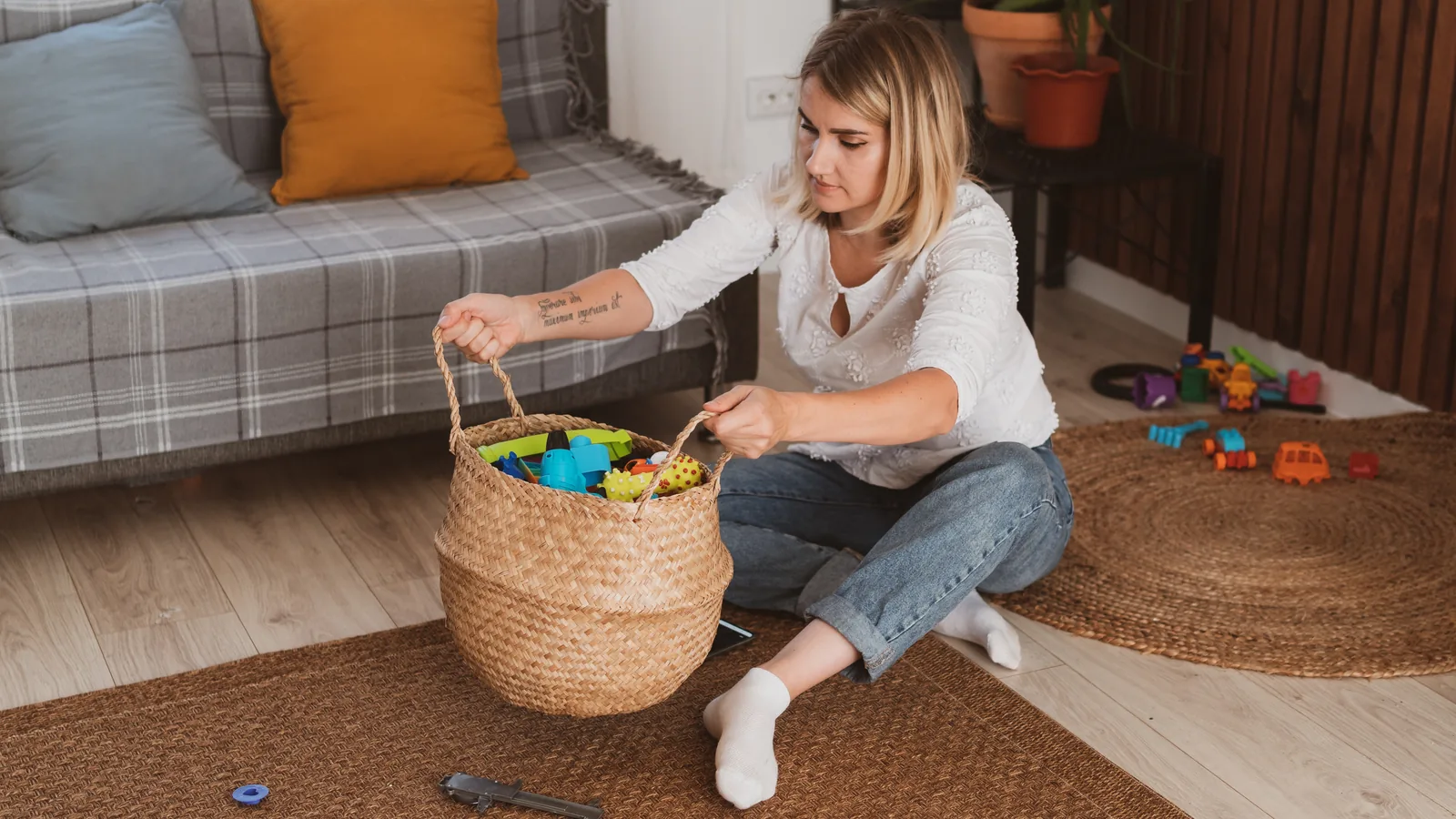
One parent on r/MontessoriForHome put the whole problem in the title of a post: “Does anyone else have a hard time with rotating their toy shelf?” Then came the line that may sound a lot like your house:
“I often feel overwhelmed pulling out the storage bins.”
A parent on Redditr/MontessoriForHome thread (2026)
It’s 8 p.m. on a weeknight. Work is done, dinner is done, bath is done, and your toddler is finally asleep. The bins are stacked in the closet, and you know exactly what opening them means: sitting on the floor, sorting, deciding, putting it all back. You’re running on empty, and the couch is right there. So the shelf stays the same for another week, the rug fills up with toys again, and a small voice tells you you’re bad at this whole Montessori thing.
Toy rotation can be much lighter than that. The version that lasts is small and steady: most toys out of sight, a few swapped when your child shows you they’re done, and the current favorite left exactly where it is. It’s the same thinking behind a calm Montessori playroom, and it works just as well on one shelf in the living room. That’s how I do it with Will: loosely, after he’s asleep, and some weeks not at all.
Below you’ll find how many toys to leave out, how often to swap, a bin setup that turns swap night into lids off and lids back on, and a one-page tracker so the remembering lives on paper.
Why does toy rotation work?
Toy rotation seems to work because fewer toys are in view at once: one small study found toddlers played longer, and in more ways, with 4 toys than with 16. No study I could find tests rotation itself.
There’s less research here than you might expect, so let’s start with what exists. In one small study from 2018, researchers watched 36 toddlers in supervised free-play sessions, once with four toys available and once with sixteen. With four toys, the toddlers played for longer stretches and used the toys in a greater variety of ways.
That study is about having fewer toys out during a play session. Rotation is simply how a family keeps that going week after week, without giving away half the toy box.
 Save
The rest comes from Montessori practice. An article by a Montessori teacher on the American Montessori Society (AMS) site suggests tucking away 30% to 50% of a child’s toys in a closet, garage or other storage, and says you may find your child becomes more interested in what’s left on the shelves. That range is the teacher’s practical advice, and the article doesn’t cite a study for it.
In Montessori terms, all of this is part of the prepared environment. A prepared environment is a space set up so a child can see their choices, reach them and put them back without an adult stepping in.
At Moje Montessori, we label each claim by how much evidence stands behind it. Here’s toy rotation, piece by piece:
| What rotation does | What you may notice | Evidence |
|---|---|---|
| Keeps fewer toys out at once | Longer, more varied play | Some research |
| Tucks most toys out of sight | More interest in what’s on the shelf, easier cleanup | Montessori philosophy (not tested at home) |
| Changes only part of the shelf at a time | Less upheaval for a toddler’s strong sense of order | Montessori philosophy (not tested at home) |
“Backed by research” means studies with babies or toddlers support that piece. “Some research” means part of it is supported. “Montessori philosophy (not tested at home)” means there’s little or no research on it in family homes yet.
Fewer toys, deeper play. That’s the piece with some evidence behind it, and everything else in this post is about keeping it going with as little effort from you as possible.
How many toys should be in a toy rotation?
Put away 30% to 50% of the toys, as an American Montessori Society article suggests, and leave out only what your child is using or working on right now. Their play, more than their age, sets the number.
If you’ve searched “how many toys for toy rotation,” you’ve probably run into exact numbers for each age. I couldn’t find research behind those numbers, so you won’t get a chart from me. What you can lean on is simpler.
For families, AMS keeps its Montessori at Home advice short: limit toy choices, use open shelves at your child’s eye level, sort smaller items into trays or baskets, and rotate the extras. Simone Davies, author of The Montessori Toddler and the voice behind The Montessori Notebook, describes a shelf that holds only what a child is “actually working to master or interested in right now.”
So the count comes from watching. Over a few days, notice what your child reaches for, what they’re still figuring out, and what they walk past. The first two groups belong on the shelf. The third can go into a bin tonight.
On swap nights, I keep one or two things Will is still into and bring out about five or six “new” ones from the bins. That fits our shelf and our toddler. Yours might need fewer, especially if your shelf is small.
The shelf caps the count, too. If you’re still choosing one, the right shelf height and size will decide more than any number on a list. And if your child is still a baby, start a step earlier, with how many toys a baby actually needs.
 Save
How often do you rotate toys?
Every few weeks is a sensible starting point, and your child’s cues get the final say: when they lose interest in the “new” toys or get restless with them, it’s time to swap again.
Both halves of that come from the AMS article: a rotation every few weeks, and another swap whenever your child seems restless with what’s out. On how often to rotate toys, that’s as specific as the article gets, and it’s enough to start with.
Davies is refreshingly honest about her own house. When her children were toddlers, she rotated materials about once a week, kept out the things being used often, and swapped in only some new ones. She also writes that “the true Montessori answer to when to rotate toys is based on observation.” So once a week was her family’s rhythm, and she shares it as exactly that.
At our house, it works out to roughly every two to three weeks, and the real signal is Will. When he starts ignoring the shelf, or tossing toys onto the floor instead of playing with them, I take that as a sign he’s finished with that set.
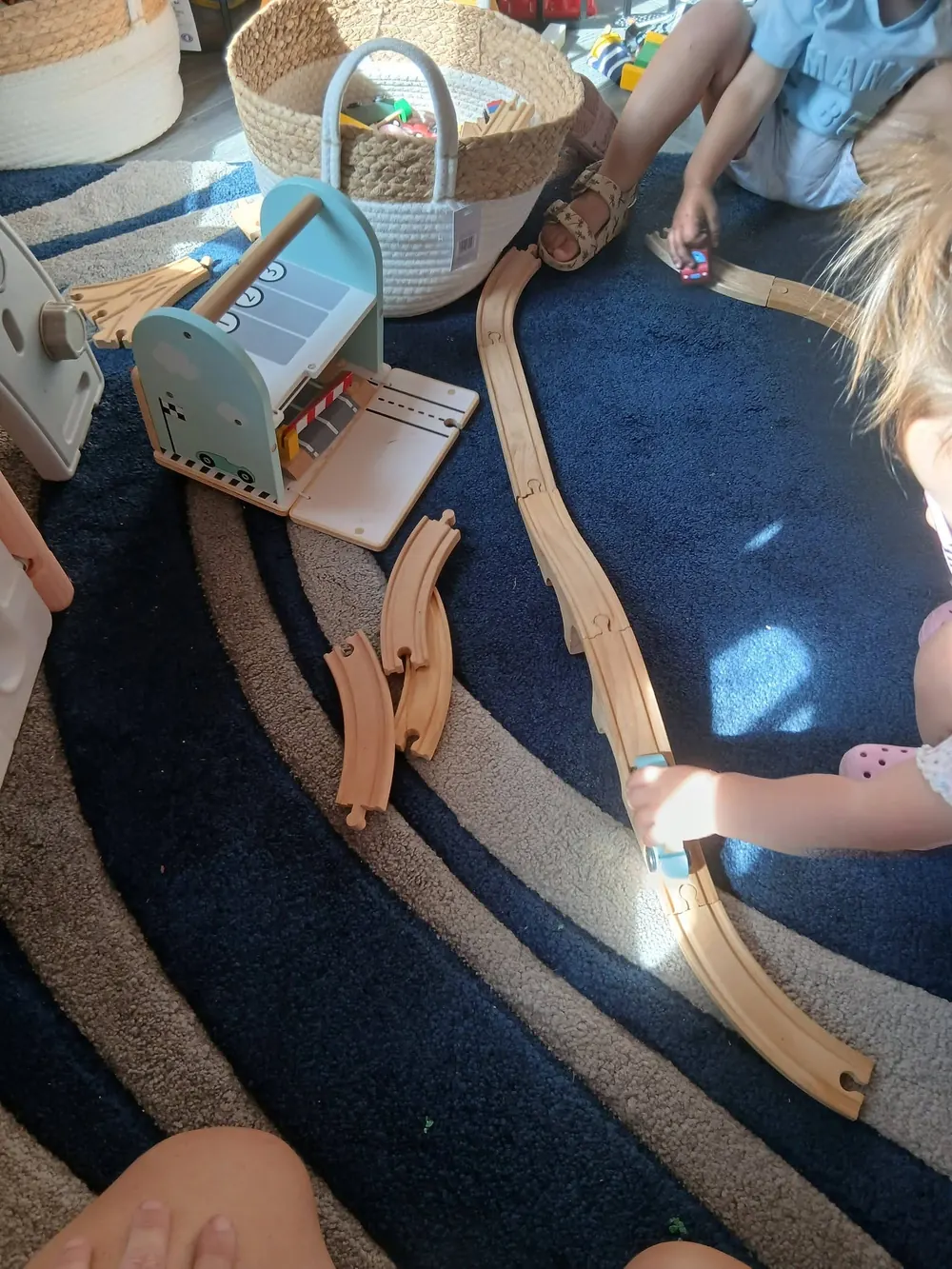
Some stretches, I don’t rotate at all. There was a month when Will was all about his wooden train set. He went looking for the trains as soon as he woke up and held on to one while he ate. That set stayed right where it was the whole month.
 Save
And on days when being pregnant with Jimmy leaves me wanting nothing but the couch, the swap waits.
If you’d like a number of days between rotations to start with, choose one you can actually keep, like every other weekend, and let your child move it earlier or later. Interest in toys ebbs and flows anyway. One more thing to watch for: a toy that gets ignored might be boring, or it might be a little too hard for right now. If you can’t tell which, give it a few more days on the shelf and see what your child does with it.
How to rotate toys, step by step
Gather every toy in one spot, pull out what’s broken, sort the rest by type, fill a few bins with a little of each type, label them, and swap one bin onto the shelf when your child is ready.
Here’s the toy rotation system, trimmed for real life. Steps 1 to 5 happen once. After that, every swap is step 6, and it’s a short job.
- Gather all the toys in one place. The basket by the couch, the bin in the bedroom, the stash in the car. Pile it all on the floor so you can see what you actually have. Pick a night when you have a bit more time than usual, because this is the one big session.
- Pull out anything broken or missing pieces. Cracked, splintered or missing a part? It goes now. Anything with small loose pieces gets a closer look, and the safety notes below cover what to check.
- Sort into piles by category. Keep your toy rotation categories simple. Will’s bins are sorted into puzzles and building toys, fine-motor toys, and animal figures. Yours might be vehicles, music and pretend play.
- Put a little from each category into each bin. That way every bin is a ready-made shelf, with something to build, something for small fingers and something to pretend with. Each bin should be able to fill the shelf on its own.
- Number or label each bin, and pick a loose rhythm. A number on the lid means you never have to remember what’s where. Davies says the main reason her own storage works is that “there is a place for everything and everything is in its place.” Labeled storage is its own small project, and these storage ideas for small spaces go further with it. For the rhythm, pencil in every few weeks and let your child’s cues move it.
- Swap one bin, then watch what your child discovers. Do the swap after bedtime and pay attention the next morning. What do they go to first? What do they walk past?
- Donate gently used toys. Anything passed over rotation after rotation can go to another family. Toys in good shape with all their pieces are the ones worth passing on.
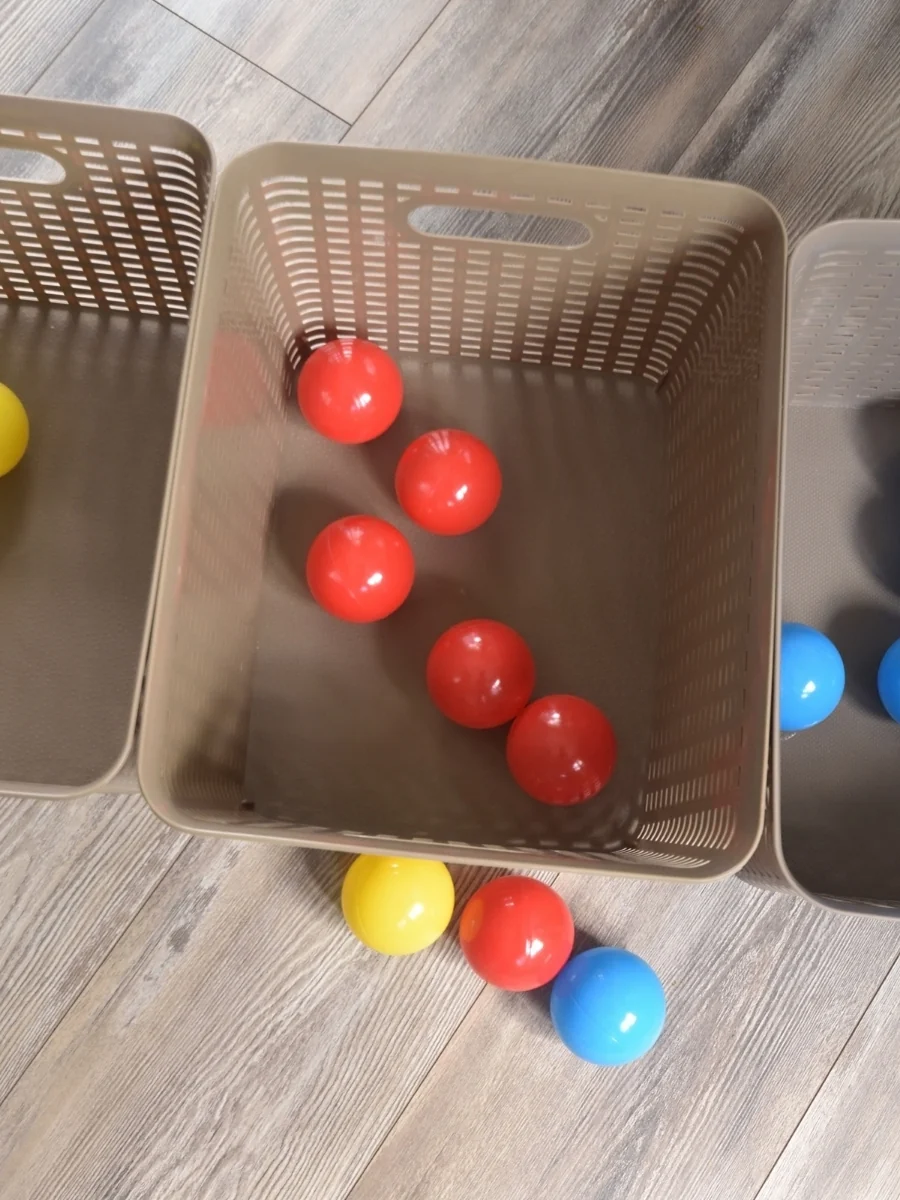
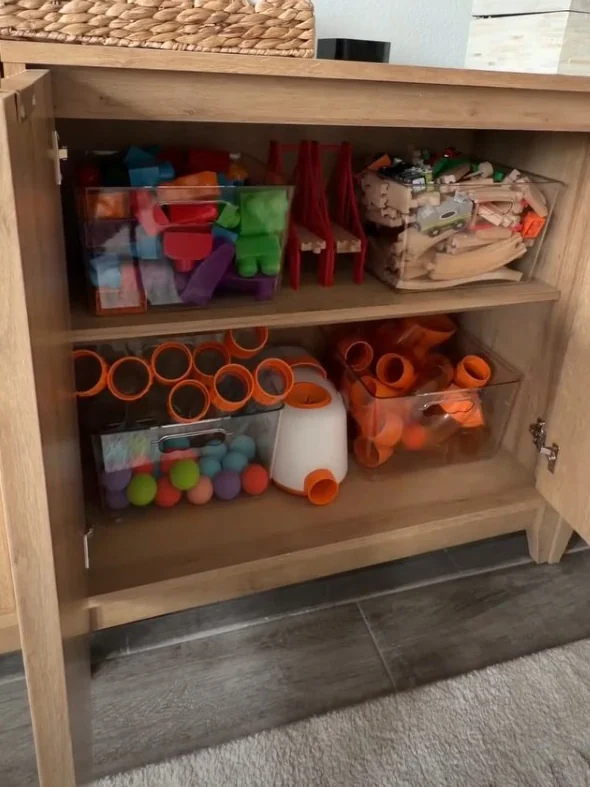
Sort once, by type, and every swap after that gets lighter. Clear bins sorted by type, so you can see what’s inside on swap night.
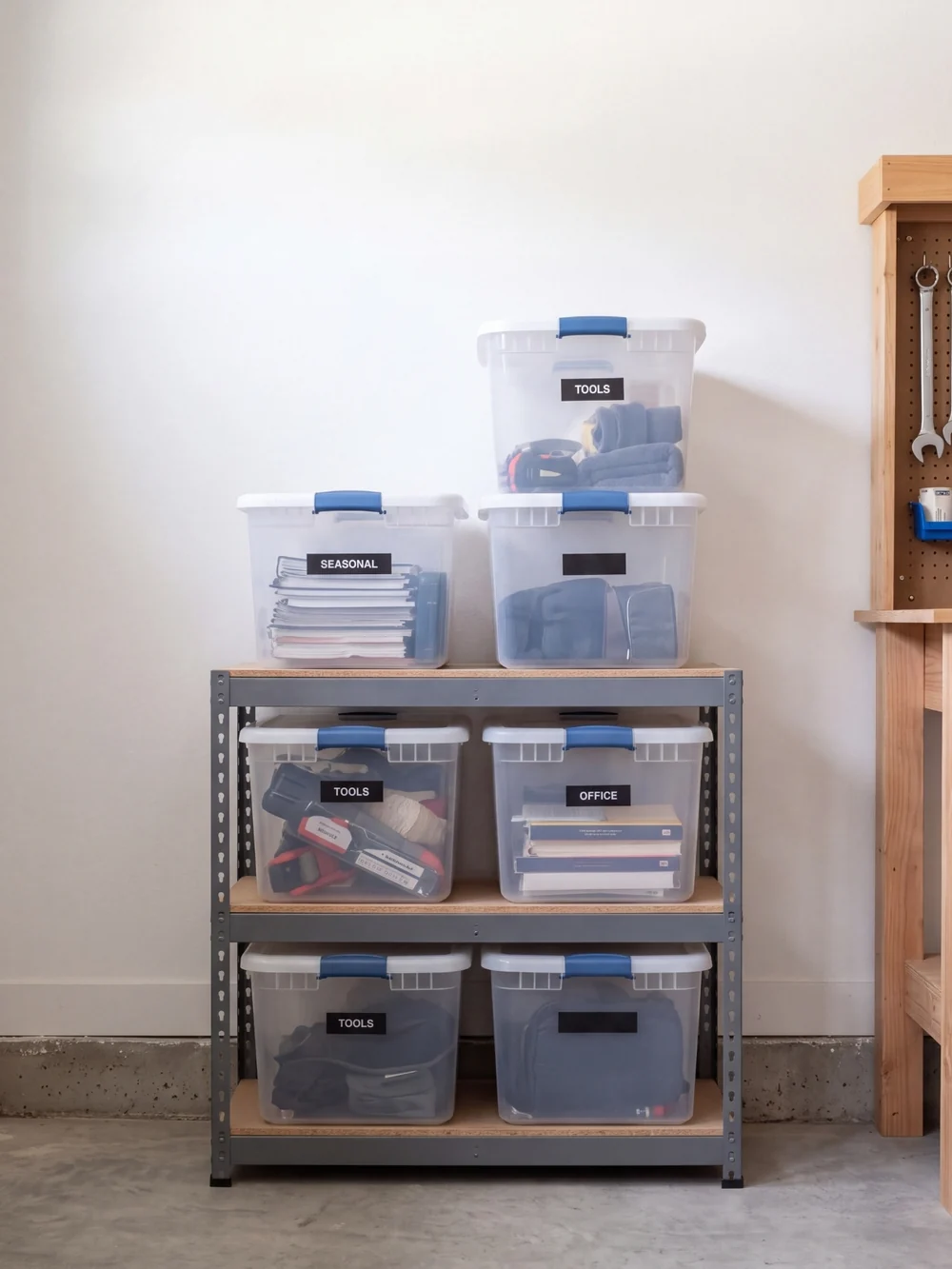
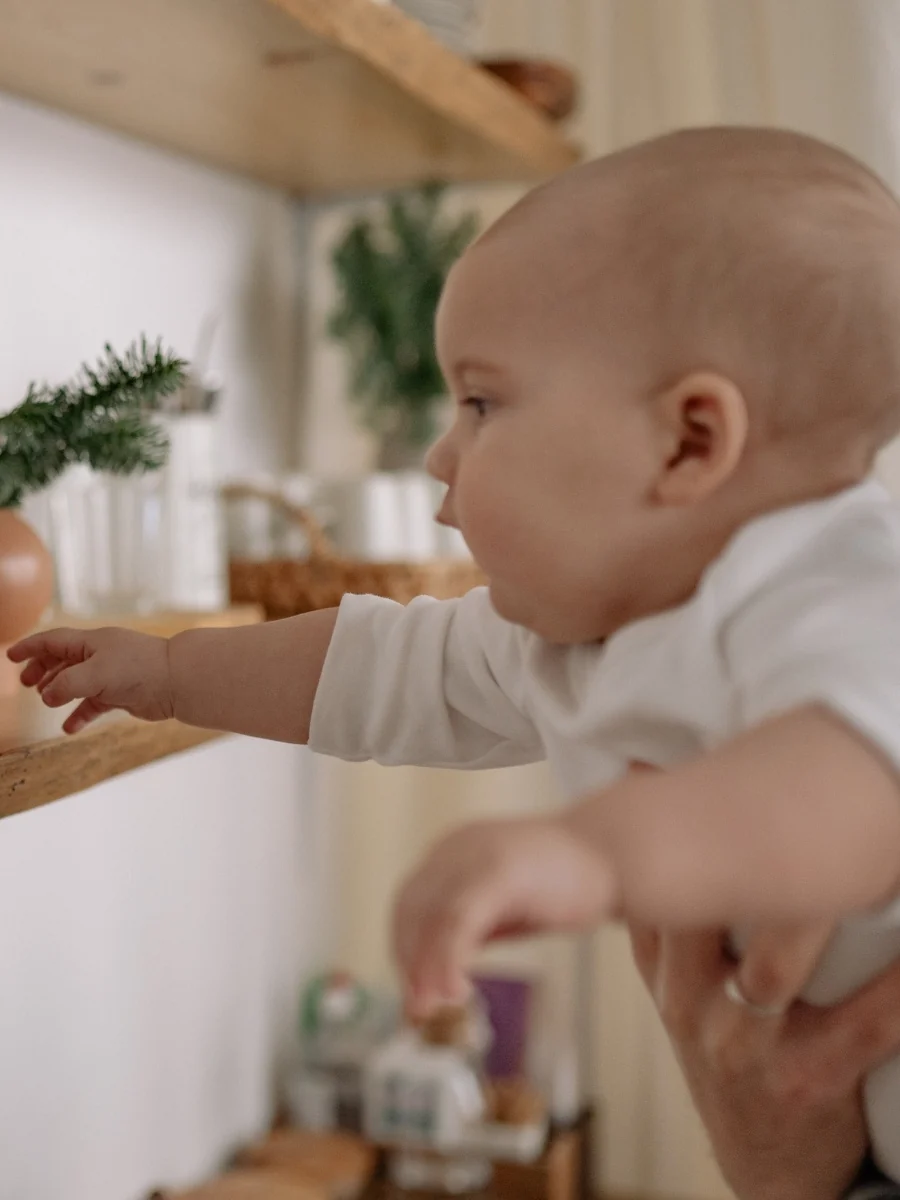
A number on the lid, so nobody has to remember what’s where. The best part of swap night happens the next morning.
Where the bins live matters as much as what’s in them. Ours are big, clear plastic bins with lids, kept in a storage closet in the basement or out in the garage, completely out of Will’s sight.
A bin your toddler can see is just another toy box.
The morning after is the fun part. When Will finds a fresh shelf, his eyes light up and he whoops like he’s just been taken to the supermarket. For a toy that’s brand new to your child, it’s worth showing it once, slowly. A Montessori presentation is a short, quiet demonstration of how a toy works, and then you step back.
I do the swap in the evening, once Will’s asleep. Because every bin is already sorted by type, I just open the lids, pick a few things, and the shelf is ready by morning.
Miri’s Tip
Once the bins are sorted, the shelf is the only part of all this your child ever sees. Getting that one spot right, low enough to reach, with room around each toy and a clear place for everything, makes every swap after this one easier.
A one-page toy rotation tracker
A toy rotation tracker is one sheet of paper with five columns: the week, what went out, what went back, what got played with most, and a note for next time.
It sounds like one more thing to keep up with. What it really does is take the remembering out of your head. Observation is the heart of the Montessori answer to when to rotate, and a tracker is just observation written down. A month from now, a few lines will show you which toys keep winning and which ones never leave the bin.
Copy this onto paper, or into the notes app on your phone:
| Week | Out on the shelf | Back in a bin | Played with most | Note for next time |
|---|---|---|---|---|
| Week 1 (example) | Bin 2: shape puzzle, stacking cups, two animal figures | Bin 1 | Stacking cups | Walked past the puzzle. Try it again next round. |
| Week ___ | ||||
| Week ___ | ||||
| Week ___ |
Tape it inside the closet door where the bins live, so it’s right there on swap night. Use the “Played with most” column to decide what stays out next time, and the notes to catch the toy that’s ready to be donated. Miss a week and the sheet won’t mind.
 Save
Common toy rotation mistakes (and easy fixes)
The mistakes that turn toy rotation into a chore mostly come from doing too much: swapping the whole shelf, packing away a favorite, sticking to a strict schedule, or storing the bins where your child can see them.
Swapping the whole shelf at once. It feels efficient. For a toddler, it can be a lot. Davies writes that she tries not to make too many changes at once, because toddlers in particular have a strong sense of order. The fix is easy: change part of the shelf and leave what’s still getting used.
Packing away the current favorite. If your child goes for something every single day, leave it out. That’s why the train set got a whole month on Will’s shelf.
A toy your child reaches for every morning has earned its spot on the shelf.
Letting the schedule run you. A strict calendar turns rotation into homework, and you’re the one doing it. I’d rather follow Will and my own energy than turn into a toy-rotation machine. Let’s be real: a swap that happens a week late still counts.
 Save
Keeping the bins where your child can see them. Clear bins are handy because you can see what’s inside. So can your toddler. The AMS article suggests a closet, garage or other storage, and anywhere out of sight and out of reach works.
Fighting a playroom that never stays clean. If pickup drags on every night, look at how much is out before you look at your toddler. The AMS article lists easier cleanup and longer periods of concentration among the reasons to tuck toys away. With only a handful of things on the shelf, each with its own spot, your toddler has a real chance of helping put them back.
Safety notes for toy rotation
Check each toy on its way out of a bin. Anything cracked, loose or missing a piece comes out of the rotation, and for a child under 3, so does anything small enough to choke on.
Swap night is a built-in safety check, since every toy passes through your hands before it reaches the shelf. Nemours KidsHealth advises checking toys regularly and throwing away or repairing the broken ones, and this is the easiest time to do it.
Before a toy goes back on the shelf, run your hands over it for cracks, splinters and rough spots, then give it a shake and a gentle tug to find anything loose. If it’s broken or missing a piece, it’s done, even if it was a favorite.
For a child under 3, small parts are the big risk. The U.S. Consumer Product Safety Commission (CPSC) defines a small part as any object that fits completely into its small parts test cylinder, which approximates the size of the fully expanded throat of a child under three. Anything that small, including a piece that has come off a bigger toy, stays out of the rotation entirely.
Bins also collect toys that didn’t start out as your toddler’s: hand-me-downs, an older cousin’s things, gifts. Check those the same way before they ever reach the shelf. If grandparents are a big source of toys at your house, the guide to a Montessori corner at the grandparents’ place has more on gifts and secondhand toys.
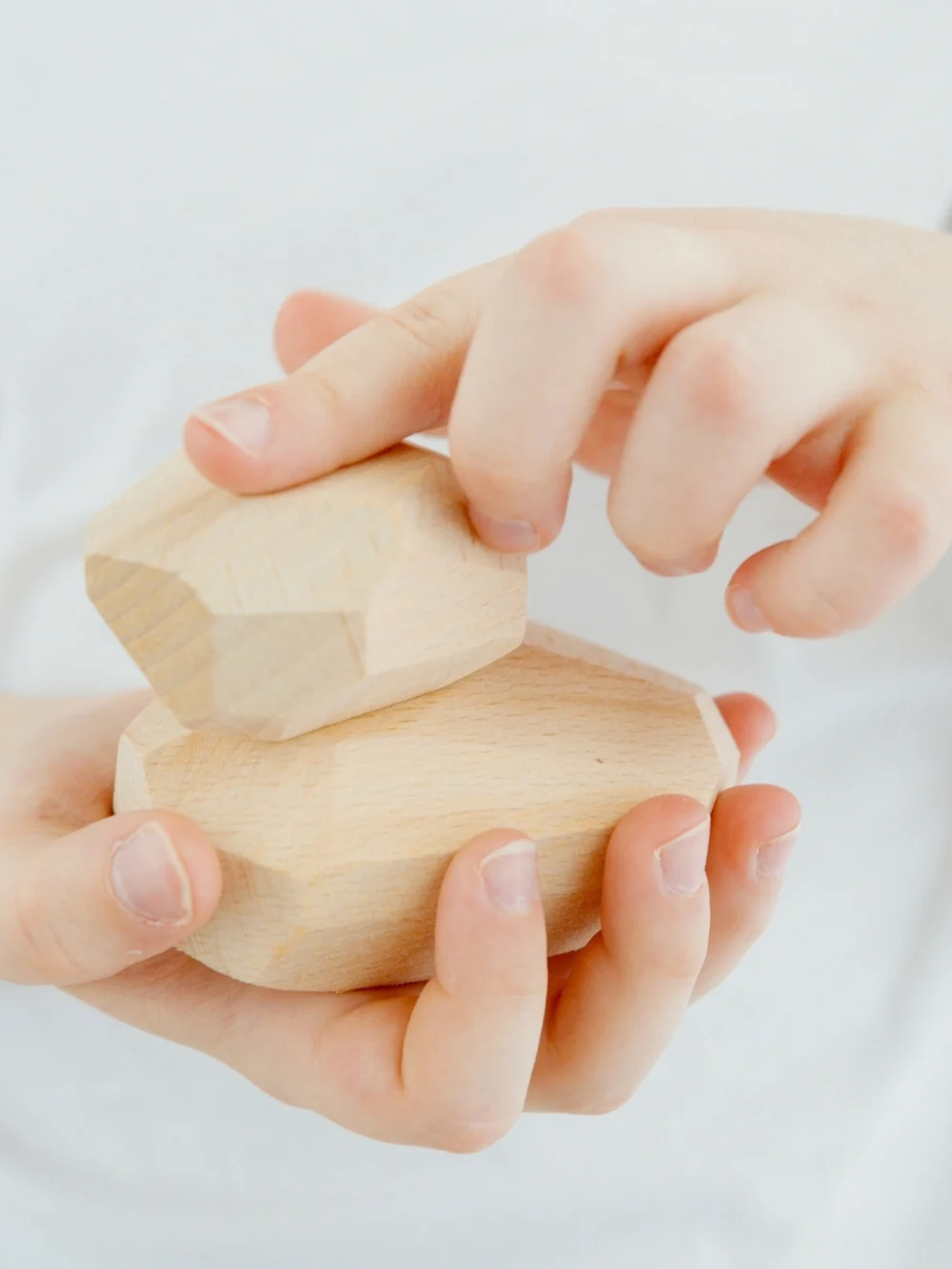 Save
Keep the bins themselves closed and out of your child’s reach. And anchor the shelf to the wall, even a low one. The CPSC’s Anchor It! campaign says anchoring all furniture with drawers, doors and shelves to the wall helps prevent tip-over injuries and deaths, and the shelf is the piece of furniture your toddler uses every day.
Frequently Asked Questions
How many toys per rotation?
How many toys per rotation depends on how much of the shelf your child has stopped using. Simone Davies swapped only some things at a time with her own toddlers and kept out whatever was still in use. On Will’s shelf, the one or two favorites usually stay while about five or six things come out of the bins.
Does toy rotation add to your mental load?
Toy rotation adds to your mental load when it runs on a strict schedule and lives in your head. Sorted, numbered bins and a one-page tracker take most of the remembering off your plate. And skipping is allowed: on my tired, pregnant-with-Jimmy days, the swap simply waits.
Conclusion
You don’t need a free Saturday to start. Tonight, after bedtime, give it ten minutes: take everything off the shelf that hasn’t been touched lately, put it in one bin or box, close the lid and set it somewhere out of sight. Then see what your child does with the shelf tomorrow morning. That’s a real toy rotation, and you can build the bins and the tracker from there.
One bin tonight is plenty. You already know what your child loves to play with, and noticing that is the part that makes all of this work.
Miri
Fewer toys, deeper play.
Further Reading & Resources
See all 8 sources
- Research: Dauch et al., 2018 (Infant Behavior & Development)
- Montessori guidance: The Importance of a Simple Environment and Montessori at Home (American Montessori Society) · Montessori storage and toy rotation (Simone Davies, The Montessori Notebook)
- Safety: Small Parts FAQ and Anchor It! (U.S. Consumer Product Safety Commission) · Choosing Safe Toys (Nemours KidsHealth)
- Real parents: Does anyone else have a hard time with rotating their toy shelf? (r/MontessoriForHome)