
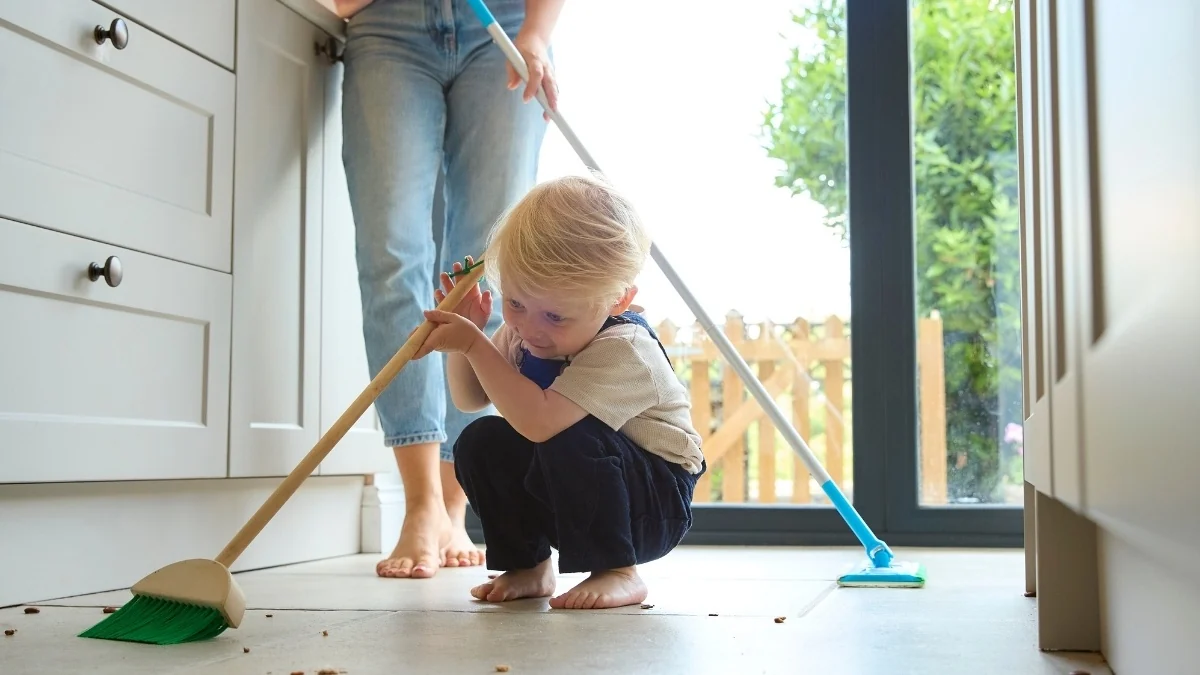
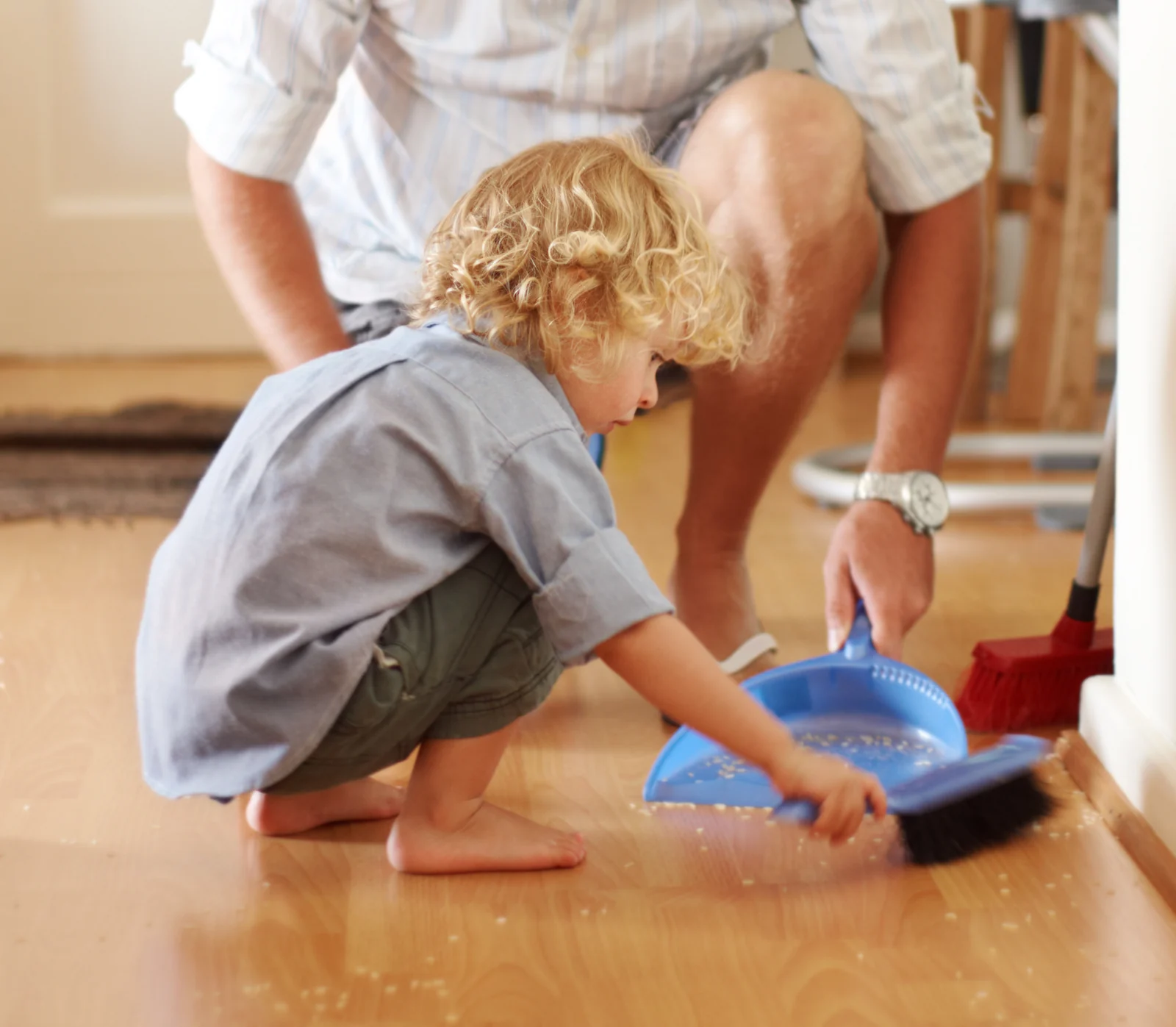
You’re sweeping up cereal under the high chair when a small hand closes around the broom handle, right above yours. Your toddler wants the broom, and they want it right now. Hand it over and they’ll push the crumbs in four directions, then trail you around the kitchen, sweeping wherever you just swept.
If that sounds like your house, you’re in good company. The Centers for Disease Control and Prevention (CDC) puts “copies you doing chores, like sweeping with a broom” on its list of milestones by 18 months, meaning things most children (75% or more) can do by that age. The broom grab is about as ordinary as toddler behavior gets.
 Save
So why does it feel so hard to let them? Part of it is what shows up when you look up practical life: mostly classrooms for 3- to 6-year-olds, with little tongs, trays of dried beans and a child calmly spooning one thing into another. Your kid is 16 months old and still tastes the bath bubbles. The other part is time. Help from a toddler is slow, wet and loud, and you’re already picturing broken glass and a quick chore that eats the whole evening.
This guide stays with the ages you’re living in, 12 to 36 months. There’s a table of real jobs by age, built on CDC milestones and on what Will did at 14, 15 and 18 months, plus the small tools that help and what to do if your toddler still mouths everything. For ideas beyond chores, I’ve laid out a simple week of Montessori activities at home by age.
What do practical life activities look like at home?
Practical life activities are the everyday jobs of looking after yourself and your home, like sweeping, wiping a table, carrying a cup or washing hands, done with real things at your child’s own speed.
In Montessori classrooms, these jobs have their own name and their own shelf. The Association Montessori Internationale (AMI) describes practical life exercises as exercises of daily life for looking after the environment, things like dusting, sweeping, laying a table and care of self. The aim, in AMI’s words, is to help the child become “a contributing person in the community.”
Its guidance for adults groups the work into areas: preliminary exercises, care of the person, care of the environment, grace and courtesy, and control and coordination of movement. That’s classroom language. At home, with a 1- or 2-year-old, it can look like this. Care of the person is pushing an arm through a sleeve. Care of the environment is a cloth on a sticky table. Control of movement is carrying a cup of water across the kitchen without sloshing half of it.
 Save
For families, the American Montessori Society (AMS) says something similar on its Montessori at home page: show and practice household tasks together, and encourage tasks that promote self-care and community contribution. Its examples for young kids are peeling veggies and folding clothes. If Montessori at home is new to you, my guide to starting Montessori at home covers the basics first.
What do Montessori practical life activities have in common? They’re real, they have a clear start and finish, and a child can do them again and again. Maria Montessori noticed that last part closely. Watching children in her first schools, the Children’s Houses, she wrote that some would “remove and replace the pieces at least twenty times, with an expression of evident interest,” in The Montessori Method. She was describing classroom work with a set of wooden cylinders. Still, you may know that look from your own kitchen, the third time your toddler wipes a spot that was already clean.
Here’s where I land, as a mom who read the books and then tried it at home: under 3, the tongs and trays can wait. The jobs already happening in your house are plenty.
Under 3, the best practical life tray is often the dish towel already hanging on your oven door.
Practical life activities by age: 12 to 36 months
Ages here are loose ranges, so start from the row that matches what your child already does and move up or down from there. Each row pairs CDC milestones or tips with jobs to try, the tool that helps, and what my son Will did.
The CDC column mixes two kinds of lines, and it helps to know which is which. Milestones (“by 18 months”) are things most children can do by that age. They’re something to watch for, and nobody expects you to drill them. Tips (“tip at 15 months”) are the CDC’s own ideas for things to try at home.
| Age | From the CDC | Jobs to try | Tools that help | What Will did |
|---|---|---|---|---|
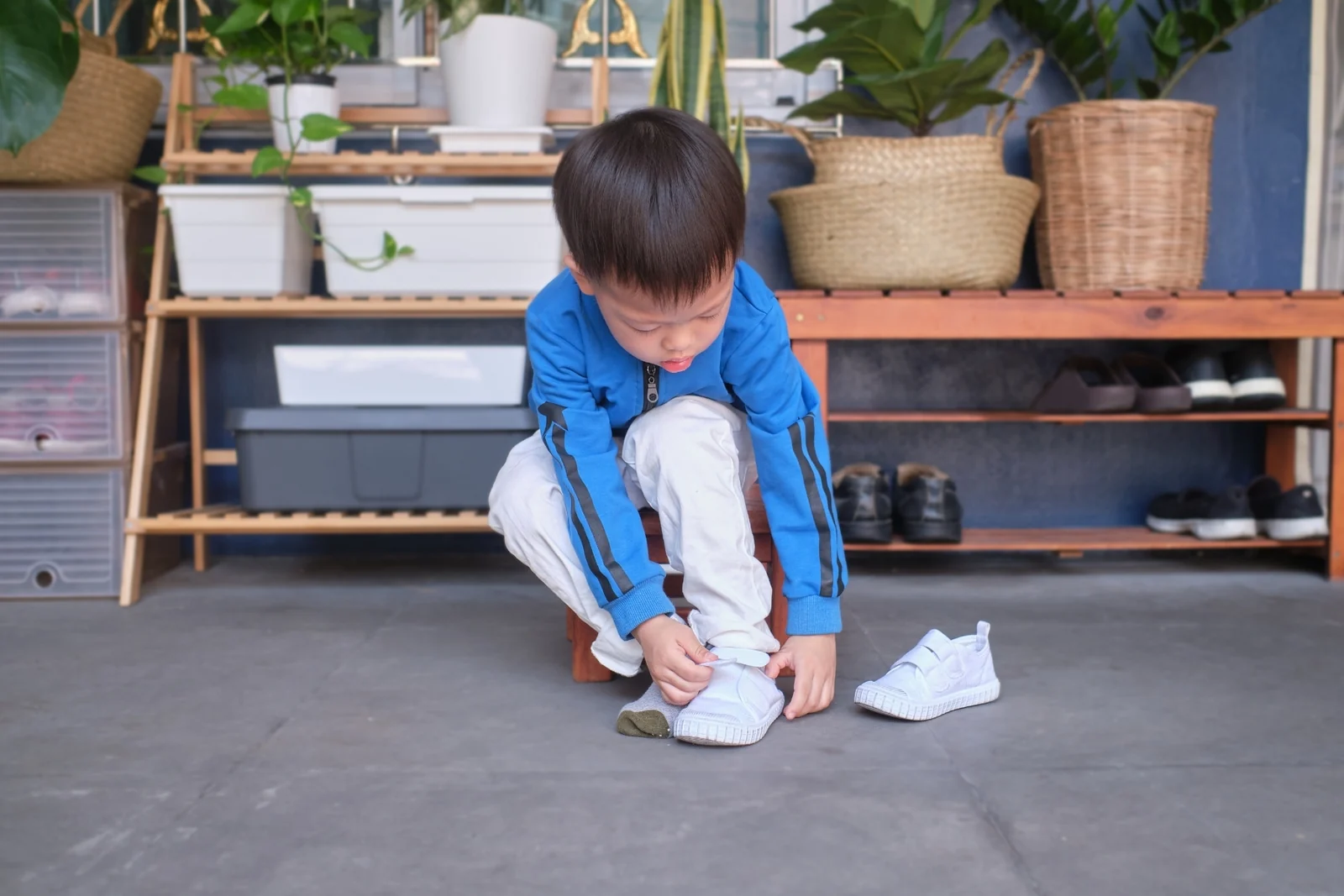
| 12–15 months | By 1 year: puts a block in a cup; picks things up between thumb and pointer finger. By 15 months: tries to use a cup the right way | Carry their own shoes to the rack; drop a toy in a basket | A low shoe rack or basket by the door | At 14 months, once he was walking steadily, he carried his own shoes to the shelf every time we came inside |
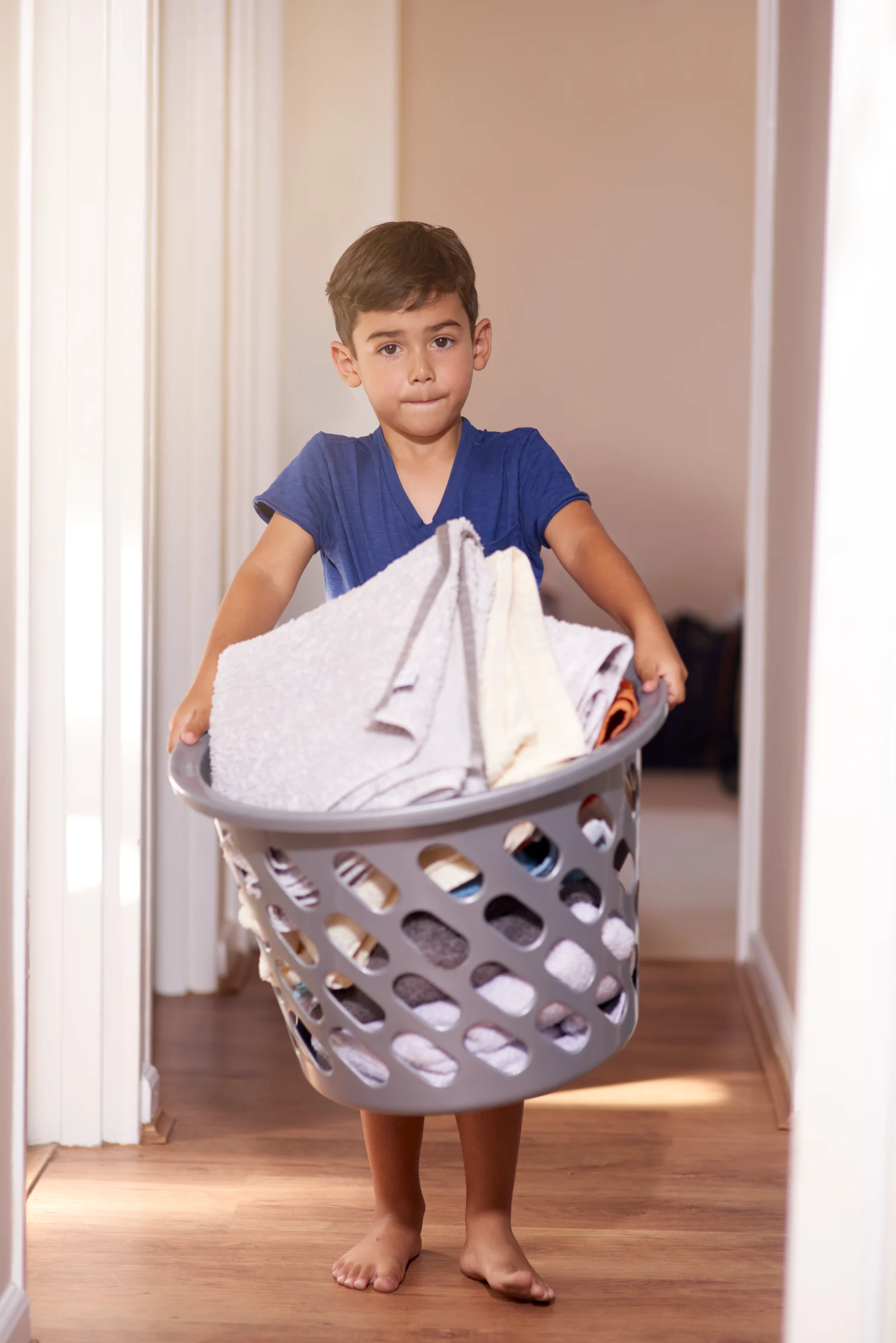
| 15–18 months | Tip at 15 months: let your child get their shoes, put snacks in the bag for the park, put socks in the basket; sing a cleanup song | Socks into the laundry basket; hand you things to put away; toys into a basket | A wide, low laundry basket | At 15 months, he dropped balled-up socks into the basket and carried wet clothes from the washer to the dryer, one piece at a time, with me right behind him |
| 18–24 months | By 18 months: copies chores like sweeping; puts hands out to be washed; pushes an arm through a sleeve; tries to use a spoon | Sweep with a small broom; wipe a table; wash hands with you; pour a little water | Small broom, mini spray bottle, small cloth, small pitcher, step stool | At 18 months, he sprayed and wiped the kitchen tables and cabinets with a mini spray bottle and a tiny cloth, and poured water from a small glass pitcher into a cup |
| 24–30 months | By 2 years: holds a container in one hand and takes the lid off with the other. Tip at 2 years: carry plastic cups or napkins to the table; put toys or laundry in a basket | Set out napkins and cups; open snack containers; laundry into the basket | Napkins and cups in a low drawer or on a low shelf | — |
| 30–36 months | By 30 months: twists lids open; takes off loose pants or an open jacket; helps pick up toys at “clean-up time.” By 3 years: puts on loose pants or a jacket; uses a fork | Unscrew a jar lid; take off and put on easy clothes; tidy toys at a set time; eat with a fork | Low hooks for jackets; easy pull-on pants | — |
Read the row for what your child does today, and let your child’s interest decide which job comes first. If they keep stealing the dish towel, that’s their first job. A toddler who wanders off after two socks has still put away two socks.
Will’s column stops after the 18–24 row because 14, 15 and 18 months are the ages I can pin down. He kept helping after that, and you’ll see some of it further down.
If your toddler is somewhere between their first and second birthdays, the first three rows are where you’ll spend most of your time, and the next two sections slow them down.
Which practical life jobs work from 12 to 18 months?
Start with jobs that are one step long: carry the shoes to the rack, drop the socks in the basket, hand over the next thing to put away. Repeat them at the same moments each day.
A lot of the hand skills behind these jobs are brand new. By 1 year, the CDC’s milestone list includes putting something in a container, like a block in a cup. By 15 months, it includes trying to use things the right way, like a cup or a book. Put those together and you get a child who loves dropping one thing into another thing. Socks into a basket is exactly that, with a purpose.
The CDC’s tips for 15-month-olds read a lot like a toddler job list. Let your child get their shoes to go outside, put the snacks in the bag for the park, put the socks in the basket. The same page suggests making up a simple cleanup song and singing it while your child helps put toys in a basket or hands you things to put away. I like the song because it tells your toddler what’s coming before you’ve asked them for anything.
 Save
Expect the jobs to come out a little crooked. When Will started carrying laundry at 15 months, he loved it. Toddlers this age seem to adore a heavy job, and he looked so proud hauling those wet clothes around. He also dropped shirts all along the way, so I was always a few steps behind him, picking them up. That’s normal at this stage. The carrying is the job, and the dropped shirt is part of it.
If you try the washer-to-dryer job yourself, the machine part stays with you. There’s more on that in the safety note further down.
18 to 24 months: wiping, pouring and hand washing
Between 18 and 24 months, the jobs can get wetter: wiping a table with a spray bottle and cloth, pouring from a small pitcher, and washing hands at a sink your toddler reaches from a stool.
By 18 months, the CDC’s list includes copying you doing chores, putting hands out for you to wash them, and trying to use a spoon. That’s a toddler telling you, fairly loudly, that they want in. And one study of 65 toddlers suggests the urge to help shows up early: in a lab, children at both 18 and 30 months readily helped an adult with hands-on tasks.
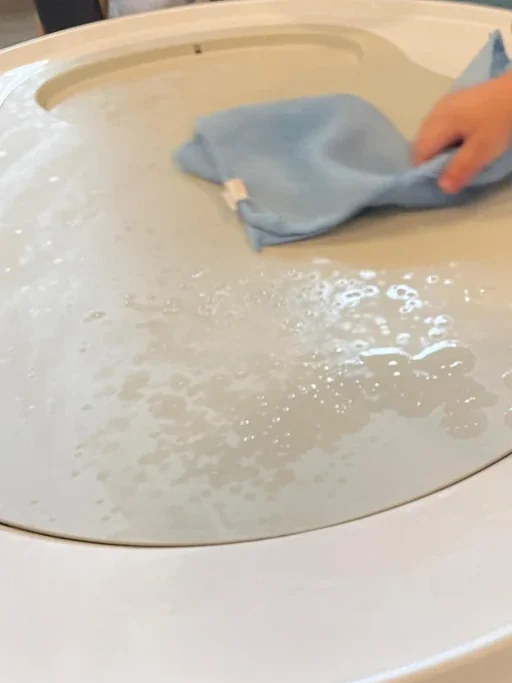
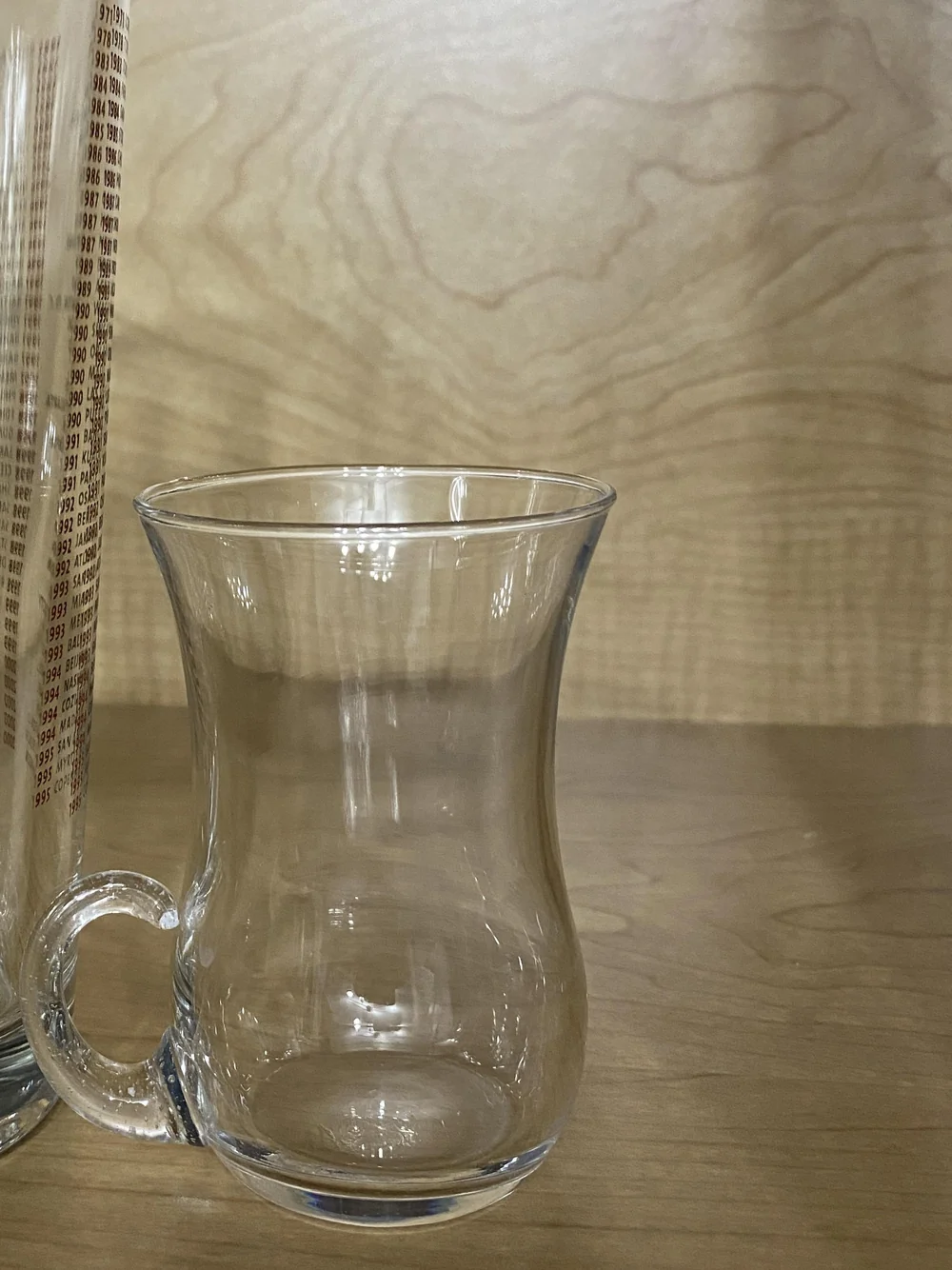
Wiping was Will’s great love at 18 months. He’d spray and wipe every table and cabinet top in the kitchen until they were bone dry. Pouring came in the same stretch, from a small glass pitcher into a cup, and the first days were a flood. Over time his hands figured out how far to tip, and by the end he poured neatly, with barely a drop on the table.
 Save
 Save
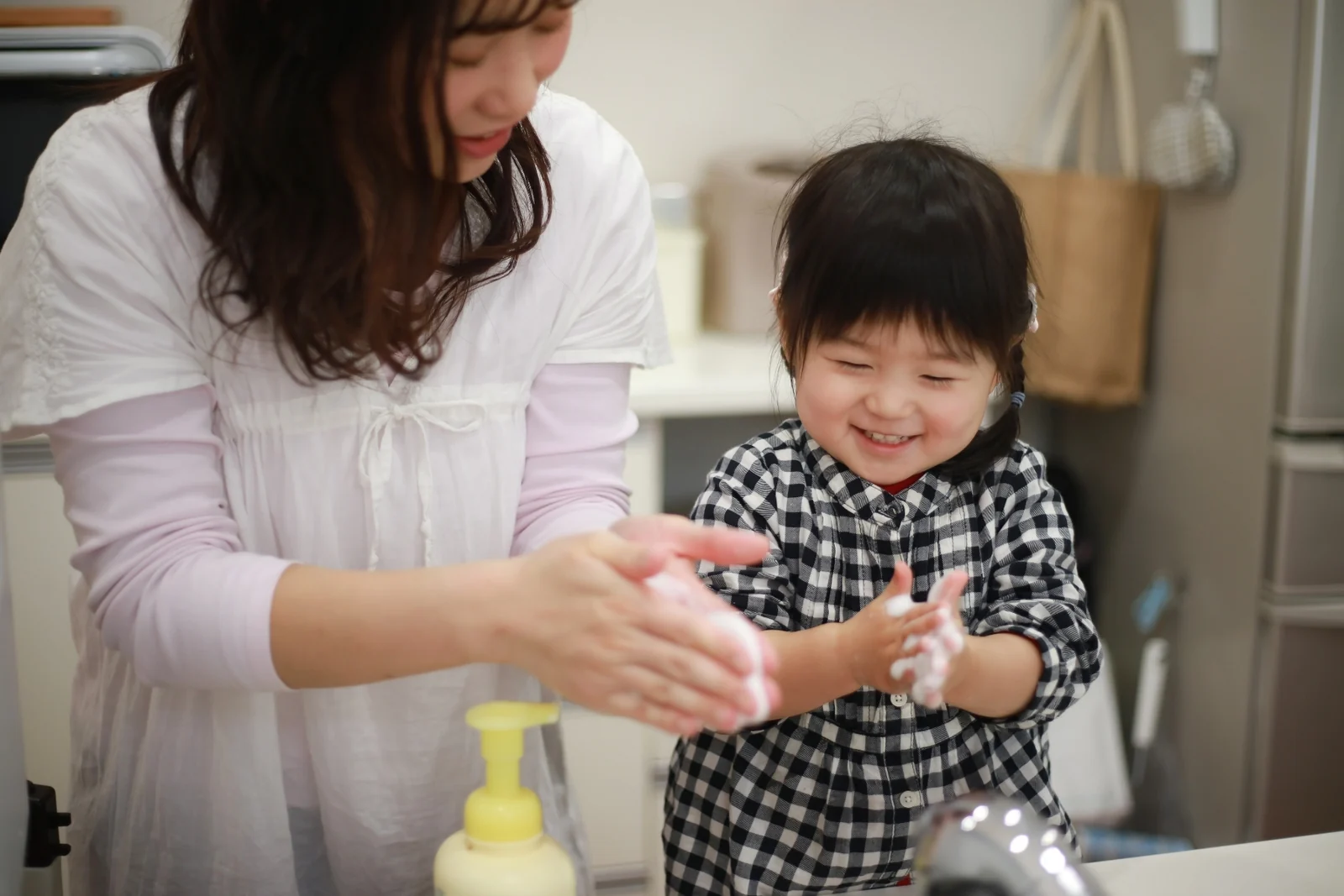
The CDC’s handwashing routine has five steps. At first you’ll do most of the work while your toddler learns the order:
- Wet hands with clean, running water, warm or cold, then turn off the tap and add soap.
- Lather the backs of the hands, between the fingers and under the nails.
- Scrub for at least 20 seconds.
- Rinse well under clean, running water.
- Dry with a clean towel or an air dryer.
A step stool makes the sink theirs. AMS suggests a stool near the countertop so kids can help with washing dishes and food prep. Moved to the sink, that same kind of stool gets small hands under the tap. Stand right beside it while they’re up there.
I put just a splash of water in Will’s mini spray bottle and gave him a tiny cloth to go with it. For pouring, I kept a towel right next to his cup, so he could mop up his own spills.
Miri’s Tip
How do practical life jobs change from 2 to 3 years?
Mealtimes and getting dressed come first between 2 and 3, because that’s where most kids’ new skills line up: carrying cups and napkins, opening and twisting lids, and taking off or putting on loose clothes.
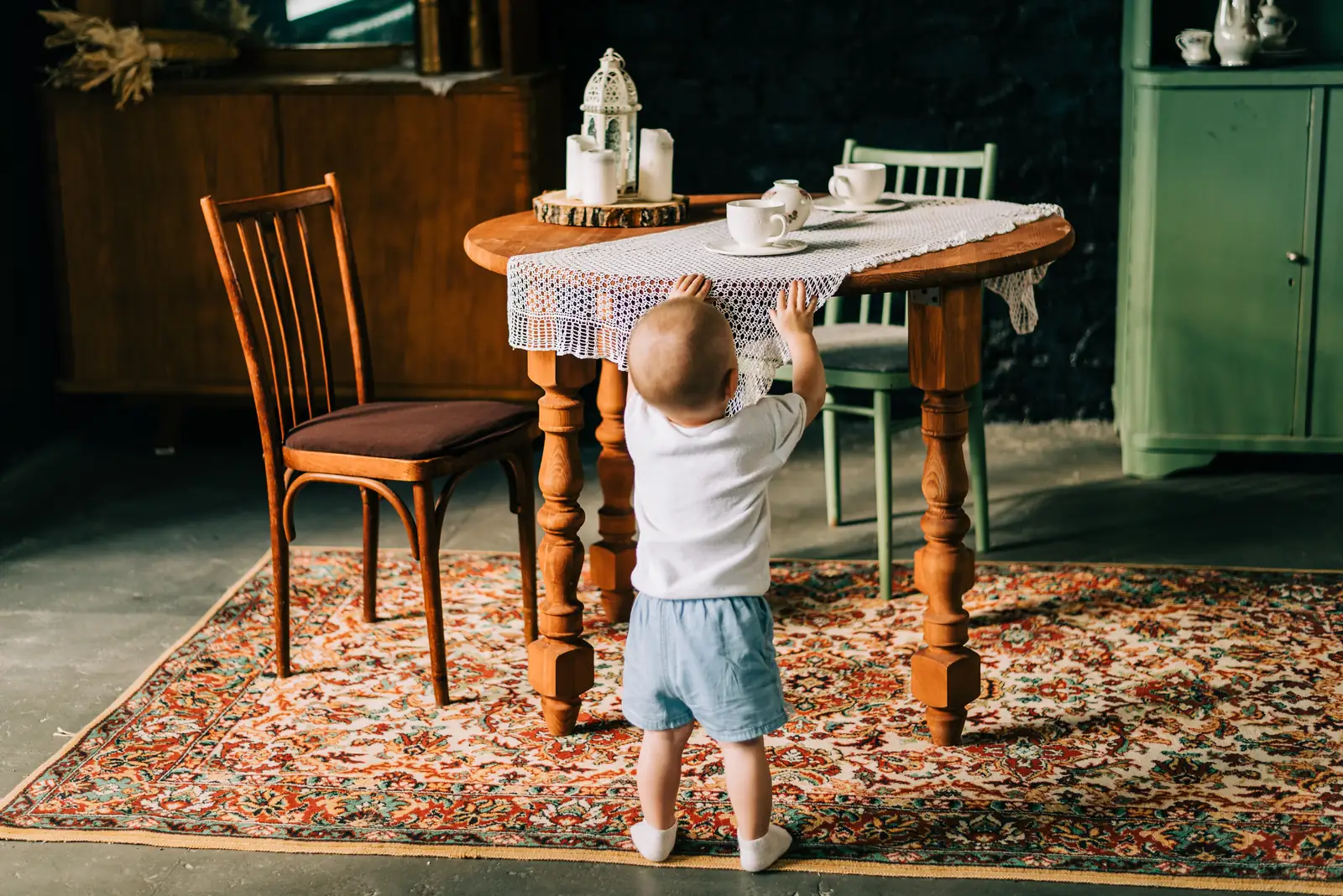
By 2 years, the CDC’s milestone list includes holding something in one hand while using the other, like holding a container and taking the lid off. Its tips for 2-year-olds head straight for the table. Let your child help get ready for mealtime by carrying things like plastic cups or napkins, thank them for helping, and let them help with simple chores, like putting toys or laundry in a basket.
That “thank your child” line is easy to skip, and I’d keep it. A plain “thanks for bringing the napkins” tells a 2-year-old the job mattered, without turning it into a show.
 Save
By 30 months, the list adds twisting things, like unscrewing lids or turning doorknobs, and following simple routines when told, like helping pick up toys when you say “It’s clean-up time.” By 3 years, it includes using a fork. So a child close to 3 might open the snack jar, carry the napkins, eat with a fork and tidy the blocks when you call clean-up time. Some days, anyway.
Care of the person: dressing
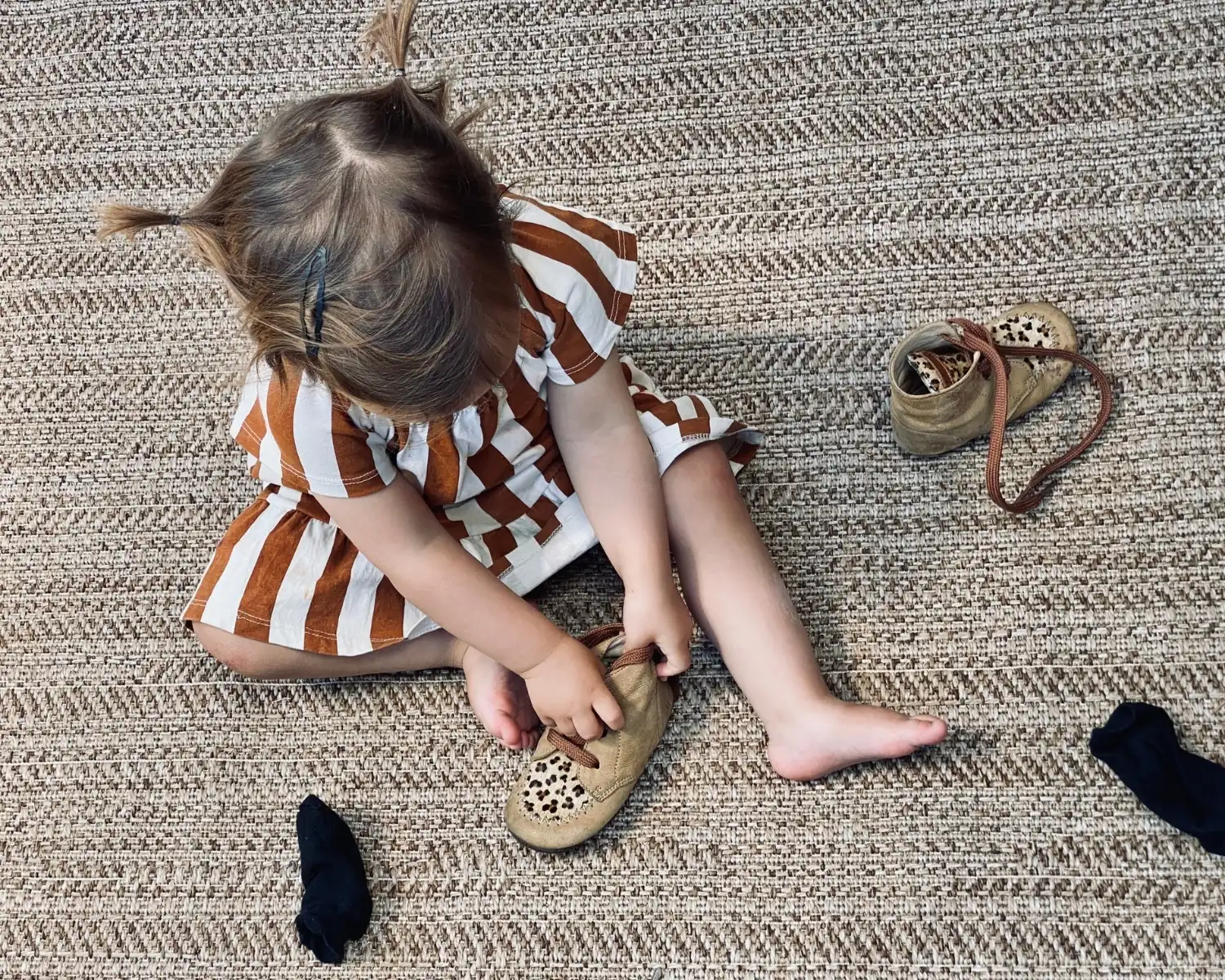
I’d file getting dressed under what AMI’s list calls care of the person, and it starts earlier than you might expect. By 18 months, the CDC’s list includes helping you dress them by pushing an arm through a sleeve or lifting up a foot. By 30 months, most kids can take off some clothes by themselves, like loose pants or an open jacket. By 3 years, most can put some on, like loose pants or a jacket.
What helps most is making the clothes easy and the choices small. Pull-on pants, jackets that open wide, and a low hook mean your toddler can do the part they’re ready for while you do the rest. In a snowy Colorado winter like ours, a jacket your toddler can shrug off alone at the door saves you both a lot of tugging. If you want to set up a dressing corner, my guide to the Montessori wardrobe covers hook height and how many outfits to put out.
 Save
Why do toddlers want to help (and is the mess worth it)?
Toddlers often want to pitch in, and one lab study backs that up for hands-on tasks. Montessori adds the bigger idea: daily work helps a child become, in AMI’s words, “a contributing person in the community.”
Practical life gets sold online with some big promises, so it helps to know what each one rests on. At Moje Montessori, we mark every row below by how much evidence is behind it.
| What practical life may offer | What the source says | Evidence |
|---|---|---|
| Toddlers readily help with hands-on tasks | In a 2010 lab study of 65 toddlers, children at 18 and 30 months readily helped an adult with action-based tasks; giving up their own things was hardest at both ages | Some research |
| Feeling like part of the household | AMI says practical life helps the child become “a contributing person in the community” | Montessori philosophy (not tested at home) |
| Coordination of movement | AMI lists “control and coordination of movement” among the areas of practical life | Montessori philosophy (not tested at home) |
| Repetition and concentration | Montessori described children in her Children’s Houses repeating an exercise many times, with evident interest | Montessori philosophy (not tested at home) |
“Backed by research” means studies with babies or toddlers support that piece. “Some research” means part of it is supported. “Montessori philosophy (not tested at home)” means there’s little or no research on it in family homes yet.
You’ll notice there’s no row about long-term results, like better grades or a tidier teenager. I didn’t find a solid source for that, so it stays out. The study in the first row also has limits worth knowing. The tasks were set up by researchers in a lab, with a small group of kids, so it tells us toddlers like to help an adult. What it means for your laundry is anyone’s guess.
 Save
Whether the mess is worth it is something only your own week can answer. This is how it went in ours.
Will’s first jobs, from 14 to 18 months
Will started helping as soon as he was steady on his feet, and the jobs grew with his hands.
- Step 1 (14 months): Shoes to the shelf, every time we came in from outside.
- Step 2 (15 months): Laundry helper: balled-up socks into the basket, wet clothes from the washer to the dryer.
- Step 3 (18 months): Water jobs: the mini spray bottle and cloth for the kitchen, then pouring from the small pitcher.
Honestly, letting a one-year-old help sometimes took three times as long as doing it myself, between the waiting and the cleanup after. Now I’m pregnant with Jimmy, and on the tired days, being able to ask Will to throw a diaper in the trash, put his dirty bowl in the sink, or clear the toys off the rug saved me more energy than I can tell you. When you’re running on empty, a small helper who already knows the jobs is a real gift.
The jobs that took three times as long bought me a helper on the hard days.
Child-size tools that make practical life work
Put a few real, small tools where your child can reach them: a stool by the counter, a low shelf, a cloth that fits one hand. Then leave them there, so a job can start without you fetching anything.
The AMS suggestions for homes are refreshingly simple. Store groceries on low shelves so kids can choose and put things back. Put a stool near the countertop so they can help wash dishes and prep food. If you have the space, add a child-sized table and chair for meal prep, snacks and cleanup, along with real kitchen utensils in a size that fits. The kitchen gets its own post, with the safety pieces that come with knives and stoves, in cooking with toddlers.
For the jobs in this guide, the short list looks like this:
- A step stool at the counter or sink, with you beside it
- A low basket or rack for shoes, socks and toys
- A small cloth and a mini spray bottle with a splash of water
- A small pitcher and a cup, with a towel nearby
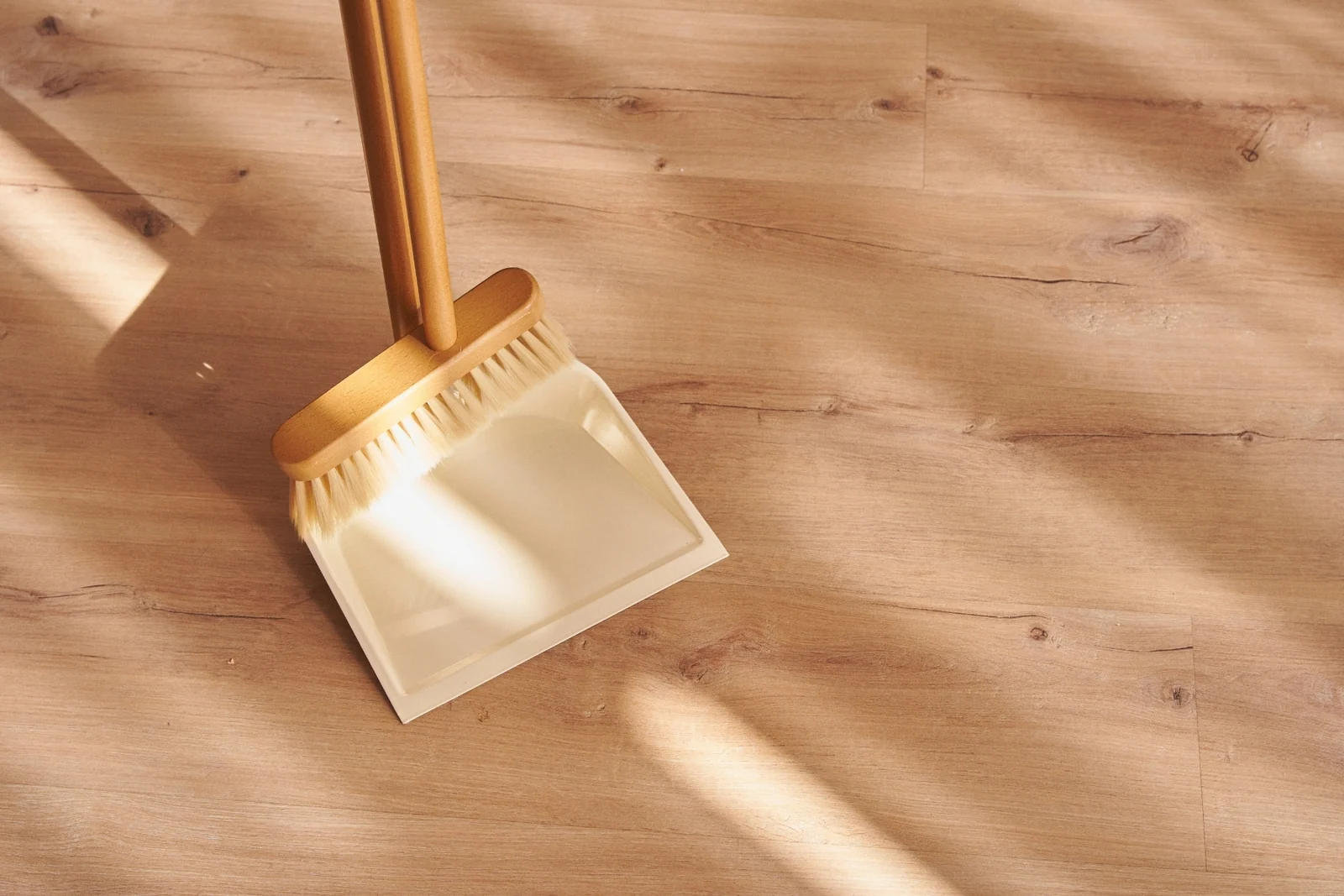
- A small broom and dustpan, or a hand brush
- Low hooks for a jacket and a bag
 Save
The accountant in me likes how little of that list needs buying. Most of it is already in your house, just moved lower. We used a small glass pitcher for pouring. That was our call, and any small pitcher your toddler can lift works for practice. If you’d like to make the rest, DIY Montessori practical life activities can come mostly from your kitchen drawers, and there’s a whole post of ideas built from household things.
Shopping anyway? A wooden-handled hand brush or broom has a nice weight in a small hand. Run your fingers along the handle for rough spots before it goes on the hook. If you’re weighing which practical life toys to buy, the real tools made small, size and price are worth comparing before anything goes in the cart.
How do you start practical life activities for toddlers?
Show the job slowly, do it side by side, and offer one job at a time. A cleanup song and a plain “thank you” handle most of the rest.
AMS puts it plainly: “Show and practice household tasks together.” In a real house, with a real toddler, that turns into something like this:
- Pick one job your toddler already grabs for. The broom, the socks, the dish towel. Interest does half the work.
- Show it slowly, with few words. Do the motion at half speed so they can watch your hands.
- Do it together. Hand them their own cloth while you wipe with yours.
- Tie it to the same moment each day. Shoes when you come in, napkins before dinner. The CDC’s cleanup song fits right here.
- Say thank you, then let it be. A wobbly result is still a finished job. Redo it later if you must, out of sight.
If you get a firm “no” to the job you picked, swap it for the one they keep grabbing. Toddlers have strong opinions about which chores count. And if you’d like a whole week mapped out, with one kind of activity a day, the week of activities by age I mentioned up top does exactly that.
 Save
What if my toddler still puts everything in their mouth?
Then your toddler is in the group the American Academy of Pediatrics (AAP) flags as highest risk. It says babies and toddlers are at the highest risk of choking because they love to explore the world by putting things in their mouths. The same new pinch that lets a 1-year-old pick up a crumb lets them pick up a bead.
None of the sources I used say at what age mouthing stops, or that a mouthing toddler can’t do practical life yet. So this part is my take as a mom: mouthing changes which jobs you pick and how close you sit. Choose jobs with big things, like shoes, socks, a cloth, a broom or a laundry basket. Leave anything small enough to go in their mouth out of practical life for now, which rules out beads, buttons and coins. Put only water in the spray bottle. And stay within arm’s reach while they work.
Babies and toddlers have the highest choking risk because they explore by mouth, the AAP says. Keep coins, marbles, balloons and small button batteries out of reach, and follow the age recommendations on toy packages. Many choking incidents happen when an older brother or sister hands a younger child dangerous food, a toy or a small object, so check the big kids’ things too.
For laundry jobs, open the washer and dryer yourself, stay right there while your toddler carries, and close both doors afterward. The AAP’s laundry room guidance suggests child locks on front-loading machines and a rule that washers and dryers aren’t toys. The open, stay and close routine is my own addition.
So tonight, skip the tray and the shopping list. Whatever your toddler keeps reaching for is your first job. Expect a little mess along the way, because that’s what learning a job looks like at this age.
Frequently Asked Questions
What are practical life activities in Montessori?
Practical life activities in Montessori are everyday exercises for looking after yourself and your surroundings, like dusting, sweeping and laying a table. AMI groups them into preliminary exercises, care of the person, care of the environment, grace and courtesy, and control and coordination of movement. For a toddler at home, they’re your daily chores, done together.
Conclusion
Some days your toddler will sweep one crumb and walk off with the broom. Other days they’ll wipe the table until it squeaks and ask for more. Both count. You don’t need a classroom or a matching set of tiny tools to start. Pick the one job your child is already trying to take from you, give them their own small version, and do it together tonight. It will be slower. It will also be theirs.
Let them have the broom tonight, crumbs and all. Making room for a toddler’s help on a tired evening takes real patience, and yours counts.
Miri
Fewer toys, deeper play.
Further Reading & Resources
See all 14 sources
- Montessori background: Practical Life Exercises and The Guidelines for the Prepared Adult in Supporting the Exercises of Practical Life (Association Montessori Internationale) · Montessori at Home (American Montessori Society) · The Montessori Method, chapter XII (Maria Montessori, 1912)
- Milestones: Milestones by 1 Year, 15 Months, 18 Months, 2 Years, 30 Months and 3 Years (Centers for Disease Control and Prevention)
- Research: Toddlers’ prosocial behavior: from instrumental to empathic to altruistic helping (Svetlova, Nichols & Brownell, Child Development, 2010)
- Safety and hygiene: Choking Prevention for Babies & Children (American Academy of Pediatrics, HealthyChildren.org) · Laundry Room and Detergent Safety (American Academy of Pediatrics, HealthyChildren.org) · About Handwashing (Centers for Disease Control and Prevention)