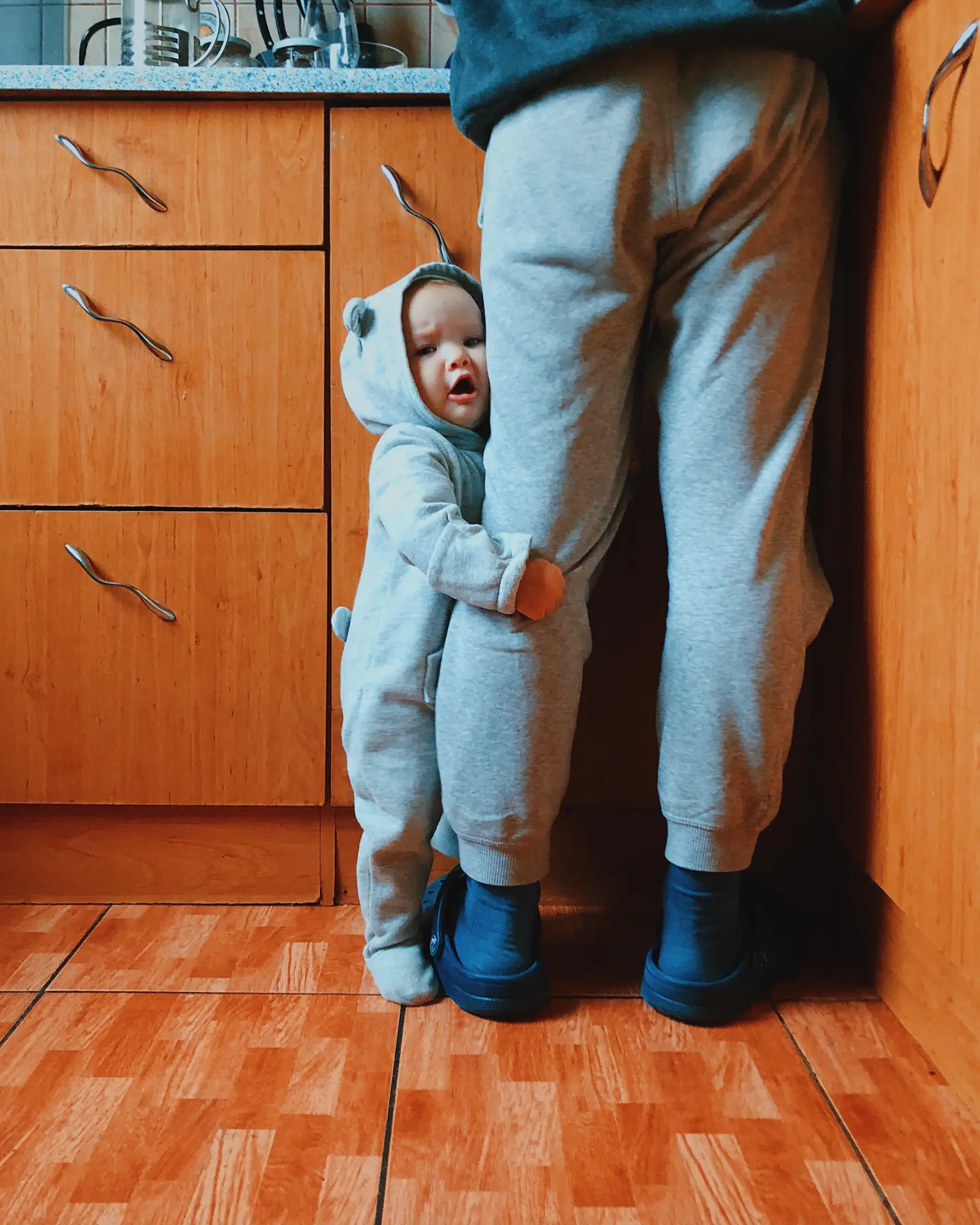
Before we had a tower, making dinner at our house came with a toddler attached. I’d start cooking, and Will would wrap himself around my leg and cry to be picked up.
If the witching hour at your house sounds like that, you already know the choices. Cook one-handed with a toddler on your hip, or cook to a soundtrack of crying. One parent on r/MontessoriForHome, trying to choose between two brands of toddler tower, explained why a kitchen chair wasn’t enough:
“Yes I know they can stand on chairs but dinner prep is busy”
A parent on Redditr/MontessoriForHome thread (2026)
Our tower turned out to be one of the most worth-it things we’ve bought for Will, and he uses it every day. It also came with recalls to check and rules to keep. What follows comes from one tower in our kitchen, recall notices from the U.S. Consumer Product Safety Commission (CPSC), one maker’s published specs, and the house rules we made after a few scares. The kitchen is just one stop in our home, and the rest is in my Montessori playroom guide.
a learning tower that prints its age range and weight limit, has an adjustable platform and a rail around your child’s waist on every side, and isn’t on CPSC’s recall list — all four are things you can check yourself, and it only gets used with an adult right beside it.
you have no corner to store it between uses, your child can’t yet stand steadily on their own, or you only need a boost for a few minutes a day (a sturdy step stool, with you standing right there, is the cheaper route).
 Save
What is a learning tower, and why do Montessori families love it?
A learning tower is a tall step stool with a railed platform, so your toddler can stand at counter height and help with real kitchen jobs instead of watching from the floor.
You’ll also see it sold as a kitchen helper, a toddler learning tower or, now and then, a tower of learning.
For families, the American Montessori Society (AMS) suggests a stool near the countertop so children can help wash dishes and prep food, plus real kitchen utensils sized for small hands instead of plastic toys. That everyday work has a Montessori name. Practical life is the ordinary business of daily living, like dusting, sweeping, setting a table and caring for yourself, and the Association Montessori Internationale (AMI) says it builds coordination and, little by little, character, because it takes patience and focused attention.
That’s Montessori philosophy more than kitchen research, so here’s what it looked like in ours.
Ask parents which Montessori purchase earned its keep, and the learning tower comes up a lot, for snack prep, for dinner help, or just for watching a parent cook from up high.
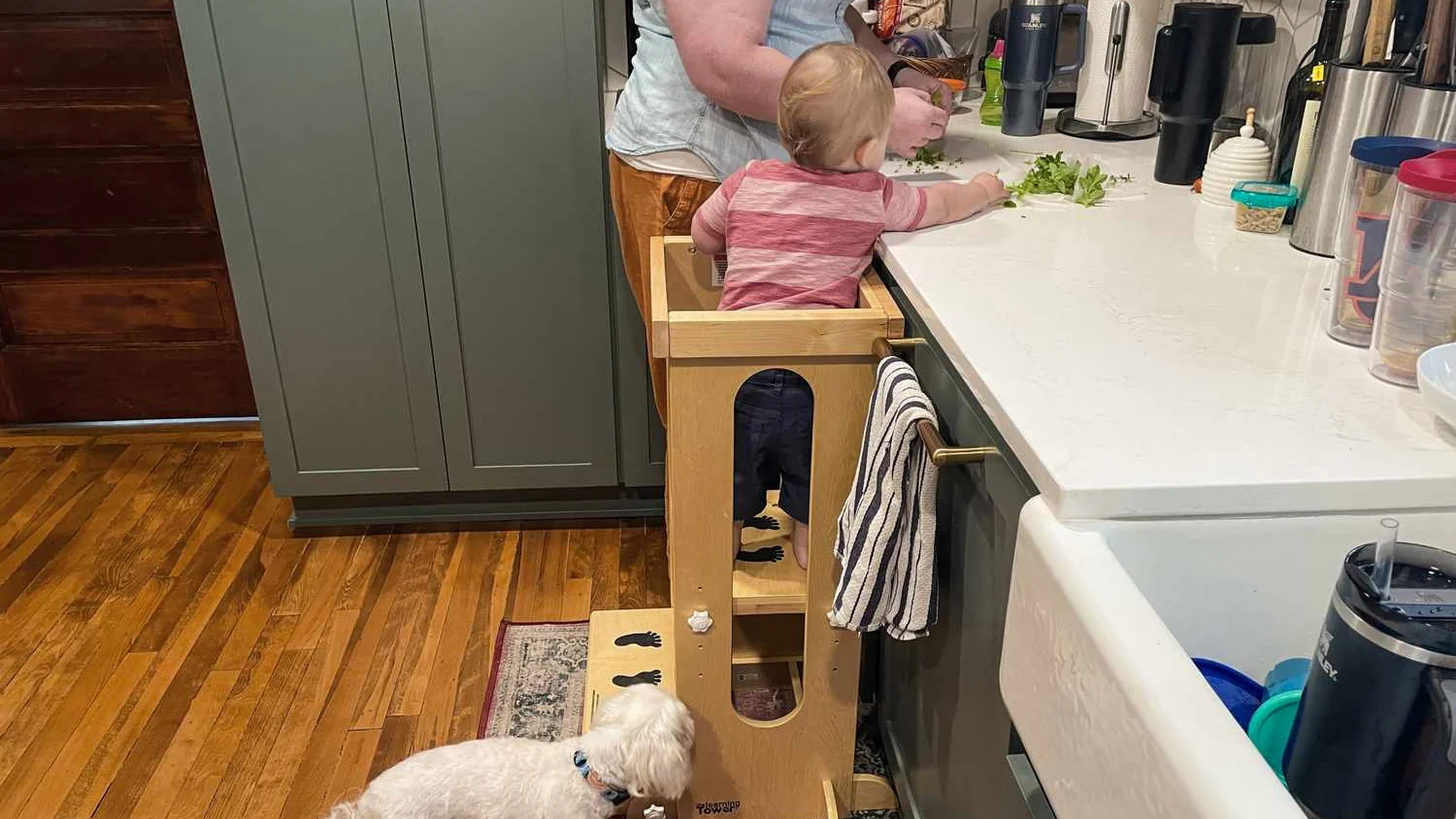
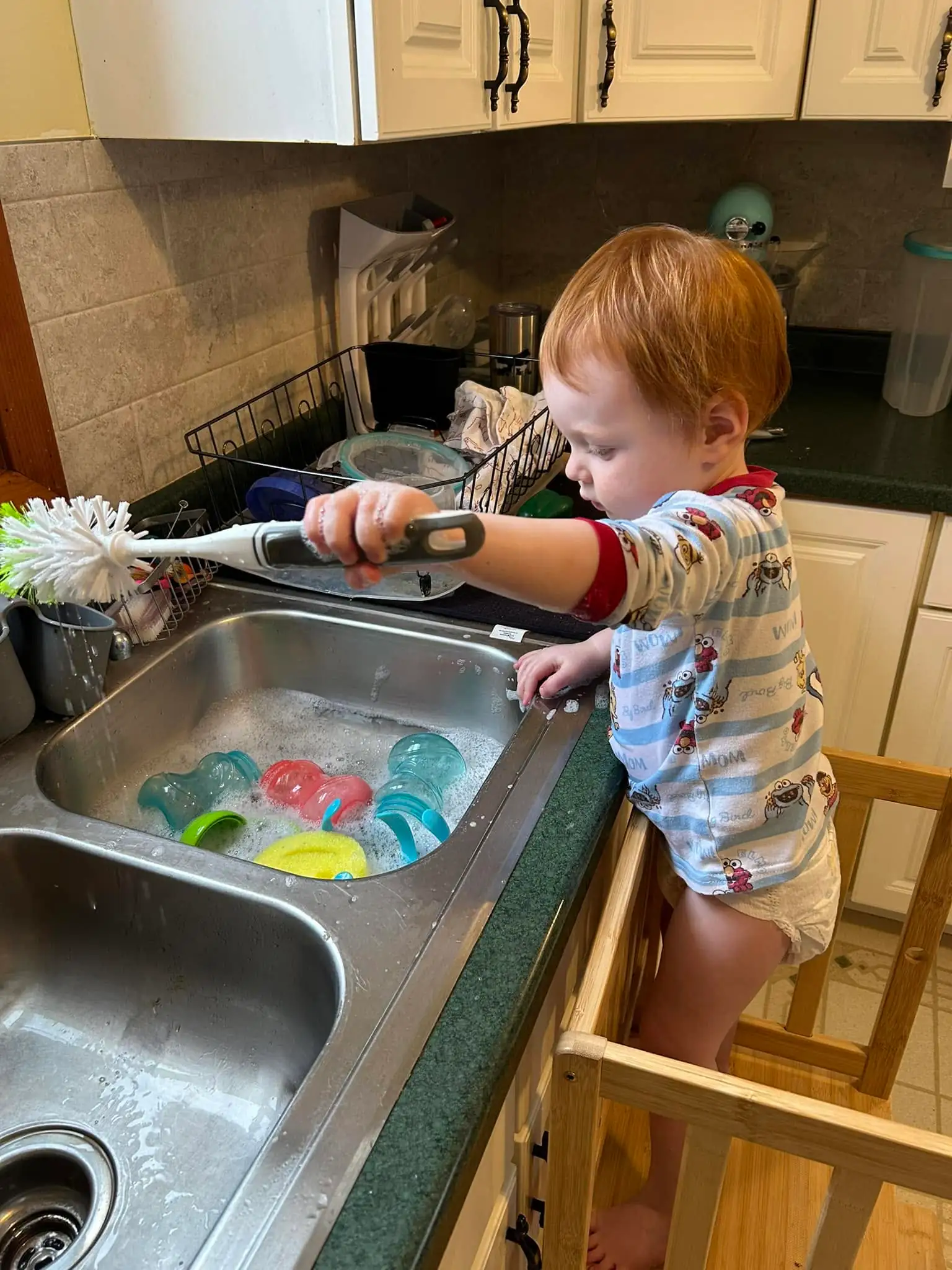
In our kitchen, the change was easy to see. Will started climbing up by himself, and there he was, standing level with the counter, beaming because he got to work like the grown-ups. His jobs are small and real: washing tomatoes, peeling garlic, tearing up lettuce. With me standing right beside him, he slices banana and avocado with a wavy crinkle cutter.
 Save
Even the Centers for Disease Control and Prevention (CDC) puts this kind of help in its tips for parents of 2-year-olds: let your child help get ready for mealtime by carrying things to the table. For a first job tonight, you don’t even need a tower: hand over the napkins.
How old should a toddler be for a learning tower?
Your tower’s own age label comes first. Piccalio, for example, says its towers are for children 18 months through 6 years, and that a child should be able to stand up independently to use one safely.
The label on ours, a Little Partners Original Learning Tower, says 18 months to 6 years and a weight limit of 250 lb. So that’s where I’d start: the age printed on the tower you actually own, and a child who stands steadily without holding on to anything.
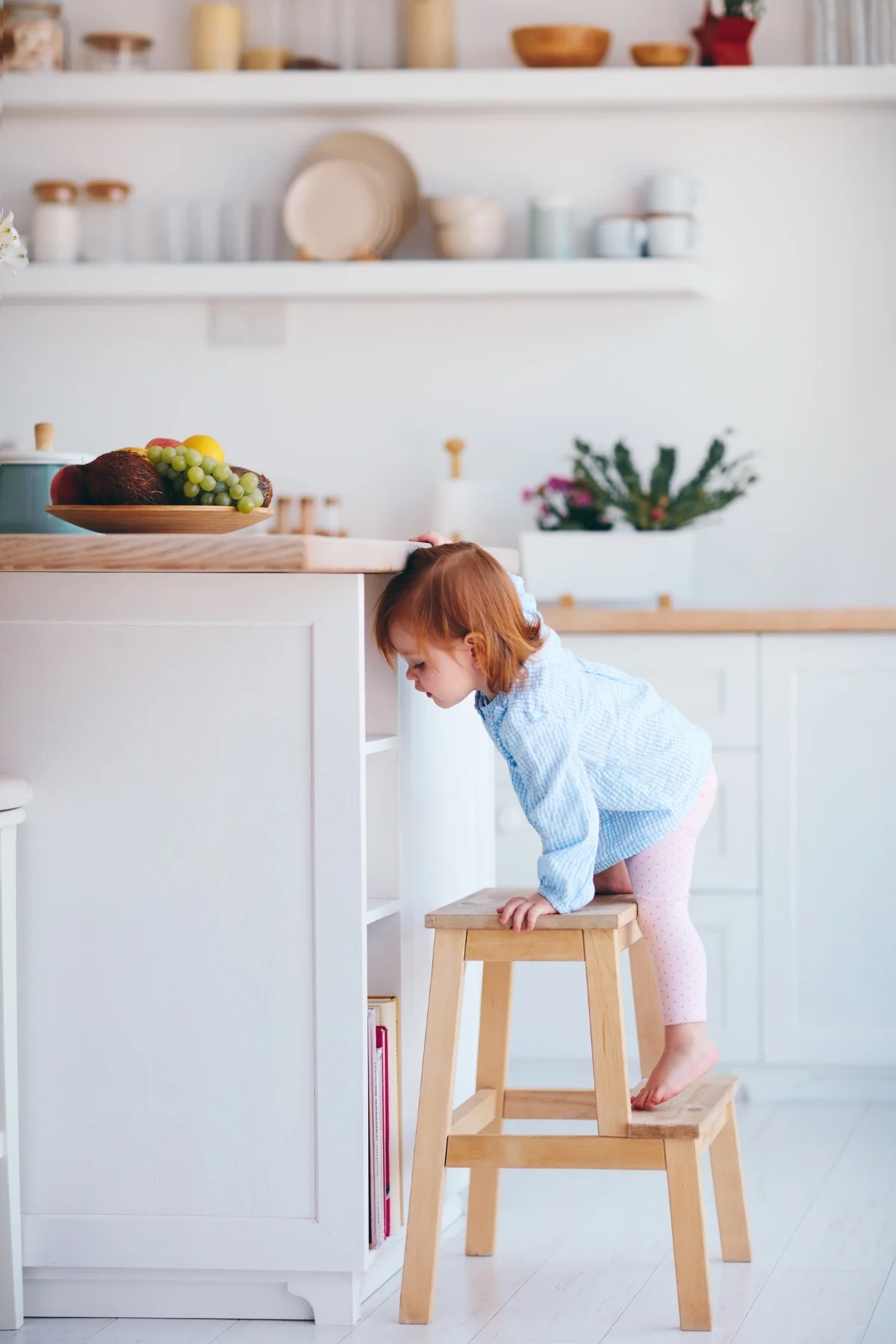
Age matters because of what toddlers can do and what they can’t yet judge. The American Academy of Pediatrics (AAP) notes that between 1 and 2, children walk well and start to climb, jump and run, and that a child this age doesn’t understand what’s dangerous. A learning tower needs both halves of that sentence covered. Your toddler brings the climbing, and you bring the judgment.
 Save
Beyond standing steadily, I’d watch for one more thing you already know about your child: can they climb up a low step and back down without help? If it’s “not yet,” a few more weeks of floor time costs you nothing.
Learning tower safety: the recalled towers I’d skip
Check the model on CPSC’s recall list before a tower comes home. Since November 2025, CPSC has recalled towers from makers including Little Partners, Boon, Guidecraft, HARPPA, Woodure, Mangohood and Cosyland for tipping, collapsing, loose platforms or openings a child’s torso fits through.
Piccalio says on its product page that no mandatory safety standards exist for toddler towers, and I couldn’t find a federal rule for them either. The company says it opted into testing anyway, but a maker’s list of tests is still the maker talking. A recall list is the one check that doesn’t depend on anyone’s sales page.
| Tower | Recall date | How many | What can go wrong | What to do |
|---|---|---|---|---|
| Boon PIVOT Collapsible Toddler Tower (recall 26-620) | July 16, 2026 | 116,908 in the US, about 2,033 more in Canada | Can tip over while in use; 11 reports of towers being unstable, shifting or leaning; no injuries reported | CPSC says to stop using it and store it away from children until repaired; TOMY mails a free stabilizing repair part |
| HARPPA Nordi foldable toddler tower (model HANS0002) | July 30, 2026 | 47,166 | A child’s torso can fit through the openings on the front and back; 3 reports of the stools collapsing or tipping over | Stop using it and store it away from children; contact HARPPA for a free repair kit |
| Guidecraft Kitchen Helper Towers | May 14, 2026 | About 25,235 | The platform inside can loosen over time, making the tower unstable or letting the platform detach; 11 reports of children falling | Stop using it immediately; contact Guidecraft for free repair parts |
| Little Partners Grow ‘N Stow Folding Learning Tower (model LP01711, date codes 202409 to 202501) | November 20, 2025 | About 9,780 | The platform inside can collapse; 14 reports of collapses, including one child with bruises | Stop using it right away and get the free repair kit, which includes a new crossbar |
| Woodure, Mangohood and Cosyland tower stools | Cosyland May 14, 2026; Woodure and Mangohood July 30, 2026 | Cosyland 125,200; Woodure about 91,000; Mangohood 105 | Can collapse or tip over in use, and a child’s torso can fit through the openings on the front and back | Look up your model’s recall notice on CPSC’s site |
Not sure which Boon you have? The CPSC recall notice describes the PIVOT as a gray and white metal-and-plastic tower sold on Target.com, Amazon.com and Babylist.com from January 2023 through June 2026 for around $150. The Grow ‘N Stow sold at Walmart, Amazon, Littlepartners.com and other stores from December 2024 through September 2025 for about $100.
When we bought ours, I checked CPSC’s recall list, and the Little Partners Original Learning Tower wasn’t on it. Later, the Grow ‘N Stow recall came out. Same company, different tower: the Grow ‘N Stow folds, and ours is the wooden one that doesn’t. If your tower says Little Partners on it, find the model name and number before you either panic or relax.
So here’s my skip list, plainly. The Boon PIVOT and the Grow ‘N Stow, unless the free repair part is installed. The HARPPA Nordi foldable, the Guidecraft Kitchen Helper Towers and the Woodure, Mangohood and Cosyland stools, until you’ve followed the remedy in your model’s CPSC notice. The thread behind that opening quote compared HARPPA and Piccalio, so if you’re weighing HARPPA, check the model first.
CPSC also recalled Wiifo, TOETOL HOME, AMZCMJ DGD and SDADI stools in April and July 2026 for similar entrapment and fall hazards. Even that isn’t every recall, and my list comes from the notices alone, since I haven’t tested any of these towers. Search your exact model on CPSC’s recall page before you decide.
If your tower is on a recall list, stop using it today and store it where your child can’t reach or climb it, then follow the remedy in CPSC’s notice. CPSC’s notices describe tip-over, fall and entrapment hazards, and for some of these towers, a risk of serious injury and death.
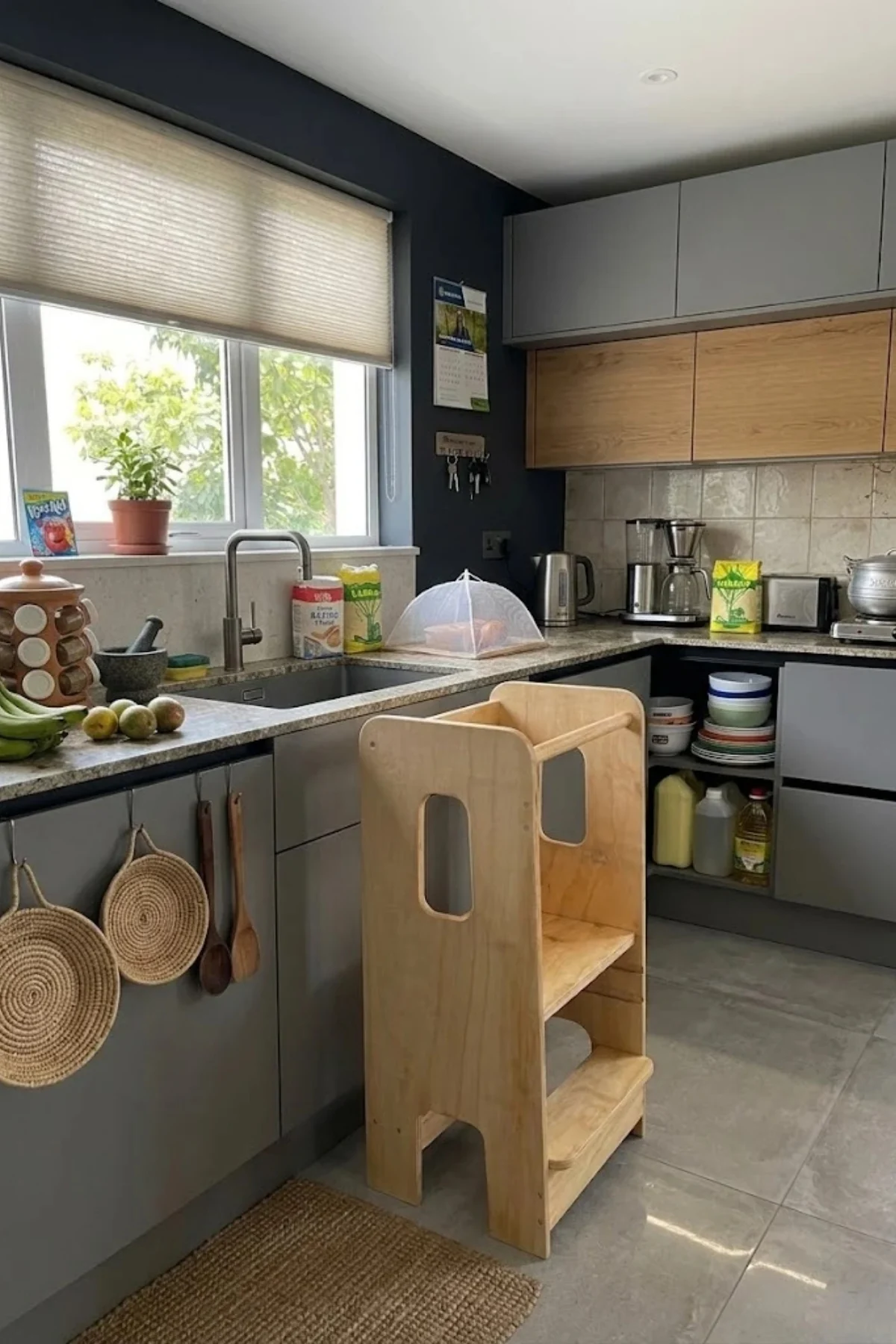
Check the openings on any tower, recalled or not. On the recalled Woodure, Mangohood, Cosyland and HARPPA towers, a child’s torso could fit through the openings on the front and back. A gap your child’s body can slide through is a reason to stop using a tower, whatever the label says.
 Save
What should you check in a kitchen helper tower before you buy?
Read the label, then the rails, then the recall list. A kitchen helper tower should state an age range and weight limit, adjust its platform height, put a rail around your child’s waist and carry a model name that isn’t on a recall.
I haven’t measured towers side by side, so there’s no stability ranking here. What I can give you is the list I’d run through for any tower, with Piccalio’s published specs as the example and the recalled Boon for size.
| Piccalio Convertible Toddler Tower | Boon PIVOT (recalled, shown for size) | |
|---|---|---|
| Price | $219 sale price (as of October 2026) | Around $150 (sold January 2023 to June 2026) |
| Size | 35.4 in. high, 15.6 in. wide, 15.6 in. long | About 35 in. high, 22 in. wide, 23 in. deep |
| Step height | Adjustable: 6, 8 or 10 in. | — |
| Weight limit | Up to 175 lb | — |
| Materials | FSC birch plywood and New Zealand pine, 0-VOC finish | Metal and plastic |
| Ages (maker’s product page) | 18 months through 6 years; child should be able to stand up independently | — |
A dash means the recall notice doesn’t give that detail.
At Moje Montessori, we look for five things you can check from a product page and a recall search:
- An age range and weight limit in writing. Piccalio lists 18 months to 6 years and up to 175 lb. No numbers on the listing? Ask the seller before you buy.
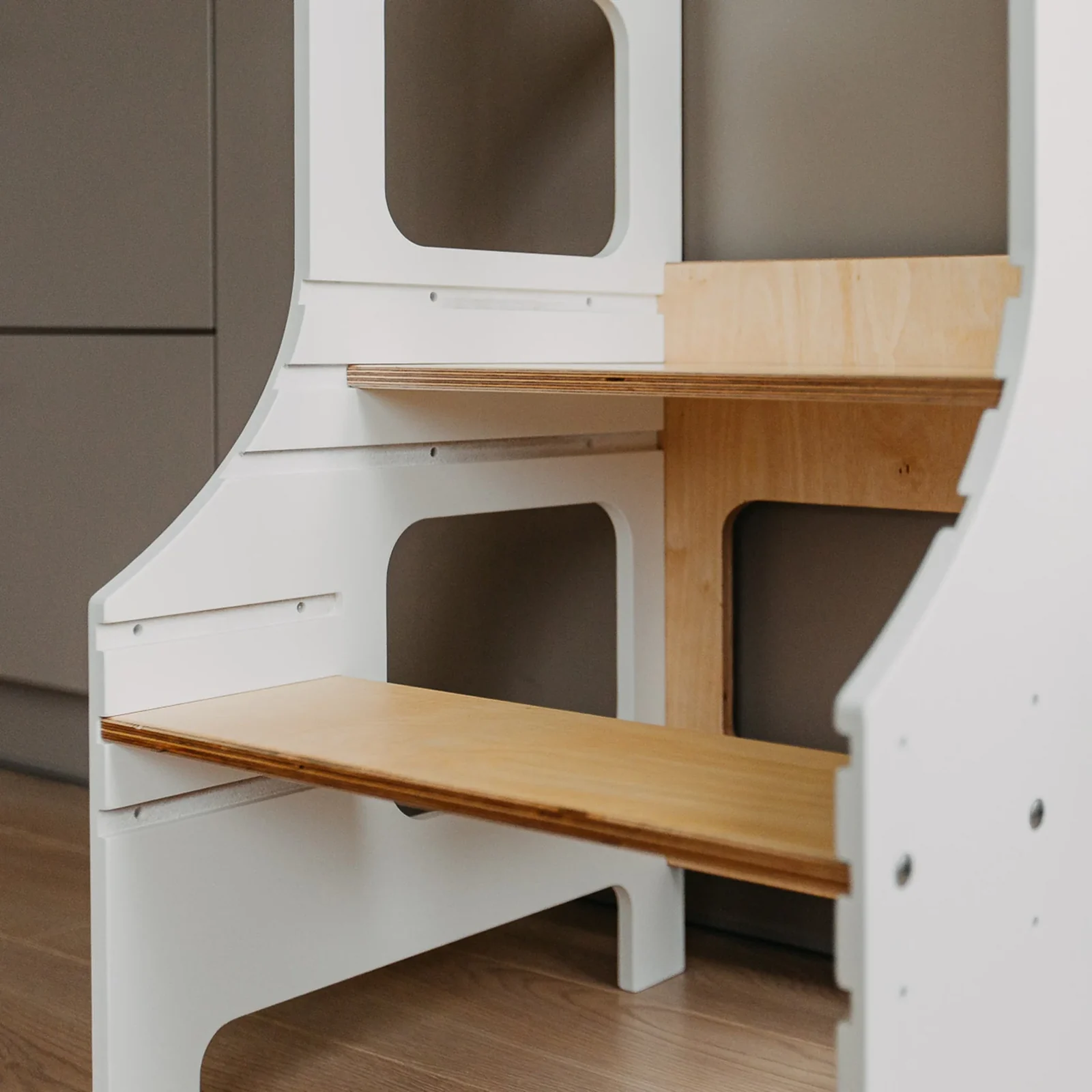
- A platform you can move. Piccalio’s step height adjusts to 6, 8 or 10 inches, so the tower keeps up as your child grows.
- A rail around the waist, on every side. Piccalio’s page describes “a secure railing around the waist area” without saying how many sides it covers, so look at the product photos yourself. It also sells a $34 safety net that it says many families find helpful for the first months. Check the front and back openings hardest, since that’s where several recalled towers let a child’s torso through.
- A model name that isn’t on a recall. Search the exact name and model number on CPSC’s site, secondhand towers included. If it folds, check that exact folding model, because a brand’s fixed and folding towers can have different recall histories.
- Certifications, read as the maker’s word. Piccalio lists ASTM F963 and F2613, Intertek, GREENGUARD Gold and FSC wood, which tells you what the company says it signed up for. A wiggle test at home can find a loose bolt, and it still doesn’t make a tower certified.
 Save
Then measure your kitchen. Piccalio’s Convertible stands on a 15.6-inch square, while the recalled Boon took up about 22 by 23 inches. In a small kitchen, those few inches decide whether the tower has a corner to live in when dinner’s done, and in our house that corner turned into one of the rules.
Our kitchen rules for the learning tower
Two rules came out of our own close calls: a grown-up stands right beside the tower whenever a child is in it, and the tower goes back in its corner as soon as cooking’s done.
Once Will got comfortable up there, I had more heart-stopping moments than I can count. He’d lean half his body out over the counter to reach something at the back. For a while, he figured out he could push the tower along the kitchen floor, right over to where the knives and scissors live. He’d also climb from the tower onto the counter, hunting for snacks I’d hidden up high.
A tower lifts your toddler up to the counter, and it lifts the whole counter into their reach.
So the rules got stricter. The two that came straight from those scares are at the end of this section. The rest borrow from the AAP’s kitchen safety tips, because a toddler at counter height is also a toddler at stove height:
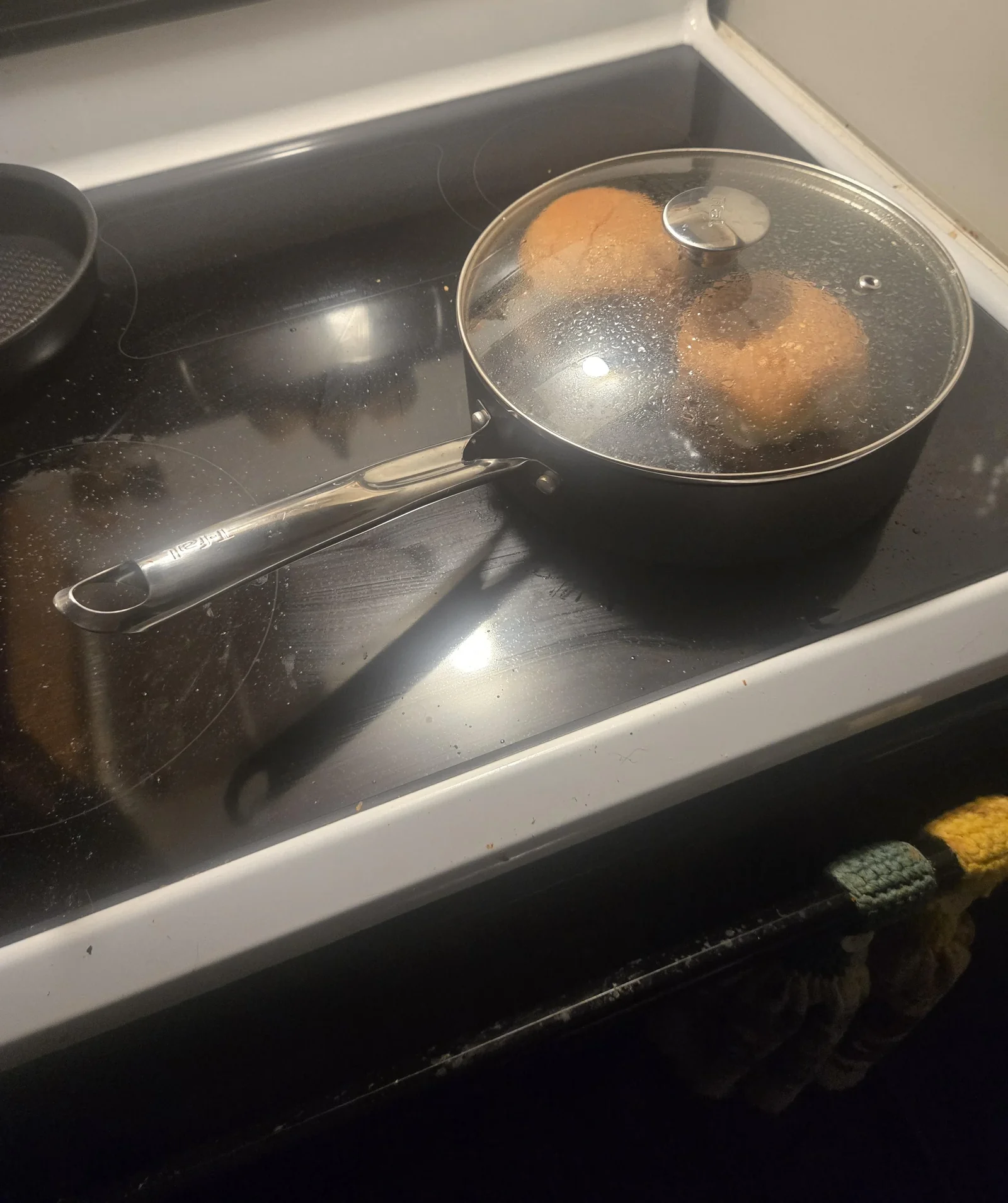
- Pot handles point toward the back of the stove, so small hands can’t reach up and grab them.
- Hot liquids move only when you know where your child is. Coffee, soup, a pot of boiling water: nobody should trip over a toddler mid-carry, and you never carry your child at the same time.
- Stove knobs come off or get covered. If they lift off easily, take them off when you aren’t cooking; if not, use child-resistant knob covers and block the stove as much as you can.
- The microwave stays grown-up territory. If it’s within your child’s reach, stay nearby while it runs, and don’t let your child open it or take out anything that’s finished heating.
- Sharp things live apart. Knives, forks, scissors and other sharp tools stay separate from the “safe” utensils, and the food processor goes out of reach or into a locked cupboard. A toddler can push a tower, so measure “out of reach” from anywhere they can push it.
- The tower stays away from windows. The AAP’s home safety advice is never to put anything a child might climb on in front of a window, and a tower is made for climbing. More of our climb-proofing is in my yes space post.
 Save
Never leave your toddler in a learning tower without an adult right beside it, not even for the few seconds it takes to grab something from the fridge. Up there, your child can reach the stovetop, the knife block and anything you set down, and a toddler doesn’t understand what’s dangerous.
If your child has a serious fall from the tower, or doesn’t act normally after a fall, call your doctor.
Eating is the one kitchen job I’d keep off the tower entirely. The AAP’s choking-prevention advice is to have children eat at the table or sit down when they eat, and never walk, run, play or lie down with food in their mouths. A toddler in a tower is still standing, so the banana they just sliced goes to a small table, cut into pieces no larger than one-half inch, the size the AAP gives for young children.
That small table pays off later, too. Using a fork is one of the CDC’s milestones by 3 years, and carrying the plate over and sitting down is the same everyday independence as letting your toddler choose their own clothes.
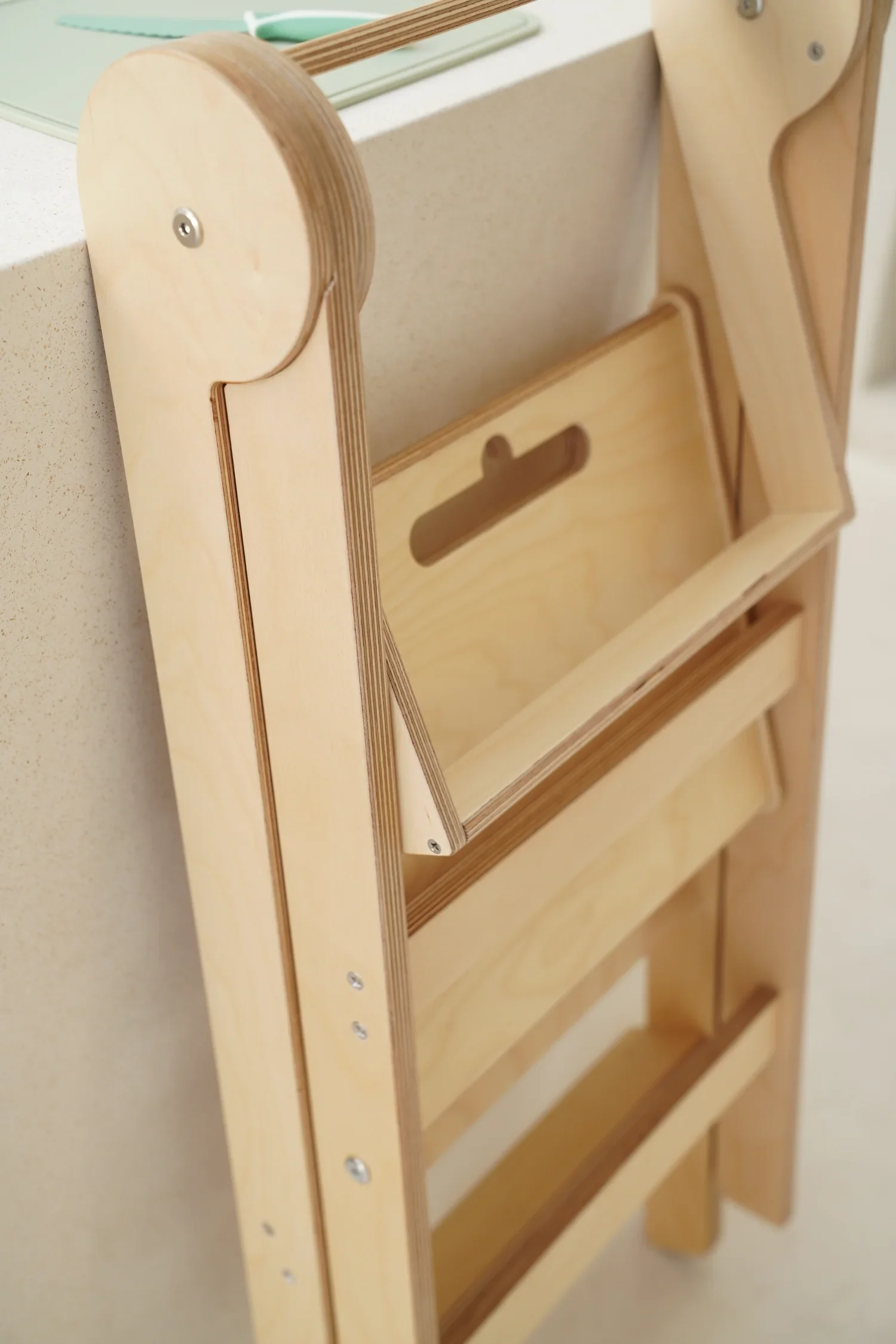
When cooking’s done, our tower goes straight into the tight corner beside the fridge. It only comes out when a grown-up is standing right next to it, and we don’t bend on either one.
Miri’s Tip
 Save
Where a learning tower falls short
Bulk, price and constant supervision are the trade-offs. A learning tower earns its place in a kitchen where it gets used daily and has a corner to live in between uses.
The parents who love their towers tend to be honest about the rest, too. The thing is bulky, and a toddler at stove height means nobody gets to zone out while dinner cooks. If your gut says your kitchen isn’t ready for a toddler at counter height, that’s a fair call.
In our house, the bigger cost is the discipline. The tower goes back in its corner every time, and someone stands beside it every time Will climbs up, busy days included.
 Save
The accountant in me looks at it this way: a tower that comes out every day spreads its price across a lot of dinners. One that comes out twice a month is an expensive step stool taking up a corner.
Cheaper alternatives, and should you build a learning tower?
For a few minutes of help a day, a sturdy step stool or chair at the counter works if you stand right there. A homemade tower is a bigger gamble, since it’s untested, and must avoid every failure the recall notices describe.
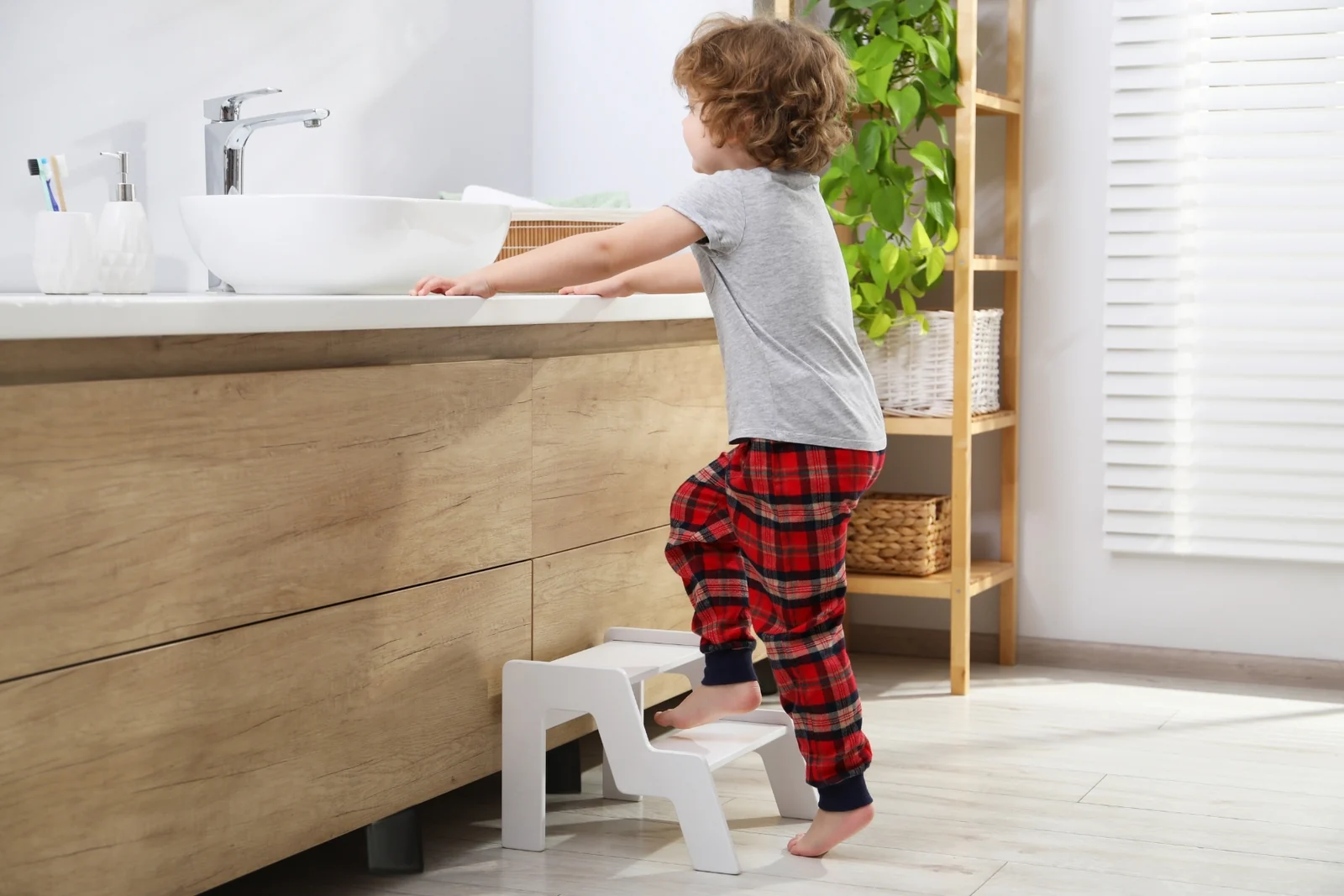
Some parents skip the tower and pull a kitchen chair up to the counter, or build one from an inexpensive IKEA stool, for far less money. Keep the AAP’s warning in mind, though: a chair left next to a counter lets a toddler climb somewhere dangerously high. A chair has no rails at all, so our kitchen rule applies twice over. You stand right there, and the chair goes back to the table afterward.
 Save
As for building a learning tower yourself, I won’t hand you plans, because ours is store-bought. What I’d hold any homemade tower to is the recall list in reverse:
- no opening on any side wide enough for your toddler’s torso
- a platform that can’t fold or collapse under them
- a base that doesn’t tip when they lean
A homemade tower also comes with no age label and no weight limit, so those calls are yours to make.
When floor space is the real problem, a tower that does two jobs can help. Piccalio’s Convertible turns into a toddler table and bench, the kind of two-for-one furniture that makes a small playroom work.
Frequently Asked Questions
What kind of learning tower is best?
The best learning tower for most families prints its age range and weight limit, adjusts its platform as your child grows, has a rail around the waist on every side, and carries a model name you’ve checked against CPSC’s recall list. Wood, color and price come after those four, and you use it with an adult right beside it.
What skills should my child be able to perform before I start a learning tower?
Before you start a learning tower, your child should be able to stand up steadily on their own. Piccalio, for one, says that’s needed to use a tower safely. Climbing up a low step and back down without help is another good sign. Toddlers can climb long before they understand danger, so the judgment still comes from you.
Conclusion
If someone small is wrapped around your legs while you cook tonight, you don’t have to solve it with a purchase this week. Pull a sturdy step stool up to the sink, stand right beside it, and hand over a tomato to wash. It can take a couple of weeks to find your groove. If it turns into a daily thing, you have your answer on the tower: check the recall list, read the label, and find its corner before it comes home.
Letting a toddler help with dinner takes more patience than doing it yourself, and you’re choosing it anyway. Start with one tomato, and stand close.
Miri
Fewer toys, deeper play.
Further Reading & Resources
See all 17 sources
- Recalls: TOMY Recalls Boon PIVOT Collapsible Toddler Tower Kitchen Step Stools Due to Risk of Serious Injury and Death from Tip-Over and Fall Hazards and Little Partners Recalls Children’s Grow ‘N Stow Folding Learning Towers Due to Fall Hazard, plus the notices for HARPPA, Guidecraft, Cosyland, Woodure and Mangohood (U.S. Consumer Product Safety Commission)
- Kitchen and choking safety: Kitchen Safety: 10 Tips for Families With Young Children, Choking Prevention for Babies & Children, Safety for Your Child: 1 to 2 Years and Home Safety: Tips for Families With Young Children (American Academy of Pediatrics, HealthyChildren.org)
- Montessori at home: Montessori at Home (American Montessori Society) · Practical Life Exercises (Association Montessori Internationale glossary)
- Milestones: Milestones by 2 Years and Milestones by 3 Years (Centers for Disease Control and Prevention)
- Prices and specs, checked October 2026: Convertible Toddler Tower (Piccalio)
- Real parents: “Toddler tower: harppa or piccalio?” (r/MontessoriForHome)