

The daycare report comes home folded in the diaper bag. 9:30, circle time. 11:15, lunch: all of the pasta, none of the peas. 12:30, nap. Somebody knows exactly how your toddler’s Tuesday went, down to the minute.
Then Saturday arrives with no sheet at all. By mid-morning your 2-year-old has asked for the tablet for the third time, the breakfast dishes are still out, and you’re wondering how the daycare makes a whole day look so easy. If that sounds like your house, you’re in good company.
When you work, your weekday toddler time lives in the early morning and the hours between pickup and bed. Search for a Montessori schedule to rescue the weekend, and a lot of what comes up reads like it was written for a classroom: a three-hour work cycle, circle time, clock times to the minute. Try to copy that on top of a work week and you’ll feel behind by Sunday.
A Montessori daily routine at home can be much looser: a handful of blocks in a steady order, with the clock keeping them roughly in place. Below is our real day, a work-day version and a blank table to make your own.
What is a Montessori schedule, really?
A Montessori schedule is the same few blocks in the same order each day: wake-up, meals, a long play stretch, time outside, a nap and bedtime. Times can drift. The order is what your toddler counts on.
That order is the heart of a Montessori schedule, and most of it rests on plain, well-supported advice about sleep, food and movement. The American Academy of Pediatrics (AAP) puts it in one line on its sleep page: the same waking time on weekdays and weekends, plus regular mealtimes, nap time and play times, helps a child feel secure and comfortable and makes for a smoother bedtime.
 Save
ZERO TO THREE says something similar about toddlers: knowing what will happen next gives them security and emotional stability, and routines can cut down on the “no’s” and corrections a toddler hears in a day. That second part is the one I’d tape to the fridge.
When Will was a baby, we followed the EASY routine from Tracy Hogg and Melinda Blau’s book Secrets of the Baby Whisperer. Parents who stuck with EASY tend to describe it as an order of events, with the clock left loose. At two, the order just has more pieces in it.
At Moje Montessori, we rate each row below on how much research stands behind it, so you can tell the well-supported blocks from the Montessori ideas we like.
| Part of the routine | What the sources say | Evidence |
|---|---|---|
| Same wake-up, meal, nap and play times every day | The AAP says this helps a child feel secure and eases bedtime. The World Health Organization (WHO) pairs its sleep advice with regular sleep and wake-up times | Backed by research |
| Meals and snacks at predictable times | The Centers for Disease Control and Prevention (CDC) says routines help children know what to expect when it’s time for meals or snacks | Backed by research |
| Movement spread through the day | The WHO says 1- and 2-year-olds need at least 180 minutes of physical activity a day, spread throughout the day | Backed by research |
| One long play stretch nobody interrupts | The Association Montessori Internationale (AMI) says children need long periods of work and should never be interrupted to put their work away. It’s written for classrooms and gives no age | Montessori philosophy (not tested at home) |
“Backed by research” means studies with babies or toddlers support that piece. “Some research” means part of it is supported. “Montessori philosophy (not tested at home)” means there’s little or no research on it in family homes yet.
A day in the life of a Montessori toddler: Will’s day
At three, our son Will’s weekday runs like this: up at 7, breakfast together, a long morning outside or at his shelf, lunch at noon, a nap, snack and solo play, dinner at 6:30, then books and lights out at 8.
Will is three now, so this is our day as it actually runs today. For a 2-year-old the blocks stay the same, and the sleep ranges run about an hour longer, which I’ll get to below.
| Block | Roughly when | What happens |
|---|---|---|
| Wake-up | 7:00 a.m. | Wakes on his floor bed and comes to find me in the kitchen |
| Breakfast | Right after | Helps make it at the learning tower, we eat together, he brushes his teeth and gets dressed |
| Long play stretch | 9:00–11:30 a.m. | Outside on nice days; his shelf or small chores on snow days |
| Lunch | Noon | Eats, then clears his dishes and wipes the table |
| Nap | After lunch | About 1.5 to 2 hours |
| Snack and solo play | About 3:00 p.m. | A small snack, then building or drawing on the rug |
| Screen time | About 5:00 p.m. | One or two short episodes while I cook |
| Dinner | 6:30 p.m. | Family dinner |
| Bedtime | 7:00–8:00 p.m. | Tidy-up, bathroom, three books, lights out at 8 |
The table leaves out the slow parts. Some mornings he lies on his floor bed hugging his stuffed bear before he wanders out. At breakfast he rinses fruit from the learning tower, then picks one of the two outfits I’ve laid out. Sunny Colorado mornings mean dry pinecones on the sidewalk, squirrels to watch and grass to run on; snowstorm days mean helping move laundry to the dryer. After lunch he carries his dishes to the sink and wipes the table. None of it is quick, and all of it is his.
 Save
When parents of 2-year-olds compare schedules on r/toddlers, a similar shape keeps showing up: up around 6 or 7, out somewhere in the morning, a nap somewhere between noon and 2:30, and bed around 7 or 8. Those times are what parents report about their own kids, so treat them as a sketch.
Screens and bedtime each have a post of their own, so just a line on each here. Around 5, when I’m cooking and running on empty, Will watches one or two short episodes. The WHO says screen time at age 2 should be no more than an hour, with less being better, and it encourages reading and storytelling with a caregiver for sitting-still time. The AAP’s 2026 policy statement adds that if a family wants a number, the limit can fit the family’s routine, and for toddlers and preschoolers that might mean under an hour a day. The full story of screen time at our house is in that post.
Bedtime follows the AAP’s Brush, Book, Bed idea, as of 2024: brush teeth, read a favorite book or two, and get to bed at a regular time each night. Our version, with three books in the reading corner, is in bedtime routines for 3-year-olds.
 Save
Your weekdays won’t look like ours if you’re out the door by 8, and they don’t have to. The order is the part that carries over, and it matters most on the days you’re home together.
How long is a Montessori work period at home?
Protect one long, unhurried play stretch a day and let your child’s focus set its length. The Association Montessori Internationale (AMI) says there’s “no magic in the number 3”: some days a work cycle runs under three hours, other days well past it.
The work period is Montessori’s name for a long block of time when a child gets to stay with whatever they’re doing. AMI’s FAQ on the three-hour work cycle says the idea began because children need long periods of work, and it doesn’t say which ages it means. So nobody is handing you a three-hour target for a 2-year-old at home.
The same FAQ says to never interrupt children to gather them up and have them put their work away. That’s classroom advice, and it travels well. Our long stretch runs from about 9:00 to 11:30, outside or at Will’s shelf, and the big tidy-up happens at 7 p.m., as the first step of bedtime.
How long a 2-year-old stays with one thing varies a lot, and I haven’t found a source I trust that puts a number on it at home. So I won’t give you one. Watch your own child for a week, and you’ll have a better number than any chart.
 Save
A long stretch at two is also a moving one. The WHO says 1- and 2-year-olds shouldn’t be restrained for more than an hour at a time, in a stroller, a high chair or strapped on a caregiver’s back, or sit for long periods. At this age, “work” can look like carrying, dumping, filling and starting over.
Endings are often the hard part. ZERO TO THREE notes that some parents use a timer or a “5-minute warning” to help a toddler shift to what’s next.
For what to put on the shelf, there’s a long list of Montessori activities at home. If the stretch keeps fizzling, try fewer things out at once. Fewer toys, deeper play: toy rotation keeps the shelf small without buying anything new.
Outdoor time, nap and bedtime in a toddler daily routine
Sleep and movement come first, since they’re the blocks with health guidelines behind them. The WHO says 1- and 2-year-olds need at least 180 minutes of physical activity spread through the day and 11 to 14 hours of sleep, naps included.
One hundred eighty minutes sounds huge until you read how the WHO’s 2019 guidelines count it: a variety of activities at any intensity, spread throughout the day, and more is better. The walk to the mailbox counts. So does hauling the laundry basket, or a dance party while the pasta boils. As they turn three, the WHO recommends that at least 60 of those minutes be moderate to vigorous, the kind that gets them breathing harder.
Ours mostly lives in that morning stretch, outside when the weather lets us. On Colorado snow days it moves indoors, and our list of outdoor activities for toddlers is there for the days you’re short on ideas.


The walk to the mailbox counts, too. · Some mornings, all the plan needs is grass.
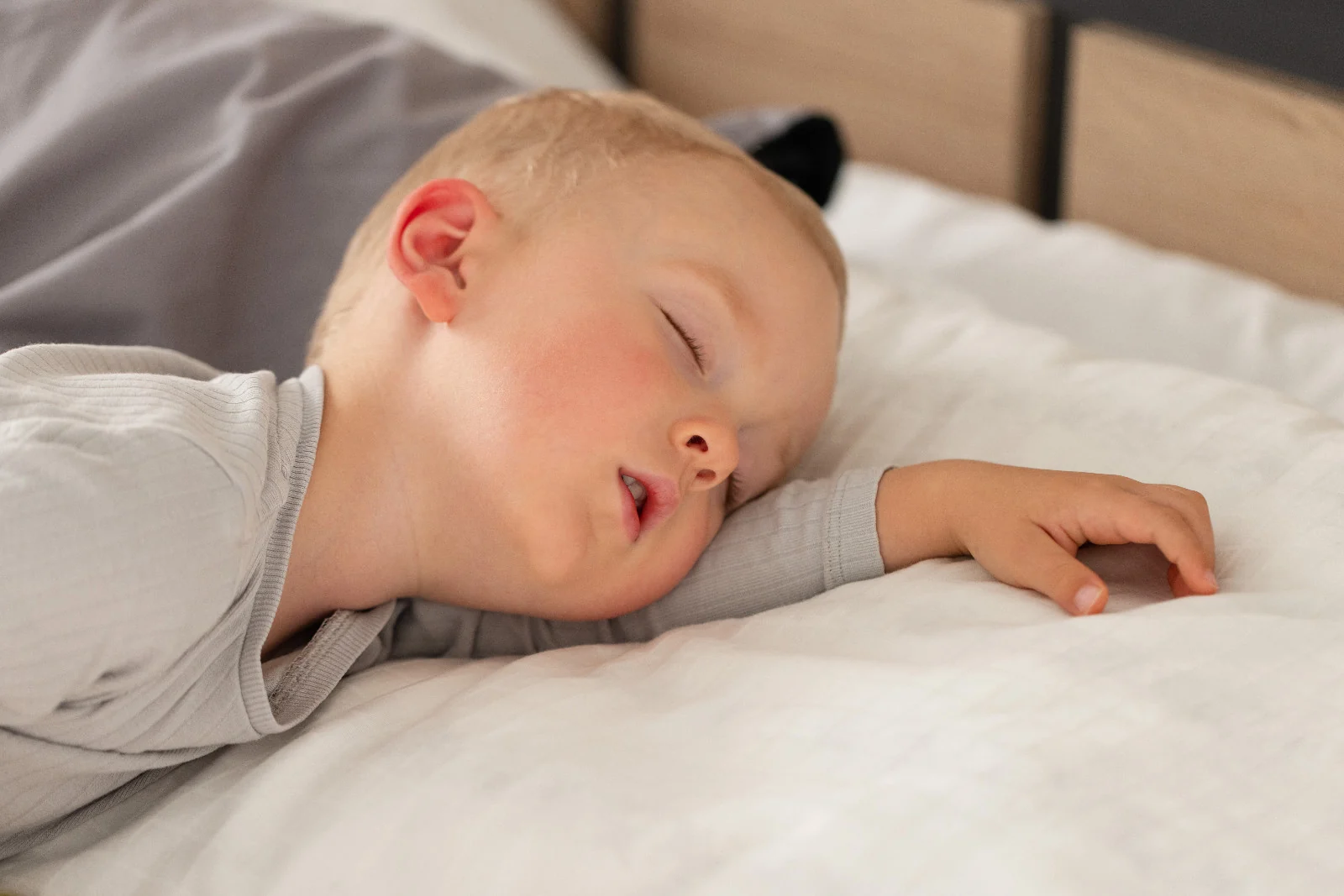
Then the nap. A systematic review of napping patterns in children found that fewer than 2.5% stop napping before age 2, while 94% have stopped by age 5. It also notes a sharp drop in children taking two or more naps a day between 12 and 18 months. So if your 2-year-old still naps, that’s what those numbers would predict.
Count the nap, too, when you add up sleep in a toddler daily routine. The AAP points out that the hour ranges cover total sleep in 24 hours, naps included. The WHO’s sleep advice also comes with regular sleep and wake-up times, and for 3- and 4-year-olds it says the 10 to 13 hours “may include a nap.” If you’re worried your child sleeps too little or too much, bring it up with your pediatrician.
 Save
What time should a 2-year-old go to bed?
None of the sources I trust gives one right bedtime for a 2-year-old, so here’s the math I use. The accountant in me enjoys this part. Start from your child’s wake-up time. Take the American Academy of Sleep Medicine (AASM) range for 1- and 2-year-olds, 11 to 14 hours of sleep in 24 hours, naps included. Subtract the nap, then count back.
Say your toddler wakes at 7:00 a.m. and naps for 2 hours. That leaves 9 to 12 hours for the night, so falling asleep anywhere from 7:00 to 10:00 p.m. fits the range. Aim for the middle and you land around 8:30. That’s my arithmetic on the AASM numbers, so treat it as a starting point.
The AAP’s Brush, Book, Bed advice, as of 2024, fills in the rest. Set a regular bedtime and stick to it. Don’t wait for the eye-rubbing and yawning, since that’s probably too late, and know that even 15 to 20 minutes earlier can make a big difference. At our house, the routine starts at 7 and the lights go off at 8 on weekdays. On weekends, or when dinner runs late, the routine starts an hour later.
Closer to 3, a lot of parents describe swapping the nap for “quiet time” in the same early-afternoon slot, with sleep optional. One parent on r/toddlers sketches it as quiet time from 12:30 to 2 and bedtime at 7. Keep the slot in the day even when the sleep doesn’t come.
Miri’s Tip
A toddler daily routine for working days
Keep the wake-up time steady, shrink the day to a few fixed blocks, and give your hardest work hours to nap time and the evening. On office days, the evening from about 5:30 to 8 becomes the block that carries the routine.
First, a number that might take some pressure off. In its 2025 estimates, the American Time Use Survey from the U.S. Bureau of Labor Statistics found that adults in households with children under 6 spent an average of 2.3 hours a day providing primary childcare, meaning care was their main activity. If your focused time with your toddler fits into breakfast and an evening, you’re closer to the average than the guilt suggests.
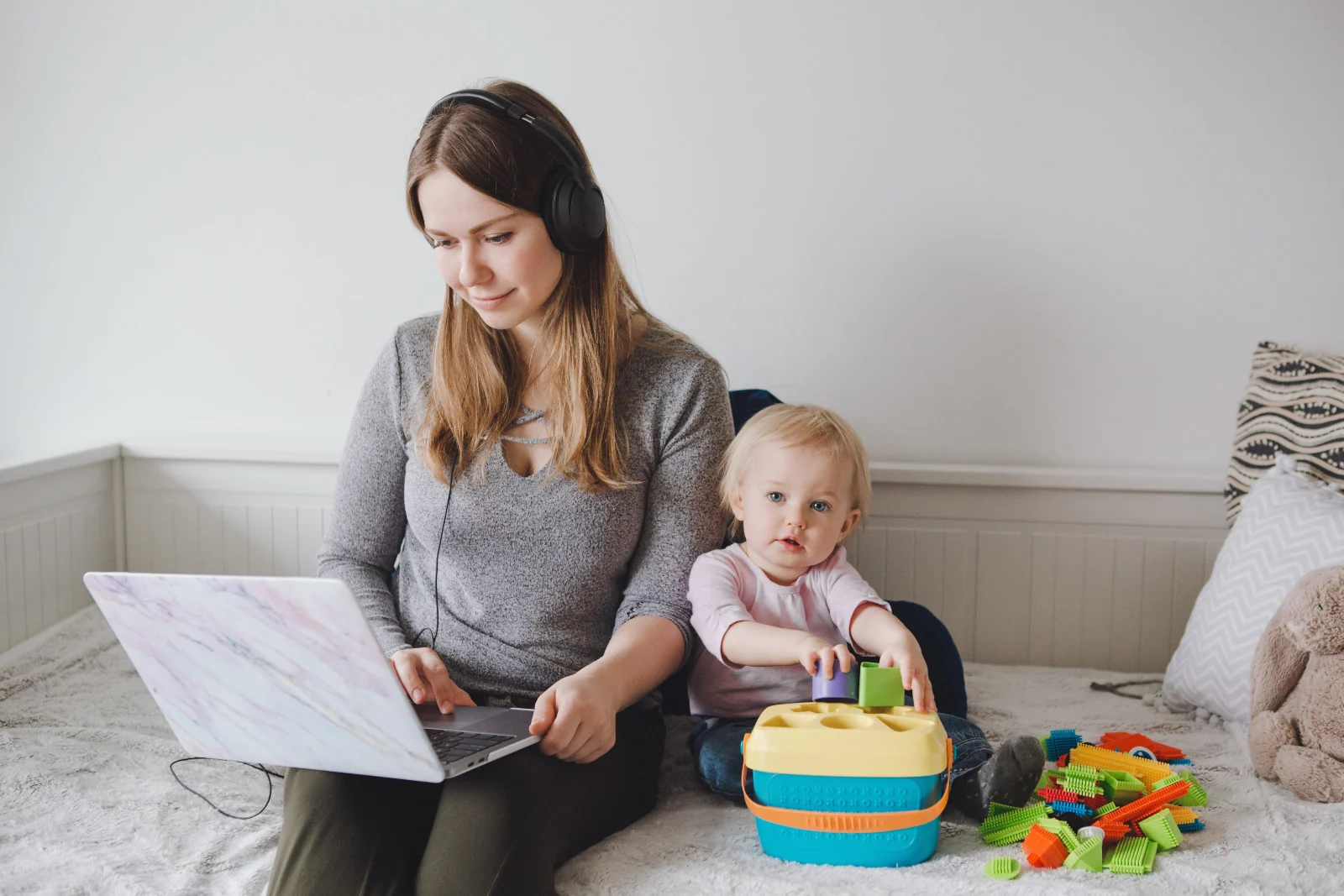
I freelance from home, so my work days look different from an office day, but the trick is the same: decide what bends and what stays put. On deadline days, my heavy work goes into Will’s nap, roughly 1 to 3, and after 8 at night. Lunch is made ahead instead of cooked together at the learning tower, and if I have a morning meeting, our walk moves to the afternoon.
On days my husband, Dom, has Will on his own, he skips the toy trays and takes him out to the yard or the park. In the evening, Dom or I handle the 7:00 to 7:30 block (tidy-up, teeth, pajamas), and I finish with three books and lights out at 8.
 Save
| Block | Our regular day | Our deadline day | Office-day idea (my suggestion) |
|---|---|---|---|
| Wake-up | 7:00 a.m. | 7:00 a.m. | Same time all seven days, as the AAP suggests |
| Morning | 9:00–11:30 outside or at his shelf | Walk moves to the afternoon if I have a meeting | Daycare or sitter’s plan |
| Lunch | Noon, cooked with his help at the learning tower | Made ahead | Weekend lunch prepped the night before |
| Nap | About 1.5 to 2 hours | My heavy work, roughly 1 to 3 | Ask for the daycare nap time and keep it on weekends |
| Late afternoon | Snack at 3, then solo play | Same | Pickup, then one play stretch, outside if there’s light |
| Evening | Short show around 5, dinner at 6:30 | Same | 5:30 to 8: dinner at a screen-free table, then bedtime |
| Bedtime | Routine at 7, lights out at 8 | Dom or I take 7:00 to 7:30, and I work again after 8 | Start the routine at the same time every night |
The last column is my suggestion for parents who leave the house for work. I built it from the sources in this post, since our days look different. Two pieces do most of the lifting. Keep Saturday’s wake-up time the same as Tuesday’s, because the AAP’s routine advice covers weekdays and weekends. And make dinner one of the screen-free zones the AAP suggests on its family media plan page, along with the time before bed.
 Save
How many minutes go into each evening block is up to you. I don’t have a good source for those numbers either, and your pickup time will decide most of it.
On the busiest weeks, hold on to wake-up, meals and bedtime and let the middle of the day get messy.
Your printable toddler schedule
Fill in your wake-up time first, then nap and bedtime, then meals, and slot play and outside time into the gaps. Print this page or copy the table onto paper and stick it somewhere you’ll see at 7 a.m.
Grab a pencil and go in this order:
- Wake-up. Pick one time you can keep on weekdays and weekends.
- Nap and bedtime. Use the math above: 11 to 14 hours in 24, minus the nap, counted back from wake-up.
- Meals and snacks. The CDC’s mealtime page says a child aged 6 to 24 months may have about 3 meals and 2 to 3 snacks a day. That’s a fair shape to start from at 2, so you’re placing five or six small eating blocks.
- Play and outside. One long play stretch when your child has the most energy, and movement sprinkled through the rest. Then write a name in the last column, so the hand-offs are planned too.
| Block | Your time | Main thing | Who’s on |
|---|---|---|---|
| Wake-up | |||
| Breakfast | |||
| Long play stretch | |||
| Snack | |||
| Outside | |||
| Lunch | |||
| Nap (or quiet time, closer to 3) | |||
| Snack | |||
| Play | |||
| Dinner | |||
| Bedtime routine | |||
| Lights out |
 Save
Expect to erase a few times. A schedule like this earns its spot on the fridge on the weekends, when there’s no daycare sheet doing the planning for you.
Frequently Asked Questions
What is a typical sleep schedule for a 26 month old?
A typical sleep schedule for a 26-month-old adds up to 11 to 14 hours in 24, naps included, the AASM range for 1- and 2-year-olds. From 3, it’s 10 to 13. Fewer than 2.5% of children stop napping before age 2, so most 26-month-olds are still napping. Parents often describe one nap somewhere between noon and 2:30, plus a regular bedtime.
Is 7pm too early for a 2 year old to go to bed?
A 7 p.m. bedtime isn’t too early for many 2-year-olds. If your toddler wakes at 7 a.m. and naps for 90 minutes, falling asleep at 7 p.m. adds up to 13.5 hours, inside the AASM’s 11 to 14. The AAP’s advice is a regular bedtime, before the yawning starts. Our weekday routine starts at 7, with lights out at 8.
Conclusion
You don’t have to build the whole day this weekend. Pick the block that can stay the same all seven days, usually wake-up, and hold it for a week. Once that’s steady, meals and the nap are easier to place around it. The daycare sheet works because it’s the same order every day, and that part travels home just fine. Give it a couple of weeks to find your groove.
One steady block this week is plenty. If work wins a few days, start again the next morning; your toddler still knows what comes after breakfast.
Miri
Fewer toys, deeper play.
Further Reading & Resources
See all 14 sources
- Sleep hours and naps: Recommended Amount of Sleep for Pediatric Populations (American Academy of Sleep Medicine, 2016) · Many naps, one nap, none (Staton et al., Sleep Medicine Reviews)
- Sleep habits: Healthy Sleep Habits: How Many Hours Does Your Child Need? and Brush, Book, Bed (American Academy of Pediatrics, HealthyChildren.org)
- Movement and screens: Guidelines on physical activity, sedentary behaviour and sleep for children under 5 years of age (World Health Organization, 2019) · Digital Ecosystems, Children, and Adolescents (AAP policy statement, 2026) · How to Make a Family Media Plan (AAP, HealthyChildren.org)
- Routines and meals: Tips for Mealtime Routines (Centers for Disease Control and Prevention) · Creating Routines for Love and Learning (ZERO TO THREE, 2010) · American Time Use Survey Summary (U.S. Bureau of Labor Statistics, 2026)
- Montessori and EASY: The Value of the Three-Hour Work Cycle (Association Montessori Internationale) · Secrets of the Baby Whisperer (Tracy Hogg with Melinda Blau, Ballantine Books)
- Real parents: What time is your 2 year olds nap and bedtime? and What’s your 2.5-3 year old’s sleep schedule like? (r/toddlers)