

Halfway through a bottle, Will’s eyes would drift shut. Every time. He was about a month old, a sleepy little potato, and I’d flick the bottom of his heel, then wipe a damp washcloth over his face, just to get him awake enough to finish. That was supposed to be the “Eat” part. Most days I couldn’t have told you where it ended and the “Play” part began.
If your days with a newborn feel like that right now, one long feed that keeps melting into a nap, you’re in good company. Maybe someone mentioned EASY, and when you looked up an EASY schedule, you found charts of clock times your baby has clearly never seen.
Quick note on who’s talking: I’m a mom with no sleep or Montessori credentials. I read the book, tried eat play sleep with Will, and found Montessori fit most naturally into the awake part of the day. Here’s what our days really looked like, month by month, including where it all came apart.
What is eat play sleep (EASY)?
Eat play sleep, or EASY, is the feed-play-nap routine from Tracy Hogg’s Secrets of the Baby Whisperer. The way I learned it, the letters stand for Eat, Activity, Sleep and You, in that order, round after round.
Hogg wrote the book with Melinda Blau, and it’s published by Ballantine Books. Its publisher sums up E.A.S.Y. as a way to get a baby to “eat, play, and sleep on a schedule that will make every member of the household’s life easier and happier.”
Those first weeks with Will were a blur of barely sleeping. When I finally picked up the book, it felt like someone had thrown me a life raft. I wanted one thing badly: a day I could predict. I wanted to know whether he was crying because he was hungry or because he was tired, so I wasn’t offering a feed at every little squeak.
If you’re struggling: You can call or text the National Maternal Mental Health Hotline at 1-833-TLC-MAMA (1-833-852-6262). It’s free, confidential and open 24/7, in English and Spanish. If you’re in crisis, call or text 988, or call 911.
Wanting a predictable day is fair. So is feeding a baby who seems hungry, and pediatricians are clear on that part (more in a minute).
EASY comes from a different book and a different idea than Montessori, and I used the two side by side. EASY gave our days a shape. Montessori showed up inside the “A,” the awake time: a baby on the floor, free to move, with something simple to look at and a grown-up quietly noticing what holds their attention. That’s Maria Montessori’s “follow the child” in its smallest form. Everything else about Montessori at home can wait until your baby is bigger.
 Save
When to start eat play sleep
Your baby’s hunger cues come first, whatever week you try eat play sleep. For us, it started around Will’s third or fourth week, once life had calmed down enough for me to start reading about routines.
The American Academy of Pediatrics (AAP), in feeding guidance last updated in 2024, says most healthy, full-term babies can be fed by watching the baby rather than the clock. Pediatricians call this feeding on demand, or responsive feeding. Crying is a late hunger sign. The earlier ones are easy to miss when you’re tired: licking lips, rooting, a hand going to the mouth again and again, an open mouth, sucking on anything close by.
How often is often? The AAP says breastfed newborns usually nurse about every 2 hours, counting from the start of one feed to the start of the next, so 10 to 12 feeds in 24 hours is the norm. Bottle-fed newborns usually eat every 2 to 3 hours, with 8 feeds in 24 hours as the general minimum. The Centers for Disease Control and Prevention (CDC) counts breastfeeding at about 8 to 12 times in 24 hours. Either way, that’s a lot of feeds, and a tidy 3-hour loop on paper won’t always match.
Your baby’s diapers tell you how it’s going. The AAP looks for 2 to 3 wet diapers a day in the first few days, then at least 5 to 6 a day after the first 4 to 5 days, and your pediatrician tracks weight on a growth chart. If anything about feeding worries you, call your pediatrician before you start any routine.
 Save
How to do eat play sleep: a gentle newborn schedule, step by step
Start with a feed when your baby wakes, give them a short stretch of awake time, put them down for a nap when they look tired, then take whatever’s left for yourself. Repeat, adjusting each round to the baby in front of you.
One round at our house went like this, with the guidance beside it:
- Eat. Feed when your baby wakes, and whenever they show hunger cues. If they doze off halfway, the CDC suggests patting, stroking, undressing or a diaper change to help wake them. (Will got heel flicks and a damp washcloth.) A baby who’s had enough should seem content and drowsy, the CDC says.
- Activity. A short, simple stretch of awake time. Ours is just below.
- Sleep. Down for a nap on their back, on a firm, flat surface of their own, even for a 30-minute nap. The safe-sleep details further down apply to every nap.
- You. In the book’s version, this is your time while the baby sleeps. Ours rarely looked like that.
The order is the whole trick, at least the way I used it. “Feed, then a little awake time, then sleep” works whatever the clock says.


Halfway through, and fast asleep. The early weeks are full of this. Patting, stroking or a diaper change can help a sleepy baby wake up enough to finish.
What “Activity” looks like at 0–3 months, the Montessori way
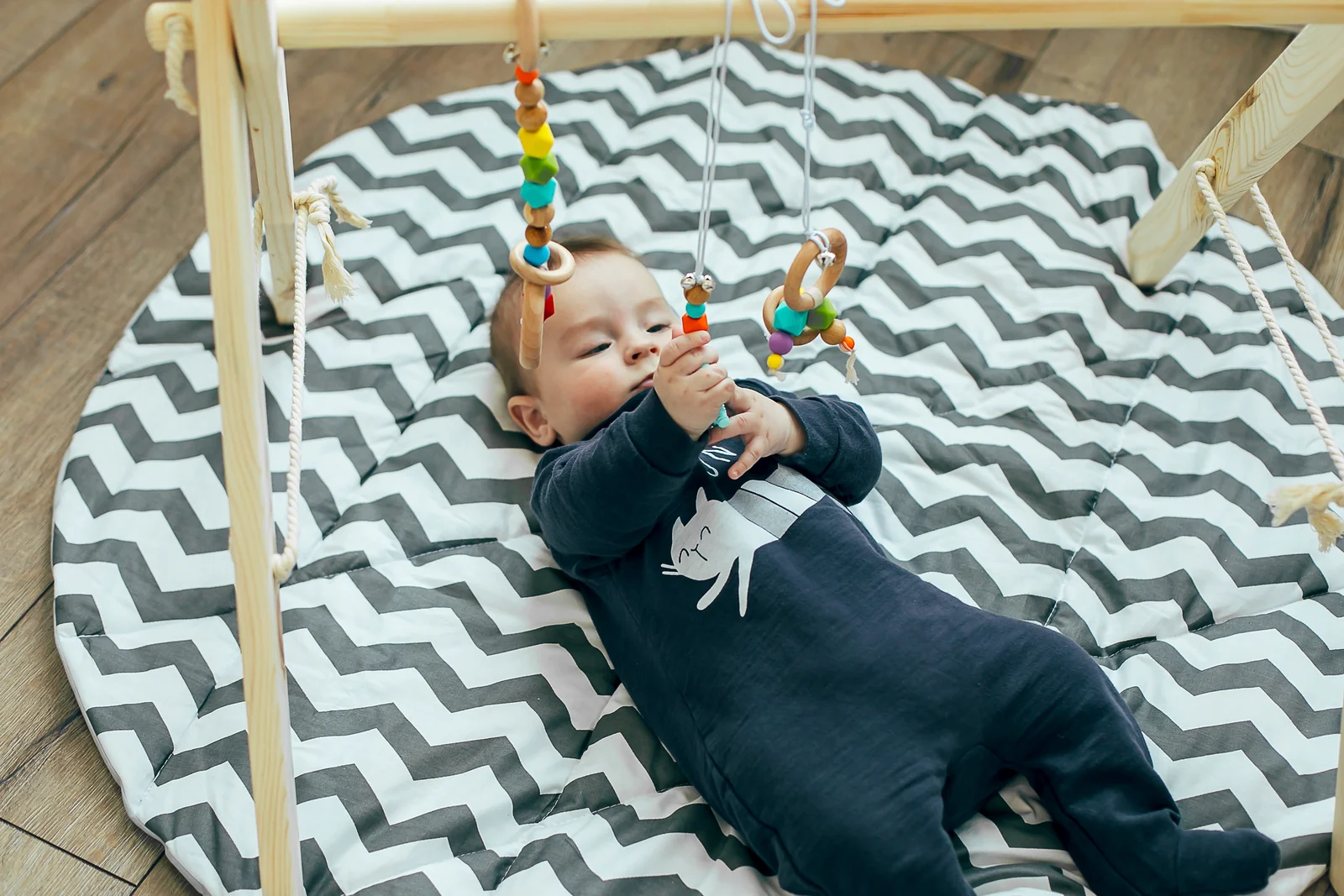
For most of those first three months, Will’s awake time was fragile. He’d manage about an hour before the yawning started. Tummy time was the main event, and honestly, it mostly went badly: face down on the mat, loudly protesting, or spitting up on the floor. He rarely cooperated.
Short and grumpy still counts. The AAP says you can start tummy time the day your baby comes home from the hospital, 2 to 3 times a day for 3 to 5 minutes, and work up to 15 to 30 minutes a day by 7 weeks. It’s only for babies who are awake and closely supervised. The World Health Organization (WHO) puts it a little differently in its 2019 guidelines for children under 5: babies under 1 year should be active several times a day, especially through floor play with you, and babies who aren’t moving around yet should get at least 30 minutes on their tummy, spread across the day while they’re awake.
 Save
The WHO also says babies under 1 shouldn’t be strapped into a stroller or high chair, or onto your back in a carrier, for more than an hour at a time, and it doesn’t recommend screen time for them. So the floor does most of the work: one safe, open spot where your baby can kick and look around. You don’t need much on it. I’ve gathered Montessori toys for newborns in one place, black-and-white baby toys have their own post, and Montessori activities at home pick up once your baby is older.
Around 4 to 6 months, once Will could roll well, he’d lie by a low mirror near the floor, babbling and chewing on his fist at his own reflection for half an hour.
 Save
Keep the “A” small. Before 3 months, Will’s Activity was three black-and-white cards set out in front of him, a walk around the house in my arms to watch the ceiling fan spin, or time on his back under the A-frame gym, waving his arms and legs. Those were mostly ways to fill his awake time until his nap.
Miri’s Tip
Eat play sleep schedule by age: Will’s rhythm, month by month
For Will, eat play sleep ran on about a 3-hour loop at 1 month, stretched to 3.5 and then about 4 hours around 3 months, and settled into a steady 4-hour rhythm with solid food at 6 months. That’s one baby’s pattern.
At 1 month, the loop was roughly three hours, with Eat and Activity blurred together. By 3 months, it had stretched to three and a half hours, then closer to four, and he’d started watching us talk and kicking away under his A-frame gym. At 6 months, the days felt calmer: a 4-hour rhythm with solid food mixed in, two long naps and one short catnap in the early evening before his long stretch at night.
The table puts that rhythm next to what pediatric and health groups describe for babies in general. Read the first column as our story and the rest as the guidance.
| Age | Will’s EASY rhythm (for us) | Feeds | Total sleep in 24 hours | Tummy time and floor play |
|---|---|---|---|---|
| About 1 month | About 3 hours per loop; Eat and Activity blurred | Breastfed newborns usually every 2 hours, 10–12 times in 24 hours (AAP) or about 8–12 (CDC); bottle-fed every 2–3 hours, at least 8 (AAP) | 14–17 hours, naps included (WHO, 0–3 months) | 3–5 minutes, 2–3 times a day, up to 15–30 minutes a day by 7 weeks (AAP) |
| About 3 months | 3.5 hours, then closer to 4; awake about 1.5–2 hours | Feeds space out slowly over time (AAP) | 14–17 hours to 3 months, then 12–16 (WHO) | At least 30 minutes a day on the tummy, spread out, for babies not yet moving around (WHO) |
| About 6 months | About 4 hours plus solid food; two long naps and a short early-evening one | Solids at about 6 months (CDC); milk still most of the nutrition at first (AAP) | 12–16 hours (WHO, 4–11 months) | Active several times a day, especially through floor play (WHO) |
The CDC says babies can begin solid foods at about 6 months, and not before 4 months. The AAP adds that starting is gradual, with breast milk, formula or both still doing most of the work at first. We went the baby-led weaning route with Will, and how we started baby-led weaning is a story of its own.
 Save
If you’re holding a 6-week-old whose days look nothing like that first column, that’s okay. Your baby’s rhythm will have its own timing, and over these first six months it will probably keep changing on you.
What about wake windows by age?
Sleepy signs beat any wake-window chart. A wake window is just the stretch your baby is awake between sleeps; Will’s ran about an hour in the early weeks and about 1.5 to 2 hours by 3 months.
The accountant in me would love a neat number here, a chart by week that adds up. I don’t have one I can stand behind. The American Academy of Sleep Medicine (AASM) recommends 12 to 16 hours of sleep per 24 hours, naps included, for babies 4 to 12 months, and leaves out babies under 4 months entirely, because normal sleep at that age varies so widely and the evidence linking sleep to health outcomes is thin. The WHO’s 14 to 17 hours for 0 to 3 months is a whole-day total, too. Neither one tells you how long to keep your baby awake.
With Will, the yawns showed up after about an hour in those early weeks. When your baby starts yawning, that’s a good moment to wind Activity down. Reading sleepy signs well is a topic of its own.
 Save
Eat play sleep vs eat sleep play
Eat sleep play lets a baby drift off during or right after a feed, while eat play sleep puts a little awake time between the feed and the nap. Our house used both, at different times of day.
During the day, we ran EASY: Will woke up, ate, then had his awake time. At 1 month he dozed off mid-feed anyway, hence the heel flicks. The CDC says a baby should seem content and drowsy after feeding once they’ve had enough milk, so a sleepy baby at the end of a feed is often a full one.
Bedtime, when Will was little, was its own thing. Every night went the same way: a warm bath, a fresh diaper, a swaddle, lights off, white noise on, then a feed until his eyes got heavy. Once he dozed off, I’d sneak him down as quietly as I could. I did every step myself, with one goal: get him asleep fast, with no crying, so I could finally lie down too.
You don’t have to pick one style for the whole day. If a swaddle is part of your bedtime, read the safe-sleep notes below before tonight.
Does eat play sleep work? When it doesn’t fit your baby
Hunger outranks the routine every time. For us, eat play sleep worked as a loose order for the day, and it still fell apart often, usually because of short naps.
The book version is the rosy one. Real days with Will broke the loop all the time.
Take the “You” part. The way I read it, the stretch while your baby sleeps is yours: a face mask, a cup of tea. In real life, the second Will’s eyes closed, I was pumping, sterilizing bottles or cleaning up after the last round. Before I’d even sat down, a little squawk came from the bassinet, and the next loop had started.
 Save
When you’re running on empty, the “You” in EASY might be five minutes with a glass of water. Take the five minutes.
And when your baby shows hunger cues “early,” feed them. The AAP’s advice to watch your baby rather than the clock applies to every single round, and no routine is worth making a hungry baby wait.
A routine can bend every single day and still be a routine.
How to do eat play sleep with short naps
Short naps were the hardest part for us. There were stretches when Will slept exactly 30 to 45 minutes and then popped his eyes wide open. That wrecked the whole cycle. He’d wake up before he was hungry, so he flat-out refused to eat, and the next “Eat” didn’t line up with anything. What I did was go back to Activity. I’d rack my brain for more ways to keep him playing, just to stretch the time until his next feed.
If your baby wakes early and isn’t hungry, a little more awake time is one way through. If they are hungry, feed them, even if it feels “too soon,” and let the rest of the day shift around it. For us, those short-nap stretches were phases, and by 6 months Will had settled into two long naps a day.
How do you separate day and night for a newborn?
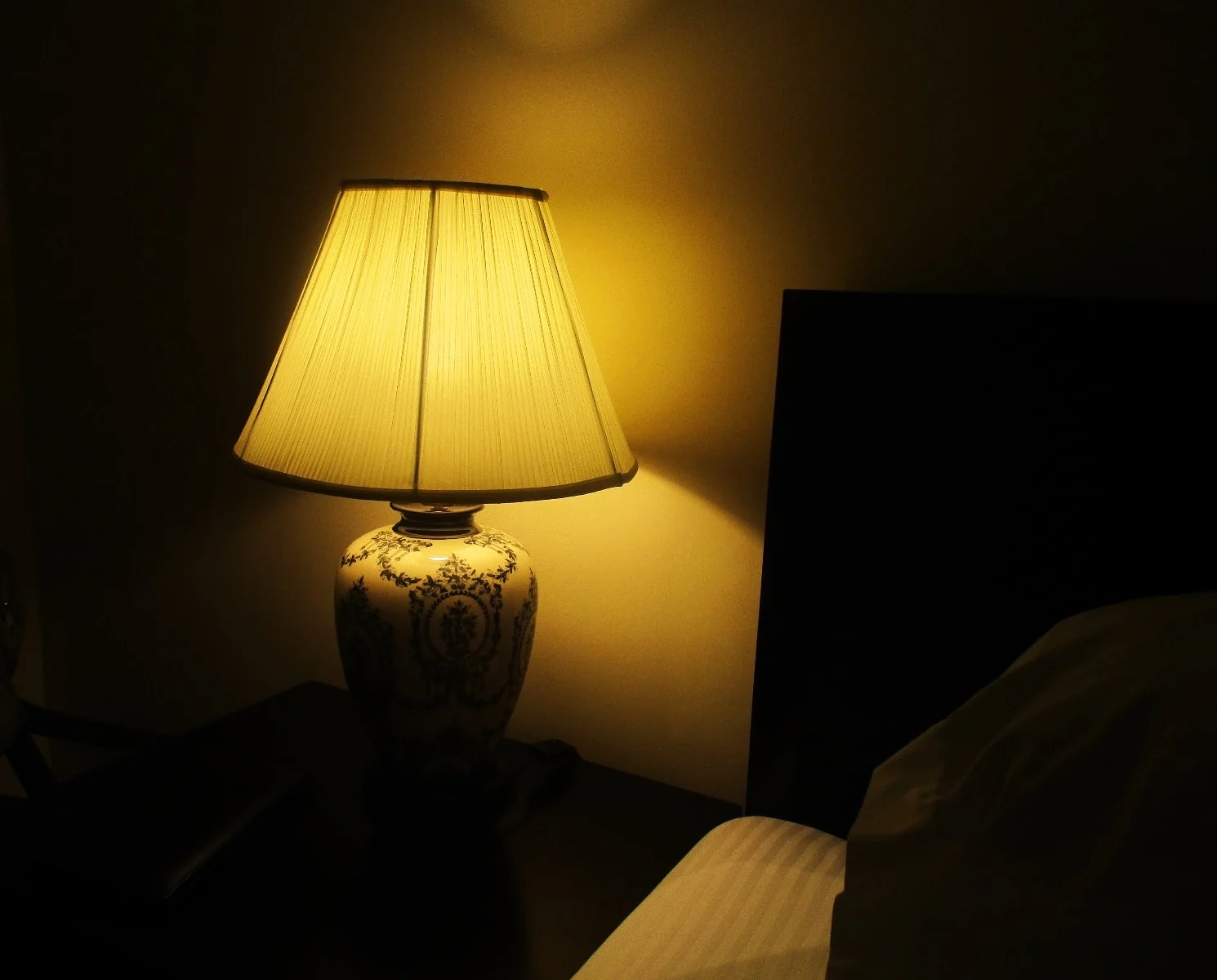
Keep nights calm and quiet in a dark or dimly lit room: use a soft voice, and keep night wake-ups to feeding, burping, changing and gentle soothing. Save the light, play and chatter for daytime.
Newborns are known to mix up their days and nights now and then. The AAP’s long-standing advice on reversing day-night reversal is to make the difference between night and day really obvious, with calm, quiet nighttime interactions.
EASY sits comfortably beside that advice. The “A” is awake time, so it belongs to daylight. At night, a feed can go straight back to sleep, with no play in between.
 Save
Safe sleep inside the “Sleep” part of EASY
Every nap counts as sleep, even a 30-minute one, so each one happens on your baby’s back, on a firm, flat surface of their own. The AAP’s safe-sleep advice covers babies up to 1 year.
Every nap and every night goes on your baby’s back. The AAP says back sleepers are much less likely to die suddenly and unexpectedly, and even babies with reflux should sleep flat on their backs. A surface tilted more than 10 degrees isn’t safe for sleep. If your baby dozes off in a car seat, stroller, swing, carrier or sling, move them to a firm sleep surface on their back as soon as you can.
If you swaddle, keep your baby on their back, don’t wrap too tight, skip weighted swaddles, and stop once they look like they’re trying to roll. Rolling usually starts around 3 to 4 months, though it can happen earlier.
One feeding note belongs right here. If your baby is having trouble gaining weight, the AAP says not to wait too long between feeds, even if that means waking a sleeping baby. Your pediatrician’s plan for weight gain comes before any routine.
For the sleep space itself, the AAP’s safe-sleep guidance points to a crib, bassinet, portable crib or play yard that meets U.S. Consumer Product Safety Commission standards, with nothing soft or loose in it. It also recommends sharing a room with your baby, but never a bed, for at least the first 6 months. Will started out in a small bassinet right next to our bed, and I’ve written about setting up a Montessori nursery around those first-year rules.
 Save
As your baby grows: where your routine goes next
Hold on to the order and let the details shift. Food joins the loop around 6 months, and the AAP says regular times for waking, meals, naps and play help a child feel secure and make bedtime smoother.
For us, the big shift came around 6 months, when solid food joined in and Will settled into steadier 4-hour days. What comes after that has its own posts:
- Food: whether to use a weaning table or pull a chair up to the family table.
- Days: a Montessori schedule for a 2-year-old picks up the rhythm once your baby is a toddler.
- Nights: a bedtime routine for a 3-year-old and, someday, the move to a toddler bed.
Every few months, your baby will hand you a new version of the day. You don’t have to work out each one from scratch.
Frequently Asked Questions
When to stop eat play sleep?
Eat play sleep doesn’t come with a stop date that I know of. For us, it simply shifted around 6 months, when solid food joined the loop and Will’s days settled into longer, steadier rounds. What carried on was the habit of regular times for meals, naps and play, which the AAP links to a child feeling secure.
How to get newborn on a schedule?
Getting a newborn on a schedule mostly means letting a pattern show up around their hunger cues. The AAP says healthy, full-term babies can be fed by watching the baby rather than the clock, and the CDC counts about 8 to 12 feeds a day for breastfed babies. Keep an eye on wet diapers, and talk with your pediatrician if weight gain is slow.
Conclusion
If your days still feel like one long, blurry feed, nothing is behind schedule. Will’s rhythm changed almost every month, and I was adjusting right along with him, heel flicks and all. You don’t need the whole chart to start, and it definitely doesn’t need to look like ours.
Today, try one round in order: a feed, a little time looking around, then a nap. If it only happens once, that still counts.
Miri
Fewer toys, deeper play.
Further Reading & Resources
See all 11 sources
- Feeding: How Often and How Much Should Your Baby Eat? (HealthyChildren.org, American Academy of Pediatrics) · How Much and How Often to Breastfeed (Centers for Disease Control and Prevention)
- Starting solids: Starting Solid Foods (HealthyChildren.org, AAP) · When, What, and How to Introduce Solid Foods (CDC)
- Safe sleep, day and night: How to Keep Your Sleeping Baby Safe: AAP Policy Explained and Reversing Day-Night Reversal (HealthyChildren.org, AAP)
- How much sleep: Healthy Sleep Habits: How Many Hours Does Your Child Need? (HealthyChildren.org, AAP) · Recommended Amount of Sleep for Pediatric Populations (American Academy of Sleep Medicine, 2016)
- Tummy time and play: Back to Sleep, Tummy to Play (HealthyChildren.org, AAP) · Guidelines on physical activity, sedentary behaviour and sleep for children under 5 years of age (World Health Organization, 2019)
- The book: Secrets of the Baby Whisperer by Tracy Hogg with Melinda Blau (Penguin Random House)