
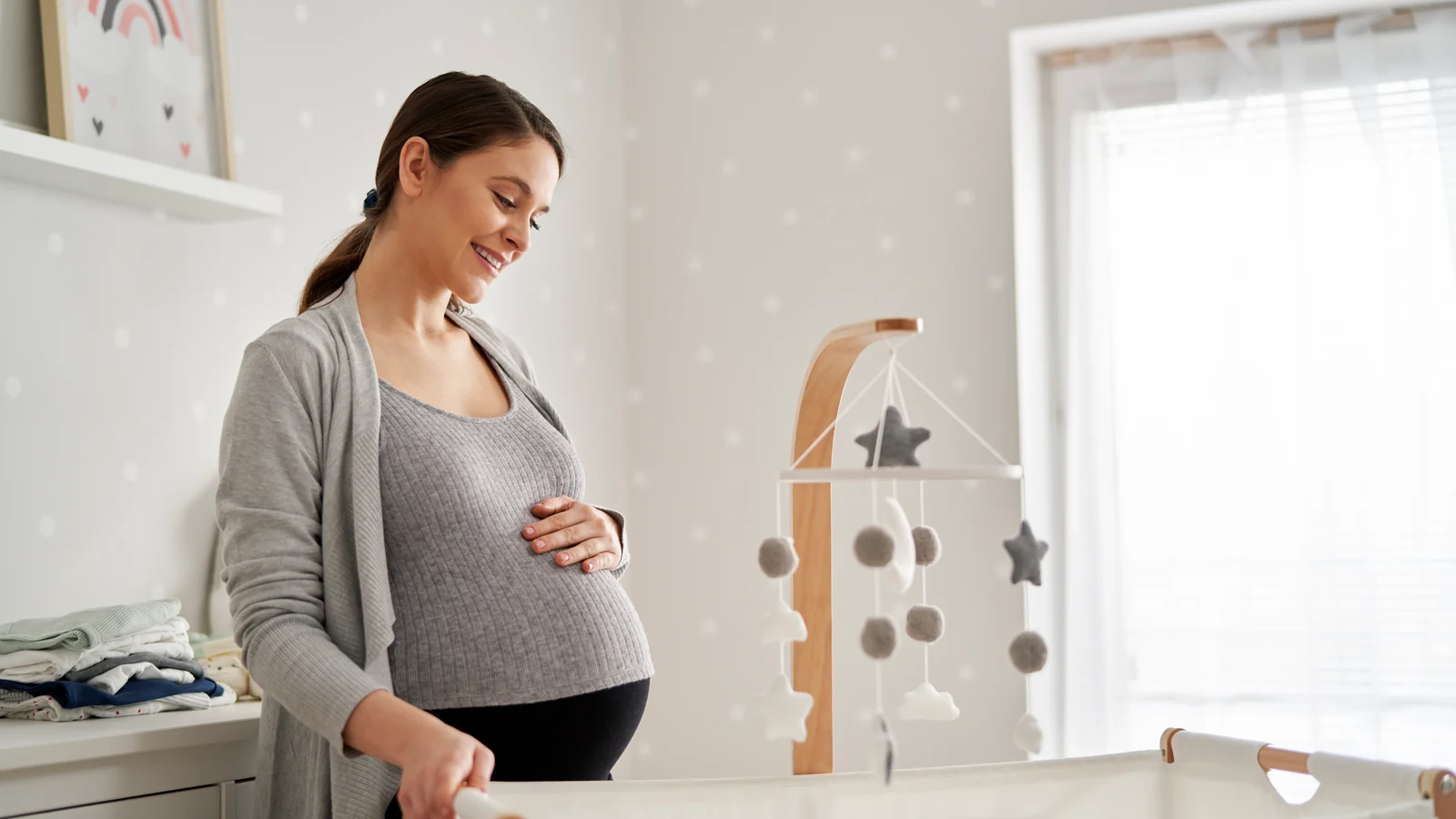
There’s a paint chip taped to the wall of the spare room. The crib is still in its box in the hallway, and the folder of saved Montessori nurseries on your phone keeps growing: pale wood, a low mirror, one perfect basket, not a burp cloth in sight. Every one of those rooms looks finished. Yours has a laundry basket in the middle of the floor and a due date that suddenly feels very close.
Nesting (that urge to get everything ready before the baby comes) has a way of turning into a quiet worry that you’re already behind. I fell hard for those photos the first time. Before my son Will was born, I repainted the walls and bought an expensive crib for a room he barely used in his first months. Now his little brother, Jimmy, is due in March, and this time I’m doing less on purpose.
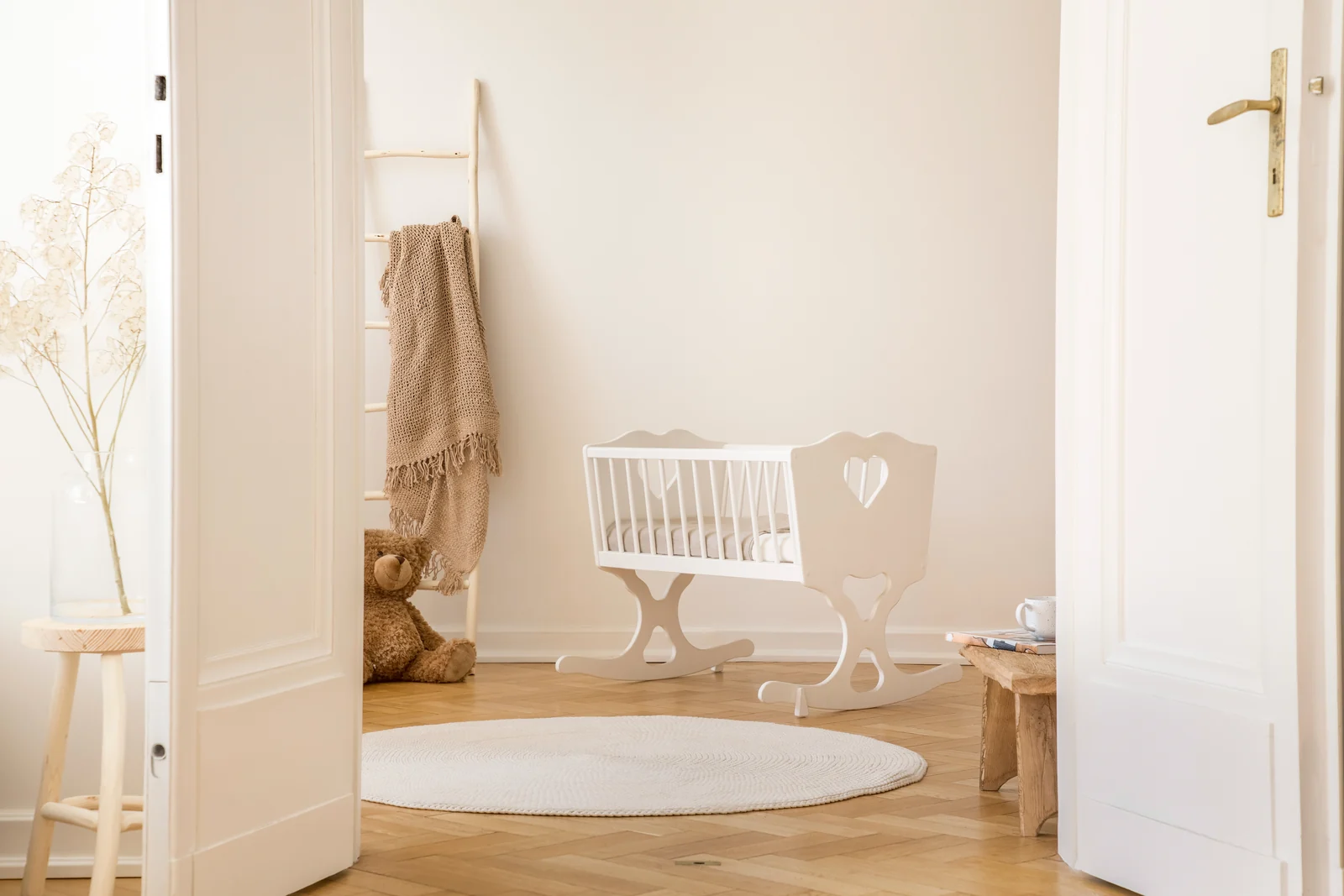
A newborn’s world is small. They need a safe place to sleep, somewhere to be changed, somewhere for you to feed them, and a bit of clear floor. The bigger Montessori play space can grow with them over the next three years.
 Save
Why does a Montessori nursery start with less?
A Montessori nursery starts with less because the idea comes from rooms prepared with everything a child needs and nothing extra. For a newborn, “everything” turns out to be a short list.
In Montessori classrooms, the Association Montessori Internationale (AMI) describes the prepared environment as one the adult sets up for the children, containing “all the essentials for optimal development but nothing superfluous.” At home, I read that as permission to stop shopping. Nothing superfluous is a lot easier to live with than a crib, a dresser, a bookcase, a play gym, a rocker and a wall of decals all arriving before the baby does.
You may also run into the word nido, Italian for “nest” and what many Montessori programs call the room for their youngest babies. Small, warm and built around one tiny person is a good picture to plan by.
The American Montessori Society (AMS) says freedom of movement and choice supports neurological development, and that in its infant and toddler environments, children aren’t restricted to infant equipment or high chairs. That describes a classroom, and your car seat and high chair will still have their jobs. What it points to for a nursery is floor space, which happens to be free.
The look follows from there. Plain walls, a few natural materials like wood, cotton and wool, and maybe one or two simple pictures hung low, where a baby lying on the floor can actually see them. Calm is much easier to keep than to create later, once the gifts start arriving.
 Save
Where will your baby actually sleep at first?
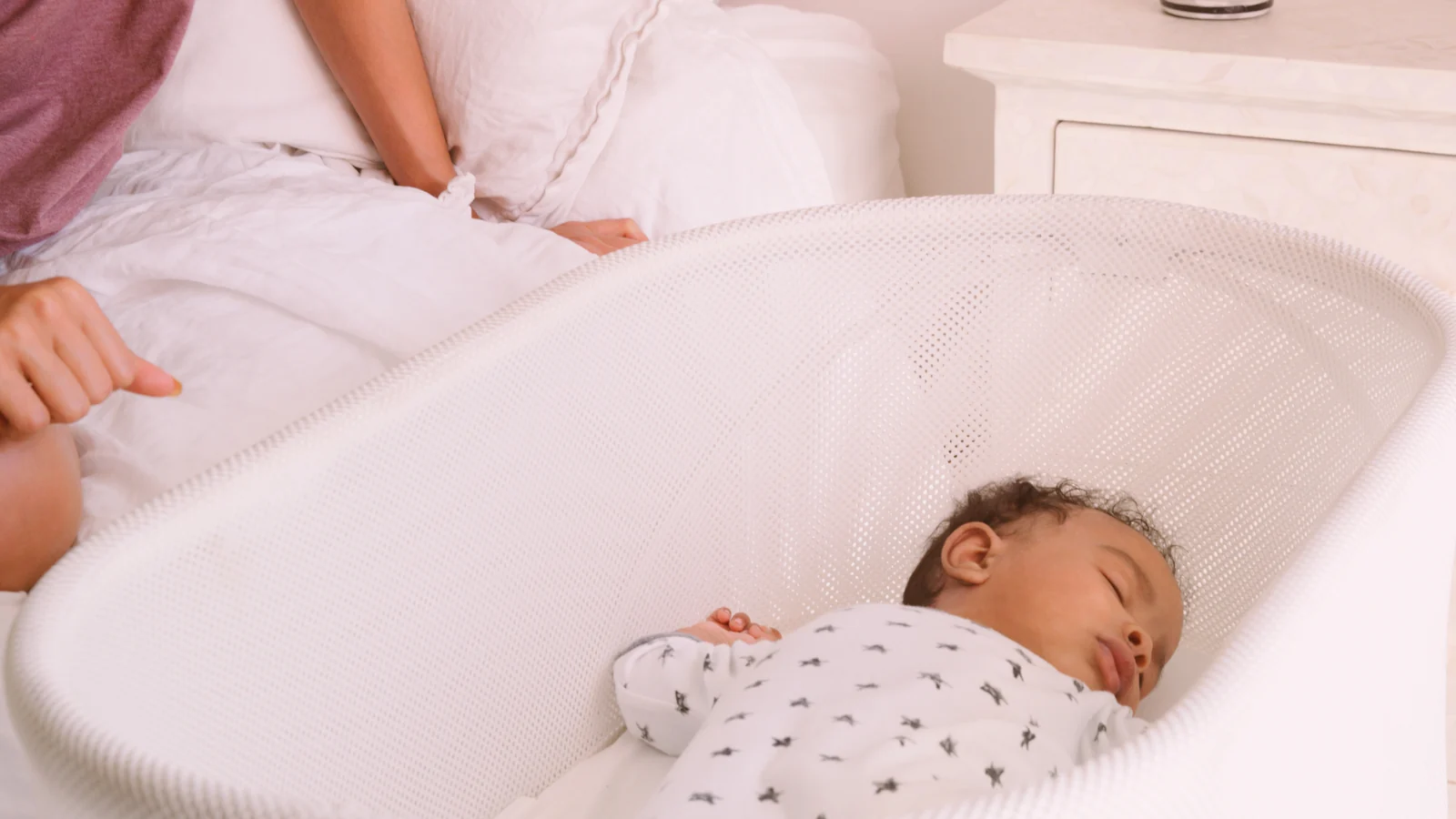
Pediatricians’ safe-sleep rules come first here: the American Academy of Pediatrics (AAP) recommends sharing a room with your baby, in their own sleep space and never your bed, for at least the first 6 months. That’s why the nursery bed can wait.
This one changes the whole shopping list. The AAP’s advice is to share a room with your baby but never a bed, and its safe-sleep guide for parents explains why: room sharing can lower the risk of SIDS (sudden infant death syndrome) by as much as 50%, and it’s much safer than bed sharing. So for half a year at least, the most important piece of nursery furniture lives right next to your bed.
That’s how it went in our house, even though I’d planned something else entirely. Will spent his first six months beside me, first in a little bassinet pushed up against the side of our bed, then, once he started rolling, in his own crib right next to it.
 Save
Plan for warmth, too. The AAP says overheating can increase the risk of SIDS, and that a baby only needs one more layer than you’d wear in the same room to be comfortable. With a March baby coming and a Colorado winter to get through first, that’s the rule I expect to need reminding of most.
Every sleep, naps included: your baby goes down on their back, on a firm, flat surface that doesn’t dip under them, in a crib, bassinet, portable crib or play yard that meets U.S. Consumer Product Safety Commission (CPSC) standards. Anything tilted more than 10 degrees isn’t safe for sleep.
Keep that space bare. No pillows, blankets, quilts, comforters, mattress toppers, bumper pads, toys or loose sheets, because the AAP says they can raise the risk of entrapment, suffocation or strangulation. This advice covers babies up to 1 year; ask your pediatrician about anything that doesn’t fit your situation.
Bassinets have their own federal safety standard, so look for it when you shop. Anything sold for a young baby to sleep in has a federal rule to meet, too. The AAP says other sleep products are only a safe option if they comply with the June 2021 rule requiring infant sleep products to meet the federal safety standards for cribs, bassinets, portable cribs or play yards. If a product doesn’t meet them, don’t use it.
You’ll also see plenty of Montessori bedrooms built around a low mattress on the floor. That’s a decision for later, and it comes with its own safety questions, which I go through in my guide to the Montessori floor bed.
How to set up a Montessori nursery in four small areas
Start with four small areas: a sleep spot in your room, a changing spot, a feeding chair close to where your baby sleeps, and a clear patch of floor. Together they cover almost everything a newborn’s day asks of you.
These four are my own practical way of splitting up a newborn’s day at home, so you won’t find them as an official Montessori list. Thinking in areas instead of furniture is what keeps the shopping short.
- Sleep. In your room for now, with a fitted sheet and nothing else.
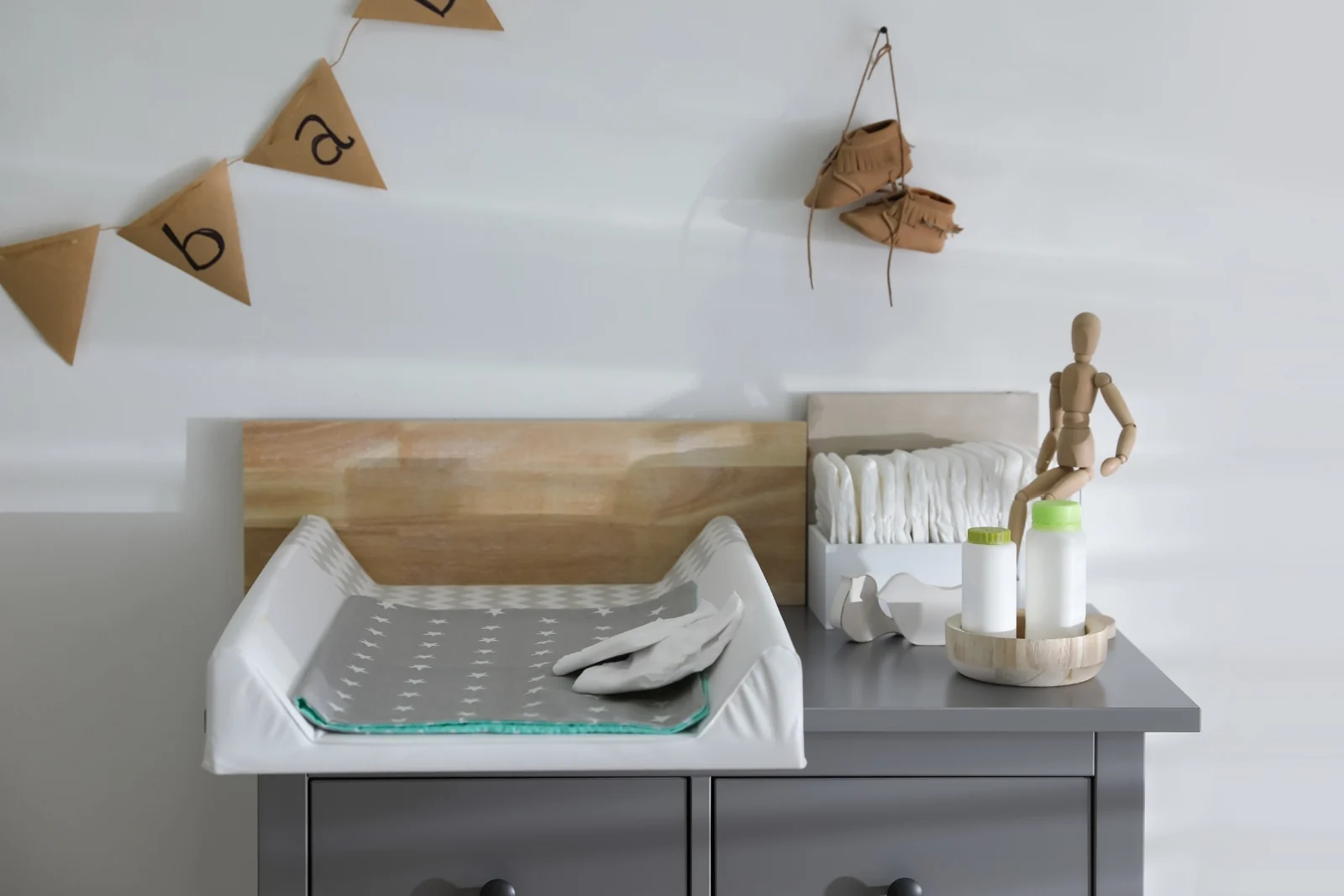
- Care. A steady changing surface at a height that’s kind to your back, with diapers, wipes and a spare outfit in reach.
- Feeding. One comfortable chair close enough to the sleep spot that night feeds don’t involve a hallway. Early on, that may be a chair in your bedroom.
- Movement. A clear, clean patch of floor, the area I’d give the most thought and the least money (more below).
Keep the feeding chair, and later any low furniture, away from windows. The AAP’s home safety tips say never to put chairs, sofas, low tables or anything else a child might climb on in front of a window, and furniture has a way of staying wherever you first put it.
With an older sibling in the house, I’d also put the changing spot and the feeding chair somewhere high or a little apart. That’s the biggest change in my plan for Jimmy, since Will is an energetic three-year-old who doesn’t always know his own strength.
 Save
The Montessori movement area
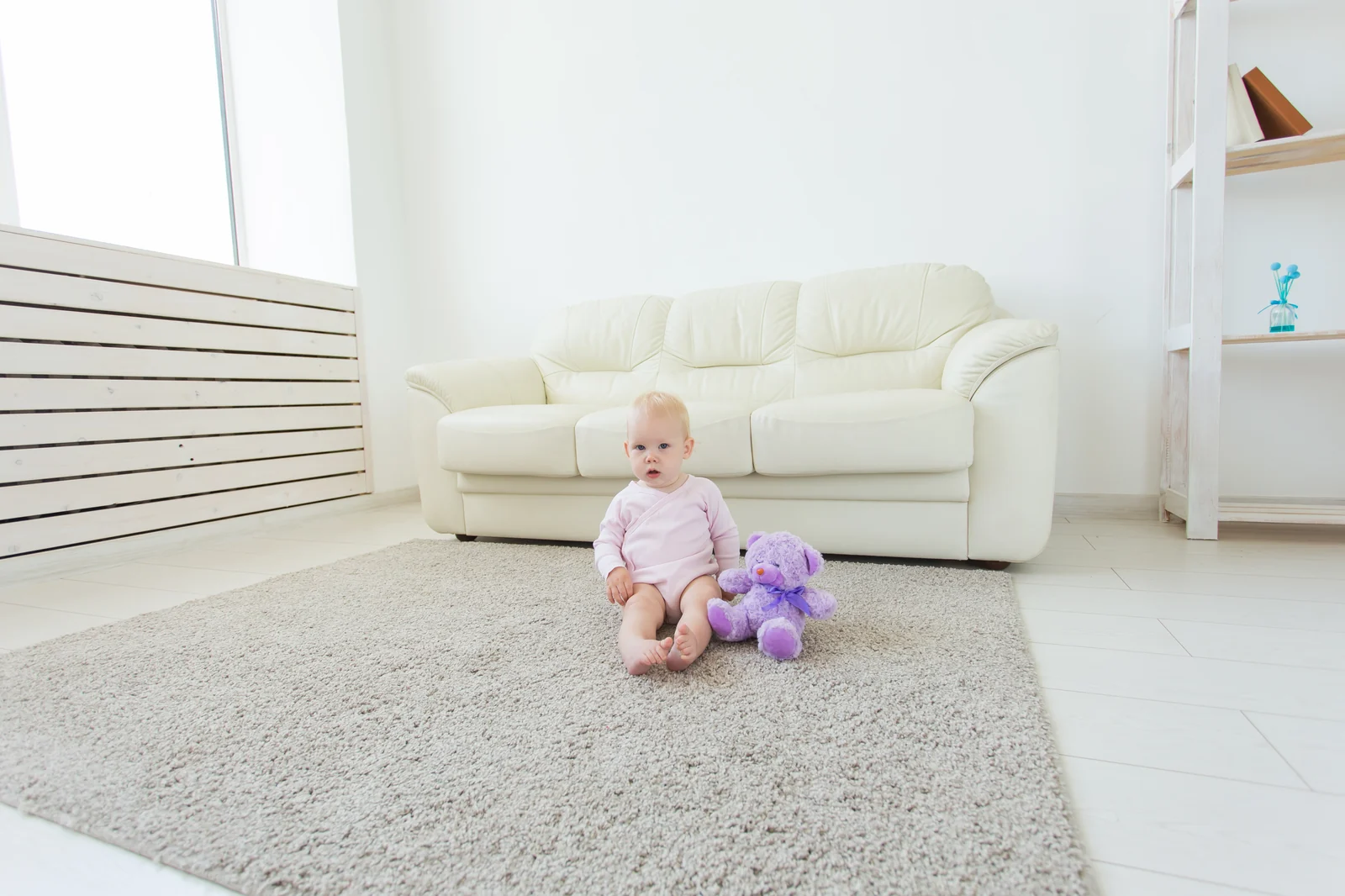
A Montessori movement area is a stretch of floor where your baby can lie, kick, reach and, later, roll and crawl. A firm play mat or a low rug on a clean patch of floor is enough to start. This is where the freedom of movement the AMS describes actually happens at home, and it costs about as much as running the vacuum.
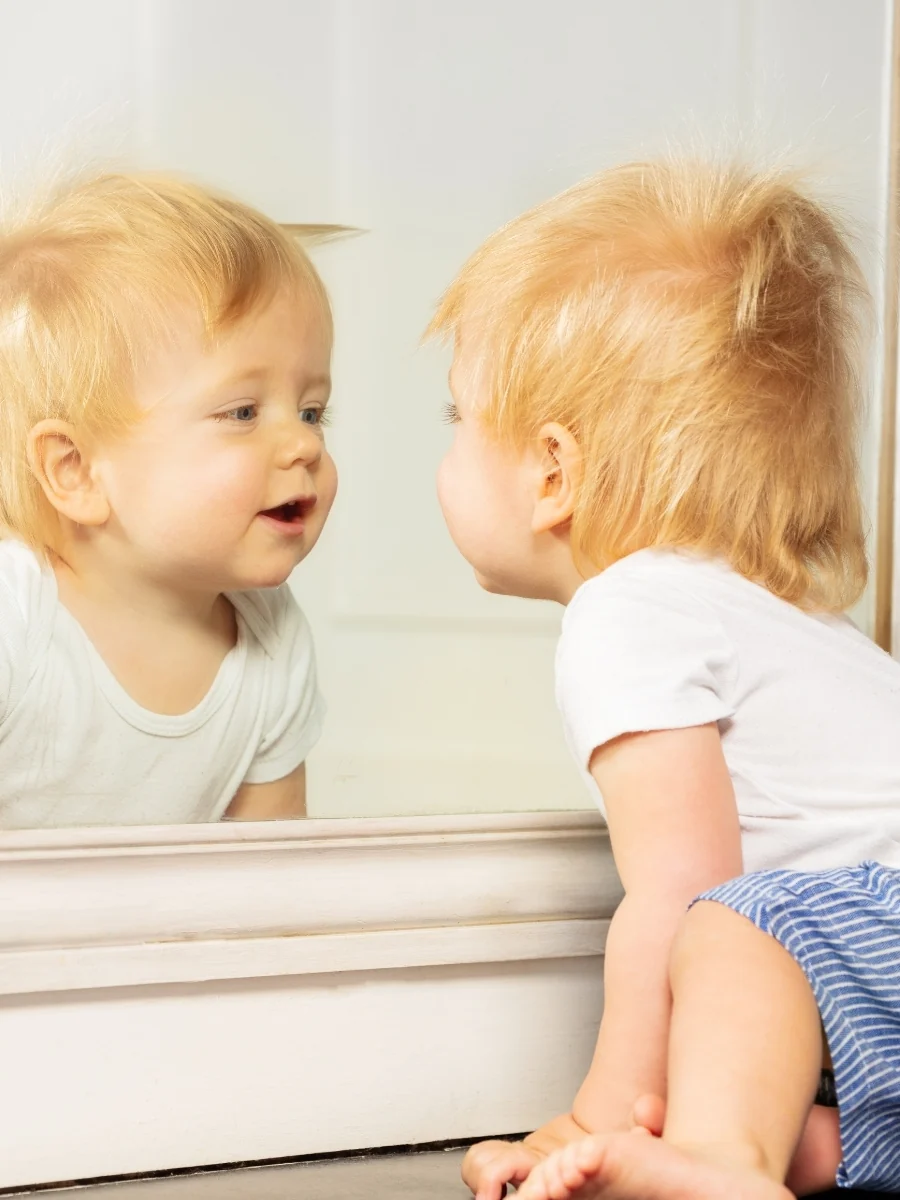
Many families add a low mirror along the wall, so there’s a face down at floor level to look at. Choose one made for babies, and mount it so it can’t come off the wall. If you’d like a mobile, it hangs above the mat, and I’ve written separately about which Montessori mobile to hang, and when. Some parents also love a topponcino, a small padded cushion some families use to hold and carry a newborn. It’s for cuddles and stays out of the sleep space, and whether you need one at all gets its own post. Tummy time will happen here too, in small bits, with you down on the floor next to them.
The low shelf can wait. In its infant and toddler programs, the AMS describes child-size furniture and materials, with everything needed to complete a task within reach, and that starts to matter once your baby is crawling over to things on purpose. Before then, a shelf mostly holds your stuff. One note for later: if the mat sits near a window, the AAP says a window screen isn’t strong enough to prevent a fall, so window guards that only an adult or older child can open are worth adding before your baby is on the move.

What I’d do differently the second time
The second time around, I’m planning one small bassinet beside our bed, reusing Will’s washed baby clothes, and skipping the decor and pricey newborn materials. The first nursery I made showed me how little of it a newborn uses.
From Will’s nursery to Jimmy’s
When I was pregnant with Will, the Montessori nurseries I found online looked like magazine pages, and I wanted ours to look just like them.
- Step 1: I repainted the walls, bought an expensive crib and a set of wooden mobiles, and filled a separate room with lovely shelves and a dresser.
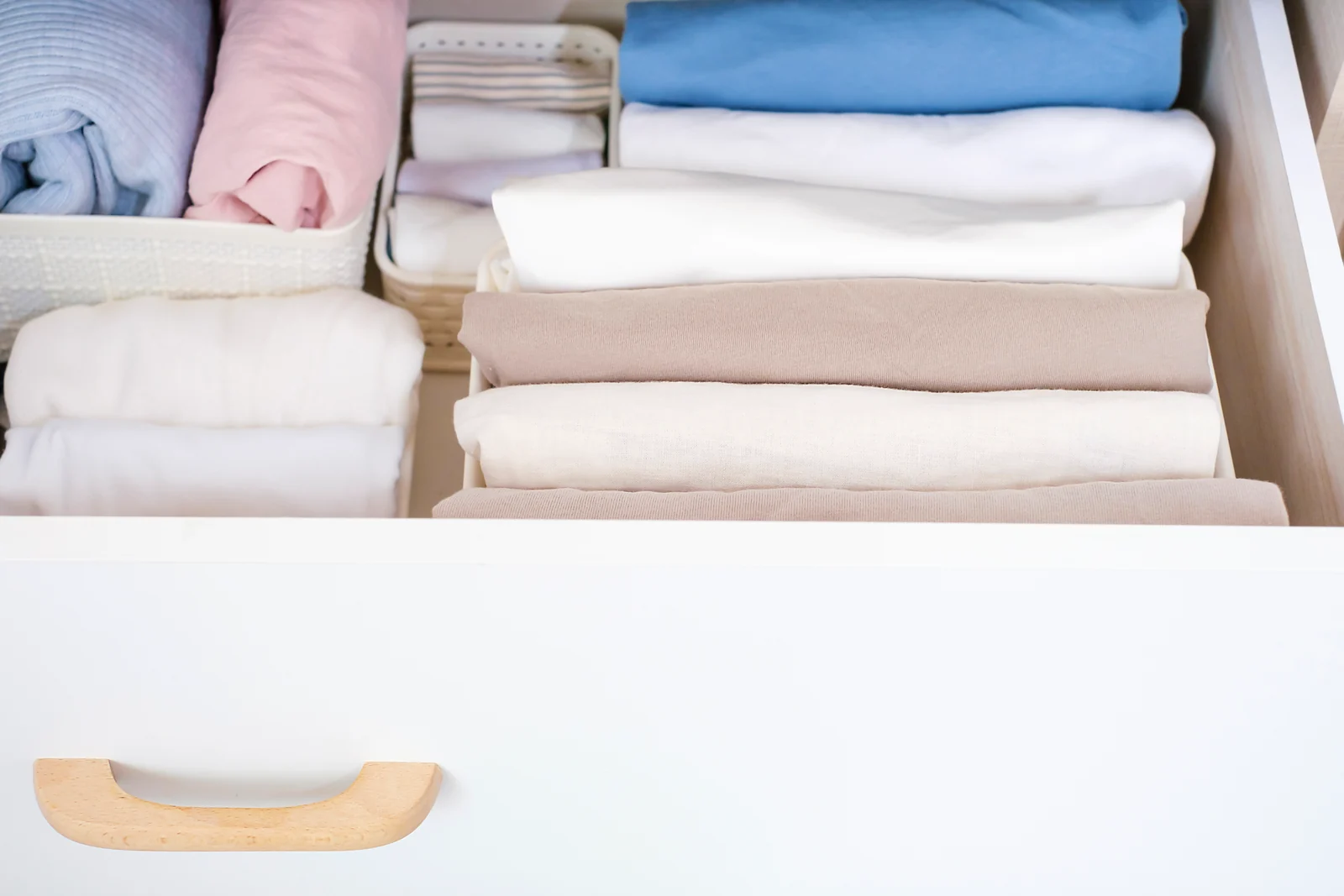
- Step 2: I ironed every tiny newborn outfit and sorted the drawers by color.
- Step 3: Will cried every time we laid him down in that room. For his first six months he slept next to me instead, and the beautiful nursery turned into the place we kept the diapers.
I’d set up a whole room for a baby I hadn’t met yet.
 Save
This time, with Jimmy due in March 2027, the plan is much shorter. One small bassinet beside our bed, so night feeds are easy. Almost all of Will’s old clothes and baby things, stored in our basement and washed, are getting a second round. No new decor, and none of the expensive newborn materials that get used for a few weeks and then put away for good.
And yes, there’s paint involved again. The third bedroom is being cleared out and painted for Jimmy. This time, though, I know it can take its time, because he won’t be sleeping in there for months.
A newborn needs a safe bed, your arms and a bit of floor. The room can catch up.
If I could hand my first-time self one list, it would look like this:
| Need now | Can wait | Skip |
|---|---|---|
| A crib, bassinet or play yard that meets federal safety standards, set up in your room | A floor bed, a later decision with its own safety questions | Repainting or redecorating the whole room |
| A fitted sheet, and nothing else in the sleep space | A low shelf, until your baby is crawling | Themed decor and a wall of decals |
| A changing spot with supplies within reach | Moving your baby’s sleep into the nursery (the AAP says to room share for at least 6 months) | Ironing newborn clothes and sorting drawers by color |
| A comfortable feeding chair, away from the window | Extra furniture beyond these four areas | Pricey newborn materials that get used for a few weeks |
| A firm mat or rug on a clear patch of floor |
My rule for Jimmy is simple: if we’d only use it for a few weeks, it doesn’t come home. Run every registry item past that one question before you hit “add,” and watch how many quietly drop off.
Miri’s Tip
Montessori nursery on a budget: what can you skip?
Skip the full-room makeover, reuse hand-me-downs only after checking them for recalls, and let the furniture wait until your baby needs it. On a budget, the biggest saving is simply not buying ahead.
The accountant in me still winces at that first nursery: real money spent on a room Will hardly used for months. Most Montessori nursery furniture is made for a baby who crawls, pulls up and reaches, so save your money for that stage, when your baby can show you what they actually go for.
Hand-me-downs are where a budget nursery really saves, as long as the sleep gear gets checked first.
 Save
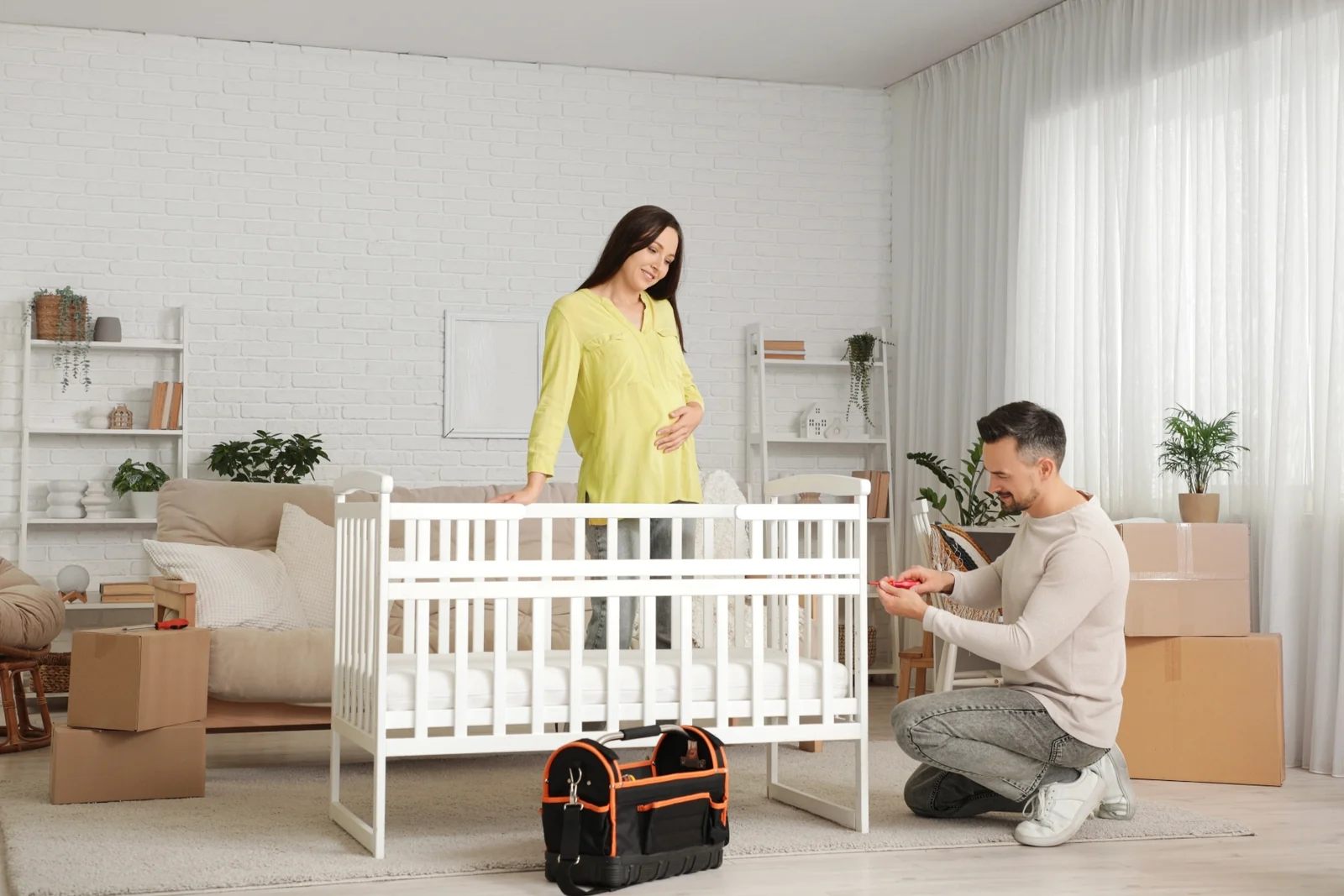
Before a hand-me-down crib or bassinet comes home, check the CPSC website for recalls and make sure the mattress was made for that crib and fits tightly. CPSC notes that used nursery products, especially cribs and bassinets, have caused deaths, and tells resellers not to sell broken or wobbly nursery furniture. Apply the same rule at home: if it wobbles, it stays out.
Age matters, too. CPSC’s guidance for child care providers says a crib bought before federal crib standards took effect on June 28, 2011, without a tracking label or registration form, is unlikely to be certified as meeting them. Drop-side cribs, CPSC said in 2011, won’t meet the new rules even with an immobilizer added.
When the crib on offer has spent years at a grandparent’s house, my post on a Montessori corner at the grandparents’ house covers old cribs and well-meant gifts in more detail.
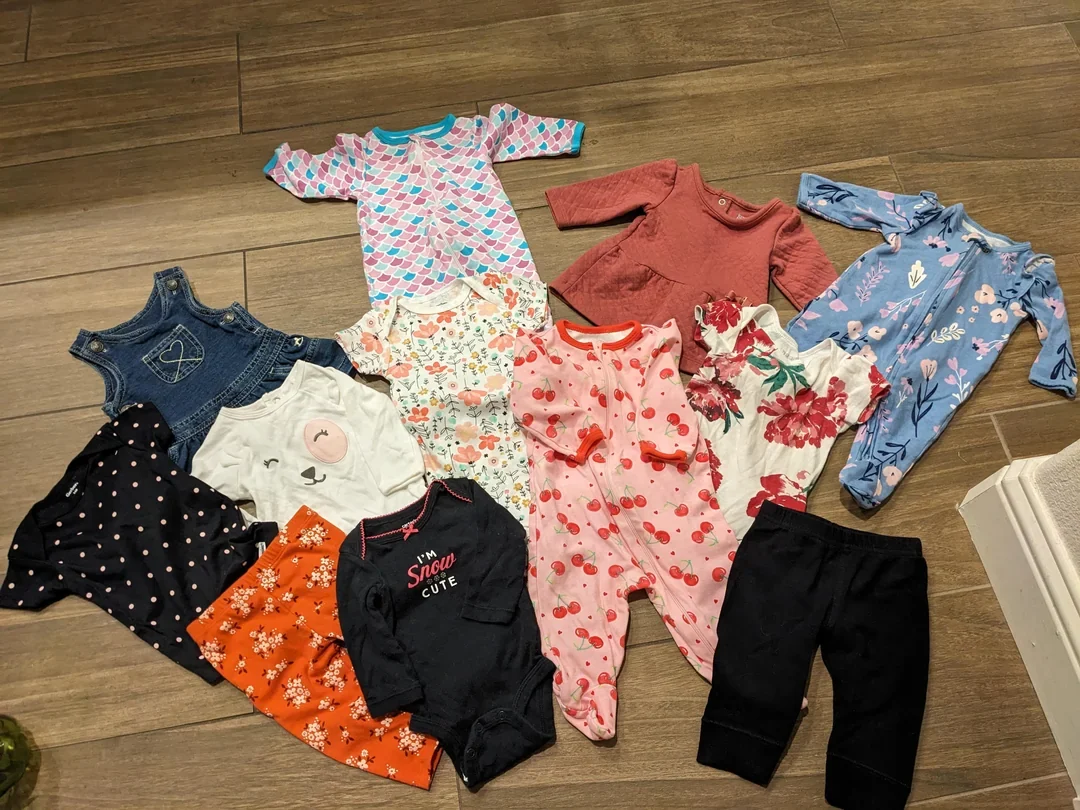
Clothes are the easy win. Washed hand-me-downs from a sibling, a cousin or a friend cost nothing, and newborns outgrow things fast. It’s where most of Jimmy’s first wardrobe is coming from.
 Save
When you do buy furniture later, I lean toward well-made wooden pieces simple enough to last through a second baby. Wood on its own doesn’t make anything safe, though. The finish, the design and the safety certification are what you’re really checking. For the newborn list itself, item by item, my Montessori baby registry checklist sorts out what’s worth asking for.
The trick with everything else is knowing what each stage actually needs, so you can set it up when your baby gets there.
Frequently Asked Questions
What is a Montessori nursery?
A Montessori nursery is a baby’s room arranged so a young child can see, move and, later, reach things on their own. It’s plain and calm, with open floor and a few simple, natural things. Pediatricians recommend sharing a room with your baby for at least the first 6 months, so at first the nursery is mostly a daytime space.
Can you set up a Montessori nursery on a budget?
Yes, you can set up a Montessori nursery on a budget, and the simple version is often the more Montessori one. Much of it is open floor and a mat. A low shelf and other furniture can wait until your baby crawls, and used sleep gear is worth a look once it’s been checked for recalls and wobbles.
Conclusion
Make your first step a small one. This week, pick the safe sleep spot that will go next to your bed, and let everything else wait. The changing spot can be a dresser top you already own. The feeding chair might be the one sitting in your living room. The floor is already there. The rest of the nursery will make more sense once you’ve met the baby who’s going to use it.
Planning this carefully says a lot about the parent you’re about to be. Start with the bed, and give yourself credit for the rest.
Miri
Fewer toys, deeper play.
Further Reading & Resources
See all 9 sources
- Safe sleep: How to Keep Your Sleeping Baby Safe: AAP Policy Explained (HealthyChildren.org, American Academy of Pediatrics) · Safety Standard for Bassinets and Cradles and Safety Standard for Infant Sleep Products (eCFR)
- Home safety: Home Safety: Tips for Families With Young Children (HealthyChildren.org, American Academy of Pediatrics)
- Used gear and recalls: Resale/Thrift Stores and Enforcement Guidance for Child Care Providers (U.S. Consumer Product Safety Commission) · The New Crib Standard: Questions and Answers (CPSC OnSafety blog, 2011)
- Montessori background: Prepared Environment (AMI Montessori Archives) · Montessori Infant and Toddler Programs (American Montessori Society)