
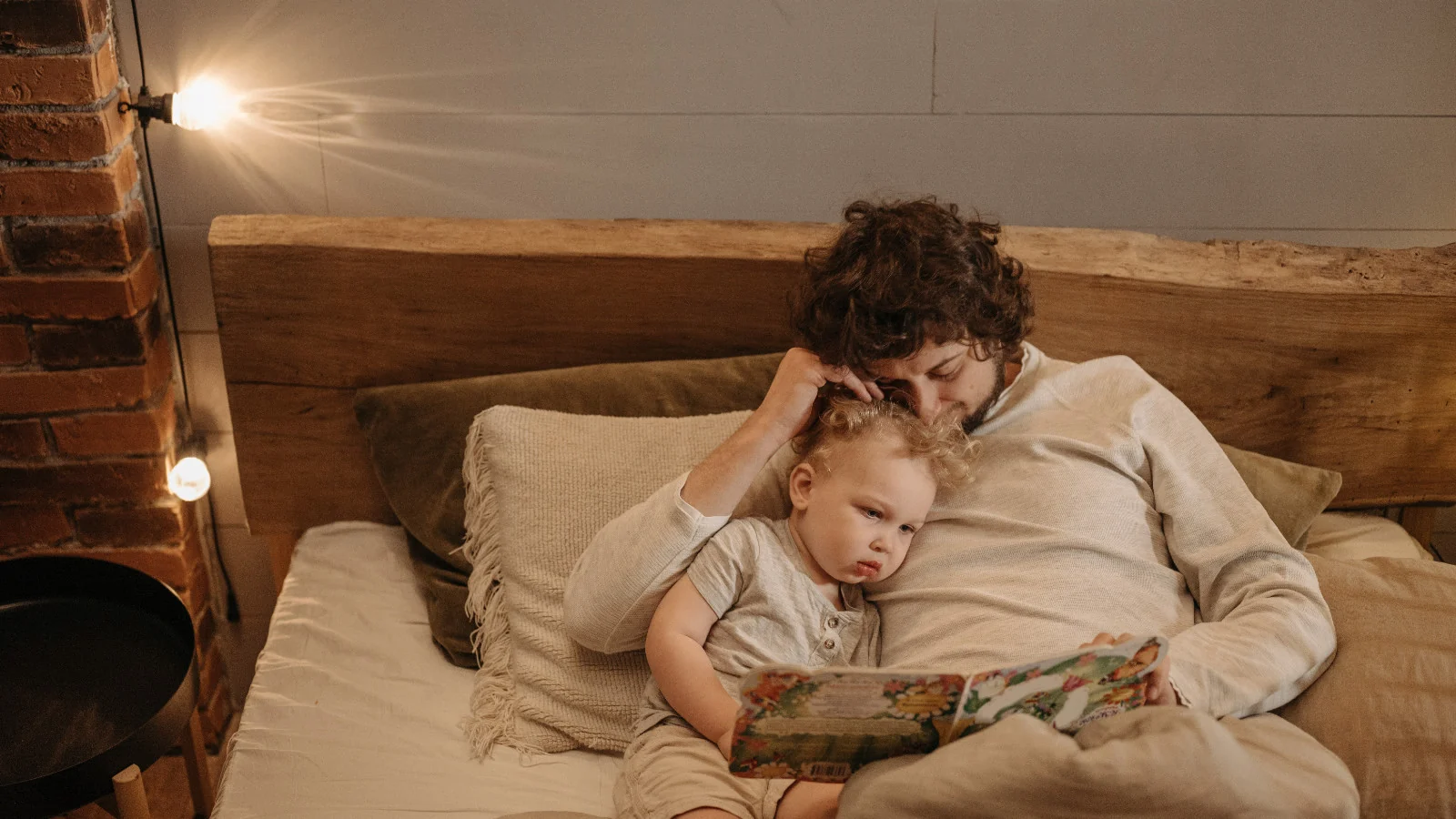
The third book is barely closed when Will remembers he’s thirsty. After the water, he needs to pee. After the potty, it turns out we really should read another book. It doesn’t happen every night. When it does, the reasons line up one after another, and a few of them are pretty funny.
If you’re walking in from work at 5:45 and hoping for lights out by 7:30, a stall like that is how a 3-year-old ends up wide awake at 9:30. It’s also how bedtime starts to feel like a nightly war.
Most of the fix happens earlier in the evening, in the order of the steps and in what you handle before the lights go off. Below: our real routine, the usual stalls and where to head off each one, and how much sleep a 3-year-old needs.
What makes a toddler bedtime routine work?
A toddler bedtime routine is a short string of calm steps done in the same order, at about the same time, every night. Repeating it can help your child learn what to expect next.
The American Academy of Pediatrics (AAP) puts the benefit this way: a predictable nighttime routine can help a child understand and expect what comes next, and it may ease the stress some families feel at bedtime. Its Brush, Book, Bed program (as of 2024) boils a child’s bedtime routine down to three parts: help your child brush their teeth, read a favorite book or two, and get to bed at a regular time each night.
Its page on toddler bedtime battles adds two details: keep the routine quiet (a story, quiet music or a bath), and make bedtime the same time every night.
 Save
A large survey points the same way. Among 10,085 children aged 0 to 5 in multiple countries, a consistent bedtime routine was associated with better sleep, based on what their mothers reported (Mindell and colleagues, 2015). The authors concluded that the more consistently a routine is used, and the younger it starts, the better.
Parents swapping bedtime advice online land on the same, almost boring rule: same steps, same order, keep it short. ZERO TO THREE adds that knowing what will happen next gives toddlers security and emotional stability, and that routines can cut down on the “no’s” a toddler hears in a day. At bedtime, I read that as fewer chances for a standoff.
When Will was a baby, I did every single step of bedtime for him, back in our eat, play, sleep days. At 3, with each step set up within his reach, he runs most of it himself, and my job is mostly keeping the order. For us, that’s the Montessori part.
At Moje Montessori, we rate each habit by how much research stands behind it.
| Habit | What the source says | Evidence |
|---|---|---|
| A regular routine, at the same bedtime each night | AAP: can help your child know what comes next. A parent-reported survey of 10,085 kids aged 0 to 5 linked a consistent routine with better sleep | Backed by research |
| Reading together | AAP: even 15 minutes a day of reading aloud helps language development and social-emotional skills | Backed by research |
| Screens out of the bedroom, off at least 1 hour before bed | AAP: helps prevent sleep disruption | Backed by research |
| Bedtime 15 to 20 minutes earlier, before the yawning | AAP: waiting for eye-rubbing is probably too late, and even 15 to 20 minutes earlier can make a big difference | Backed by research |
| A “bedtime pass” for a child who keeps leaving the room | Tested in one small trial of 19 children aged 3 to 6 who resisted bedtime | Some research |
“Backed by research” means studies with babies or toddlers support that piece. “Some research” means part of it is supported. “Montessori philosophy (not tested at home)” means there’s little or no research on it in family homes yet.
Our real bedtime routine, step by step
Our weekday routine starts at 7:00 and the lamp goes off at 8:00: tidy the shelf, potty, bath or washcloth, teeth, pajamas, three books, lights out. The order stays the same every night, and Will does most of the steps himself.
Dom or I handle the first half hour, depending on the evening. The books are my part.
- Tidy the shelf, 7:00. Will and one of us put the toys back on the living room shelf.
- Potty, right after tidy-up.
- Bath or warm washcloth. A bath three or four nights a week, a washcloth the rest.
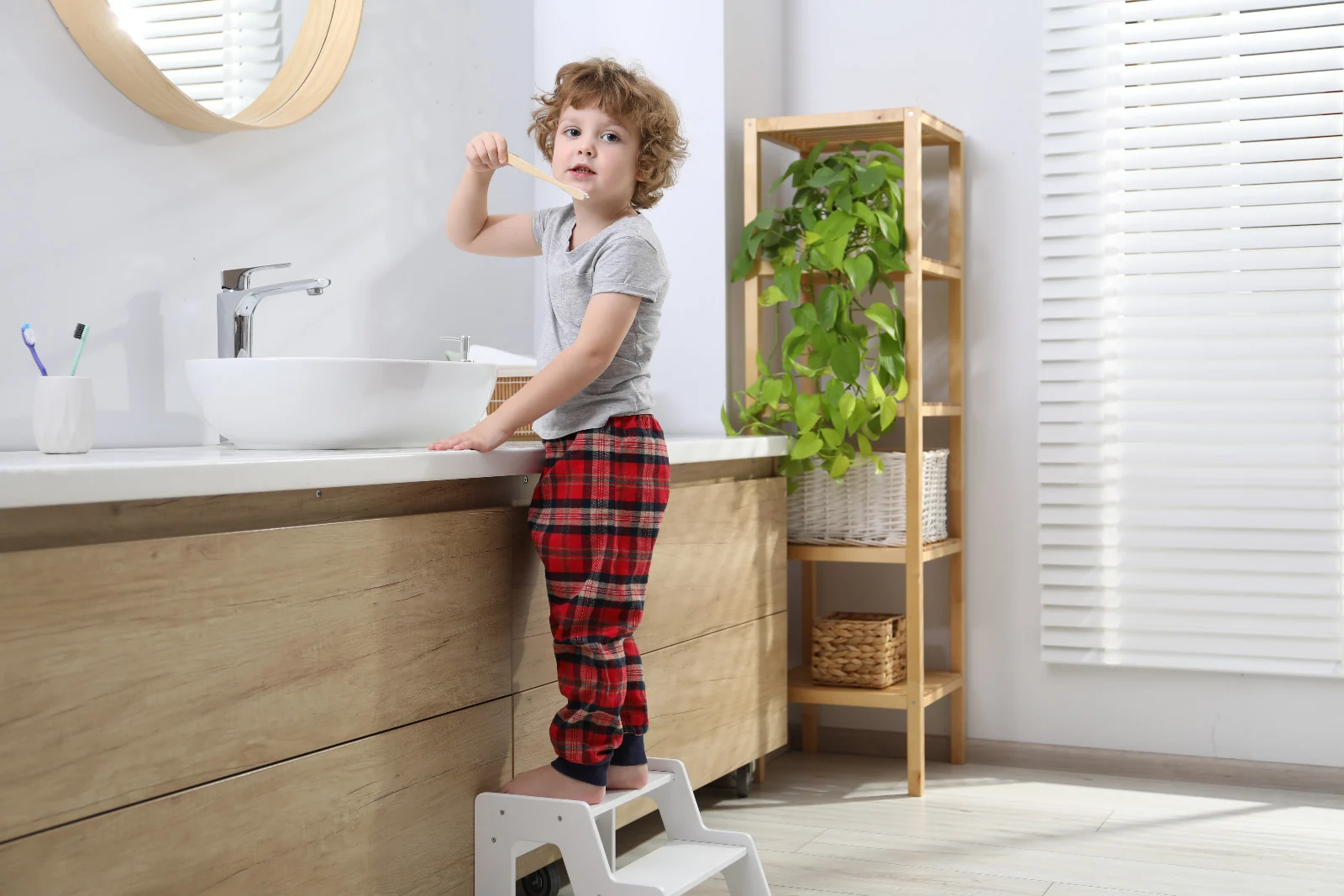
- Teeth at the learning tower. Will drags his learning tower into the bathroom himself to brush and wash his face.
- Pajamas. I lay two pairs out on his mattress, and he points to one.
- Three books. In the reading corner, he picks exactly three, and I read them.
- Lamp off, 8:00. He switches off the lamp and crawls onto his floor bed.
Why skip the nightly bath? Colorado air is very dry, and bathing every day made Will’s skin crack easily. Fewer baths are also easier on me while I’m pregnant, and any night he comes in grubby from rolling around outside, he gets one anyway. Those are our family’s reasons; your pediatrician can tell you what suits your child’s skin.
For teeth, Brush, Book, Bed (as of 2024) goes by age: a rice-grain smear of fluoride toothpaste twice a day under 3, a pea-sized amount twice a day from 3 to 6. Young children need an adult’s help, so let them practice, then take your turn. Teach them to spit without rinsing, and make the toothbrush the last thing to touch their teeth before bed.
 Save
On weekends, or when dinner runs late, the whole routine slides an hour and starts at 8. The steps stay where they are. Even on a good night, the books take the longest of any step.
 Save
 Save
The trickiest part at this age is that bedtime is half theirs now. A 3-year-old wants to do the steps, choose the pajamas and the books, and, some nights, stretch the whole thing as far as it will go.
The stall-proof bedtime: head off every request early
Take care of the usual requests before the lights go off. The AAP’s advice is to handle a child’s needs before bedtime so they don’t become reasons to stay up: a drink of water, a light left on, the door open a crack.
Stalling and resisting going to bed sit on the AAP’s list of the most common sleep problems in children, so a 3-year-old with a long list of reasons to stay up has plenty of company. If it worries you, the same page suggests bringing it to your pediatrician, since most sleep problems are easily treated.
 Save
Most stalls are predictable, which is good news. Each one has a spot earlier in the routine where you can answer it before your child asks.
| The stall | Head it off | What that looks like |
|---|---|---|
| “I’m thirsty” | Before teeth | Offer a last drink, then brush. The toothbrush stays the last thing to touch the teeth before bed |
| “I need to pee” | Early, as its own step | Make the potty a fixed step near the start. Ours comes right after tidy-up |
| “One more book” | Before the first book | Agree on the number before you open a cover. At our house it’s three, and Will picks them |
| “Leave the light on” or “Leave the door open” | Just before lights out | Ask once how they want the light and the door, then do it that way |
| Getting out of bed | After lights out | See the next section |
If you only change one row this week, make it the water. It costs nothing, it fits the toothbrush rule, and it answers the first request before anyone asks.
Every request you answer before lights out is one less negotiation in the dark.
Will still tries now and then. When he does, I stay gentle and firm: I remind him that reading time is over, say goodnight and walk out. Saying the same calm thing every time shows him the schedule isn’t up for discussion. Our evenings are far more peaceful than they used to be, and I’m no longer wrestling with him on the bed for an hour.
Give the last few minutes before lights out to a little talk. One parent on r/toddlers spends a couple of minutes recounting the day to their child before she falls asleep, and another parent on What to Expect reads a book with her older child and talks about what she hopes to dream about, then a kiss and lights out.
Miri’s Tip
What if your 3-year-old keeps getting out of bed?
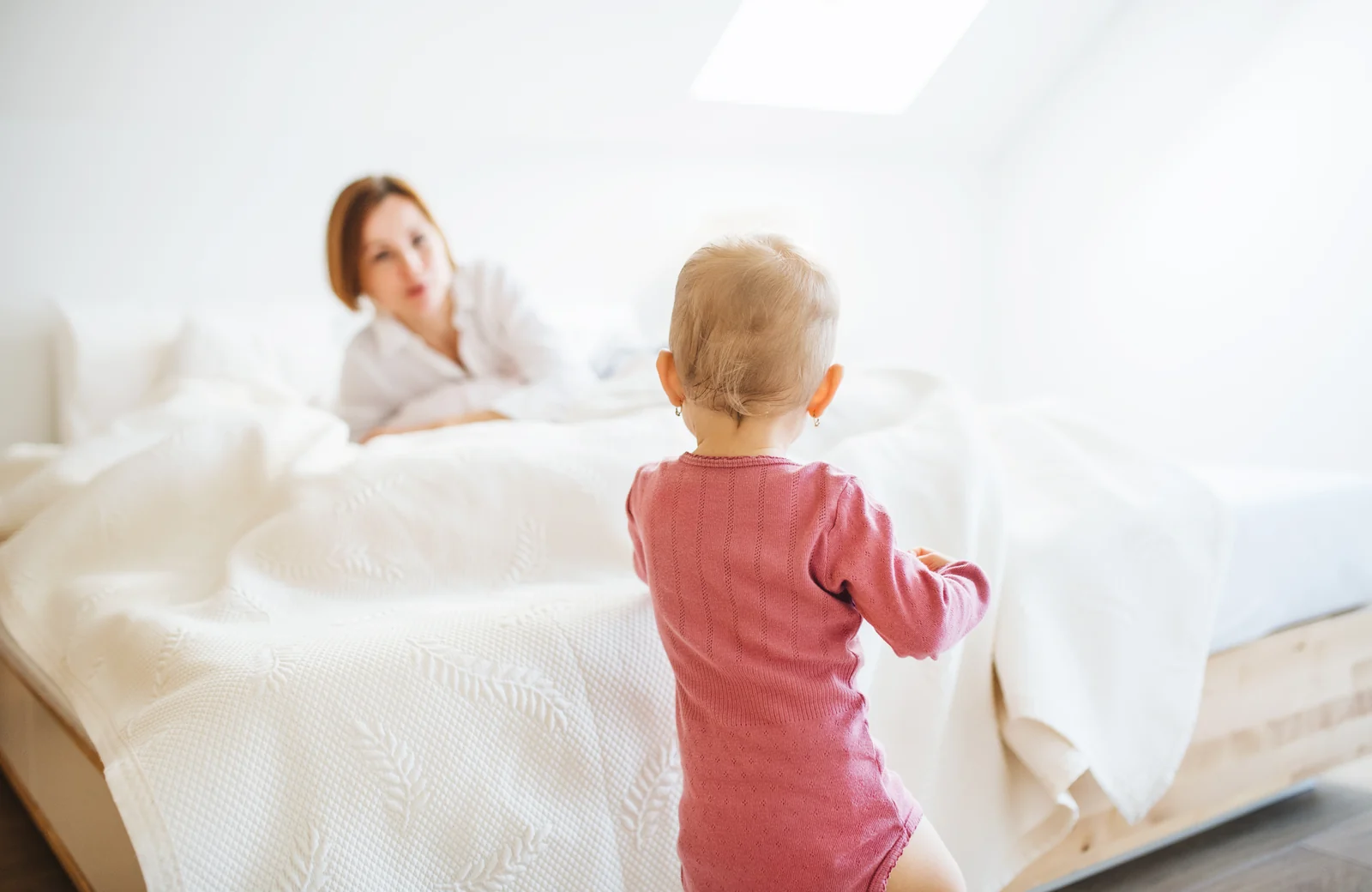
For a toddler who has just moved to a big-kid bed, the AAP (as of 2022) suggests keeping the same bedtime routine and telling your child to stay in bed until you come for them. If they get up, calmly and quietly lead them back. Keep every trip brief and boring, and expect to repeat it for several nights in a row. If your child is still in a crib and has started climbing out, the same page says it may be time for a big-kid bed.
Researchers have also tested a Bedtime Pass Program in a small randomized trial of 19 children aged 3 to 6 who resisted bedtime, and the authors describe it as an extinction-based procedure. With one small study behind it, talk it through with your pediatrician before you try anything like it.
 Save
Once your child can get out of bed on their own, they can reach everything in their room, and whatever is past the door, while you’re asleep. Make the whole room safe for a child who’s up and wandering before those nights start.
What to check at the door, in the hallway and at the stairs is in our guide to moving to a toddler bed.
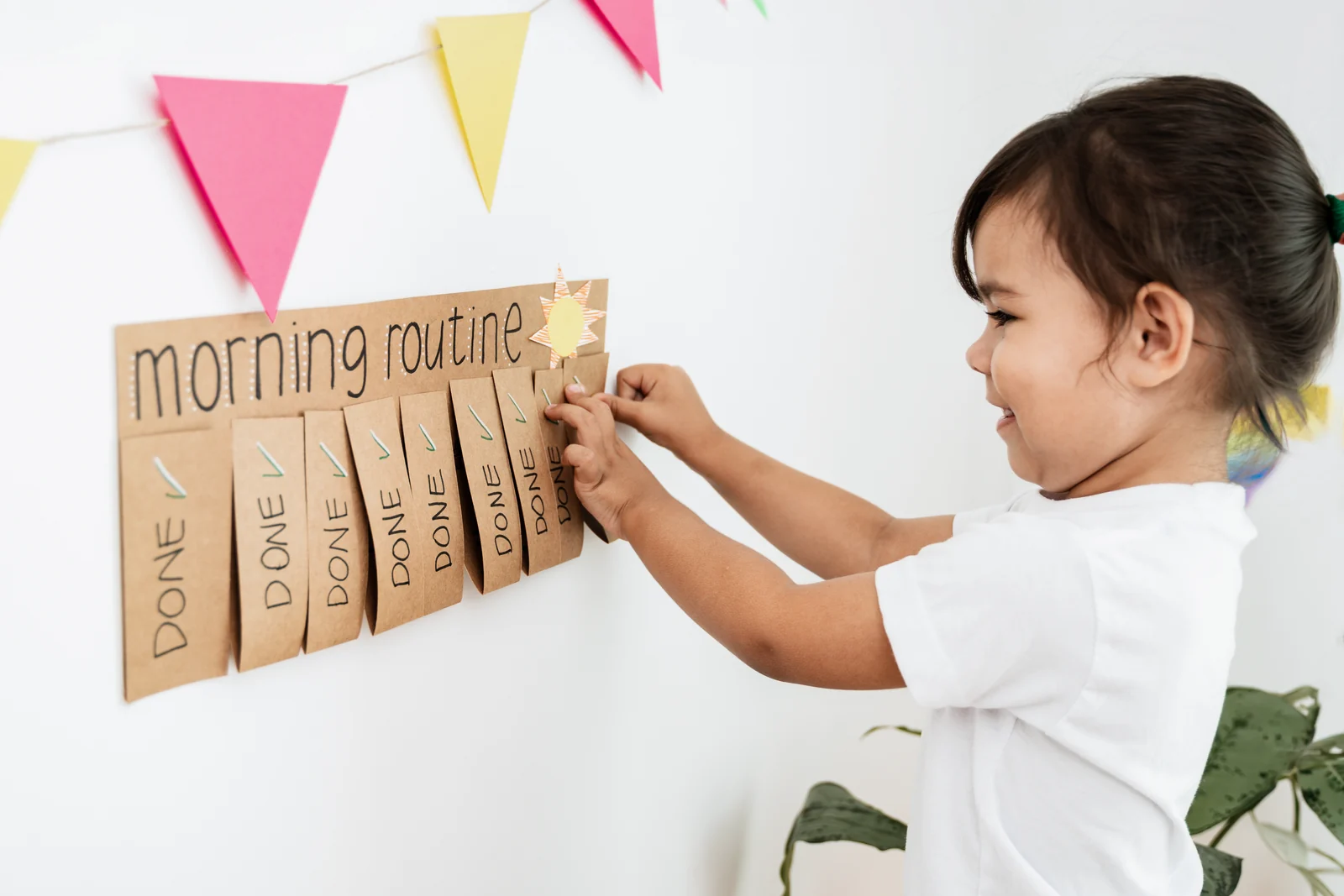
How do you make a bedtime routine chart with pictures?
Pick one picture for each step you already do, line them up in the same order as your evening, and hang the strip at your child’s eye level, close to where bedtime starts.
A bedtime routine chart is your routine, drawn out: a 3-year-old can’t read “pajamas,” but a picture of pajamas says it just fine. One parent on r/toddlers made a to-do list for a 4-year-old and a 2-year-old who struggled to switch from one activity to the next, and says the kids love it.
We don’t use a chart at our house, so this is how I’d make one if Will needed it:
- List the steps you do on most nights, in order. If baths only happen some nights, one picture can cover “bath or washcloth.”
- Use one picture per step. I’d photograph his own things: the shelf, his toothbrush, his pajamas, the lamp.
- Hang it low, at your child’s eye level, near the first step.
- Point instead of talking. When a step is done, point to the next picture and let your child tell you what it is.
 Save
Does your child already know the order by heart? Then skip the chart. The routine is already doing that job.
How much sleep does a 3-year-old need?
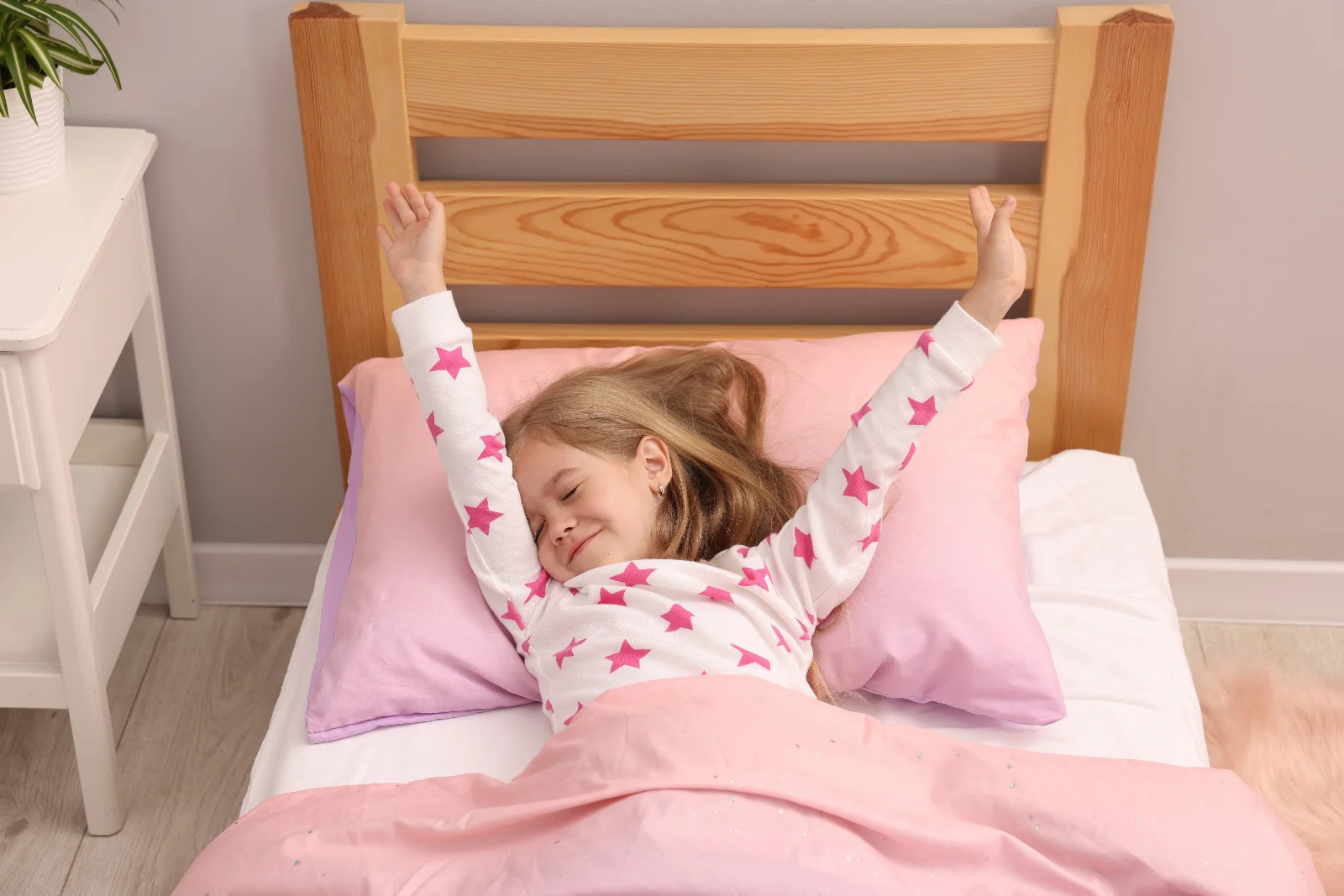
Count total hours before you worry about the clock. The American Academy of Sleep Medicine (AASM) recommends 10 to 13 hours per 24 hours for children 3 to 5, naps included, and the AAP endorses those numbers.
For 1- and 2-year-olds, the AASM range is 11 to 14 hours. The AAP’s own sleep page adds the part that’s easy to miss: these are totals for a whole day, so a nap counts toward them. The World Health Organization (WHO) gives the same 10 to 13 hours for 3- and 4-year-olds, sleep that “may include a nap,” with regular sleep and wake-up times.
 Save
At 3, some kids still nap and some have stopped, and both can fit those numbers. A systematic review of napping studies found that fewer than 2.5% of children stop napping before age 2, while 94% have stopped by age 5. Naps get their own section in our Montessori schedule for a 2-year-old.
Worried your child sleeps a lot less or a lot more than that? The AASM’s advice is to talk with your child’s doctor, who can check for a possible sleep problem.
What’s the average bedtime for a three-year-old?
I haven’t found a source I trust that gives an average bedtime for a 3-year-old, so I work backward from the wake-up time instead. Say your child wakes at 7:00 a.m. and no longer naps. Counting 10 to 13 hours back puts falling asleep somewhere between 6:00 and 9:00 p.m. Still napping for an hour? Take that hour off the night, and the window moves to 7:00 to 10:00 p.m. That’s my arithmetic on the AASM range, so treat it as a starting point. At our house, Will wakes around 7 and his lamp goes off at 8, which leaves room for up to 11 hours overnight.
Whatever time you land on, Brush, Book, Bed says to set a regular bedtime and stick to it. Don’t wait for the eye-rubbing and yawning, since that’s probably too late. Putting your child to bed even 15 to 20 minutes earlier can make a big difference.
How do you get a bedtime routine back on track?
Start with the screens and the wake-up time, then rebuild the same short order on top of them. Turn screens off at least an hour before bed, keep wake-up steady all week, and try bedtime 15 to 20 minutes earlier.
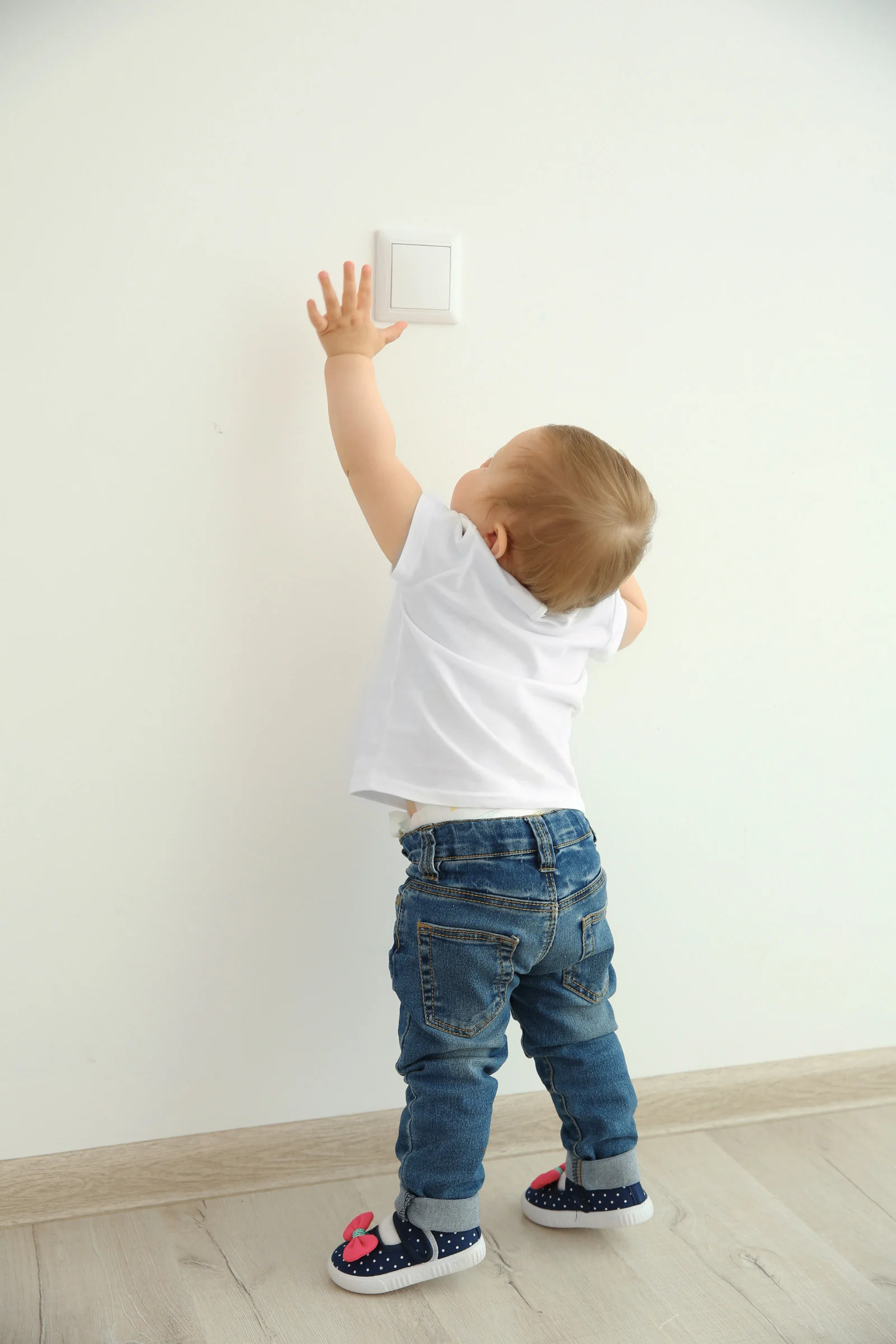
The AAP recommends keeping all screens, from TVs to phones, out of children’s bedrooms, especially at night, and turning them off at least 60 minutes before bedtime to prevent sleep disruption. Its Family Media Plan page suggests making “before bed” one of your screen-free zones, in a plan that fits your own routines and values. To fill that hour, the AAP’s page for toddlers and preschoolers (as of 2024) suggests calming bedtime routines with reading and snuggling.
 Save
Wake-up time matters too. The AAP says the same wake-up time on weekdays and weekends, along with regular meals, naps and play, will help a child feel secure and help with a smooth bedtime. I’ll admit our weekends drift, since our routine starts an hour later. The order is the part I protect.
Before a clock change, the AAP suggests that younger children’s naps and bedtime get nudged a few minutes each day in the direction the clocks will move, ideally starting about a week ahead.
A pacifier at bedtime is a separate project, and weaning off the pacifier has its own post.
If you get home late, shrink the steps and keep the order: a washcloth instead of a bath, the book count settled before anyone sits down, the lamp off on time. I’d give a new order at least a couple of weeks before deciding it doesn’t work for your family.
Frequently Asked Questions
Is 9pm too late for a 3 year old?
A 9 p.m. bedtime is on the late side for a 3-year-old who wakes at 7 a.m. and no longer naps, since it leaves 10 hours at best, the very bottom of the AASM’s 10 to 13. With a nap or a later wake-up, it can still add up. Whatever time you choose, the AAP says to keep it regular.
How long should a bedtime routine be?
A bedtime routine should be long enough for the same few calm steps and short enough to repeat every night. The AAP advice I rely on names the steps, brush, book and bed, and leaves the minutes to you. Ours starts at 7 and the lamp goes off at 8 on weekdays, three books included.
Conclusion
Some nights Will still remembers he’s thirsty with the third book barely closed. That’s a 3-year-old being a 3-year-old, and it doesn’t mean the routine has failed. You don’t need a perfect evening to start. Pick the stall that shows up most at your house, give it a fixed spot earlier in the routine, and keep everything else the same for a week.
Tonight, try one small swap: offer the water before the toothbrush comes out. Showing up for bedtime every single night is the hard part, and you’re already doing it.
Miri
Fewer toys, deeper play.
Further Reading & Resources
See all 16 sources
- Bedtime and sleep habits: Healthy Sleep Habits: How Many Hours Does Your Child Need? · Brush, Book, Bed: How to Structure Your Child’s Nighttime Routine · Toddler Won’t Go to Sleep? 7 Tips to Help End Bedtime Battles · Big Kid Beds: When to Switch From a Crib · Daylight Saving Time: Don’t Lose Sleep Over It (American Academy of Pediatrics, HealthyChildren.org)
- Sleep research: Recommended Amount of Sleep for Pediatric Populations (American Academy of Sleep Medicine, 2016) · Bedtime routines for young children: a dose-dependent association with sleep outcomes (Mindell et al., Sleep, 2015) · Evaluating the Bedtime Pass Program for child resistance to bedtime: a randomized, controlled trial (Moore, Friman et al., Journal of Pediatric Psychology, 2007) · Many naps, one nap, none (Staton et al., Sleep Medicine Reviews) · Guidelines on physical activity, sedentary behaviour and sleep for children under 5 years of age (World Health Organization, 2019)
- Screens and routines: How to Make a Family Media Plan · Kids & Screen Time: 5 C’s Questions for Toddlers & Preschoolers (AAP, HealthyChildren.org) · Creating Routines for Love and Learning (ZERO TO THREE, 2010)
- Real parents: Favorite bed time trick and I created a to do list for my kids and they LOVE it (r/toddlers) · Bedtime routine with 4 and 2 year old…tips please (What to Expect)