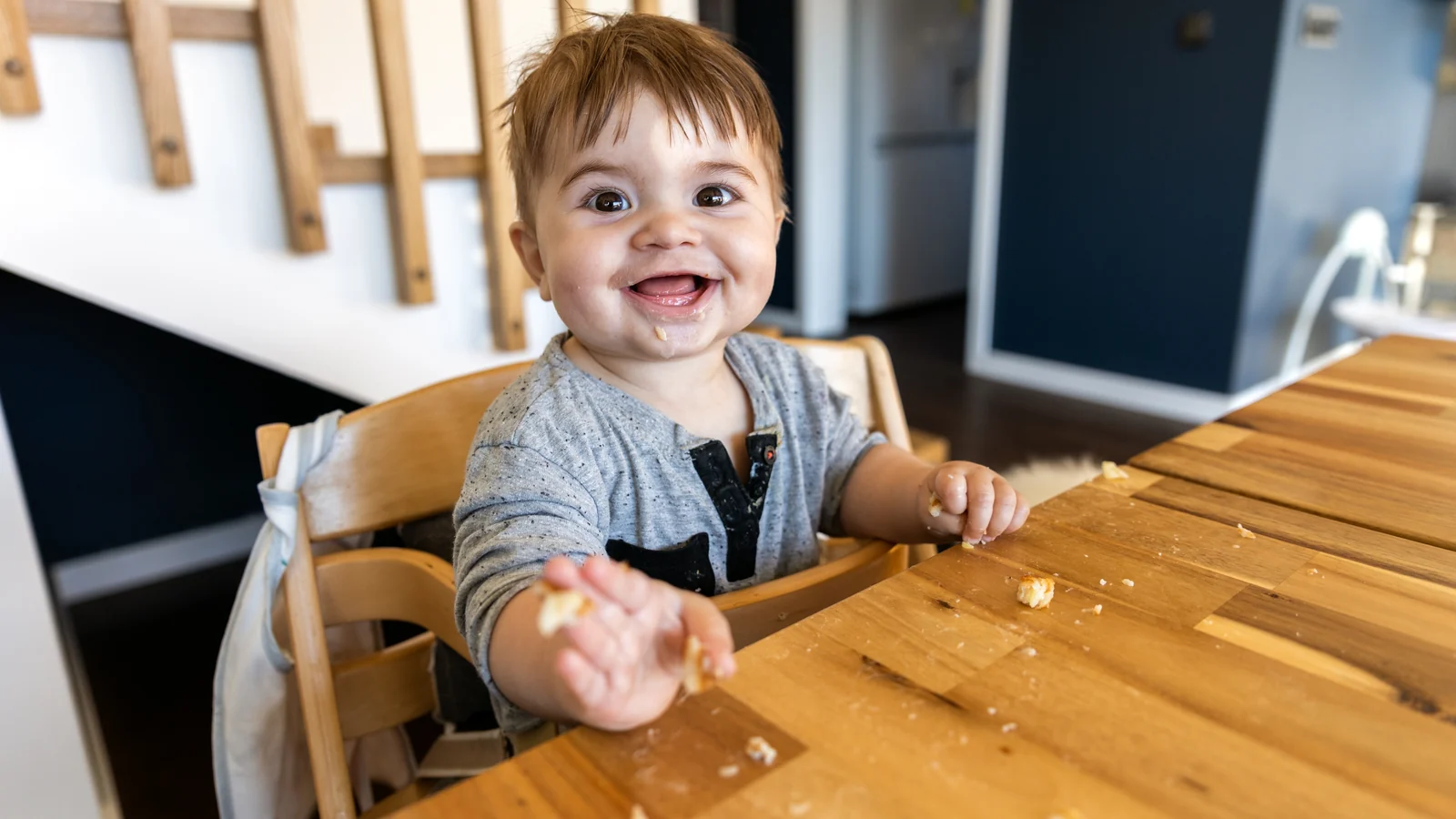
You’ve probably seen the picture by now. A baby on a tiny wooden chair, at a tiny wooden table, a few feet from where the grown-ups eat. It comes with a quiet message: Montessori babies eat at their own little table. Next to that picture, the high chair in your kitchen can start to look like the wrong purchase.
In our house, that picture never happened. Will has never used a weaning table. From six months on, he’s eaten his meals in a wooden chair pushed right up to our family table, feet on a footrest, at eye level with his dad and me.
Plenty of families love their weaning tables, and I’ll show you what they get right. I’ll also put the three common setups side by side, with the safety basics for each and the measurements from our own chair.
a chair pulled right up to the family table, with a harness you buckle every meal and a footrest you can adjust, so your baby sits steady and eats with everyone.
you’d be using a weaning table in place of family meals. Pediatricians encourage family meals from the very first feeding, so a low table works best as an extra seat alongside the family table.
What is a Montessori weaning table?
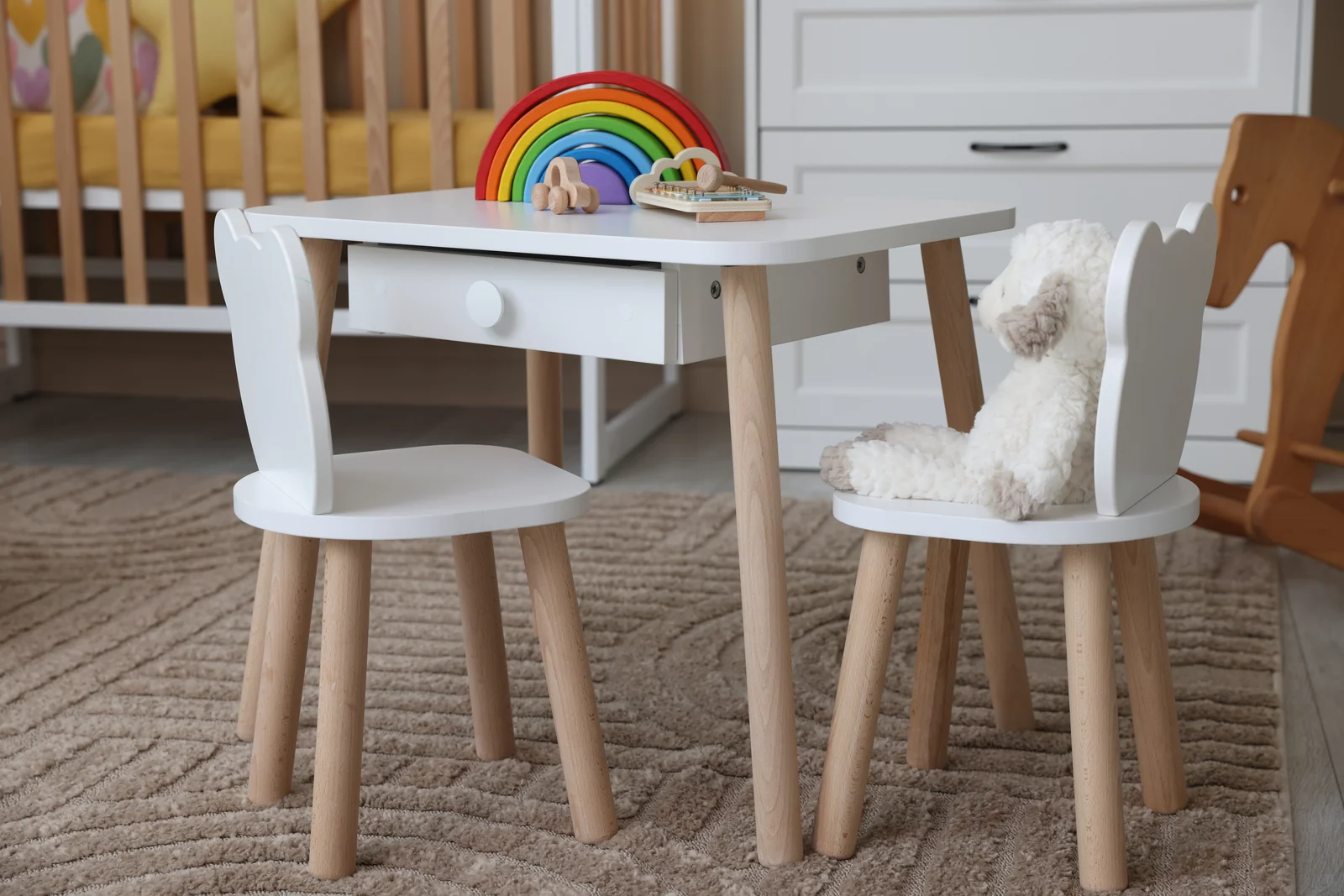
A Montessori weaning table is a small table and chair at your baby’s height, where they eat sitting up with feet planted on the floor and, once they can, climb in and out without your help.
The name makes more sense once you know that “weaning” means more than food in Montessori writing. Teanny Hurtado V., a 0–3 trainer with the Association Montessori Internationale (AMI), calls weaning “an important stage in advancing independence, as it is both a biological and psychological process.” She writes that the adult’s role is to help that process along. A table your baby can reach on their own is one way families try to do that.
I don’t have a source I trust for an official size, height or starting age, so I won’t invent one. Our own numbers are further down.
The American Montessori Society (AMS) makes a related point about its infant and toddler programs: in a Montessori environment, children “are not restricted to infant equipment or high chairs.” That describes a classroom with an adult always present, though. It doesn’t tell you to get rid of the high chair at home.
When Will was small, meals were the “eat” part of the eat, play, sleep rhythm we followed, so his chair got used several times a day. Whatever seat you choose will too.
 Save
Weaning table vs. high chair vs. a chair at the family table
Before you compare furniture, ask two things: is an adult sitting right there while your baby eats, and does your baby share the meal with you? A chair pulled up to the family table says yes to both.
All three setups show up in Montessori homes, and each one changes who your baby eats with.
The case families make for a weaning table is mostly about freedom. A baby on a low chair can sit down and get up without anyone lifting them, and the table fits their body. The catch is where it puts you. Unless you sit on the floor or a low stool beside them, your baby ends up eating a few feet away from the rest of the meal.
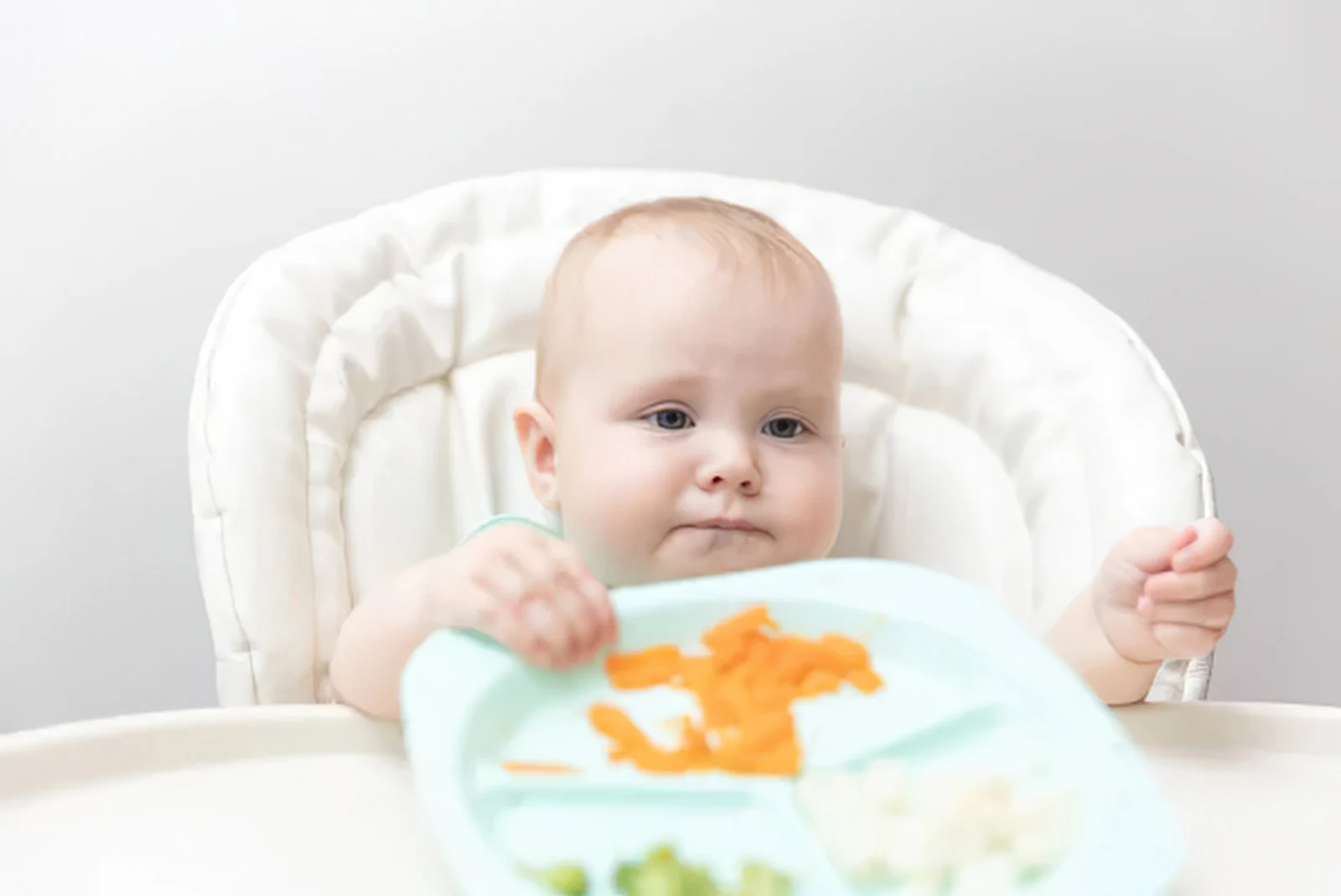
A high chair with a tray lifts your baby up near you, but the tray becomes their own little table. A chair pushed straight up to yours puts them at the same table as everyone else, at the same height as the plates.
 Save
At Moje Montessori, we run every seat through those two questions first, then the safety basics in the last column.
| Setup | Where your baby sits | Who’s at the table | What to check |
|---|---|---|---|
| Weaning table | A low chair at a small table, feet on the floor | Your baby, plus anyone who sits down low beside them | An adult sits with them the whole meal; food stays at the table, since your baby can get up and walk away |
| High chair with a tray | A raised seat with a tray in front | Your baby, next to the family table, eating off the tray | Harness buckled every meal; in the US, high chairs must meet the federal high chair rule (16 CFR 1231) |
| Chair pulled up to the family table | A raised seat with a footrest, pushed up to your table | Everyone, at the same table | Harness buckled every meal; footrest set so both feet rest flat; an adult seated right there; a seat over 15 inches high that’s used for feeding counts as a high chair under the same federal rule |
If your baby is somewhere between six months and their first birthday, I’d choose the setup that lets you sit down and eat too. You’re about to share a lot of short, messy meals, and it helps to be sitting down for them.
What are the Montessori practices for weaning babies?
Seat your baby upright, put real food and real dishes within reach, and let them set the pace from the first bite to the last wipe of the table. In our house, that’s what Montessori feeding looks like.
The American Academy of Pediatrics (AAP) says it’s important for your baby to get used to the process of eating: “sitting up, taking food from a spoon, resting between bites and stopping when full.” Read that list as a Montessori parent and most of it is the child’s job. Yours is setting the table so they can do it.
For us, Montessori feeding meant real dishes from the start. Will ate from a real bowl and plate at the family table, like everyone else. We followed baby-led weaning, so he picked up his food with his hands from his first meals. Small portions help with all of it, if only because there’s less to end up on the floor.
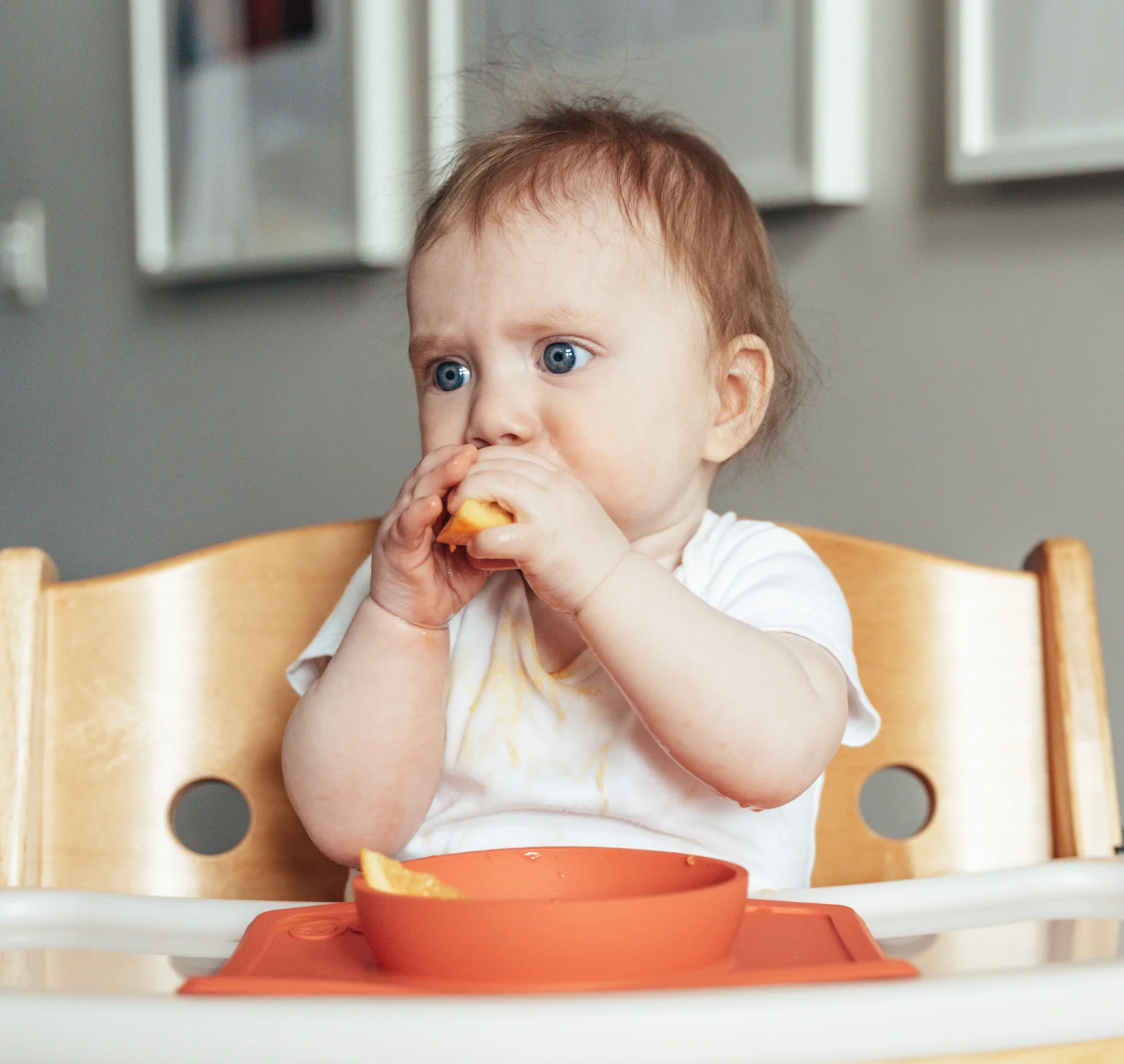 Save
Drinking from a small open cup or glass belongs on the same list, and it’s wet enough to deserve a post of its own.
As Will got older, meals started ending with cleanup. I’d hand him a small damp cloth, and he’d wipe his spot at the table with enormous pride, often spreading the mess around more than cleaning it. Then he’d carry his dirty dishes to the sink. Clearing up after yourself is practical life at its smallest: real work, with a reason your toddler can see.
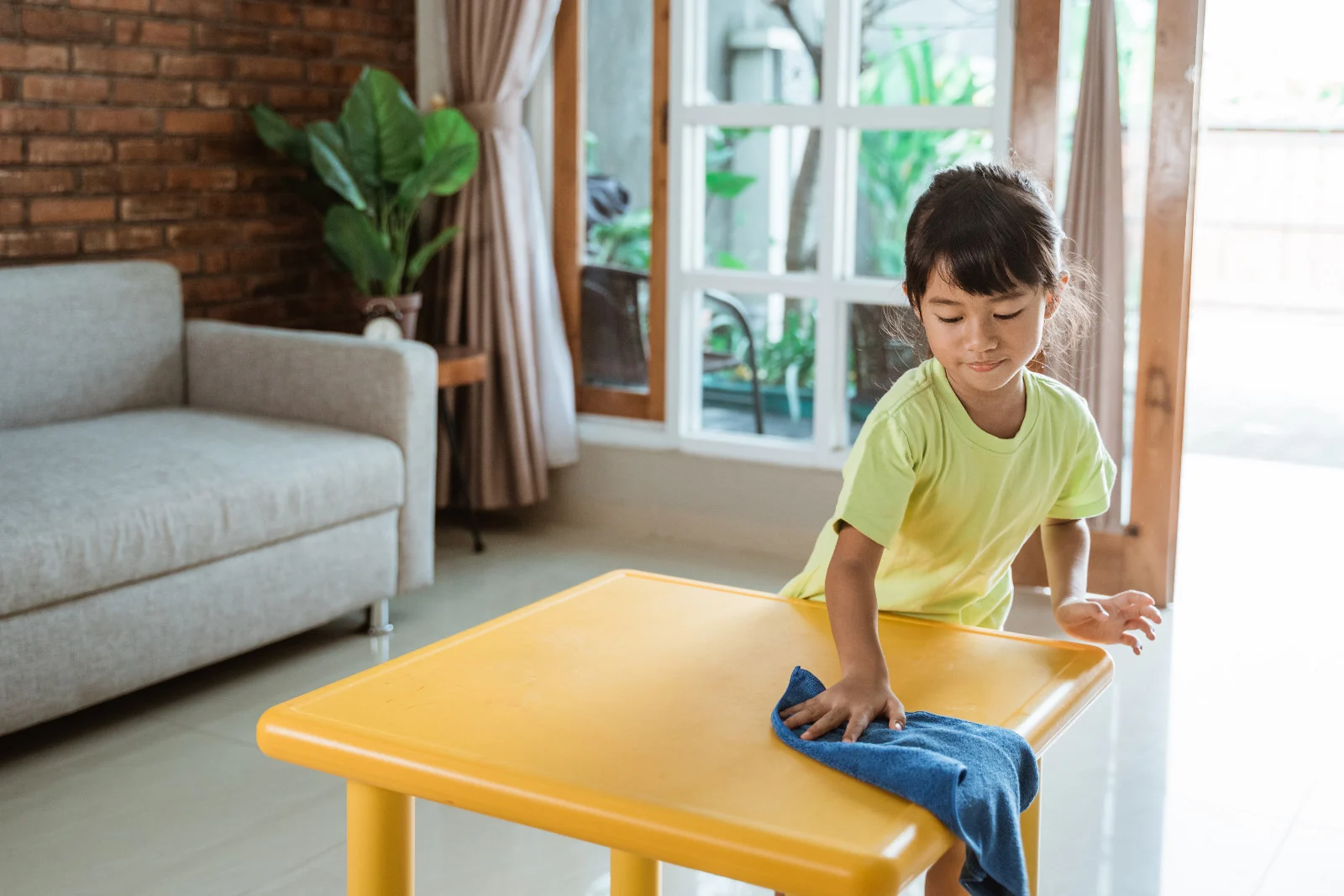 Save
The seat we use: table height and footrest numbers
We set our son’s chair by his body: seat high enough that his elbows sit level with the tabletop, footrest high enough that both feet rest flat. At our 29.5-inch table, that’s a seat around 21 inches up and a footrest around 12.5.
Will’s seat is a Stokke Tripp Trapp in natural wood. We never put a tray on it. It went straight up against the family table from his first meals, with the Baby Set attachment and a five-point harness, buckled every single meal. When he turned three and could climb in and out steadily on his own, we took the Baby Set and the harness off.
I measured our setup now that Will is three:
- Table: 29.5 inches high.
- Seat: notch 2 from the top, about 21 inches off the floor. His elbows land level with the tabletop.
- Footrest: notch 8, about 12.5 inches off the floor. His feet rest flat.
These are our numbers, not a standard. Your table, your chair and your kid’s legs will all be different, so treat them as one family’s example.
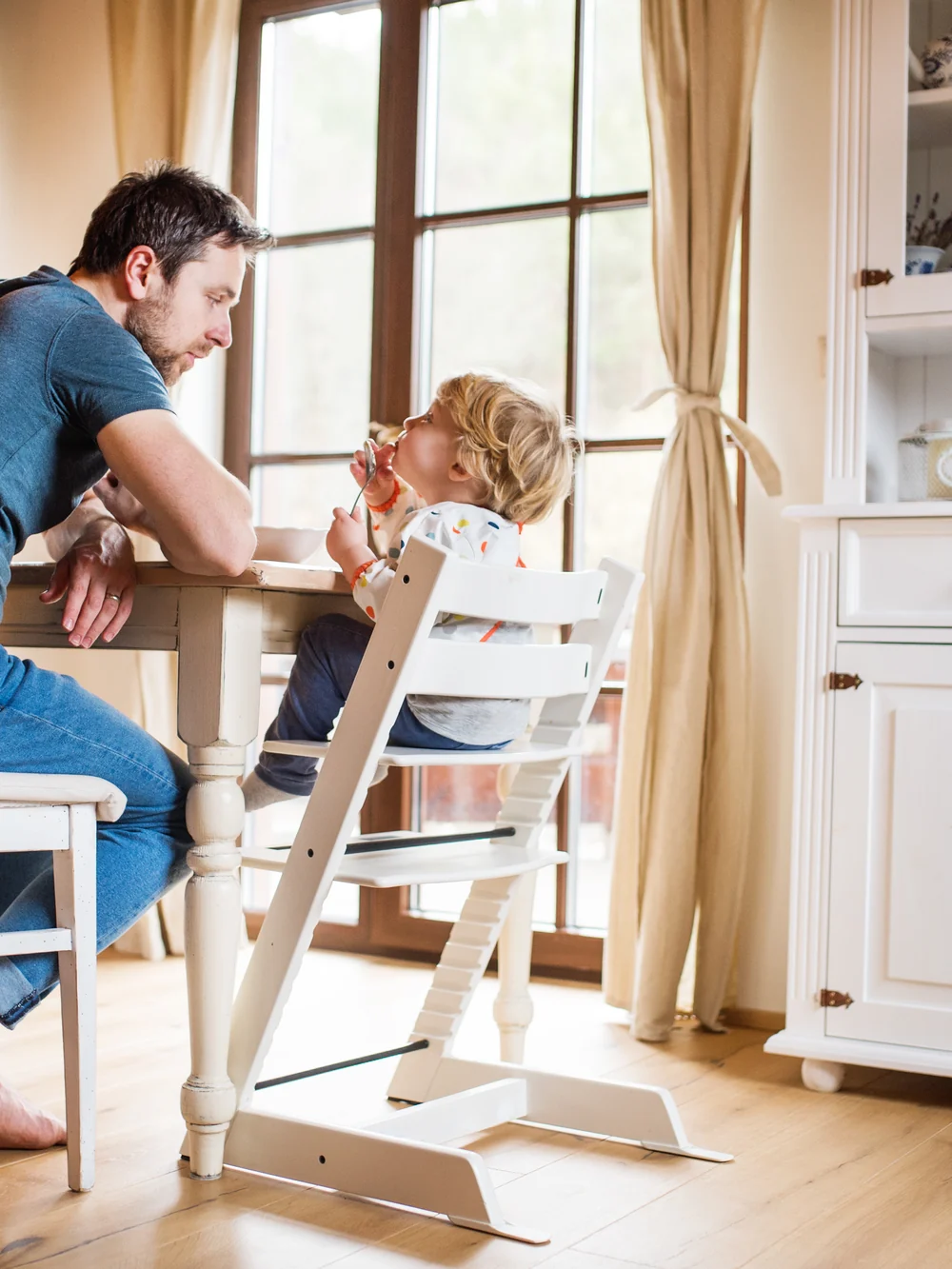
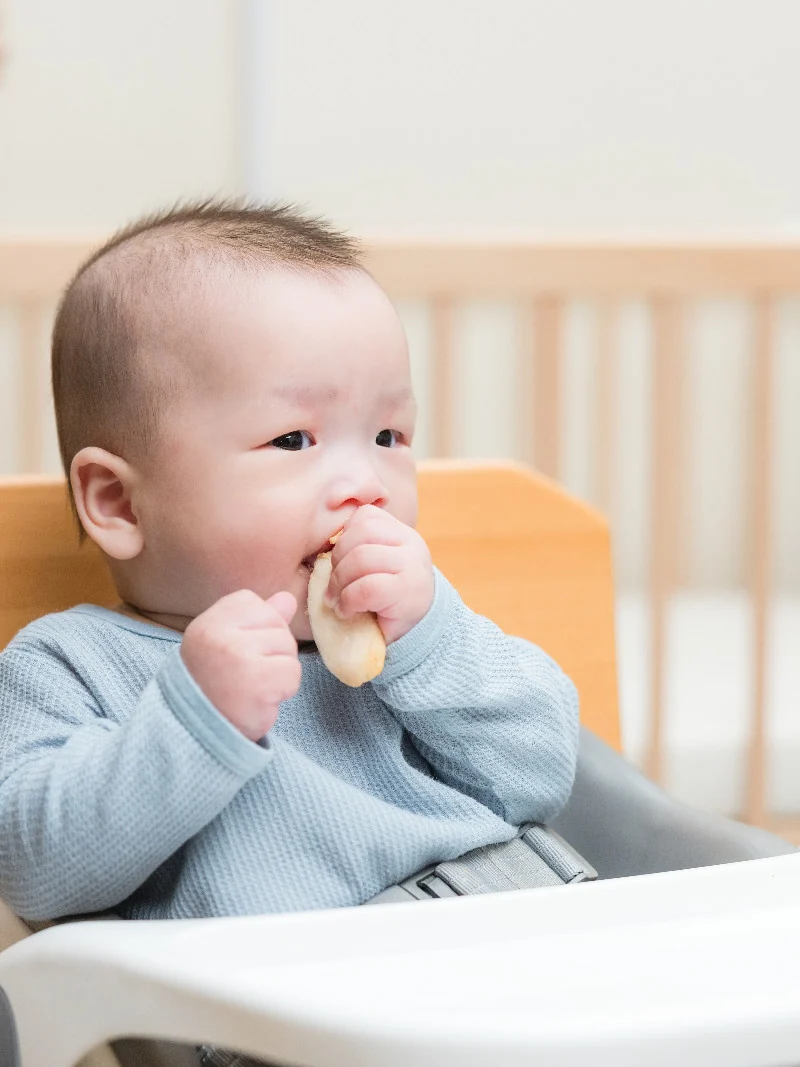
No tray needed when the chair slides right up to the family table. A baby who sits tall and steady can put their focus on the food.
Will has never had a low table of his own for meals, snacks or play. He eats in that chair at our table, spends his kitchen time up on his learning tower, and draws sitting on the floor rug.
Other parents notice the feet, too. As one parent in r/BabyLedWeaning put it, they spent months blaming the food before figuring out the real problem was their baby’s dangling feet. My own theory, and it’s only a mom’s theory, is that feet with something solid under them leave a baby free to concentrate on eating.
When Will started solids at six months, I pushed the footrest up to the highest notch. Every few months I loosen the screws and drop it one step, and that steady footrest is what lets him sit up straight through a 30-minute meal without sliding down.
Miri’s Tip
Montessori mealtime: does a weaning table mean eating alone?
A weaning table doesn’t have to mean eating alone. Montessori mealtime is meant to be shared, and an AMI trainer’s description of weaning has the baby eating “ideally sitting at the table with their mother.”
Eating apart was exactly the worry one parent in r/Montessori ran into when asking about a toddler table and chair: their partner felt their child should eat with the whole family, and wasn’t sure they needed more furniture.
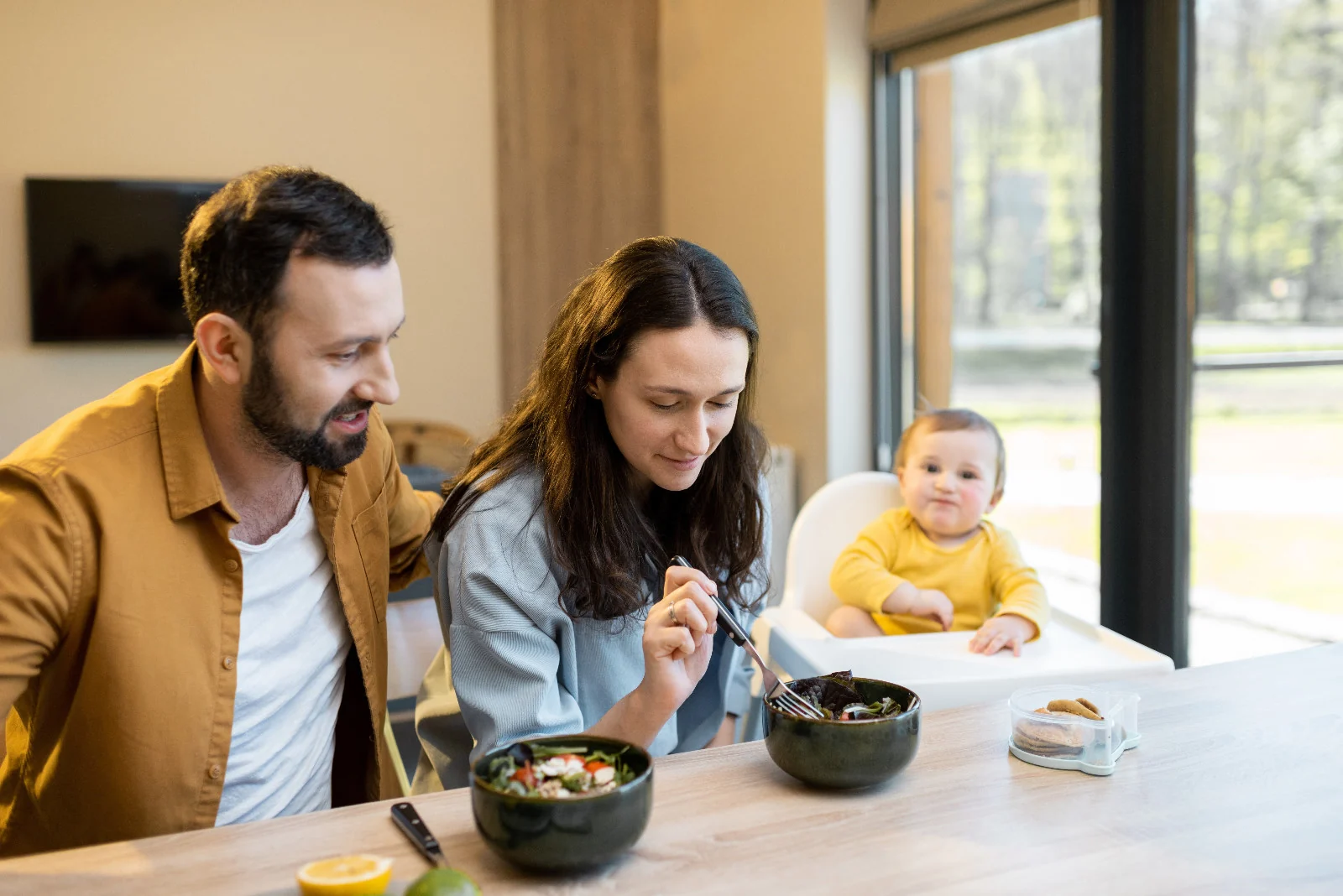
Pediatricians are big on eating together. The AAP encourages family meals from the first feeding: “When you can, the whole family should eat together.” It adds that research suggests regular family dinners have positive effects on children’s development.
At our table, Montessori mealtime has always meant Will sitting at eye level with his dad and me, eating from real dishes like ours. He’d watch us crunch through salad or scoop up rice, then try the same thing himself.
There’s a cost. The table is always sticky, and we rarely get to finish a slow, quiet meal, because we’re busy showing him how it’s done. I’d still pull his chair up again tomorrow.
Almost any chair can work, as long as it sits where the family eats.
And if your toddler wants in on dinner before it reaches the table, cooking together is a whole other kind of mess, in the good way.
 Save
How one Montessori family changed seats between kids
Nicole Kavanaugh, a Montessori enthusiast who writes at The Kavanaugh Report, took on this exact misconception, the idea that Montessori babies eat alone at weaning tables. Her answer was short: “This simply isn’t true.” Her own family tried both setups.
- Step 1: With her first child, Nora, the whole family ate at the weaning table “for months and months,” and then they moved back to the big table.
- Step 2: By her second, Gus, five people were eating together, and fitting everyone around a weaning table felt unrealistic. They chose a Montessori-friendly high chair so he could eat “directly at the family table.”
- Step 3: She’s honest about the follow-through. They set Gus’s place at the table “about 60 percent of the time,” and she’s happy as long as he’s with them, enjoying the meal.
“Eating is a communal activity and babies and other young children should be involved in the process.”
Nicole KavanaughMontessori enthusiast sharing stories and tips, The Kavanaugh Report (2017)
When your baby fights the high chair
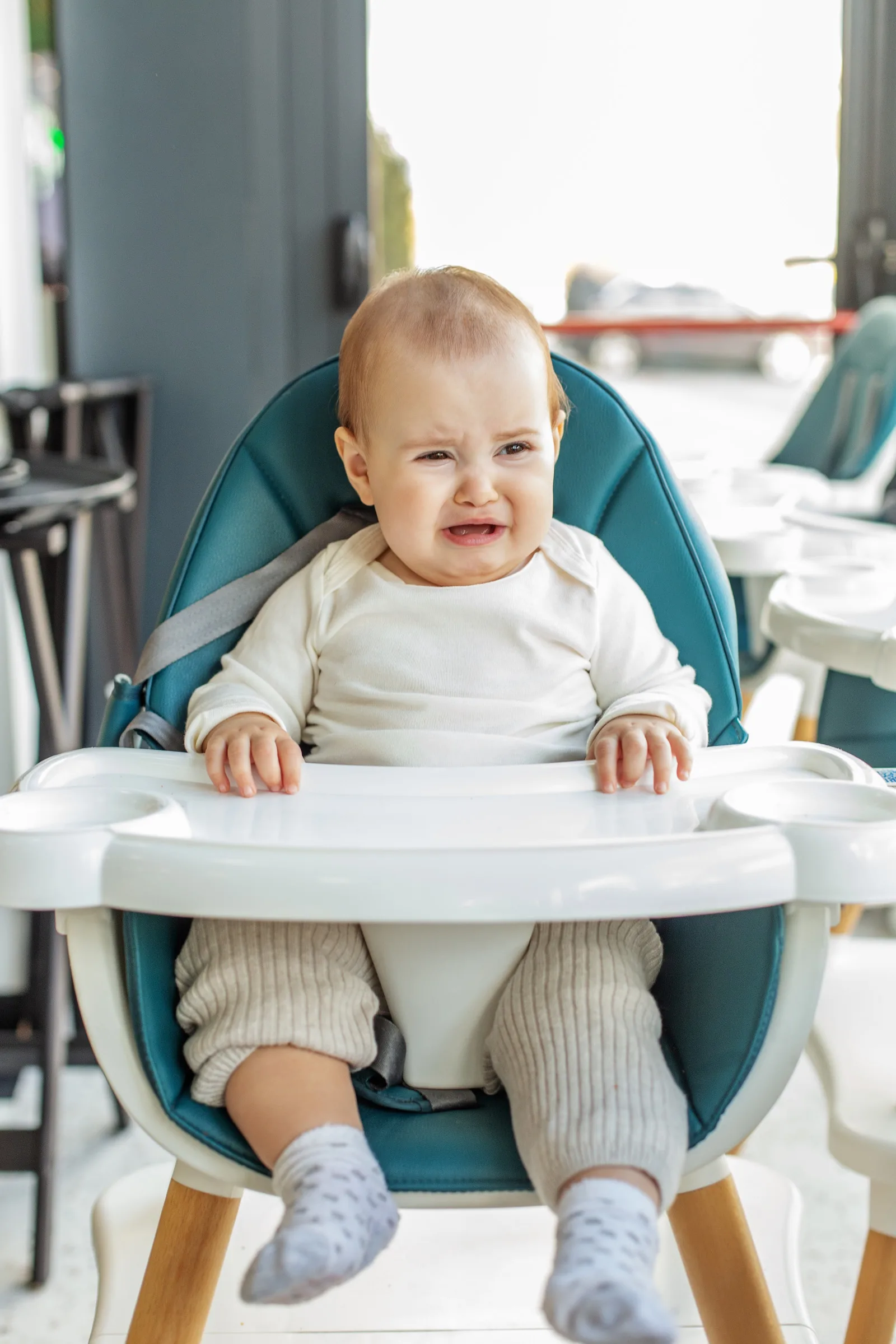
If you’re in the thick of a high chair standoff, with a one-year-old who arches their back the second you lower them in, you have company. One parent in r/BabyLedWeaning wrote that their 13-month-old seemed to hate the high chair. In r/Parenting, a parent whose 2.5-year-old wouldn’t stay in theirs was told to look into a Montessori weaning table and chair.
Sometimes a new seat really is the fix. Before you buy a second set of furniture, though, the accountant in me says check the footrest. Feet hanging in the air have nothing to push against, and moving a footrest up a notch is free.
Two habits help a toddler sit for a meal, at a small table or a big one. End the meal when they’re clearly done, since stopping when full is one of the skills they’re practicing. And keep one rule: if they get down, the food stays at the table.
 Save
How do you keep any seat safe at mealtimes?
Whatever seat you choose, the same rules come first: your child sits down to eat, a grown-up supervises every meal, and a baby in a high chair stays buckled while eating. Furniture choices come after those three.
Choking is where the advice gets blunt. The AAP’s choking-prevention advice says children should eat at the table or sitting down, and never run, walk, play or lie down with food in their mouths. It also asks adults to supervise mealtimes for babies and young children. For baby-led weaning, the AAP’s page on BLW, as of its 2024 version, says to sit your child in a high chair for stability and comfort and to buckle the harness while they’re eating.
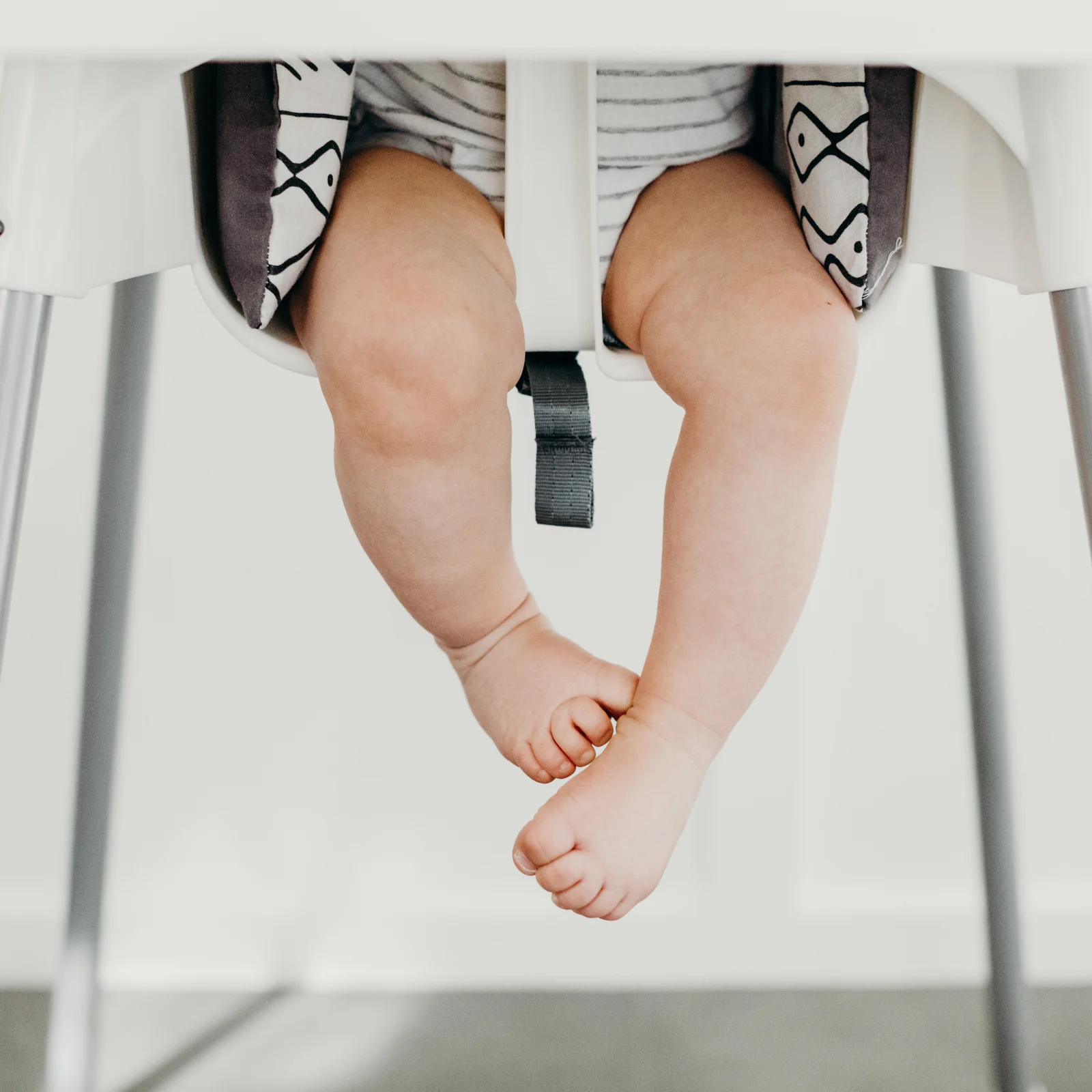
Your baby eats sitting down, every time, with an adult sitting right there with them. In a high chair or any seat with a harness, buckle it before the first bite and keep it buckled while they eat.
A weaning table has no harness, so the rule moves to you: if your baby gets up, the food stays at the table, and you stay close.
Federal law requires every high chair sold in the United States to meet the U.S. Consumer Product Safety Commission’s Safety Standard for High Chairs, written into 16 CFR part 1231 and built on ASTM International’s high chair standard approved in November 2021. Using a booster seat strapped to a regular chair instead? Use it exactly as the maker’s instructions say, buckled.
 Save
The World Health Organization (WHO) says babies and toddlers under 2 shouldn’t be restrained for more than an hour at a time, whether in a stroller, a high chair or strapped to a caregiver’s back. Will’s meals run about 30 minutes, well inside that, and it’s still a nice reason to lift your baby out once the eating is done. If you offer a small glass, offer it only with an adult at the table. Get those basics in place and the rest is practice, one sticky meal at a time.
Frequently Asked Questions
What is a weaning table?
A weaning table is a low table and chair where a baby who can sit up eats at their own height, feet on the floor. The name comes from Montessori’s broad meaning of weaning: a step toward independence that covers far more than food. Families set them up in their own way, so sizes vary from one home to the next.
When should you start using a weaning table?
Start using a weaning table, or any seat at the table, when your baby is ready, not when the calendar says so. The Centers for Disease Control and Prevention (CDC) says solids can start at about 6 months, and not before 4. Signs include sitting up alone or with support and good head and neck control; the AAP adds watching you eat and reaching for your food.
Conclusion
If those weaning-table photos have you second-guessing the high chair you already own, take a breath. You don’t need new furniture to do Montessori meals well. Check whether your baby’s feet have somewhere to rest, set their place with real dishes, and sit down to eat with them. Most of what makes a Montessori meal work happens in the chair next to theirs.
Check the footrest tonight, then let the next meal be messy. You’re already giving your baby the main thing: a seat at your table.
Miri
Fewer toys, deeper play.
Further Reading & Resources
See all 14 sources
- Feeding and safety: When Can Babies Start Solid Foods? · Choking Prevention for Babies & Children · Baby-Led Weaning: Is It Safe? (AAP) · When, What, and How to Introduce Solid Foods (CDC)
- Montessori background: The Development of Independence in the First 3 Years of Life (AMI) · Montessori Infant and Toddler Programs (AMS)
- Activity guidelines: Guidelines on physical activity, sedentary behaviour and sleep for children under 5 years of age (WHO, 2019)
- High chair rule: 16 CFR 1231.2, Safety Standard for High Chairs (Cornell LII) · High Chairs (CPSC)
- Real parents: Montessori Baby – Introducing Family Meals (The Kavanaugh Report) · Reddit: dangling feet, a 13-month-old, toddler table, a 2.5-year-old