
Somewhere along the way, you’ve probably picked up the idea that Montessori comes with its own language, and that you’re supposed to be fluent before the baby gets here. Absorbent mind. Normalization. Prepared environment. Control of error. It can start to feel like the vocabulary list for a class you never signed up for.
You need far less of it than you think. Most of these words describe things babies and toddlers do with no help from anyone: staring at your face, asking for the same song again, insisting on carrying the grocery bag themselves. The rest are names for what the adults do, and most of that comes down to setting up a space and then paying attention.
So think of this Montessori glossary as a translation sheet. Each entry gives you the term in plain words, where the idea comes from, and a line on what it might look like in a house with a baby in it. The definitions lean on the published glossaries and booklets of the two big Montessori organizations. The “at home” lines are my own translation, so treat them as a starting point and adjust them to your family.
I’ve also kept the list to Montessori vocabulary I can back with a source, so a few words you may hear, like Nido or three-period lesson, will wait for a later update. And if you’d like the big picture of how all this fits into family life first, the guide to Montessori at home covers it, starting with the safety side of setting up a room.
A: Absorbent Mind, AMI and AMS
The A’s cover how a young child soaks up the world, plus the two organizations you’ll see cited most: the Association Montessori Internationale (AMI), started by Maria Montessori in 1929, and the American Montessori Society (AMS), founded in 1960.
The absorbent mind is Montessori’s name for the way a young child takes in knowledge, experiences, relationships and images, quickly and without effort. According to AMI, only children from birth to six have one. Until about age three, the soaking-up happens without the child being aware of it, and from three to six it becomes conscious.
At home, this is why the ordinary stuff counts. The way you talk to the cashier, the song you hum while you cook, how you react when a cup tips over: your baby is taking all of it in, long before they can tell you so. That tiny human is paying closer attention than it looks.
 Save
SaveMaria Montessori set up AMI herself, in 1929, and its online archives supply many of the definitions on this page. For a parent, that’s about all you need to know. When a book or a school mentions AMI, it’s pointing back to the organization Montessori started.
In 1960, Nancy McCormick Rambusch founded AMS to promote Montessori education in the U.S. Its booklet on infant and toddler programs supplies several of the toddler examples further down.
C: Casa dei Bambini and Control of Error
Casa dei Bambini means “Children’s House” in Italian, and Maria Montessori’s first one opened in Rome in January 1907. Control of error means a material shows a child their own mistake, so no adult has to point it out.
The first Casa dei Bambini opened on January 6, 1907, in the San Lorenzo district of Rome. By then, Montessori had been one of Italy’s first female doctors for more than a decade. She was born on August 31, 1870, in Chiaravalle, Italy, and became a doctor on July 10, 1896.
The name itself is the part worth borrowing: a house that belongs to the children in it. That idea comes back under P, as the prepared environment. Her full story, from those early years onward, is in the post on who Maria Montessori was.
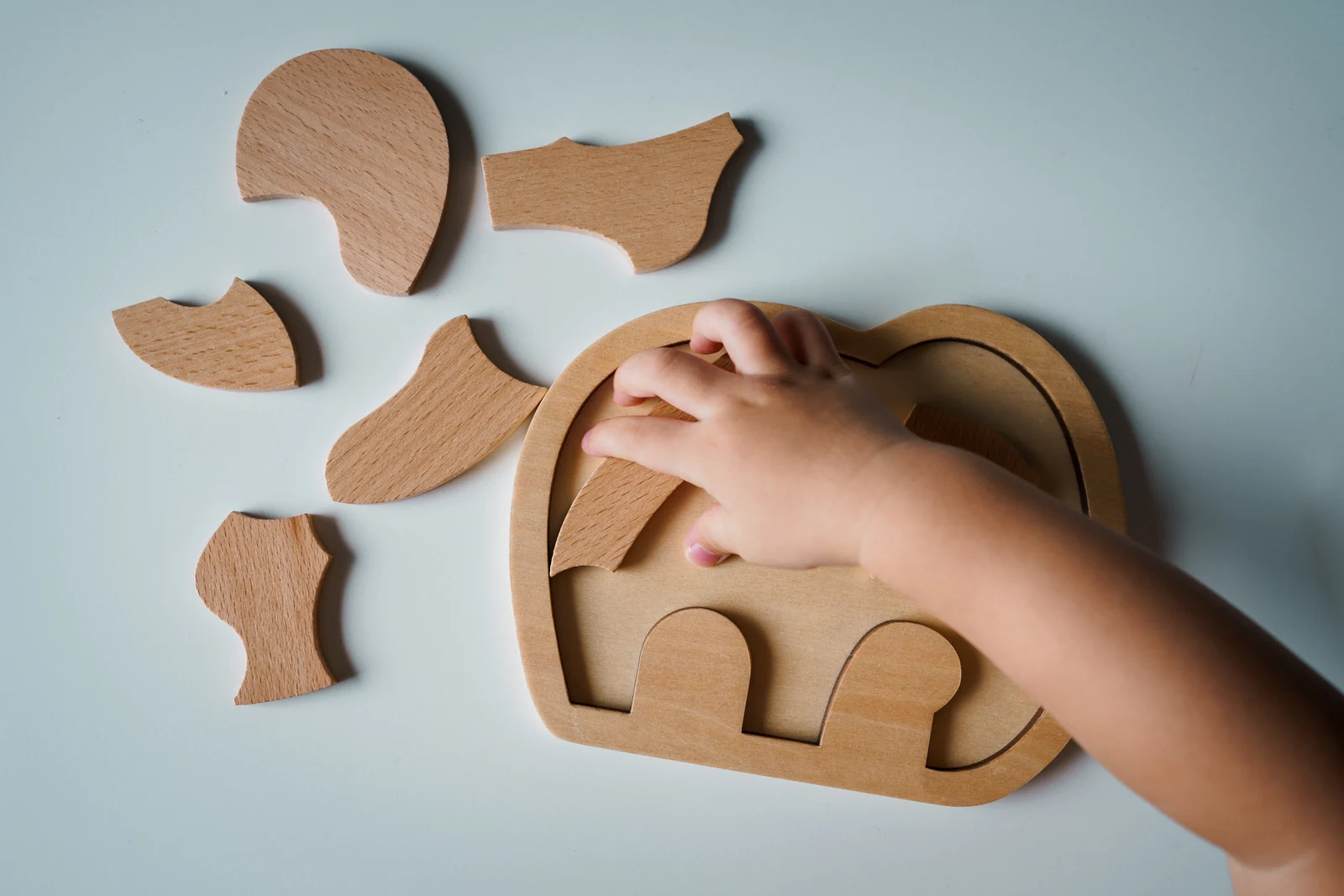
Control of error is a feature built into a material that gives a child instant feedback, so they can spot and fix a mistake on their own. The AMI glossary puts the weight on that last part. The child does the correcting, without waiting for a grown-up.
Around the house, think of a shape that only fits one hole, or a lid that only sits flat on its own jar. Your toddler tries, it won’t go, they turn it around and try again. Nobody had to say “wrong one.” This might be my favorite term on the whole list, because it takes you out of the correcting business. The toy does that part, and you get to sit on your hands.
 Save
SaveF: Follow the Child and Freedom Within Limits
Start by watching, then decide what to offer. That’s follow the child, an idea that sits at the heart of how Maria Montessori described her method. Freedom within limits is its partner: real choices, inside a safe frame, with an adult close by.
Follow the child is the phrase you’ll probably meet first. Montessori put it this way in her 1946 lectures in London: her method “has been achieved by following the child and his psychology.”
Day to day, it means letting what your child is doing right now shape what you put out next. If your toddler is suddenly opening and closing every cabinet in the kitchen, that’s useful information. A couple of containers with lids to work on might suit them better this month than whatever toy was next on your list.
Freedom within limits is the guardrail that keeps “follow the child” from turning into “do whatever they want.” AMI describes children from birth to three growing within a frame of “freedom and limits.” The AMS booklet fills in the practical side: that freedom always happens with an adult present, furniture and materials are child-size and within reach, and children get the time they need to finish what they start.
In your home, freedom within limits can be as small as two shirts to choose from instead of a full drawer, or a play corner where everything they can reach is something they’re allowed to touch. You set the edges. They choose inside them.
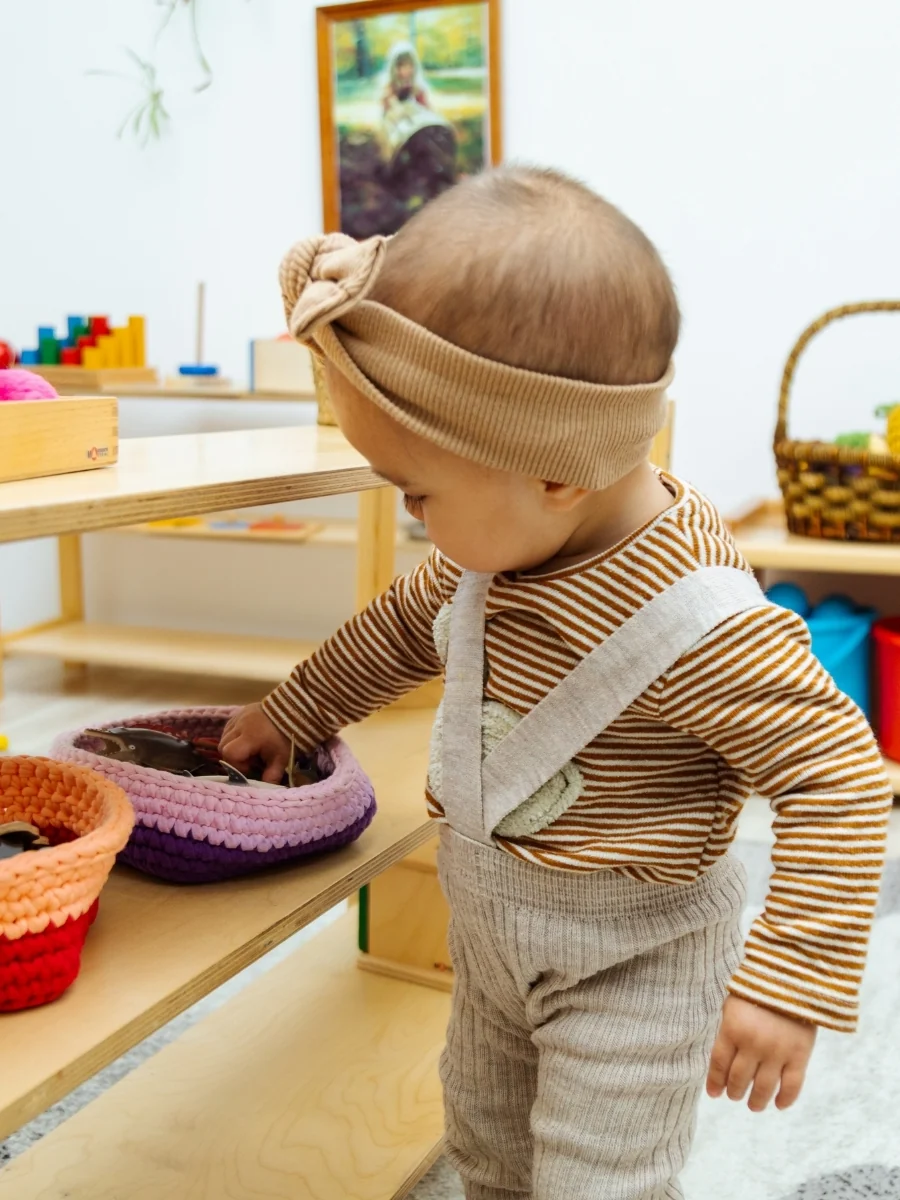

A few choices within reach is plenty of freedom for a toddler.
Close enough to help, far enough back to let them try.
G: Grace and Courtesy
Grace and courtesy is the Montessori term for teaching everyday manners on purpose, like greeting people, saying thank you, apologizing and listening, mostly by showing them and practicing together.
This one gets less attention than the shelves and the wooden toys, and it deserves more. In Montessori classrooms, AMI describes grace and courtesy as social behavior taught deliberately, with respect and kindness at the center. The lessons are concrete: greeting someone, expressing thanks, apologizing, listening, working through a conflict. Children learn them through role-play, modeling and practice.
What I like about it is how unglamorous it is. Manners get taught the way you’d teach any other skill: slowly, by showing first, with lots of chances to get it wrong.
The classroom version doesn’t come with an age, so here’s how I’d translate it for home. It starts long before your child can talk. You say “thank you” when your baby hands you a toy. You say good morning to them and goodbye to the mail carrier in the same warm voice. Later, with a toddler, you can play visitor: one of you knocks on the bedroom door, and the other opens it with a hello and a wave.
 Save
SaveYour toddler won’t get it right for a long time, and that’s expected. They’re watching how you do it, which is the absorbent mind at work again.
Long before they can say “please,” manners are something your baby watches you do.
H: Human Tendencies
Human tendencies are natural inclinations that guide every person to survive. AMI calls them universal and timeless, and notes that Maria Montessori mentioned 25 to 30 of them across her writings.
You won’t need to memorize the list. The idea underneath it is the useful part: a lot of what your child does comes from pulls every human shares, so you’ll get further working with them than against them.
With a toddler in the house, this is the reassuring entry. The emptied drawer, the climb onto the couch, the endless trips back and forth with the same spoon: a lot of what looks like mischief makes more sense through this lens. You can’t switch those pulls off. You can offer a safer outlet, like one low drawer that’s theirs to empty.
M: “Montessori” (the Word Itself)
Check what a product actually is before trusting the word on the box. “Montessori” started as Maria Montessori’s last name, and today it describes a whole approach to children, which is why it shows up on so many things.
Simone Davies, who writes The Montessori Notebook, put it this way in 2024:
“Montessori is not a brand. It is a philosophy, a way of seeing our children with a new lens.”
Simone Davieswriter of The Montessori Notebook blog (2024)
As a shopping filter, that line works well. You’ll see the word on play gyms, shelves, towers and plenty of toys in between, and the label on its own can’t tell you whether the thing inside fits the approach. The post on what makes a toy Montessori walks through how to judge one yourself, label or no label.
N: Normalization
Normalization is Montessori’s word for the settled, happy focus that grows when a child gets to concentrate, again and again, on work they chose. The “normal” in it has nothing to do with whether your child is developing normally.
This is the term that tends to trip people up, so it gets a bit more room. AMI’s glossary spells it the British way, “normalisation,” and describes what happens when young children can repeatedly sink into spontaneous concentration on something they picked freely. Over time, they start to show what AMI’s glossary calls the characteristics of normal development: a love of work, an attachment to reality, and a love of silence and working alone. AMI describes these children as happy, enthusiastic, generous and helpful.
In a line AMI quotes from her book The Child, Society and the World, Montessori wrote: “We call this normalization. This phenomenon of normalization only comes through intensive activity and real concentration.”
One thing worth underlining, because the word sounds clinical. “Normal” here is a Montessori term for this kind of settled concentration. It isn’t a label for your child, and it isn’t a developmental checklist. If you ever have questions about how your child is developing, that’s a conversation for your pediatrician.
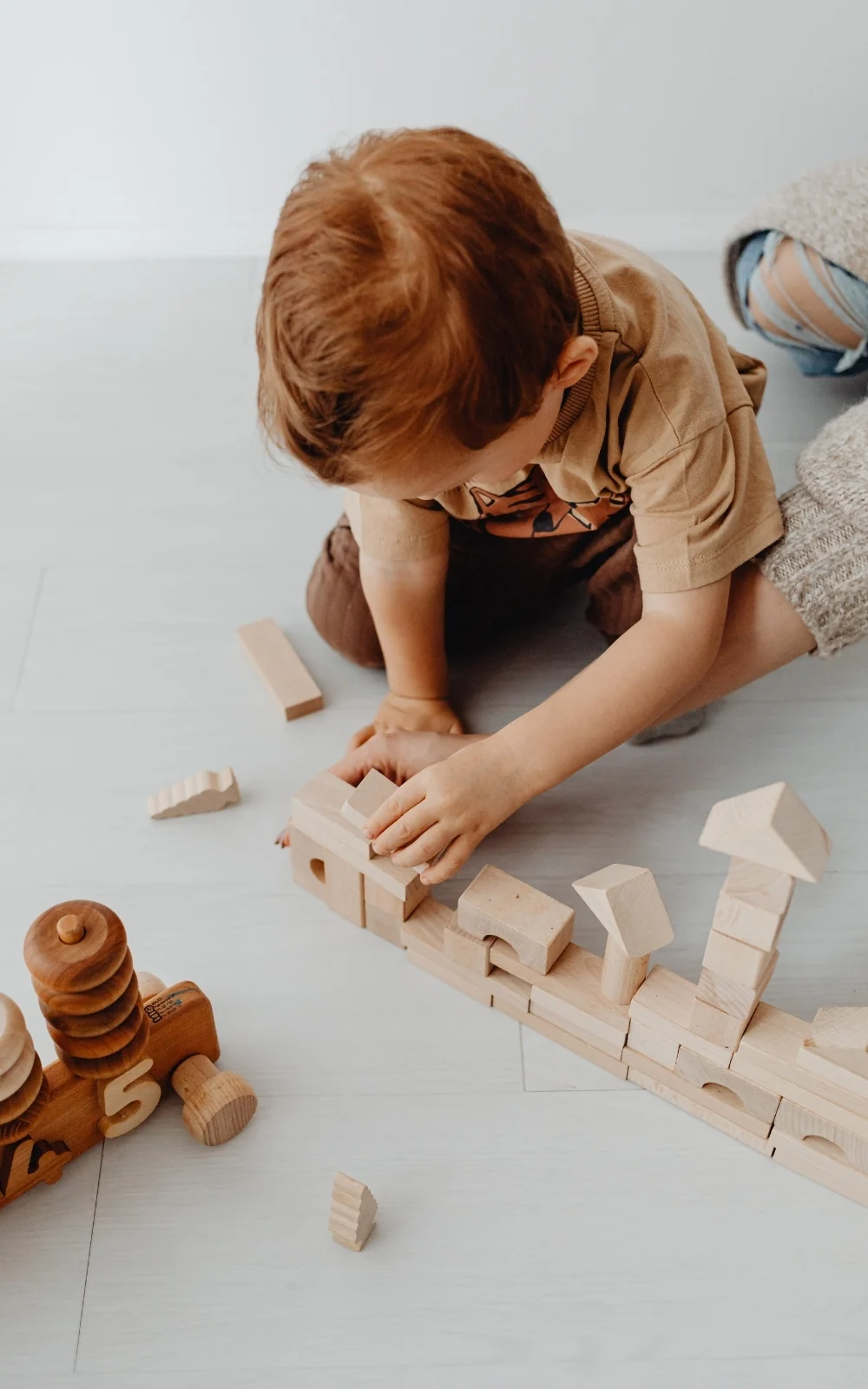
At home, the version you’ll actually see is small and quiet. Your toddler pulls something off the shelf, settles in, and works at it for a while. When they come up for air, they can seem calmer and easier to be around. Your job in that moment is mostly to protect it: no quizzing, no cheering, no rushing them to the next thing.
When your toddler is deep in something, the most useful thing you can do is very little.
 Save
SaveO: Observation
Sit back, watch for longer than feels natural, and notice what your child keeps returning to. In Montessori terms, that’s observation: looking carefully over long stretches, as a habit you build with practice.
In AMI’s definition, observation means looking carefully for prolonged periods to gather information, and it’s a habit developed by practice. Montessori guides are trained in it. Montessori herself set the tone early: in the 1912 English translation of The Montessori Method, she wrote that the teacher “must become a passive, much more than an active, influence.”
If I could keep only one word from this whole page, it would be this one. Follow the child, sensitive periods, normalization: you can’t spot any of them without it.
On an ordinary afternoon, observation can be a few minutes on the couch, phone face down, watching what your baby does with the one toy in front of them. What do they reach for first? What makes them stop and stare? That’s the information that tells you what to offer next.
 Save
SaveP: Planes of Development, Practical Life and Prepared Environment
Three P’s carry much of Montessori: the planes of development map growing up in roughly six-year stages, practical life means everyday work like sweeping or setting a table, and the prepared environment is a space arranged so children can do things themselves.
The planes of development are Montessori’s big-picture map of how people grow, in four stages: birth to 6, 6 to 12, 12 to 18, and 18 into adulthood. AMI describes the first plane as the years when a child becomes independent and secure, picks up language, and starts learning consciously around age 3. Each plane splits into two halves, three years of “creation” and three of “crystallization,” and AMS divides the first plane the same way, into birth to 3 and 3 to 6.
For you, the useful part is the math. Birth to three, the stretch this whole site covers, is the first half of that very first plane. The post on the four planes of development walks through all of them.
Practical life is Montessori’s name for the jobs of daily life: dusting, sweeping, setting a table, taking care of yourself. The AMI glossary says these exercises build coordination and, because they ask for patience and focus, slowly shape a child’s character. For toddlers, the AMS booklet lists real tasks like using the toilet, washing their hands and setting the table for lunch.
At home, this is probably the most doable term on the page. A toddler can carry their own cup to the table, wipe up a spill with a small cloth, or put their shoes by the door, with you right there. It’s slow, and some of it ends up on the floor. There’s a list of free Montessori activities built around things you already own.
 Save
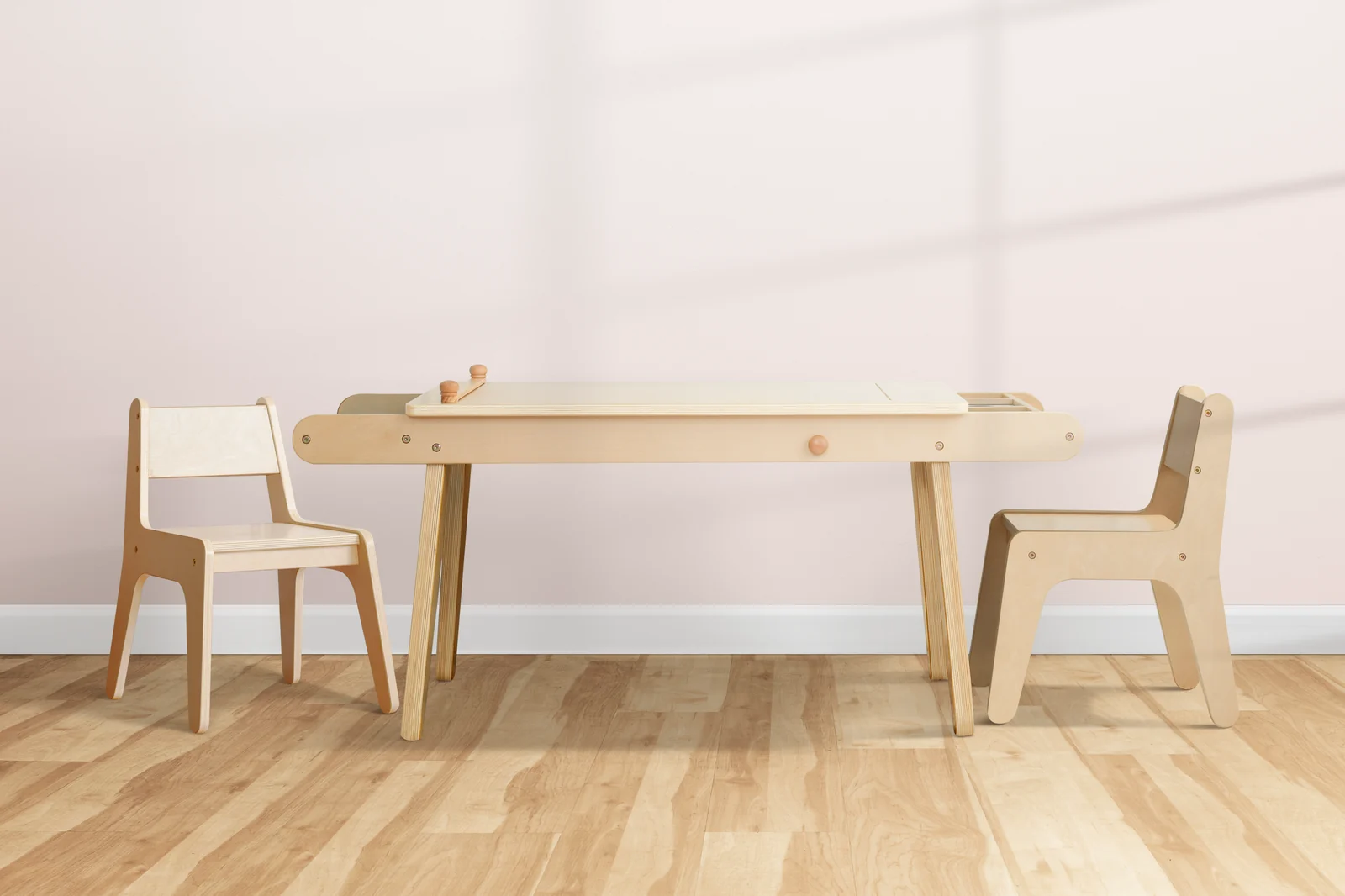
SaveIn Montessori classrooms, the prepared environment is a space the adult sets up for the children who use it, with everything they need and nothing extra. The AMS booklet describes the infant and toddler version as child-size furniture and materials, with everything needed for a task within reach.
In a house, the idea usually shrinks to one corner: a low shelf with a few things to choose from, a small chair, maybe a hook at their height for a coat. Whatever sits within reach should be something you’re fine with them grabbing, mouthing and dropping. Get down to their eye level before you add anything, because that’s the view that counts.
A low shelf is only a good idea if it can’t tip. Anchor every shelf and dresser to the wall before your child can reach it. The U.S. Consumer Product Safety Commission calls securing furniture to the wall with anti-tip devices the best way to protect children from falling furniture.
 Save
SaveS: Sensitive Periods
Sensitive periods are stretches of time when a child is intensely drawn to one kind of activity, such as language, movement or order. AMS describes them as times when a child is biologically ready to pick up a specific skill.
AMI’s glossary describes a child in a sensitive period as extremely sensitive to one particular activity or interest. Montessori identified periods for language, movement, order, refinement, culture, social cohesion and the senses. The AMS list for the first plane overlaps and adds a few: order, language, refinement of movement and of the senses, concentration and repetition, grace and courtesy, and independence. Neither source gives an exact age for each one. AMS files its list under the first plane, birth to 6, and says the pulls show up roughly within the age periods it lays out.
At home, a sensitive period can look a lot like an obsession. The same book every night. Every cup lined up just so. A sudden need to climb anything with an edge. That intensity ebbs and flows, and when you spot it, it’s usually worth leaning into. The post on sensitive periods from birth to three goes through what each one can look like.
 Save
SaveFrequently Asked Questions
What are the long-term benefits of a Montessori education?
The long-term benefits of a Montessori education look promising, but they haven’t been proven. One 2021 study on the long-term effects of Montessori education looked at 1,905 adults: at least two childhood years of Montessori were associated with higher adult wellbeing on all four wellbeing factors in the main comparison. The authors say the design can’t show cause, and it looked at schools rather than homes.
What is meant by normalization in Montessori?
Normalization in Montessori means the calm, happy focus that shows up after a child has repeatedly been able to concentrate on work they chose. Montessori linked it to a love of work and of working alone, and AMI spells it “normalisation.” Don’t read “normal” as a verdict on your baby. In Montessori, it’s simply the name for this kind of settled concentration.
Is “Montessori” a trademark or a brand?
For parents, “Montessori” works best as a philosophy rather than a brand name. Simone Davies puts it plainly: Montessori is “not a brand.” I’m not going to weigh in on the legal side of trademarks here. In everyday life, though, the word shows up on so many products and schools that the label alone can’t tell you whether something follows the approach.
Conclusion
You don’t have to learn every word on this page before your baby arrives. If you keep just three, make them observation, follow the child and the prepared environment, because you can use all of them from the very first weeks. If you’re nesting (that urge to get everything ready before the baby comes), one low corner is plenty to start with. The rest of the words will make more sense once there’s a real baby in front of you, showing you what they mean. Bookmark this page and come back whenever a new one pops up in a book or a conversation.
Fewer toys, deeper play.
Miri
Montessori for ages 0–3
Further Reading & Resources
See all 20 sources
- AMI glossary, A to N: Absorbent Mind, Control of Error, Four Planes of Development, Freedom, Grace and Courtesy, Human Tendencies and Normalisation (Association Montessori Internationale)
- AMI glossary, O to S: Observation, Practical Life Exercises, Prepared Environment and Sensitive Periods (Association Montessori Internationale)
- History and Montessori’s own words: Biography of Maria Montessori and Montessori Great Ideas (AMI Montessori Archives) · History of AMS (American Montessori Society) · The Montessori Method (Maria Montessori, translated by Anne E. George, 1912, Project Gutenberg)
- Babies and toddlers: Montessori Infant and Toddler Programs and Planes of Development and Sensitive Periods: Foundations of the Montessori Multi-Age Classroom (American Montessori Society)
- Safety: Anchor It! How to anchor it and protect children from furniture tip-overs (U.S. Consumer Product Safety Commission)
- Research and a parent’s view: An Association Between Montessori Education in Childhood and Adult Wellbeing (Lillard, Meyer, Vasc & Fukuda, Frontiers in Psychology, 2021) · Is Montessori parenting a fairy-tale? That’s what the Atlantic said. Here’s what I think… (Simone Davies, The Montessori Notebook, 2024)