
You’re a few nights into building the baby registry, and one word keeps popping up. Montessori play gym. Montessori shelf. Montessori busy board. Then a quote floats past on Pinterest, soft script over a photo of a wooden rainbow, signed “Maria Montessori.” You save it, and then you pause. Who was she, actually? A teacher? A toy company?
If that sounds like your evening, you’re in good company. Her name is printed on so many products that it’s easy to forget there was a real person behind it, with a long, surprising life and a handful of ideas that still make sense in a house with a newborn.
 Save
SaveThis is the short, honest version. You’ll get a timeline built from dates you can check at the source, the words she actually wrote (and the book each line came from), and a table of ideas worth borrowing once your baby arrives. If you’d rather skip the history and get practical, how to start Montessori at home covers the setup basics, safety included.
Who was Maria Montessori?
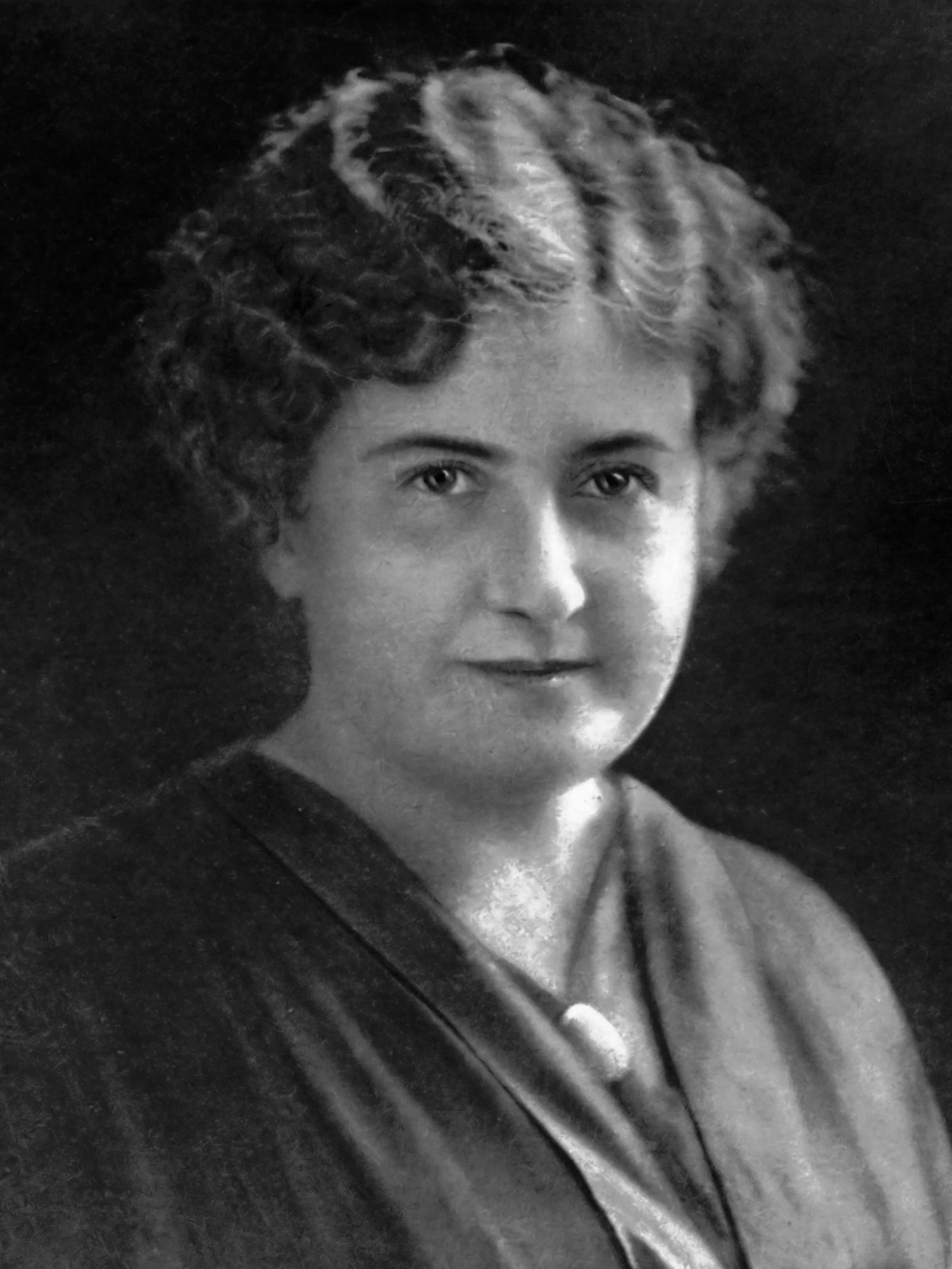
Maria Montessori was an Italian doctor, born in 1870, who turned her attention to young children and opened her first Children’s House in Rome in 1907. The method she built there is the one behind today’s Montessori schools, shelves and toy labels.
Dr. Maria Montessori was born on August 31, 1870, in Chiaravalle, Italy. On July 10, 1896, she became one of the first female doctors in Italy. Both dates come from the Association Montessori Internationale (AMI), the organization she set up herself in 1929 and which runs the online AMI Montessori Archives.
That “Dr.” in front of her name is worth a second look. She didn’t come to children as a teacher with a lesson plan. She came as a physician, and a lot of her writing reads like careful notes on what children actually did.
 Save
SaveMaria Montessori’s life at a glance: 1870 to 1952
Maria Montessori lived from 1870 to 1952. The big markers: becoming a doctor in 1896, opening the first Children’s House in 1907, setting up the Association Montessori Internationale in 1929, and a first Nobel Peace Prize nomination in 1949.
Every date below comes from AMI’s biography of her, from the American Montessori Society (AMS), a U.S. Montessori organization that started in 1960, or from her book itself. The third column is the part a wiki page won’t give you: what each moment means for you, while you get ready for a baby.
| Year | What happened | Why it matters to you today |
|---|---|---|
| 1870 | Born on August 31 in Chiaravalle, Italy | The name on today’s toy labels belonged to a real woman, born more than 150 years ago. |
| 1896 | On July 10, became one of the first female doctors in Italy | She was used to doing what few women had done before her. |
| Before 1907 | Co-directed the Orthophrenic School with Giuseppe Montesano, working with children with disabilities; studied the work of Itard and Séguin | Her method began with children who needed adults to look more closely. |
| 1907 | On January 6, opened the first Casa dei Bambini (“Children’s House”) in the San Lorenzo district of Rome, for children many thought couldn’t learn | It started with underprivileged children, not a picture-perfect playroom. Your home doesn’t need to look like a catalog either. |
| 1912 | The Montessori Method appeared in English, translated by Anne E. George | You can read her own account of those first classrooms today, for free. |
| 1929 | Set up the Association Montessori Internationale (AMI) | Its online archives are where most of the dates on this page come from. |
| 1939 | Traveled to India with her son, Mario, and didn’t return for nearly 7 years | She was in her late 60s and still taking her work somewhere new. |
| 1949 | Received the first of three Nobel Peace Prize nominations | Her work with children was taken seriously well beyond schools. |
| 1952 | Died on May 6 at the Pierson family’s holiday home in the Netherlands | She was 81. Her ideas kept going without her. |
| 1960 | Nancy McCormick Rambusch founded the American Montessori Society to promote Montessori education in the U.S. | Montessori got a fresh start in America after its early wave here had faded. |
Look at that list again and notice what isn’t on it. No toy, no shelf, no product. Her life’s work was about children, not things.
A short history of Montessori: how her method began
The history of Montessori starts in medicine. Before opening a Children’s House in Rome in 1907, Maria Montessori co-directed a school for children with disabilities and studied the work of Jean-Marc Itard and Edouard Séguin.
So what did Maria Montessori do, exactly? Three chapters of her story explain the origins of the method.
From medicine to the Orthophrenic School
Before there was a Children’s House, there was a school for children with disabilities. According to AMI’s biography, Montessori was appointed co-director of a new institution called the Orthophrenic School, alongside a colleague, Giuseppe Montesano.
Before that, she had studied the work of Jean-Marc Itard, who had made his name working with the “wild boy of Aveyron,” and of his student, Edouard Séguin. At the school, she experimented with and refined the materials they had devised. She didn’t invent everything from scratch. She built on work that came before her, then took it somewhere new.
If you’re expecting, it’s tempting to skim past this part. Don’t. It means her method didn’t begin with gifted kids or fancy private schools. It began with children who needed the adults around them to look more closely.
 Save
SaveThe first Children’s House in Rome, 1907
On January 6, 1907, Montessori opened her first Casa dei Bambini, Italian for “Children’s House,” in the San Lorenzo district of Rome. The American Montessori Society describes it as opening for underprivileged kids “whom many had thought were unable to learn.”
Sit with that for a second. The method behind so many beautiful wooden toys today began with children a lot of adults had already written off.
In her Children’s Houses, she paid close attention to how children worked. In The Montessori Method, she wrote that normal children repeat such exercises many times, and she described watching a four-year-old repeat the same exercise sixteen times. She didn’t treat it as a phase to hurry along. She wrote it down. Keep in mind these were young children in a classroom, not babies.
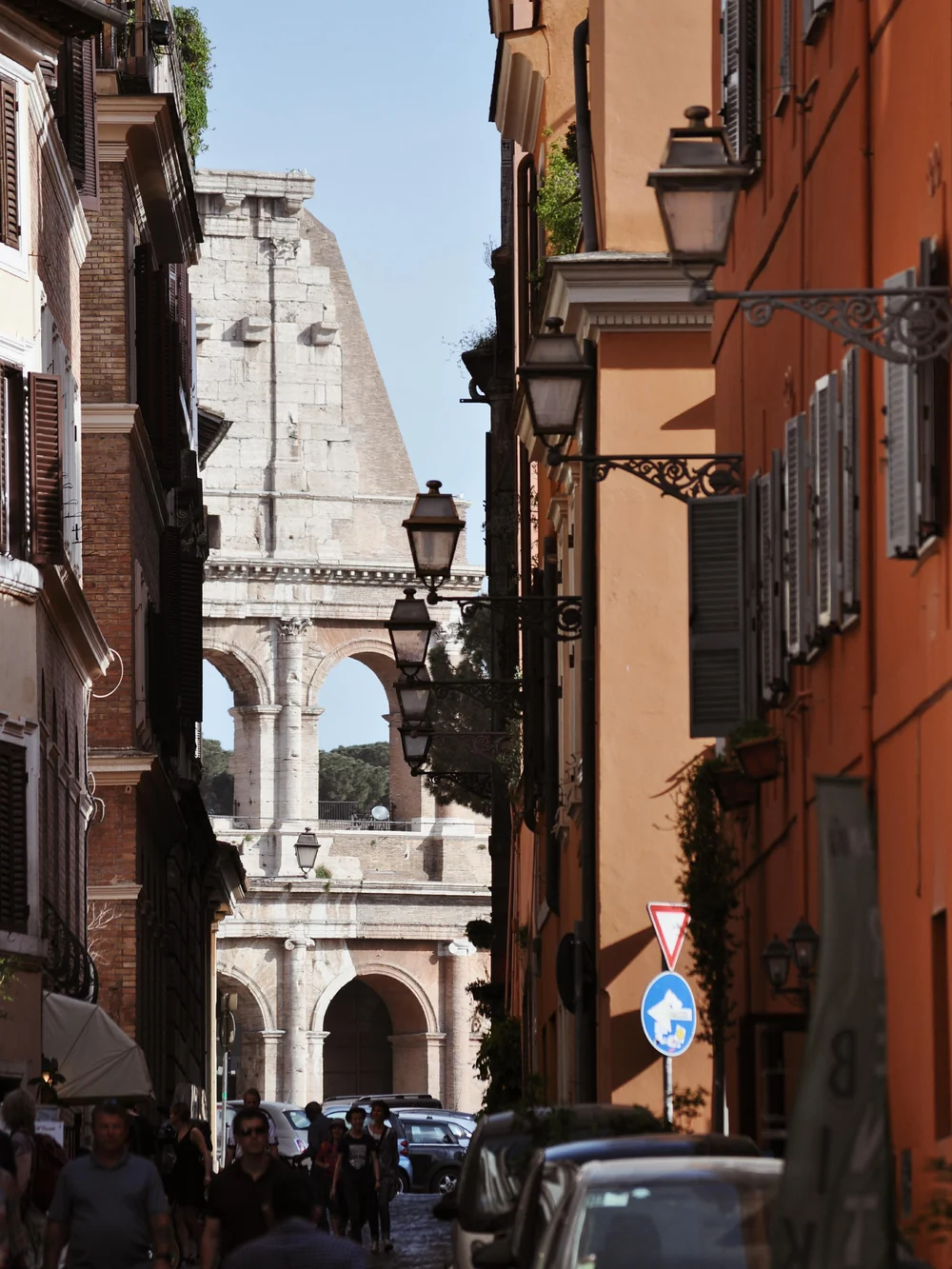
The first Children’s House opened in Rome in 1907. Her ideas grew from watching young children in a real room.
“Following the child”
Chances are you’ve heard at least one Montessori phrase: “follow the child.” Those words trace back to her. In her 1946 London lectures, she described her method this way:
“The method has been achieved by following the child and his psychology.”
Maria MontessoriThe 1946 London Lectures, p. 29, via the AMI Montessori Archives (1946)
In plain words: watch first, then offer. Before you decide what your baby needs, look at what they’re actually doing. Which toy do they keep scooting back to? What makes them go quiet and focused? What frustrates them?
You can start practicing that before your baby is born, simply by deciding to observe more than you buy. Once they’re here, a simple observation journal is an easy way to turn it into a habit.
 Save
SaveWhat is Maria Montessori’s theory, in plain words?
Maria Montessori’s theory comes down to four ideas: children grow in stages, they learn by doing real things themselves, freedom and discipline grow together, and the work is its own reward. She wrote about her classrooms, but each idea carries over to home.
Each stage prepares the next. Montessori saw childhood as a series of stages, each one laying the groundwork for the next. That’s the core of the planes of development she described, and the absorbent mind. If you worry about doing everything “on time,” it’s a relief: in her view, what your baby is doing now is the foundation for what comes next.
Children learn by doing. She warned that when adults habitually do things for children, it can smother the children’s own useful activity. For a toddler, that might mean letting them carry their own cup or tug at a stuck zipper before you jump in.
 Save
SaveFreedom and discipline grow together. In her view, discipline comes through freedom, and a child’s freedom stops where it would offend or annoy others, where it meets the group’s interest. People often sum this up as “freedom within limits,” and the Montessori parenting style shows what that looks like on an ordinary weekday.
The work is the reward. She argued that once discipline grows out of freedom, prizes and outside punishments follow naturally out of the picture. She even tells of a child in one Children’s House who wore a big silver cross as a reward. When it slipped off, he looked at it with indifference and went back to his work, busy and happy.
The words she actually wrote, and where to find them
Real Maria Montessori quotes can be traced to a book and, ideally, a page. The safest ones to share come from her own books, like The Montessori Method (1912), or from the archives of the organization she founded.
Search for Maria Montessori quotes and you’ll find plenty, many in pretty fonts with no book or page attached. Some are real. Others are hard to trace to anything she wrote. These lines are traceable, and each one says something useful about the baby and toddler years:
- “We habitually serve children; and this is not only an act of servility toward them, but it is dangerous, since it tends to suffocate their useful, spontaneous activity.” (The Montessori Method, 1912, chapter V, on independence)
- “Discipline must come through liberty.” (The Montessori Method, 1912, chapter V)
- “Each preceding phase prepares the one that follows, forms its base, nurtures the energies that urge towards the succeeding period of life.” (From Childhood to Adolescence, p. 84, as quoted by AMI)
- The “following the child” line from her 1946 London lectures, quoted above.
Before you share a quote, try one quick test: can you find the book it came from? If there’s no title anywhere, enjoy it as a nice thought, just not as her words.
If you can’t find the book, it isn’t her quote yet.
That one habit will save you from a lot of well-meaning misinformation, and not only about Montessori.
Her key contributions, from Rome to the world
Maria Montessori’s key contributions reached well beyond one house in Rome. She set up the Association Montessori Internationale in 1929, traveled to India in 1939 and stayed away nearly 7 years, and received the first of three Nobel Peace Prize nominations in 1949.
The Children’s House was a beginning, not the whole story. She was in her late 60s when she and her son, Mario, set off for India, and the Nobel nominations came near the end of her life. She died on May 6, 1952, at the Pierson family’s holiday home in the Netherlands.
The American story took a detour. According to the American Montessori Society, the early movement here faded, in part because of criticism from influential educators like William Kilpatrick. If you’re curious about the other side of the debate, the common criticisms of Montessori are worth reading with an open mind. Then, in 1960, Nancy McCormick Rambusch founded the American Montessori Society to promote Montessori education in the U.S.
 Save
SaveHer ideas we still use at home today
Six of Maria Montessori’s ideas fit easily into life with a baby or toddler: follow the child, let them do it, freedom within limits, no prizes needed, room for repetition, and trust that each stage prepares the next. None of them requires buying anything.
This is where the history gets practical. She was writing about classrooms of children around 3 to 6, so think of this table as borrowing, not copying. At Moje Montessori, we rate each idea by how much research backs it up at home. For these six, the honest answer is: not much yet.
| Her idea | What it can look like at home (0–3) | Evidence |
|---|---|---|
| Follow the child (The 1946 London Lectures) | Watch what your baby keeps reaching for before you buy or offer anything new. | Montessori philosophy (not tested at home) |
| Let them do it (The Montessori Method) | Give your toddler a few extra minutes to try the sock, the spoon or the cup before you step in. | Montessori philosophy (not tested at home) |
| Freedom within limits (The Montessori Method, chapter V) | Offer two choices you’re happy with, and keep a few firm rules that protect people and things. | Montessori philosophy (not tested at home) |
| No prizes needed (The Montessori Method) | Skip sticker charts for everyday tasks and let the task itself be the point. | Montessori philosophy (not tested at home) |
| Repetition is learning (The Montessori Method, chapter XII) | When your toddler wants to do it again, and again, let them. | Montessori philosophy (not tested at home) |
| Each stage prepares the next (From Childhood to Adolescence) | Don’t rush the next toy or skill. What they’re working on now is the groundwork. | Montessori philosophy (not tested at home) |
“Backed by research” means studies with babies or toddlers support that piece. “Some research” means part of it is supported. “Montessori philosophy (not tested at home)” means there’s little or no research on it in family homes yet.
Only have energy for one row? Make it the first. Watching costs nothing, and it makes the other five easier. You’ll start to see when your toddler wants to do it themselves, and when they’re perfectly happy doing the same thing for the tenth time this morning.
 Save
SaveYour home doesn’t need to be Instagram-worthy to use a single row of that table. And all that wood in Montessori photos? Why natural materials get so much love is a bigger question than one table row, and it deserves its own post.
Her method started with watching children, not buying things.
Letting your child do real things only works in a space that’s ready for them. Before you step back, get down to their eye level and check what they can reach, climb, pull down or put in their mouth.
Stay close whenever a task involves water, food or anything that could break. Stepping back means giving them room to try, not leaving them alone with it.
Want to read her own words?
Maria Montessori’s own book The Montessori Method (1912), translated by Anne E. George, is free to read on Project Gutenberg. It describes her Children’s Houses for children about 3 to 6, so read it for the ideas, not for baby how-tos.
It’s a book from 1912, and the language shows it, as you saw in the quotes above: long sentences, formal words, and children a few years older than yours will be for a while. Still, a chapter or two is a lovely way to hear her voice without anyone’s filter in between. You’ll find The Montessori Method on Project Gutenberg.
For something written for today’s parents of babies and toddlers, this list of Montessori books for parents is a gentler place to start.
 Save
SaveFrequently Asked Questions
Who is Maria Montessori?
Maria Montessori (1870–1952) was an Italian doctor, one of the first women in Italy to become one, who created the Montessori method. She opened her first Children’s House in Rome on January 6, 1907. Today her name shows up on schools, books and toys, but her ideas started with watching real children.
What is Maria Montessori’s theory?
Maria Montessori’s theory is that children develop in stages, each preparing the next, and learn by doing real things for themselves. She wrote that discipline comes through freedom, with limits set by the interest of the group, and that when children are disciplined through freedom, prizes and outside punishments become unnecessary. With a baby, it starts with watching what they’re working on.
What did Maria Montessori do?
Maria Montessori became one of the first female doctors in Italy in 1896, co-directed the Orthophrenic School, and opened the first Casa dei Bambini in Rome in 1907. She set up the Association Montessori Internationale in 1929, traveled to India in 1939, and received her first Nobel Peace Prize nomination in 1949.
Conclusion
You don’t need to memorize a single date from this post. If one thing sticks, let it be this: the woman behind all those registry listings started by watching children closely and taking what she saw seriously. You can do the same, for free, from the day your baby comes home. Keep things simple, give them time, and let them show you what they’re working on.
Reading up on where these ideas came from already counts as getting ready. Pick one row from the table to try once your baby arrives.
Miri
Fewer toys, deeper play.
Further Reading & Resources
See all 7 sources
- Her life: Biography of Maria Montessori · Montessori Great Ideas · Glossary: Four Planes of Development (Association Montessori Internationale, AMI Montessori Archives)
- Montessori in the U.S.: History of Montessori and History of AMS (American Montessori Society)
- Her own books: The Montessori Method (Maria Montessori, 1912, translated by Anne E. George, Project Gutenberg) · The Montessori Method, chapter XII (A Celebration of Women Writers, University of Pennsylvania)