
It’s the wee hours and you can’t get comfortable, so you’ve got the baby registry open in one tab and a Montessori post in the other. A low wooden shelf with three toys. A toddler setting the table with real plates. A caption about how Montessori changed everything. You scroll down to the comments, and the first one calls the whole thing overhyped.
 Save
SaveSo which is it? A better way to raise a kid, or an expensive aesthetic with good lighting?
I’m not a trained Montessori guide. I’m a mom who read the books and tried it at home with my son, Will, who’s three now. Some of it stuck. Some of it I dropped, and I don’t feel guilty about it. This is the honest version: what the research does and doesn’t say, the part that’s genuinely hard, and what you can skip. If you decide to try it, starting Montessori at home breaks it into small steps.
What is Montessori, and what does it look like at home?
Montessori is an approach to childhood that grew out of Maria Montessori’s classrooms. At home, it mostly means setting things up so your baby or toddler can do real things for themselves, with a few toys on a low shelf instead of a toy box.
A Montessori school has a classroom designed around the method and adults whose job is to run it. At home, there’s no classroom. There’s you, your kitchen, and whatever your days already look like.
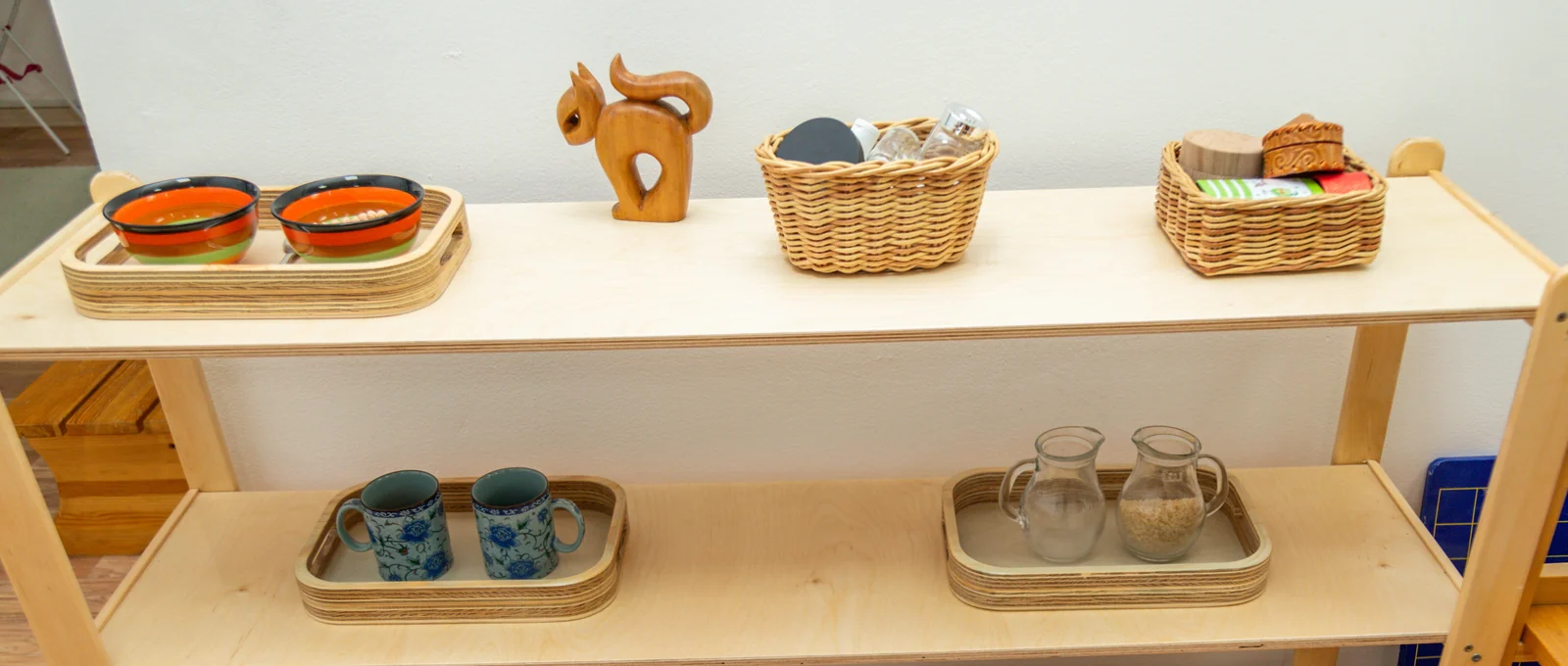
That’s why the home version tends to look smaller than people expect. In practice, it might be a low shelf with a handful of toys, a cup small enough for your toddler to hold, and a few extra minutes for them to try their own shoes.
One small, preliminary 2018 study of 30 parents whose children attended a private Montessori school suggested something that rings true. Parents may find it easier to change the physical setup at home, like “placing limited items on open shelving,” than to change “their deeply rooted beliefs about child development and discipline.” The shelf is the easy part. The mindset takes longer.
 Save
SaveDoes Montessori work? What the research actually says
Montessori schools have research behind them showing a modest edge over traditional schooling. Montessori at home has very little research of its own, so those school results can’t tell you what doing it in your living room does.
Start with a 2023 systematic review that pulled together 32 studies comparing Montessori with traditional schooling. Montessori students came out ahead, with an overall effect of g = 0.24 on academic outcomes and g = 0.33 on nonacademic ones. Translated into plain English, that’s a modest edge: real, but not dramatic. The reviewers were more certain about language and math than about social skills, where certainty was low.
Then there’s the study of grown-ups. A 2021 study of 1,905 adults, ages 18 to 81, found that attending Montessori for at least two childhood years was associated with higher adult wellbeing on all four factors the researchers measured. Before that turns into a headline, read the authors’ own caution: “the study design does not allow one to determine if Montessori schooling caused higher wellbeing.” Families who choose Montessori may differ in ways the study couldn’t measure.
A 2017 study used school admission lotteries to follow 141 preschoolers from about age 3 to age 6: 70 who won seats at two public Montessori magnet schools and 71 who didn’t. Over three years, the Montessori group pulled ahead in academic achievement, social understanding and mastery orientation.
A much bigger 2025 national randomized trial of 588 children at 24 public Montessori schools gives a more mixed picture: no notable differences at the end of the first two preschool years, then a lead in reading, short-term memory, executive function and theory of mind (understanding that other people have their own thoughts) by the end of kindergarten. One name shows up on every school study here: researcher Angeline Lillard, as lead author or co-author. For the other side of the debate, the most common criticisms of Montessori sorts the fair points from the myths.
Now the part that matters most for you. Every study in this section is about Montessori schooling. On the home side, the author of that 2018 study wrote that “few, if any,” studies had looked at the home environments of Montessori-educated children. None of the newer studies I’ve cited here set out to look at homes either, so the evidence for Montessori at home is still thin.
 Save
SaveWhat are the pros of the Montessori approach?
The main pros of the Montessori approach at home are practical: you can start small and keep your routines, it doesn’t have to cost much, and it gives you two clear goals to work toward, independence and concentration.
You can start small and keep your routines
Montessori at home isn’t a switch you flip. That same small 2018 study pointed to ways of doing Montessori at home “that do not require abandonment of their current parenting practices and routines.” You don’t have to rebuild your days around it before the baby comes, or after.
That’s been true for us. In our home, Montessori sits next to the EASY routine, a simple eat, activity, sleep and you-time rhythm for babies, and baby-led weaning, where your baby feeds themselves instead of being spoon-fed. Neither of those is Montessori, and I don’t pretend they are. They worked for our family, and the Montessori pieces fit around them. Take what works for your family and leave the rest.
Start small. One shelf. Two toys. See what happens.
 Save
SaveIt doesn’t have to cost much
Simone Davies, a longtime Montessori educator and author of The Montessori Toddler, puts it plainly on The Montessori Notebook: “You do not need to buy anything to practice Montessori principles at home.” The ideas are free. The furniture is optional.
The well-known classroom materials aren’t required either. A lot of the same hand practice can come from things already in your kitchen cupboards, and Montessori activities that cost nothing collects ideas along with how to check each one for safety.
Where Montessori can get expensive is school. For a sense of scale, Child Care Aware of America puts the national average price of child care in 2025 at $13,184 a year (2025 data, published May 2026). That’s child care in general, based on care for babies and 4-year-olds in centers and home-based programs, not Montessori tuition. I haven’t found a solid national number for Montessori tuition, so I won’t guess. Montessori at home doesn’t add a line like that to your budget. You need less than you think.
It’s built around independence and concentration
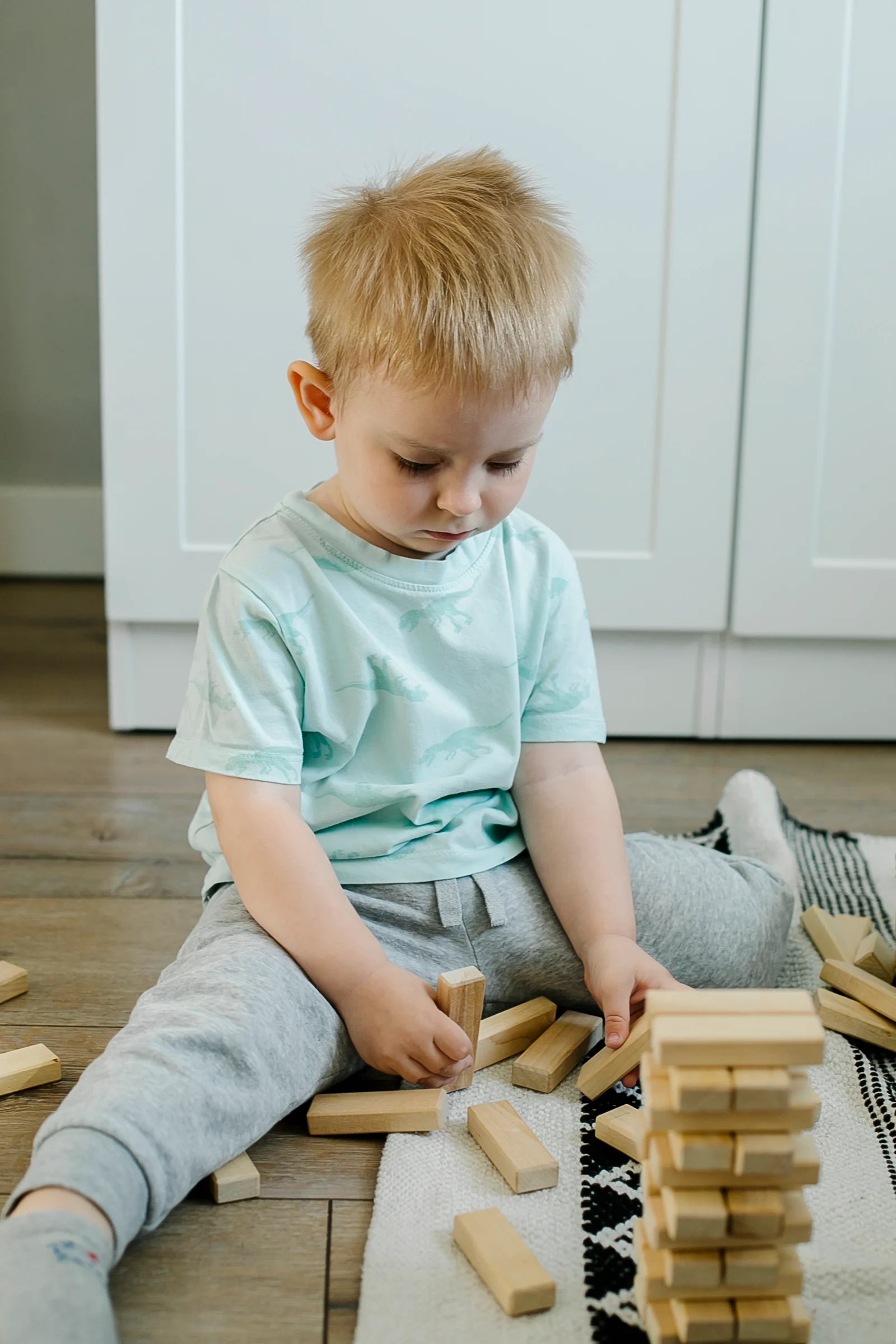
Independence and concentration sit at the heart of what Montessori is aiming for. Independence means your child doing real things for themselves: carrying their own cup, pulling on their own shoes, choosing a toy from the shelf. Concentration means having the time and quiet to get absorbed in something without a grown-up jumping in.
 Save
SaveI’m listing these as goals, not results. None of the research above measured them in babies or toddlers at home, so I can’t promise your child will become more independent or more focused because of a shelf. What I can tell you is that working toward them costs almost nothing in money. It costs time and patience instead.
Which brings us to the cons.
The cons of Montessori, honestly
The real cons of Montessori at home are the patience it takes to let your child struggle, the thin research on doing it at home, and how fast the Montessori “look” gets expensive once you start shopping for it.
The hardest part: sitting on your hands
Nobody warned me that the hardest part of Montessori wouldn’t be the setup. It would be my own hands.
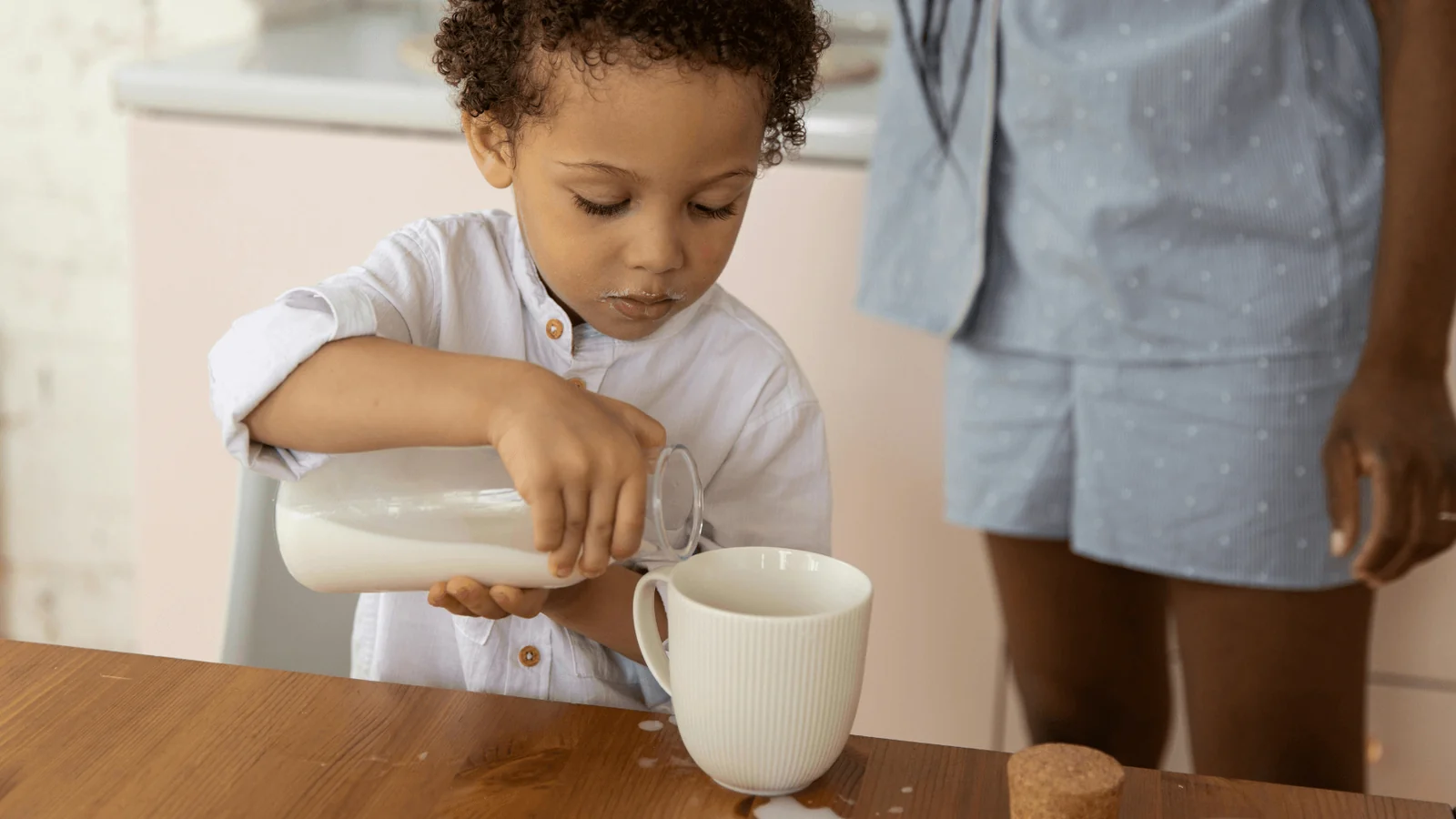
Will would pick up a full cup of milk and carry it with both hands, slow and wobbly, and I could tell from the way he held it that it was going to spill. Everything in me wanted to say, “Let me do it, it’s faster.” I’d bite my tongue, stay put, watch it tip, and then get down on the floor to clean it up. Cracking eggs was the same story. I could see the mess coming, and I sat on my hands anyway.
If your toddler cracks eggs too, raw egg means a hand-washing stop for both of you afterward, with soap and water, before anyone touches anything else. The U.S. Food and Drug Administration, the federal agency that oversees much of the nation’s food supply, also says to wash utensils and work surfaces with hot, soapy water after they touch raw eggs.
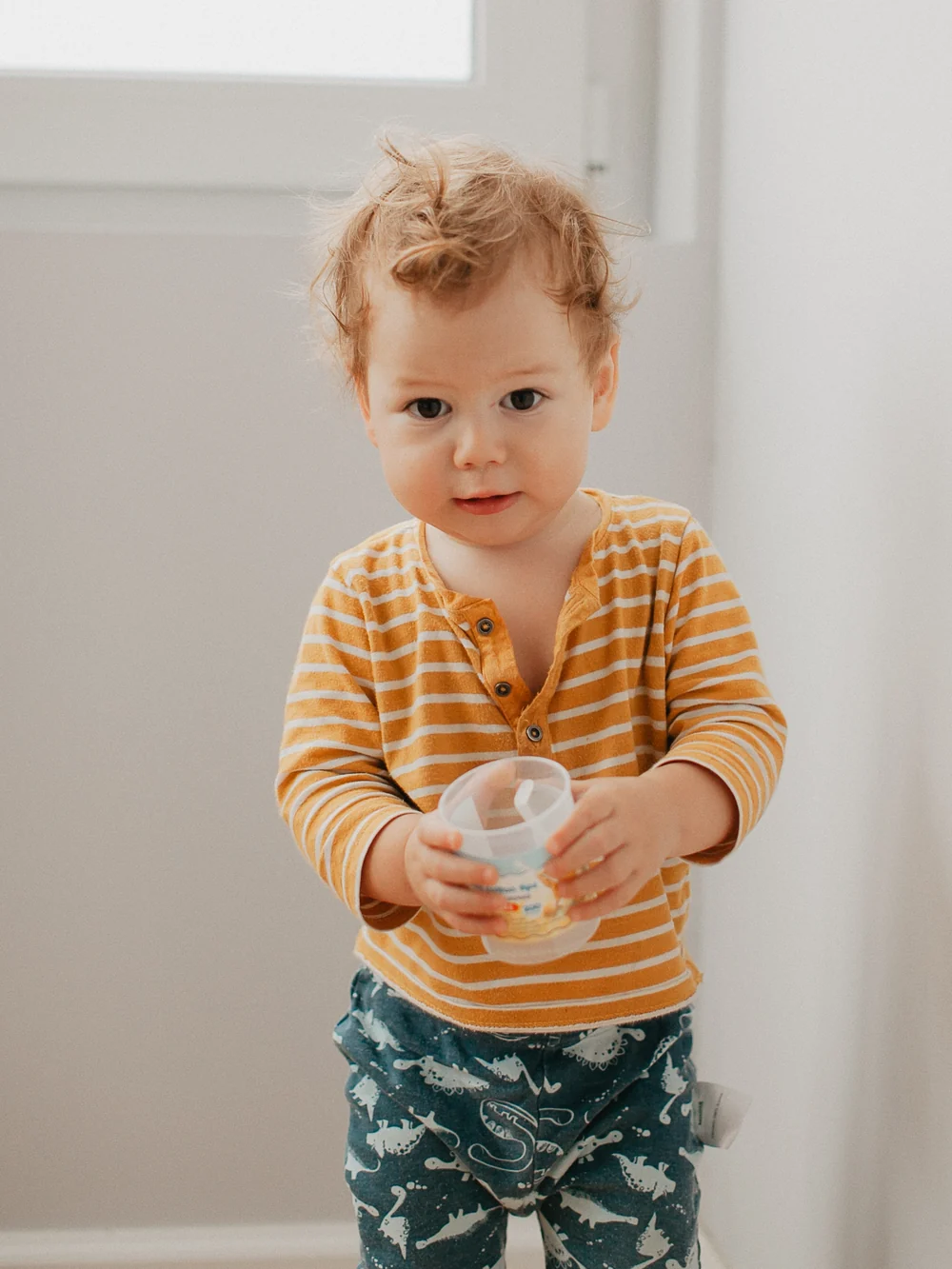
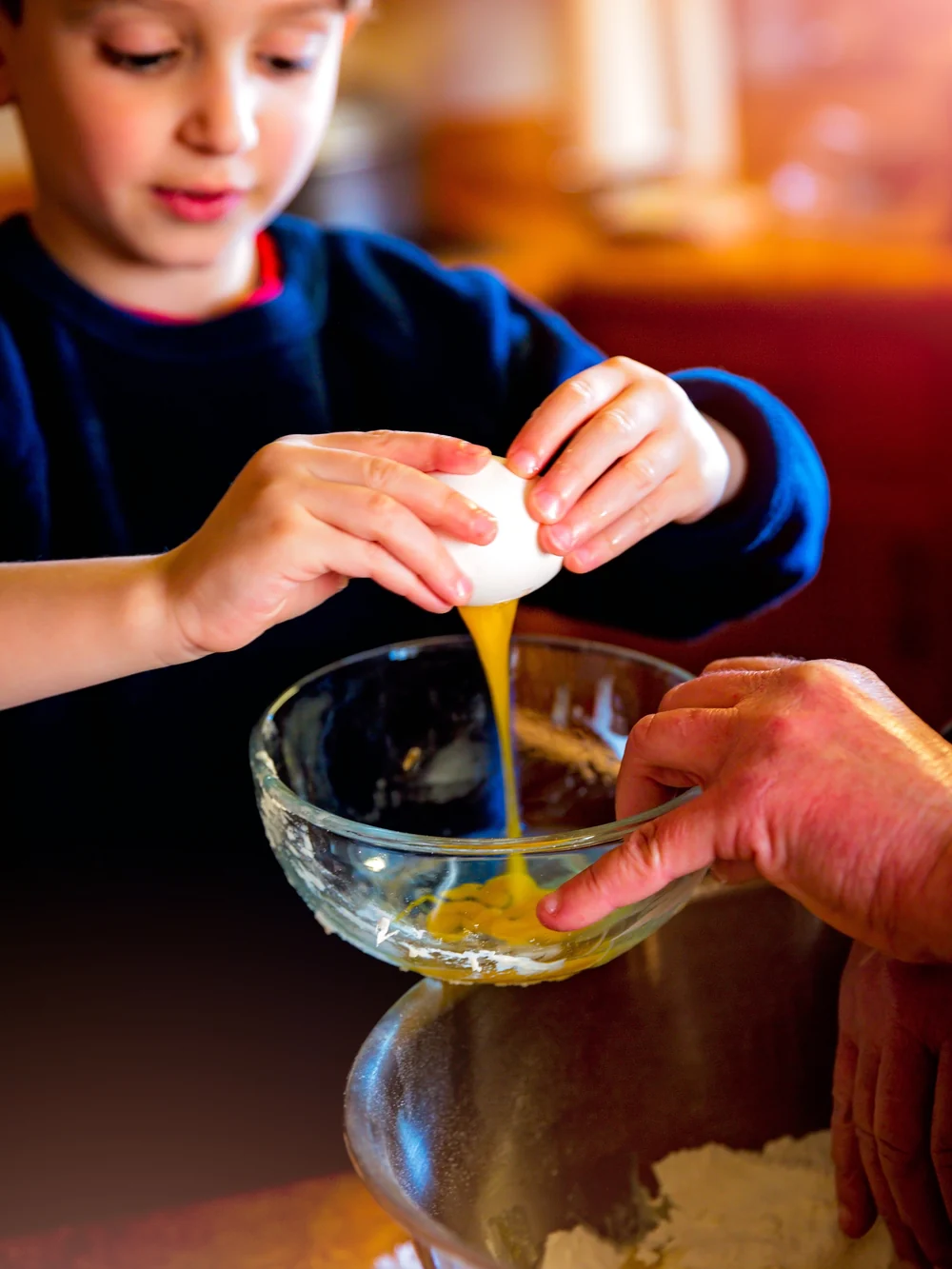
You can see the spill coming. Cracking eggs: messy, slow, and still worth it.
Spills are one thing. Tears are harder. A shoe that’s a little too tight, a zipper that keeps sticking, and Will working at it until he’s frustrated and his eyes are filling up, while I know I could fix it in one second. For me, that’s the hardest moment of all.
It isn’t just our house. In an r/MontessoriForHome thread about the most difficult thing about following Montessori, one parent wrote about letting their child do the cutting:
“it was so hard not to just cut it for him”
A parent on Redditr/MontessoriForHome thread (2026)
Simone Davies offers a balance worth holding onto: “Montessori is about both respecting the child and ourselves.” Waiting is a gift to your child. Knowing when you’ve run out of waiting is respecting yourself.
The spill is part of the lesson. So is the cleanup.
Thin evidence for home, mixed quality in schools
Even if you go the school route, “Montessori” on the sign doesn’t tell you much by itself. In a 2012 study of preschool children, those in classic Montessori programs made significantly bigger gains over a school year than children in supplemented Montessori programs or conventional ones. That held for executive function (skills like planning and self-control), reading, math, vocabulary and social problem-solving. The takeaway was that high-fidelity Montessori, the kind that sticks closely to the method, was associated with better outcomes. A school can use the name while following the method only loosely.
At home, nobody is checking fidelity at all. Because so little research has looked at Montessori in family homes, you’re working from philosophy, books and your own child, not from proof. I don’t think that’s a reason to skip it. It’s a reason to hold it loosely and keep what you can see working.
The “Montessori” look can get expensive
Search for Montessori toys or furniture and it doesn’t take long to find matching wooden shelves, special trays and beautiful materials with “Montessori” in the name. None of it is required, as Davies said above. Still, it’s easy to scroll long enough that your home starts to feel like it doesn’t count until it looks like the photos.
That feeling is the expensive part. If you notice yourself filling a cart because something says “Montessori,” pause and ask what your child would actually do with it this month. A basket and a low shelf you already own can carry you a long way. When you do want to spend, Montessori on a budget walks through a first-year plan and what’s worth paying for.
 Save
SaveMontessori schools vs. Montessori at home: pros and cons
Montessori schools have the stronger research, though quality varies from program to program. Montessori at home costs little and bends around your life, but it has very little research of its own, and you’re the one doing it.
If you’re pregnant right now, school is a question for later. The studies above are about children in classrooms, mostly preschool age and up, and that’s worth keeping in mind when you see them quoted as proof for babies.
- Montessori school. Pros: most of the evidence in this post comes from classrooms, including the 2023 review and the 2017 lottery study, and a good program brings a room set up for children plus adults whose job is the method. Cons: quality varies, as the 2012 study suggested, and cost depends entirely on the program, so ask each one.
- Montessori at home. Pros: it’s flexible, it fits around the routines you already have, and it can cost close to nothing. Cons: as of that 2018 paper, “few, if any,” studies had looked at it, and there’s no one to hand the hard parts to. The patience comes from you.
Is Montessori worth it? Who it suits, who it doesn’t
Montessori is worth it for families who want to borrow a few ideas, start cheap and stay flexible. It’s probably not worth it if you need research proof for the home version, or you want one complete system with every rule spelled out.
At Moje Montessori, we look at this question through three practical lenses: cost, time and flexibility. I’ve added two more: patience and proof.
| Worth it if… | Probably not worth it if… | |
|---|---|---|
| Cost | You’re happy to start with what you already own. Simone Davies says you don’t need to buy anything. | You feel you have to buy the full “Montessori” setup before you can begin. |
| Time | You can give your child extra minutes on slow days, and help them finish on rushed ones. | Every day is already a race, and slower routines would add stress instead of calm. |
| Flexibility | You like mixing ideas with routines you already have, the way we use EASY and baby-led weaning. | You want one complete system with every rule spelled out. |
| Patience | You can let a cup spill and clean it up together. | You need things done quickly for a while, and that’s a fair season to be in. |
| Proof | You’re comfortable trying ideas that make sense to you without a home study behind them. | You need research showing that Montessori at home changes outcomes before you start. |
If you landed mostly in the left column, it’s probably worth a try. If you landed on the right, you can still borrow one or two ideas without signing up for the rest.
What can you skip without guilt?
You can skip any Montessori rule that doesn’t fit your family, especially on rushed days. Helping your child finish, passing on advice that feels too strict and skipping the shopping list still leave plenty of Montessori in your home.
Two rules I’ve broken, and why I don’t feel bad about either.
Rushing out the door: when I just put the shoes on
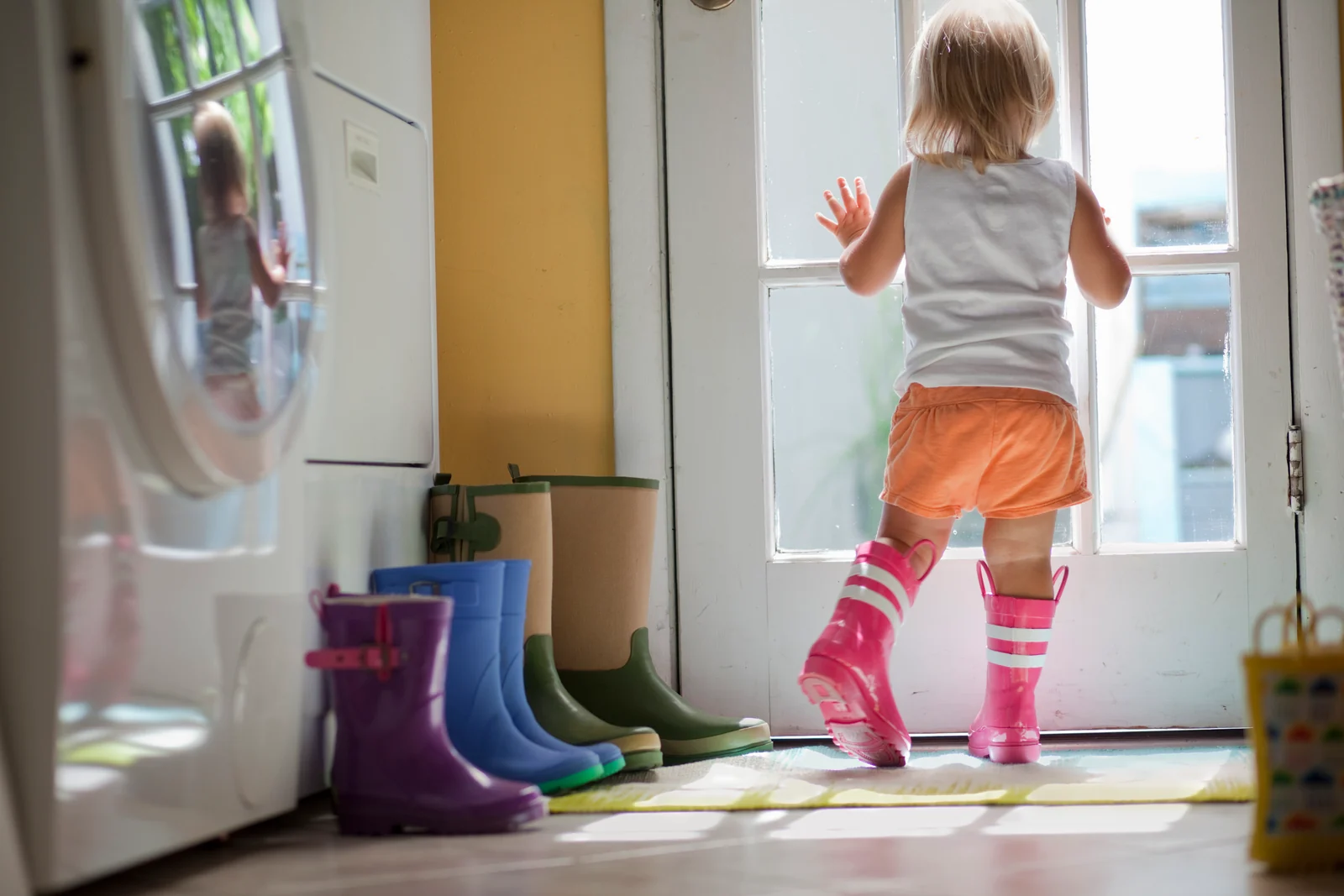
On a slow weekend, Will dresses himself and puts on his own shoes, and I let it take as long as it takes. On days we have to be out the door on time, I can’t stand there for twenty minutes while he wrestles with one shoe. So I break the rule. I put the shoes on for him, or I scoop him up and carry him to the car.
A classroom has time built in for waiting. A parent trying to get out the door doesn’t always have that.
Simone Davies makes the same point in that post on Montessori parenting: when you need to leave, you don’t have to have infinite patience. You can tell your child they tried, help them finish, and let them try again tomorrow. That isn’t failing at Montessori. It’s the “respecting ourselves” half of the deal.
Helping your child finish isn’t quitting Montessori.
 Save
SaveThe “no fantasy before six” rule I kept reading about
When I was reading up on Montessori, I kept running into the same advice: no fairy tales, no superheroes, no talking animals before age six. It felt too rigid for us, like it took some of the magic out of being little.
So our home doesn’t follow it. Elsa and Spider-Man are regulars at our house. Will hears fairy tales, and he plays pretend.
I’m not telling you what Montessori itself says about fantasy here. That’s a bigger question than one section of one post, and I’d rather not put words in anyone’s mouth. I’m telling you that a rule I kept reading didn’t fit our family, and dropping it hasn’t made the rest feel any less worth doing.
 Save
SaveBeyond those two, a lot of the Montessori shopping list is optional, too. You don’t need a full nursery makeover before the birth, and setting up a Montessori-style home can happen one corner at a time, after you’ve met your baby. A few simple toys for the first months is plenty to start.
If you’ve heard that Montessori parents never say “good job,” that’s one more rule worth reading up on before you start policing every word.
Even in a forum for Montessori at home, one parent asked the group, “What’s the least Montessori thing that you [do] with your family?” It’s a good question to ask yourself, too. Your answer doesn’t disqualify you. It just shows you where your family’s line is. We’re all just doing our best, and doing it differently.
A quick note on safety
Letting your child do real things only works in a space that’s safe for them to do it in. Make the space safe first, then step back.
Before you step back and let your toddler try, get down to their eye level and look at what they can reach, climb, pull down or put in their mouth. Stay close whenever a real task involves food, water or anything that could break.
Anchor shelves and dressers to the wall, low ones included. The U.S. Consumer Product Safety Commission, the federal agency for product safety, says anchoring all furniture with drawers, doors and shelves prevents tip-over injuries and deaths.
For the rest of a safe setup, the guide to Montessori at home starts with the basics.
Frequently Asked Questions
What are the pros and cons of Montessori education?
Most of what we know about the pros and cons of Montessori education comes from school research. A 2023 review of 32 studies found a modest edge over traditional schooling, with stronger evidence for language and math than for social skills. The cons: quality varies from program to program, and research on Montessori at home is still thin.
What are the pros and cons of Montessori schools?
The pros of Montessori schools are a real research base and a classroom built around the method; in one 2017 lottery study, Montessori students pulled ahead over three years. The cons are that programs differ in how closely they follow Montessori, and cost depends on the program, so visit and ask before you decide.
What are the pros and cons of the Montessori approach?
The pros and cons of the Montessori approach at home are mostly practical. It’s flexible, cheap to start and fits alongside routines you already have. The hard parts are the patience it takes to let your child struggle and how little research there is on Montessori in family homes. If you’re expecting, you have time to read first.
Conclusion
If you’re pregnant and still on the fence, you don’t have to decide tonight. Read a little. Once the baby’s here, watch what they reach for and what they try to do on their own. Then start with one small thing, like a low shelf with two toys or an extra minute before you step in, and keep whatever fits your family. Montessori doesn’t have to be all or nothing, and the parts you skip don’t cancel out the parts you keep.
You’re asking the right questions before your baby even arrives. Pick one idea that feels doable, and let the rest wait.
Miri
Fewer toys, deeper play.
Further Reading & Resources
See all 12 sources
- Montessori at home: To What Extent Do Parents of Montessori-Educated Children “Do Montessori” at Home? (Walls, Journal of Montessori Research, 2018)
- A Montessori educator’s view: Is Montessori parenting a fairy-tale? (Simone Davies, The Montessori Notebook, 2024)
- School studies: Systematic review of Montessori outcomes (Randolph et al., Campbell Systematic Reviews, 2023) · Lottery study (Lillard et al., Frontiers in Psychology, 2017) · Classic vs. supplemented Montessori (Lillard, Journal of School Psychology, 2012)
- Long-term and national studies: Adult wellbeing study (Lillard et al., Frontiers in Psychology, 2021) · National randomized trial of public Montessori preschool (Lillard et al., PNAS, 2025)
- Cost and safety: Child Care in America: 2025 Price & Supply (Child Care Aware of America, 2026) · Anchor It! (U.S. Consumer Product Safety Commission) · What You Need to Know About Egg Safety (U.S. Food and Drug Administration)
- Real parents: The most difficult thing about following Montessori? and the “least Montessori thing” thread (r/MontessoriForHome, 2026)