

You’re seven months along, passing the mashed potatoes at a family dinner, when you mention you’ve been reading about Montessori. Your uncle laughs. “Isn’t that where the kids just run wild?” Across the table, your cousin is sure it’s only for rich families, and by dessert someone has heard that Montessori parents aren’t allowed to say “good job.”
 Save
SaveYou drive home quieter than you’d like. You’re deep in nesting mode (that urge to get everything ready before the baby comes), and now you wonder if you got excited about the wrong thing. Search for criticism of the Montessori method at midnight and it’s no better: for every critic, someone’s calling it the answer to everything.
Secondhand opinions make it easy to drop an approach, or follow it, for reasons that aren’t true. So here are the criticisms, one at a time. Some are fair, and you’ll see them called fair. Some are myths. And a few are really about schools for older kids, not the baby you’re about to meet.
What is the biggest criticism of Montessori?
No single criticism of Montessori wins the title. Most of what you’ll hear falls into a few buckets: too loose or too rigid, only for wealthy families, short on research, against praise, hard on social skills, bad for creativity, or pointless before age 3.
A couple of those cancel each other out: Montessori can’t be a free-for-all and a strict system at once. Critics who describe opposite things are often picturing very different classrooms.
A lot of Montessori education criticism is also about schools for kids 3 and up. The question here is narrower: does any of it matter for a baby or toddler at home?
 Save
SaveOne fair point belongs right at the top: Montessori isn’t for everyone. If it doesn’t suit your family, that’s a reasonable conclusion, not a failure. It’s worth weighing the honest pros and cons of Montessori for your own home: what you’d gain, and what’s genuinely hard.
Myth: Montessori starts at age 3
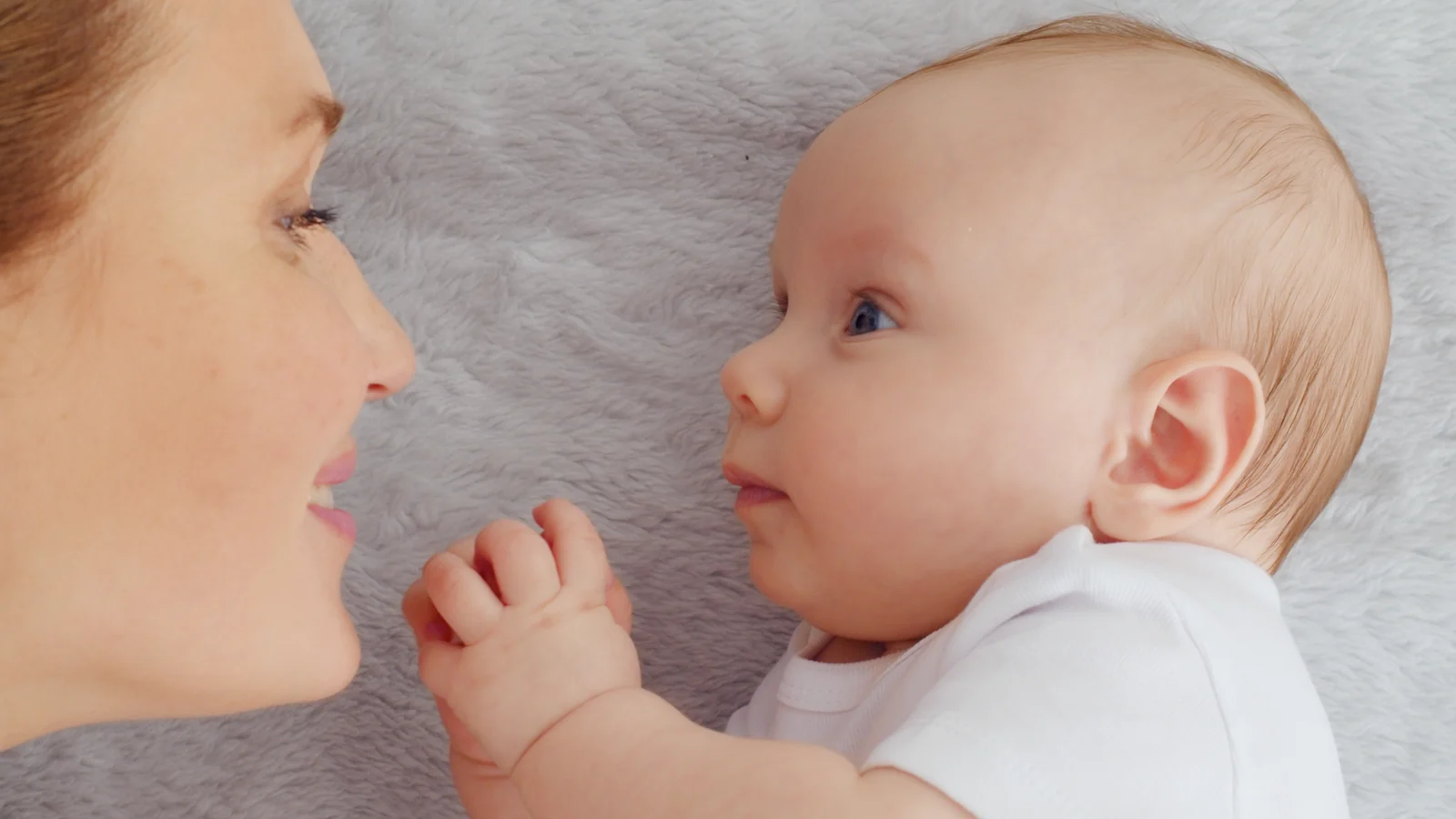
Montessori doesn’t start at age 3. The Association Montessori Internationale describes the absorbent mind as working from birth, and the American Montessori Society describes infant and toddler programs where guides “assist, not teach.”
If the only Montessori you’ve seen is a preschool classroom, this one makes sense. Plenty of Montessori myths grow from a small true piece like that.
The absorbent mind is Montessori’s name for the way young children soak up the world around them. The Association Montessori Internationale (AMI), the organization Maria Montessori founded, describes it as a sensitivity that takes in experiences, relationships and images quickly and effortlessly. By AMI’s account, only children from birth to six have it, and from 0 to 3 they take it in without being aware of it.
The American Montessori Society (AMS), a U.S. Montessori organization, says the approach is based on respect for the child. Even with infants and toddlers, it says, guides seek to “assist, not teach,” and teachers educate by showing and modeling, not by correcting.
So the Montessori years begin the day your baby comes home, with everyday life: your voice, your face, the room around them. The guide to starting Montessori at home covers the first steps.
 Save
SaveIf someone tells you Montessori “really starts at three,” keep AMI’s own answer in your back pocket: the absorbent mind is at work from birth. You won’t be the only one pushing back. On r/Montessori, a poster who describes themselves as an AMI-trained 0–3 guide asked if other 0–3 people feel “constantly invalidated” (2025), and “When can you start Montessori?” is a real question on r/MontessoriForHome (2026).
Miri’s Tip
“Too much freedom” or “too structured”?
Montessori is neither a free-for-all nor a strict drill. Maria Montessori wrote that “discipline must come through liberty,” and she set the limit of a child’s freedom at the interest of the group.
People tend to picture one of two cartoons: a toddler dumping cereal while nobody says a word (“follow the child!”), or a silent little student while an adult corrects every move. Her own writing sits somewhere else. In The Montessori Method (1912), she put it this way:
“We call an individual disciplined when he is master of himself, and can, therefore, regulate his own conduct when it shall be necessary to follow some rule of life.”
Maria Montessoriauthor of The Montessori Method, chapter V (1912)
Freedom, in her view, was the road to self-control, with limits built in. The Association Montessori Internationale has a phrase for the under-3 version: children grow within “freedom and limits.” That’s real structure, just not a classroom in your living room.
The same goes for “follow the child.” Watching what your toddler is working on, and making room for it, is a long way from letting them run the house.
 Save
SaveA small 2018 study of 30 parents at one private school describes the same middle ground. Its author treats authoritative parenting (nurture and guidance, plus room for self-direction), valuing children’s independent work, and discipline without punishment as consistent with Montessori. It’s one small, early study, so hold it lightly.
Limits don’t mean harshness, either. The American Academy of Pediatrics, the professional group for U.S. pediatricians, says in its 2018 guidance that parents shouldn’t spank or hit. Yelling and shaming don’t work either, it says. Clear, consistent rules are on its list of what helps instead. The Montessori parenting style lays out how that compares with traditional discipline.
And no, Montessori toddlers aren’t always tidy. Real ones still dump the basket out.
Myth: Montessori bans praise
The idea that Montessori bans praise doesn’t hold up. What Maria Montessori wrote against was prizes and outside punishments, and research on rewards points the same way: material rewards can backfire, while positive feedback tends to help.
Maybe you’ve already seen the advice: never say “good job,” or you’ll ruin your child’s motivation. Look at what Maria Montessori actually wrote about, though, and the target is narrower.
In The Montessori Method, she argued that once children are disciplined through freedom, prizes and outside punishments drop away. She even tells of a child wearing a silver cross as a reward who shrugged it off, too busy and happy with his work. Her target was the prize.
Modern research on toddlers points the same way. In a study of 20-month-olds, toddlers given a material reward for helping went on to help less than those praised out loud or not rewarded at all. A review of 128 studies found that expected tangible rewards undermined kids’ own motivation, while positive feedback increased it. Children tended to be hit harder by those rewards than college students, and tended to get a smaller lift from praise.
Put together, the thing to watch is the prize promised in advance, not the warm word after.
I’ll be honest about my own house here. While I was reading up on Montessori, I kept running into advice to drop “good job” completely. I tried. It felt stiff, like I had to stop mid-smile and hunt for the “correct” sentence.
Where I’ve landed with my three-year-old, Will, is somewhere in the middle. Most of the time, I describe what he did and the effort behind it: “You worked so hard on those shoes, and you got them on all by yourself. You were so patient.” Or: “You carried your cup so carefully. Not one drop spilled.” Every so often, when I’m just plain happy, “You’re a superstar!” slips out, and I let it. What I care about is Will feeling proud of himself, not doing things to get a clap from me or a piece of candy.
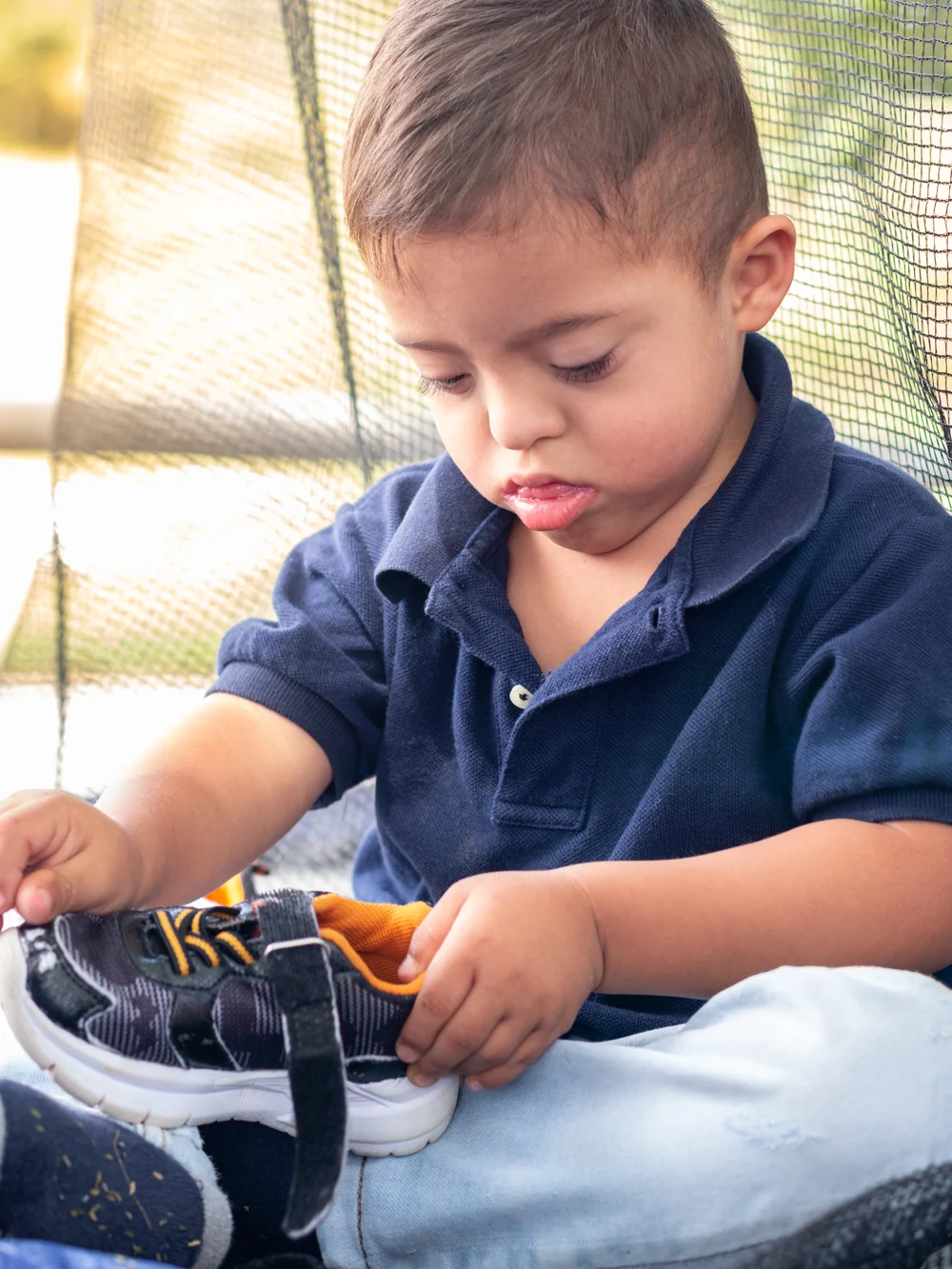

Describe the effort: “You got those on all by yourself.” Or the care: “Not one drop spilled.”
If “good job!” still slips out a dozen times a day, nothing is ruined. The shift worth making is small: fewer prizes for everyday things, more noticing out loud.
Skip the prize. Keep the warmth.
Does Montessori hurt social skills?
Research hasn’t shown Montessori hurting social skills. In a 3-year lottery study of 141 children ages 3 to 6, the Montessori group pulled ahead in social understanding, though a 2023 review of 32 studies rated certainty on social skills as low.
The worry usually starts with a photo: one child, one mat, one tray, working alone. Where are the friends?
In the lottery study, children at two public Montessori schools were followed for 3 years, and the Montessori group pulled ahead over time in social understanding as well as academics. Another study found preschoolers in “classic” Montessori programs gained more over a school year in social problem-solving, among other skills, than children in “supplemented” Montessori or conventional programs.
The honest caveat: a 2023 Campbell systematic review of 32 studies rated the certainty of the evidence on social skills as low. And all of it is about Montessori schools, not babies at home.
 Save
SaveWith a baby or young toddler, the social part happens in your arms and on the floor with you, whatever’s on the shelf.
Does it squash creativity?
Whether Montessori squashes creativity is hard to answer for babies. A 2023 review of Montessori schools, from preschool up, found a possible small edge on creativity, not a loss, but we haven’t found solid research on babies or toddlers.
One version says Montessori is all practical life (real everyday tasks like pouring, wiping and sweeping) and no art or make-believe. Pretend play is a bigger question than one paragraph can hold; how Montessori and Waldorf each think about imagination is covered in Montessori vs. Waldorf.
At home, nothing about a Montessori-inspired shelf stops you from offering music, a big cardboard box, or paper and paint. At this age, a lot of creativity looks like plain curiosity anyway. What happens if I drop this? What if I bang it on the floor?
 Save
Save“Montessori is only for rich families”
Montessori isn’t only a private-school thing. According to the National Center for Montessori in the Public Sector, more than 590 of the roughly 3,500 Montessori schools in the U.S. are public schools.
The fair part: that still leaves most of those schools outside the public system, and private school means tuition. If a Montessori school is out of reach, that’s a real limit, not a myth.
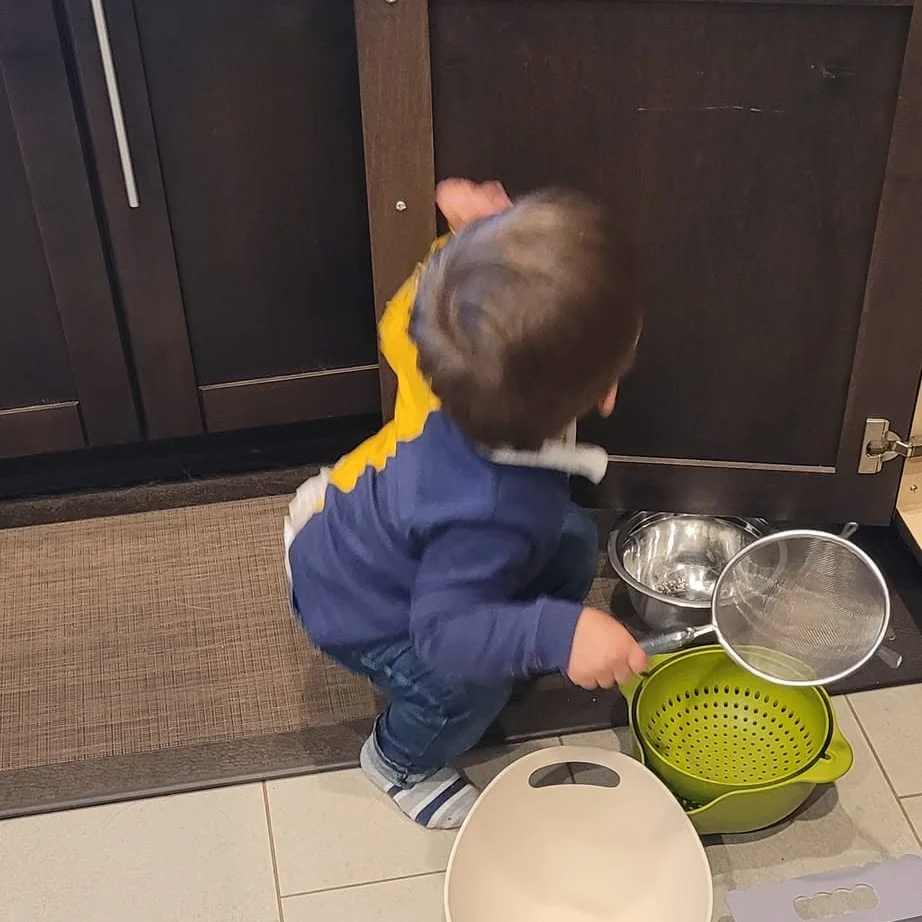
At home, the picture changes. You don’t need anything with “Montessori” printed on the box. Once you know what makes a toy Montessori, it’s easier to look past the label. Whether wood is worth paying more for than plastic is a fair question of its own, and plastic isn’t the villain here.
 Save
SaveIf cost is the real worry, Montessori on a budget shows where a first-year budget goes and what to skip.
“There’s no research behind it”
There is research behind Montessori, mostly on Montessori schools. A 2023 review of 32 studies found modest, positive effects for Montessori students, but as of 2018, almost nothing had been studied about Montessori at home.
This criticism is half right, which makes it the most useful one here.
The school research is real. The 2023 Campbell review compared Montessori with traditional schooling across 32 studies and found modest, positive effects, with more certainty for language and math than for social skills. A 2021 study of 1,905 adults found that attending Montessori for at least two childhood years was associated with higher adult wellbeing, though its authors note the design “does not allow one to determine if Montessori schooling caused higher wellbeing.”
 Save
SaveOne finding should make every parent a little skeptical of labels. In the preschool study above, “classic” Montessori programs did better than “supplemented” ones using the same name. How faithfully a program followed Montessori, not the word on the sign, lined up with better results.
And at home? As of 2018, that same small study of 30 parents noted that few if any studies had directly examined the home environments of Montessori-educated children. So the evidence for the version you’d be doing with a baby is thin.
Not tested yet isn’t the same as doesn’t work.
Was William Heard Kilpatrick a critic of Montessori?
William Heard Kilpatrick was a critic of Montessori. According to the American Montessori Society, criticism from influential educators like him contributed to the early American Montessori movement fading.
Montessori criticism, in other words, isn’t new. It was one of the things that slowed the method in the U.S. once already. The story continued: Maria Montessori had set up the Association Montessori Internationale in 1929, and in 1960 Nancy McCormick Rambusch founded the American Montessori Society to promote Montessori education in the U.S. Today’s critiques deserve the same treatment as the old ones: take each seriously, then check it against the source.
Criticism vs. fact: a quick table
Montessori criticism holds up best on research at home, which really is thin, and worst on the age-3 and praise myths. The table sums up five criticisms you can actually check against evidence.
At Moje Montessori, we rate each row by how much research stands behind the answer. “Only for rich families” and “squashes creativity” are left out: one is about school counts, not effects on a child, and the creativity research we found is all from schools, with nothing on babies or toddlers.
| Criticism | Fair? | What the sources say | Evidence |
|---|---|---|---|
| “It starts at age 3” | Myth | The Association Montessori Internationale describes the absorbent mind from birth; the American Montessori Society describes infant and toddler programs. | Montessori philosophy (not tested at home) |
| “It’s too loose, or too rigid” | Mostly a myth | Montessori paired freedom with limits. One small study of 30 parents treats warm, nonpunitive parenting as a Montessori fit. | Montessori philosophy (not tested at home) |
| “It bans praise” | Myth | Montessori wrote against prizes. Material rewards can backfire, while positive feedback tends to help. | Some research |
| “It hurts social skills” | Not supported | School studies of children 3 to 6 found gains in social understanding; a 2023 review rates the certainty as low. | Some research |
| “There’s no research” | Partly fair | Studies of Montessori schools look modestly positive. Studies of Montessori at home barely exist. | Some research |
“Backed by research” means studies with babies or toddlers support that piece. “Some research” means part of it is supported. “Montessori philosophy (not tested at home)” means there’s little or no research on it in family homes yet.
Notice where the honest uncertainty sits: at home. The research can’t promise you results from a Montessori shelf, and it hasn’t shown harm there either, because it has barely looked. Borrow what makes sense for your family, then watch your own child.
Frequently Asked Questions
What is the biggest criticism of Montessori?
There’s no official biggest criticism of Montessori, but the one with the most truth in it is the research gap at home: as of 2018, few if any studies had looked at Montessori in family homes. The popular ones, like “it starts at age 3” or “it bans praise,” turn out to be myths when you check the sources.
Was William Heard Kilpatrick a critic of Montessori?
Yes, William Heard Kilpatrick was a critic of Montessori. The American Montessori Society says criticism from influential educators like Kilpatrick contributed to the early American Montessori movement fading. Montessori found new footing in the U.S. after Nancy McCormick Rambusch founded the American Montessori Society in 1960.
Conclusion
You don’t have to defend Montessori at the next family dinner, and you don’t have to give it up because of one. Keep the fair points and let the myths go. Once your baby is here, watch what they’re working on and borrow the parts that fit your family. Give yourself a few months to find your groove. You’ll make better calls with your own child in front of you than any critic can from across the table.
Checking before you believe is a good instinct to carry into parenthood. Next time someone says Montessori kids run wild, smile and pass the potatoes.
Miri
Fewer toys, deeper play.
Further Reading & Resources
See all 17 sources
- Montessori sources: The Montessori Method (1912), absorbent mind, freedom and biography (Association Montessori Internationale)
- Montessori in the U.S.: Infant and toddler programs and history (American Montessori Society), Montessori schools (National Center for Montessori in the Public Sector)
- Montessori research: lottery study (Lillard et al., 2017), classic vs. supplemented (Lillard, 2012), systematic review (Randolph et al., 2023), adult wellbeing (Lillard et al., 2021), Montessori at home (Walls, 2018)
- Praise and discipline: rewards at 20 months (Warneken & Tomasello, 2008), 128-study review (Deci, Koestner & Ryan, 1999), discipline guidance (American Academy of Pediatrics)
- Real questions on Reddit: 0–3 thread (r/Montessori, 2025), when to start (r/MontessoriForHome, 2026)