
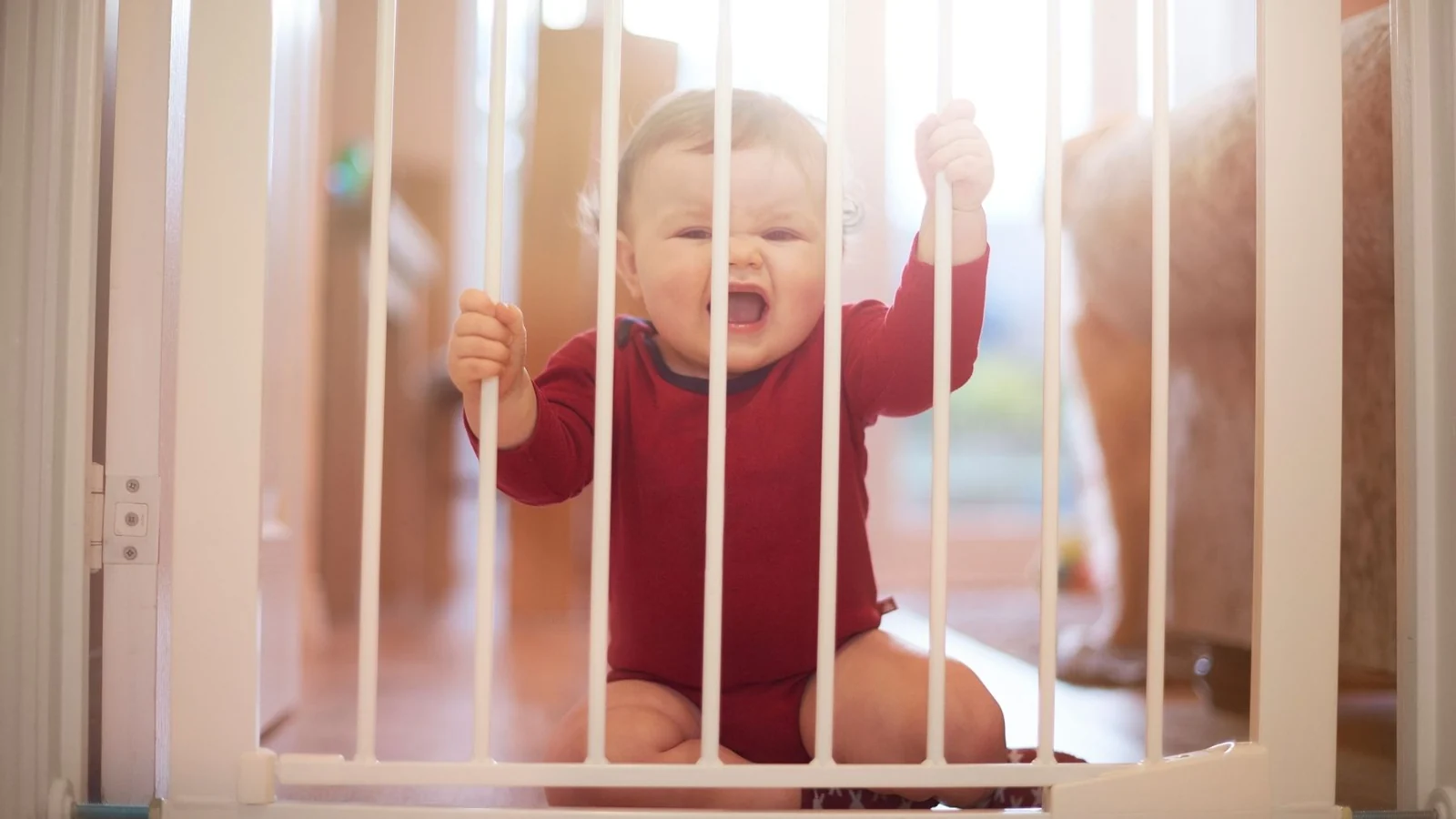
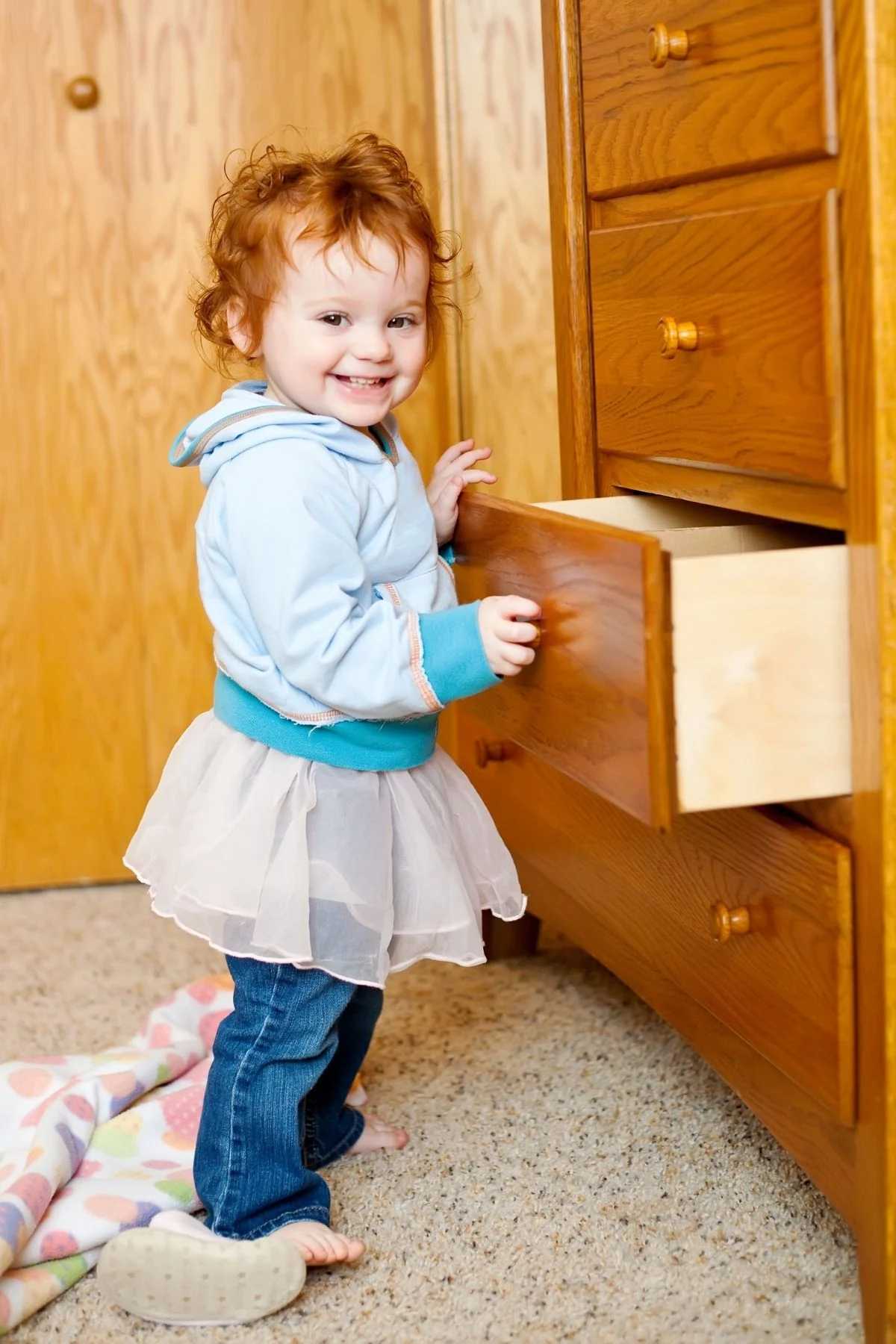
The bottom drawer of the dresser slides open. Your toddler figured that out sometime this week, and they’ve been practicing ever since: pull, peek inside, pull a little farther. Then one morning a bare foot goes into the drawer, two small hands grab the top edge, and you suddenly see what they see. It’s a staircase.
 Save
If you’ve set up your home the Montessori way, some of this is by design. The shelves are low. The books sit where small hands can reach them, and the whole point is a child who can help themselves. Then you look up babyproofing and get a shopping list longer than your grocery list, covering every outlet, hinge and corner in the house. Your partner thinks half of it is overkill. And you’re quietly wondering whether locking everything down undoes the freedom you were going for.
Good news, though: the jobs that truly can’t wait make a much shorter list than the internet suggests. That list is tied to what your baby can do, and it grows as they go from crawling to pulling up to climbing.
The short list, done before your baby crawls — anchor the heavy furniture, gate the stairs and lock away medicines and cleaners, because pediatric advice ties gates and poison storage to crawling and walking.
you’re about to buy the whole babyproofing aisle before your baby can move. Past the short list, wait and see what they actually reach.
When to start babyproofing
Start babyproofing before your baby crawls, at least for stair gates and anything poisonous. The American Academy of Pediatrics (AAP) ties both to the crawling-and-walking stage, and the rest can follow what your child can actually reach.
You won’t find one magic month for this, because the timing follows your baby’s body. The AAP’s page on childproofing your home for poisons says to act before or as soon as your child begins crawling or walking: harmful things go out of reach, out of sight, and ideally into a cabinet with a lock or safety latch. Its home safety tips tie stairs to the same stage: gates at both the top and the bottom while your child is learning to crawl and walk.
Plenty of parents who’ve done this before give the same advice: anchor the furniture and gate the stairs early, then hold off on the rest of the gadgets until your baby is actually on the move and you can see what they go for.
Miri’s Tip
Medicines and cleaners belong in that early pile too, per the AAP. Yes, that includes the bottle of pain reliever on your nightstand.
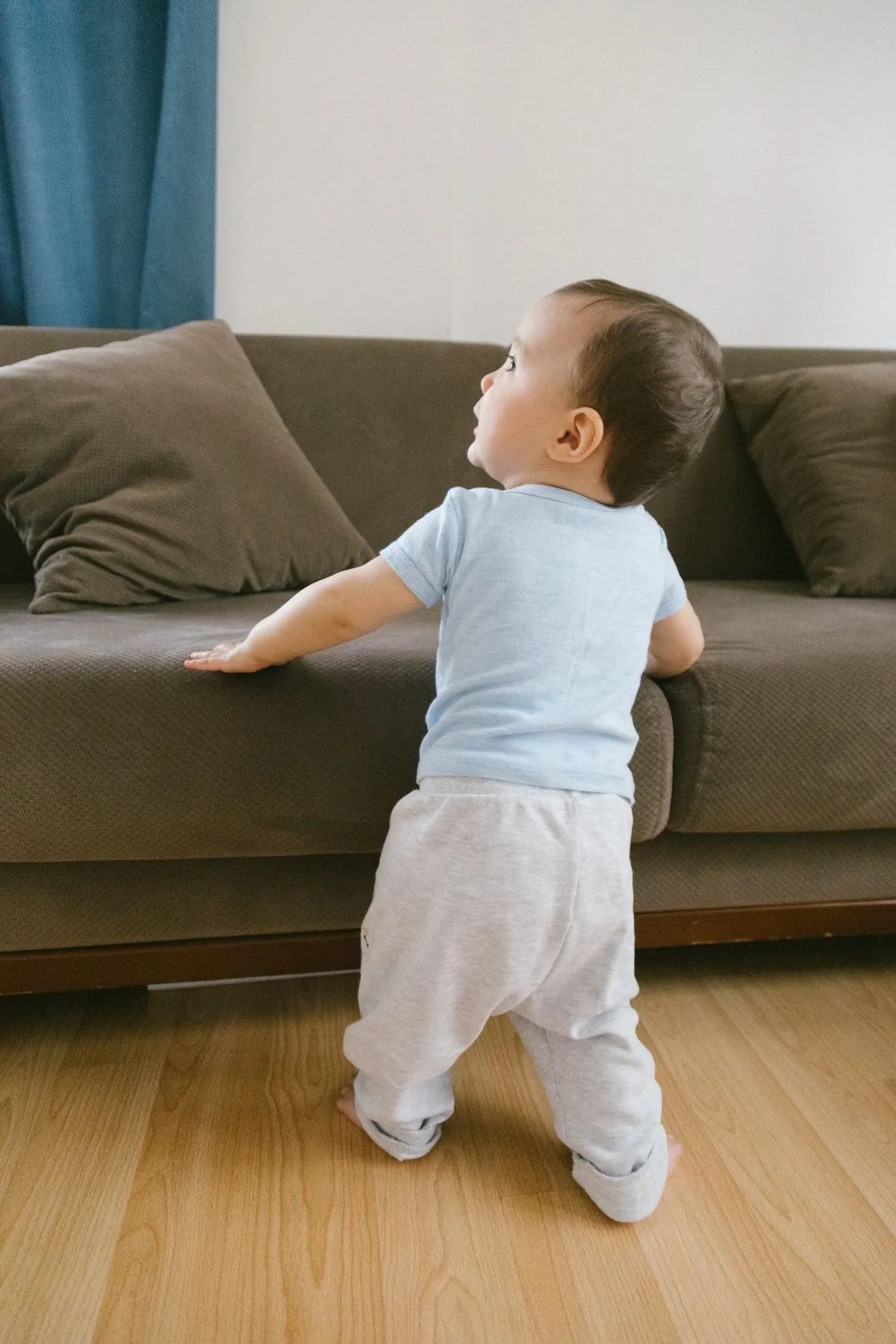
Furniture gets serious attention a little later. By 12 months, the milestone checklist from the Centers for Disease Control and Prevention (CDC) includes pulling up to stand and walking while holding on to furniture. That’s the stage when the coffee table turns into a handhold and the bookcase turns into something to haul on, which is why anything top-heavy should already be anchored by then.
 Save
How to babyproof your home, in order of priority
Work in three passes. Before your baby crawls, handle tip-overs, stairs, poisons, batteries, cords and water; when they pull up, check furniture and floors at their height; when they climb, move chairs and secure windows.
At Moje Montessori, we sort babyproofing by what your child can do this month, because every new skill opens up a new part of the house. The table runs in that order. If your toddler is already running laps around the kitchen island, start at the top anyway and work down.
The Why column is there so you can explain each row to anyone who asks, your partner included. Each reason comes from a published source: the U.S. Consumer Product Safety Commission (CPSC), pediatric guidance or a peer-reviewed study.
| Stage | Do now | Why | Go deeper |
|---|---|---|---|
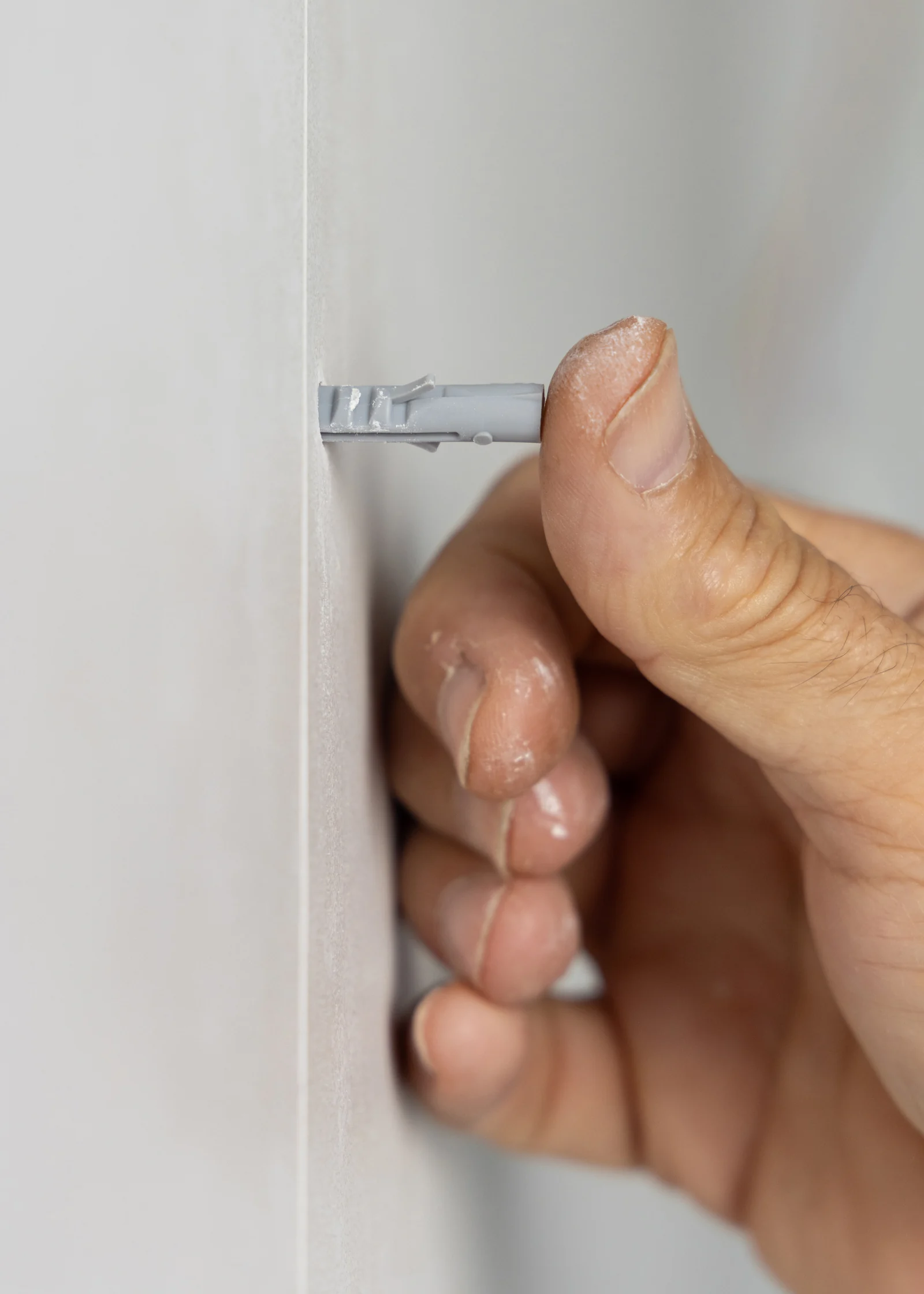
| Before crawling | Anchor dressers, bookcases and the TV to the wall | Kids under 18 make up 22% of the population and 44% of ER-treated tip-over injuries (CPSC, 2020–2022 average) | How to anchor furniture |
| Before crawling | Gates at the top and bottom of stairs, firmly mounted to the studs; skip accordion-style gates, which can trap an arm or neck | AAP ties gates to crawling and walking. In a 2014 study of gate-related ER visits through 2010, 60.4% of the kids were under 2, and the under-2s were most often hurt in falls down stairs after a gate gave way | Choosing a stair gate |
| Before crawling | Medicines, supplements and cleaners up high, out of sight, ideally behind a lock or latch | About 100 young children a day end up in the ER after getting into medicines, and gummies can look like candy (CDC) | Kitchen section below |
| Before crawling | Know which gadgets run on button batteries, round up loose magnets, and save 1-800-498-8666 in your phone | A swallowed button battery is an emergency: Poison Control says to call right away, before any symptoms | Button batteries and magnets |
| Before crawling | Go cordless on blinds and shades in the rooms your child uses | CPSC: cords can strangle a child in moments, often silently; cordless coverings are the only option that removes the hazard | Cordless blinds and window safety |
| Before crawling | Give water its own plan, starting with the bathroom | CDC: more children ages 1 to 4 die from drowning than from any other cause | Bathroom section below |
| Pulling up (around 12 months) | Tug on every piece of furniture at hand height and anchor or move whatever wobbles; sweep the floor from your child’s eye level for coins, buttons and pills | CDC milestones: pulling up and walking while holding furniture by 12 months. AAP: small things on the floor can cause choking or poisoning | Floor check below |
| Climbing (1 to 2 years) | Move chairs away from counters, tables and windows; open windows from the top if you can, and if you must open them from the bottom, add window guards only an adult can open | AAP: kids this age start to climb and don’t understand danger yet; a window screen isn’t strong enough to stop a fall | Covered in the blinds guide above |
| Once you see what they reach | Outlet covers, latches on the rest of the cabinets, corner guards if you want them | Easier to buy the right ones after you’ve watched where your child actually goes | Gear section below |
The accountant in me keeps rereading the first row. Kids are a little over a fifth of the population and close to half of the tip-over injuries that end up in the ER, according to the CPSC’s 2023 tip-over report. That’s twice their share, and it’s why anchoring sits at the top of the list.
Two rows go wrong fast and quietly, so they get a box of their own.
If you think your child has swallowed a button battery, call the National Battery Ingestion Hotline at 1-800-498-8666 or a poison center at 1-800-222-1222 right away. Poison Control says not to wait for symptoms.
Window cords can strangle a child in moments, even with an adult nearby, and the CPSC warns it’s often silent. Cordless blinds and shades are the only option that removes that hazard.
Start at the top and stop at the row your child is in right now. Everything below it can wait until they get there, and trust me, they’ll let you know when that is.
Babyproofing a Montessori home: safety first, freedom after
A Montessori home puts the house at your child’s height on purpose, so babyproofing comes first: low shelves and open access only work once everything within reach is safe to grab.
The American Montessori Society (AMS) calls order and independence fundamental to the approach, and its ideas for Montessori at home are simple. Fewer toys. Open shelves at your child’s eye level. Child-sized furniture. A welcome in the kitchen.
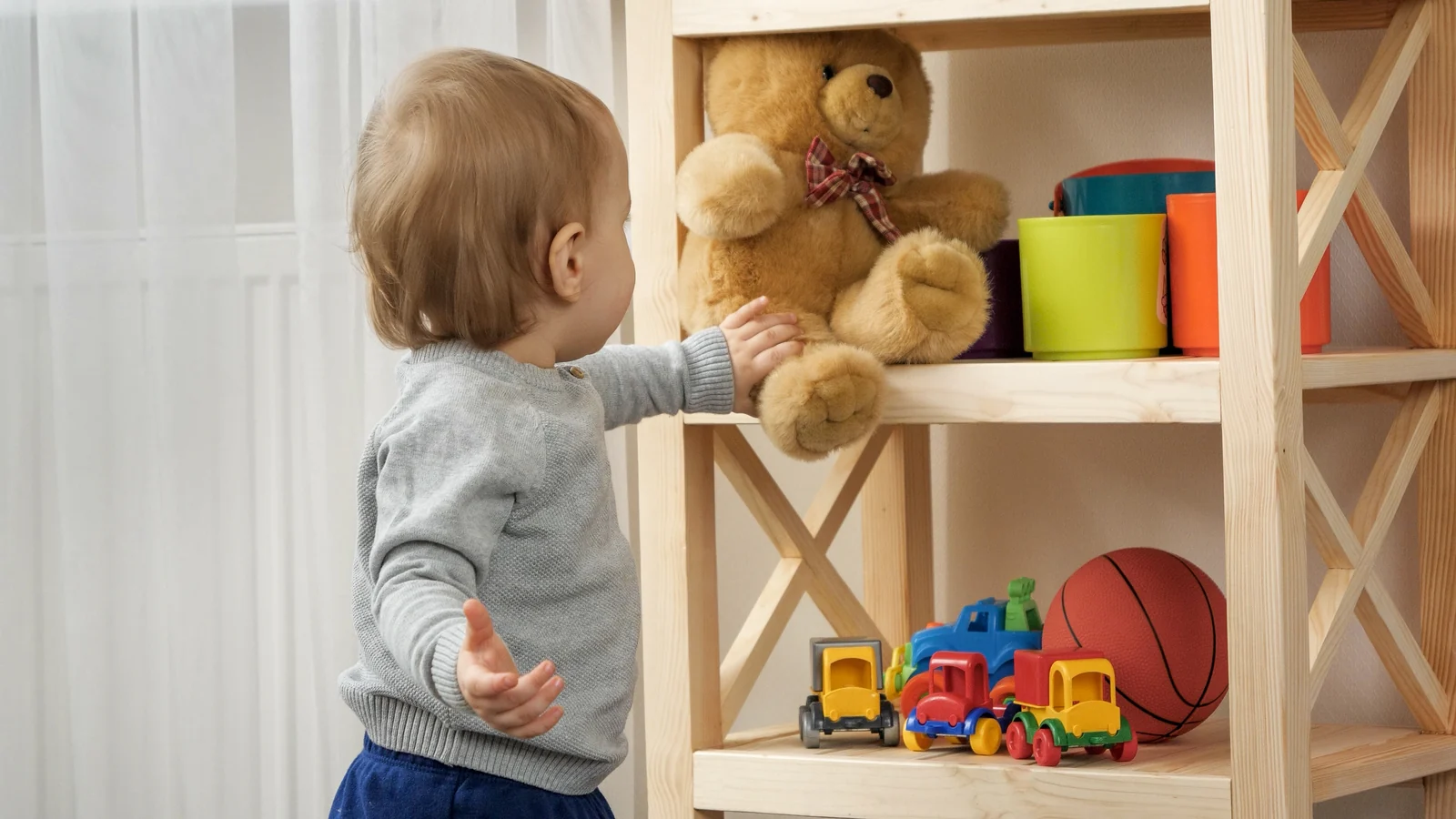
Read that list with babyproofing eyes and you’ll notice that every item puts more of the house within reach. That’s why safety has to come first in a Montessori home. A low, open shelf only says “help yourself” when the shelf is anchored and everything on it is safe for small hands. Once that’s true, you get the freedom of movement you were after, and you can stop hovering.
Montessori has a name for all this groundwork: the prepared environment, which is a space set up so your child can do things for themselves. Babyproofing is the part of that preparation nobody photographs.
 Save
The easiest way to put this into practice is a yes space, a room or corner where everything within reach is safe, so you can say yes far more often than no. I wrote a full guide to setting up a yes space. If you’re welcoming your toddler into the kitchen the way the AMS suggests, a learning tower brings its own safety checks, and the rest of the house is mapped out room by room in the Montessori playroom guide. The toys themselves are a separate safety question, starting with safe toys for newborns.
Case: How Ashley Yeh made yes spaces at home
Ashley Yeh, a Montessori-at-home creator who runs the YouTube channel Hapa Family and wrote the book The Montessori Home, walked viewers through her own babyproofing in a 2020 home tour. She describes a yes space as a safe area where a child can explore without a parent hovering, and she lays out a choice: make a few special areas, or babyproof the whole home.
- Step 1: Decide on the scale. A couple of yes spaces, or the entire house.
- Step 2: Secure the big pieces. Major furniture that could fall over is mounted to the wall, and the outlets and cords are covered.
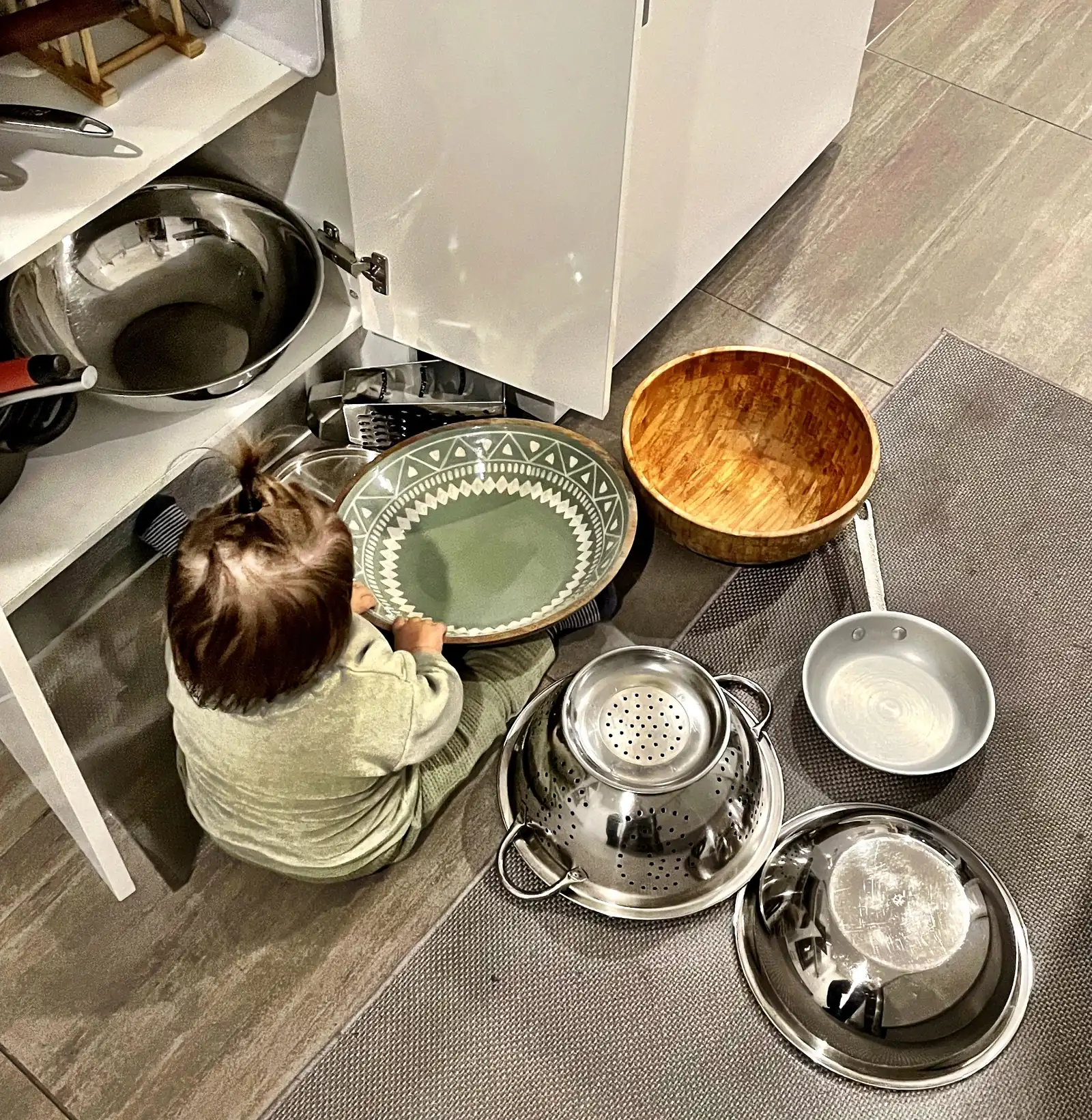
- Step 3: Lock what’s dangerous and leave one cabinet open. Cabinets with dangerous items get locks. One cabinet stays unlocked on purpose, holding plastic containers and mixing bowls for the kids.
“…the only cabinet that I do not have locked and I left it that way on purpose is this one and it simply contains just plastic Tupperware and mixing bowls”
Ashley YehMontessori-at-home creator, Hapa Family on YouTube (2020)
That one open cabinet is a lovely bit of Montessori. The locks on the others line up with what the AAP says about harmful items, and together they make a kitchen where your toddler gets a real yes.
 Save
Babyproofing the kitchen and the rest of the house
In the kitchen, start with the cabinet under the sink and wherever the medicines live, then pull chairs away from the counter. After that, give the bathroom its own plan and check the floor from your child’s eye level.
Kitchens are where the AAP’s poison advice gets the most use, and the cabinet under the sink is usually the first stop. Cleaners, medicines and supplements go up high, out of sight, and ideally behind cabinet locks or safety latches.
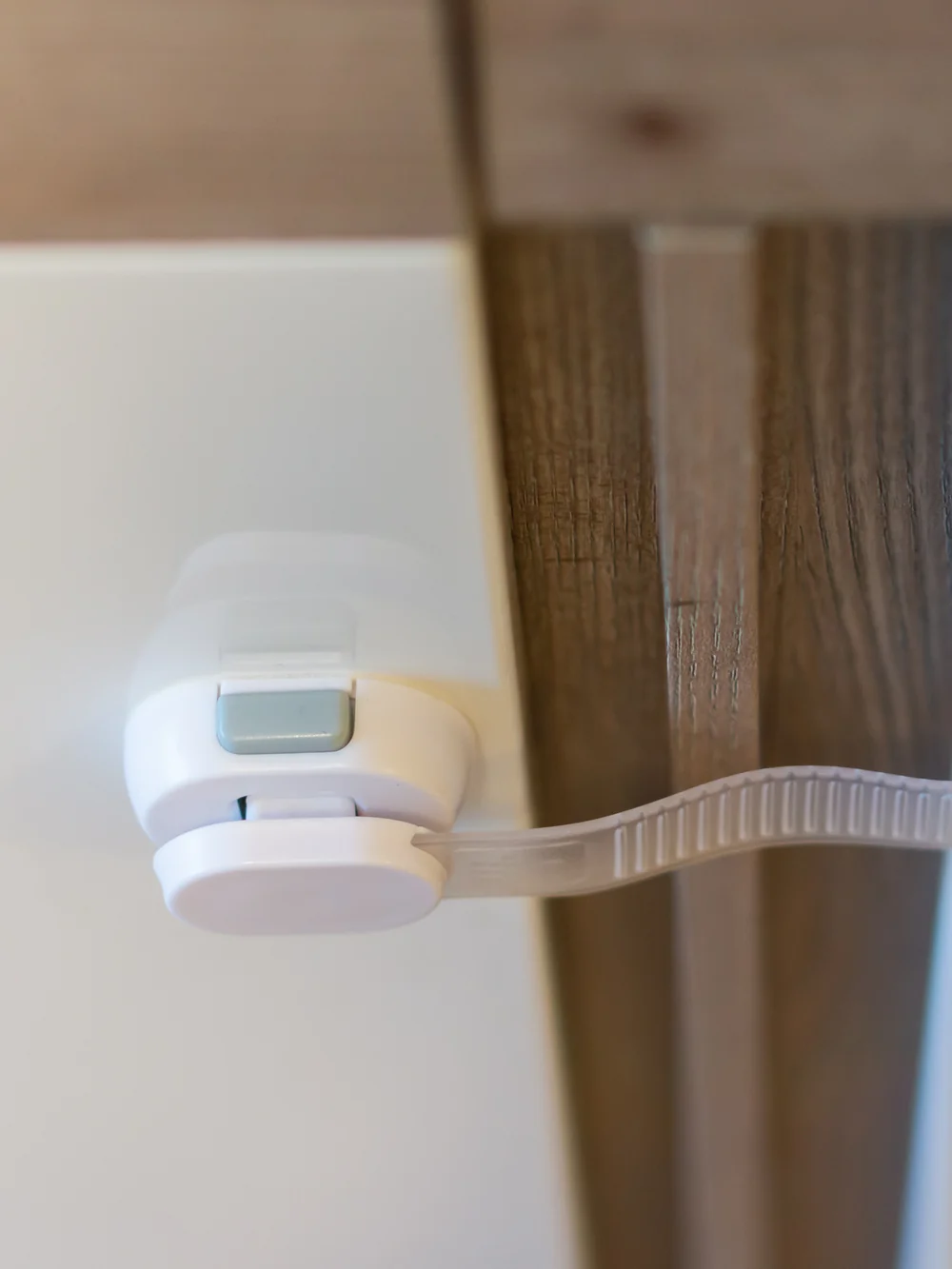
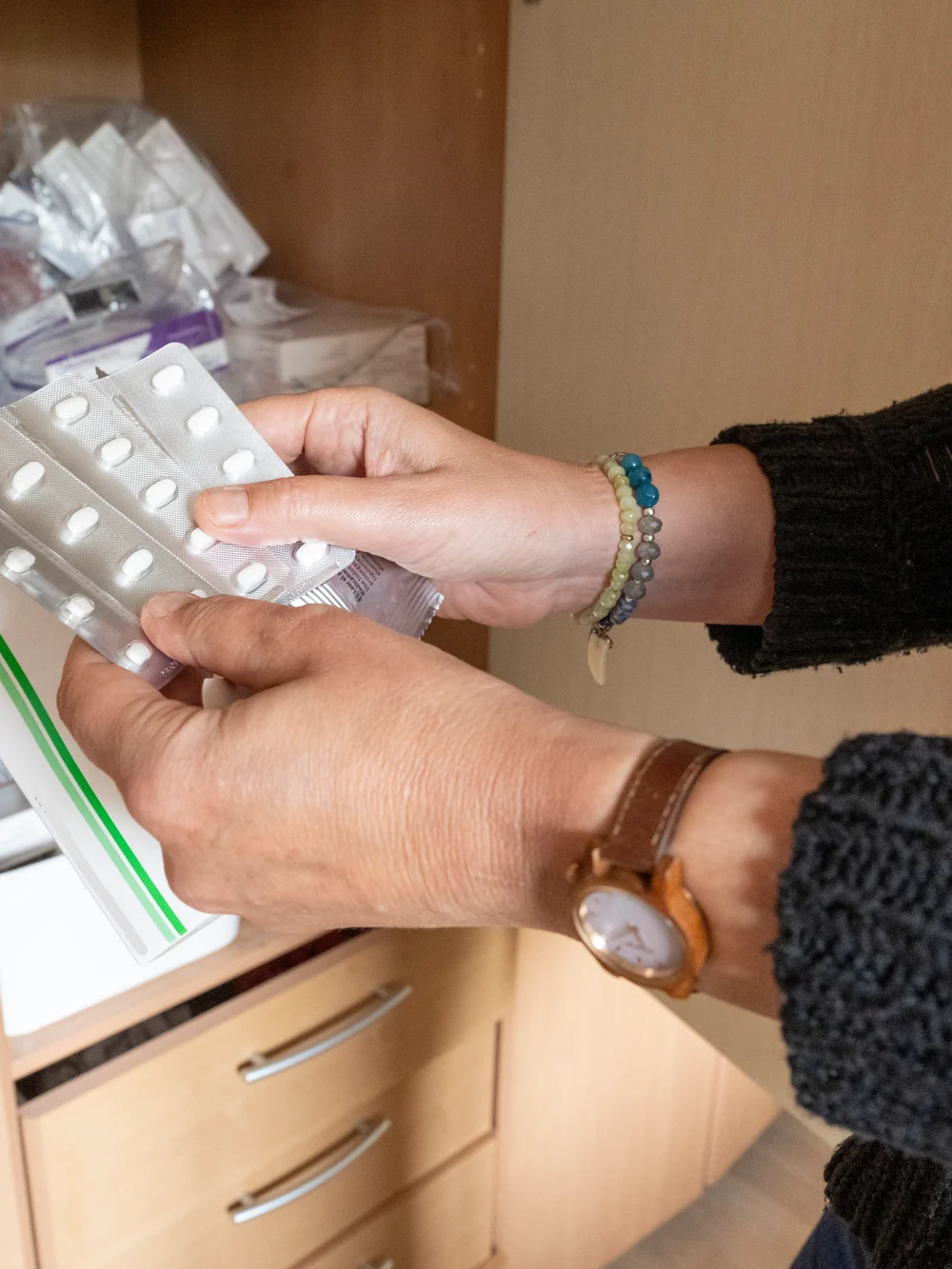
Cleaners go up high, out of sight, and ideally behind a latch. Every strip, bottle and gummy counts, so give them all one high home.
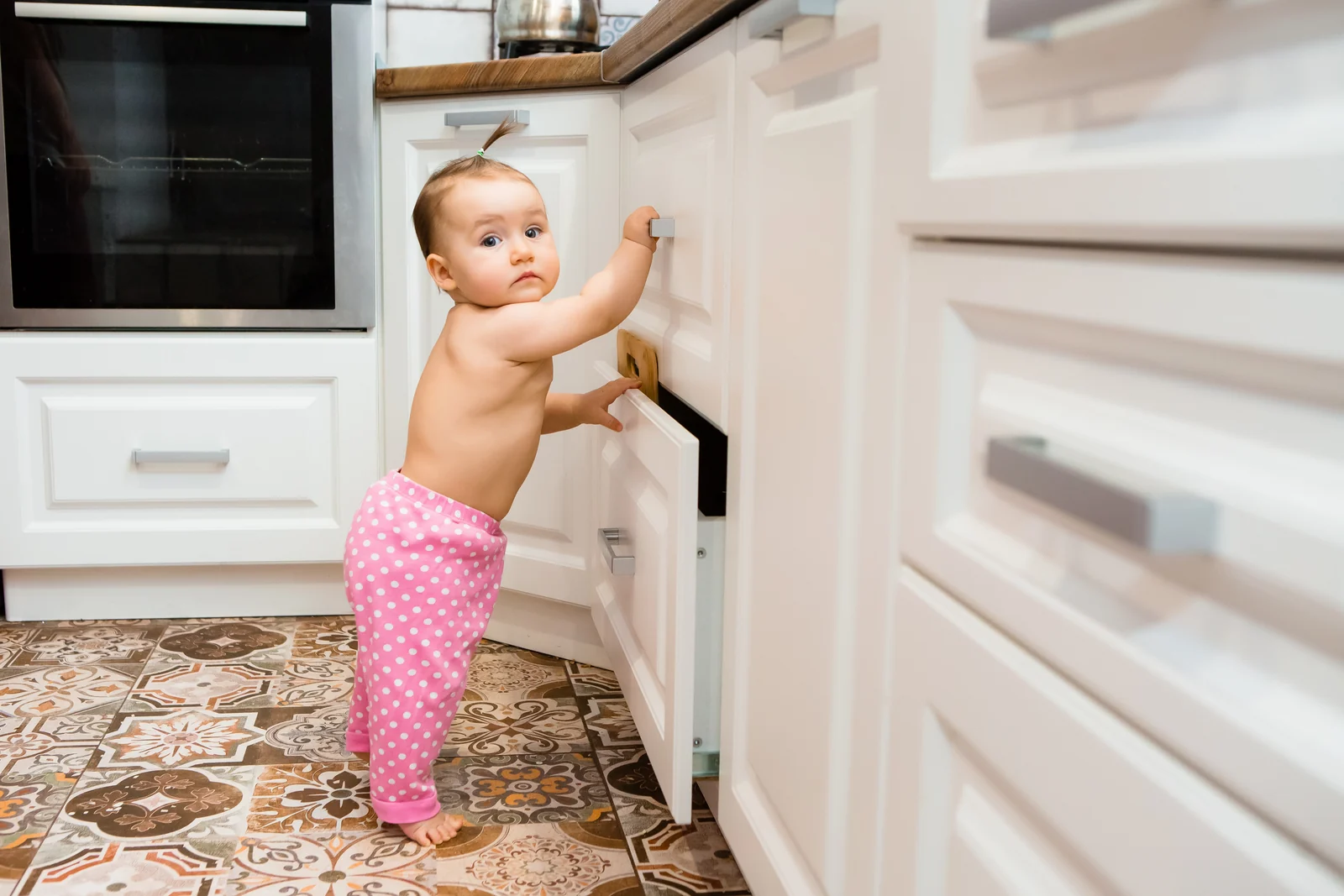
Once your toddler starts climbing, watch where the chairs end up. The AAP points out that at 1 to 2, a chair left next to a counter, table or window lets your child climb somewhere dangerously high, and a child that age doesn’t understand what’s dangerous yet. Push the chairs in, or move them, after every meal. Outlet covers and latches for the rest of the cabinets come next, in the rooms your child actually spends time in.
Bathrooms need their own plan. More children ages 1 to 4 die from drowning than from any other cause, according to the CDC. In its 2018–2019 data on children’s accidental-injury deaths, drowning led the list for that age group in urban areas. The steps for the tub, the toilet and everything in between are in the room-by-room babyproofing checklist.
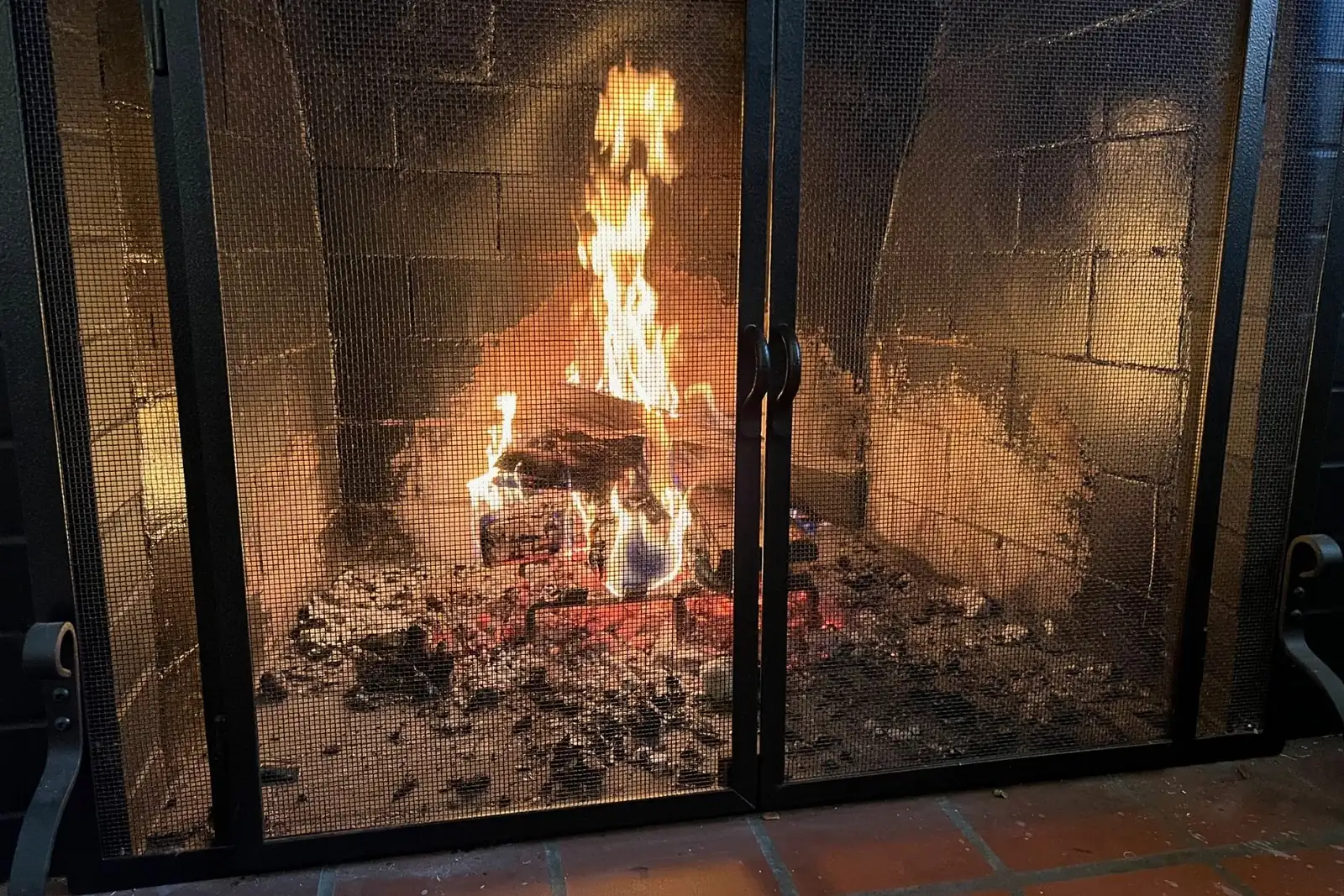
If you have a fireplace, the glass front on some models, gas ones included, can get hot enough to burn. The FAQ below covers what to do about it.
 Save
Then there’s the floor. Once a day, get down at your child’s eye level and look. The AAP suggests exactly this for spotting coins, beads, buttons, pins and pills, which can cause choking or poisoning, and it matters even more when an older sibling has small toys or someone in the house has a hobby with tiny parts.
Latches and supervision work as a pair. The AAP notes that most poisonings happen when parents or caregivers are home but not paying attention. Nobody watches every second, and that one minute you turn to answer the door is exactly what a latch is for.
When one of you thinks babyproofing is overkill
When you and your partner disagree, lock in the before-crawling rows of the table together, since those have the strongest reasons behind them. Past that, how far you go is your household’s call, and a closed door can be part of the deal.
My husband and I didn’t agree at first. I wanted everything drilled in and latched, so we’d have a proper Montessori yes space. He wasn’t keen on putting holes in every wall, and he figured a few small bumps, plus a grown-up keeping an eye out, would cover most of it. He didn’t see the point of turning the house into a fortress.
Where we landed: the rooms our son Will lives in get everything. His bedroom and the living room are babyproofed as far as we could take them, with the furniture bolted to the wall. The grown-up rooms, our bedroom and the office down in the basement, have no latches at all. The deal is that those doors always stay closed, so Will can’t wander in on his own.
A closed door counts as babyproofing, as long as it stays closed.
If you’re having this conversation at your house, the table above is a good place to start, because the reasons in it don’t depend on who worries more. Settle those rows, then go room by room, starting with the rooms your child spends the most time in.
 Save
What babyproofing gear can wait?
Babyproofing gear can wait when it guards against something your child can’t do yet. Latches for cupboards they can’t reach and gadgets for rooms they never go in can stay in the store until your child shows you otherwise.
The babyproofing aisle is long, and a big starter kit can feel like a way to handle everything in one trip. Most of it is easier to buy well once you’ve watched your child for a while. Watch first, then buy. Your toddler will show you what to latch next: the trash can, the pantry, the drawer with the takeout menus.
For what’s actually worth buying, and the mistakes that are easy to make, see the guide to babyproofing essentials. Hand-me-downs get a different check, whether they’ve been recalled, so it helps to know how to look up toy recalls before anything from storage goes back into use.
 Save
The short list is what keeps your child safe this month. Keep it somewhere you’ll see it, and add a line each time they learn a new move.
Frequently Asked Questions
How do you babyproof a fireplace?
To babyproof a fireplace, start with the glass. The AAP’s fireplace safety tips warn that the hot glass front of some fireplaces, gas fireplaces included, can burn a child, and that a safety screen can reduce the risk. If you leave the room while the fire is burning or the fireplace is still hot, take your child with you.
How do you babyproof a Christmas tree?
To babyproof a Christmas tree, start with the fire and gift basics in the CPSC’s holiday safety tips: water a live tree, look for the “fire resistant” label on an artificial one, string together no more than three sets of incandescent lights, and don’t overload outlets. With gifts, keep balls and small-parts toys away from kids under 3, and toss plastic wrapping as soon as the gifts are open. Those tips don’t cover a toddler tugging on the tree itself, so keep an eye on what your child can reach.
How do you babyproof a home?
The simplest way to babyproof a home is to follow the order your child moves in. Before crawling, anchor heavy furniture, gate the stairs, lock up medicines and cleaners, round up button batteries and magnets, go cordless on blinds, and plan for water. As they pull up and climb, check furniture, floors, chairs and windows. The rest can wait until you see what they reach.
Conclusion
If you’re in the thick of the climbing stage, the whole house can look like one long list of things to fix. You don’t have to fix it all this weekend. Pick one row from the before-crawling part of the table, maybe the dresser in the room your child plays in most, and do just that one today. The rest can follow your child, one new move at a time.
Anchor one dresser today and call it a win. Your toddler will keep climbing, and you’ll already be a step ahead of them.
Miri
Fewer toys, deeper play.
Further Reading & Resources
See all 15 sources
- Home safety, American Academy of Pediatrics (AAP): Home Safety: Tips for Families With Young Children (updated 2022) · Childproofing Your Home for Poisons (updated 2021)
- Toddler safety and fireplaces (AAP): Safety for Your Child: 1 to 2 Years (updated 2022) · Fireplace Safety Tips (updated 2020)
- Injury data: Facts About Drowning (Centers for Disease Control and Prevention, CDC) · Urban–Rural Differences in Unintentional Injury Death Rates Among Children Aged 0–17 Years: United States, 2018–2019 (CDC National Center for Health Statistics, 2021) · Product Instability or Tip-Over Injuries and Fatalities Associated with Televisions, Furniture, and Appliances: 2023 Report (U.S. Consumer Product Safety Commission, CPSC, 2024) · Baby gate-related injuries among children in the United States, 1990-2010 (Academic Pediatrics, 2014)
- Products, medicines and holidays: Window Covering Cords (CPSC) · Safety tips for button batteries (Poison Control, National Capital Poison Center) · Up and Away campaign resources (CDC) · Don’t Be Left Out in the Cold This Holiday Season with Unsafe Presents (CPSC, December 2025)
- Milestones and Montessori: Important Milestones: Your Baby By One Year (CDC) · Montessori at Home (American Montessori Society, AMS)
- Real parents: MONTESSORI AT HOME: Creating “Yes” Spaces (Babyproofing for Safety) (Ashley Yeh, Hapa Family on YouTube, 2020)