
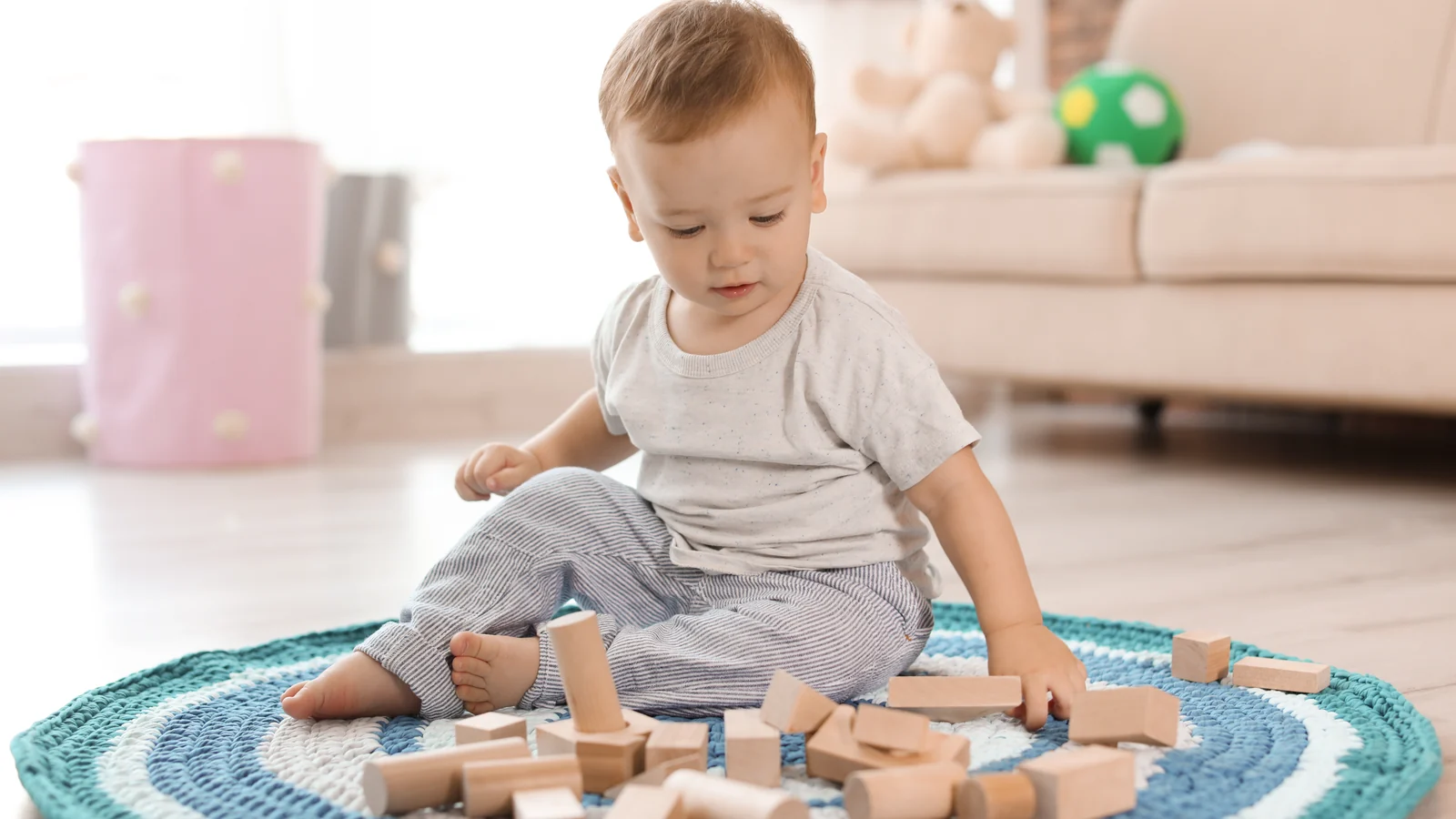
Our TV turns itself off after the second episode of Trash Truck. Will gets up off the rug and goes looking for something else to play with. Nobody bargains for one more, and nobody ends up face-down on the floor.
I’d love to take the credit. Some of it is just Will’s temperament, some of it is that the limit is the same every day, and he still has hard days like any 3-year-old.
We use the TV, and I’m not embarrassed about it. I’m pregnant with Jimmy, and on weekday afternoons a show is what lets me start dinner or rest my back. If you lean on it more than you’d like, you’re in good company. One mom in r/toddlers recently described it well: home with her toddler, a partner working 70-plus hours a week, no village to call on, and guilt every time the TV goes on, even as she leans on it more.
When Will was a baby, our days ran on the EASY routine, and I still plan a toddler’s day in blocks: before dinner, during a call, the long stretch after nap. The ideas below are sorted that way. Then come how to end a show without a fight and the guidelines by age, which have changed.
Screen-free activities for when you’re cooking dinner
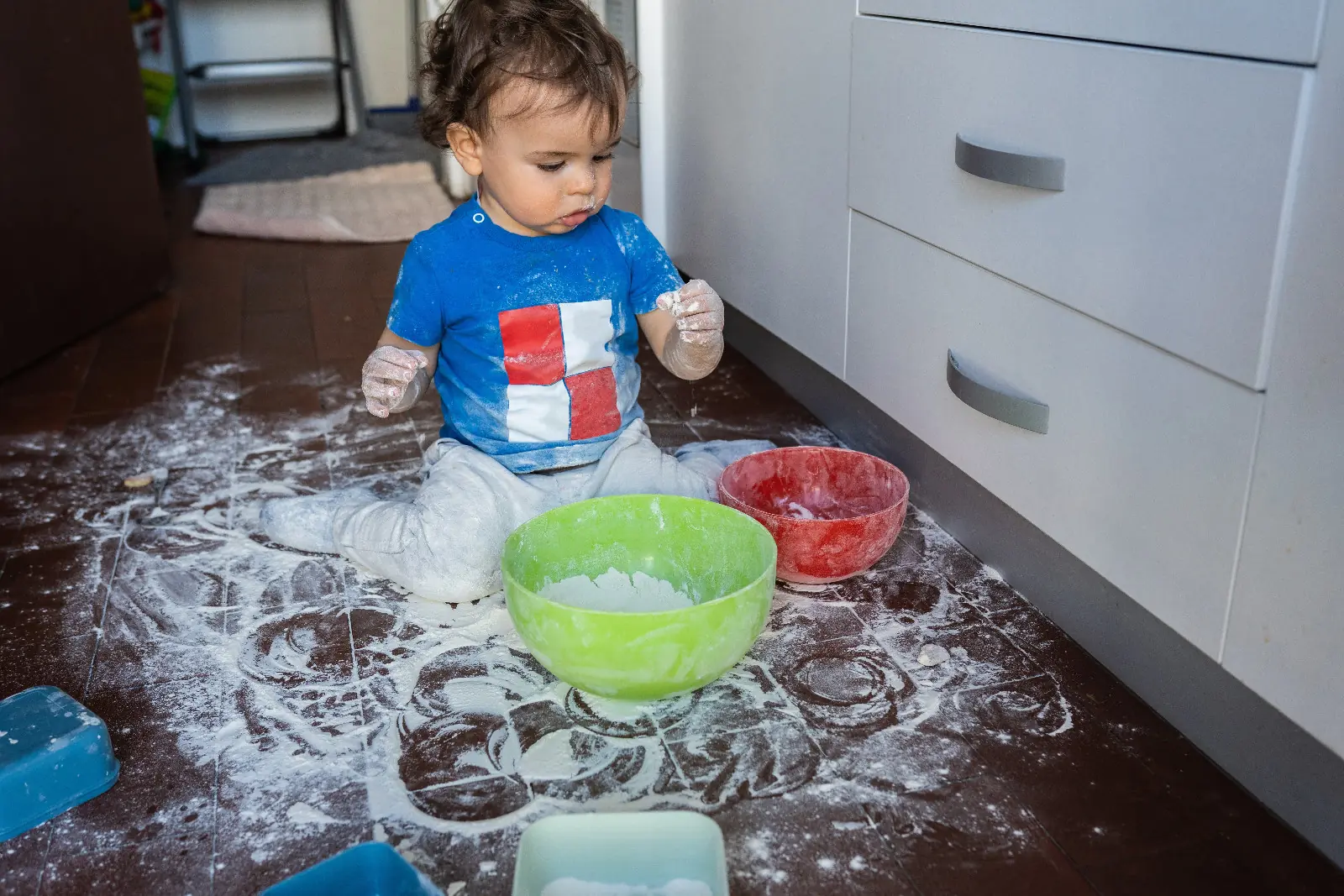
Give your 2-year-old a job you can see from the stove. A big bowl of dry pasta with a ladle and two cups, with music playing, is one screen-free parents actually use for the dinner rush.
The best no screen time activities for 2 year old kids at dinnertime are the ones you can set up with one hand. The pasta idea comes from a screen-free parent in r/toddlers who sets out dry pasta in a bowl with a few cooking utensils. It costs almost nothing, and a song you can both sing keeps you connected without leaving the pan.
Dry pasta is food, so expect it to get tasted. The U.S. Consumer Product Safety Commission (CPSC) treats anything that fits completely inside its small-parts cylinder as a small part, and that cylinder is sized like the fully expanded throat of a child under 3. I’d pick the biggest shape in the pantry, keep the bowl in sight, and put it away on the spot if pieces keep heading for their mouth. You can try again in a few weeks.
 Save
If your toddler would rather be up at the counter with you, cooking with a toddler has real jobs for small hands.
What keeps a 2-year-old busy during a work call?
Pull out a set of toys your toddler doesn’t see all day, check the floor for small bits, and sit close enough to keep an eye on them. That setup once bought me most of a 30-minute call.
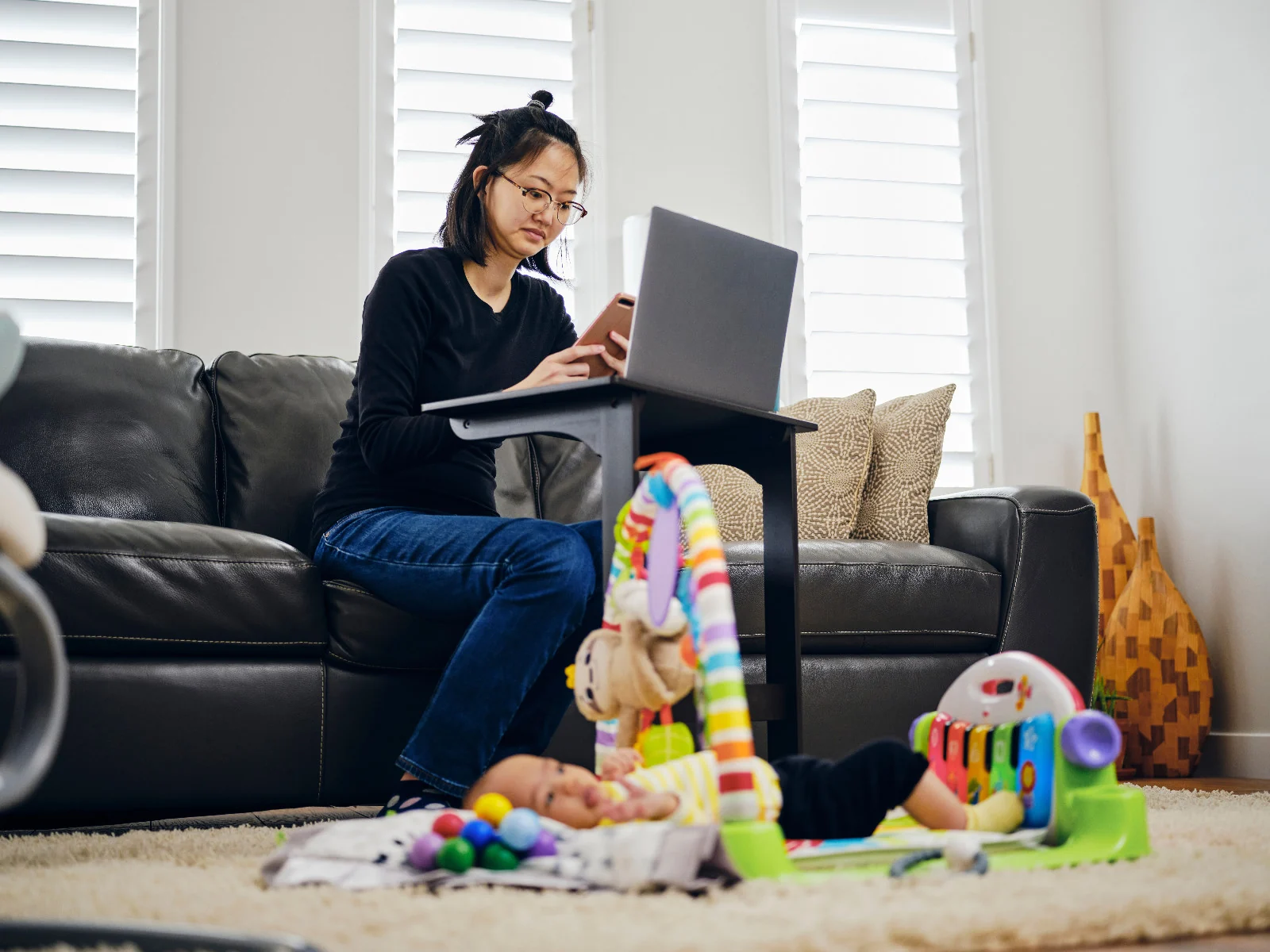
I work freelance from home, so calls land right in the middle of Will’s day. When one comes up, I get out a set of toys I keep separately in a cupboard. Will plays on the living room rug, and I sit at the dining table nearby. In early November I had a 30-minute Zoom call with a client, and Will built a dinosaur enclosure by himself for close to 25 minutes before running over to tug my shirt and show me. That was one call on one good day, and I don’t plan around 25 minutes.
 Save
Magnetic tiles are in our call set, and they come with a rule. Every night at cleanup, I run my eyes and fingers over each tile, and anything cracked or split at the edge goes straight in the trash. The reason is in my post on button batteries and magnets.
Sweep the rug before you sit down, too. The American Academy of Pediatrics (AAP) lists coins, marbles, pen caps, button batteries and toys with small parts among household choking hazards, and suggests checking under furniture and between couch cushions. You’ll be staring at a screen for half an hour, so do the looking first.
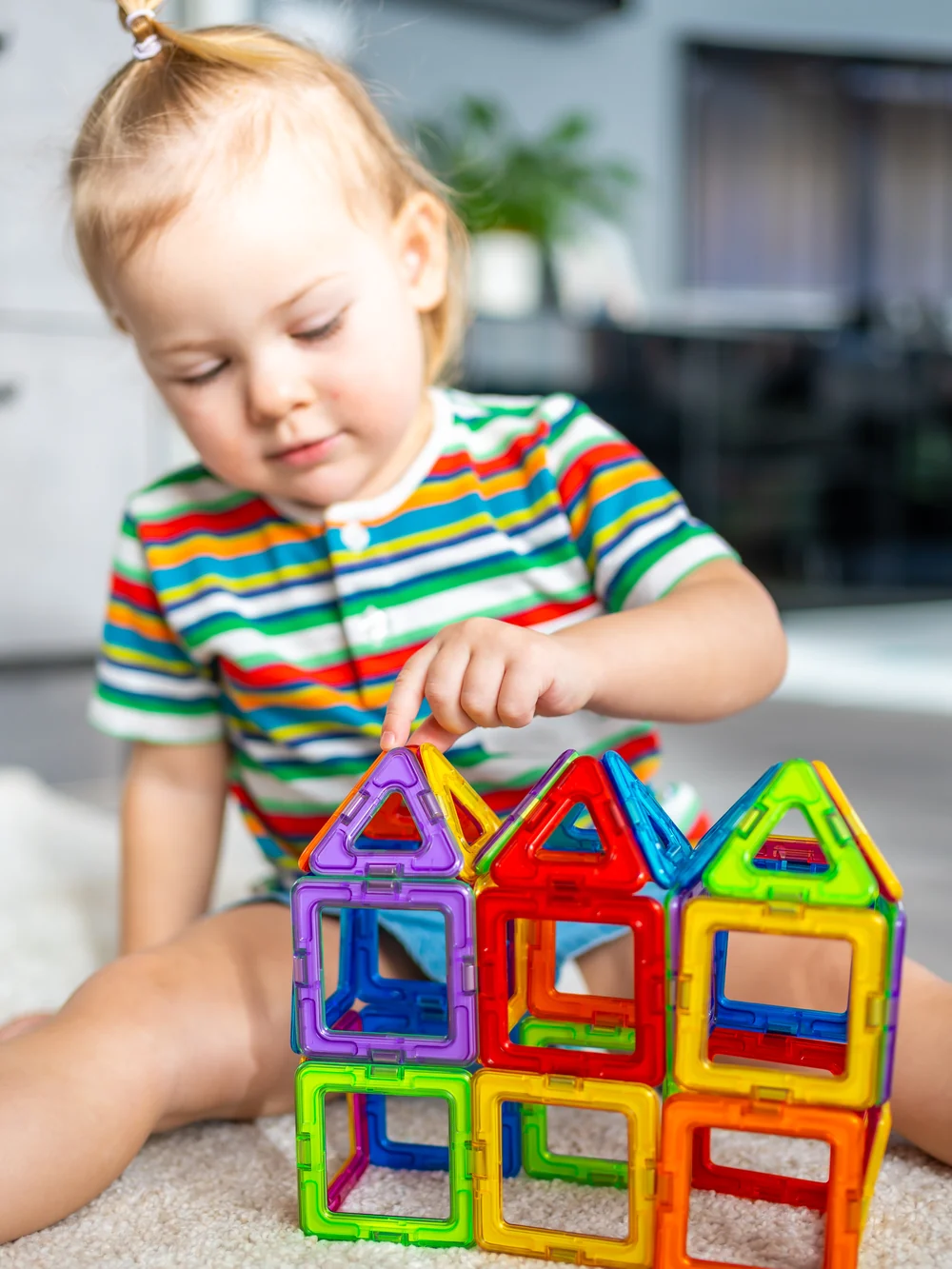

At cleanup, run your fingers over each magnetic tile and toss any that are cracked. A couple of big toy dinosaurs can turn one rug into a whole prehistoric zoo.
Two more ideas from screen-free parents on Reddit fit a call: get a toddler started with building bricks and quietly leave the room (for a 2-year-old, the bigger bricks made for under-3s), or put on an audio story player, low enough to stay off your call.
Keep an “emergency” set in a cupboard that comes out when a call does. Ours is magnetic tiles, a few model dinosaurs and some stickers for decorating a cardboard box.
Miri’s Tip
How do you entertain a 2-year-old without screens all afternoon?
Movement first. The World Health Organization (WHO) says kids aged 1 to 2 should get at least 180 minutes of physical activity a day, at any intensity and spread across the day, so a long afternoon is a good place to bank some.
If you’re wondering how to entertain a 2 year old without screen time from nap to dinner, that number helps. Three hours sounds like a lot until you count what qualifies: a slow lap around the block, climbing on and off the couch, chasing a ball across the yard.
When screen-free parents compare notes in r/toddlers and r/Mommit, the afternoon fixes are humble: a long walk with nowhere to be, a song loud enough to dance to. On days Dom has Will on his own, he skips the indoor toy trays and takes him out to the yard or the park to run.
 Save
Snow keeps some of our Colorado afternoons indoors. For those days, the indoor activities for toddlers list is sorted by how many minutes you have.
When the energy finally runs out, the WHO has a suggestion for sitting-still time, too: reading and storytelling with a grown-up.
 Save
What can you do instead of screen time when you can sit beside them?
Save the messy, fiddly activities for when you can sit on the floor too: stickers on a cardboard box, water poured between cups, ice cubes to chase around a tub. Those are the ones that need you right there.
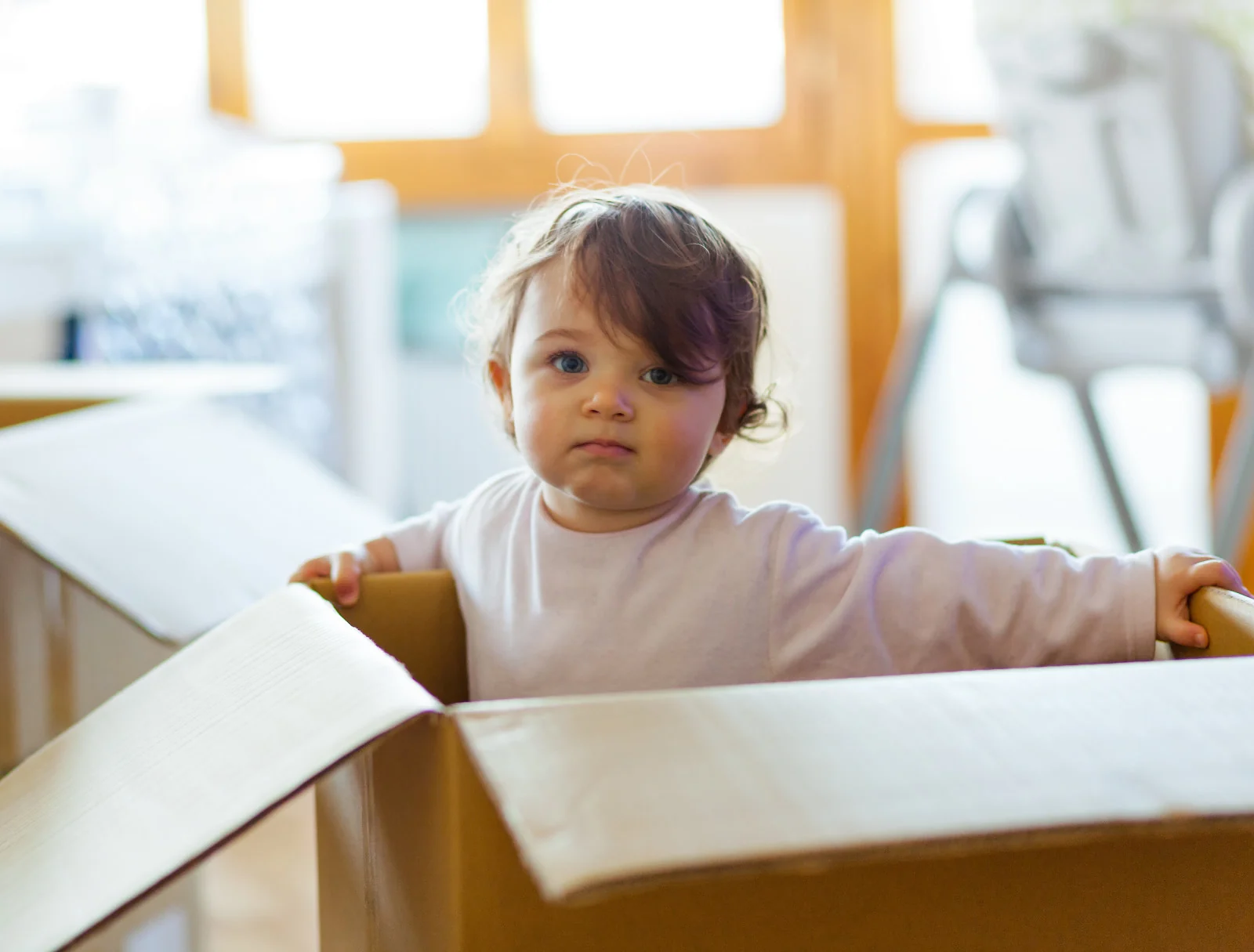
What activities can be done instead of screen time? Plenty, once you have a free half hour, and a lot of them are finger work in disguise. Peeling a sticker off its sheet takes patience and two hands. A big cardboard box can be a car in the morning and a sticker canvas by lunch.
 Save
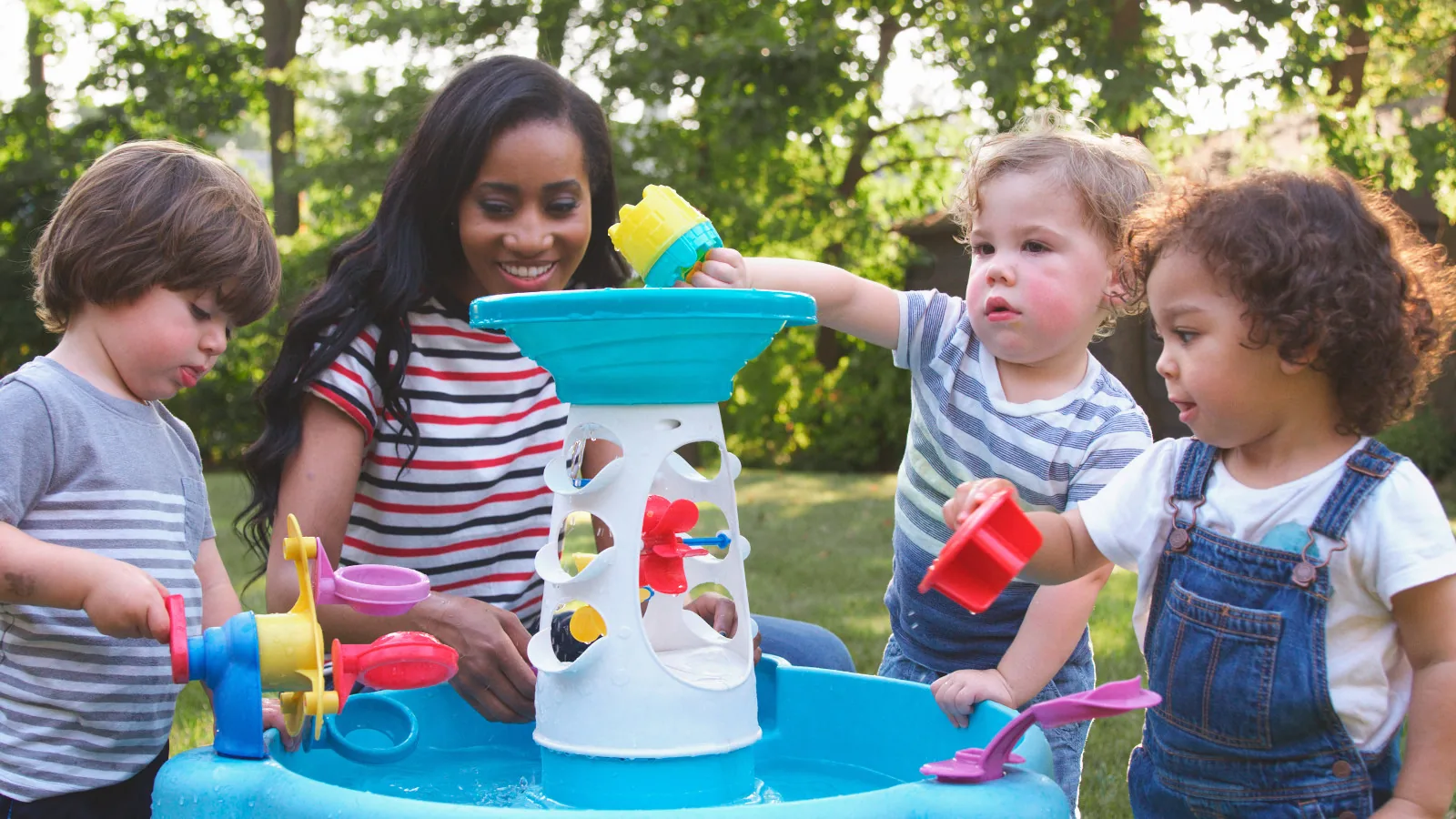
Water is the easy sensory pick. Screen-free parents on Reddit swear by bath-time play with ice cubes, and a shallow tub with a few cups on a towel works on a weekday, as long as you’re sitting right beside it.
 Save
Water play means you’re sitting right there. The AAP says babies can drown in as little as 1 or 2 inches of water and should never be left alone in or near water, not even for a moment, and its bathroom page (2017) gives young children in the bath the same rule. If you have to get up, dump the water first.
Choking is the other reason to stay close. The AAP says most children who die from choking are under 5, and small round objects like balls, marbles, and pieces of toys and food cause the most choking deaths. Keep toys with parts that fit the CPSC’s small-parts cylinder away from under-3s.
Screen-free activities by age
There’s no official chart that says which activity fits which month, so treat this table as a rough starting point. Watch first, then offer: what your toddler does with a pot and a spoon tells you more than any age label. One rule runs through every row, and it comes from the CPSC’s definition of a small part.
| Age | Things to try | Keep in mind |
|---|---|---|
| 12 to 18 months | A pot and a wooden spoon, a basket of big blocks to fill and dump, a walk outside | Toys made for under-3s only; nothing that fits inside the small-parts cylinder |
| 18 to 24 months | Dancing to music, big building bricks, scooping dry pasta with you beside them | Same small-parts rule; pasta and ice cubes only with you sitting there |
| 24 to 36 months | Magnetic tiles, toy dinosaurs, a cardboard box and stickers, long walks | Same small-parts rule; check magnetic tiles for cracks at cleanup |
If a row feels too young or too old for your child, move a line up or down.
Car rides, waiting rooms and other “screens are fine” moments
Long drives and flights are where pediatric advice eases up. The AAP’s 2026 policy statement says a tablet can be appropriate for occasional long road trips, plane rides or tough medical procedures.
A 2024 AAP page for parents of toddlers and preschoolers agrees: keep screens for regular times of day, or for a long car, bus or plane ride. Waiting rooms aren’t on either list, so I’d pack a sheet of stickers and a small board book and see how far they get you before the phone comes out.
 Save
Video calls with grandparents sit in their own category. The AAP’s 2026 statement says video chatting can give children back-and-forth interaction, so I count a call with Grandma as a conversation that happens on a screen. Outside of calls and long drives, the ideas above can carry most of a 2-year-old’s day.
How do you move a toddler off a screen without a meltdown?
Decide where the show ends before it starts, give a heads-up a few minutes out, and have the next thing already waiting. An ending that’s the same every day leaves less to argue about.
If you’ve been asking how do I reduce screen time for my 2 year old, I’d start with the ending, since that’s where a show turns into a standoff. The first step is how we do it at home, and the rest is what I’d add, mostly from the guidelines and other parents.
- Pick the stopping point first. Ours is one or two episodes, then the TV switches itself off.
- Give a warning. ZERO TO THREE notes some parents use a timer or a “5-minute warning.”
- Set out the next thing before you press play.
- Turn the TV off when nobody’s watching, as the AAP advises.
- Don’t make it the only fix. The AAP’s earlier 2016 statement warned against media as the only way to calm a child. Its 2024 toddler page adds: not every time they’re upset or bored.
- Keep screens away from bedtime. The AAP says screens go off at least an hour before bed. Our bedtime routine for a 3-year-old fills that hour.
When the TV goes dark, the next toy should already be on the rug.
Screen time guidelines by age: what the AAP and WHO say
The 2016 screen rules you’ve probably heard were revised in January 2026, and the new AAP statement lets each family set a limit, possibly under an hour a day for toddlers. For age 2, the WHO’s line is no more than 1 hour.
A lot of the confusion about screen time for toddlers comes from blending sources into one number. One answer in an r/toddlers thread puts it at 2 hours max after age 2, which none of these three sources says for a toddler. At Moje Montessori, we keep each source in its own column, so you can see the screen time guidelines by age the way each one wrote them.
| Age | AAP 2016 (earlier guidance, since revised) | AAP 2026 (current) | WHO 2019 |
|---|---|---|---|
| Under 18 months | Avoid screens other than video chatting | Babies don’t learn from digital media; an occasional brief, high-quality video isn’t harmful; video chat allows back-and-forth | Under 1: not recommended. Age 1: not recommended |
| 18 to 24 months | If you want to start, choose high-quality programming and watch together | No set number; limits can fit your family, possibly under 1 hour a day for toddlers | Age 1: not recommended |
| 2 years | Limit to 1 hour a day of high-quality programs | Possibly under 1 hour a day for toddlers and preschoolers | No more than 1 hour a day; less is better |
| 3 years | Limit to 1 hour a day of high-quality programs | Possibly under 1 hour a day for toddlers and preschoolers | Ages 3 to 4: no more than 1 hour a day; less is better |
The 2026 statement doesn’t say which ages count as “toddlers and preschoolers,” so its range sits in each toddler row.
Why two AAP columns? The journal page for the 2016 statement, Media and Young Minds, now notes that it was revised and points to the January 2026 statement, Digital Ecosystems, Children, and Adolescents. So an article quoting the 18-month and 1-hour rules is quoting the earlier guidance.
The accountant in me wanted one tidy total at the bottom of this table. There isn’t one, and a figure none of the three wrote wouldn’t help you decide anything.
Is TV bad for babies?
Is TV bad for babies? The research is calmer than the headlines. The AAP’s 2026 statement says babies don’t learn from digital media, but that an occasional brief, high-quality video, like Sesame Street, isn’t harmful.
The research I’d pay more attention to is about TV playing in the background. In a study of 329 children aged 2 months to 4 years, audible TV was linked with hearing fewer words from the adults around them (Christakis and colleagues, 2009). That’s a link, and it can’t show the TV caused it. In a small lab study of 50 children aged 12, 24 and 36 months, an adult show playing in the background shortened their bouts of toy play and their focused attention, even though they barely looked at it (Schmidt and colleagues, 2008).
So the easiest change is the one the AAP already suggests: if nobody’s watching, turn it off.
Does Montessori say no screens?
The clearest Montessori statement on screens is about classrooms. In its FAQ Screens in Montessori Classrooms, Association Montessori Internationale (AMI) says the only Montessori environment where screens should be available is an elementary class, ideally ages 9 to 12, for research and writing, and that screens shouldn’t be used in any other environment because they aren’t developmentally appropriate.
That’s guidance for schools, and it doesn’t tell a parent what to do with a 2-year-old at dinnertime. Montessori-at-home parents are candid about this part. When a r/MontessoriForHome thread asked for the least Montessori thing families do, screens came up, and people swapped notes on which shows rather than whether.
What does screen time look like in our house?
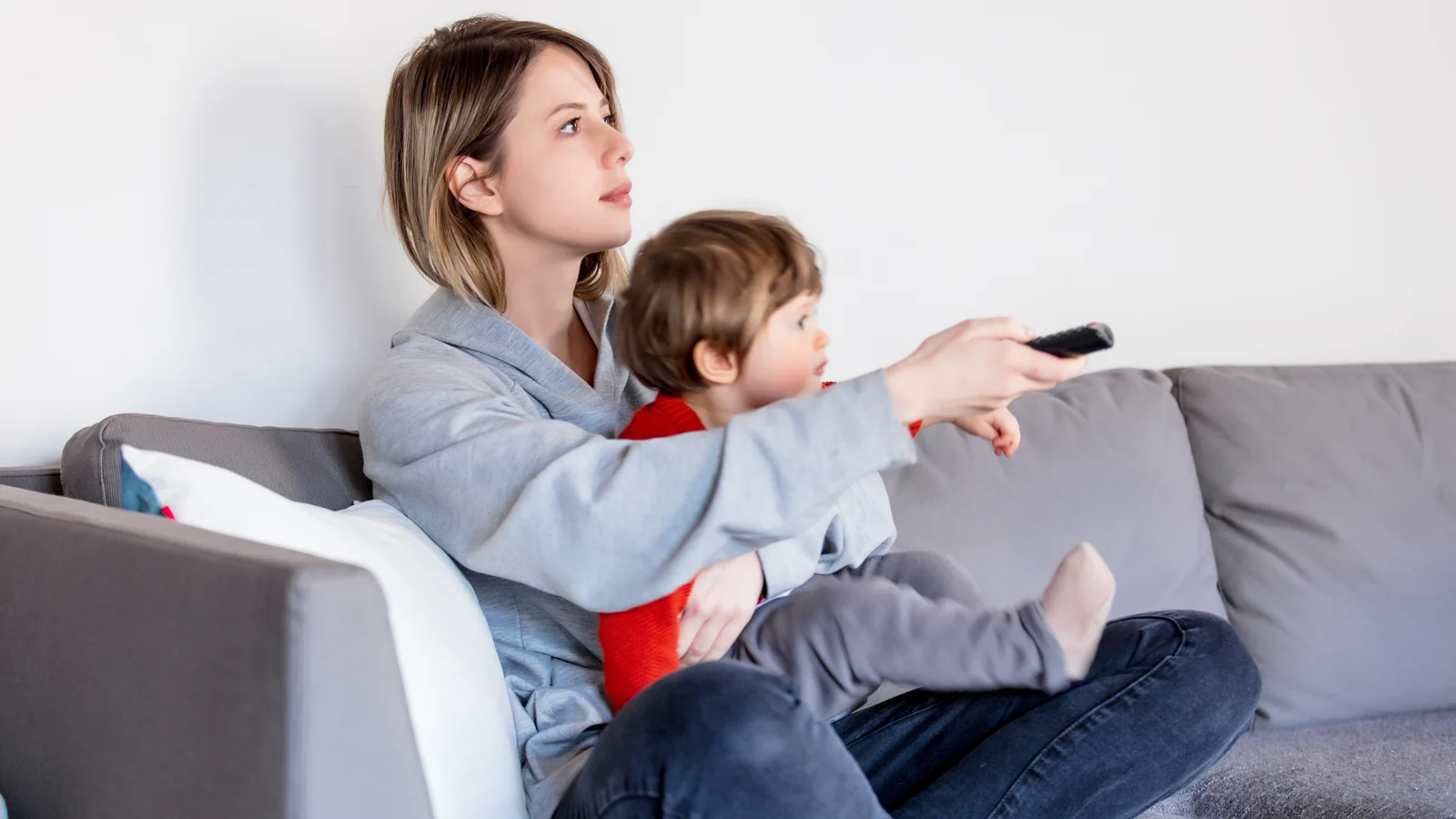
At our house, Will watches about 20 to 30 minutes a day, one or two episodes of slow, gentle shows. We watch together on weekends, and on weekday afternoons the TV is honestly a babysitter while I cook or rest my back.
Case study: one or two episodes, then off
Will is 3 now, and this is the setup we’ve landed on. It’s what works for our family, and yours may look different.
- Step 1: Slow shows only. Trash Truck on Netflix, about a boy and a giant garbage truck; Daniel Tiger, about feelings; sometimes a National Geographic nature documentary. I skip fast, loud, cut-every-two-seconds shows.
- Step 2: The same small amount. About 20 to 30 minutes a day, one or two episodes. When the TV turns itself off or I say time’s up, Will goes to find another toy.
- Step 3: Together when I can. On weekends, on the couch, talking about the animals.
- Step 4: Honest weekday afternoons. When my energy is gone, the TV is a very effective free babysitter while I cook or rest my back. I check in with Will now and then.
 Save
Why slow shows? Honestly, that’s our family’s call more than a proven rule. In a small 2011 experiment with 60 four-year-olds, those who watched a fast-paced cartoon for nine minutes did worse right afterward on executive-function tasks (the thinking skills behind focus and self-control) than those who watched an educational cartoon or drew (Lillard and Peterson, 2011). A 2015 follow-up with 4- and 6-year-olds pointed at “fantastical,” impossible events more than pacing (Lillard and colleagues, 2015). Both studied older kids, and only the minutes right after the show.
To write your own rules down, the AAP’s How to Make a Family Media Plan page (January 2026) says a plan should fit your routines and values, suggests screen-free zones like the dinner table, and links to a personalized plan tool. Our Montessori schedule for a 2-year-old shows where the show sits around meals and nap.
Whatever your numbers turn out to be, the off switch gets easier when the next activity is already waiting.
Frequently Asked Questions
Should a 2 year old have screen time?
Screen time for a 2-year-old is a family call, and every guideline keeps it small. The WHO says no more than 1 hour a day at age 2, less being better. The AAP’s 2026 statement lets families set their own limit, possibly under an hour for toddlers.
How do I reduce screen time for my 2 year old?
To reduce screen time for a 2-year-old, change one piece at a time. Make a screen-free zone or two, like the dinner table, as the AAP’s Family Media Plan page suggests. Turn the TV off when nobody’s watching, and give a heads-up before a show ends.
How can I cut back when my toddler is used to a lot?
Cutting back from a lot of screen time goes easier one time slot at a time, in my view. Start with the show you’d miss least, swap in an idea from the lists above, and expect some protest. If your toddler’s speech or behavior worries you, ask your pediatrician.
What happens if a 2 year old has too much screen time?
There’s no clear answer for what too much screen time does to a 2-year-old. One study linked audible TV with young children hearing fewer adult words, and a small lab study found background TV shortened toddlers’ play. Neither settles it. If your child’s speech worries you, talk to your pediatrician.
Conclusion
If you’re in the thick of it, with a 2-year-old, a job and dinner all landing at the same hour, a show will sometimes be the plan, and that’s okay. Two or three ideas ready for your hardest moments, and a show that ends the same way every day, will carry you a long way.
Tonight, tuck three toys into a box for your next busy moment. Getting through the late afternoon with a 2-year-old is hard, and you’re doing it.
Miri
Fewer toys, deeper play.
Further Reading & Resources
See all 22 sources
- Screen time guidelines: Digital Ecosystems, Children, and Adolescents: Policy Statement (American Academy of Pediatrics, Pediatrics, 2026) · Media and Young Minds (AAP, 2016, since revised) · Guidelines on physical activity, sedentary behaviour and sleep for children under 5 years of age (World Health Organization, 2019)
- Screens at home: How to Make a Family Media Plan · Kids & Screen Time: 5 C’s Questions for Toddlers & Preschoolers · Healthy Sleep Habits: How Many Hours Does Your Child Need? (AAP, HealthyChildren.org) · Creating Routines for Love and Learning (ZERO TO THREE)
- Safety: Small Parts and Choking Hazard Labeling FAQs (U.S. Consumer Product Safety Commission) · Infant Drowning Prevention & Water Safety · 5 Bathroom Safety Tips for Infants & Young Children · Choking Prevention (AAP, HealthyChildren.org)
- Research: Audible television and decreased adult words, infant vocalizations, and conversational turns (Christakis et al., Archives of Pediatrics & Adolescent Medicine, 2009) · The effects of background television on the toy play behavior of very young children (Schmidt et al., Child Development, 2008) · The immediate impact of different types of television on young children’s executive function (Lillard & Peterson, Pediatrics, 2011) · Further examination of the immediate impact of television on children’s executive function (Lillard et al., Developmental Psychology, 2015)
- Montessori background: Screens in Montessori Classrooms (Association Montessori Internationale)
- Real parents: Ive had enough and i’m taking drastic measures · No screen-time parents…how do you do it?! · Anyone else struggle to pass time with no screen time? · How much screen time is okay for a 2 year old? (r/toddlers) · Screen-Free Moms: What Actually Keeps Your Kids Busy? (r/Mommit) · What’s the least Montessori thing that you with your family? (r/MontessoriForHome)