
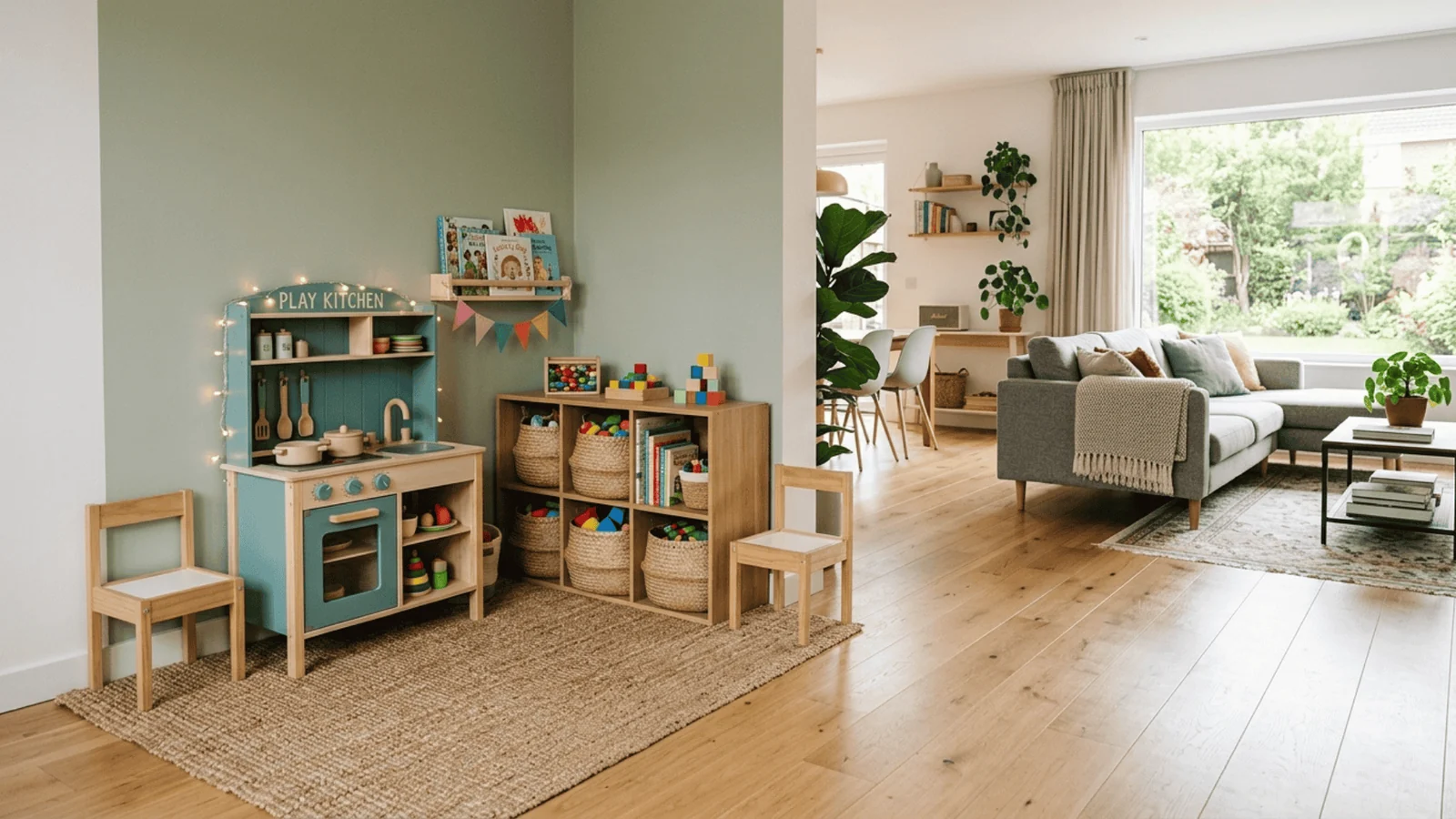
Two bedrooms, one 14-month-old, no storage room. That’s how one parent on r/MontessoriForHome set the scene before asking for tips on meaningful spaces in a small flat. One sentence in the post could have come from almost any apartment:
“we don’t have a cellar where we can put things away”
A parent on Redditr/MontessoriForHome thread (2026)
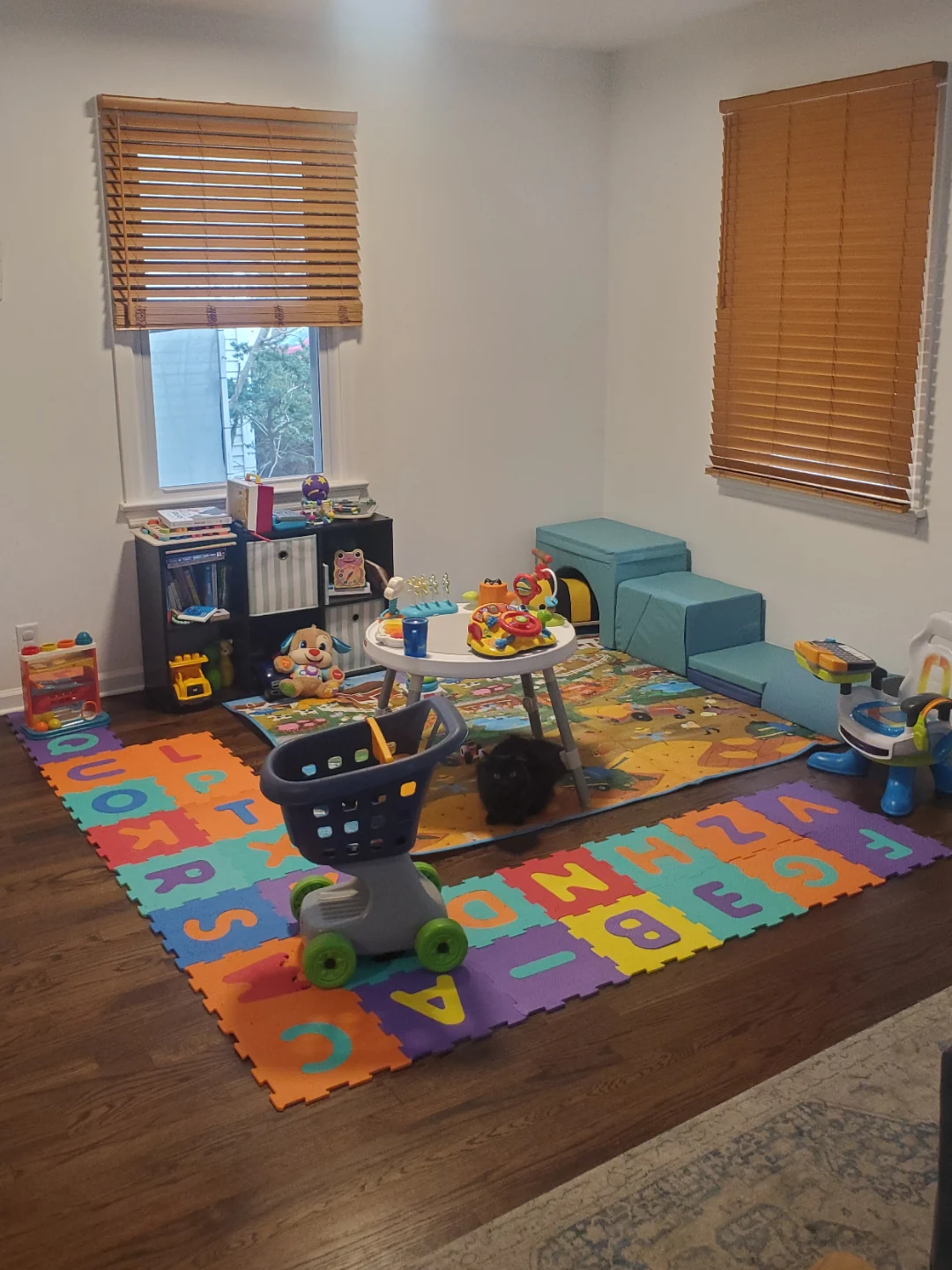
If you’re in an apartment, you can probably fill in the rest. The toys have drifted out of the bedroom and into the living room. And the small room playroom ideas you find online are mostly photos of entire rooms, with white walls, a climbing triangle and a reading nook, in homes that look nothing like yours.
Our house doesn’t have a playroom either. Will’s toys live on a two-shelf wooden shelf in the best spot in our living room, six to eight at a time, plus a small rug, and that spot has been plenty. (How the rest of our home is set up is in my Montessori playroom guide.) So these small playroom ideas start from the space you already have.
 Save
What does a Montessori small space actually need?
A Montessori small space needs four things: a low open shelf, a rug that marks where play happens, a few trays or baskets, and one labeled place for the toys that aren’t out.
In Montessori classrooms, the prepared environment is the room an adult sets up ahead of time for the children, and the Association Montessori Internationale (AMI) says it contains all the essentials “but nothing superfluous.” At home, that idea gives you permission to own less, which is good news when you’re short on floor.
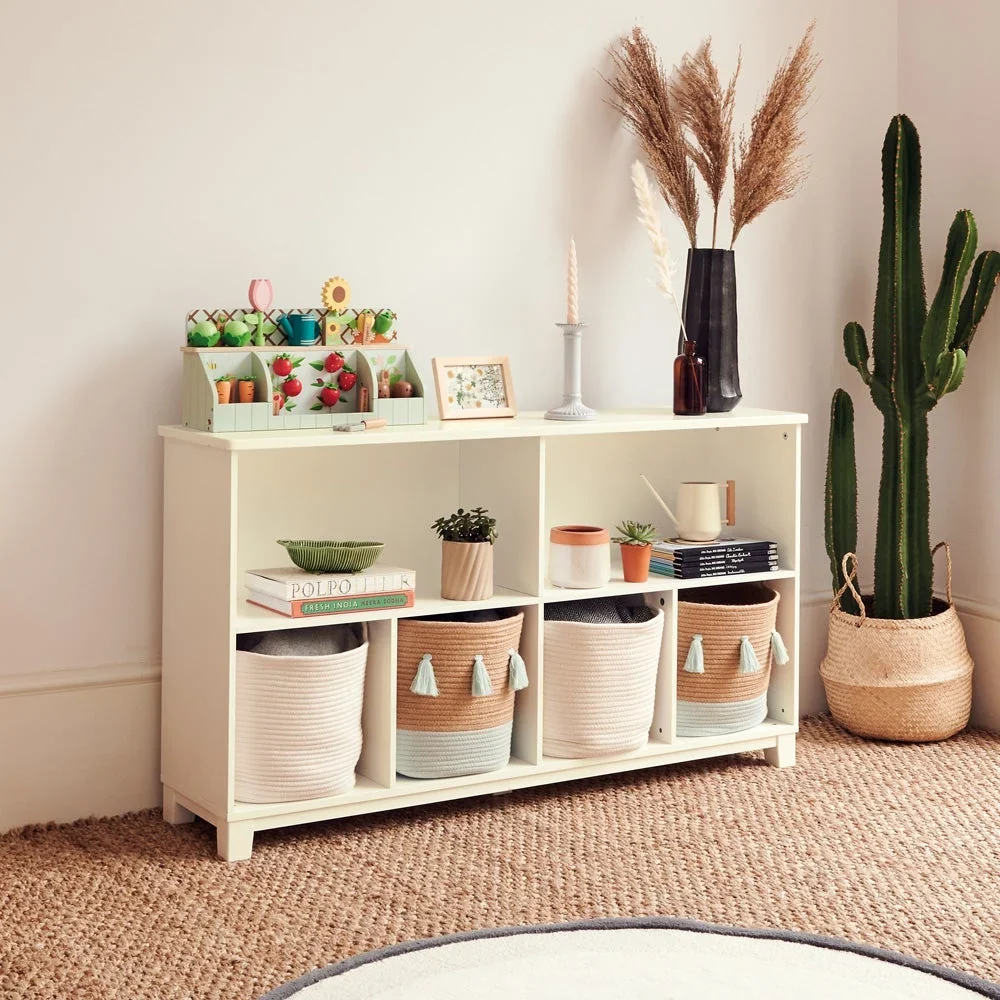
For families, the American Montessori Society (AMS) suggests limiting toy choices, using open shelves at your child’s eye level, sorting small items into trays or baskets and rotating the extra toys. Picking the shelf is a decision of its own, and I’ve covered what to look for in a Montessori shelf separately.
 Save
Put together, the list is short:
- One low, open shelf your toddler can reach without asking.
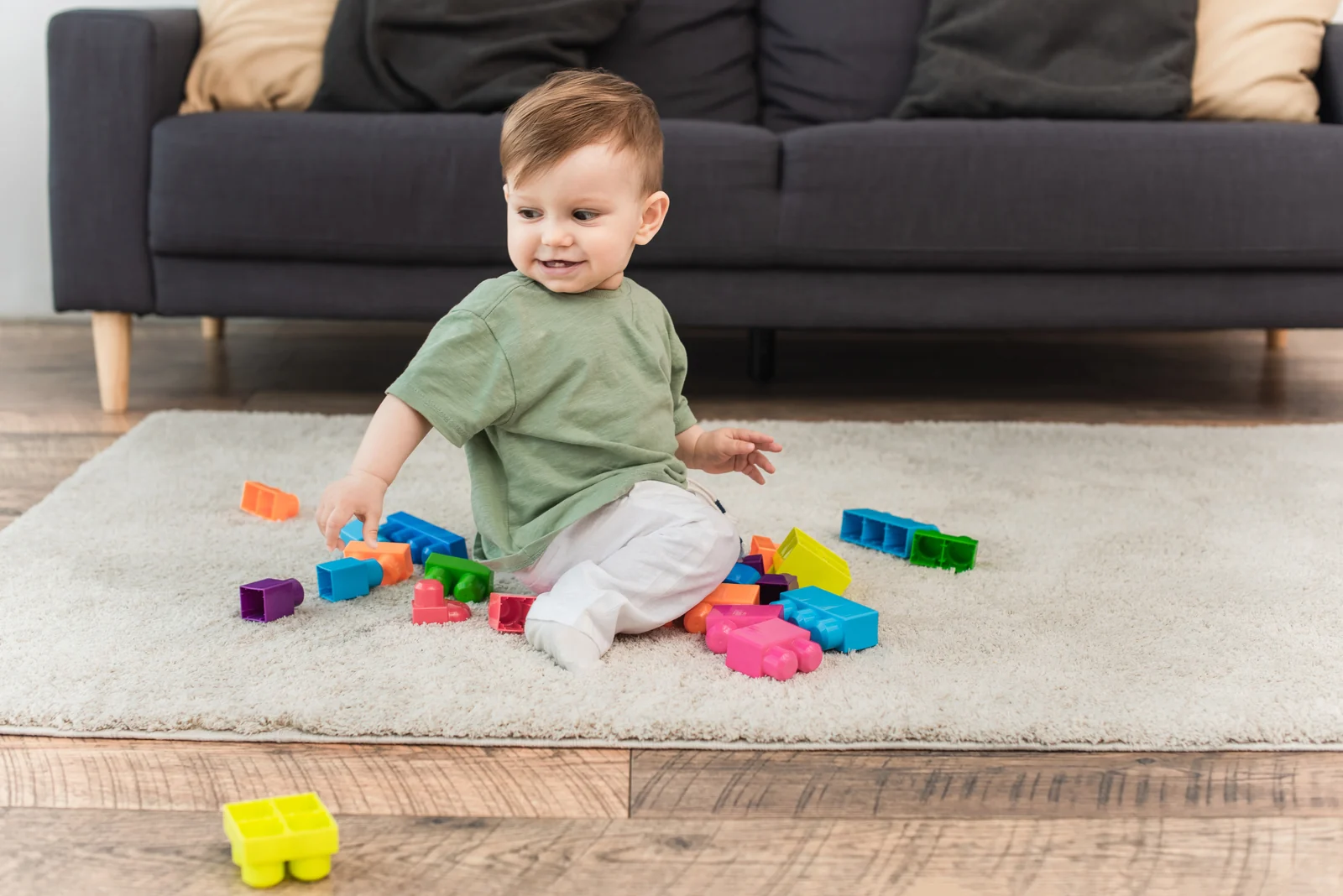
- One rug that says “this is where we play.”
- A few trays or baskets, so small pieces stay together.
- One labeled place for everything else, out of sight.
A play kitchen, a climbing triangle or a book nook can come later if you find the room. Save your money on those until you know where they’d go.
 Save
Small playroom layout ideas for the space you actually have
Choose your layout by the kind of space you have, whether that’s a corner, one wall or a shared bedroom. Each version keeps a shelf and rug where your child plays and closed, labeled storage for everything that isn’t out.
You’ll see layouts sorted by square feet, but the shape of your space usually decides more than the number. Which wall is free? Where are the outlets? Where do you actually sit in the evening?
At Moje Montessori, we sort small-space setups by the kind of spot you have, and chances are your home has at least one of these three:
| Space you have | What goes there | Where the rest lives |
|---|---|---|
| A corner of the living room | A low shelf with its back to the wall or the side of the couch, plus a rug in front that marks “this is where we play” | Lidded baskets or pull-out boxes under the shelf, or a cabinet in the grown-up part of the room |
| One wall (a hallway, a dining nook) | A long, low shelf with a narrow rug along it | Taller labeled storage above your child’s reach, anchored to the wall |
| A shared bedroom (yours or a sibling’s) | One shelf, one rug and quiet things: books, chunky puzzles, a basket of soft toys | Boxes under the bed or a labeled shelf in the closet |
Every row is a multi-use corner on purpose. The play part stays small and low, and the storage part does the heavy lifting somewhere else.
The living-room row is the closest to how we do it. Will can see me cooking in our open kitchen or folding laundry on the couch while he plays, and our living room still looks like a living room.
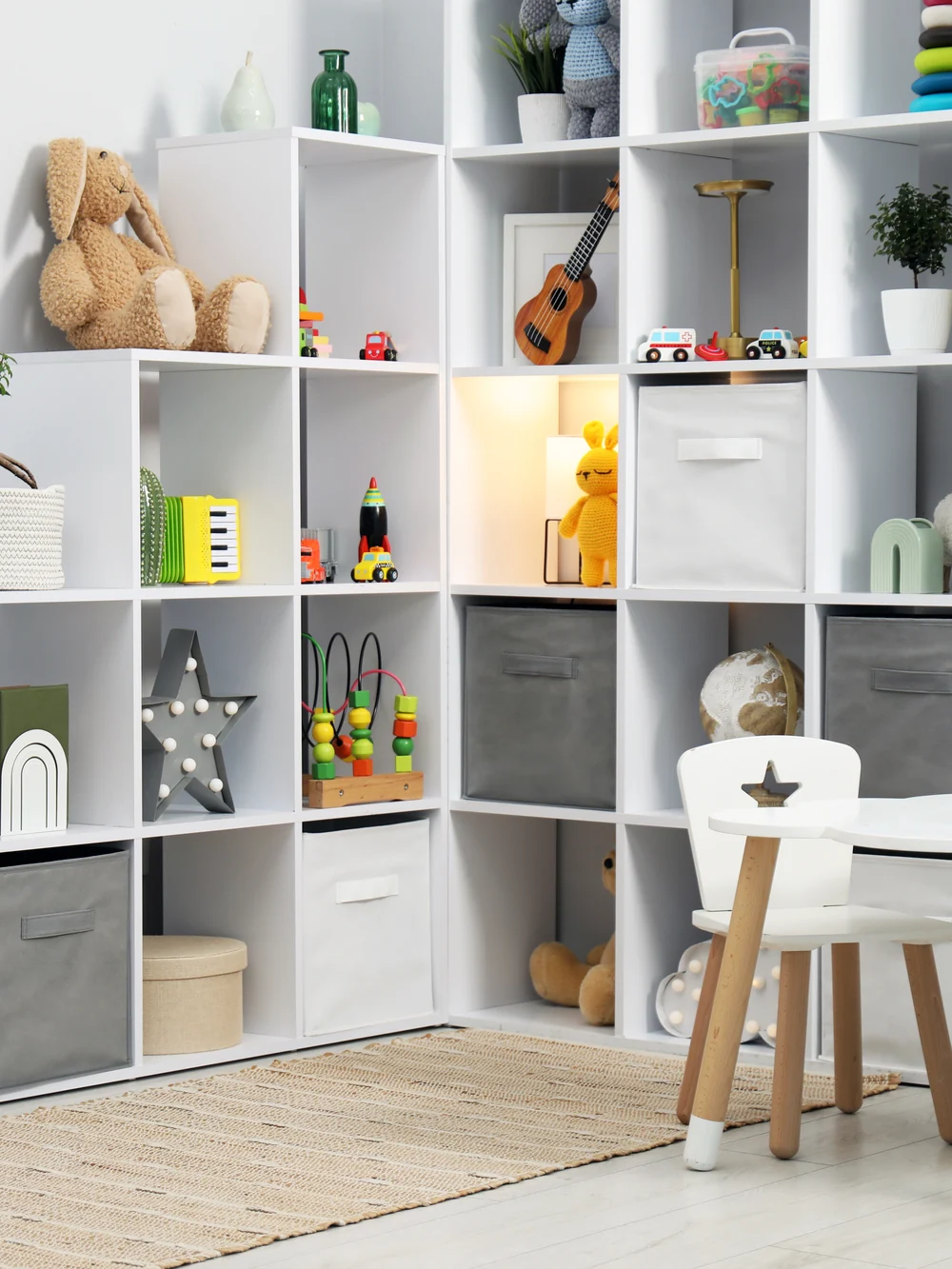
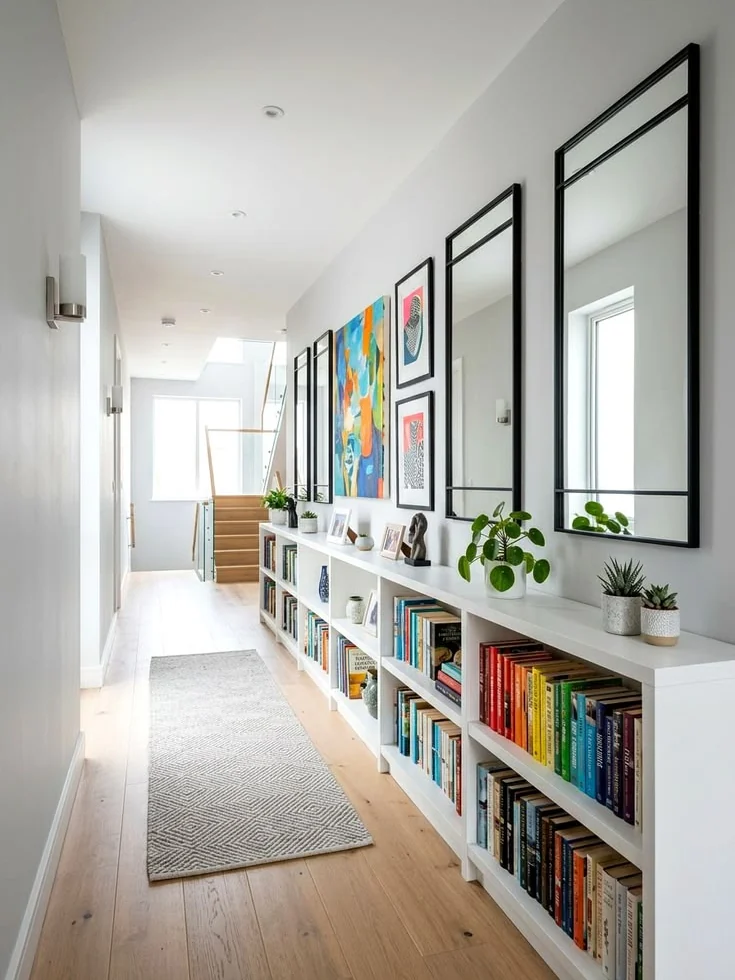
A corner of the room: shelf against the wall, rug in front. One free wall can hold a long, low shelf and a narrow rug.
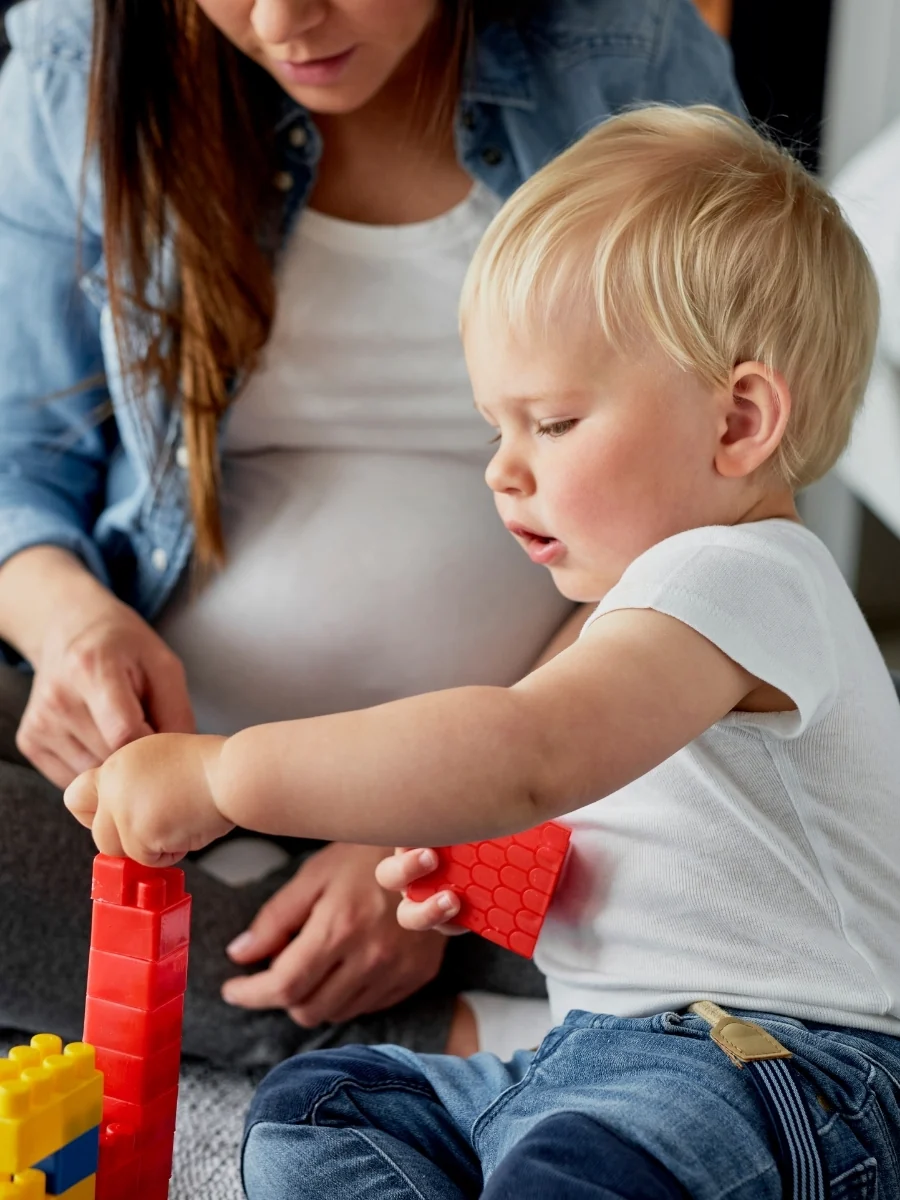
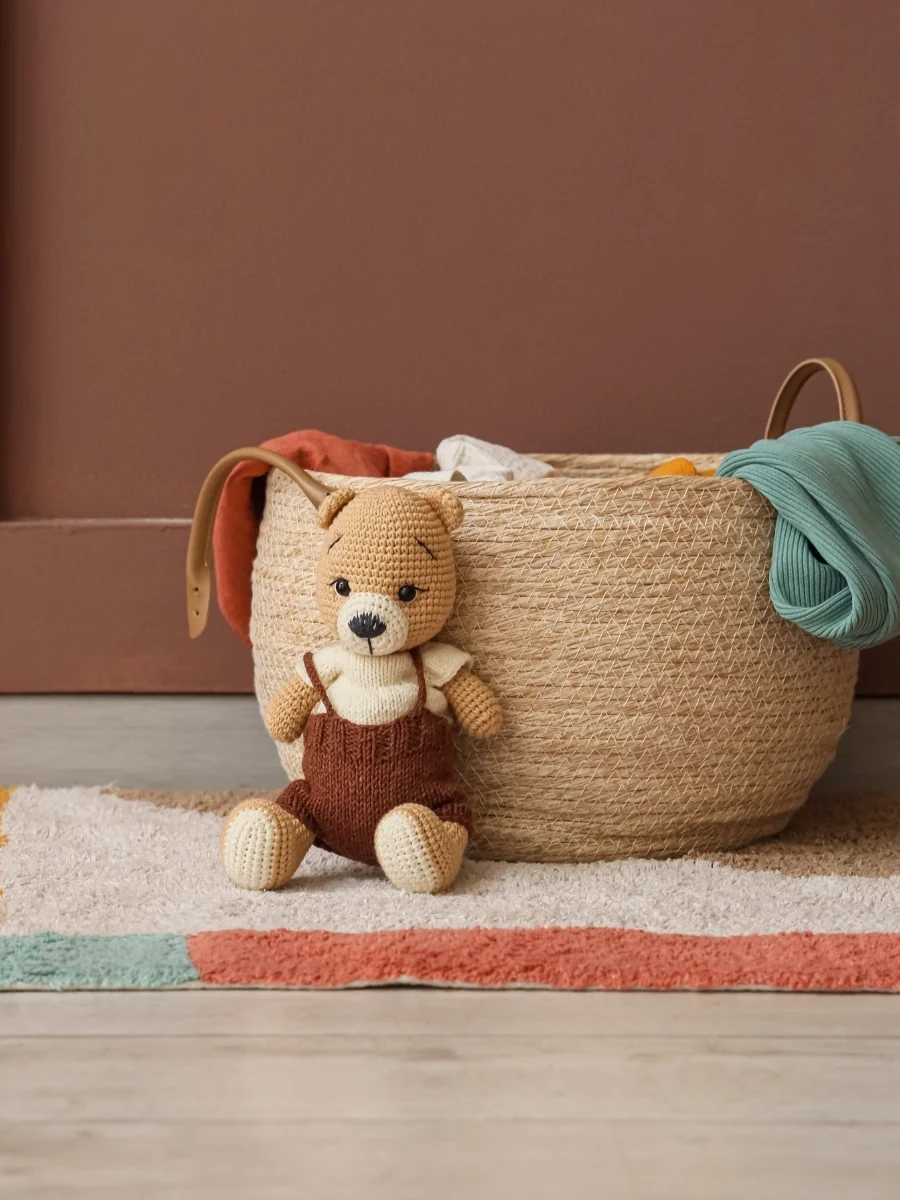
In a shared bedroom, a rug beside the bed is all the play corner you need, so keep it to quiet things. One big basket by the rug makes the end-of-day tidy quick.
The rug does a second job on rainy days. Push the coffee table back and it becomes your spot for indoor gross motor play and screen-free activities that don’t need a single new toy. If your winters run long, like ours in Colorado, snow days count too.
Furniture that does two jobs earns its place in a small home. Piccalio’s Convertible Toddler Tower, for one, turns into a toddler table and bench, so a learning tower can be a little snack and craft table once the cooking’s done. Folding furniture works the same way: anything that folds flat and slides behind the couch at night gives you the room back.
How do you store toys in a Montessori apartment?
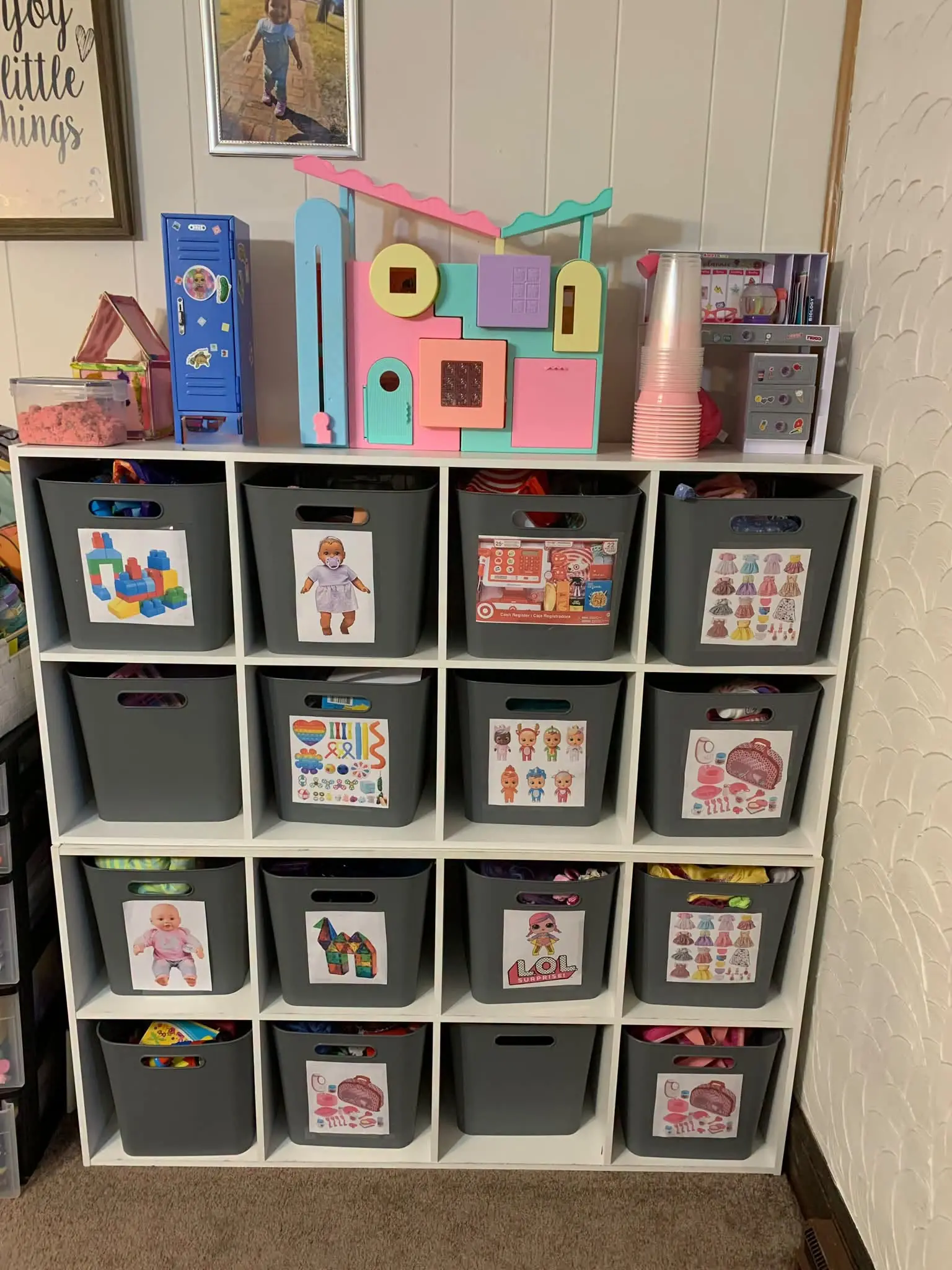
Keep a few toys out and pack the rest into labeled boxes or baskets out of your child’s sight, so everything in a Montessori apartment has one place to live.
Most ideas for a small playroom come down to storage, and the simplest rule comes from Simone Davies, author of The Montessori Toddler. On The Montessori Notebook, she says her storage works because “there is a place for everything and everything is in its place,” the same principle she applies in Montessori homes and classrooms. She also suggests labeled storage for what isn’t in use, instead of a single toy box that can turn into a “black hole.”
That spot can be a closet shelf, the top of a wardrobe or a cabinet in the grown-up part of the room. Tape a photo of what’s inside to the front of each box, and your toddler can “read” the label too.
 Save
How much goes into storage? The AMS suggests tucking away 30% to 50% of most children’s toys, and says you may find they become more interested in what’s left on the shelves. One small 2018 study points the same way: 36 toddlers had supervised play sessions with four toys and with sixteen, and with four, they switched toys less often, played longer and found more ways to play. Swapping what’s out for what’s stored is toy rotation, and it costs nothing.
 Save
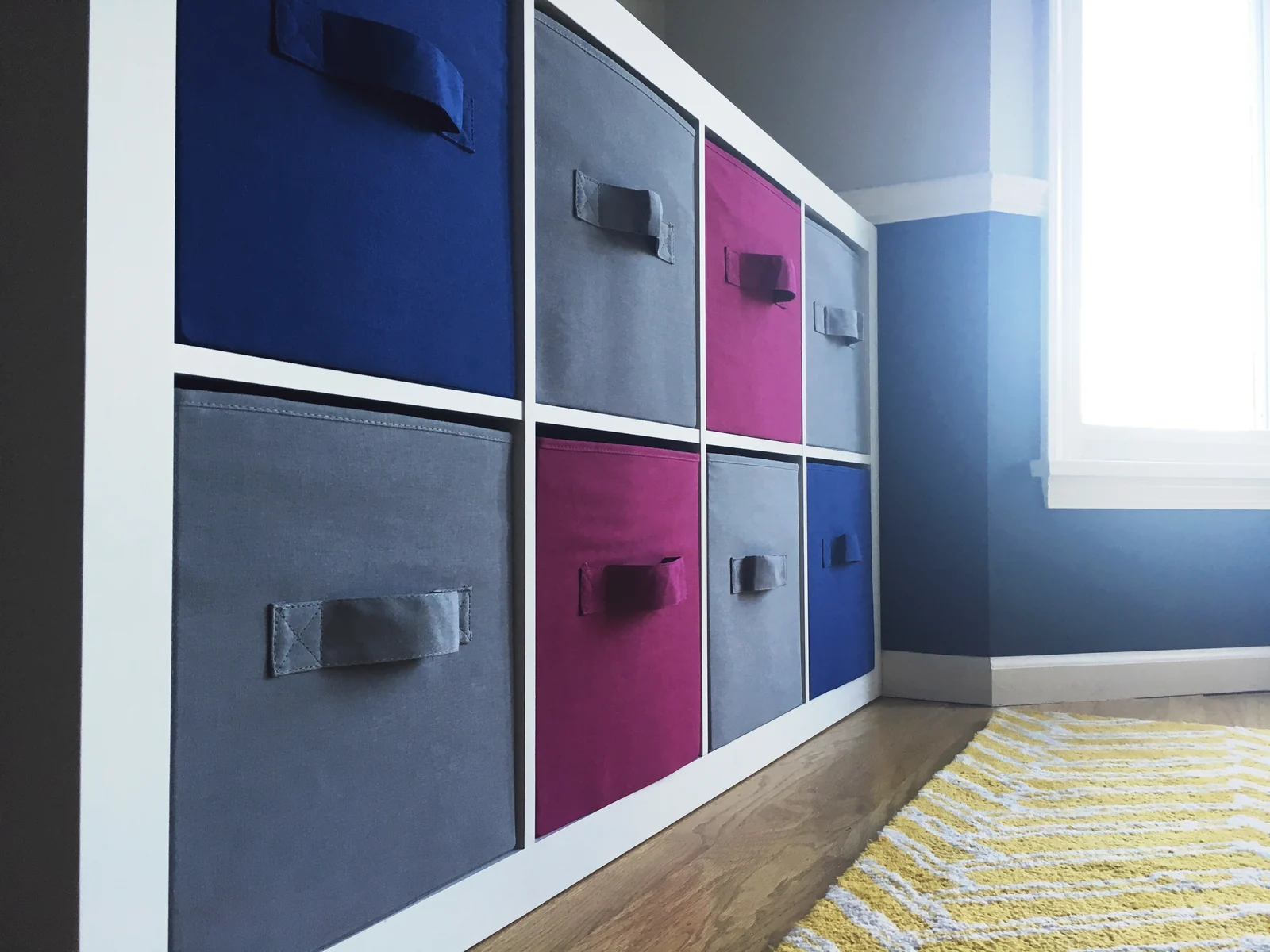
Two IKEA lines can do this job. KALLAX is a cube shelf made of particleboard and fiberboard, and IKEA’s product page says it must be securely anchored. TROFAST pairs a particleboard frame with polypropylene boxes that pull out. Either way, this vertical storage holds the boxes your toddler isn’t using, and the play shelf stays low.
In a small home, three moves do most of the work: keep fewer toys out, pick furniture that hides things, and park one big basket by the rug for a five-minute tidy at the end of the day.
Miri’s Tip
How do you keep a small play corner calm, not crowded?
Fewer things out, each with a fixed spot, keep a small play corner calm. When your toddler knows where each toy lives, they can choose one, play and put it back with less help from you.
In The Secret of Childhood, Maria Montessori described order as “things in their place”: a child knowing where each object belongs, which lets them find their way around their surroundings. AMI’s glossary entry on order quotes her calling a child’s love of order “a vital need at a certain age.” Davies’s storage rule is the same idea, seen from the grown-up side.
Order is also what makes a small corner feel calm. A shelf with a few things, each in its own basket, is easy to take in at a glance. Your toddler pulls one out, plays and slides it back, and that bit of independence means you’re not the only one keeping the room together.
On our living-room shelf, it means six to eight things at a time. That’s why the corner fits in with the rest of the room, and why our living room hasn’t turned into a rainbow-colored daycare.
In a small home, a playroom is wherever the rug is.
As for decor, keep it simple: a plain wall behind the shelf lets the toys bring the color.
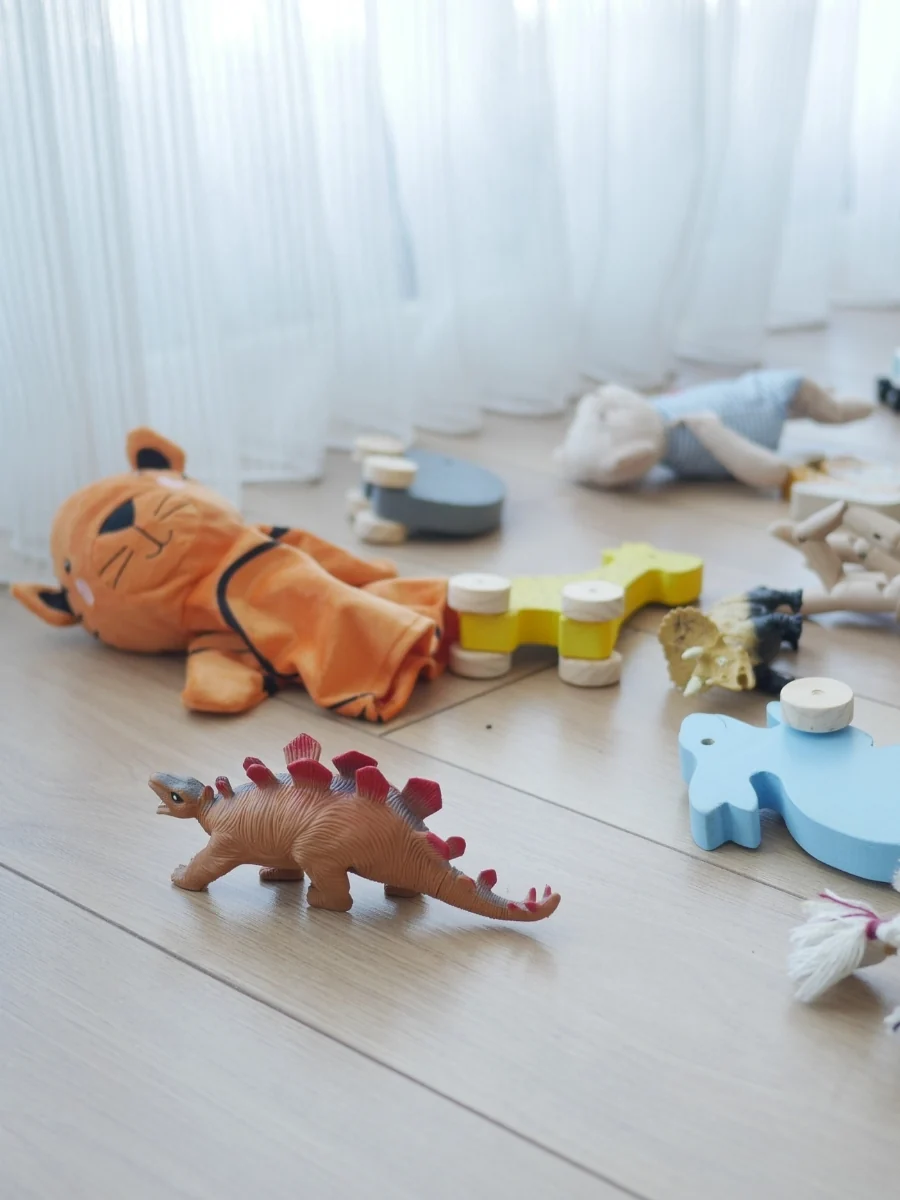
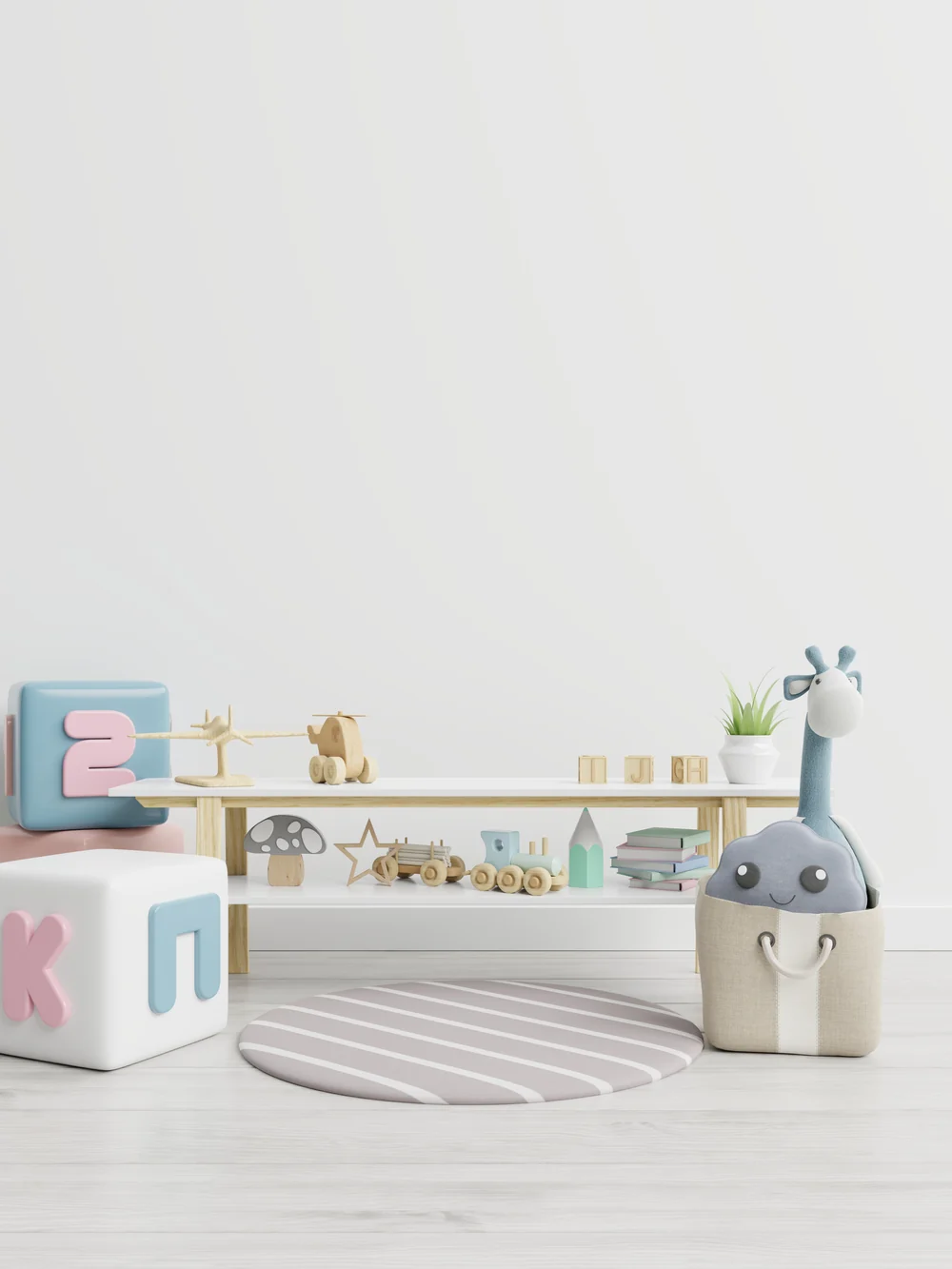
With every toy out at once, there’s nowhere for the eye to land. A few things on the shelf and a basket for the rest, and a corner can breathe again.
Safety notes for a play corner in a shared room
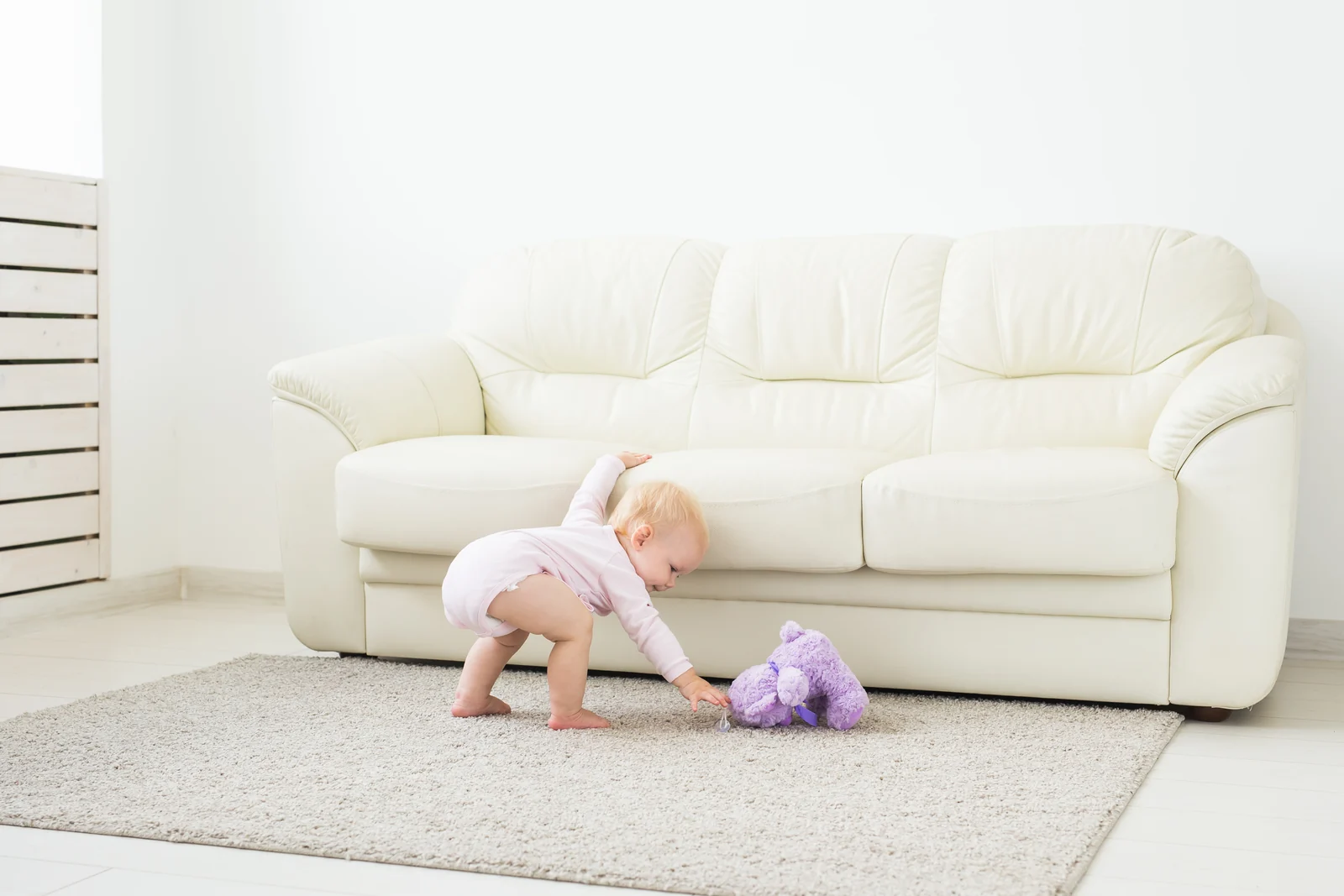
Anchor every shelf and storage unit, cover unused outlets and check the floor at your toddler’s height, because a room you share with them is full of cords and small grown-up things.
A play corner in a living room or bedroom sits right next to the TV, the lamps, the phone chargers and whatever grown-ups and older siblings drop on the floor. That’s fine, as long as you run a few checks before the rug goes down.
 Save
Anchor every shelf and storage unit to the wall, low ones included. The American Academy of Pediatrics (AAP) says to anchor all your furniture, and toys left up high can tempt kids to climb. IKEA’s KALLAX page puts it plainly: “Tipping hazard – this product must be securely anchored.”
The AAP’s home safety tips say to put non-choking-hazard safety plugs in every unused outlet, block outlets with furniture if your child keeps going back to them, and keep cords out of reach and out of sight. Keep checking the floor for coins, beads, buttons, pins and pills, too. The best way to check: get down at your child’s level and look.
Once those checks are done, the corner turns into a place where you rarely have to say no, which is the whole idea behind a yes space.
Conclusion
If your living room is also the office and now the playroom, you don’t need another room tonight. Pick one corner, put a rug down, and pack half of what’s in the toy basket into a box with a label on it. Leave a handful of things on the shelf and watch what your toddler reaches for first. Once most of the toys have somewhere to go, a small home has more room for play than the photos ever let on.
Fitting play into a small home takes real thought, and you’re already giving it. One rug and one low shelf is plenty to start with.
Miri
Fewer toys, deeper play.
Further Reading & Resources
See all 12 sources
- Montessori at home: Montessori at Home and The Importance of a Simple Environment (American Montessori Society) · Prepared Environment and Order (Association Montessori Internationale glossary) · Montessori storage and toy rotation (Simone Davies, The Montessori Notebook)
- Research: Dauch et al., Infant Behavior & Development (2018) (PubMed)
- Home safety: Preventing Furniture and TV Tip-Overs and Home Safety: Tips for Families With Young Children (American Academy of Pediatrics, HealthyChildren.org)
- Products, checked October 2026: KALLAX shelf unit and TROFAST storage combination with boxes (IKEA US) · Convertible Toddler Tower (Piccalio)
- Real parents: “Tips for Meaningful spaces in a small flat?” (r/MontessoriForHome)