

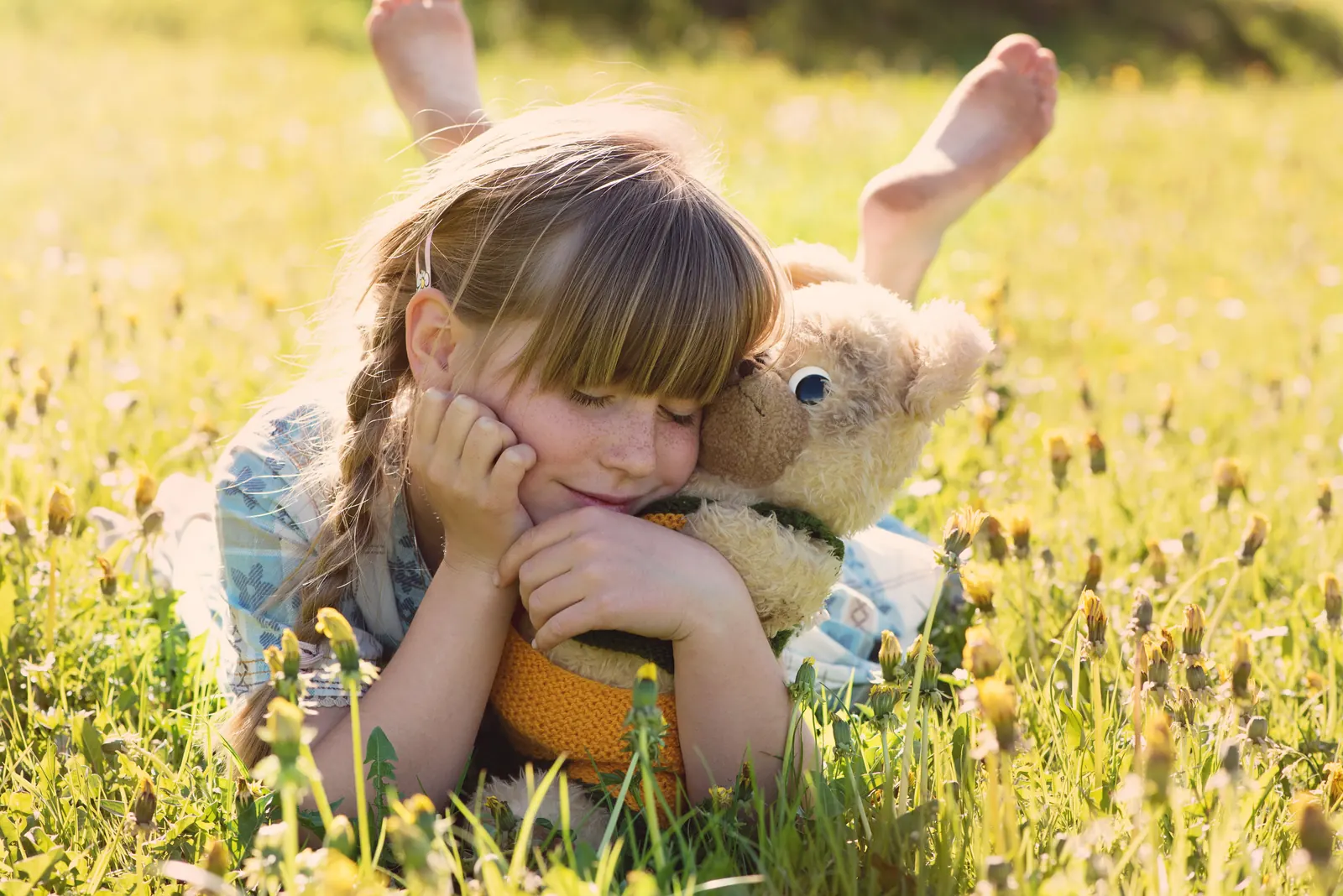
One of our teddy bears has picked up a new job. It’s standing in for a baby. I hold it out to Will, my three-year-old, and show him how to stroke it with just two fingers, very gently, the way you’d touch a newborn’s cheek.
The baby it’s standing in for is Jimmy, Will’s little brother. Jimmy isn’t born yet. He’s due in the spring, so I can’t tell you what my two boys love to play together. They haven’t met.
Maybe you’re expecting your second too, or you’ve just brought one home. Your older child is hoping for a playmate, and what’s arriving is a newborn who won’t be ready to play for a good while. So what does “playing together” even mean right now?
Underneath that question sit the real worries. That a loving squeeze turns into a too-hard one. That your helpful toddler offers the baby a cracker. That your firstborn ends up in the doorway, feeling pushed aside, on a day when you’re too tired to set up two of anything.
This post starts before the baby does, with three small jobs I’m doing with Will now. Then it follows the baby stage by stage and ends with the safety rules worth teaching early. It’s one corner of Montessori activities at home, and most of it uses things you already have.
 Save
What does “playing together” look like when one is a baby?
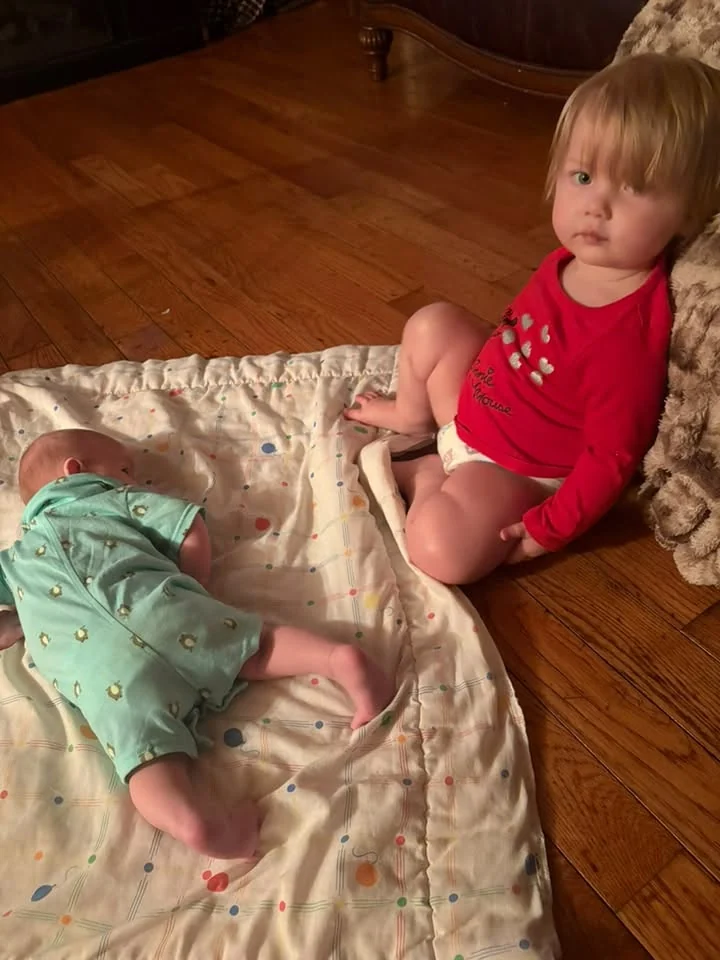
Playing together, when one sibling is a baby, mostly means the older child helping, staying close and doing small things beside you while the baby watches and listens. Back-and-forth play comes later.
That’s a smaller picture than most toddlers have in mind. In its guide to preparing an older child for a new baby, the American Academy of Pediatrics (AAP) even suggests letting your child know it may be a while before they can play with the new baby.
It sounds a little deflating until you look at what “together” can mean for now: the big kid nearby, doing one small, real thing for the baby while you handle the rest. To a three-year-old who was just handed a job, that can feel like a very big deal.
The activities for sibling bonding that fit these early months are small and repetitive, and you’re already doing most of them. Your part is leaving a spot in each one for the big kid. That spot can open up months before the birth.
 Save
Before the baby arrives: three small jobs for the big sibling
Start while you’re still pregnant: show your older child a gentle two-finger touch on a teddy bear, let them stack diapers in a basket, and fold the tiny baby clothes together. Each job gives them a real part in getting ready.
These are the three I’m doing with Will now, most days. None of them needs anything new, and each is an actual piece of getting ready for a baby, sized for a three-year-old.
- A gentle touch on a teddy bear. The two-finger routine from the top of this post. You do it together, your hand next to theirs.
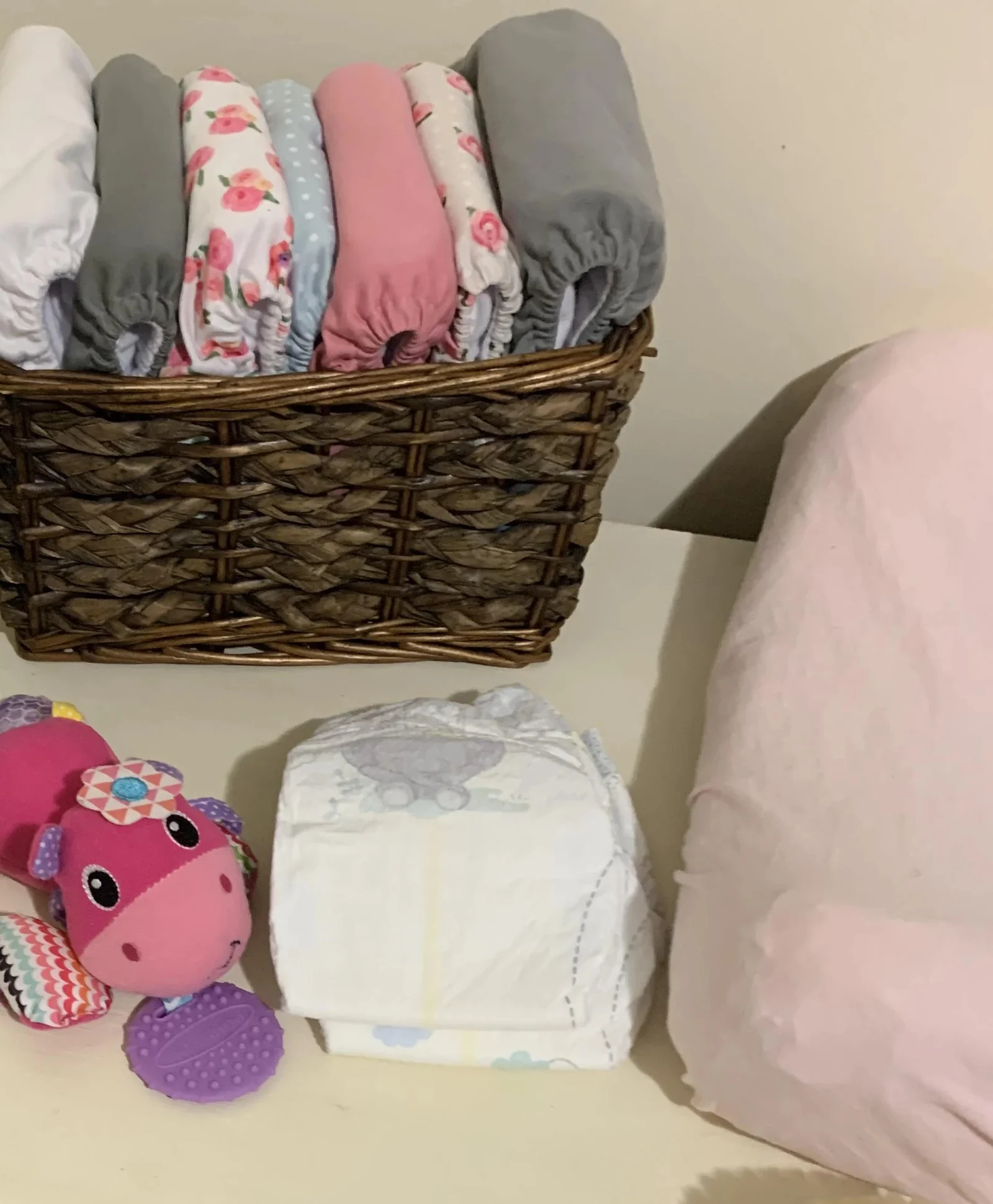
- Stacking diapers in a basket. Will pulls diapers out of the pack and lines them up neatly in a basket. Diapers are soft and light, so you can watch from the couch with your feet up.
- Folding tiny clothes into a drawer. Will and I fold the baby’s little clothes together and tuck them away. Expect lopsided folds. The clothes won’t mind.
The first one has the AAP’s guide behind it. For 2- to 4-year-olds, it suggests a doll the child can care for as “their” baby, because it “helps explain what being around a baby is like,” along with a reminder to be gentle. Once the baby is here, it also says to “find ways to invite your child to help,” so they feel included, which it says helps build a bond between siblings and reduce jealousy. Stacking diapers is that same idea, started early. Jealousy needs more room than this list. The drawer is just my own reasoning: it’s going to be the baby’s, and the big kid helped fill it.
 Save
Books about becoming a big brother or sister cover the talking side of getting ready, and that’s a topic of its own. These jobs are the doing side.
Keep the jobs real and tiny, and fit one into an ordinary day, every day. What I’m after with Will is simple: by the time Jimmy comes home, I want him to already feel that baby things are partly his job.
Miri’s Tip
None of this will stop every wobble once the baby is here. What it can do is give your older child a place in the story before the baby takes center stage. That’s often the worry sitting under all the others: a firstborn who suddenly feels left out of their own family.
How can a toddler help with the new baby?
Pediatricians at the AAP say your older child can help at feeding time and bath time, though the baby needs one-on-one time with you too. Keep the big kid’s jobs short, with you right there, and hand them out often.
Newborn weeks are the trenches for everyone, and helping won’t look like much. If I picture the early days with Jimmy, these are the jobs I’d hand Will. None of them involves holding the baby.
- Fetch and carry. A clean diaper, a burp cloth, the baby’s socks. Small errands with a clear finish.
- Bath-time helper. Holding the towel open while you do the washing.
- Reading together. The big kid “reads” a picture book to the baby, turning the pages and naming what’s in them, with you sitting between them on the couch.
- Music. A song the big kid already knows, sung to the baby during a diaper change. Sing it badly together. Nobody’s grading.
For a big kid who’s only one or two, the AAP’s advice shifts a little: make sure the focus isn’t all on your new baby. That’s mostly about time alone with your older child, which is a bigger topic than this post.
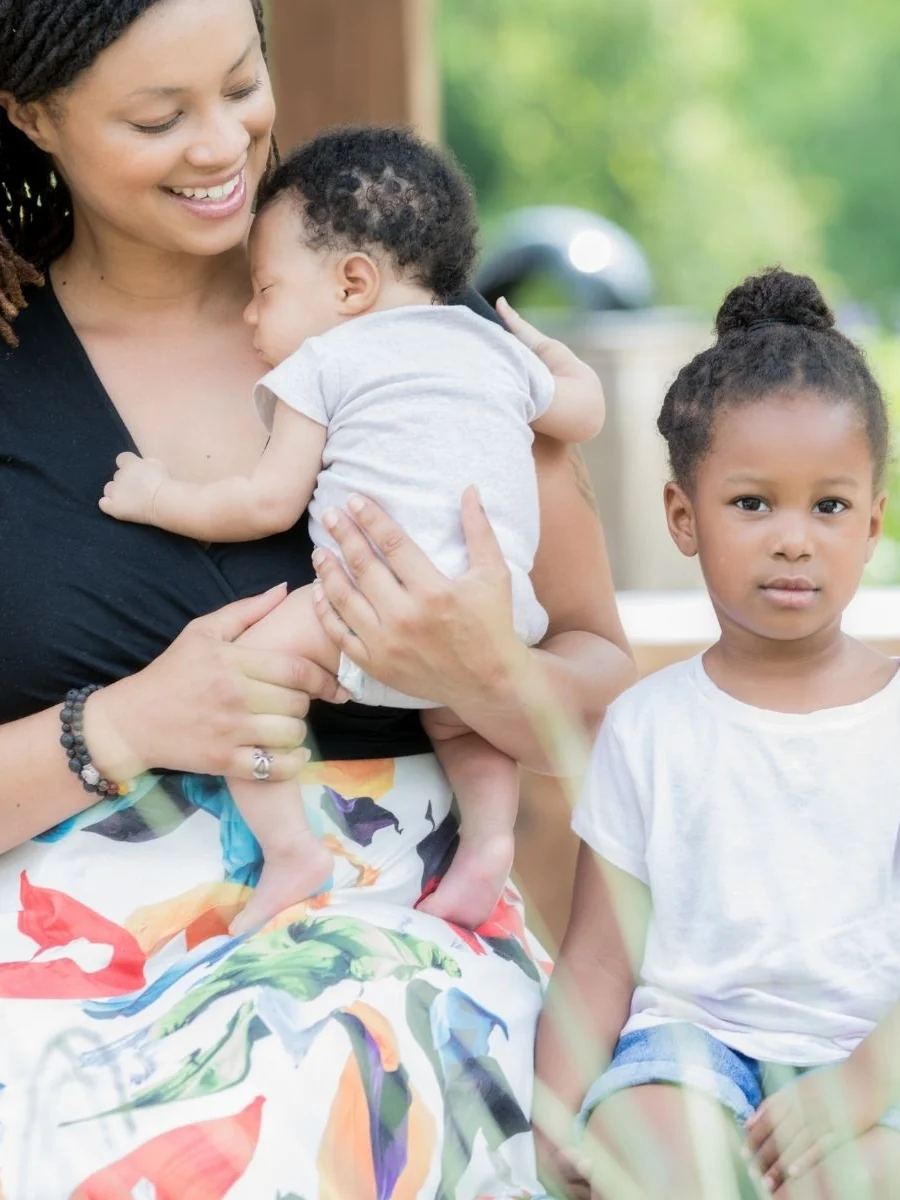
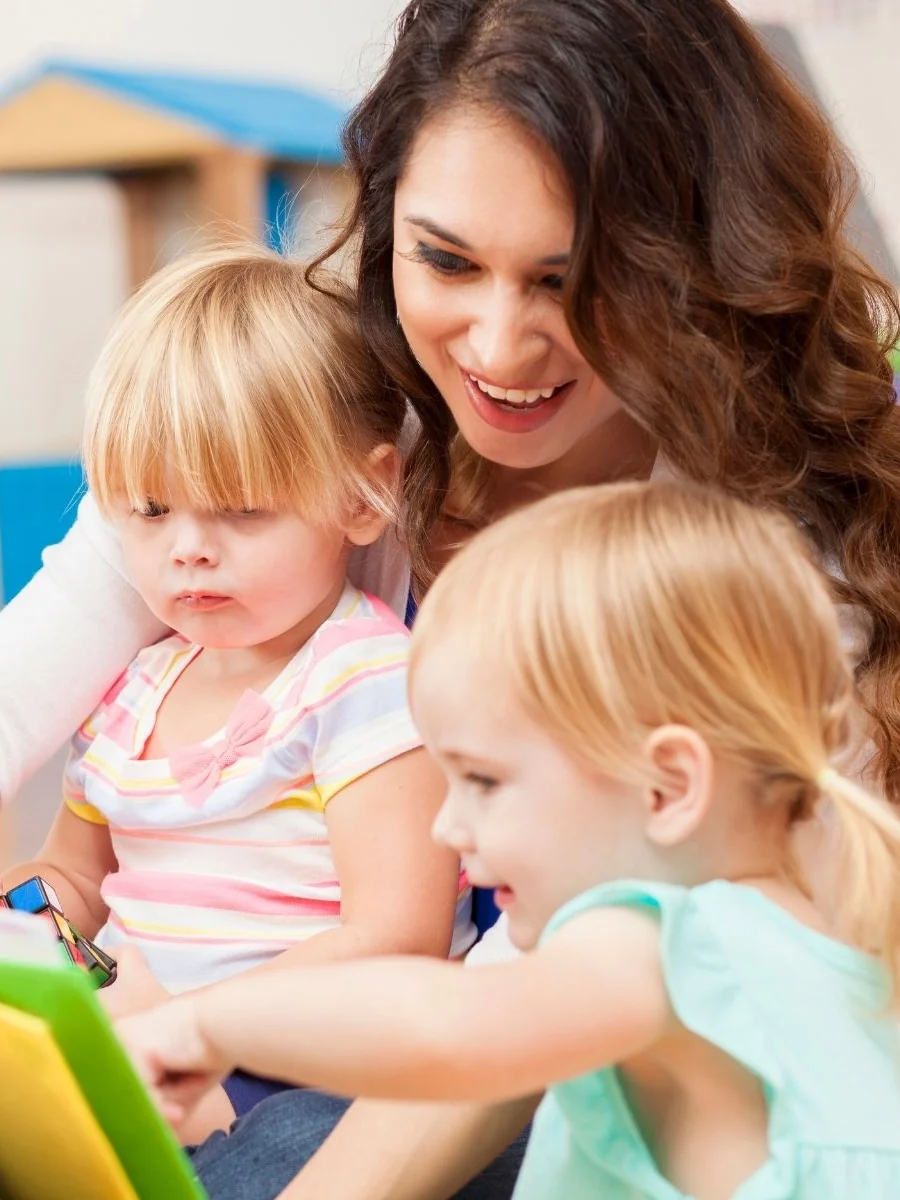
Sitting close to the baby counts as helping, too. Reading together can be as simple as one book and everyone pointing.
Activities for kids different ages: once the baby can sit
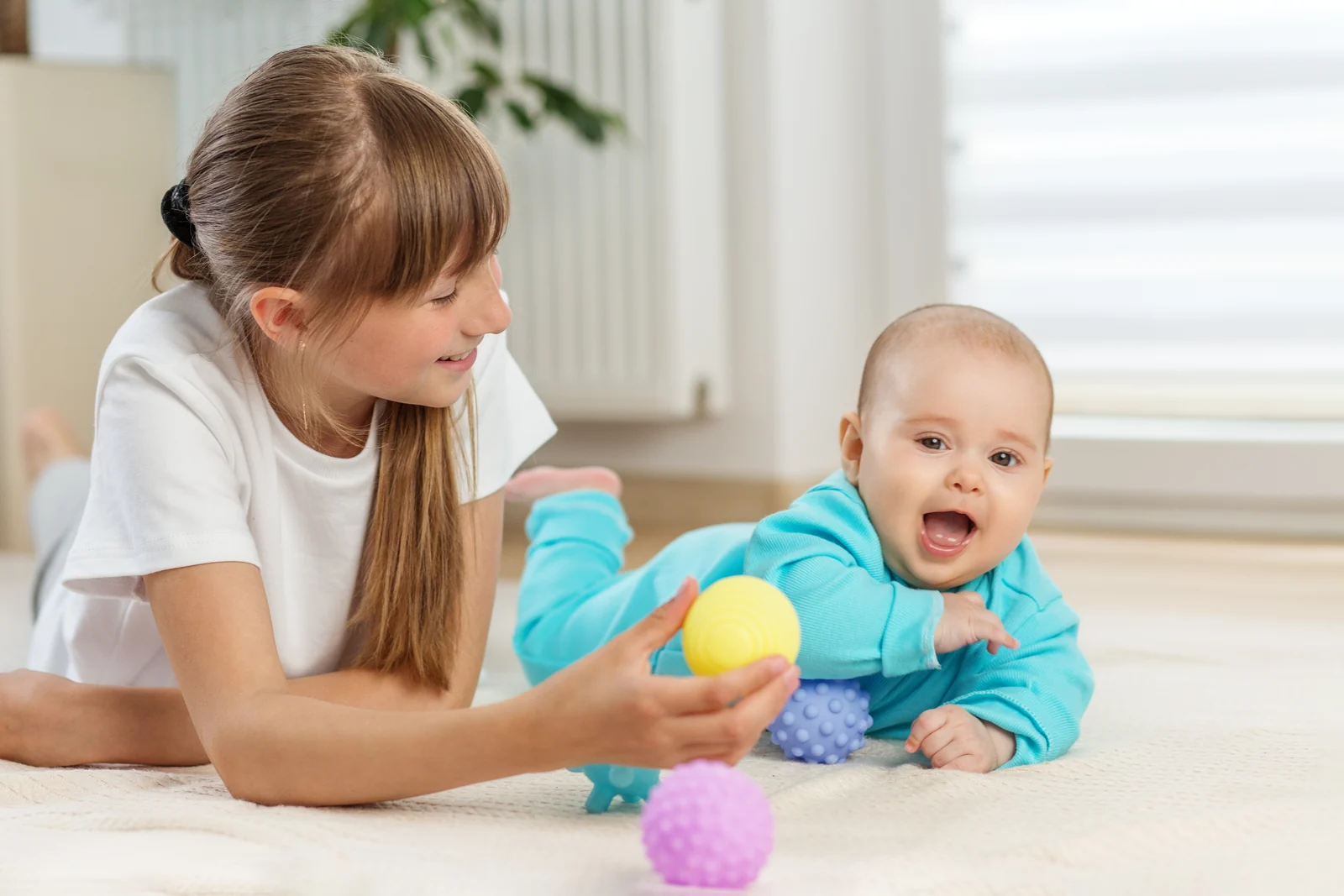
Go by what the baby can do rather than their age in months. Once they sit steadily, pick play that comes to them, like a ball rolled their way or a song with a beat, and let the big kid run it.
Things get more fun for the big kid here, because the baby can finally join in from where they sit. These three work across very different ages, using things you probably own.
| Activity | The big kid | The baby | You |
|---|---|---|---|
| Rolling a ball | Rolls a big, soft ball across the rug | Pats it, grabs it, maybe pushes it back | Right beside the baby |
| Music with a beat | Drums on an upside-down pot with a wooden spoon | Shakes a rattle made for babies | On the floor with both of them |
| Water play | Pours from cup to cup in a shallow baking dish of water | Splashes from a sitting spot on a towel | Within arm’s length, the whole time |
Water play asks the most of you. The AAP says young children can drown in as little as an inch or two of water, quickly and silently, so stay within arm’s length and tip the water out the minute you’re done. My post on sensory activities for toddlers has more water ideas and more on keeping them safe.
Don’t expect real turn-taking yet. The baby will grab the ball and head straight for their mouth with it, and the big kid may need you to say out loud that this is how babies play. Hearing that from you often keeps the game going.
At this stage, the baby is the audience and the big kid is the show.
 Save
Sibling play ideas once both are walking
Once both kids are on their feet, shift the play toward shared jobs, games with simple turns and open-ended toys each can use their own way, and stay close enough to step in.
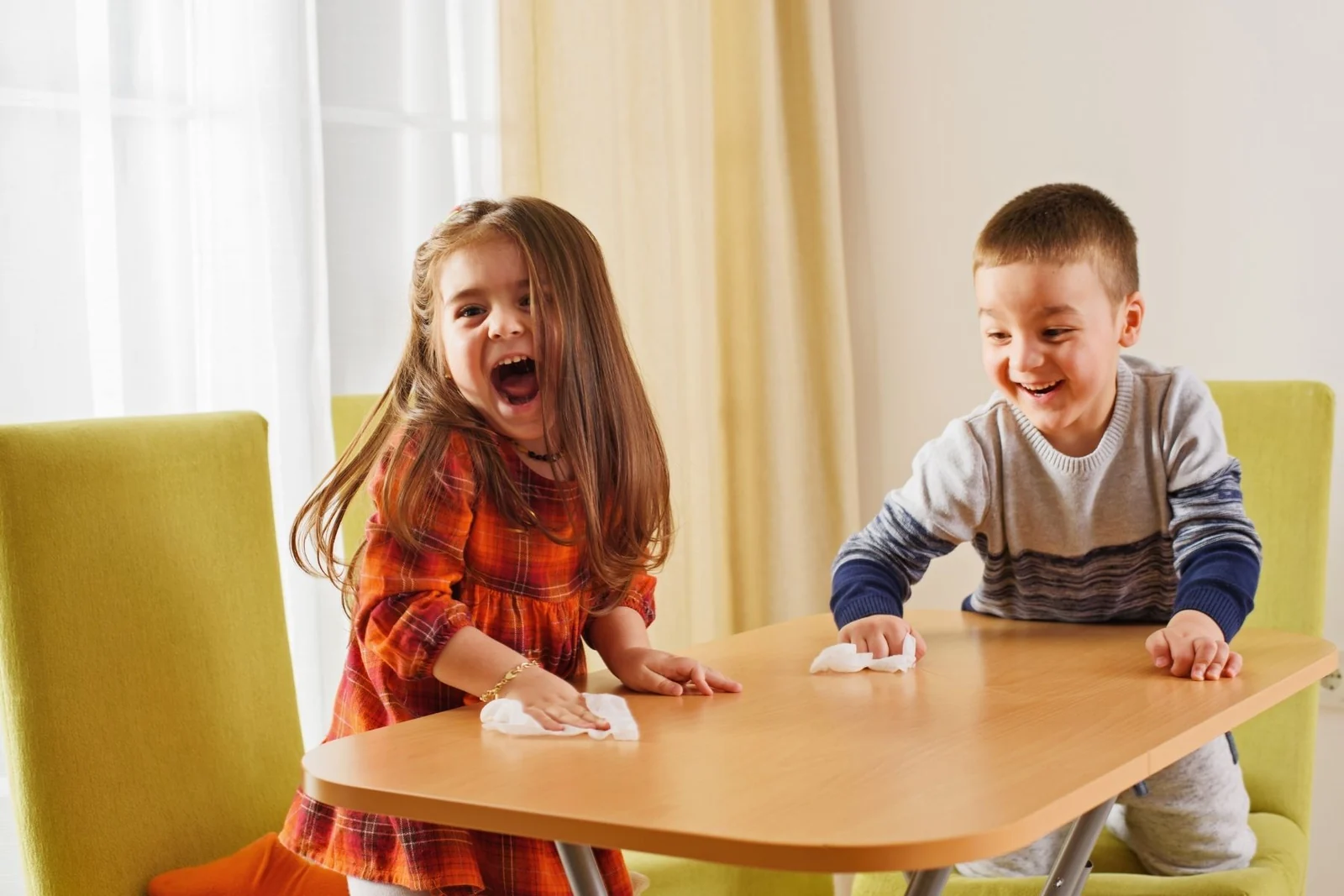
- Household jobs, side by side. Two kids and two cloths can wipe one table. Montessori calls everyday work like this practical life, which the Association Montessori Internationale (AMI) says helps “the child become a contributing person in the community.”
- Games where everyone’s on the same team. Cooperative board games are a gentle next step once the younger one can sit through a short round, and nobody loses to their sibling.
- Toys that work two ways. The big kid builds a block tower, the little one knocks it down, and both seem to think that’s the best part. Skip anything with pieces small enough to choke on.
Twins and kids born close together are a different setup again, since both want the same toy at the same moment.
 Save
Why does Montessori mix ages, and what does that look like at home?
Montessori classrooms put children across about three years of age in one room, so younger kids can learn by imitating older ones. Siblings already live with an age gap, which makes home a natural place for a small version of the idea.
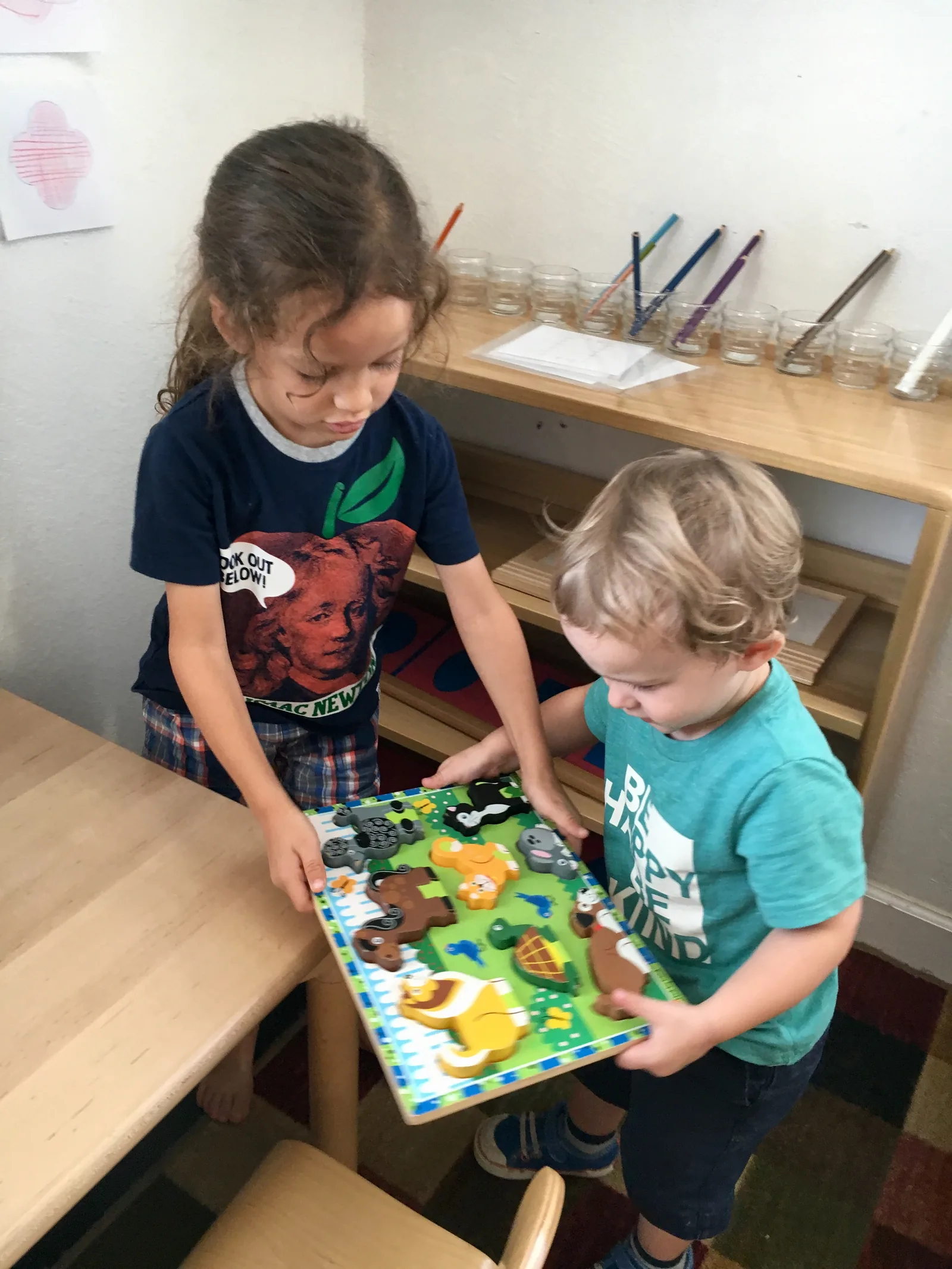
Mixed-age grouping means children of different ages learning in the same room, and AMI’s glossary calls it one of the hallmarks of the Montessori method. Maria Montessori explained why. Three years of difference in one class “enables the younger children to be helped through imitation” of the older ones, she wrote, and the older children often “give real lessons to the younger ones,” which gives them a chance “to learn to sympathize with the younger ones.” Then comes the part I keep coming back to: because “we do not force the children to this reciprocal help,” it results in “a form of social relationship.”
 Save
All of that describes classrooms, with trained adults and a room set up for it. At home, I think it can look much simpler. Will and Jimmy will be about three and a half years apart, close to the span of one Montessori class. I’m not planning to turn Will into Jimmy’s teacher. I’d like Jimmy to have a big brother worth watching, and Will to have room to be kind without being told to.
Grace and courtesy is the manners side of the same idea, and Montessori teaches it on purpose. In AMI’s description, children learn to greet others, express gratitude, apologize, listen and handle conflicts with care, through role-playing, modeling and practice. In a classroom, that’s a planned lesson. At home, it can be as simple as thanking the big kid for every diaper they hand you, and saying sorry out loud when you bump the baby by accident, so both kids hear how it’s done.
 Save
One study of more than 300 sibling pairs suggests the grown-ups matter here too. In a 2015 study in PLoS One, researchers filmed ten minutes of free play between younger siblings around 18 months old and their older brothers or sisters, who were about four on average. The little ones’ behavior fell into two patterns, “harmonious” (53%) and “casual” (47%), and families where mom brought a warmer emotional tone tended to show more positive patterns.
The study only shows a link. The researchers say it can’t show what causes what, and it says nothing about Montessori or about big kids teaching little ones. I read it gently: some days you’ll have warmth to spare and some days you won’t, and on the good ones, it’s part of the room they play in.
What safety rules should the big sibling learn early?
A grown-up stays close and supervises whenever an older child is with the baby, and the big kid learns to ask before giving the baby anything. Both rules are short enough to repeat every day.
If I could pick only one rule to teach Will before Jimmy comes home, it would be the asking one. It covers toys, snacks and the big kid’s own treasures in two words: ask first.
Texas’s state health department tells parents in its 2025 guide: “Always supervise children younger than age 12 with your baby.” It also says to explain that babies can choke easily, to have older kids always ask permission before giving the baby a toy or food, and to have them ask a grown-up for help if they want to see or hold the baby.
Pediatricians at the AAP add that many choking incidents happen when an older brother or sister gives a younger child dangerous foods, toys or small objects. The Texas guide says to put “big kid” toys like Legos and marbles where the baby can’t reach them. A lidded bin up high is my own pick.
Expect to say these rules a lot. The AAP’s page on sibling relationships makes a similar point about sibling squabbles: with toddlers you’ll need to consistently repeat simple rules, and with younger siblings you’ll need to step in more often. That’s the age, and it’s why the rules are short.
Two kids and one of you can sound like a lot of planning. On most days, though, you won’t need two separate activities. You need one thing with two parts: the big kid’s job and the baby’s front-row seat.
Conclusion
If you’re reading this with a bump and a toddler climbing on you, tonight is a fine time to start. Hand your big kid a teddy bear and show them the two-finger touch, or set a pack of diapers next to a basket and let them stack. It takes a few minutes, and it’s one of the first things they’ll ever do for the baby.
Getting your firstborn ready for a sibling is real work, and you’re already doing it. One small job tonight is plenty.
Miri
Fewer toys, deeper play.
Further Reading & Resources
See all 9 sources
- New baby and siblings: Preparing Your Older Child for a New Baby: How to Help Siblings Adjust and Sibling Relationships: How to Help Your Kids Build Healthy Bonds (American Academy of Pediatrics, HealthyChildren.org)
- Safety: A Parent’s Guide to Raising Healthy, Happy Children (Texas Department of State Health Services, 2025) · Choking Prevention for Babies & Children: What Every Parent Needs to Know and Drowning Prevention for Curious Toddlers: What Parents Need to Know (American Academy of Pediatrics)
- Montessori background: Mixed Ages, Grace and Courtesy and Practical Life Exercises (Association Montessori Internationale)
- Research: Capturing the Temporal Sequence of Interaction in Young Siblings (Perlman et al., PLoS One, 2015)