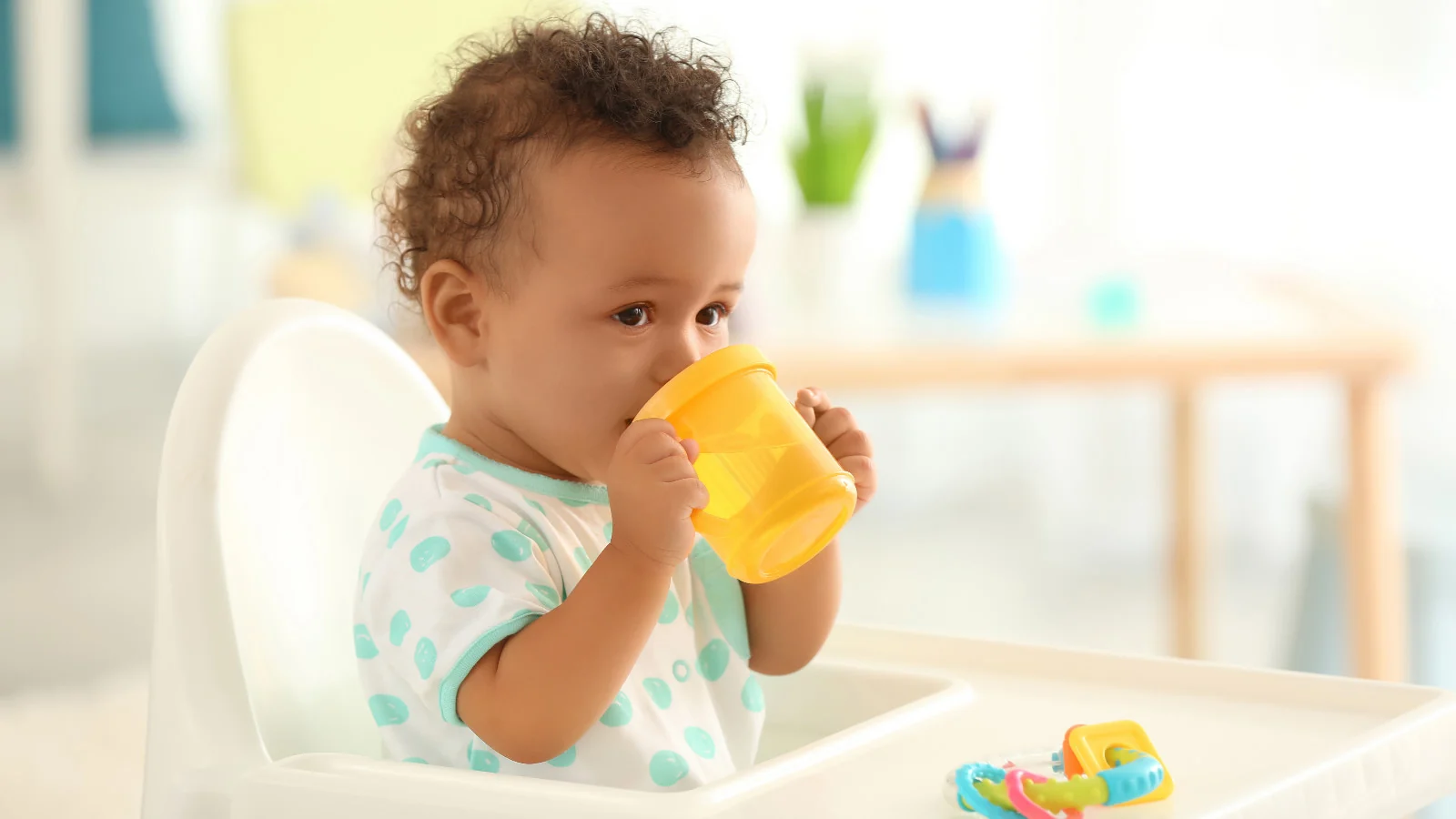
Twelve months and eighteen months. Both ages have a line about drinking from a cup on the milestone checklists from the Centers for Disease Control and Prevention (CDC). At 12 months, the line reads “Drinks from a cup without a lid, as you hold it.” At 18 months: “Drinks from a cup without a lid and may spill sometimes.”
Look at how those lines end. As you hold it. May spill sometimes. The official checklists picture your hand still on the cup at the first birthday, and a little water on the floor at a year and a half. So if your seven-month-old just sent a sip down their chin and into every crease of the bib, that’s what learning to drink looks like.
Will started on an open cup at six months, with a small, heavy glass about the size of a little teacup, and our first weeks were wet ones. Below is what I learned at our table, plus what the American Academy of Pediatrics (AAP) and dentists say about open, straw and sippy cups, so you can pick one and pour that first sip.
a small open cup from the day solids start, with only a sip or two of water in it. The AAP says to offer a cup around 6 months and calls an open cup a fine choice.
the cup in your cart is a sippy with a valve. If you go the sippy route, the AAP says to choose one with no valve, because a valve makes your baby suck the way they would on a bottle.
When to introduce an open cup
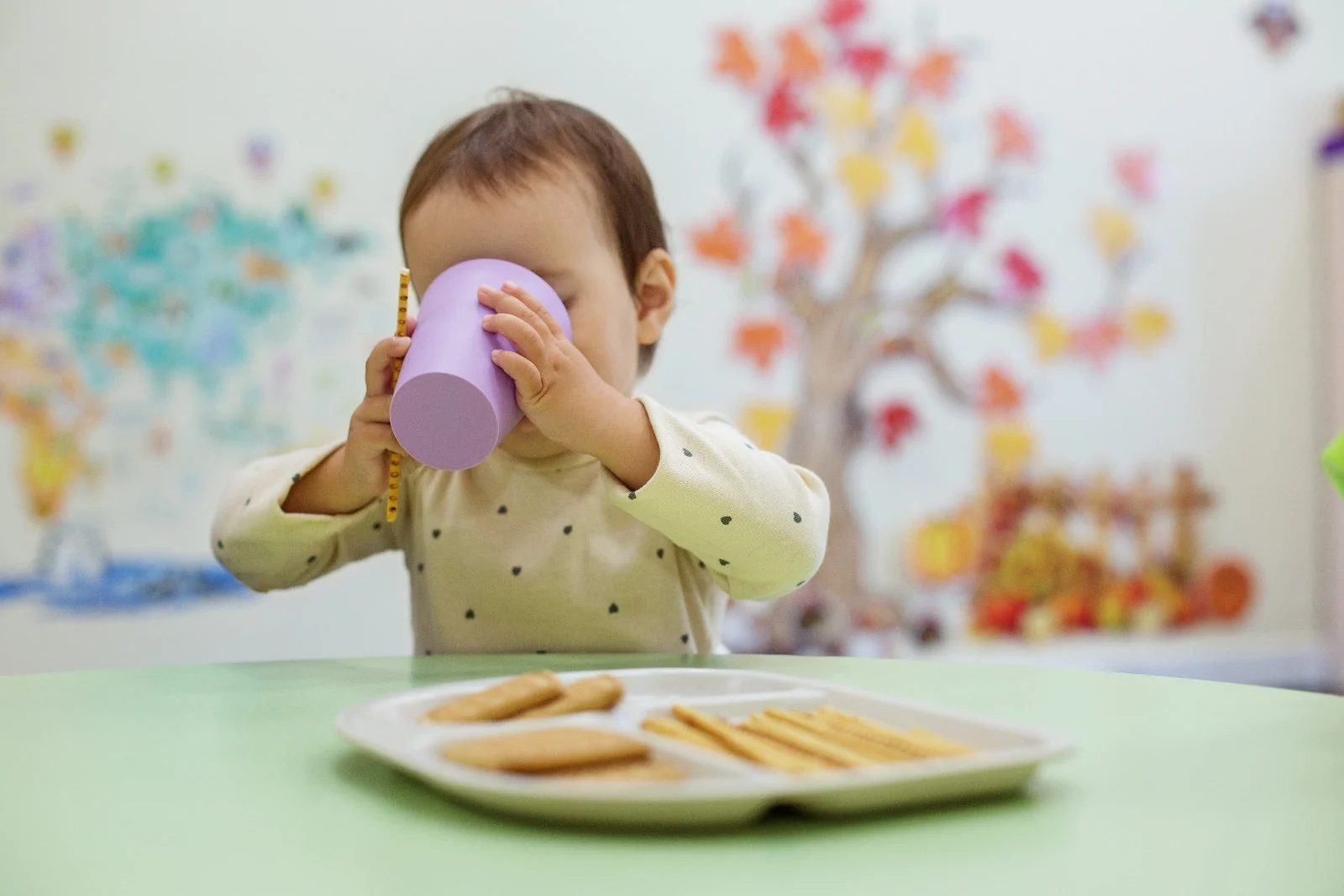
Your baby’s first cup can arrive with their first solid foods, usually around 6 months. The AAP recommends offering a cup at that point, whether it’s a sippy, a straw cup or an open cup, which it calls “just fine, too.”
So if you’re wondering when to introduce an open cup, think first soft bites. The AAP’s page on moving from bottle to cup, as of its 2023 update, has the switch starting around 6 months and wrapping up sometime between 12 and 18 months. That timeline is about leaving the bottle behind. The American Dental Association (ADA) says to encourage drinking from a cup by the first birthday.
At the start, the cup is mostly practice. The AAP’s guide to drinks for young children says you can offer a little water around 6 months, 4 to 8 ounces a day, in an open, sippy or straw cup. It builds cup-drinking skills and is unlikely to replace much breast milk or formula. If your days follow an eat, play, sleep rhythm, the cup simply joins the eating part.
Will started at six months, right as he began solids, and we skipped sippy and straw cups entirely. The AAP leaves room for that: it calls the sippy an optional step and says many children go from breast or bottle to a regular cup without one.
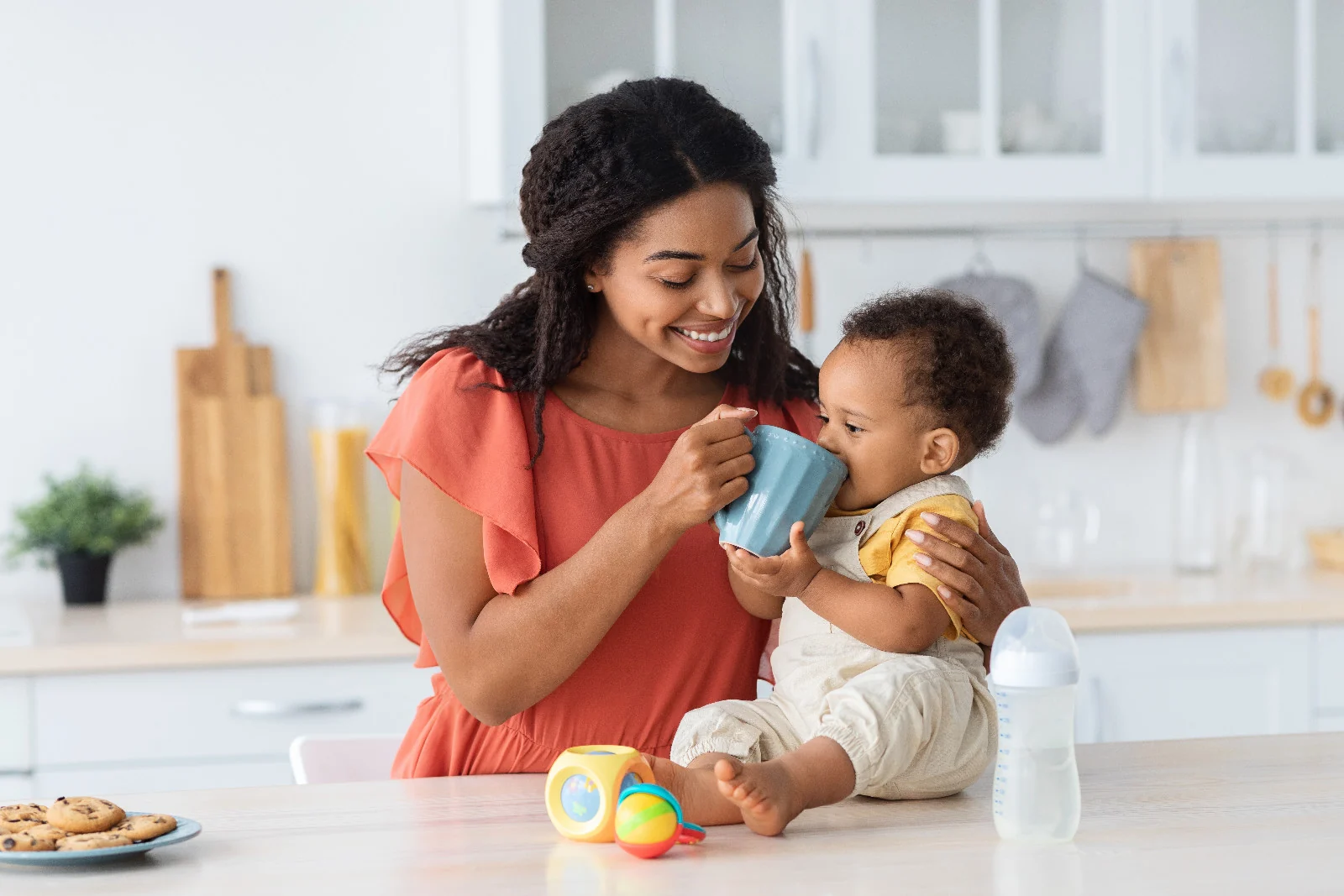
Maybe you’ve heard a baby should be drinking from an open cup by 12 months. The CDC’s 12-month milestone is gentler: drinking from a lidless cup while you hold it. Your hand is still part of the picture.
 Save
Open cup progression by age, at a glance
An open cup progression is the slow shift from sips you hold for your baby to a cup they manage on their own. It usually runs from about 6 months to around age 2, with spills along the whole way.
No single checklist lays the whole path out, so I pieced this one together from the CDC milestones, the AAP’s cup advice and our own table. Five rough stages. Plenty of babies skip one, camp out in another or slide back for a while.
| Stage | Rough age | What it looks like | What’s in the cup |
|---|---|---|---|
| 1. You hold, they sip | Around 6 months, as solids start | You bring a small cup to their lips and tip it slowly. Most of the first sips run down the chin | A little water (the AAP’s range is 4–8 oz a day) |
| 2. Two hands on the cup | Varies a lot (one baby’s story: Will drank on his own at about 10 months) | Both hands grab the cup. They tip too far, then slowly learn to set it back down | A thin sip at a time |
| 3. Drinking with your help | By 12 months (CDC milestone) | “Drinks from a cup without a lid, as you hold it” | Water, and whole milk once they turn 1 |
| 4. Drinking, spilling sometimes | By 18 months (CDC milestone) | “Drinks from a cup without a lid and may spill sometimes” | Water and whole milk |
| 5. The open cup as the everyday cup | About 2 years (AAP) | The AAP says it’s healthiest for kids to drink from an open cup by about age 2 | Water and milk |
Ages are ranges. Milestones describe what most children do, so use the chart as a map and let your child’s interest set the pace. Row two comes from our house, since no checklist covers it.
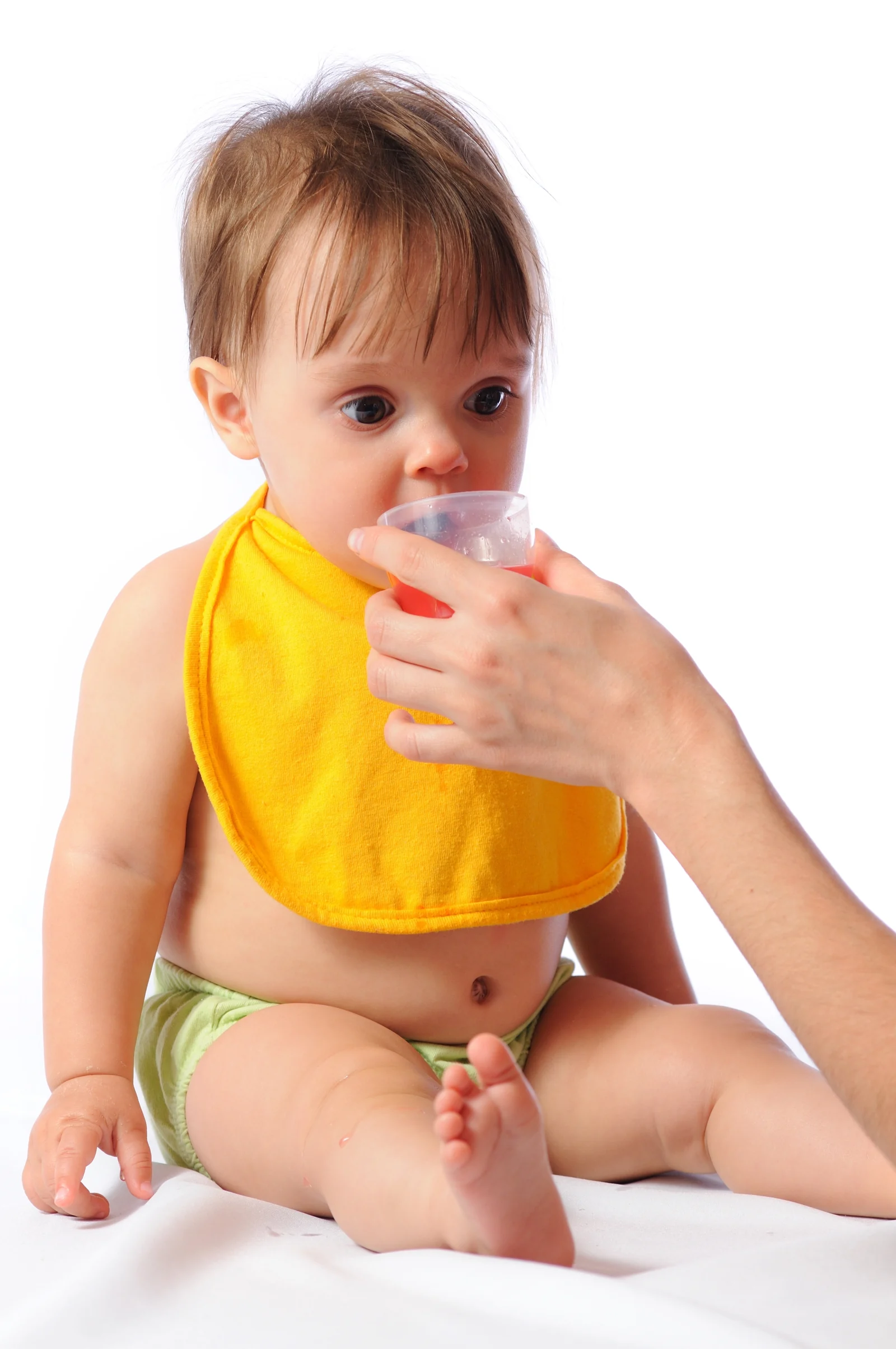
Most of the mess lives in those first two rows, when the water goes down the chin, into the bib and under the high chair strap.
 Save
If your baby is there right now, you’re in the wettest stretch of the chart, the one where a little planning saves the most laundry.
Open cup vs. straw cup vs. sippy cup
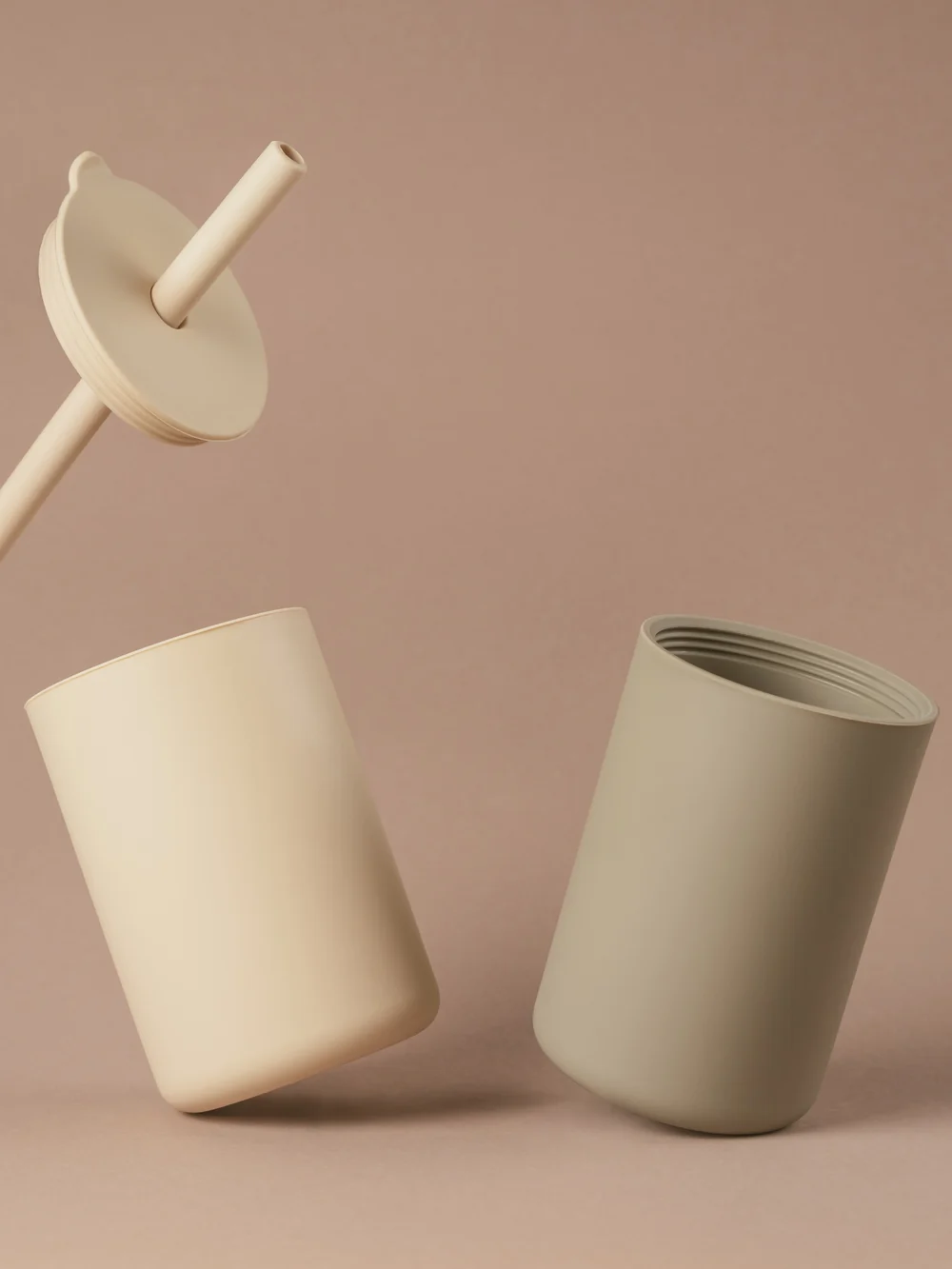
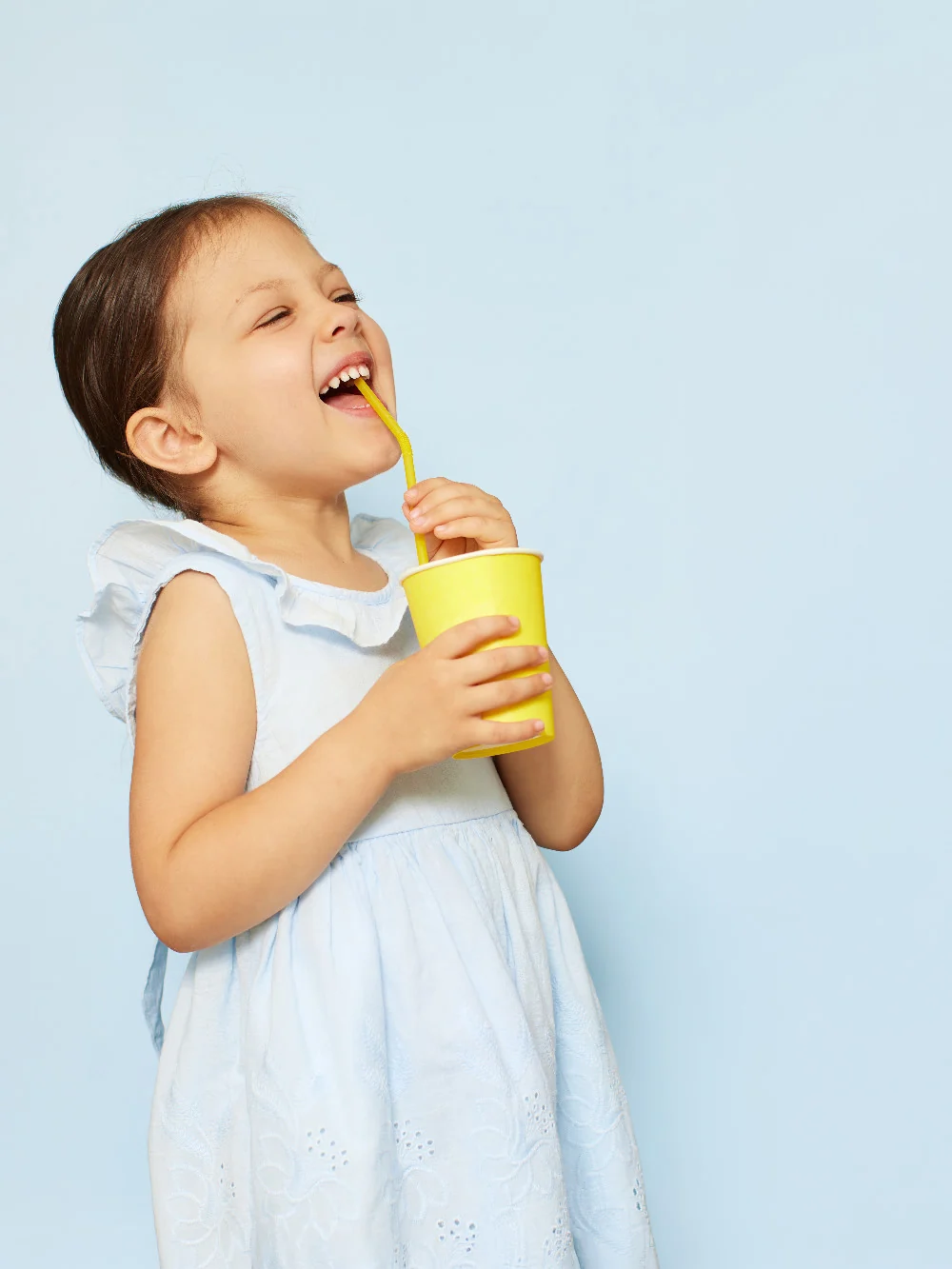
Open, straw and sippy cups are three ways to drink: tipping a cup to the lips, sucking through a straw, or sipping through a spout. The AAP names all three as first-cup options when solids start and doesn’t crown a winner.
Sippy cup or open cup is one of those questions that can eat a whole nap time. This is how the three actually compare.
| Cup | How your baby drinks | What the AAP or ASHA says | Watch for |
|---|---|---|---|
| Open cup | Tips the cup and sips from the rim | AAP: an open cup at the start is “just fine, too,” and drinking from an open cup by about age 2 is healthiest | Spills, so pour very little |
| Straw cup | Sucks the liquid up a straw | AAP: a cup with a straw is one of the first-cup options. ASHA article: offer straws and open cups alongside any sippy use | Keep some open-cup practice in the mix |
| Sippy cup | Sips through a spouted lid | AAP: an optional step, used only while your child is learning | Valves. The AAP says to choose a sippy with no valve |
The speech worry is where online advice gets loudest. Speech-language pathologist Stefanie LaManna, writing for the American Speech-Language-Hearing Association (ASHA) in 2024, suggests a sippy cup of any kind in moderation, alongside straws and open cups. I couldn’t find a solid source that ranks one cup above the others for talking or mouth development, so I won’t rank them either.
 Save
 Save
Mix them if that suits your days. Ours ran on one small glass at the table. Yours might run on a straw cup in the diaper bag and an open cup at dinner.
Are sippy cups bad?
Pediatricians treat sippy cups as an optional step. The AAP says to use one only while your child is learning, to pick a spout without a valve, and to aim for drinking from an open cup by about age 2.
So where does “sippy cups are no longer recommended” come from? Most likely from three real pieces of advice squashed into one scary sentence.
Valves come first. With a valve cup, the AAP explains, kids have to suck to get anything out, “which is just like drinking from a baby bottle.” Then there’s how long: the ADA discourages frequent or prolonged sippy use. And there’s what goes inside. While your child uses a sippy, the AAP says to fill it only with plain fluoridated water, without juice or sugar.
The scary list you may have seen, cavities and crooked teeth and speech delays, matches what the AAP says about bottles. That page, as of 2023, lists these under prolonged bottle feeding: children who drink from bottles well into their second year may have tooth alignment problems and even speech delays, and cavities come from teeth constantly bathed in milk, formula, juice or other drinks. It doesn’t tie speech delays or crooked teeth to sippy cups.
On the sippy itself, LaManna’s ASHA piece is direct: “There’s no scientific evidence that links sippy cups and problems with oral and facial development.”
We never used one, since Will went straight to his little glass. If a valve-free sippy of water makes your outings easier, it’s doing its job.
 Save
How do you choose the best open cup?
Pick a cup small enough for both of your baby’s hands to wrap around, with no lid and no valve, in a material you’re comfortable seeing hit the floor. Then pull up a chair right next to theirs.
Every material has a cup somewhere calling itself the best open cup for babies. We didn’t test cups side by side, so I won’t rank brands. These are the three things I’d check instead.
- Small. Both of your baby’s hands should fit around it, and a small cup only holds a little when it tips.
- Nothing to suck through. No lid, no spout. If you also buy a sippy for outings, the AAP says to choose one with no valve.
- A material you can live with. Plastic, glass, stainless steel and silicone all show up as baby cups, and I haven’t found a solid source that ranks them.
On BPA: the U.S. Food and Drug Administration (FDA) amended its rules in 2012 so BPA-based polycarbonate resins are no longer authorized for baby bottles and sippy cups. The FDA says the change rested on manufacturers having already abandoned that use, rather than on a new safety finding.
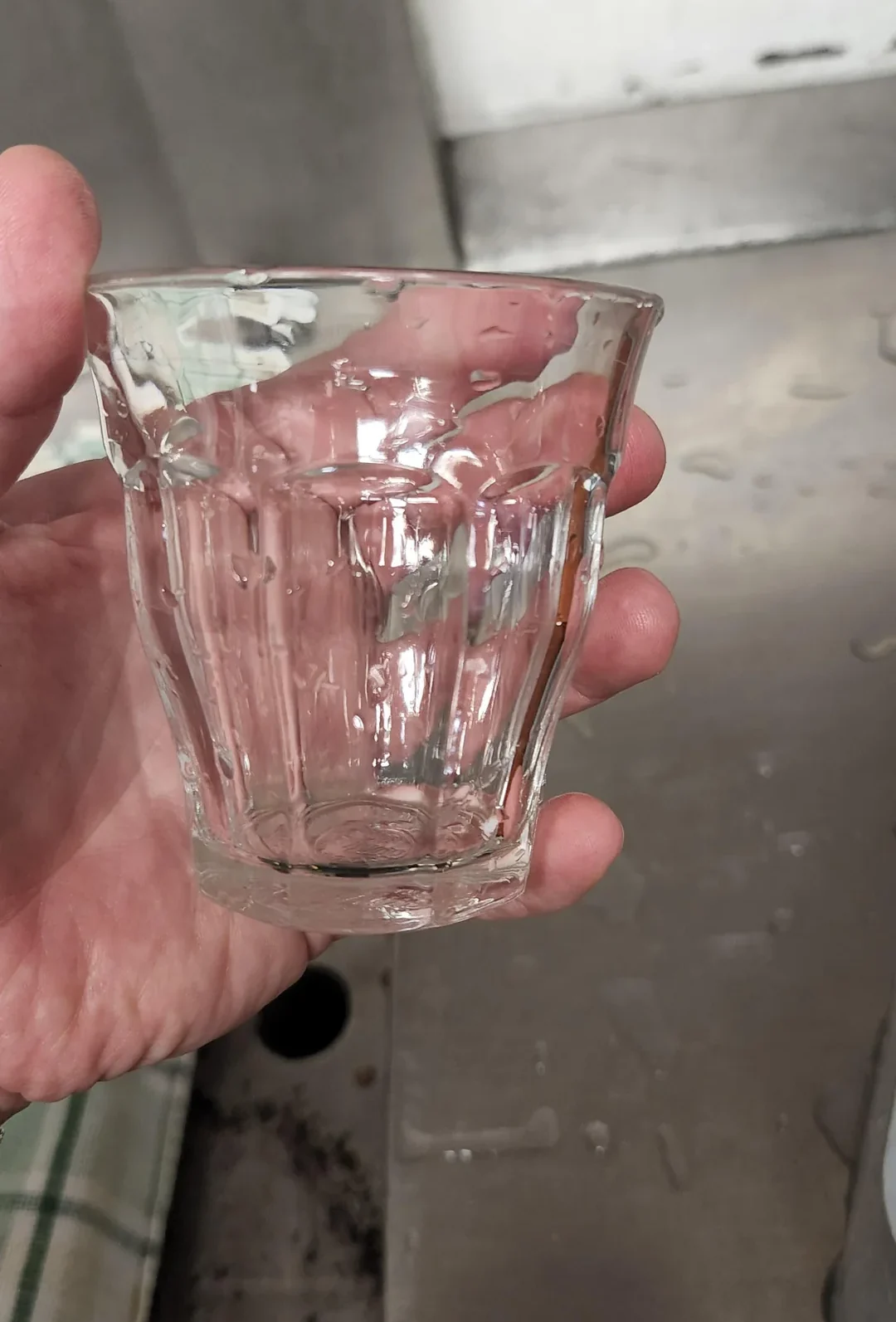
Will’s cup was glass: a Duralex Picardie in tempered glass, about 3 ounces (90 ml), one of a set of six I ordered on Amazon. It’s about the size of a small teacup, thick for its size and small enough for two clumsy little hands.
 Save
I wanted a real glass, in the Montessori spirit of giving children real things. I also had a hunch that a heavier cup would sit steadier in his hands than a very light one. That’s only my hunch, and I can’t point you to research behind it.
If you choose glass, an adult sits right beside your baby every single time the glass is in their hands. In our house that was Dom or me in the next chair at the table. Will never used his glass alone and never carried it around.
Tempered glass still breaks. Ours did once, when Will was almost one and swept his glass off the table onto the floor. Move your baby away from the spot before you clean anything (I carried Will over to the rug), then vacuum and go over the floor with a damp cloth to catch the small pieces.
Once the floor was clean, I told Will gently that glasses break when they fall. I didn’t scold him. I took another glass out of the set, and we carried on.
Where your baby sits matters as much as the cup. If you’re weighing a high chair against a low table, I compared the setups in my post on the Montessori weaning table.
Whatever cup you bring home, the most useful thing to pair it with is a grown-up in the next chair.
What goes in the cup at each age?
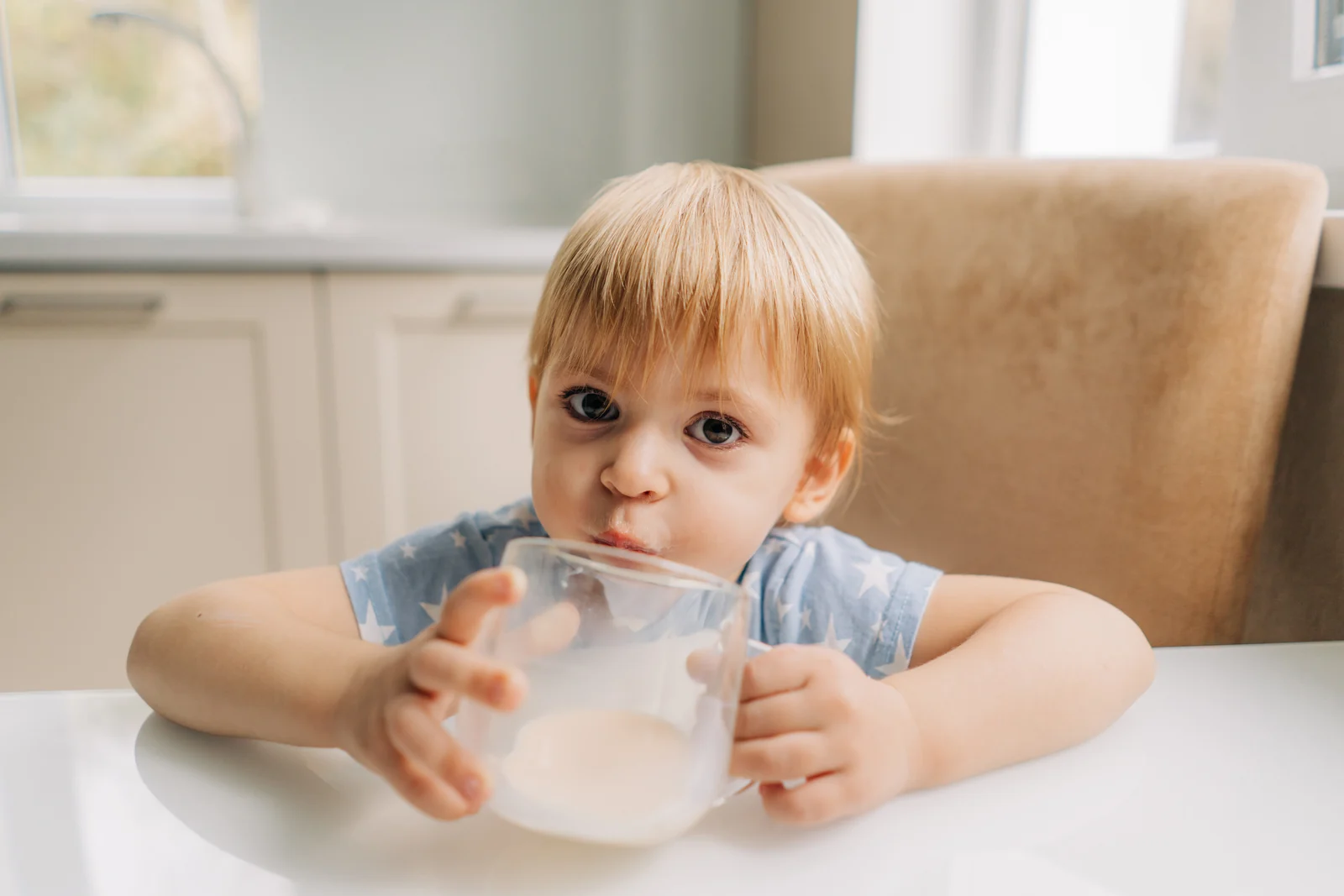
From about 6 months to the first birthday, the cup is mostly practice with a little water. Juice and cow’s milk don’t belong in the cup that first year, and from 12 to 24 months, water and whole milk do most of the work.
That first-year water is mostly practice. The AAP notes it’s unlikely to replace much breast milk or formula, and its page on starting solids says healthy babies don’t need extra water. So keep it to a little, no more than 1 cup (8 ounces) a day.
| Age | What goes in the cup | How much a day (AAP, as of 2023) | Skip or limit |
|---|---|---|---|
| 6–12 months | A little water | 4–8 oz (½–1 cup) of water, no more than 8 oz | No juice. No cow’s milk to drink |
| 12–24 months | Water and whole milk | Water 8–32 oz (1–4 cups). Whole milk 16 oz (2 cups) | Juice isn’t needed; if you offer 100% juice, no more than 4 oz a day (CDC, citing the AAP). Avoid added sugars |
The reasons juice and cow’s milk stay off the first-year menu belong with the rest of the food list, in my post on baby-led weaning. The short version for cow’s milk: the CDC says giving it to a baby before 12 months may put them at risk for intestinal bleeding.
 Save
How do you practice with fewer spills?
Start with a thin sip in a small cup, sit right beside your baby at the table, and keep a hand near the bottom while they lift it with both hands. Then do it again at the next meal.
Our first few weeks were soggy. Will had no idea yet how far to tip, so he’d lift the glass and pour it straight onto his face, and I’d be changing his shirt again. It took us about three to four weeks to find our groove, until he could bring the glass up, take a small sip and set it back down without sputtering. By about 10 months, he was drinking from it on his own.
I poured one thin sip into the bottom of Will’s glass, about a teaspoon’s worth. When it tipped, and it tipped a lot, all I had to wipe was a damp bib instead of a puddle on the table.
Miri’s Tip
Beyond the thin sip, one rule came from our house. Parents also trade tips like these in forums, such as this r/MontessoriForHome thread, where a parent was struggling with the open cup at 11 months:
- Sit down together. Practice at the table, with you in the chair beside them. That was our one fixed rule.
- Offer it after the food. Some parents bring the cup out once most of the meal is eaten.
- Show it slowly, with two hands. Lift your own cup with both hands, take a sip, set it down. Fewer words, slower hands.
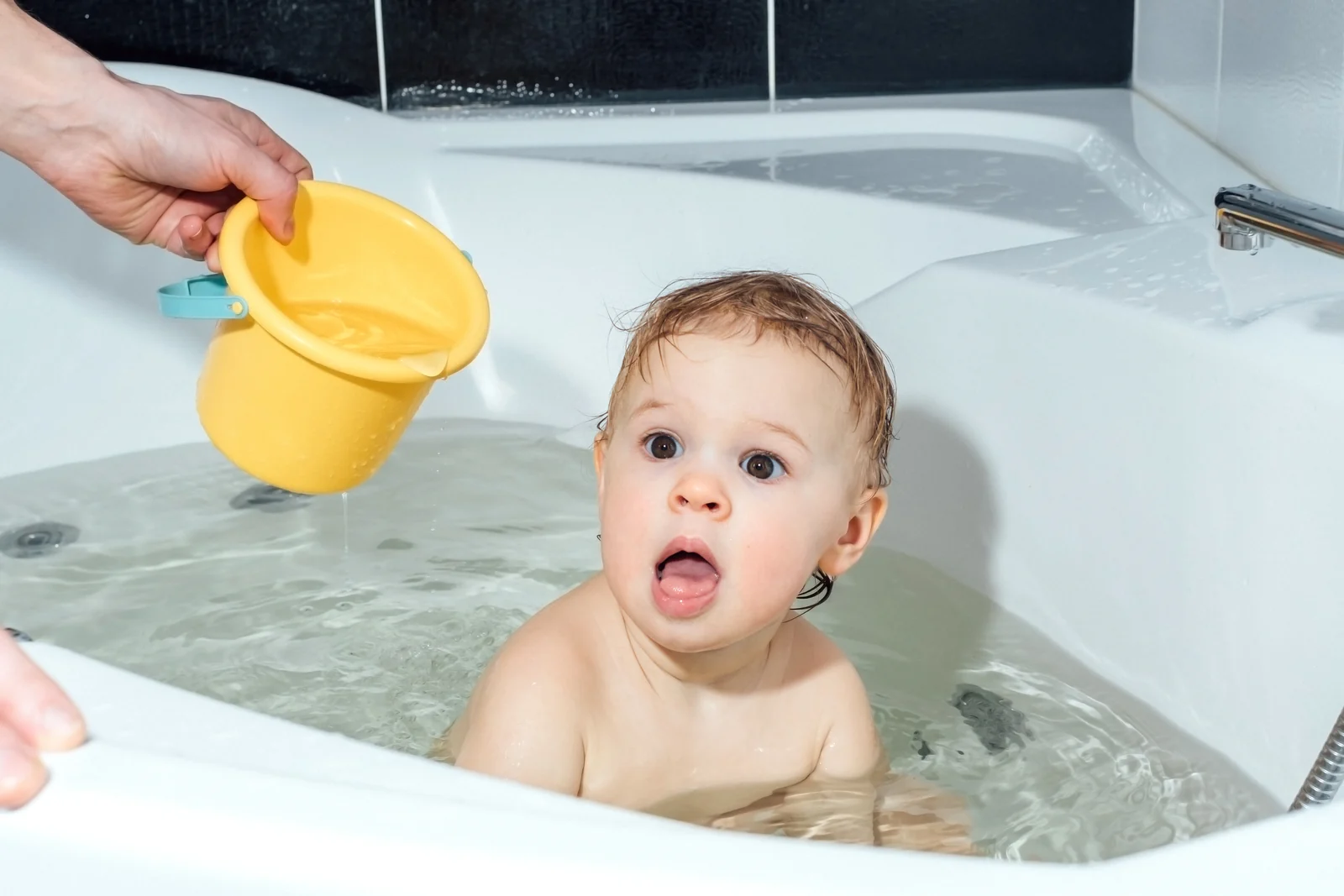
- Practice in the bath. A spill in the tub is just more bathwater, and you’re already kneeling right beside them.
 Save
Pouring their own water from a small pitcher comes later. Practical life is what Montessori families call everyday jobs like that, and pouring sits with the other practical life activities for each age.
One family’s tiny glass at 8 months
Nicole Kavanaugh, a Montessori enthusiast who writes at The Kavanaugh Report, wrote about her son’s weaning cup, her name for his first glass, back in 2017. He was 8 months old, and her post is honest about how it was going.
- Step 1: She went small. Her family’s answer was “this tiny glass from IKEA.”
- Step 2: She let him keep learning. At 8 months, she wrote, he “hasn’t quite mastered the cup yet, but is getting closer.”
- Step 3: She made peace with the misses. The water, in her words, “may or may not make it there.”
Eight months old, a tiny glass, and water that only sometimes reaches the mouth. If that sounds like your kitchen this week, your baby is right where a lot of babies are.
“It’s not a perfect process, but it’s an important one!”
Nicole KavanaughMontessori enthusiast sharing stories and tips, The Kavanaugh Report (2017)
It’s okay if it goes backward
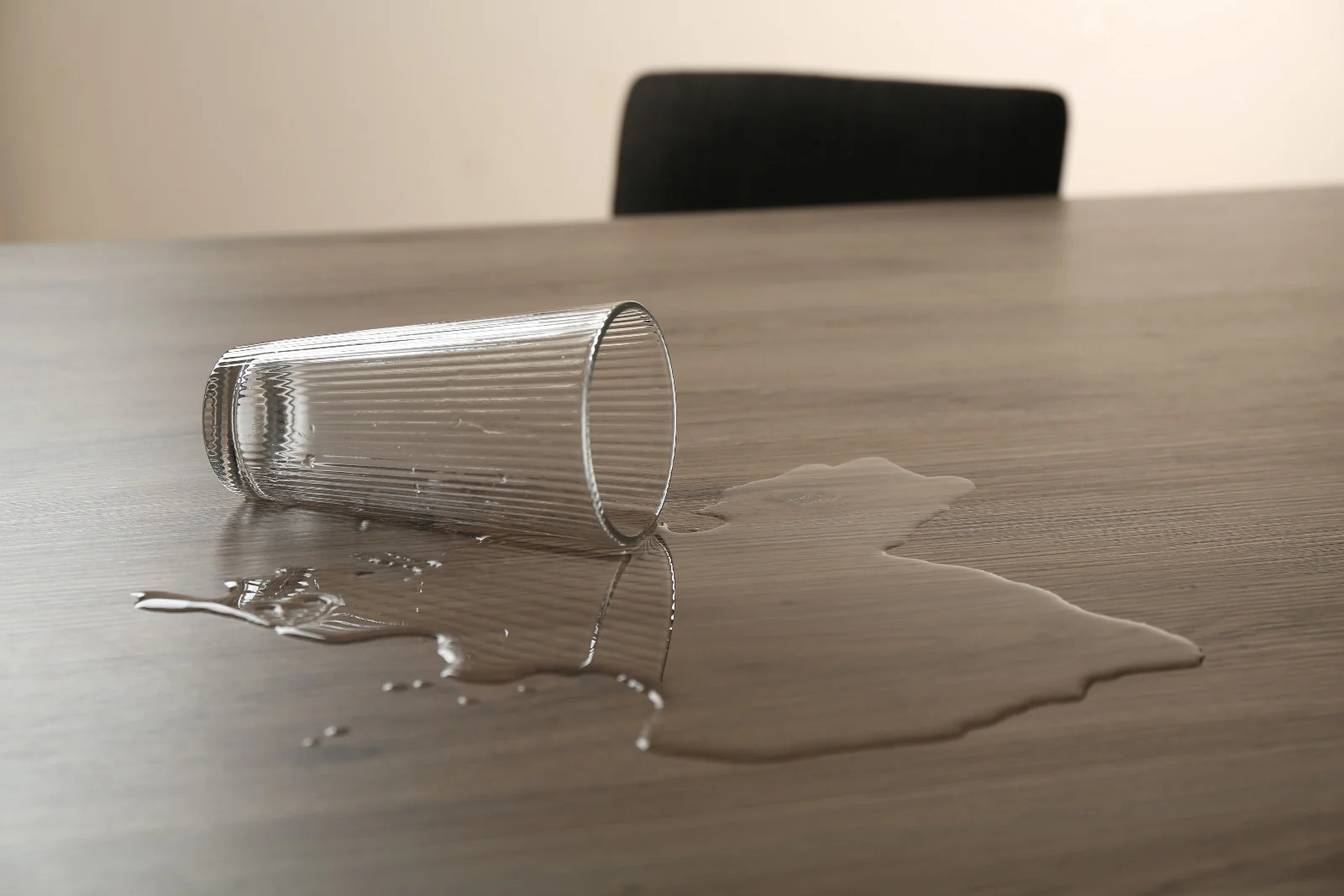
Cup skills rarely move in a straight line. Parents who’ve been through it describe progress, then a stretch of tipping and dumping, then progress again. It ebbs and flows, and a backslide doesn’t erase the weeks of practice that came before it.
 Save
The checklists allow for it too. The CDC’s 18-month milestone still includes “may spill sometimes,” so a messy week at 14 months fits right inside it. When it happens, pour a little less, hold the cup with them again for a few days and keep offering it at meals. If anything about how your child drinks or swallows worries you, bring it up with your pediatrician.
Frequently Asked Questions
What is the best open cup for a 1 year old?
The best open cup for a 1-year-old is small enough for both hands, has no lid or valve, and is made of something you’re fine seeing dropped. We used a tempered glass of about 3 ounces, always with an adult sitting beside Will. At this age, daily practice counts for more than the brand.
What cup should a 12 month old drink from?
A 12-month-old can drink from an open cup with your help, with a straw cup or valve-free sippy alongside if you like. The CDC’s 12-month milestone is drinking from a lidless cup as you hold it, and the AAP aims for an open cup by about age 2. Fill it with water and whole milk.
Should I give my baby an open cup or a straw cup first?
You can give your baby an open cup or a straw cup first, or both. The AAP lists an open cup, a straw cup and a sippy as first-cup options when solids start, and the ASHA article suggests offering straws and open cups alongside any sippy use. We went straight to a small glass with Will because it suited us.
Conclusion
If the first sip ends up on the bib, the floor and your sleeve, that’s a normal first try. You don’t need a special cup or a perfect setup to begin. Pick something small, sit down next to your baby at the next meal, pour less than feels worth pouring, and watch what they do with it. The milestones will come at their own pace, one damp bib at a time.
Pour one sip at the next meal and keep a cloth within reach. Every wet bib is practice, and you’re the one making room for it.
Miri
Fewer toys, deeper play.
Further Reading & Resources
See all 12 sources
- Cups and drinks: From Bottle to Cup · Recommended Drinks for Children Age 5 & Younger · When Can Babies Start Solid Foods? (American Academy of Pediatrics, AAP) · Foods and Drinks to Avoid or Limit (CDC)
- Milestones: Milestones by 1 Year · Milestones by 18 Months (Centers for Disease Control and Prevention, CDC)
- Teeth and speech: Nutrition for babies and kids (American Dental Association, ADA) · Skip the Sippy? (ASHA Leader Live, 2024)
- Materials: Bisphenol A (BPA): Use in Food Contact Application (FDA)
- Real parents: Montessori Weaning Cup (The Kavanaugh Report) · Reddit: the open cup at 11 months, drinking out of an open cup