

The Object Permanence Box With Tray from Nienhuis Montessori costs $69.00 as of October 2026. It’s birch plywood and beech, and it’s honestly lovely. You’ve got it sitting in a cart in one tab, and you’re doing the math every parent on a budget does before checking out: how many weeks will they actually use this?
Over by the back door, an empty oatmeal canister is sitting on top of the recycling bin, lid and all.
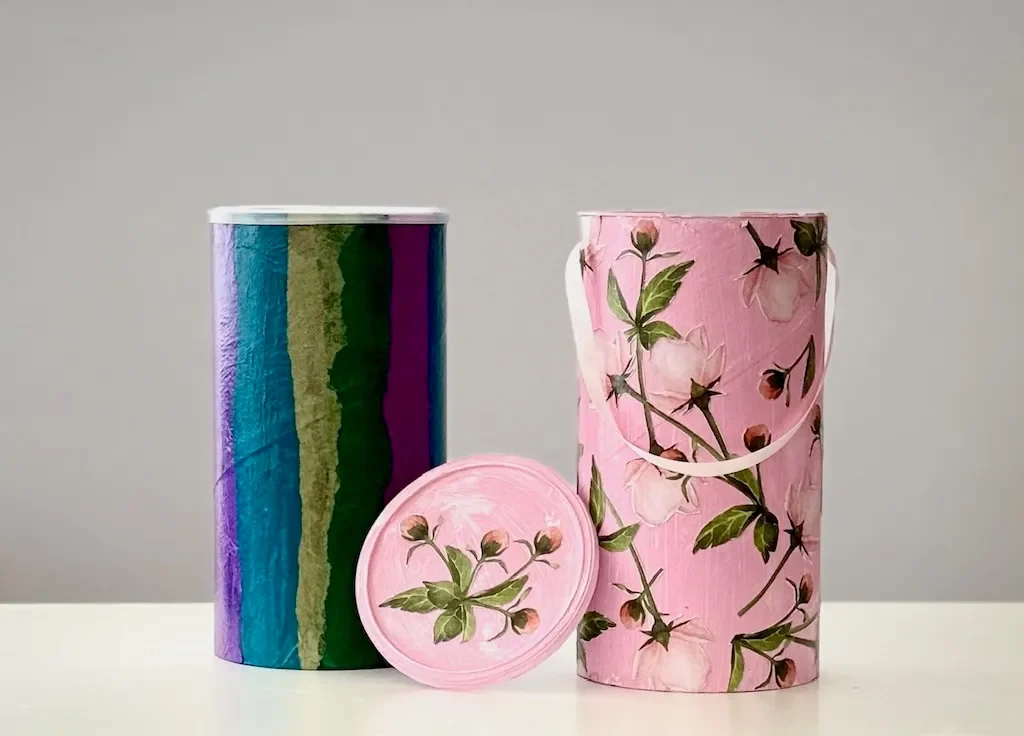
That canister is most of a ball drop box already. Cut a round hole in the lid, find a ball too big to fit in your toddler’s mouth, and you’ve made the first material on this list for roughly the price of breakfast.
Homemade materials are one small corner of Montessori activities at home. This post stays in that corner: one or two things to make for each stage from about 14 months to 3 years, the developmental milestone each one lines up with, and the store price next to it, so you can see exactly what you’re saving.
 Save
Montessori activities with household items: what makes them Montessori?
A homemade material is Montessori-style when it gives your toddler one real thing to do with their hands, sized for them, that they can repeat as many times as they like.
In Montessori classrooms, practical life exercises are the everyday jobs of looking after the space and yourself, like dusting, sweeping and laying a table, and they help a child become a contributing member of the community, according to the Association Montessori Internationale (AMI). How those jobs grow with your child is a topic of its own, covered in practical life activities by age.
For homes, the American Montessori Society (AMS) suggests appropriately sized, real kitchen utensils in place of plastic toys. At home, that can look like a wooden spoon from your own drawer, a jar your toddler can really open, or a canister that used to hold oatmeal. Lids and containers do a lot of the work in this post for exactly that reason. They’re real, and plenty of them already fit small hands.
If you’d rather make nothing at all, there are lots of ways of using kitchen things exactly as they are. Everything below takes a few minutes with scissors or a craft knife (your job, of course), and gives you a material built for one stage.
 Save
DIY Montessori activities by age at a glance
Your toddler’s interest outranks every age in this chart. Treat the ages as rough ranges: if your 2-year-old still wants the ball drop, keep it out, and if your 18-month-old reaches for the jar lids, hand them over.
Each row pairs a homemade material with a milestone from the Centers for Disease Control and Prevention (CDC). The CDC describes milestones as “things most children (75% or more) can do by a certain age.” Think of them as things to notice as they show up. You don’t have to teach any of them.
| Age (roughly) | What to make | Made from | Matches this CDC milestone | Store version |
|---|---|---|---|---|
| Around 14 months | Ball drop canister | An oatmeal canister with a round hole cut in the lid, plus a ball too big to fit in the mouth | By 1 year: “puts something in a container, like a block in a cup” | Push Box, $63.60 (Montessori Services) · Object Permanence Box With Tray, $69.00 (Nienhuis) |
| Around 18 months | Slot drop box and spoon scooping | A lidded tub or sturdy box with a slot cut in the lid, big plastic jar lids as “coins,” a wooden spoon and two bowls | — | About $15 to $25, what I paid for Will’s simple drop box |
| Around 2 years | Lid basket | Clean plastic bottles and jars in a few sizes, each with its lid | By 2 years: holds a container in one hand and takes the lid off with the other | — |
| Around 2½ to 3 years | Twist, thread, pinch | Screw-top jars, a shoelace with large pasta tubes, clothespins on a low line | By 30 months: “unscrewing lids” · By 3 years: “strings items together, like large beads or macaroni” | — |
Rows without a price are rows where nobody needs to sell you anything. A lid basket is just lids.
Pick the row closest to your toddler right now and make that one thing this week. The rest of the table will keep.
What can you make for a 14-month-old?
Cut a round hole in an oatmeal canister’s lid, hand your toddler a ball too big to fit in their mouth, and show them once how it drops in and comes back out when the lid lifts off.
According to the CDC’s milestones by 1 year, most children can put something in a container, like a block in a cup. So if you’re hunting for DIY Montessori activities for a 14-month-old, anything built around in-and-out is a good bet. Your toddler drops it in, it vanishes, they find it again. Then they do it again. And again.
Three things to set out at this stage:
- Ball drop canister. The oatmeal canister from the top of this post. You do the cutting, then tape over the edge of the hole so it’s smooth. It’s the homemade cousin of an object permanence box, where the whole fun is a ball that disappears and turns up again.
- A cup and a few blocks. The CDC’s own example, taken literally: a wide cup and a handful of blocks too big to fit in the mouth. Nothing to cut at all.
- A treasure basket. That’s a basket of everyday objects for your toddler to sit with and turn over. It fits right alongside these, as long as every object is larger than their mouth.
The store version of the ball drop is the Push Box from Montessori Services, $63.60 as of October 2026 and sold for ages 12 to 24 months. It’s a birch plywood box, 9 x 6 1/4 x 4 inches, with a yellow beech ball your child pushes through the holes. It’s solid and good-looking, and the job it does is the same one your canister does.
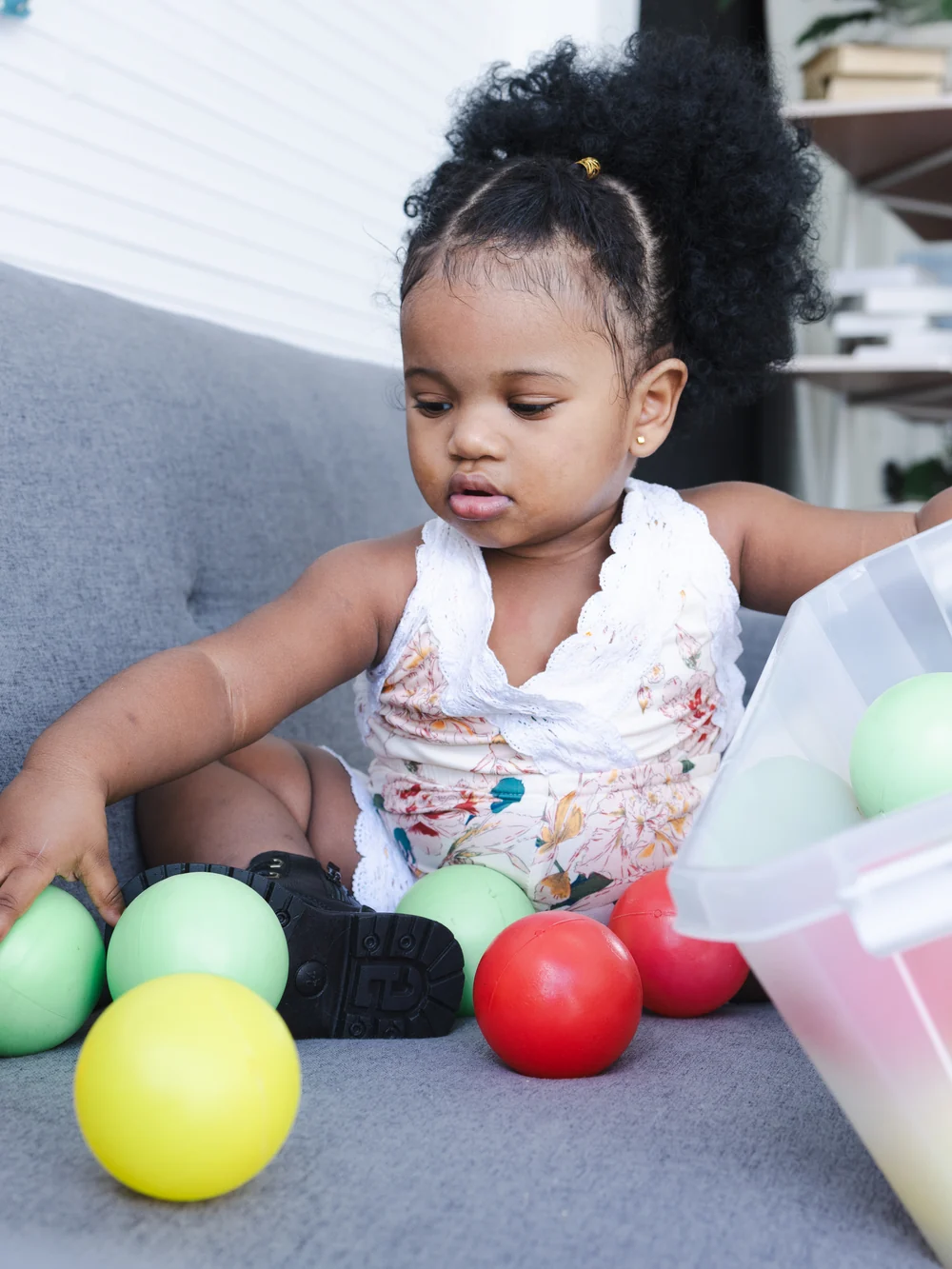
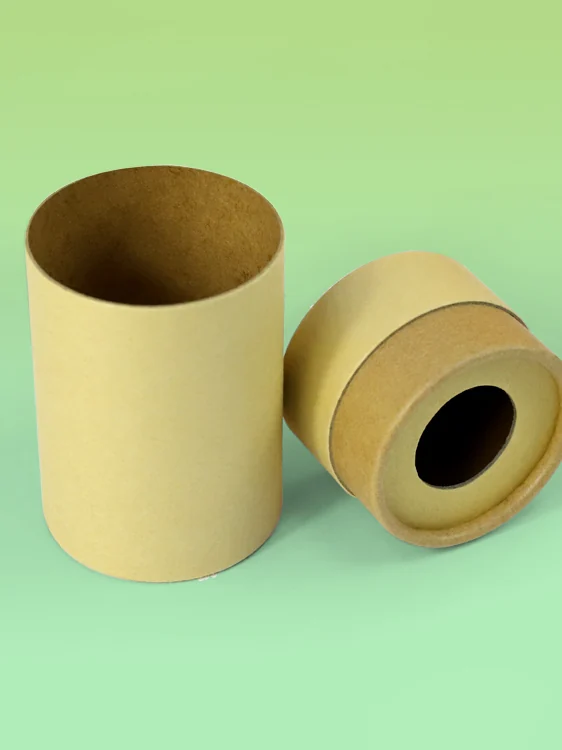
Pick a ball too big to fit in your toddler’s mouth. Breakfast today, a ball drop by naptime.
Household items for toddler play at 18 months
Size comes first at 18 months. A slot box and a wooden spoon with two bowls make good household items for toddler play, as long as every piece is too big to fit in your toddler’s mouth.
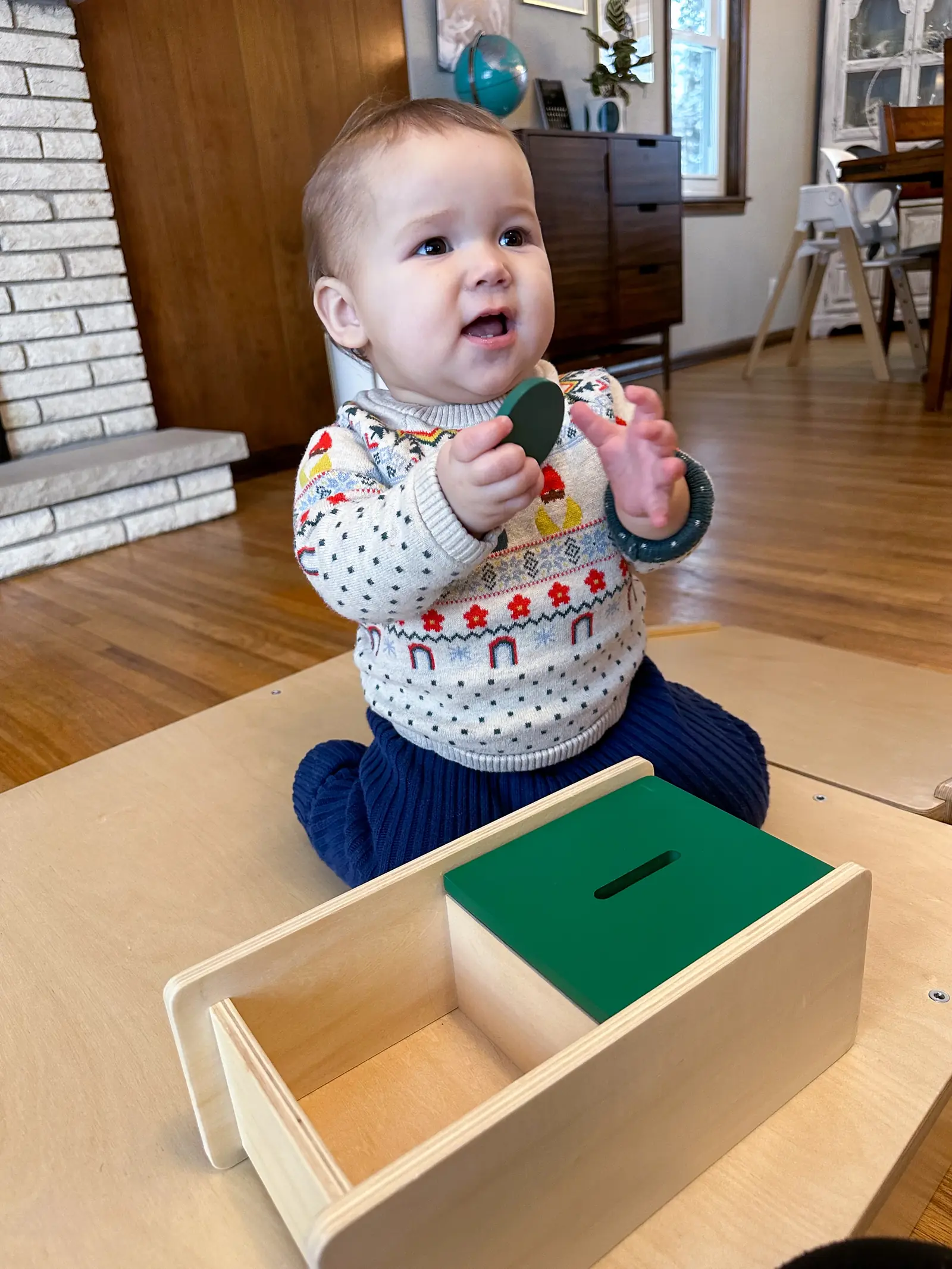
The slot box is a step up from the ball drop because the opening is narrow, so each piece has to be turned just right before it slips through. Cut a slot in the lid of a plastic tub or a sturdy box, and use big plastic jar lids as the “coins.” Real coins stay out of this one. The American Academy of Pediatrics (AAP) puts coins on its list of household items to keep away from young children, which is the whole reason the jar lids get the job.
 Save
If I had to pick one more of the DIY Montessori activities for an 18-month-old, it would be scooping, because it reuses what you’ve already made. Set out two bowls and a wooden spoon, and put the balls from the ball drop in one bowl. Getting a round ball to sit on a spoon long enough to cross the gap is slow, fiddly fine motor work, and plenty of balls will end up on the floor. That’s fine. Picking them up is part of the job.
What DIY materials work for a 2-year-old?
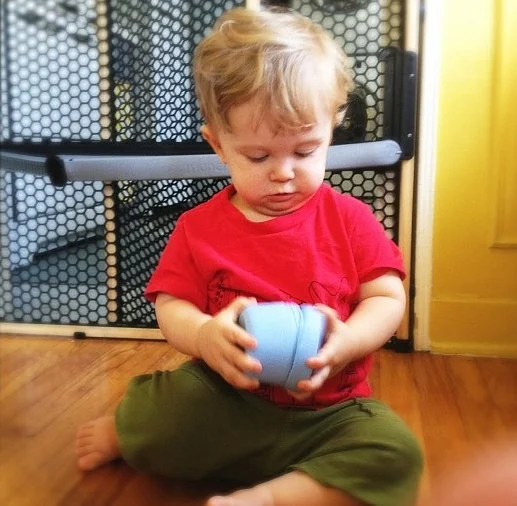
Lids are the most useful DIY material for a 2-year-old: a basket of clean plastic bottles and jars in different sizes, each with its own lid, to match, open and close.
By 2 years, the CDC’s milestone list includes holding something in one hand while using the other, like holding a container and taking the lid off. That one milestone explains why so many DIY Montessori activities for 2-year-olds come down to lids. One hand steadies, the other works, and both have to cooperate.
To make a lid basket, collect empty plastic bottles and jars in a few sizes, wash them well, and put them in a basket with the lids off. Skip any lid small enough to fit in your toddler’s mouth. Your toddler’s job is to work out which lid goes where. Mixing sizes turns the matching into a real little puzzle.
 Save
What Will did with an oatmeal canister and old plastic bottles
Two of the materials I made for Will came straight out of our recycling. Each one came out when he was clearly into that exact thing.
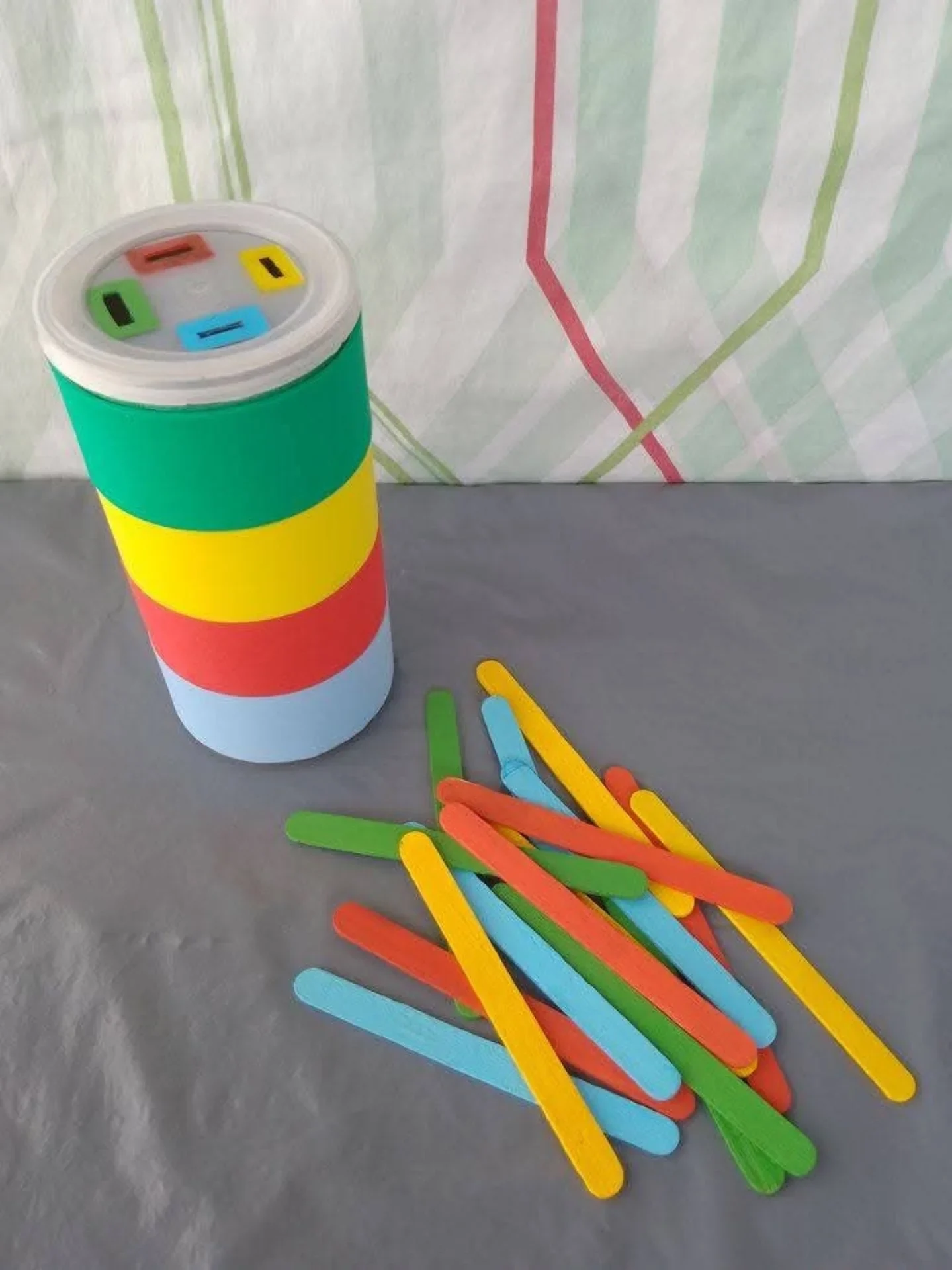
- Step 1: The oatmeal canister. I cut a round hole in the lid of an empty oatmeal canister to make a ball drop. Will was fascinated by things disappearing at the time.
- Step 2: Old bottles and jars. I washed out plastic bottles and jars in different sizes and let him match the lids and twist them open, right when he loved practicing turning his wrist.
- Step 3: Put it away when it’s done. He played with each one, totally absorbed, for a few weeks. Once his hands had it down and he got bored, I put it away and brought out something else.
 Save
You’ll notice there’s no age in that story. The CDC lists taking a lid off by 2 years and unscrewing lids by 30 months, which tells you roughly when a lid basket makes sense. Will’s interest told me when.
When your toddler gets bored with the lid basket, the lid basket has done its job.
DIY Montessori activities for 3-year-olds: twisting, threading, pinching
Closer supervision comes first once threading pieces and clothespins join the shelf. From about 2½ to 3, homemade options grow into twisting screw-top lids, stringing big pasta onto a shoelace, and pinching clothespins along a low line.
By 30 months, the CDC’s list includes using hands to twist things, like turning doorknobs or unscrewing lids. Swap a few screw-top jars into the lid basket, and the same material grows with your child for free.
The CDC’s 3-year page also lists stringing items together, “like large beads or macaroni.” The homemade version is a shoelace with a big knot at one end and a bowl of large pasta tubes. Large beads and pasta can still fit in a toddler’s mouth, so threading is a sit-down-together activity, and the pieces go back up high the moment you’re done.
Clothespins round out the set. Clip them around the rim of a basket, or along a low line, and let your child pinch them open and closed. There’s no CDC milestone for squeezing a clothespin, so this one is about watching your child’s fingers. If they can’t open it yet, set it aside for a few weeks and try again. Like the threading pieces, the clothespins come out when you’re sitting with your child and get put away after.
Cords count too. Safe Kids Worldwide says to keep cords and strings out of your child’s reach, so the shoelace and any low clothesline come out only while you’re beside your child and come down when you’re done.
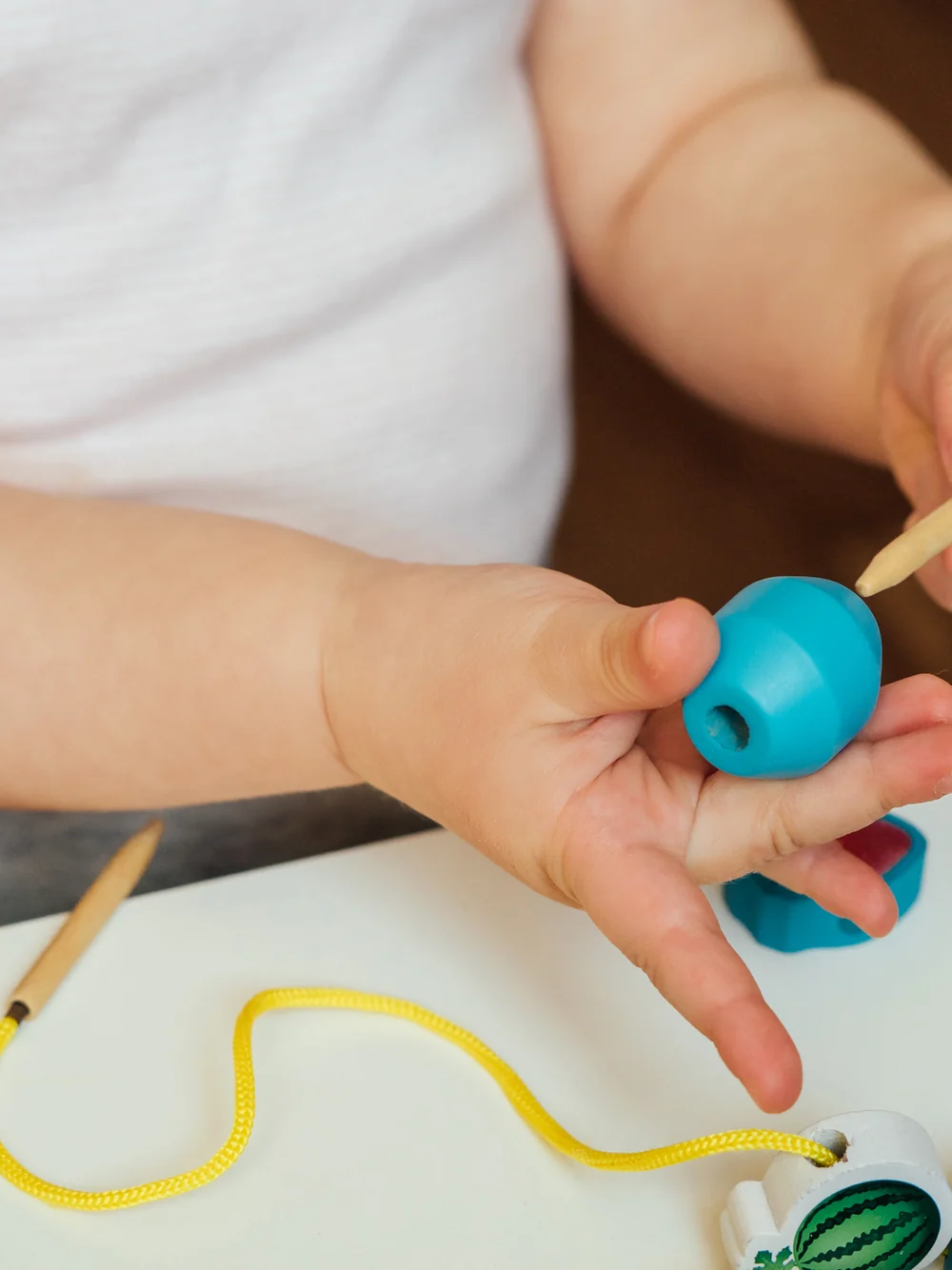
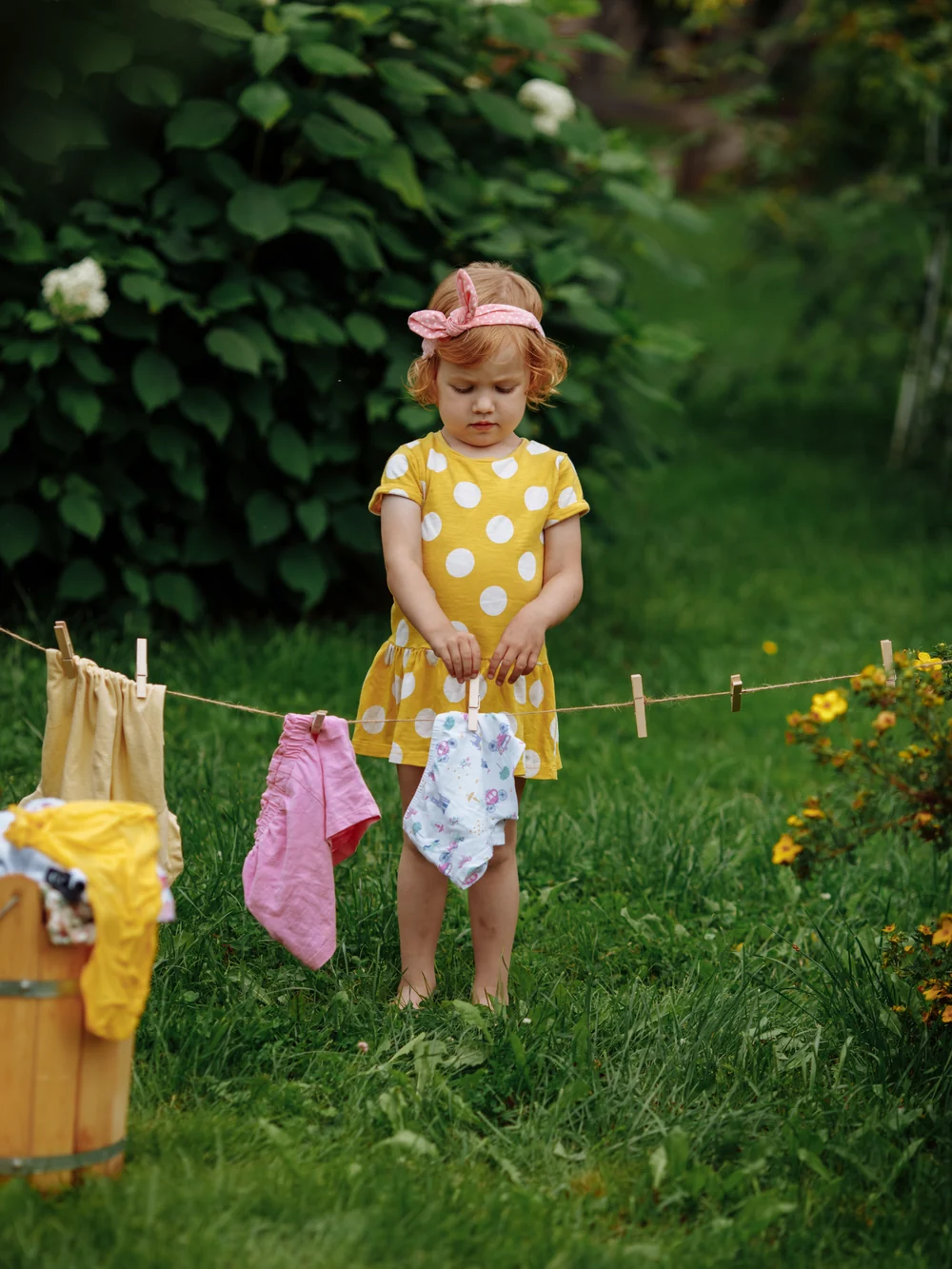
Threading pieces come out when you sit down and go back up when you stand. A low line and a few clothespins, and the laundry is suddenly theirs too.
A small jug and a cup at the sink add pouring to the mix. Put just a little water in the jug and keep a towel within reach, since spills come with learning to pour.
Toddlers often want the real version of a job. As one parent on r/MontessoriForHome found, a clothesline at their toddler’s height was a hit, and the only snag was that regular clothespins were too stiff for little fingers. Look for looser, easier-to-squeeze clothespins before you hang the line.
Miri’s Tip
How do you check a homemade material before your toddler gets it?
Before any homemade material reaches your toddler, check every loose piece for size, tug on lids and tape, run a finger along the cut edges, and decide which pieces only come out while you’re sitting right beside them.
Homemade materials skip the toy aisle, so the safety check happens at your kitchen table. It takes a couple of minutes.
Babies and toddlers have the highest choking risk because they love to explore by putting things in their mouths, says the AAP. Its list of household items to keep away from young children includes coins, marbles, balloons and small button-type batteries. Many choking incidents happen when older brothers or sisters give a younger child dangerous foods, toys or small objects.
The AAP’s toy-buying advice says all toys and parts should be larger than your child’s mouth, so every ball, lid and “coin” here should clear that bar. Threading pasta and clothespins don’t always clear it, so they stay in a closed container up high and come out only while you’re beside your child.
If you’re tempted to add a bowl of dried beans to the scooping, read the bean part of sensory activities for toddlers first. The National Library of Medicine’s MedlinePlus lists dried beans among the small objects curious young children may push into their noses.
DIY versions also wear out faster than wood: cardboard edges go rough where you cut them, lids loosen, and tape starts to peel. A quick look before each session catches most of it, and anything that’s coming apart goes into the recycling for real.
 Save
Cost check: homemade vs. store-bought
As of October 2026, the two wooden store versions in this post cost $63.60 and $69.00, and a Lovevery Play Kit for ages 1 to 3 is $132 every three months. Most homemade versions start in your recycling bin.
| Item | Store price (as of October 2026) | Who sells it | Homemade version |
|---|---|---|---|
| Object Permanence Box With Tray | $69.00 | Nienhuis Montessori USA | Oatmeal canister ball drop |
| Push Box, ages 12–24 months | $63.60 | Montessori Services | The same canister, or a sturdy box with a hole cut in the lid |
| Play Kit, ages 1, 2 and 3 | $132 per kit, every 3 months | Lovevery | A rotation of the homemade materials in this post |
The accountant in me can’t leave that last row alone. A kit every three months is four kits a year, so at $132 a kit, that comes to $528 per year of age by my math, before tax and shipping.
For comparison, the simple ball-and-coin drop box I bought for Will cost me about $15 to $25, and the rest of that story is in my post on Montessori on a budget.
The bigger number is time. Will played with each homemade material for a few weeks, then moved on. A $69 box that gets a few weeks of play makes for an expensive few weeks. An oatmeal canister that gets the same few weeks cost you breakfast. Short stages like these are where homemade makes the most sense.
Store-bought wood still earns its price in some homes. A birch plywood box won’t go soft at the corners the way cardboard does, and it can wait in a closet for a younger sibling. With Jimmy on the way, I get the appeal. If a wooden version fits your budget and you’ll use it for more than one child, that’s money well spent.
The homemade side is my own estimate: close to $0 for most of it, since it starts as recycling, plus maybe a few dollars of tape if your drawer is empty.
You don’t need the whole table this week. If you’re wiped by bedtime, one canister, one ball and a few minutes with the scissors is plenty to start, and the bottles can keep piling up until your toddler is ready for them.
Conclusion
Spending less doesn’t make the lesson any smaller. A ball still disappears and turns up again, and a lid still clicks into place, whether the box came from a catalog or from breakfast. Start with the one thing that matches what your toddler is into right now. When they’ve got it down and start to drift, put it away and bring out the next.
Pick one thing from the recycling bin this week and watch what your toddler does with it. Stretching a tight budget this carefully is its own kind of care.
Miri
Fewer toys, deeper play.
Further Reading & Resources
See all 14 sources
- Milestones: Milestones by 1 Year, 2 Years, 30 Months and 3 Years (Centers for Disease Control and Prevention, CDC)
- Choking, cords and small objects: Choking Prevention for Babies & Children and How to Buy Safe Toys (American Academy of Pediatrics, HealthyChildren.org, 2026 and 2024) · Choking and Strangulation Prevention Tips (Safe Kids Worldwide) · Foreign body in the nose (MedlinePlus, National Library of Medicine)
- Montessori background: Practical Life Exercises (Association Montessori Internationale, AMI) · Montessori at Home (American Montessori Society, AMS)
- Real parents: Pegs for little fingers (r/MontessoriForHome, 2026)
- Prices, checked October 2026: Object Permanence Box With Tray (Nienhuis Montessori USA) · Push Box (Montessori Services) · The Play Kits (Lovevery)