
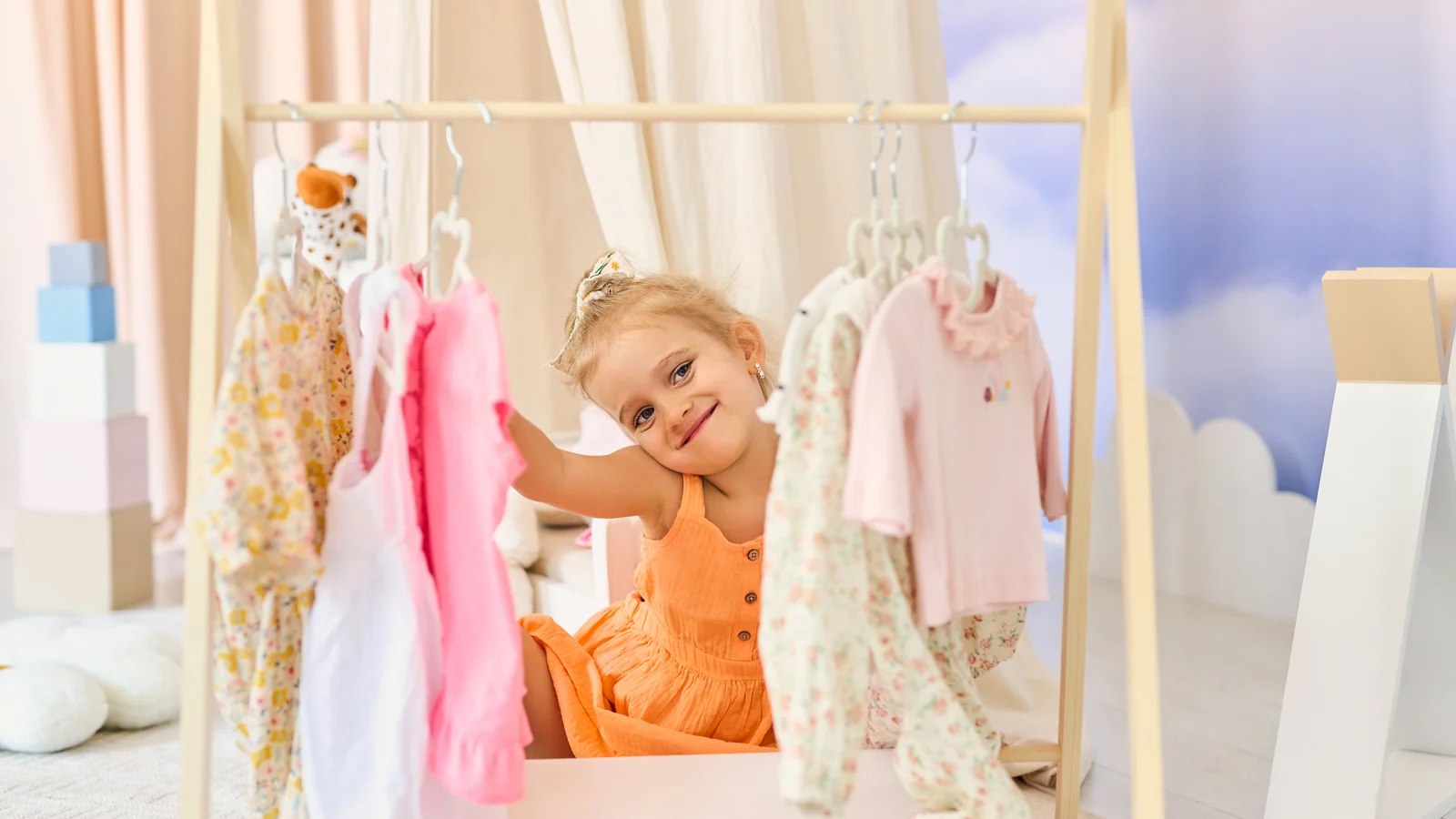
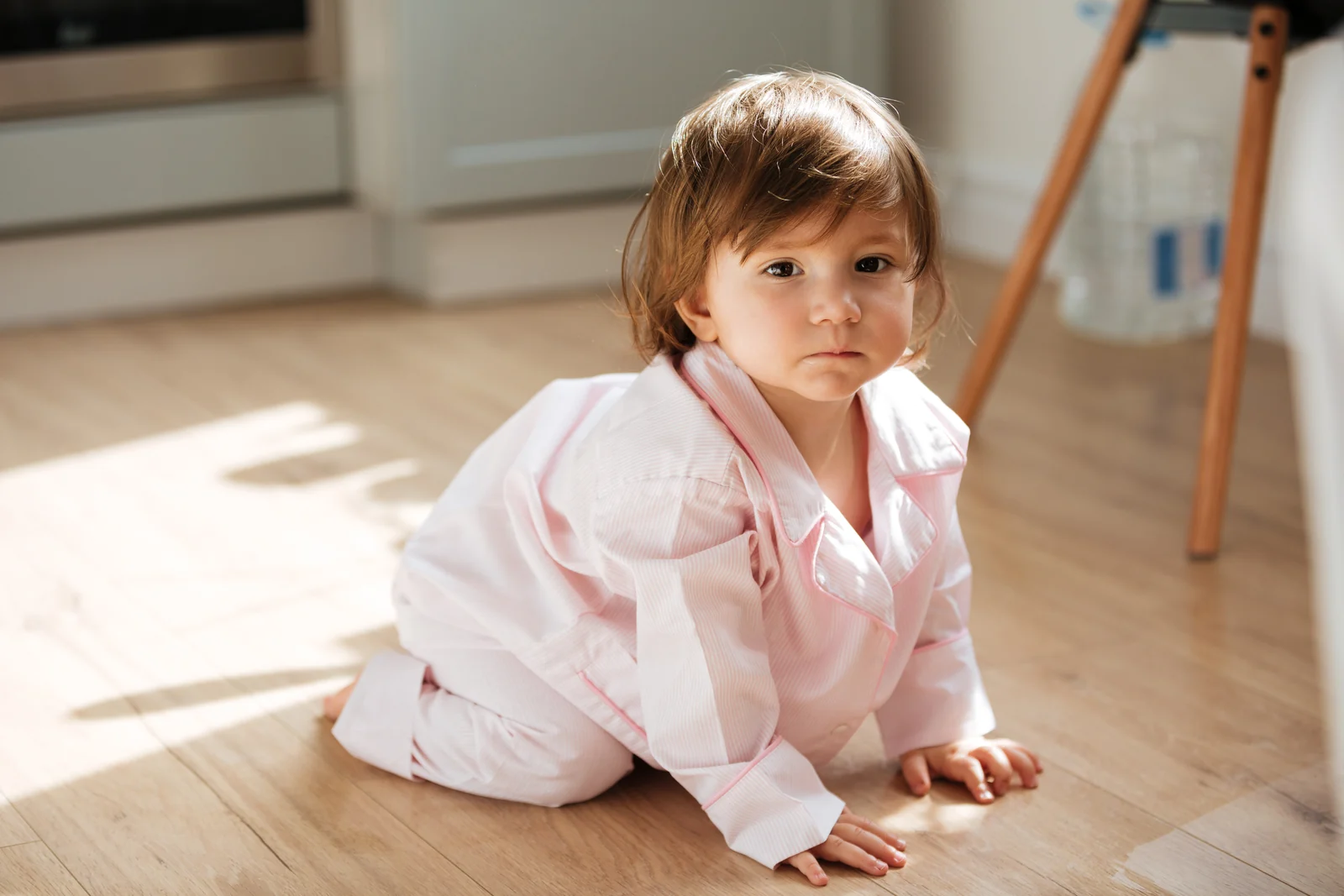
The snow started overnight, and your toddler has decided today is a T-shirt day. They’re flat on the bedroom floor in one sock, howling for the one with the shark on it. You’ve offered the fleece twice. The second time, it sailed across the room, and you were supposed to be out the door five minutes ago.
If that sounds like your house, you’re in good company. That “no” usually has very little to do with the shirt. A toddler gets told what to wear, when to sit and where to go all day long, and the closet is one of the few places they can push back.
A Montessori wardrobe gives them a real say, inside limits you set. The clothes hang low enough for small hands, and only a couple of outfits are on offer. Your toddler chooses, you know they’ll be warm, and the standoff loses its point. It’s one of the smallest corners of a Montessori home setup, and the one that touches your mornings most.
 Save
Why do low-hanging clothes help a toddler who says “no”?
Low-hanging clothes let your toddler reach, pick and put away their own things, so getting dressed turns into their job. The American Montessori Society (AMS) recommends them at home for exactly that reason.
The AMS advice for Montessori at home fits in one line: “For young children, use child-sized furniture and low-hanging clothes in the closet to encourage independence in clothing choices and tidying.” There are two jobs in that sentence. Choosing is the fun half. Tidying is the half you’ll thank yourself for at bedtime.
The idea starts in Montessori classrooms. A prepared environment is a room set up so children can manage on their own, and the Association Montessori Internationale (AMI) says everything in a Montessori classroom is child-sized to support exactly that. At home, that becomes a closet built around your child’s reach instead of yours.
Getting dressed also counts as practical life. Practical life is Montessori’s name for everyday jobs, and AMI’s examples run from dusting, sweeping and laying a table to care of self, all work that takes patience and focus. A toddler who fights you over a sweater can work on a zipper with total seriousness when it’s their idea. The same urge sends them up a learning tower to help with dinner, and into the other household jobs toddlers love to copy.
 Save
Tonight, kneel down in front of your child’s closet. From that height, what can they actually reach?
Setting up a toddler closet your child can reach
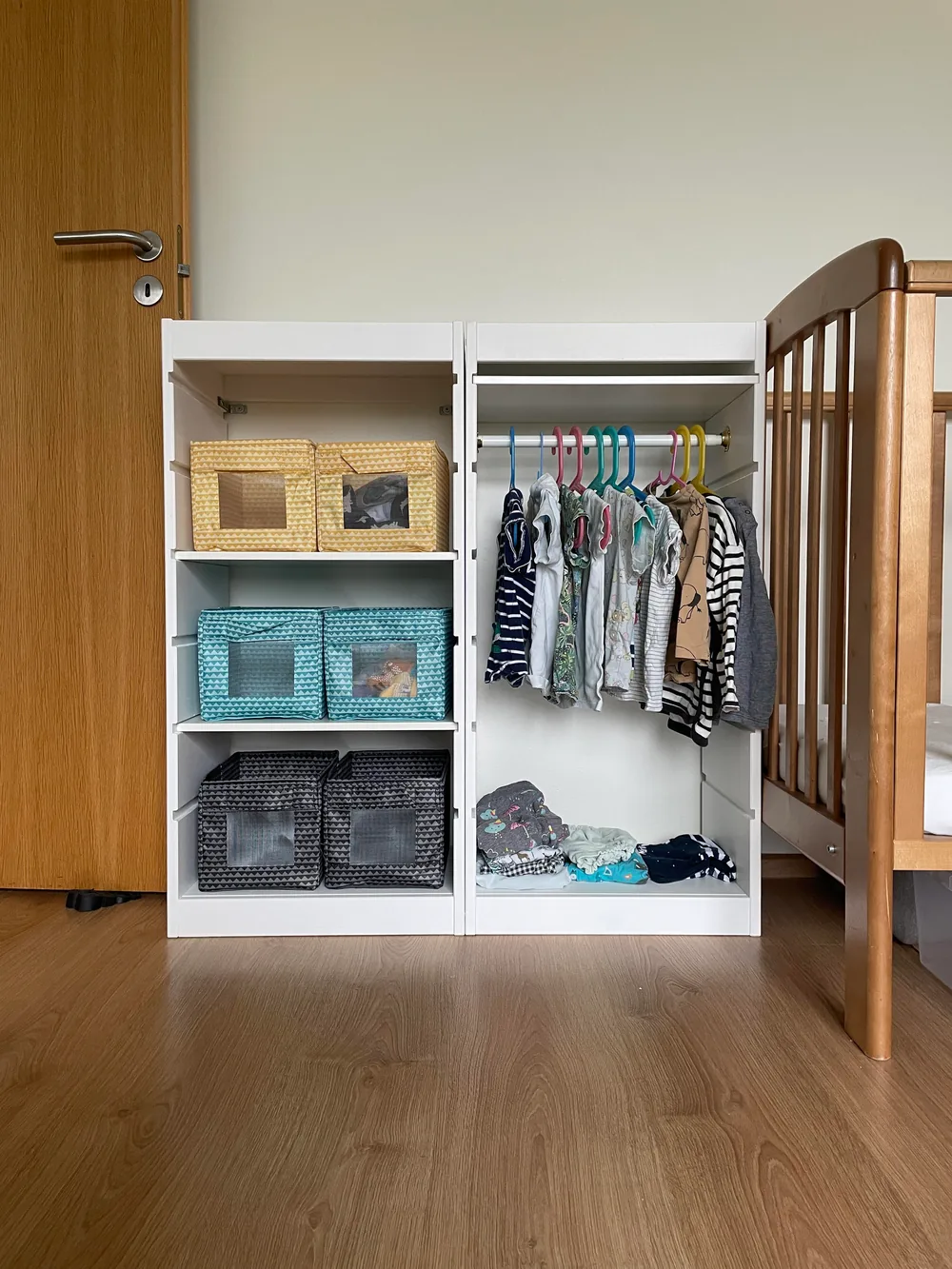
Start with a low rail or open wardrobe your child can reach standing flat-footed, then add a couple of low drawers or bins, a hook, a mirror and a spot to sit. Our whole dressing corner is about 35–39 inches tall.
You don’t need special furniture for this. A DIY Montessori wardrobe can start with the closet you already have or a short freestanding rack. The pieces below are what ours has, and what each one is for.
- A low rail or clothes rack. Stand your child next to it: if they can lift a hanger off without going up on tiptoe, the height is right. In Will’s room, it’s an open wooden wardrobe with no doors and a rail at his reach for jackets and button-up shirts. No closet to work with? A Montessori clothing rack with shelf does the same job, and the rail can move up as your child grows.
- Low drawers or small bins. Ours are two fabric drawers at the bottom, for underwear, socks and pants. When the folded things live where your child can open them, you get fewer calls for help from the bedroom.
- A few low hooks. On the side of Will’s wardrobe, low hooks hold his backpack and his knit hat. I think hooks are the easiest win in the whole corner: no folding, no hangers, just hang it up.
- A mirror. We have an acrylic mirror stuck to the wall right next to the wardrobe, so the whole outfit is there to admire once it’s on.
- A place to sit. Pants go on much more easily sitting down. Will sits on the rug to pull his on, and a low stool works too.
- A laundry basket. Keep it low, open and close by, so dirty clothes have an obvious place to land.
 Save
Everything else goes out of reach: off-season clothes, extra outfits, anything that only comes out for special days. We never open up the whole closet, and the next section explains why.
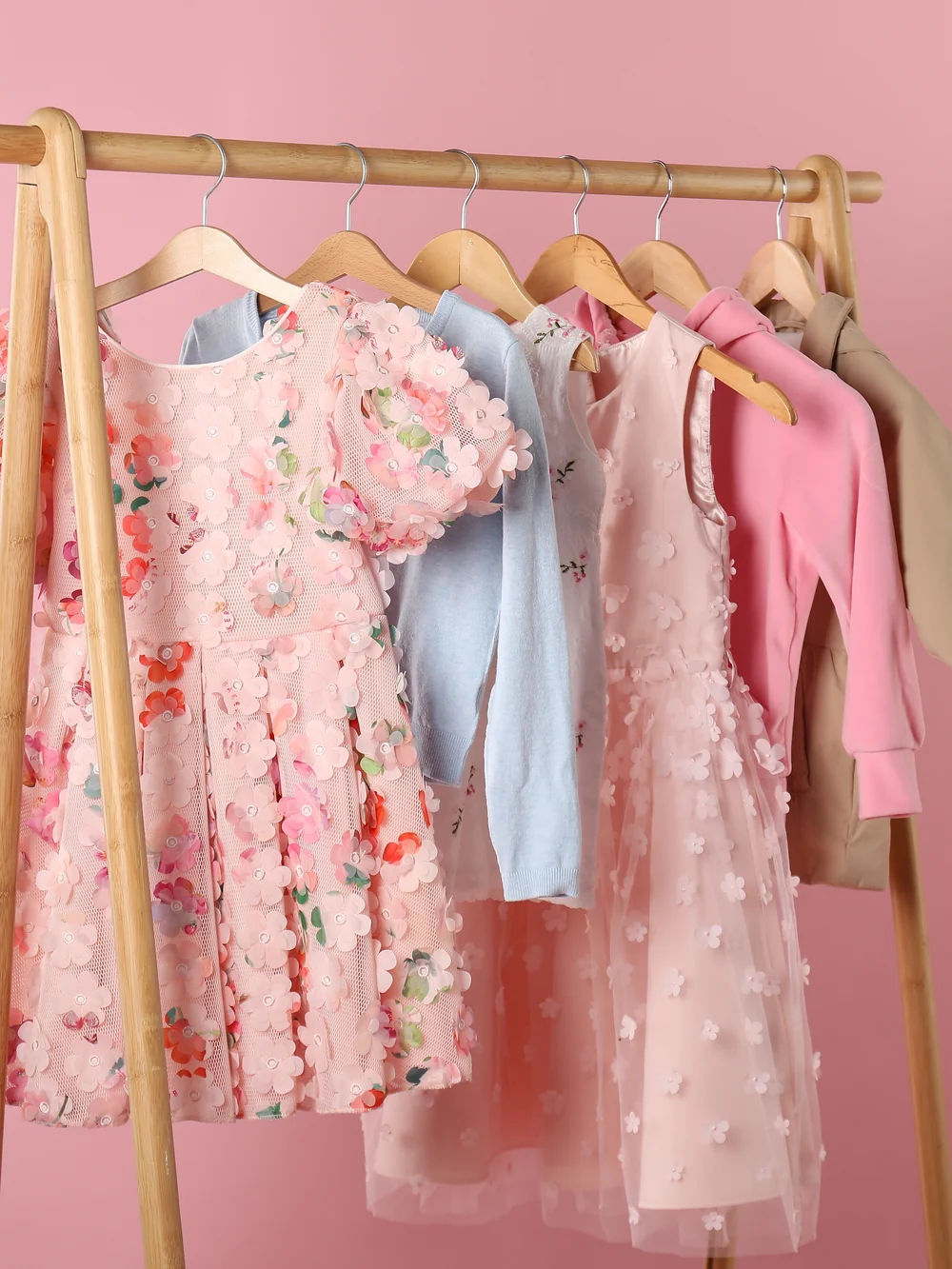
Anything your toddler pulls on every morning has to be anchored to the wall, and that includes a wardrobe or a freestanding clothes rack. The American Academy of Pediatrics (AAP) asks parents to anchor all furniture, with the wall anchors in a stud. Its 2021 guidance puts anti-tip devices at $5 to $25 and says they take just minutes to install.
The U.S. Consumer Product Safety Commission (CPSC) says all clothing storage furniture should be anchored, no matter when it was made, and heavier items belong on lower shelves. Keep the top of the wardrobe clear, too: the AAP warns that toys and other tempting things up high can lead kids to climb.
My guide to choosing a Montessori shelf goes into anchoring in more detail.
If you’re buying or building one from hardwood plywood or MDF, ask the maker which formaldehyde standard the panels meet. Federal limits on formaldehyde from composite wood have applied since June 1, 2018. As for the best Montessori wardrobe, it’s simply the one your child can reach and you’ve anchored. A brand name won’t change either of those.
How many outfits should your toddler choose from?
Offer two or three outfits you’ve already approved, never the whole closet. In our house it’s two, picked for the weather, and ZERO TO THREE’s advice to offer a few choices you’re fine with points the same way.
Will was about 18 months old when getting dressed turned into a fight. He suddenly wanted to decide things for himself. My first move was to get him into whatever I’d picked, which ended in a wrestling match and tears.
Opening the whole closet was never going to work either. Left to choose from everything, he’d have asked for a T-shirt and flip-flops in the middle of a Colorado snowstorm. Two outfits I’d already picked turned out to be the middle ground. He gets to be the one who decides, I know he’ll be warm enough, and he gets dressed with a lot more cheer. Mornings stopped starting with a meltdown.
Pointing at a sweatshirt still counts as deciding.
The guide Coping with Defiance: Birth to Three Years from ZERO TO THREE gives a good reason this works. Giving choices lets children feel in control in positive ways, it says, and can actually reduce defiance. It also says to be very clear about what is and isn’t a choice. For Will, getting dressed is a given. Which top goes on is the part he owns.
 Save
Two is our number, not a rule. If your child happily weighs three options, offer three. At Moje Montessori, we boil the whole wardrobe down to four questions:
| Question | Start with | Change it when |
|---|---|---|
| How high should the rail be? | Where your child can lift a hanger off standing flat-footed. Our whole corner is about 35–39 in. | Your child has to stoop to reach the hangers |
| How many outfits? | Two, picked for the weather. ZERO TO THREE suggests a few choices you’re fine with | Your child chooses easily and wants more say |
| What hangs, what folds, what goes on hooks? | Jackets and button-up shirts on the rail · underwear, socks and pants in low drawers · hat and backpack on hooks | The season changes |
| What stays out of reach? | Off-season clothes and the rest of the outfits | It doesn’t. Keep the top of the wardrobe clear of toys, too |
Every morning, I check the weather first, then pull out exactly two outfits that work for it, say a sweatshirt and a red sweater. I hold them up side by side and let Will point. Whichever he picks, he’s dressed right for the day, and he got to decide.
Miri’s Tip
A low rail and two outfits are a small start on a room your toddler can run on their own, and it’s easy to build out from there one corner at a time.
What toddlers can put on (and take off) by age
Taking clothes off tends to come before putting them on. The Centers for Disease Control and Prevention (CDC) lists taking off loose pants or an open jacket at 30 months, and putting on some clothes, like loose pants or a jacket, by 3 years.
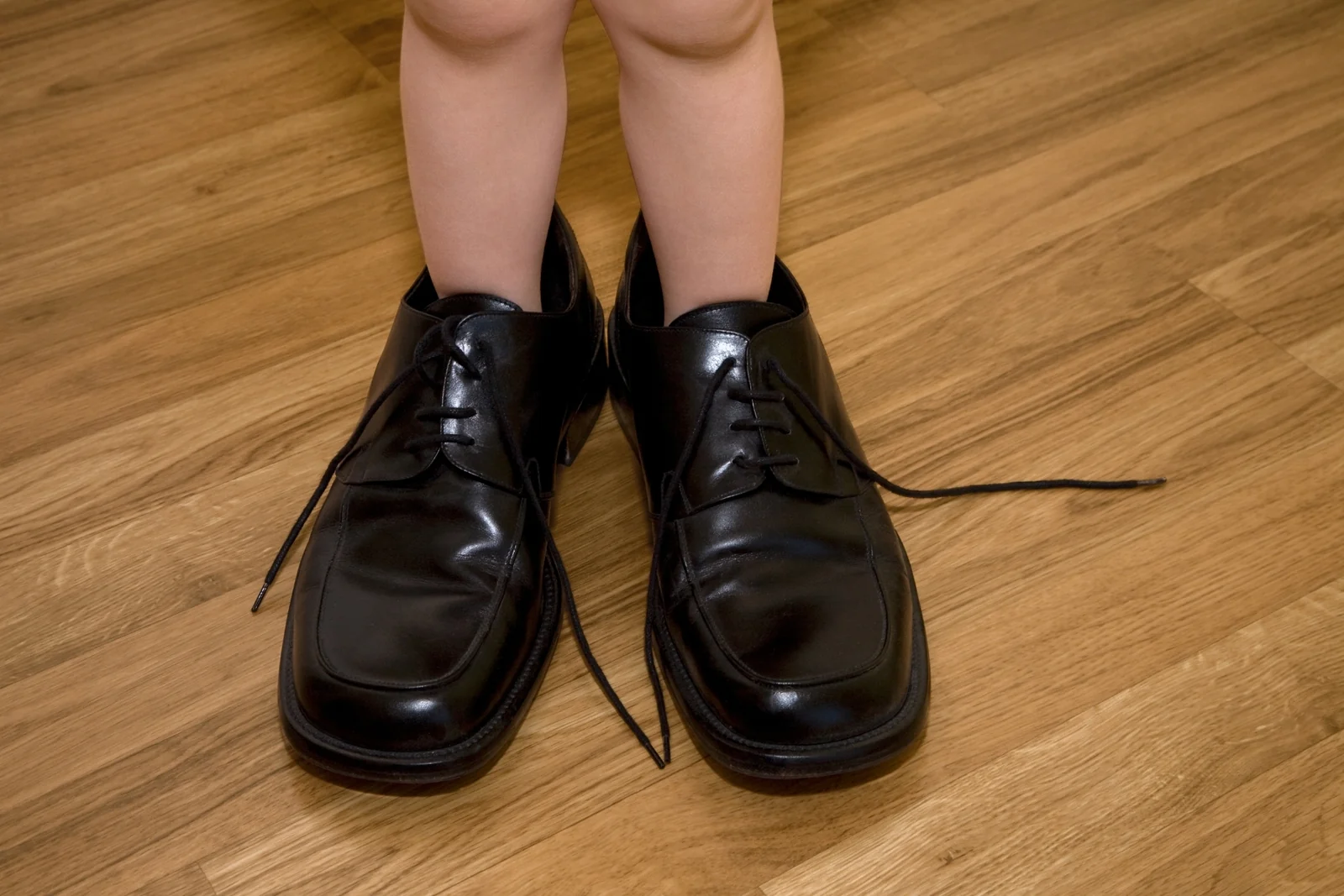
There’s no dressing milestone on the CDC’s list for 2-year-olds. What it suggests at that age is play: let your child play dress-up in grown-up shoes, hats and shirts. Every clomp across the kitchen in your boots is a little practice with openings and sleeves, and nobody has to be anywhere.
 Save
By 30 months, the CDC’s milestone list includes “Takes some clothes off by himself, like loose pants or an open jacket.” Many kids this age start with exactly those easy pieces. By 3 years, the list adds putting on some clothes by themselves, again like loose pants or a jacket.
So stock the low rail and drawers with clothes your toddler can win at: pants with a stretchy waist, a jacket that opens all the way. Loose pants pay off again once potty learning starts, when getting them down fast suddenly matters a lot.
 Save
Every child gets to these in their own time. If something about how your child moves or handles everyday tasks worries you, bring it up with your pediatrician.
Short on space? One low hook and a basket on the bedroom wall still make a dressing corner, the same way these small playroom ideas fit a toy corner into very little room.
Frequently Asked Questions
How do you build a toddler Montessori wardrobe?
To build a toddler Montessori wardrobe, start with a low rail or rack and stand your child next to it: they should be able to lift a hanger off without tiptoeing. Add a low bin or two for small things and a hook for hats. Then anchor it to the wall, into a stud, before the first hanger goes on.
Conclusion
You don’t have to rebuild the closet tonight. Tomorrow morning, before anyone is out of pajamas, check the weather, pick two outfits you’d be happy to see out the door, and hold them up. Let your toddler point. Some mornings will still go sideways, because toddlers are toddlers. The rail, the drawers and the hooks can wait for the weekend.
Every one-sock-on-the-floor morning shows how hard you’re trying. Start with two outfits and one pointing finger, and let that be enough for now.
Miri
Fewer toys, deeper play.
Further Reading & Resources
See all 10 sources
- Montessori at home: Montessori at Home (American Montessori Society) · Prepared Environment and Practical Life Exercises (AMI Montessori Archives)
- Milestones: Milestones by 2 Years, Milestones by 30 Months and Milestones by 3 Years (Centers for Disease Control and Prevention)
- Choices and defiance: Coping with Defiance: Birth to Three Years (ZERO TO THREE)
- Furniture tip-overs: Ahead of Sunday’s Game, CPSC Reminds Families to Tackle the Deadly Hazard of TV and Furniture Tip-Overs (U.S. Consumer Product Safety Commission, February 2024) · Preventing Furniture and TV Tip-Overs (HealthyChildren.org, American Academy of Pediatrics)
- Composite wood: Formaldehyde emission standards, 40 CFR 770.10 (eCFR)