“It says non-toxic, so it’s fine if they eat it.” You’ve probably heard some version of that, maybe from another parent at the park, maybe from the little voice in your own head as you fish a purple crayon out of your toddler’s mouth. There’s a fresh bite mark on the crayon, purple smudges on their chin, and a look on their face like they’ve just discovered dessert.
That small Approved Product (AP) seal on some art supplies comes from the Art & Creative Materials Institute (ACMI), and ACMI’s criterion for it reads “non-injurious to humans when used as intended.” Eating a crayon isn’t the intended use.
The other confusing part is the advice itself. Most Montessori art guides online picture a classroom of 3- to 6-year-olds, with an easel and a tray for every project. Your 15-month-old mostly wants to eat the tray.
Art is one of the easiest Montessori activities at home for ages 1 to 3. Below: which materials fit each age, what the labels can promise, and what I did when Will went through a crayon-eating phase.
 Save
What makes toddler art “Montessori”?
Montessori-style art for a toddler puts the choosing and the making in your child’s hands: a few real materials within reach, a surface they’re allowed to mark up, and no finished picture to copy.
I’m not a trained Montessori guide, so take this as one mom’s reading. Look past the classroom setups in most art activities for Montessori, and the idea underneath is simple: real materials, a child who chooses, and an adult who doesn’t steer. At home with a toddler, that looks a lot plainer. A crayon or two. Paper big enough to swing an arm across. You sitting close by with your hands in your lap.
If you’ve been browsing Montessori art and craft activities and wondering where a 16-month-old fits in, go lower, bigger and simpler than the pictures, and let your toddler decide when they’re done.
You’ll also see plenty of toddler art on Pinterest tagged Reggio Emilia. That’s a different approach, and a topic for another day. Whatever the label on the pin, creativity at this age mostly looks like cause and effect. The arm moves, a line appears, and your toddler does it again to make sure.
 Save
Process art for toddlers: why is there nothing to copy?
Process art for toddlers is art with no model to match: no step-by-step instructions, no sample, and no wrong way to make a mark. The scribbling, smearing and squishing are the whole activity.
The National Association for the Education of Young Children (NAEYC) describes process-focused art this way in an article written for preschool teachers. The focus, it says, is on the experience and on exploring techniques, tools and materials, and its own examples include finger painting, homemade doughs and drawing with crayons. It’s an approach early-childhood teachers use with preschoolers, and the idea fits a kitchen floor just as well.
The line I’d tape above any toddler art table comes from that same article: “Remember that it’s the children’s art, not yours.”
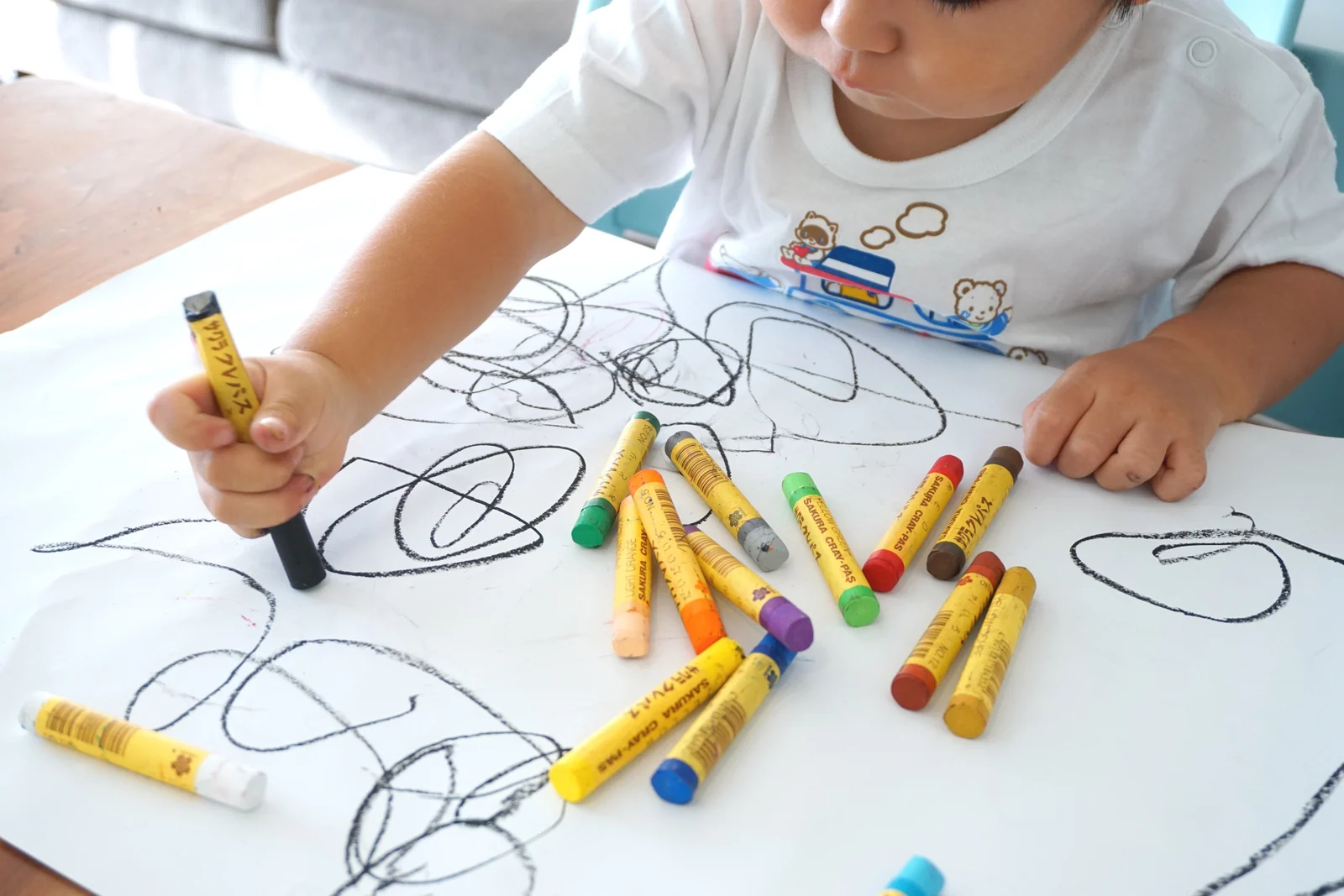
In practice, you skip “let’s make a sun,” and you don’t add eyes to their blob. You’ll hear this called process over product. Your toddler may cover one corner of the page, rip it, and walk away after a minute and a half. That’s a complete art session.
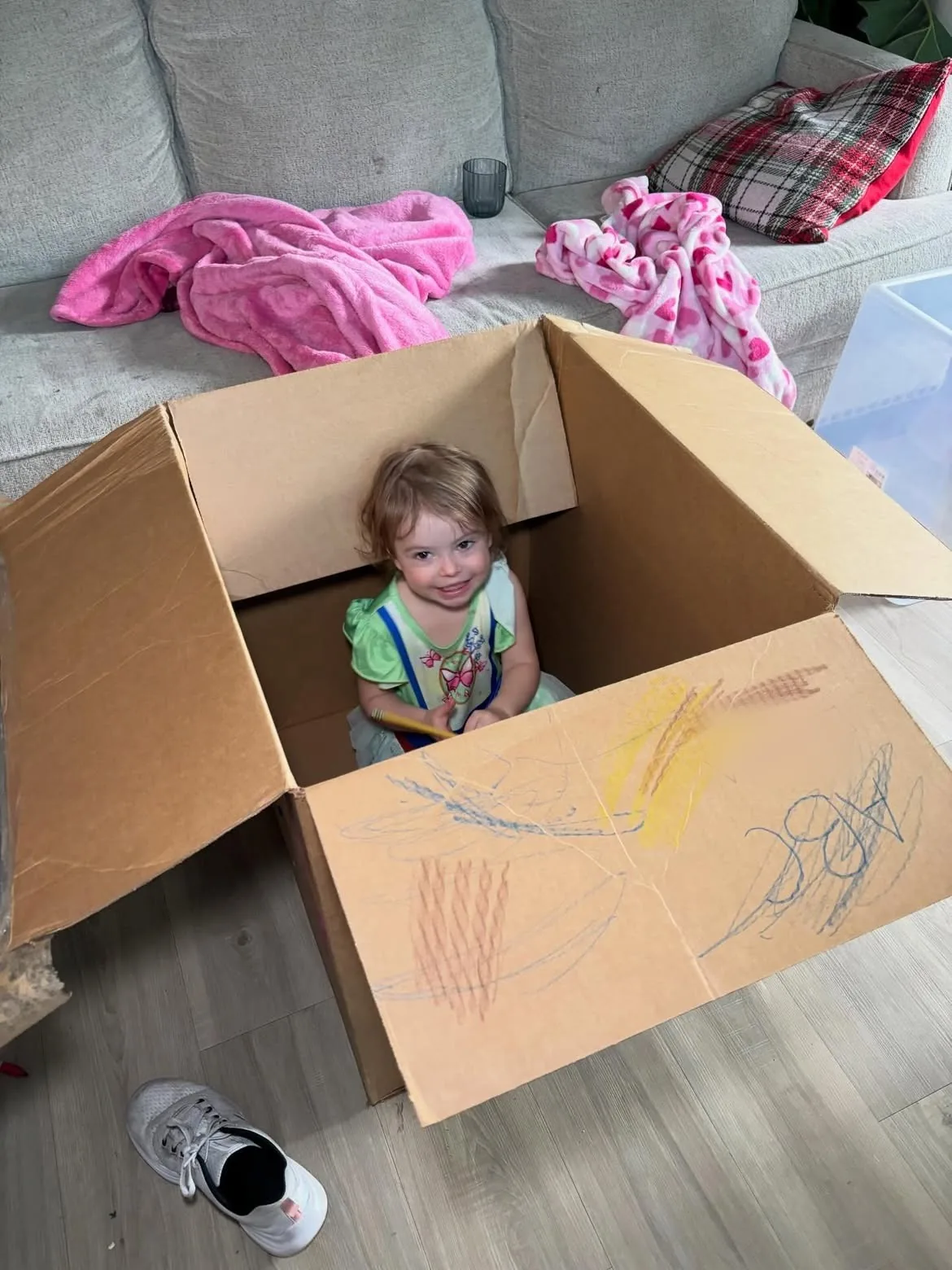
Your toddler’s first painting might be a damp, dark patch on a cardboard box, and it still earns a spot on the fridge.
 Save
Montessori art activities by age: safe materials at a glance
Safety chooses the materials and your child’s interest sets the pace. Start around the first birthday with water and chunky crayons, add finger paint and dough later, and save watercolors, collage and glue for when supplies stay out of the mouth.
At Moje Montessori, we sort toddler art supplies by two things: how likely they are to end up in a mouth, and what a label can actually tell you. Each row also asks a little more of small hands, from a whole-fist grip on a fat crayon to the fine motor work of tearing paper.
| Age | Materials to try | Label to look for | How closely to watch |
|---|---|---|---|
| 12–18 months | Plain water and a brush on cardboard; a few chunky, egg-shaped crayons; big paper taped to the floor | AP seal on the crayons; the age on the package | Sit right beside them; a crayon in the mouth goes away |
| 18–24 months | Add finger paint, plus play dough on a tray with sides | AP seal; the age on the package; read any hazard warning; homemade dough: no raw flour, and salt dough only with you right there | Within arm’s reach; dough stays on the tray |
| 2–3 years | Watercolors, torn-paper collage (glue once mouthing has stopped), an easel if you have room | AP seal; the age on the package | Nearby, and closer for glue and small paper scraps |
The ages are rough ranges. Let your child’s interest decide when something new joins the tray, and drop back a row any time things start going in the mouth again.
If your child is somewhere between their first and second birthdays, the top two rows will keep you busy for months. Water, one fat crayon and a roll of paper cost very little, and watching what your toddler does with them will tell you more than any art kit.
What can a 12- to 18-month-old do with art?
Your seat beside them matters most at this age. A 12- to 18-month-old can scribble, smear and paint with plain water, and crayons will still visit the mouth, so keep it to big paper, a few chunky crayons and water.
The Centers for Disease Control and Prevention (CDC) includes “scribbles” in its list of milestones by 18 months. Treat it as something to notice when it shows up. Nobody needs to drill scribbling.
First art supplies for a 1-year-old are a topic of their own. What I can share is the setup that worked for us.
How Will started drawing at about 14 months
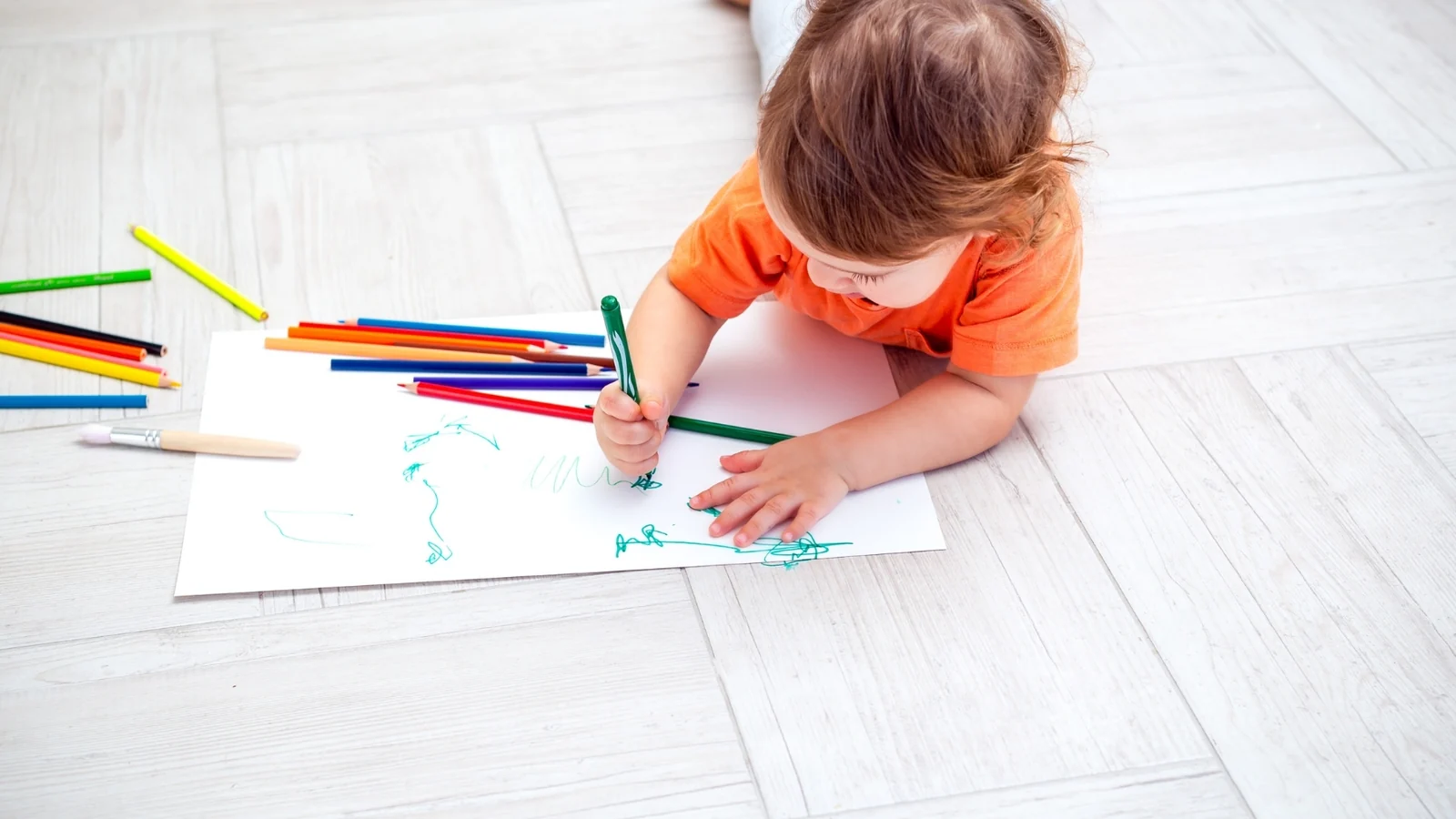
Will started making marks at around 14 months. Looking back, the setup was almost embarrassingly simple, and nearly all of it happened right on the floor.
- Step 1: Follow the hands. Will’s hands suddenly wanted to grab and smear everything in reach, so that’s when the crayons came out.
- Step 2: Go big and low. Instead of buying a bulky easel, I taped big sheets from a paper roll to the floor, or reused an old delivery box, and let him go at it.
- Step 3: Pick crayons for a small fist. His first ones were big egg-shaped and chunky palm-grip crayons that sat right in his palm, because his hands weren’t ready for a regular skinny crayon yet.
 Save
Water painting on cardboard
For a toddler who still tastes everything, my favorite no-mess option is painting with plain water. On tired days during this pregnancy, I flatten a cardboard box on the floor and hand Will a small paintbrush (sometimes my face-mask brush) and a plastic cup with a little water in it. Then I tell him he’s the painter and the house needs painting.
The water soaks in and turns the cardboard darker, so as far as Will is concerned, he’s really painting, and he gets completely absorbed in it. If he flicks water everywhere, it’s clean water. When he’s finished, I lean the cardboard in a corner of the balcony and the breeze dries it. There’s nothing for me to wipe up, and he still got to paint.
 Save
Toddler art ideas for 18 to 24 months
Somewhere between 18 and 24 months, try toddler art ideas that use the whole hand: finger paint on a big sheet first, then play dough on a tray with sides. Keep each session short and stay within arm’s reach.
Finger paint is process art with nothing in between. There’s no tool to hold, only a hand, a color and a big sheet of paper. Tape the paper down, add a spoonful of one or two colors, and let your toddler find out what happens when they push. Expect paint on elbows.
Play dough is the other big one at this age. An art tray with raised sides gives the dough a home base, so it gets squished, rolled and poked on the tray while you sit close by. Homemade dough recipes and the rest of the messy-play family live with the sensory activities for toddlers.
If you make dough at home, the CDC says not to let children play with or eat dough made with raw flour, and that includes homemade play dough for crafts.
Salt is the other thing to watch. In a 2016 post, the Tennessee Poison Center at Vanderbilt University Medical Center summarized a conference abstract that looked at three popular homemade play dough recipes. They call for ½ to 2 cups of table salt, and one tablespoon of dough from two of them would put a 22-pound (10 kg) child in the toxic range for salt. Keep homemade dough on the tray, stay right there, and if your toddler swallows some, call the poison center at 1-800-222-1222.
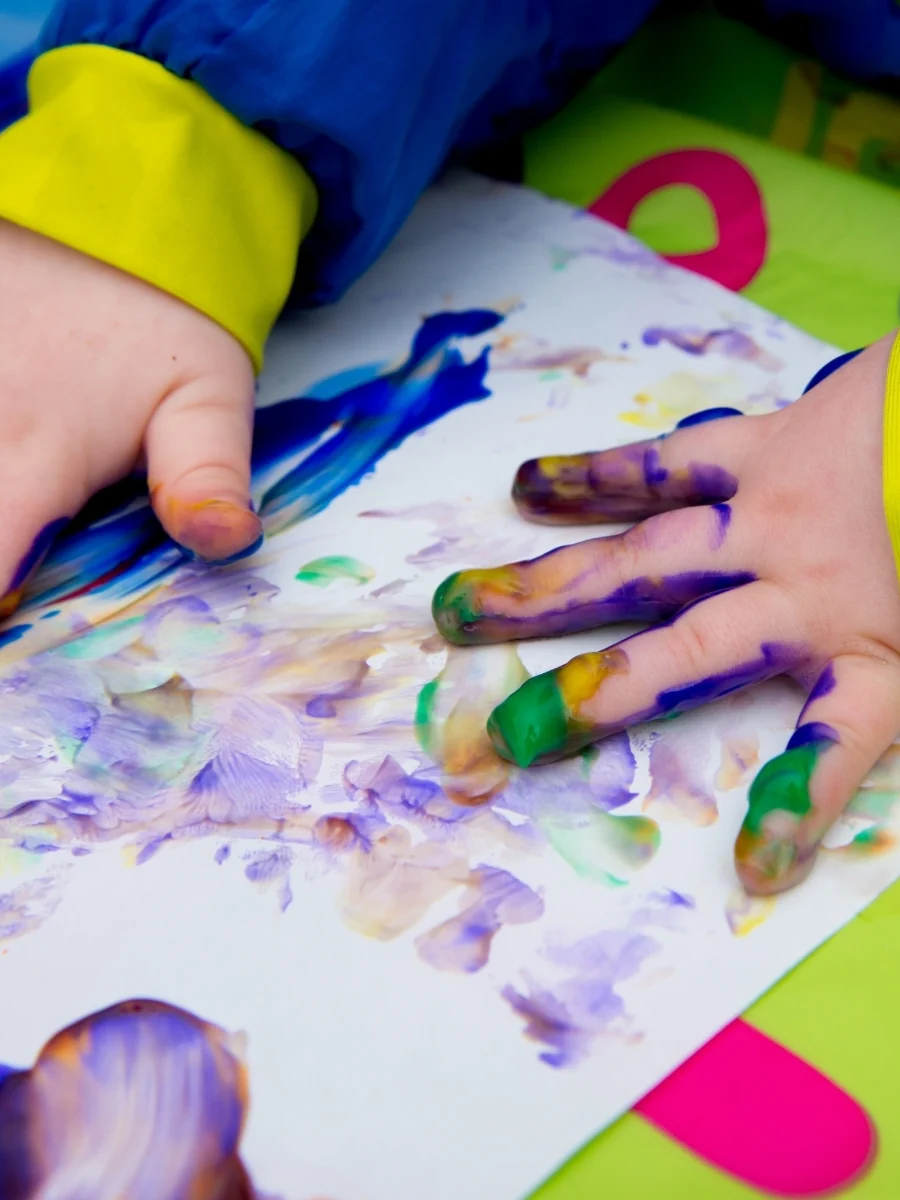
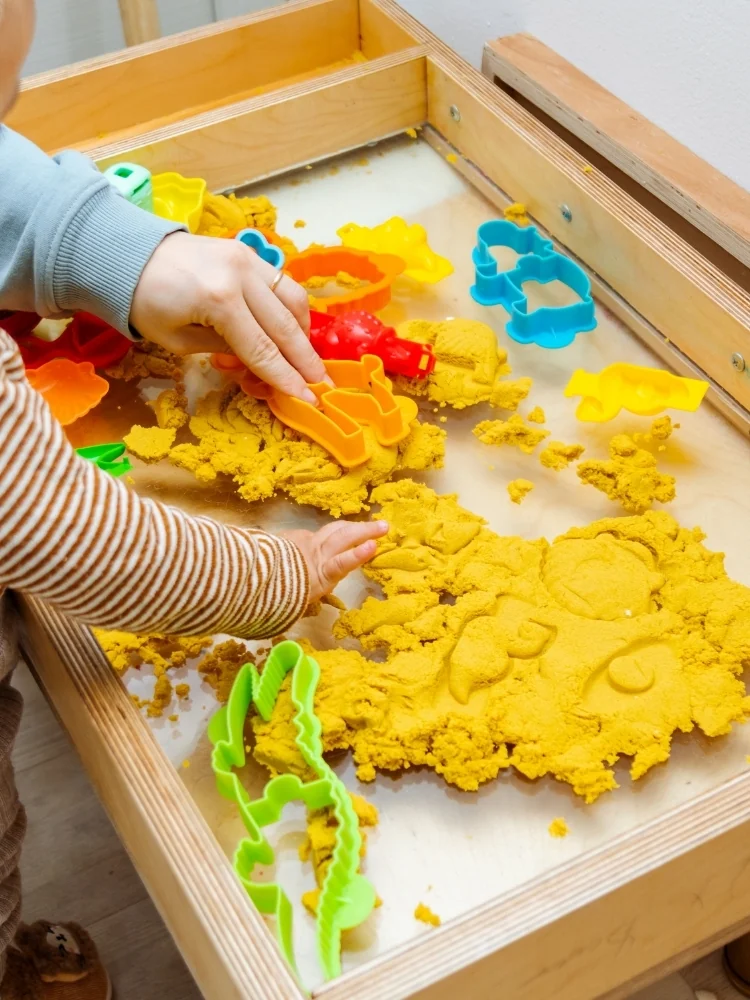
Finger paint: no tools, just color and a whole hand to find out with. · A tray with sides gives play dough a home base.
What art works for 2- to 3-year-olds?
Mouthing decides the next step more than birthdays do. Once art supplies stay out of the mouth, a 2- to 3-year-old is ready for watercolors, torn-paper collage and, if you have room, an easel.
By 3 years, the CDC’s milestones include “draws a circle, when you show him how.” It’s a marker along the way, and nobody needs to schedule circle practice.
Most Montessori art activities for 2 year olds use the same kinds of materials as before, with more of the choosing handed over:
- Watercolor: a set with only a few colors, one brush and a small jar of water. Expect brown puddles while your toddler works out what happens when colors meet.
- Collage: paper your toddler tears into pieces and sticks down. Tearing is slow, fiddly hand work, and every piece is theirs to place.
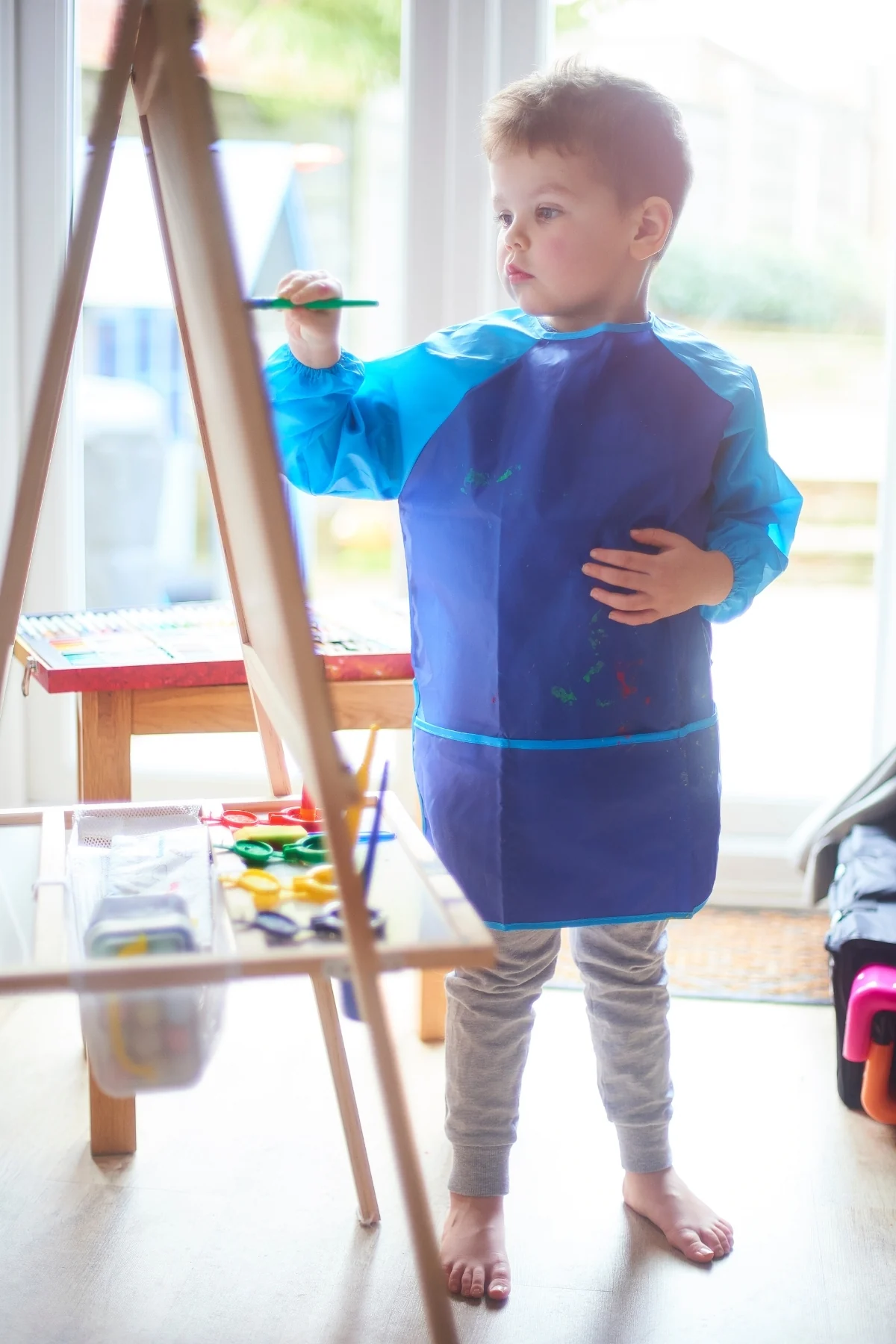
- Easel: optional. Painting standing up is a fun change if you have the floor space, and paper taped to the floor still works fine.
Looking at art counts, too. Open a picture book with big, bold illustrations, ask which color they like, and wait for the answer. Art supplies for 2-year-olds, from washable paint to child scissors, get a post of their own.
 Save
What does “non-toxic” on an art label really mean?
The parts of an art label you can actually check are the AP seal, which ACMI says covers products “when used as intended,” and the hazard warning federal law requires on art materials that need one. Neither turns a crayon into a snack.
Start with the AP seal. ACMI says on its Materials Safety page that the seal identifies art materials a board-certified toxicologist has evaluated and certified as containing nothing in amounts large enough to be toxic or injurious to humans, including children, or to cause acute or chronic health problems. Its program looks at skin contact, swallowing and breathing in. What the page doesn’t do is define the word “non-toxic,” or say AP products are meant to be eaten.
There’s a federal layer, too. The U.S. Consumer Product Safety Commission (CPSC) says that under the Labeling of Hazardous Art Materials Act (LHAMA), art materials must get a toxicological assessment at least every five years to check for chronic hazards, and the ones that pose a hazard must carry a warning label. The labeling rules sit in 16 CFR 1500.14. For you, that boils down to one habit: if an art supply carries a hazard warning, read it before that supply goes anywhere near the art tray. Check the age on the package, too.
A label helps you choose what comes home. It can’t sit next to a 14-month-old who’s eyeing the purple crayon, and that part is still yours.
 Save
What if your toddler eats crayons?
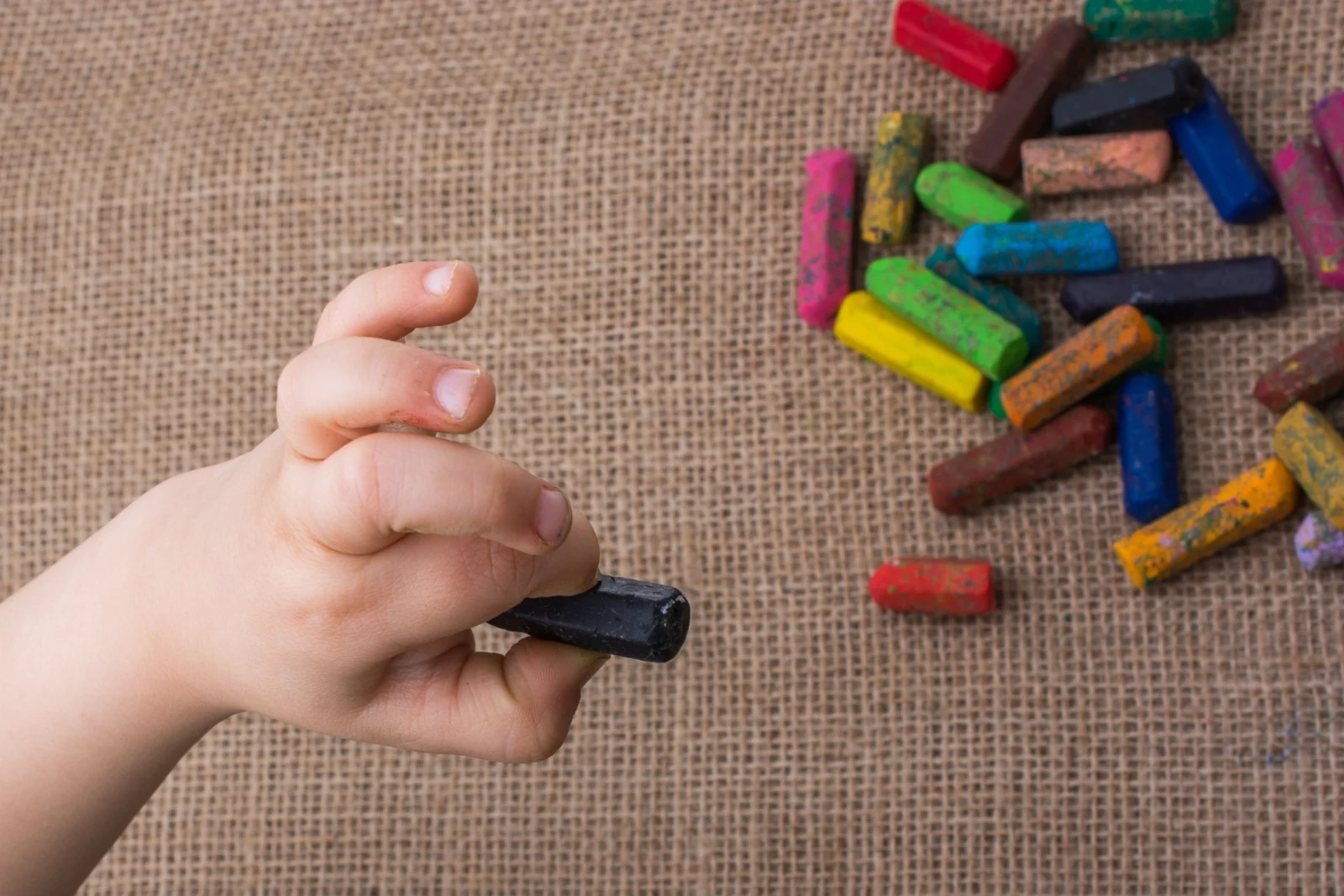
Stay calm first. If your toddler ate some crayon and seems fine, the Illinois Poison Center’s advice is a few sips of water and watching for vomiting or diarrhea. Then put the crayons away every time they go in the mouth.
If you’re in the thick of the crayon-eating phase, I’ve been there. Will chewed crayons like candy. For a while he treated them as a snack: I’d turn around to grab a cup of water, and three seconds later he’d be chewing away, his mouth smeared green and red, like a tiny goblin.
I panicked and ordered beeswax crayons online, mostly so I’d worry less if he swallowed some. I don’t have a source saying beeswax is any safer to swallow, so count that as my nerves doing the shopping. What actually ended the phase was much less exciting: one calm sentence, said over and over, and a crayon that disappeared each time. It took a few screaming tantrums over confiscated crayons before Will decided they weren’t food after all and went back to drawing on the paper.
The Illinois Poison Center says crayons are minimally toxic and can cause a mild laxative effect if swallowed. If your child isn’t having symptoms, give a few sips of water and watch for vomiting or diarrhea. If vomiting, diarrhea or coughing keeps going, call the poison center at 1-800-222-1222. Crayons can also be a choking hazard: if your child is choking, call 911 right away.
That “minimally toxic” comes from a page about crayons. If your toddler swallows marker ink, paint or play dough, call 1-800-222-1222 and let the poison specialists tell you what to do.
The habit itself is mostly about what you put out, and how you react when a crayon heads for the mouth.
I pick out three or four basic colors and keep the rest of the box put away. When a crayon goes to the mouth, I calmly take it and say, “Crayons are for drawing, not for eating. If it goes in your mouth, I’ll put it away.”
Miri’s Tip
How do you set up an art area at home?
Start with a surface and a boundary: paper taped to the floor or a flattened box, a tray with sides for anything wet, and a few colors within reach. An easel is optional, especially before age 2.
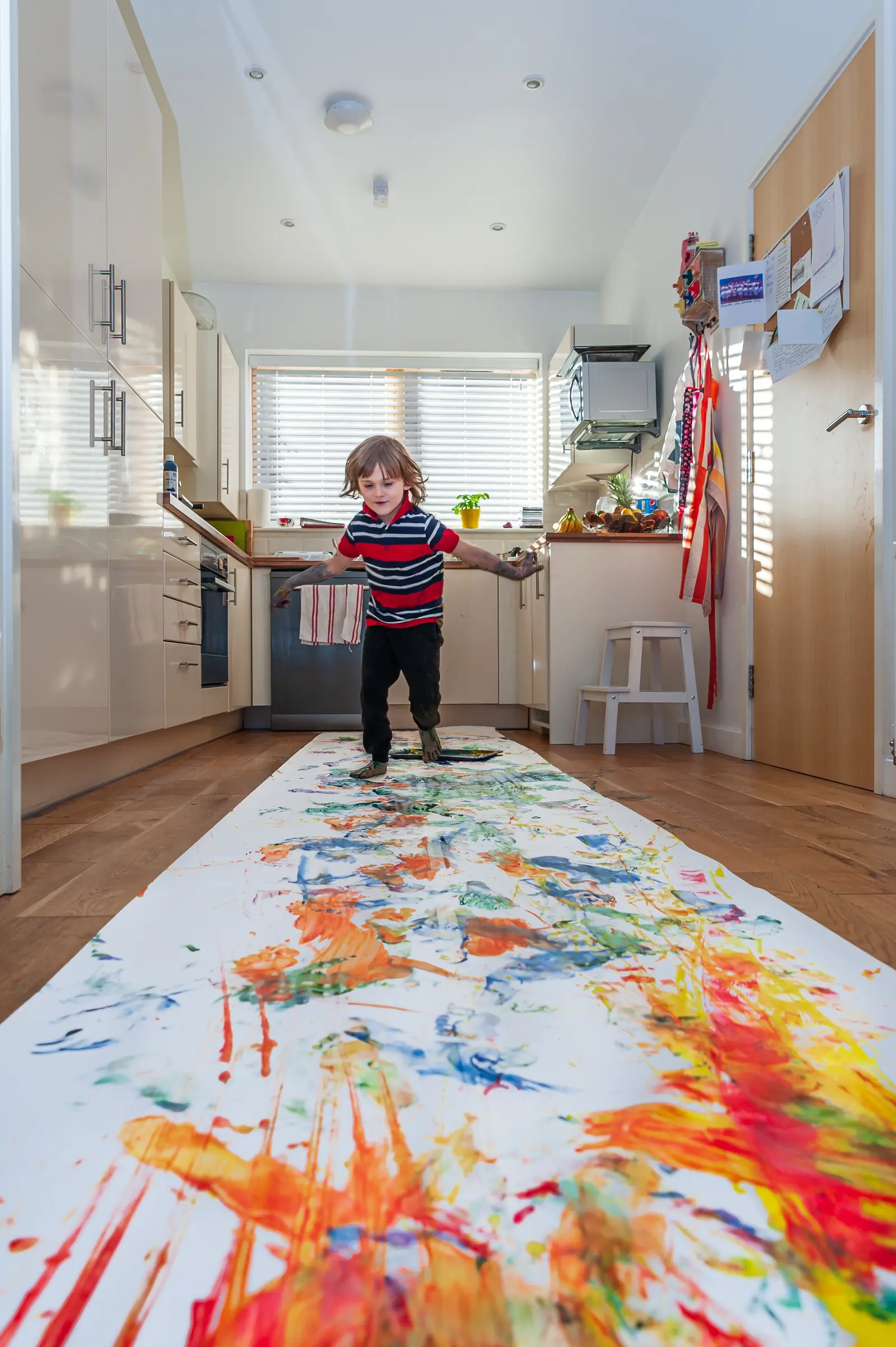
Nobody’s art corner stays Instagram-worthy past the first round of finger paint, so plan for wiping. At our house, anything wet, from watercolors to soap bubbles, happens in the kitchen with its easy-to-wipe floor or right in the bathtub, and a big bath towel goes down first. More ways to keep messy play contained are in the post on sensory play.
Keep the supplies in one small basket or on a low shelf your toddler can reach, so they can ask for art by bringing you the basket. On a snowed-in Colorado afternoon, art makes a good anchor for the day, and when it runs out, there are more indoor activities for toddlers to rotate in.
 Save
If all of this feels like a lot, shrink it to one thing. This week, tape one big sheet of paper to the floor, set down one fat crayon, and sit next to it. For a 1-year-old, that’s a whole art program.
Frequently Asked Questions
My 17-month-old keeps eating crayons. Is that dangerous?
For a 17-month-old who eats crayons, the Illinois Poison Center’s answer is fairly calm: it calls crayons minimally toxic, with a possible mild laxative effect. Offer a few sips of water and watch. Call the poison center at 1-800-222-1222 if vomiting, diarrhea or coughing keeps going, and 911 if they’re choking. Then put the crayons away each time they go in the mouth.
Conclusion
Your toddler’s art is going to look like scribbles, smears and damp cardboard for a good while, and that’s exactly what it should look like. Hand over the crayon, step back, and let the art be theirs. When a crayon ends up in a mouth, put it away without a fuss and try again tomorrow.
A few minutes with one fat crayon is plenty. Some days it ends in a meltdown, and a calm “crayons are for drawing” still counts.
Miri
Fewer toys, deeper play.
Further Reading & Resources
See all 8 sources
- Art labels: Materials Safety (Art & Creative Materials Institute, ACMI) · Art Materials FAQ (U.S. Consumer Product Safety Commission, CPSC)
- If your child eats art supplies: My Child Ate Crayons (Illinois Poison Center) · What are the dangers of borax slime and homemade salt dough? (Tennessee Poison Center, Vanderbilt University Medical Center, 2016)
- Raw dough: Raw Flour and Dough (Centers for Disease Control and Prevention, CDC)
- Process art: How Process-Focused Art Experiences Support Preschoolers (National Association for the Education of Young Children, NAEYC, Teaching Young Children, 2014)
- Milestones: Milestones by 18 Months and Milestones by 3 Years (CDC)