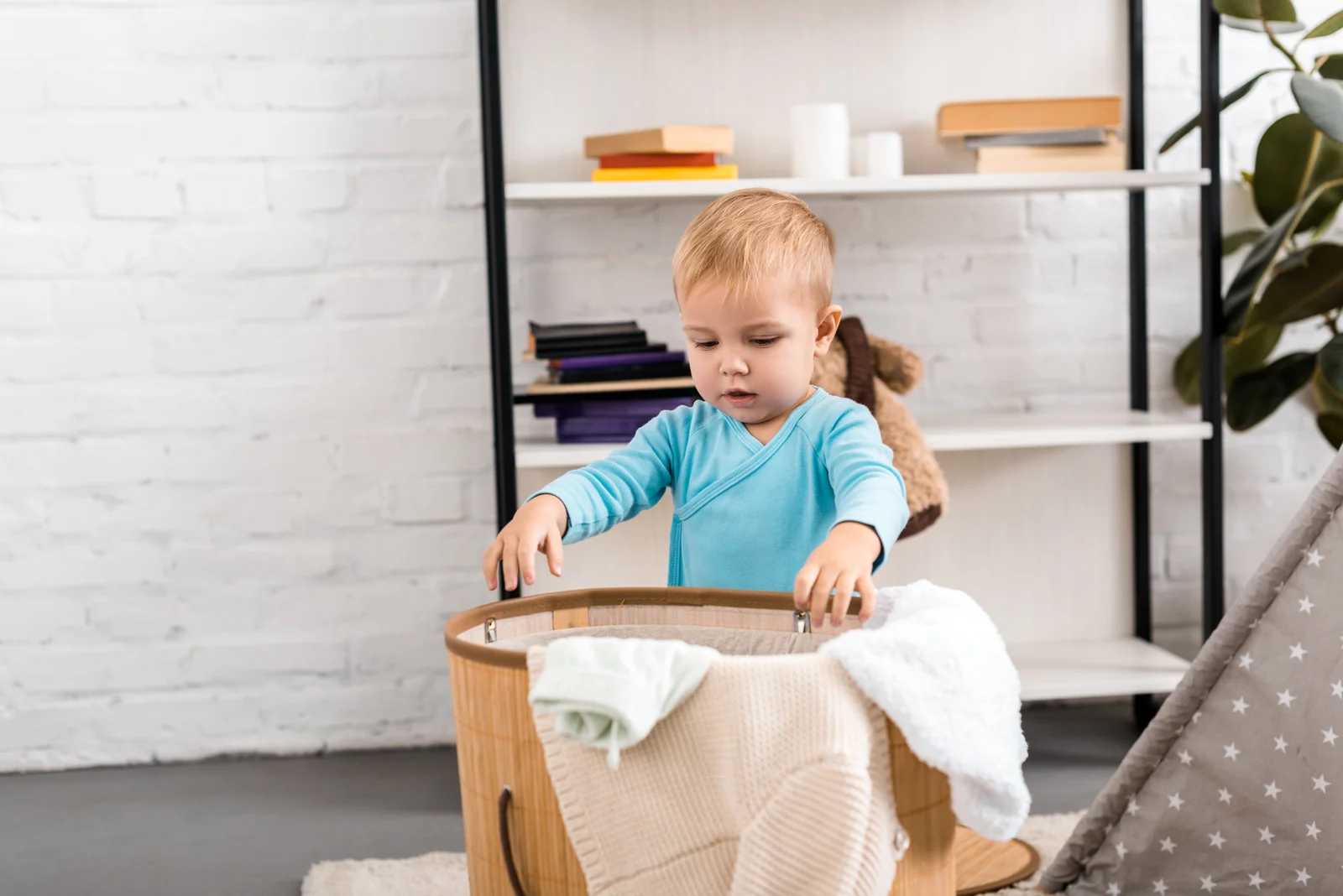
A stuck-inside day is a real test for a kid like Will, who loves to move. If all that energy has nowhere to go, he gets stir-crazy, and a stir-crazy Will starts taking the house apart. So on those days I skip the new toy. I hand him the big laundry basket, the one heaped with dirty clothes, and give him a job: push it from the bedroom all the way to the washing machine.
He leans into it with his whole body and huffs and puffs the entire way. Toddlers this age love copying grown-ups, and a real job with a real basket is about as grown-up as it gets. By the time the laundry reaches the washer, he’s sweaty, the clothes are where they belong, and a good chunk of that energy is spent.
Your version of that day might look different. Rain all morning, a heat wave, a cold snap, and maybe an apartment where the living room is also the dining room and the playroom. The TV is right there. Honestly, by the time you’ve set up a craft and scrubbed paint off the table, you’ve often spent longer on it than your toddler did.
So the ideas below are sorted by the one thing you do know on a day like this: how many minutes you’ve got, with setup and cleanup counted in. Each one also notes how much floor it takes. For the bigger picture of play at home, start with my guide to Montessori activities at home.
 Save
How do you pick indoor activities by the time you have?
Picking indoor activities by time means starting from the minutes you can actually give, setup, play and cleanup included. A 10-minute idea sets up in about a minute, and a 30-minute one usually has you sitting close the whole time.
Those minutes are yours. I’m counting the time it takes you to get things out, stay with it and put it all away, because that’s the number you’re juggling on a long day. How long your toddler stays interested is a separate question, and nobody can promise you that. Some days a 10-minute idea stretches to twenty. Some days it’s over before you’ve sat down, and you move on to the next one.
In a small space, floor matters as much as time. A hallway, a strip of rug, the kitchen floor and the bathtub do most of the work on this list, and nothing on it needs a playroom. If you’re looking for indoor activities for toddlers under 2, the 10-minute ideas are the easiest place to start, since you’re right there with your toddler for every one of them. The heavy jobs and the car wash suit toddlers who already walk steadily and like to carry things.
 Save
The table pulls every idea in this post into one place. The time column is your total, from setup to cleanup. The last column is what’s left to put away when you’re done, which in a small apartment is often the deciding factor.
| Activity | Your time (setup + cleanup) | Space | Cleanup |
|---|---|---|---|
| Painter’s tape to peel | 10 minutes | A wall, the fridge, a table edge | Balled-up tape goes straight in the trash |
| Stickers to peel | 10 minutes | A table corner | Pick off the strays |
| Sock toss | 10 minutes | A clear patch of rug | The socks land in the basket |
| Dance party | 10 minutes | Wherever you’re standing | Nothing |
| Crayons on taped-down paper | 10 minutes | The kitchen table | Pull up the paper, crayons back in their cup |
| A basket of books | 10 minutes | The couch | Books back in the basket |
| Heavy jobs: laundry basket, watering can, mop | 20 minutes | Bedroom to washer, around the plants | The job is the cleanup |
| Sensory bin | 20 minutes | A tray or old towel on the kitchen floor | A quick sweep, lid back on |
| Painting | 20 minutes | Kitchen table over an old sheet | Wipe the table, rinse the brushes |
| Sheet-and-chair tent | 20 minutes | Two kitchen chairs in the middle of the room | Fold the sheet, chairs back to the table |
| Cushion obstacle course | 20 minutes | Living room floor | Cushions back on the couch |
| Warm-water play and toy car wash | 30 minutes | The bathtub or a big basin | Drain it right away, towel the floor |
Read it from the top when you’re tired and from the bottom when you’ve got a little more in you. Almost nothing on it needs a purchase, either. Most rows run on things already in a closet or under the sink, and the rest is a roll of painter’s tape, a sheet of stickers or a few crayons.
Which rainy day activities for toddlers fit into 10 minutes?
Pull out something from around the house and put it within reach: painter’s tape to peel, stickers, socks to toss, a song to dance to. These rainy day activities for toddlers take about a minute to set up and less to put away.
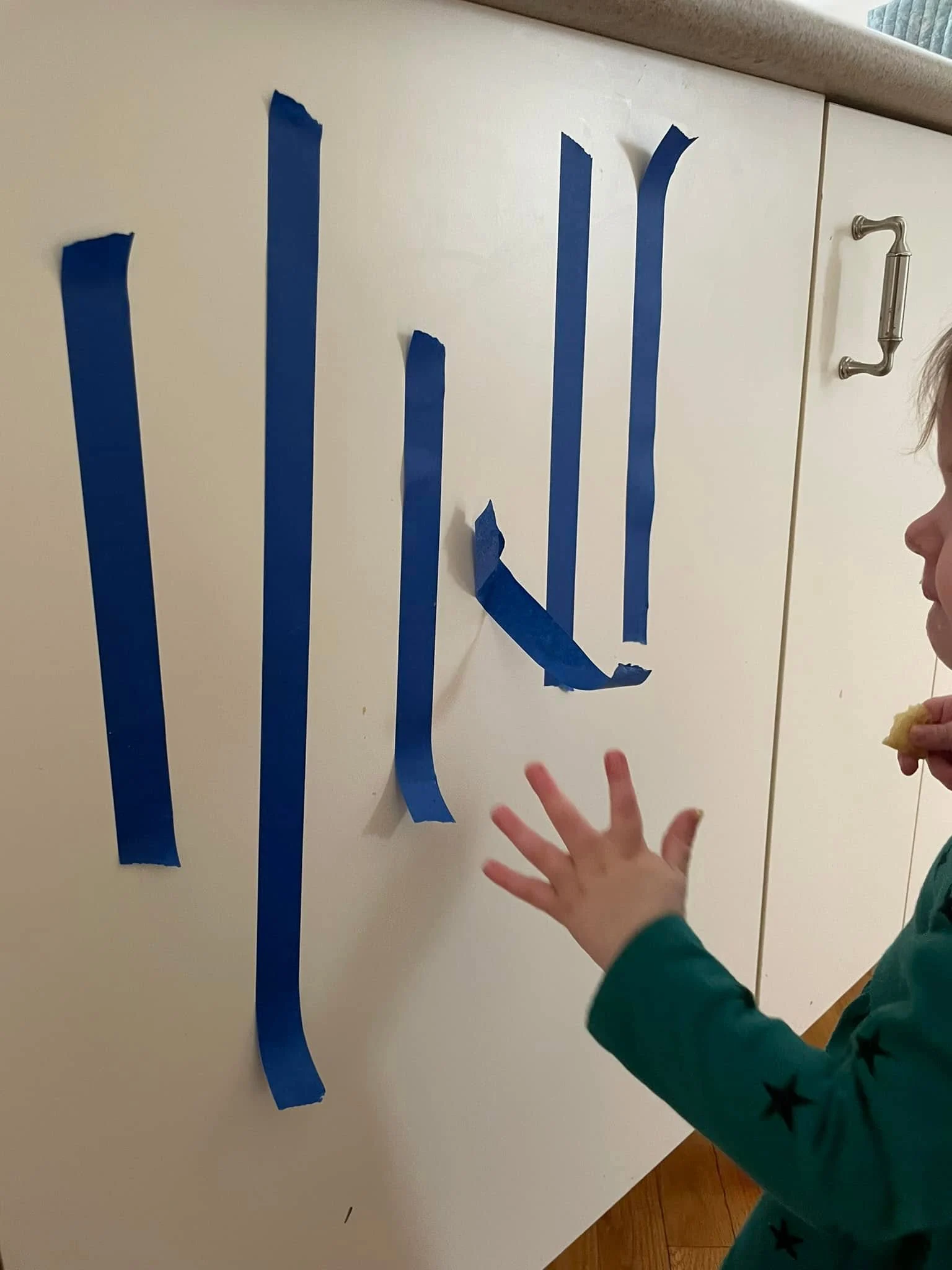
These days I’m pregnant with Jimmy, and some days I’m completely wiped and the couch is calling my name. On those days my rule for Will’s play is simple: it has to be ready in a blink and cleared away just as fast. The thing that saves me most often is a roll of painter’s tape, or a few sheets of stickers. Will does the peeling, I direct from the couch like a very relaxed foreman, and when he’s done, the tape goes in the trash and the house looks exactly the way it did before.
 Save
The tape has good company in this row:
- Stickers. A sheet of peel-and-stick stickers and a piece of paper or an empty box to stick them on. Stay close, because a peeled sticker can easily end up in a mouth. It takes a table corner, and cleanup means picking off the strays.
- Sock toss. Roll a pile of clean socks into balls and set a laundry basket a few steps away. All you need is a clear patch of rug, and the socks clean themselves up by landing in the basket. Some of them, anyway.
- Dance party. One or two songs, you and your toddler, whatever floor you’ve got. There’s nothing to set up or put away, and your downstairs neighbors will survive two songs.
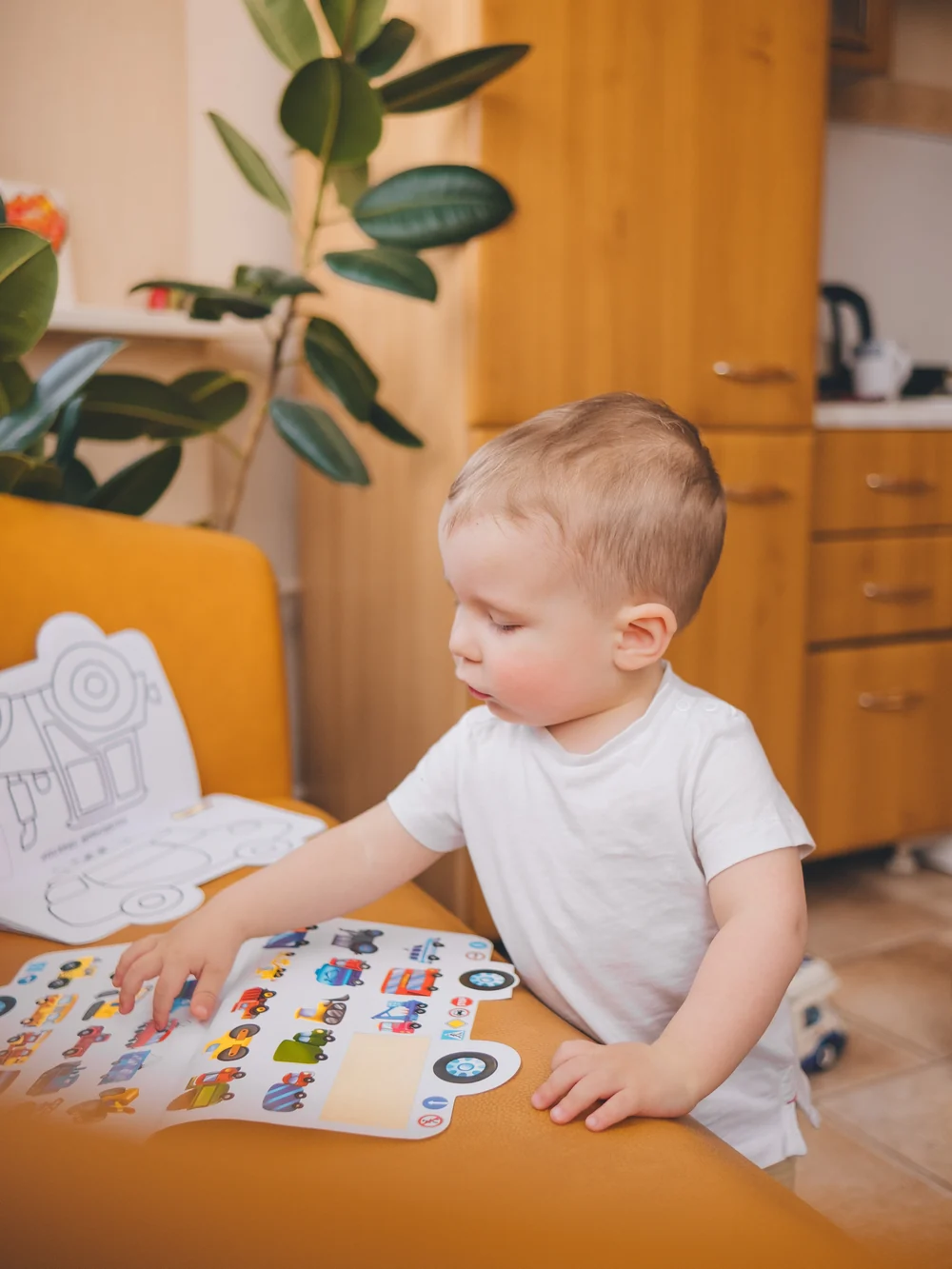

Peeling a sticker takes real concentration when your fingers are this small. · One song, one living room, nothing to clean up.
Crayons fit in ten minutes too. Tape a sheet of paper to the kitchen table so it can’t slide, set out a few chunky crayons and stay nearby. If a crayon gets nibbled, the Illinois Poison Center says to give a few sips of water and watch for vomiting or diarrhea, and to call 1-800-222-1222 if your child has ongoing vomiting, diarrhea or coughing. If your child is ever choking on a crayon, it says to call 911 right away.
When your toddler is ready to sit for a bit, a basket of books on the couch is another 10-minute idea. The World Health Organization (WHO) guidelines for children under 5 say that when kids are sitting still, reading and storytelling with a caregiver is encouraged. Three board books and a warm lap make a perfectly good ten minutes.
On my most tired days, I tear off strips of painter’s tape and stick them all over at Will’s height: the wall, the fridge door, the edge of the table, the glass door. His job is to peel off each one, ball it up and throw it in the trash. Stay in the room while your toddler peels, because a balled-up wad of tape is just the right size to end up in a mouth.
Miri’s Tip
20-minute ideas: heavy jobs, a sensory bin and painting
Heavy jobs come first, before any new toy: pushing, hauling and carrying use your toddler’s whole body and get a chore done at the same time. A sensory bin, painting or a sheet tent can fill the rest, with you close by.
Twenty minutes is enough for some real energy release, which is often what an inside-all-day toddler is asking for. The trick is giving that energy a job to do.
Case: heavy jobs on our stuck-inside days
When Will starts bouncing off the walls, I hand him work instead of toys. I think of these as maximum-effort jobs: things that are heavy, a little awkward and genuinely useful, the kind of work a real helper would do. That name is just my own shorthand. The jobs work at our house because toddlers this age love doing exactly what the grown-ups are doing, and these are real grown-up jobs. On a long day at home, they’re the first thing I reach for:
- Step 1: The laundry basket. The big one, full of dirty clothes, pushed from the bedroom to the washing machine.
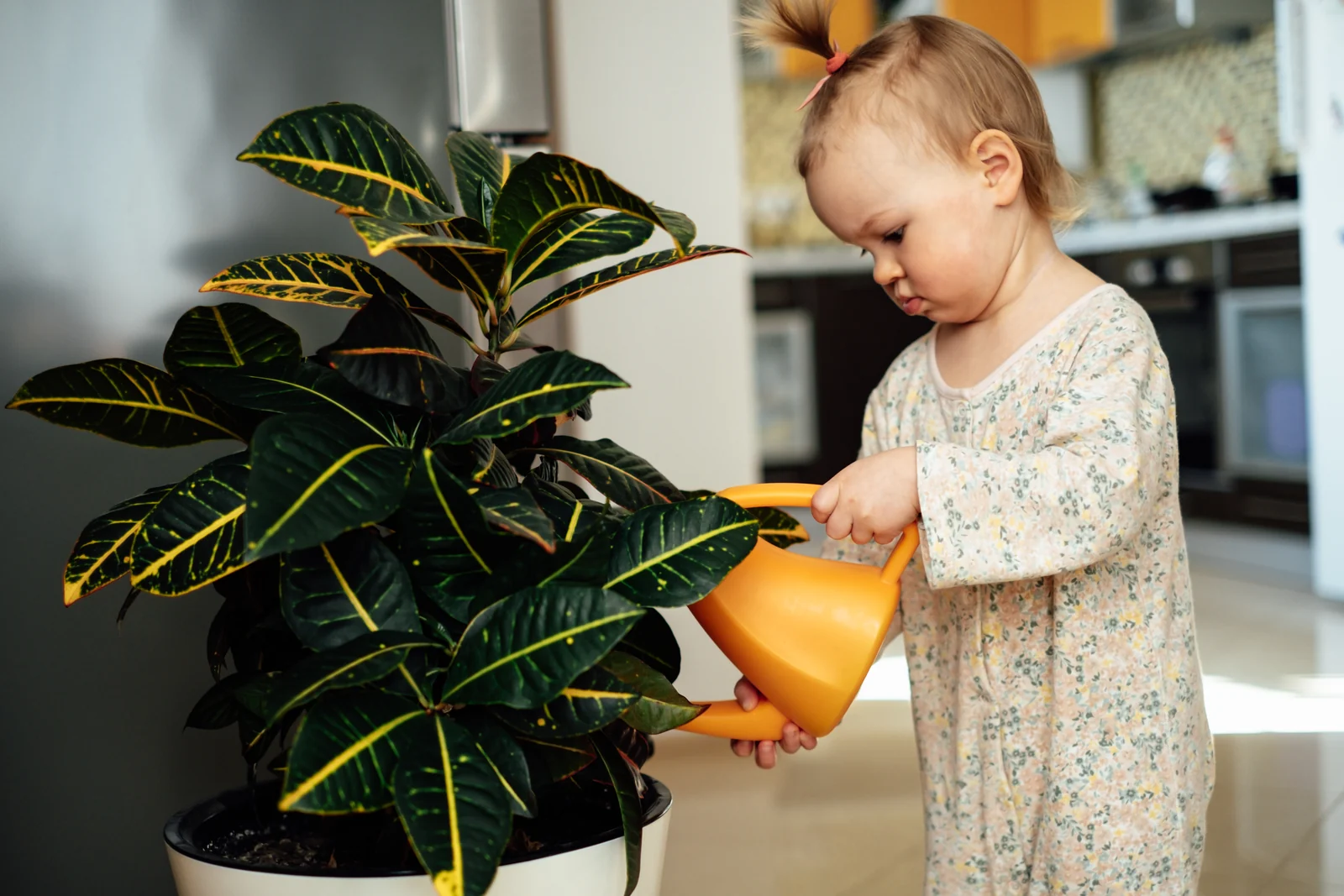
- Step 2: The watering can. Will carries water around to the houseplants and gives each one a drink.
- Step 3: The mop. He pushes it from room to room, and every room counts as cleaned.
 Save
By the end he’s worked up a sweat, and I’ve gotten a little housework done that needed doing anyway. In a smaller home the same jobs shrink to fit. A basket of towels pushed from one end of the hall to the other still counts.
Some days the most exciting thing in the house is a basket of dirty laundry.
A sensory bin, painting or a sheet tent
A sensory bin is a shallow tub of something to scoop and pour, plus a few cups and spoons, set on a tray or an old towel on the kitchen floor. It works as a 20-minute idea only when you’re sitting right beside it, since so much of it ends up near a mouth. What to put in it, and what to keep out of reach, gets the full treatment in my post on sensory activities for toddlers. Ready-made sensory bins for 2- and 3-year-olds deserve a post of their own.
One filler to skip entirely is water beads. The U.S. Consumer Product Safety Commission (CPSC) warns that they can grow 100 times their original size in water and can cause intestinal blockages if swallowed, and it urges parents and caregivers to remove them from any environment with children.
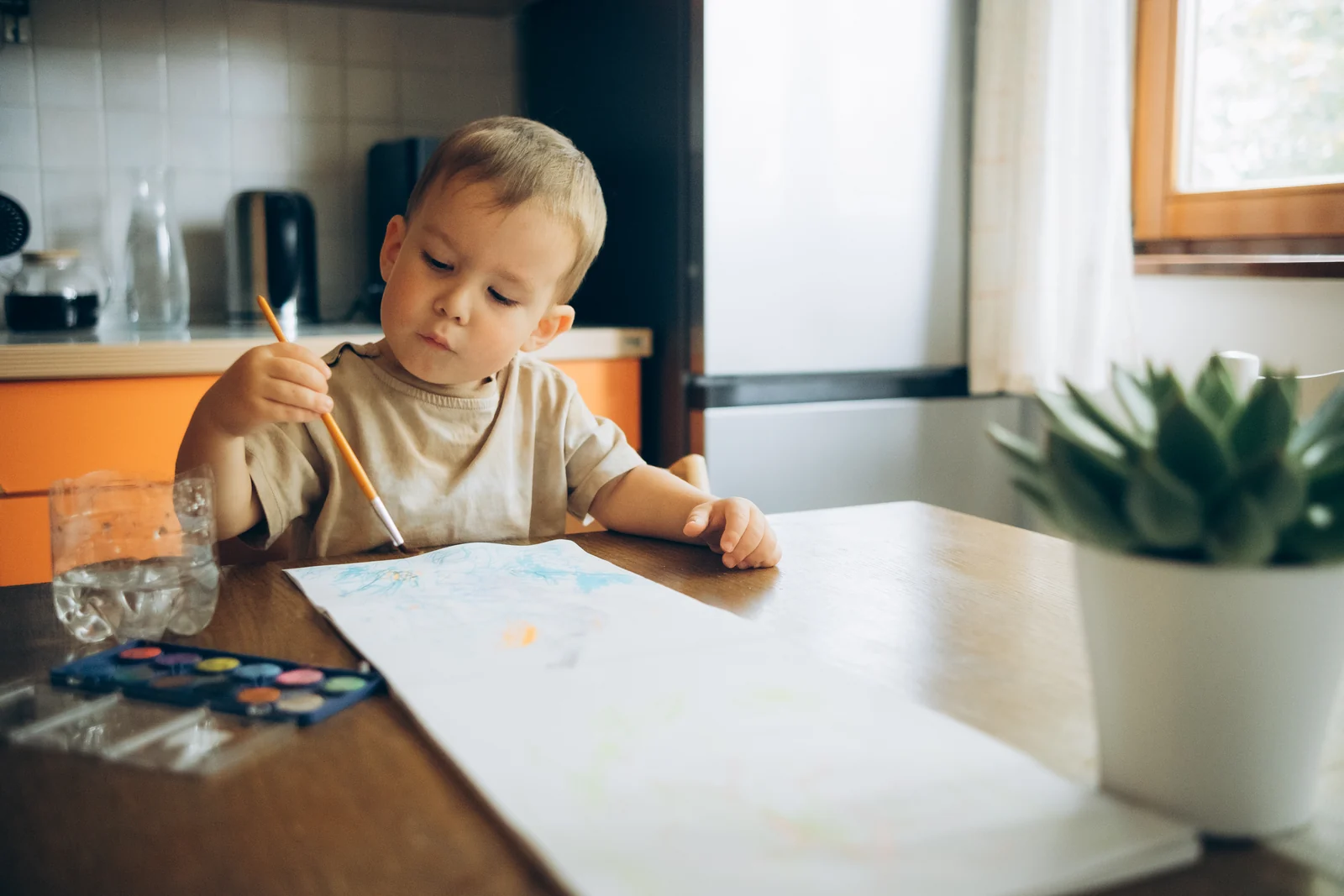
Painting fits in twenty minutes too, at the kitchen table over an old sheet, with a wipe-down and a brush rinse at the end. Paints, paper and art setups for this age get their own post on Montessori art activities.
 Save
For something quieter, drape a sheet over two kitchen chairs pulled into the middle of the room, away from the counter and the windows, and you’ve got a tent. Toss in a pillow and a couple of books. When it’s over, the sheet folds up and the chairs go back to the table.
30-minute indoor activities: water play and a toy car wash
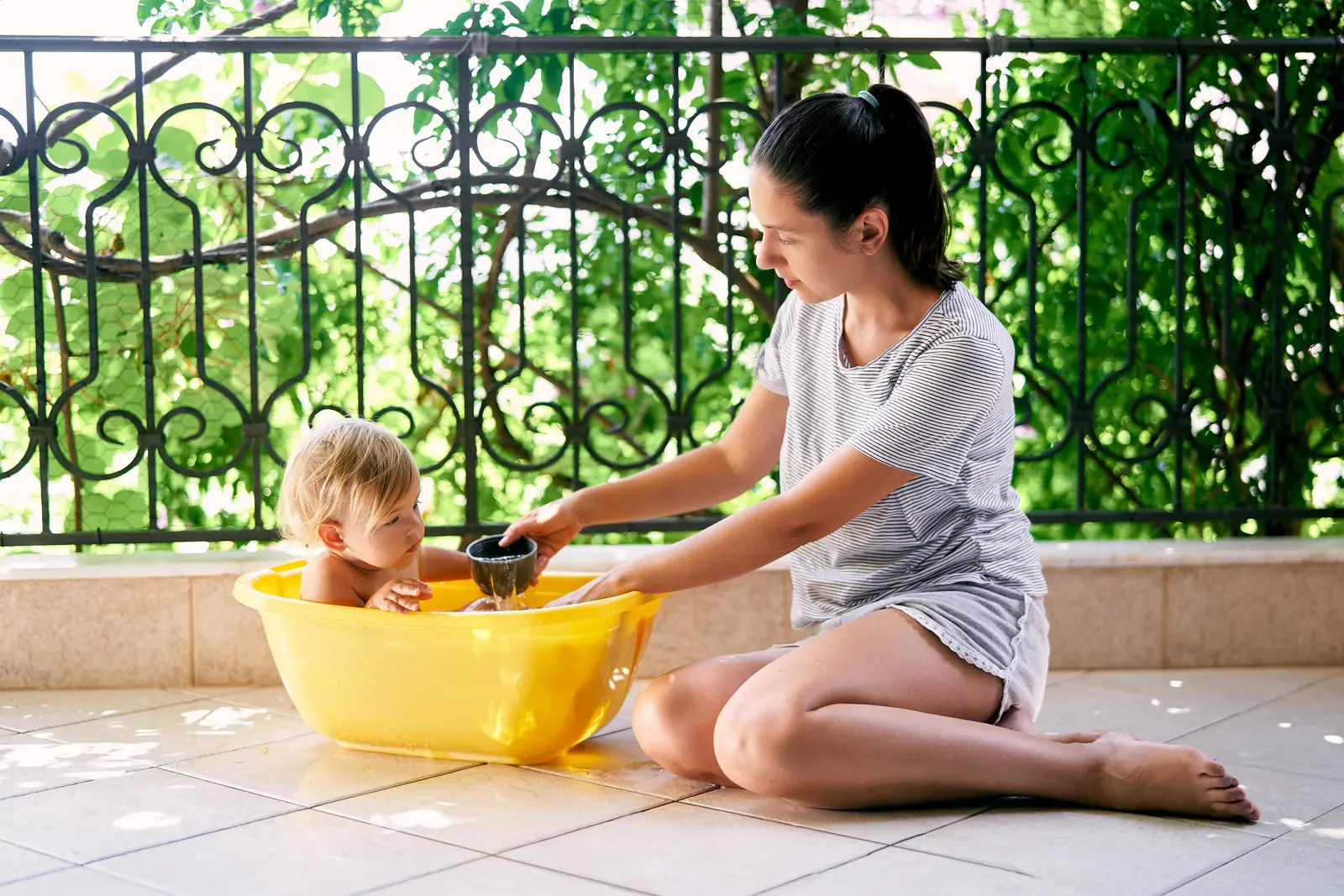
Fill the tub or a big basin with warm water, toss in bowls, scoops, a funnel and a few muddy toy cars, then sit down right beside it. Water play runs longest on this list, and you stay within arm’s reach throughout.
Heavy jobs only last so long. When Will has hauled enough and the whining and fussing start, I bring out my last trick: warm water. I run it into the bathtub or a big basin and toss in plastic bowls, a scoop, a funnel, and sometimes his muddy toy cars. Now he’s the car wash guy.
He scoops water from one cup to the next and scrubs every wheel, one at a time, very seriously, for up to half an hour. I sit right beside the tub, within arm’s reach, the entire time. For us, it’s the rescue plan once the hauling is done.
No bathtub to spare? A big basin on a towel on the kitchen floor works the same way, and the towel catches most of the splashes.
 Save
Young children can drown in as little as an inch or two of water, and it can happen quickly and silently, the American Academy of Pediatrics (AAP) warns. Stay within arm’s reach for the whole car wash, never leave a filled tub or basin unattended, and empty it completely the moment play is over.
Test the water before your toddler touches it. The AAP says to check it with your wrist or elbow so it feels warm, not hot, and to set your water heater so the hottest water at the faucet is no more than 120°F (49°C).
Those are the fun indoor activities by the clock, and you won’t need all of them on any one day. String two or three together and a long day gets shorter: tape while you’re slow to get going, a heavy job when the energy spikes, the car wash once the whining starts. Pick by the minutes you have, and save the rest for the next gray day.
Can a toddler get gross motor play in a small apartment?
Safety setup comes first: anchor TVs, bookcases and dressers, and move chairs away from windows and counters before you build anything to climb. After that, a small apartment has room for plenty of gross motor play.
Gross motor play is the big-body stuff: walking, crawling, climbing, jumping, pushing and carrying. According to the WHO’s 2019 guidelines for children under 5, 1- and 2-year-olds should get at least 180 minutes a day of physical activity at any intensity, spread throughout the day, and more is better.
That’s three hours, which sounds like a lot on a day you can’t go out. My accounting brain reads that 180 as a running total. A dance party, a laundry run, a crawl through the cushion course: it all goes on the tally, and a stuck-inside day still adds up.
The same guidelines say kids under 5 shouldn’t be kept strapped into a stroller or high chair, or onto a grown-up’s back, for more than an hour at a time. That’s worth remembering on a long day when the high chair and a snack start to look like a break for everyone.
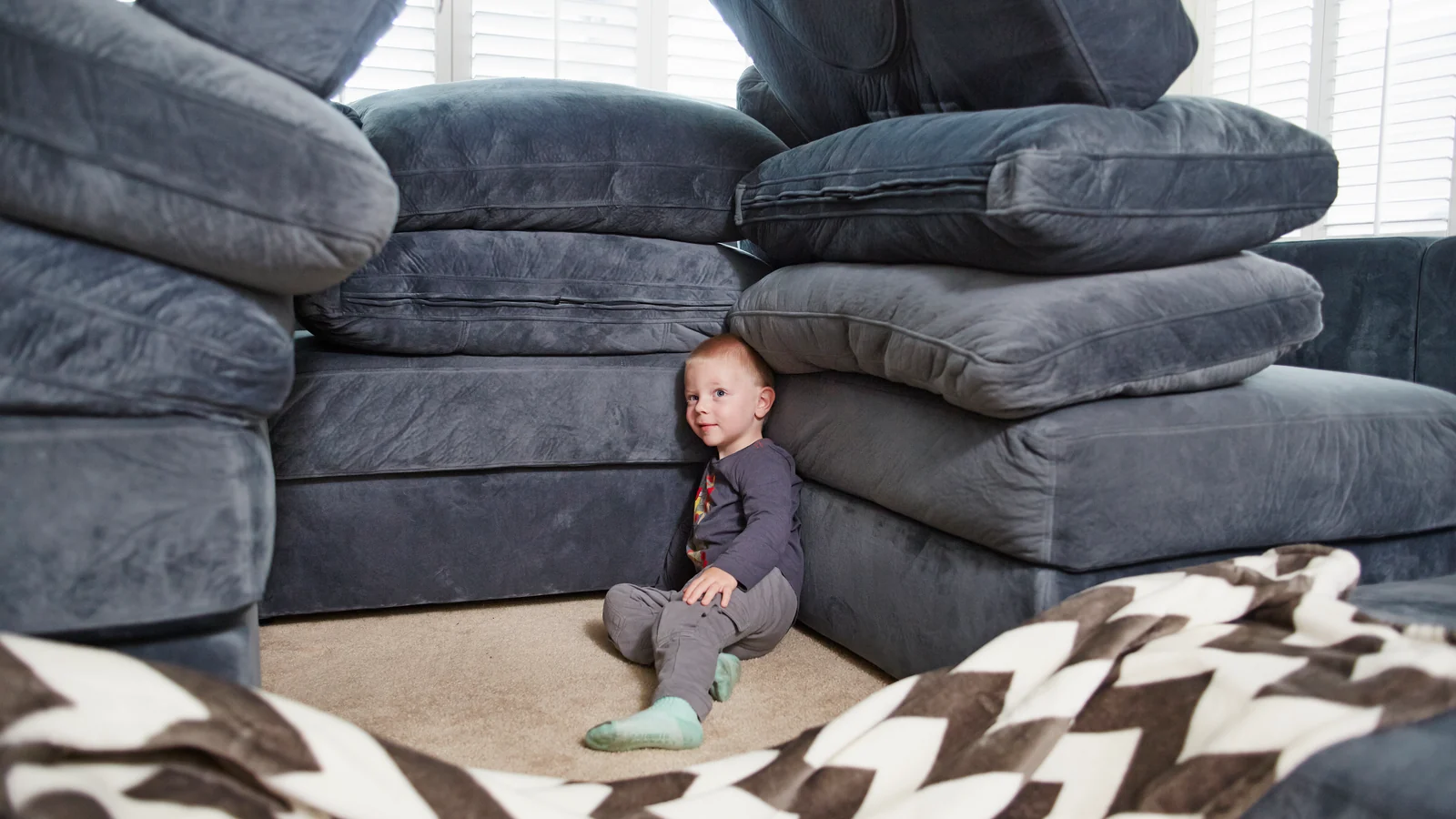
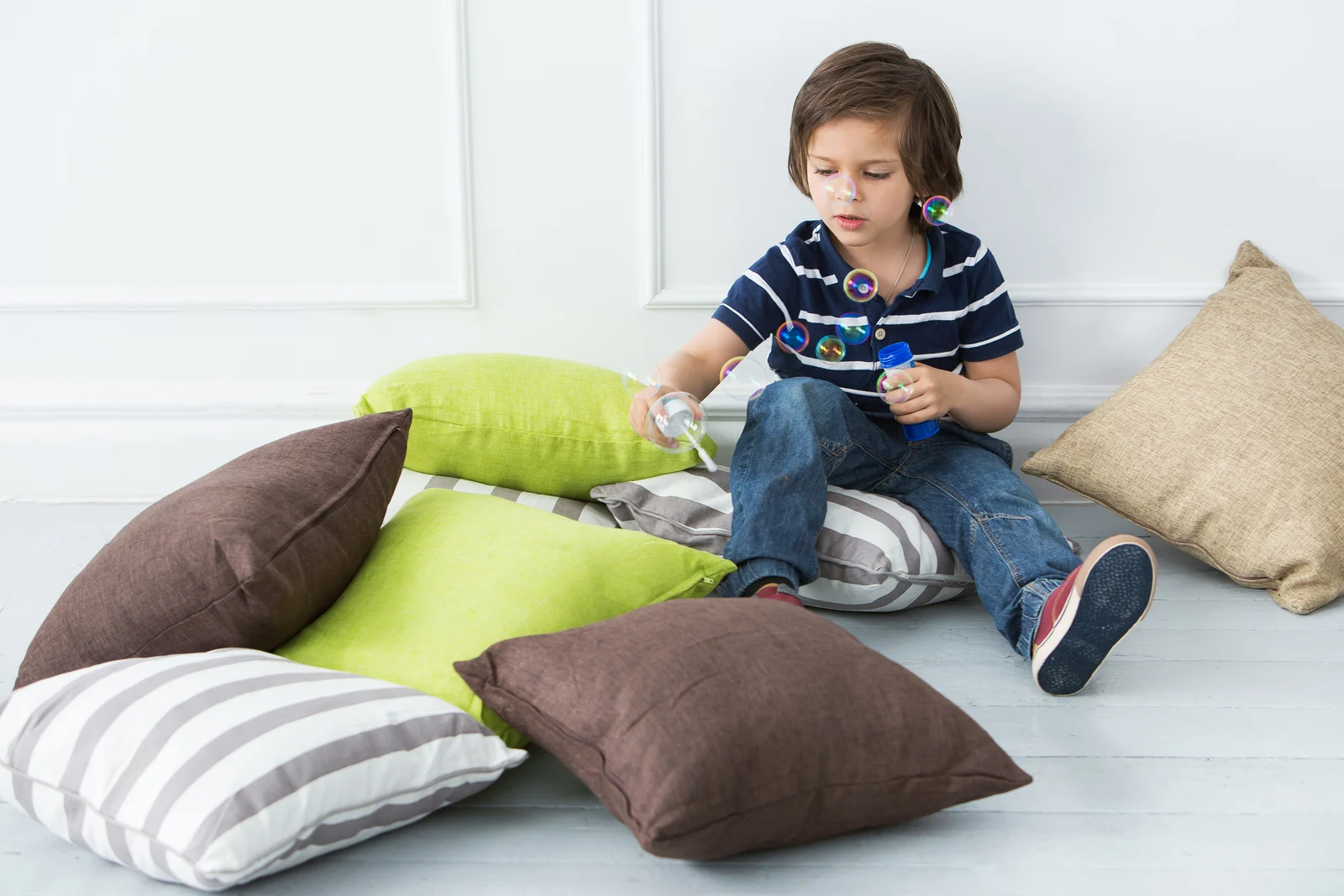
For an obstacle course, pull the cushions off the couch and lay them in a line to crawl over. Add a pillow to step around and the kitchen table to crawl under, and you’ve got a loop through the living room. When it’s over, the cushions go back where they came from. Indoor gross motor toys for small spaces are a bigger topic than this post has room for.
 Save
Toddlers between 1 and 2 start to climb, jump and run, and they don’t understand what’s dangerous, the AAP notes. A chair left next to a counter, table or window lets them climb to dangerously high places, so move those chairs first. After a serious fall, or if your child doesn’t act normally afterward, call your doctor.
Anchor TVs, bookcases and dressers to the wall and keep heavier things on lower shelves, the CPSC advises. Window screens aren’t strong enough to stop a fall, the AAP says, so open windows from the top if you can, and if they open from the bottom, add window guards that only an adult or older child can open from the inside.
Screen-free activities and what the AAP says about screens
Screen-free activities swap a show for hands-on play and real people, and the AAP says that kind of real-world interaction is how babies under 18 months learn best. A show on a hard afternoon is still allowed.
If the TV bailed you out at four o’clock yesterday, you won’t get any judgy looks from me. On plenty of days the show is what gets dinner on the table, and we’re all just doing our best. The pediatric advice simply gives you a direction to lean.
In its family guide to the 2026 media policy, the AAP says infants under 18 months learn best from real-world interactions, and that heavy solo screen use can affect their developing language and social skills. For the times a screen is on, its advice is to watch and play alongside your kids. The guide says the update is meant to focus on “quality, context and conversation.”
If you want a specific number, the AAP’s January 2026 policy statement in Pediatrics says time limits for toddlers and preschoolers might be under an hour a day. It also says kids and media can’t be viewed through screen limits alone.
A separate AAP Q&A on screen time for infants adds that children under 2 learn best by exploring the world around them and playing with other children and adults. It suggests limiting screens and watching together, and it gives video chatting with family as an example of using a device with a baby. So the video call with Grandma is the kind of screen use the AAP itself holds up as an example.
Numbers come from the WHO. Its 2019 guidelines say screen time isn’t recommended for babies or 1-year-olds, and for 2-year-olds, sitting screen time should be no more than an hour, with less being better.
What I’d suggest is small. Try one thing from the 10-minute list before you reach for the remote, and when a show does go on, sit with your toddler for part of it. Screen time by age, with every guideline side by side, needs a post of its own. Sick days are a different kind of stuck-inside day too, so I’ve kept those ideas in a separate list of sick day activities for toddlers.
 Save
Rainy days come back around, and so do heat waves and the days nobody can get out the door. A roll of tape in the drawer and a basin under the sink is most of the prep. That way the next stuck-inside morning starts with a plan you already have.
Frequently Asked Questions
What indoor activities are good for toddlers?
Good indoor activities for toddlers use busy hands or the whole body and ask very little of you: peeling painter’s tape, tossing socks into a basket, dancing, pushing a laundry basket, and water play with you right beside them. Most of them work as indoor activities for toddlers under 3 with a grown-up close by. Pick by the minutes you have, counting cleanup.
What are your kid’s favorite indoor activities?
Will’s favorite indoor activities are the ones that feel like real work. He peels strips of painter’s tape off the fridge and throws them away, pushes the big laundry basket from the bedroom to the washing machine, and runs a car wash for his toy cars in a tub of warm water, with me sitting right beside him.
Conclusion
You don’t need a playroom, a craft cabinet or a plan for the whole day. Before the next stuck-inside day, put a roll of painter’s tape where you can grab it and pick one thing from the 10-minute list. If it buys you ten minutes, good. If it stretches to twenty, even better. And if a show goes on later, the day still had tape on the fridge and a laundry basket that made it all the way to the washer.
Small home, long day, a toddler with energy to spare: you’re handling more than it looks like. Start with one strip of tape and let that be enough.
Miri
Fewer toys, deeper play.
Further Reading & Resources
See all 11 sources
- Screens: Helping Kids Thrive in a Digital World: AAP Policy Explained (American Academy of Pediatrics, HealthyChildren.org) · Digital Ecosystems, Children, and Adolescents: Policy Statement (Pediatrics, 2026)
- Babies, screens and movement: Screen Time for Infants (American Academy of Pediatrics) · Guidelines on physical activity, sedentary behaviour and sleep for children under 5 years of age (World Health Organization, 2019)
- Home safety: Safety for Your Child: 1 to 2 Years and Home Safety: Tips for Families With Young Children (American Academy of Pediatrics) · Ahead of Sunday’s Game, CPSC Reminds Families to Tackle the Deadly Hazard of TV and Furniture Tip-Overs (U.S. Consumer Product Safety Commission)
- Water and small things: Drowning Prevention for Curious Toddlers: What Parents Need to Know (American Academy of Pediatrics) · 5 Bathroom Safety Tips for Infants & Young Children (American Academy of Pediatrics) · Water Beads: A Danger to Young Children & Can Be Deadly if Swallowed (U.S. Consumer Product Safety Commission) · My Child Ate Crayons (Illinois Poison Center)