
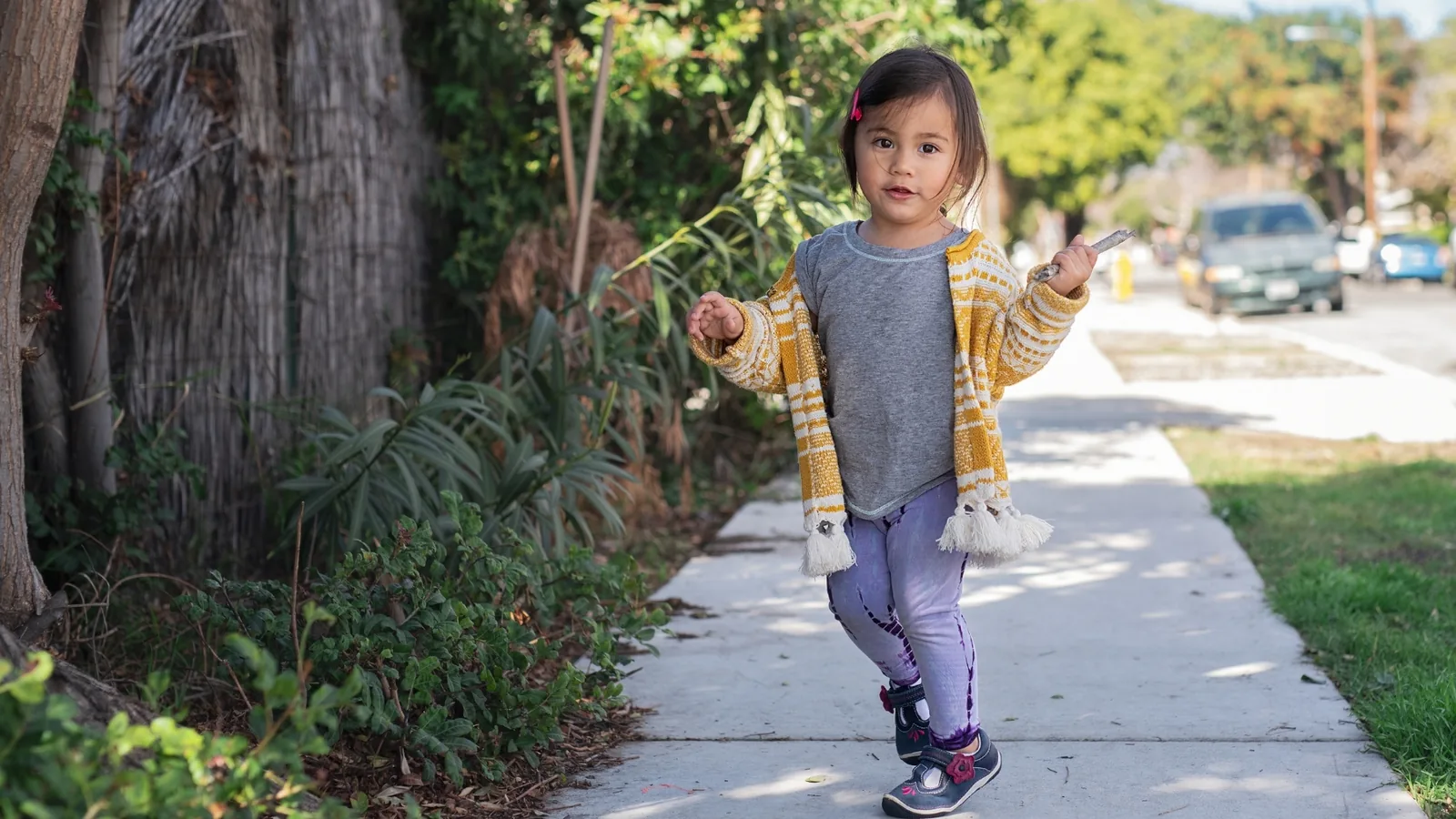
Somewhere along the way, Montessori outdoor play picked up a reputation. You’d think it takes a big backyard, a garden bed, a mud kitchen and ideally a patch of woods out back. Meanwhile, your toddler has climbed the arm of the couch twice before breakfast, and your yard is a strip of grass by the driveway. Or there’s no yard at all.
You’re far from the only one who feels that gap. One parent in r/MontessoriForHome asked for outdoor play ideas for a 15-month-old with a very small backyard to work with. In another thread there, a parent admitted to feeling they don’t involve their kids in the great outdoors as much as they need to.
In case nobody’s told you yet: a sidewalk counts. So does a small park with a bench and a few trees, and so does the puddle at the end of your driveway. Most of the easy, fun backyard activities for toddlers you’re hunting for fit on a sidewalk, and every season hands you a few of its own.
 Save
What makes outdoor activities Montessori?
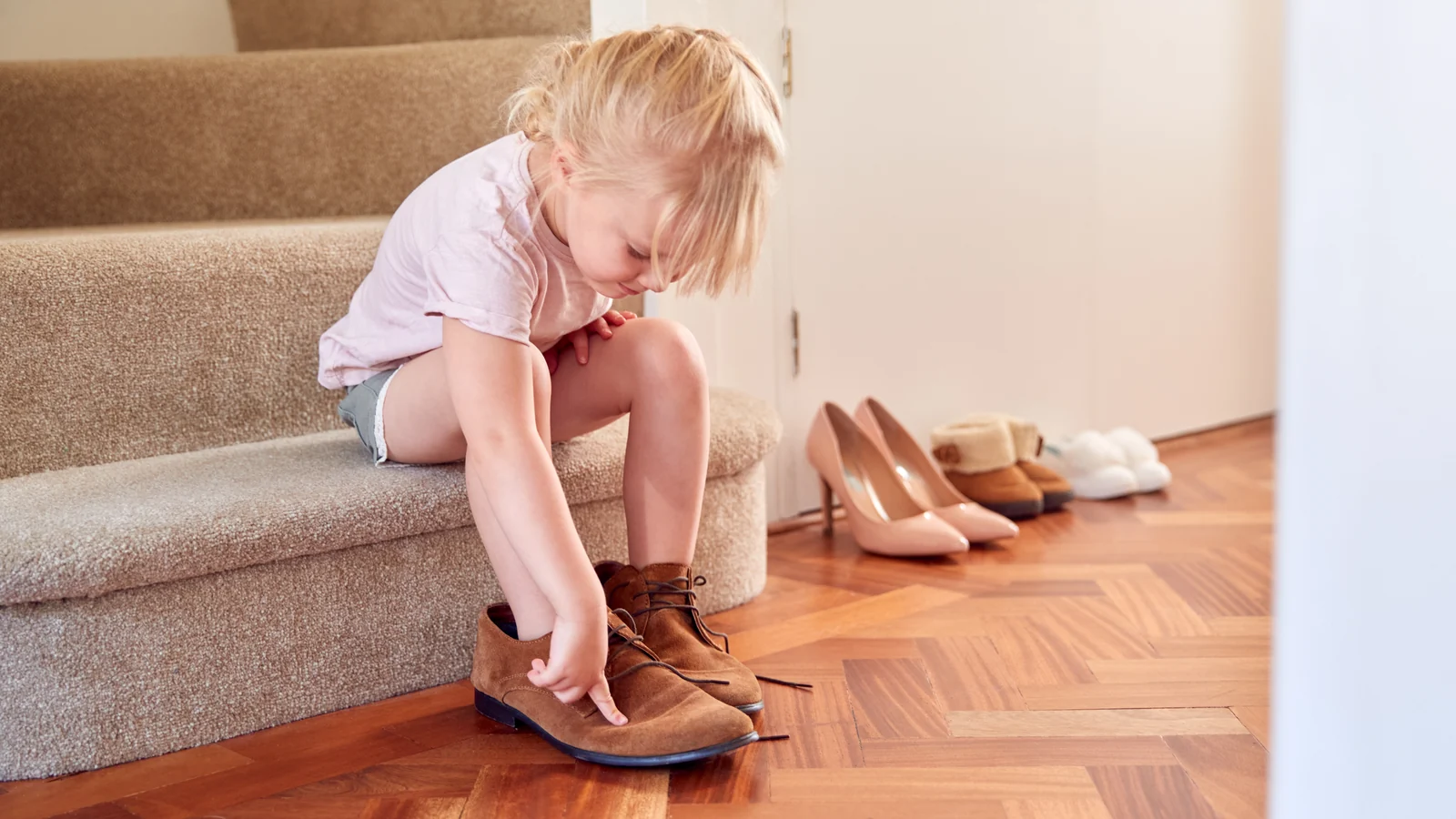
Montessori outdoor activities are everyday outside time where your toddler walks on their own feet, touches what they find and sets the pace, while you follow and watch. There’s nothing special to buy and nowhere in particular to get to.
That idea comes from a bigger one. “Follow the child,” Maria Montessori’s phrase, sits under most of what I write about Montessori activities at home, and outside it gets very literal. You walk a step behind. Your toddler decides that one crack in the sidewalk deserves three full minutes, then sprints for the next driveway. The running, squatting and curb-climbing are gross motor work, the big-muscle kind, and your part is mostly observation.
 Save
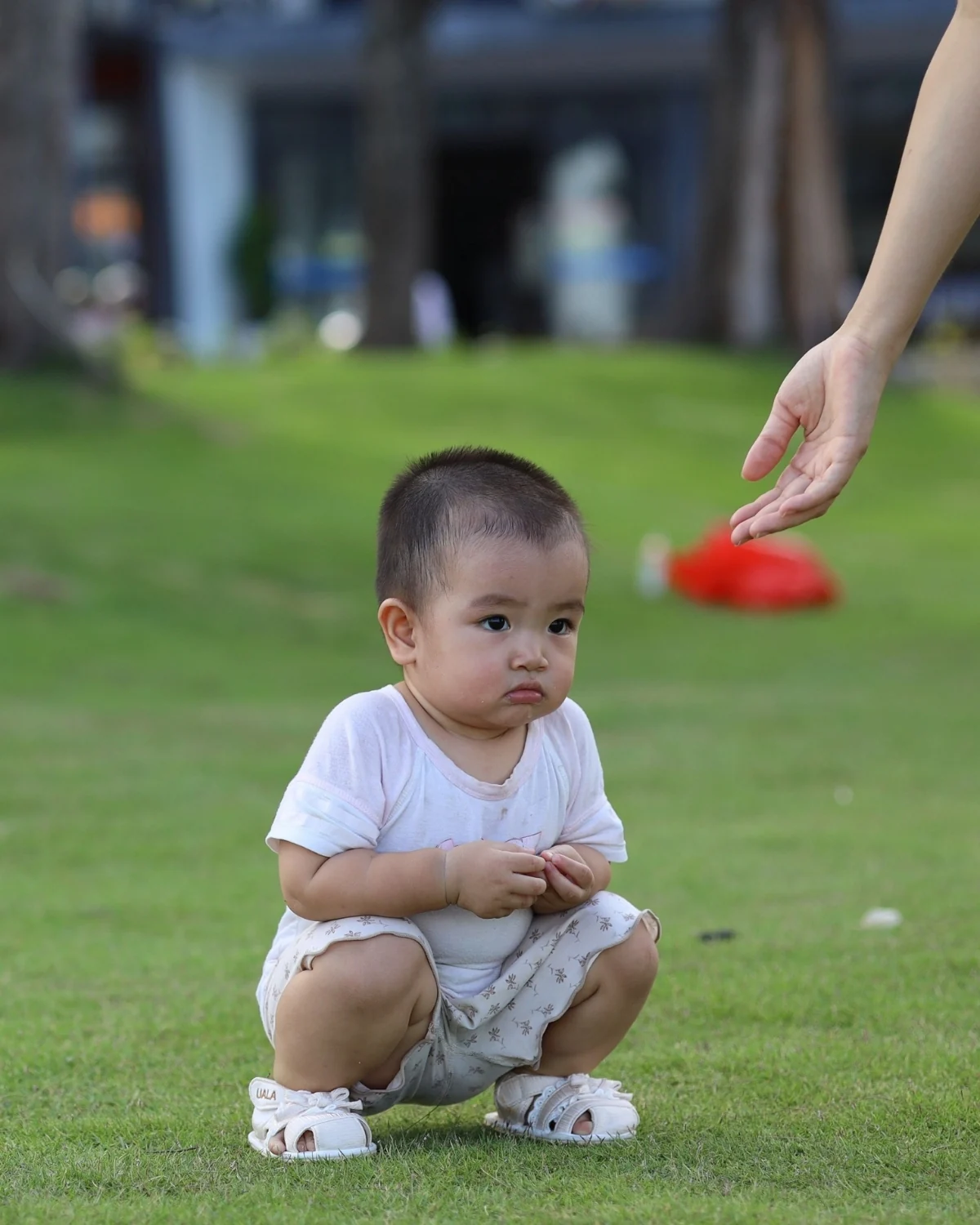
There’s a practical reason to get out the door, too. The World Health Organization (WHO) says in its 2019 guidelines for children under 5 that children 1–2 years old should get at least 180 minutes a day of physical activity at any intensity, spread throughout the day, and that more is better. That number covers all the moving from breakfast to bedtime, at any pace. Outside time is one easy way to add to it, because a toddler on a sidewalk rarely stands still for long.
For ages 3 and 4, the guidelines add that at least 60 of those minutes should be moderate to vigorous. And if you’re planning outdoor activities for infants and toddlers at the same time, the WHO asks for babies under 1 to be active several times a day, particularly through interactive floor-based play. A blanket in the shade works nicely for that.
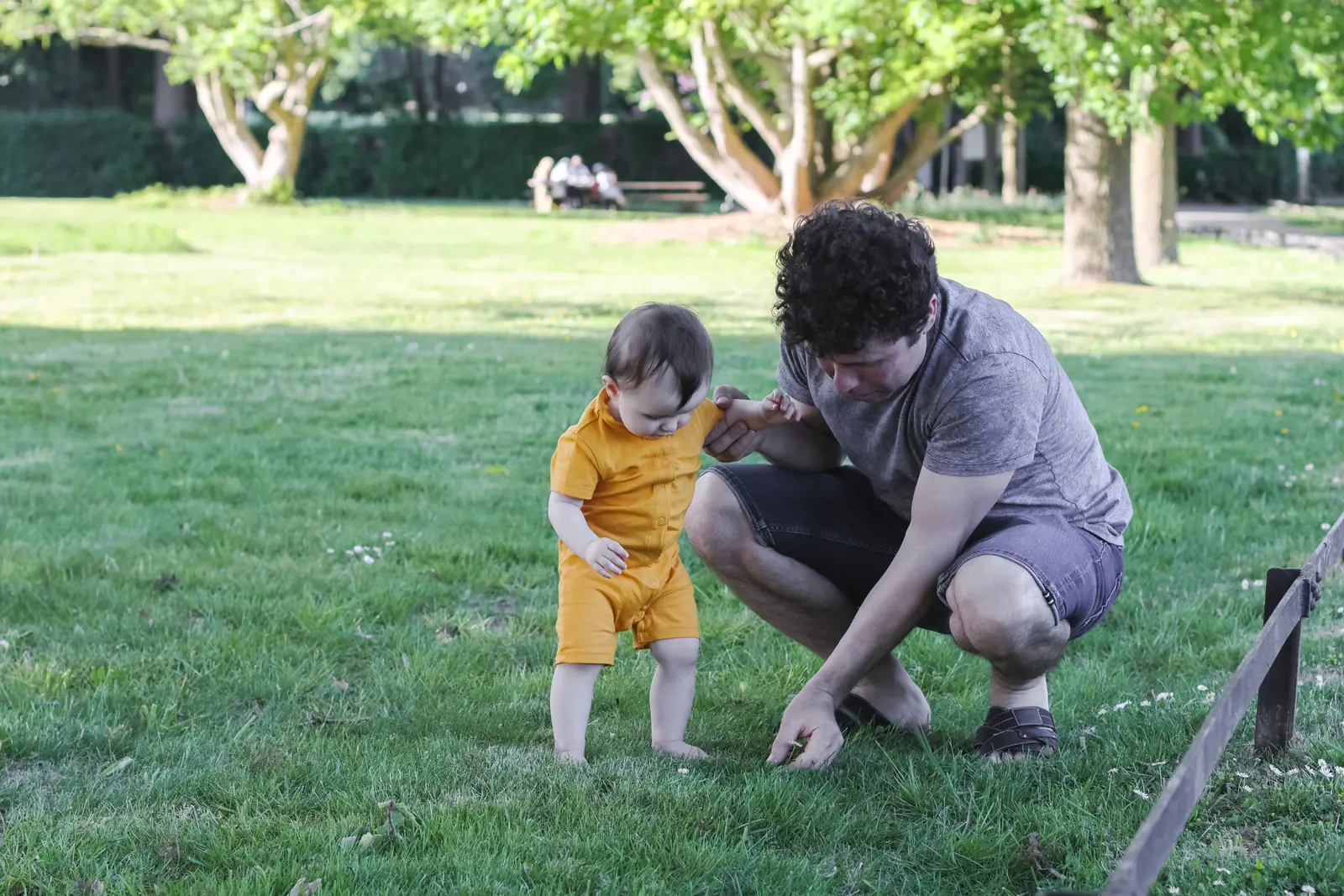
On our everyday walks along the neighborhood sidewalks or to the small park near our house, I rarely carry Will or buckle him into the stroller. He walks, runs, touches the pine needles, picks up dry pine cones and digs in the dirt, and I let him get messy. The walk’s only job is letting him explore with all his senses.
Miri’s Tip
What are some outdoor activities for toddlers, season by season?
Look out the window, find your season in the table below, pick one activity from its row, and do the one check that goes with it before you head out. Each season gets a few ideas and needs no special gear.
At Moje Montessori, we pair each season with just one safety check, so there’s only one thing to remember at the door. The spring, fall and winter rows lean on what Will does outside here in Colorado, where winter means real snow.
| Season | Try this | One check before you go |
|---|---|---|
| Spring | Jump in mud puddles in rain boots · plant a few seeds · water them with a small watering can · draw with sidewalk chalk | Check for ticks when you come back in, even from your own backyard |
| Summer | Dig in sand · pour water from cup to cup · splash at a water table · picnic on a blanket in the shade | Sunscreen first (SPF 15 or higher), bug spray second · empty water containers after play |
| Fall | Stomp through leaf piles · collect pine cones · line up finds on a porch step · start a nature table | Learn the names of the plants in your yard · a wild mushroom eaten means a call to Poison Control |
| Winter | Wade through snow in boots · pull a small sled · shovel snow · pack small snowballs | UV rays bounce back off snow, so take extra care with sun |
Spring: puddle play and planting
Spring’s first rule comes at the end of the outing: check your toddler for ticks once you’re back inside, even after playing in your own backyard. Before that comes the fun part, which is puddles, seeds and chalk.
When our snow melts in spring, Will moves on to rubber boots and squelchy mud puddles, jumping in just to play with the water. Jump in, stomp around, jump again. That’s puddle play, start to finish.
Gardening can stay tiny. A few seeds in a pot on the steps and a small watering can give a toddler a job to come back to every day. Sidewalk chalk turns the front walk into a drawing board, and don’t be surprised if more chalk gets stepped on than drawn with.
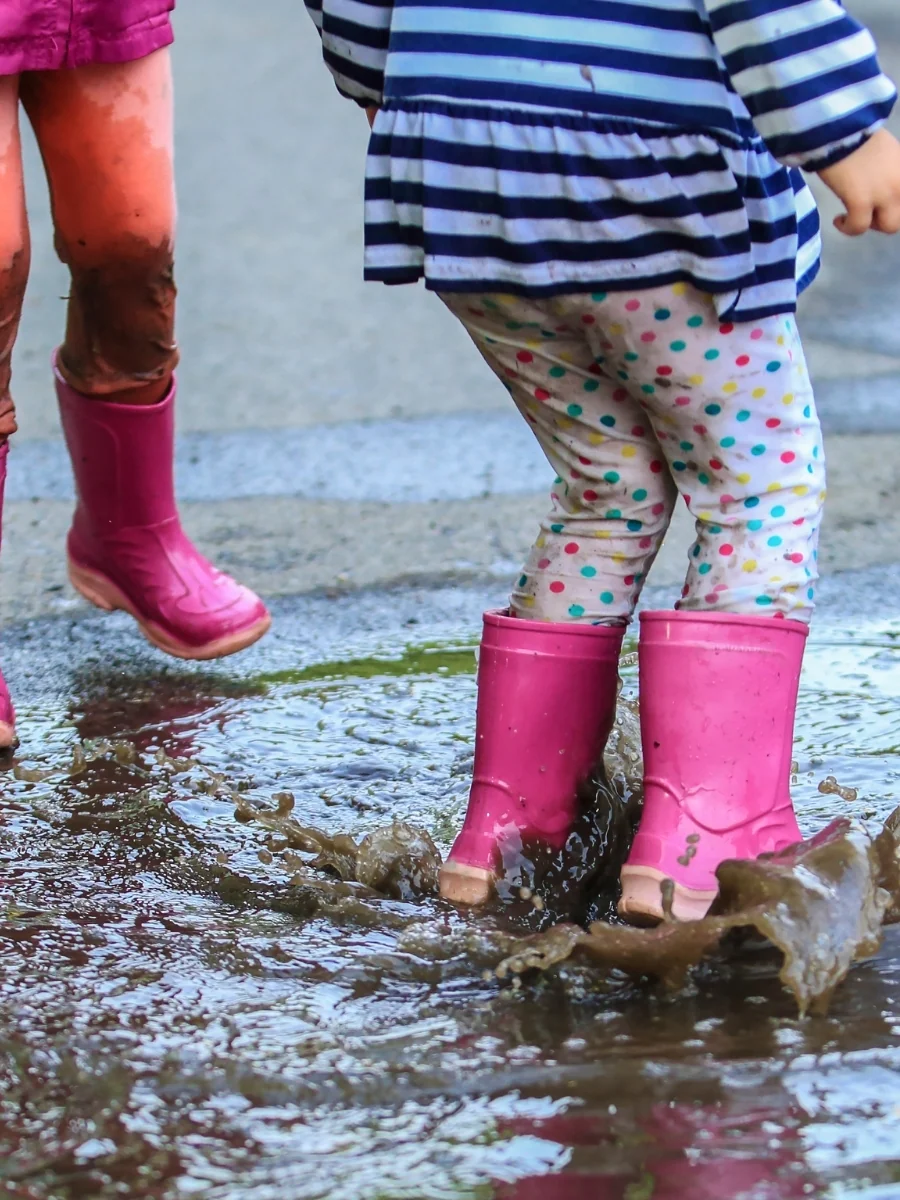
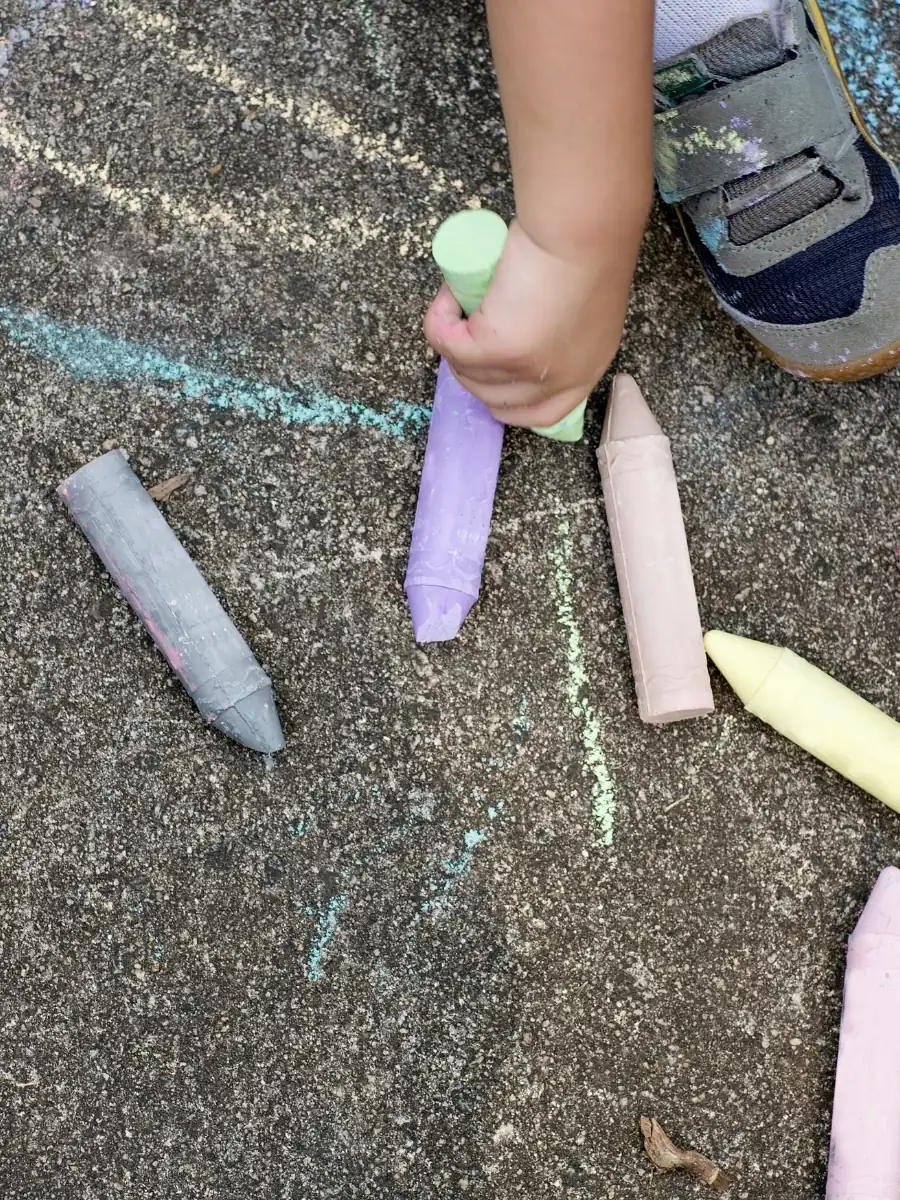
Rain boots and one good puddle. That’s spring. A thick stick of chalk turns the front walk into a drawing board.
That end-of-outing rule comes from the Centers for Disease Control and Prevention (CDC), which says to do a full-body tick check after being outdoors, including in your own backyard. I list the spots to check on a toddler in the safety section near the end.
Summer: sand, water and shade
Shade and sunscreen come before the sandbox in summer, with bug spray after sunscreen if you use it. Once that’s done, a bucket of sand, a few cups of water and a shady spot can fill a whole morning.
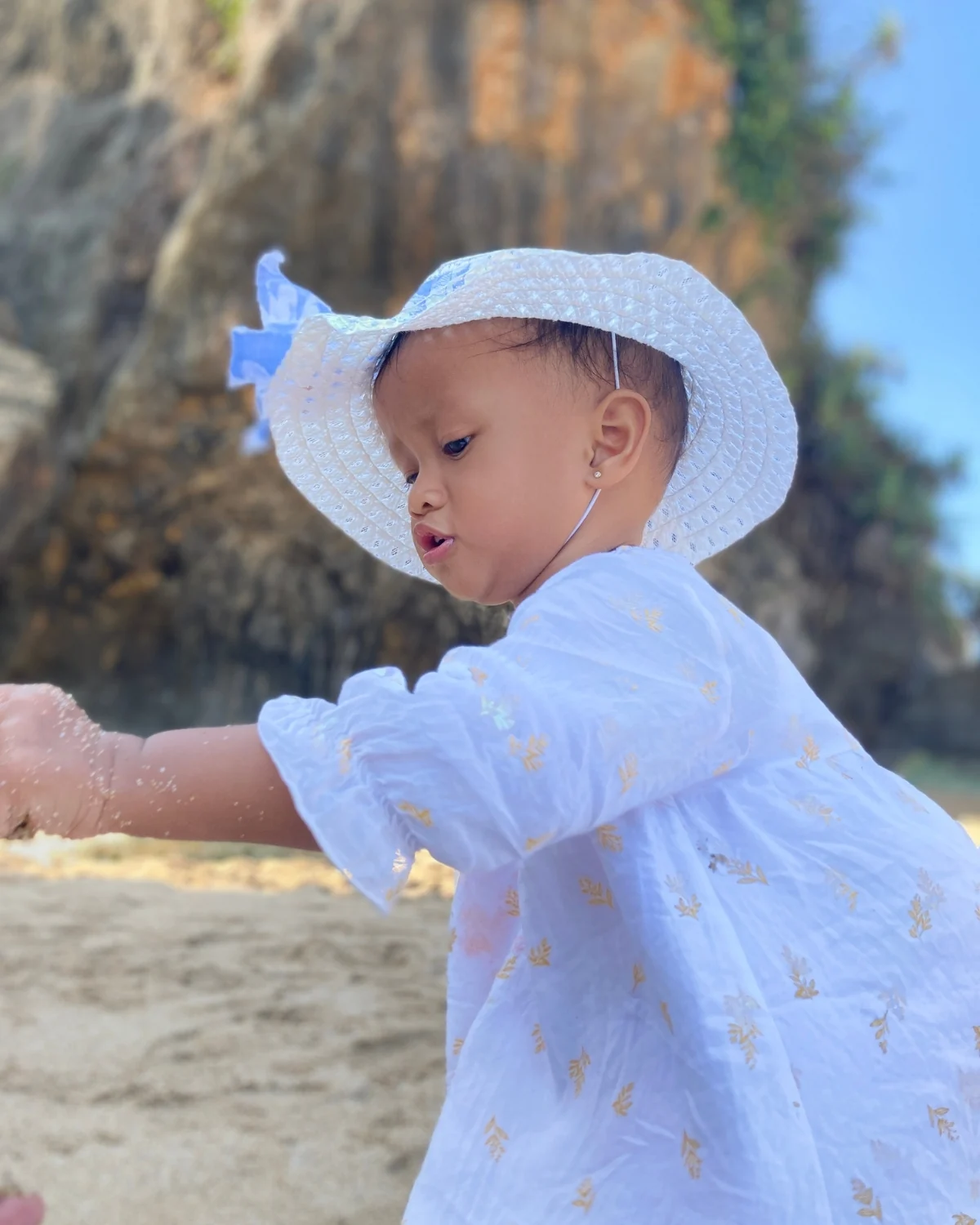
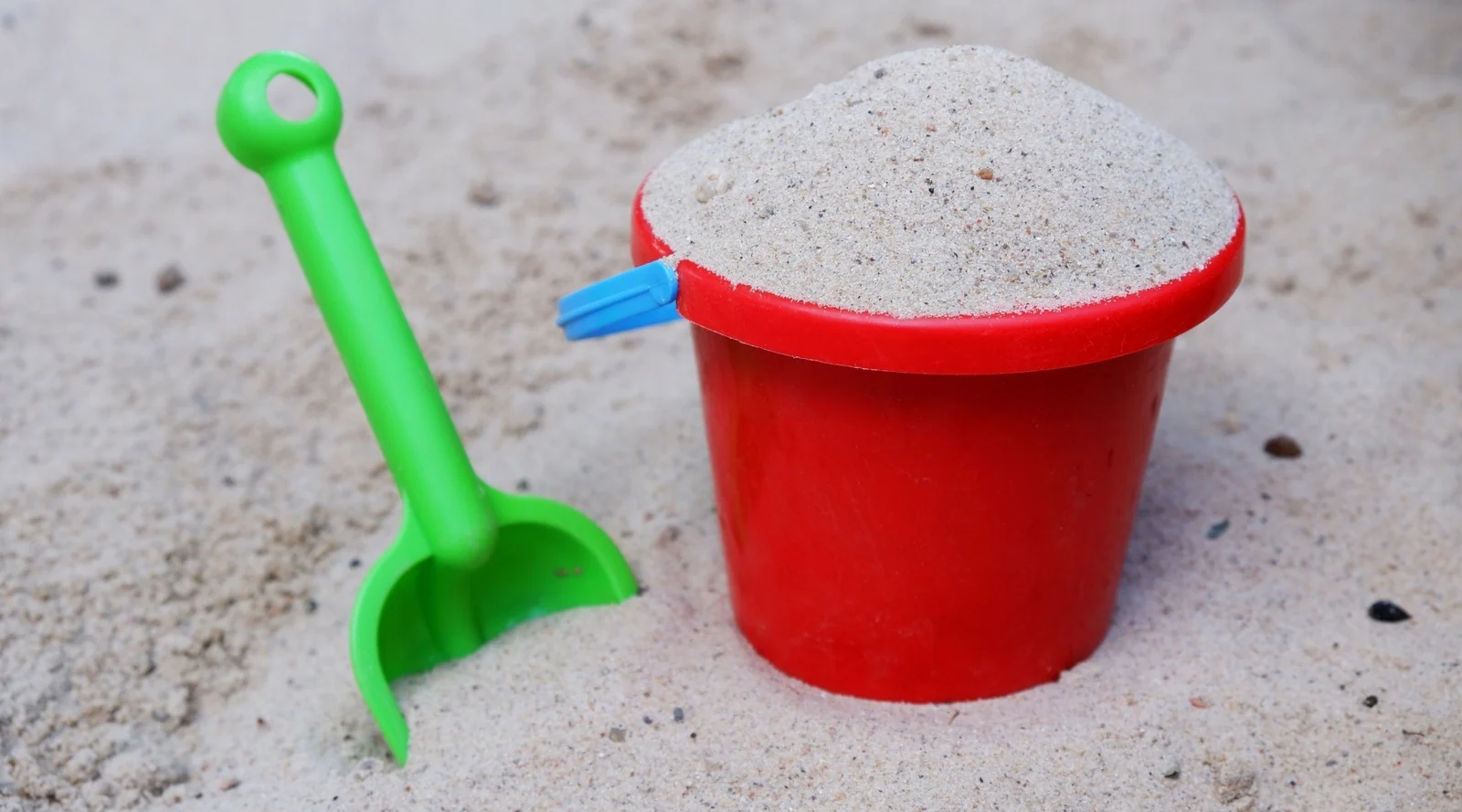
Summer is the easy season for sand and water play: dig, scoop, pour from one cup into another, fill a bucket and dump it out again. A water table does the same job standing up. Sand and water toys for toddlers deserve a post of their own.
 Save
Water is the one place I’d never step back, even for a minute. The American Academy of Pediatrics (AAP) says young children can drown in as little as an inch or two of water, quickly and silently, and recommends staying within arm’s length around water. It also says buckets, wading pools and other containers should be completely emptied whenever they’re not in use. I go into water setups in my post on sensory activities for toddlers.
On sun, the AAP notes that UV rays bounce back from sand, water, snow and concrete, so take extra care around them, and look for a wide-brimmed hat that shades the cheeks, chin, ears and back of the neck. On hot afternoons at the playground, press your own hand on the slide before your toddler sits on it. It takes two seconds.
Keep babies under 6 months out of direct sunlight: shade from a tree, umbrella or stroller canopy, light clothes covering arms and legs, and a brimmed hat that shades the neck. On uncovered skin, the AAP says to use sunscreen with SPF 15 or greater, 15 to 30 minutes before going out, and to reapply every two hours after swimming, sweating or toweling off. Sunscreen is okay on small patches of a young baby’s skin.
Sunscreen goes on first, then bug spray. The CDC says to pick a repellent registered with the Environmental Protection Agency (EPA) and not to use products containing oil of lemon eucalyptus (OLE) or para-menthane-diol (PMD) on children under 3.
Fall: leaf piles and a nature table
Find a leaf pile, let your toddler crash through it, then carry a few finds home to a tray or windowsill. Learn the names of the plants in your yard along the way, because that’s the check that matters most in fall.
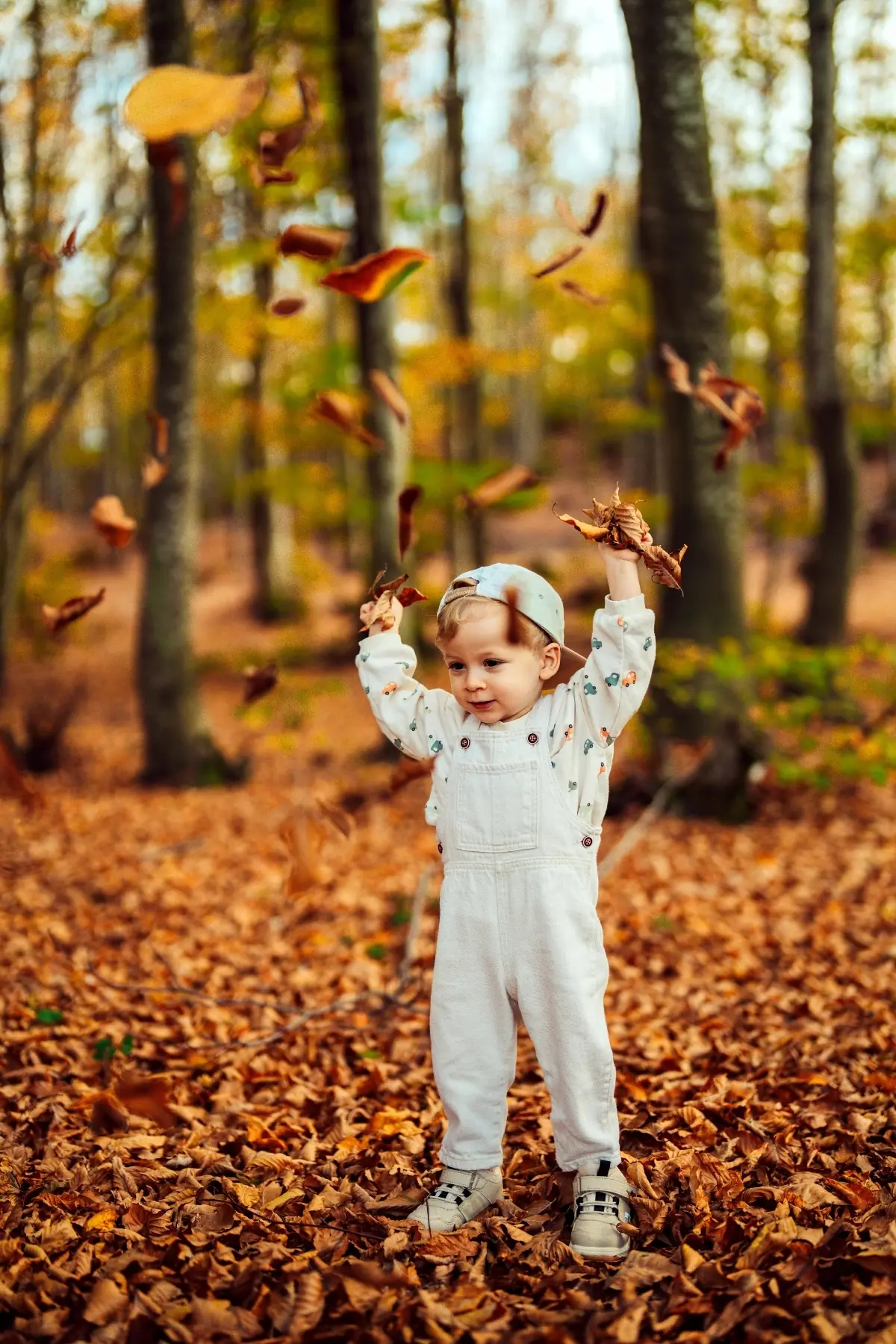
In fall, when the weather turns cool and comfortable, Will’s favorite thing is running and stomping through piles of crunchy, dry yellow leaves. Then he goes hunting for fallen pine cones and brings them back to line up along our front porch.
 Save
A nature table is a low spot, like a tray, a windowsill or a porch step, where the things your toddler collected outside get to stay for a while. A pine cone, a curled red leaf, a stick with a good bend in it. Collecting is the fun part, and the table just gives the treasures somewhere to go.
 Save
Before the nature table fills up, find out the names of the plants in your yard, because Poison Control says expert help depends on accurate plant identification. It also says eating any amount of any wild mushroom could be very dangerous: if your toddler eats any part of a mushroom from the yard, call your poison center right away at 1-800-222-1222. Picking things up on walks has more rules of its own, covered in my post on toddler nature walks.
Winter: snow, boots and a small sled
Snow comes with its own sun check: UV rays bounce back off it, so take extra care out there. Past that, winter outside can be as simple as boots, a small sled and a shovel.
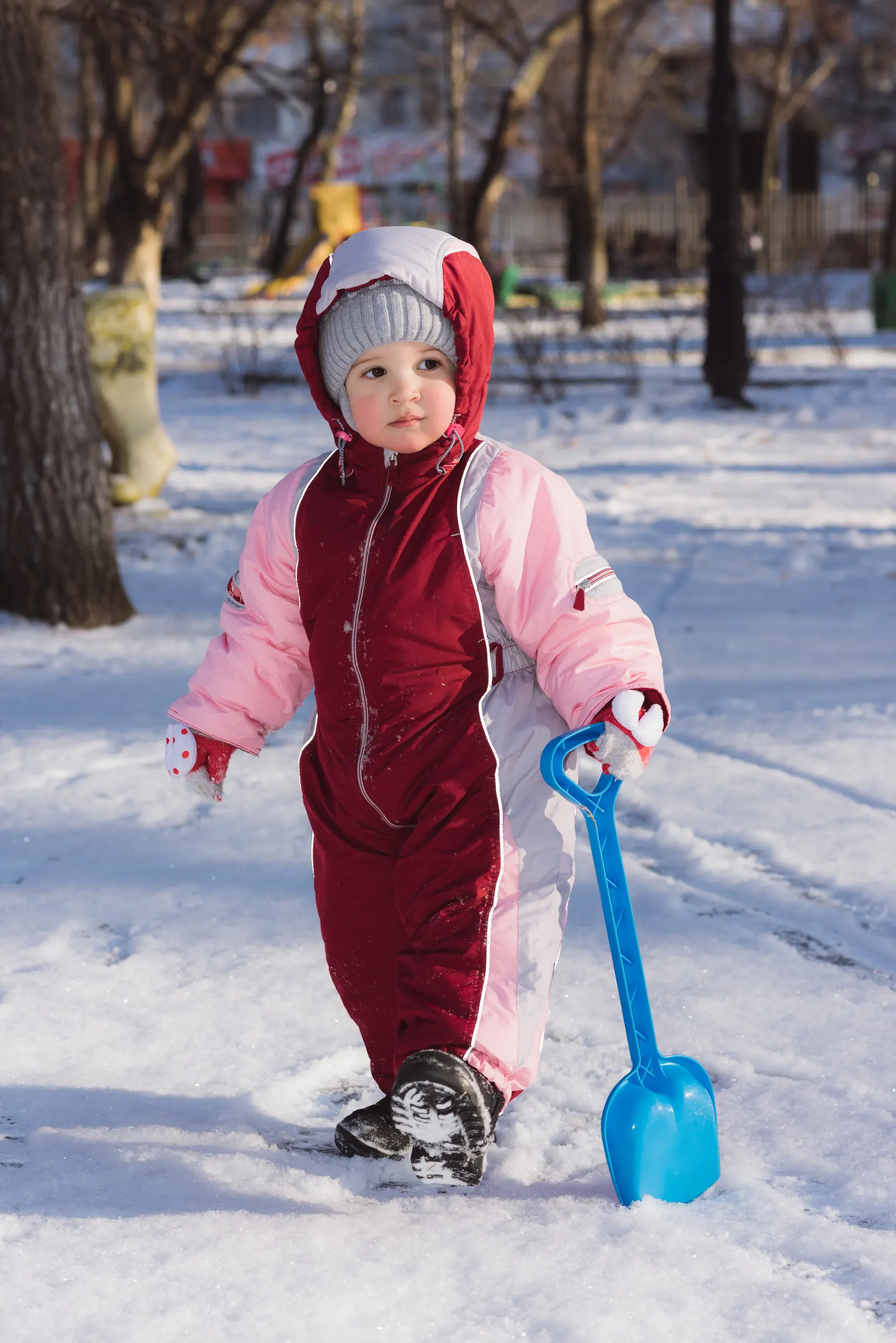
Winter in Colorado means snow, and Will’s winter outside stays simple. He pulls on his snow boots and wades around our small yard, or tows a little sled around. I don’t build giant snowmen or set up anything complicated. I just let him shovel snow and pack small snowballs to throw.
 Save
How long to stay out, and what counts as too cold, depends on your weather and your child, and I won’t guess at numbers here. Your pediatrician is the right person to ask about cold days where you live.
Glance back at the table and you’ll notice none of it needs a big backyard. A sidewalk, a puddle, a leaf pile, a patch of snow: each season brings its own, and one row is plenty for this week. What helps most is having that one idea ready before the season turns.
Can you do nature play with no yard and no gear?
Nature play needs only a front door: walk out, let your toddler lead, and stop whenever they stop. Look, touch, pick things up, rest on a bench at the small park, then head home.
This kind of outdoor activity for toddlers works anywhere and needs no materials at all. Kneel down to their height and you’ll see what they see: an ant on the curb, a leaf caught in a fence, a dog two houses down. For outdoor activities for toddlers under 2, this slow walk is often the best fit, since a new walker is usually thrilled just to be walking.
For a toddler, the walk to the corner is the outing.
When they’re ready for a little mission, like finding three kinds of leaves, you have the start of a nature scavenger hunt. Forest school photos can make a city sidewalk feel small. Call it connection to nature or just fresh air before lunch; either way, the block you live on has plenty of it.
 Save
The outdoor classics still earn their place: a ball to chase, a bucket and shovel, a small watering can. Outdoor toys for 1-year-olds are a topic of their own, but if I could buy only one, it would be a bucket and shovel, because it works in sand, dirt and snow.
 Save
What outdoor safety checks matter in every season?
Three checks travel with you all year: look for ticks when you come in, stay within arm’s length near water and empty containers when play is over, and know who to call if your toddler eats a plant or mushroom. Then let them explore.
The CDC’s tick check covers the whole body, and on a toddler these are the spots to look:
- Under the arms
- In and around the ears
- Inside the belly button
- Behind the knees
- In and around the hair
- Between the legs
- Around the waist
Poison Control’s advice for outdoor play is short and fits every season: watch young children carefully when they play outdoors.
After every outing, check your toddler for ticks in the spots above, even if you only played in your own backyard. Stay within arm’s length of your toddler around water, and completely empty buckets, wading pools and other containers as soon as play is over.
If you think your child ate a poisonous plant, use the webPOISONCONTROL online tool or call 1-800-222-1222. If they ate any part of a wild mushroom from the yard or the woods, call right away.
Some weeks the plan will be one walk to the mailbox, and on the days you’re wiped by lunch, that still counts. Outdoor time grows the way a toddler’s walk does, one short stretch at a time.
Frequently Asked Questions
What are some fun outdoor activities for toddlers?
Fun outdoor activities for toddlers follow the season: puddle jumping and sidewalk chalk in spring, sand and water play in the shade in summer, leaf piles and pine cone collecting in fall, and snow, boots and a small sled in winter. A slow walk where your toddler leads works in every season.
What are easy, fun backyard activities for toddlers?
Easy, fun backyard activities for toddlers fit in a small yard: a bucket and shovel in a patch of dirt, a few seeds to plant and water, a leaf pile to stomp through, or snow to shovel. In our small Colorado yard, winter means snow boots and a little sled. Empty any water container when play ends.
Conclusion
You don’t need a garden, a forest or an outdoorsy streak to make this work. Pick one thing from this season’s row, give it ten minutes outside today, and let your toddler decide where to stop. If most of those ten minutes go to one crack in the sidewalk, that’s the plan working.
Ten minutes outside counts, even when you only get as far as the mailbox. Let your toddler set the pace today, and give yourself credit for opening the door.
Miri
Fewer toys, deeper play.
Further Reading & Resources
See all 7 sources
- Sun and water safety: Summer Sun, Heat & Air Quality: Tips to Keep Kids Safe and Drowning Prevention for Curious Toddlers: What Parents Need to Know (American Academy of Pediatrics, HealthyChildren.org)
- Ticks and plants: Preventing Tick Bites (Centers for Disease Control and Prevention) · Poisonous and non-poisonous plants: An illustrated list (Poison Control)
- Activity guidelines: Guidelines on physical activity, sedentary behaviour and sleep for children under 5 years of age (World Health Organization, 2019)
- Real parents: Outdoor play ideas and How do you involve your child in the outdoors? (r/MontessoriForHome, 2026)