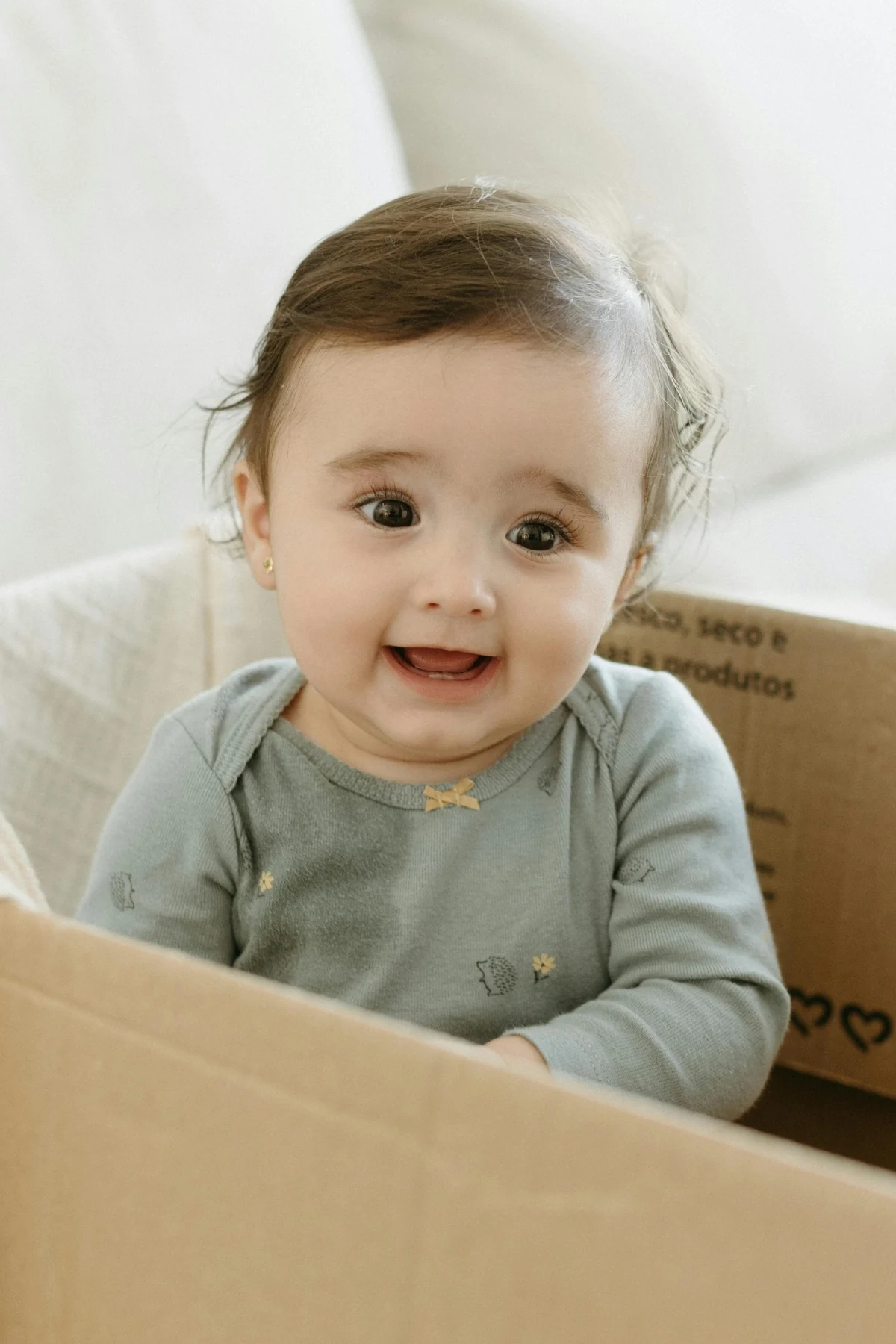
Say it’s Saturday morning, and the new wooden knob puzzle comes out of its box at nine. By two minutes past, your toddler has pulled out all three pieces, flung the giraffe under the couch and wandered off. The box it came in is a different story. So far it’s been a car, a hat and a hiding spot, and right now it’s a drum.
If you’re wiped before lunch and quietly doing the math on that puzzle, you’re not alone. Your feed says every good toy is “open-ended.” Someone else says the toys with one right answer are the real Montessori ones. And you’re left with a fair question: is a toy that only works one way a waste of money?
Usually, no. Open-ended and close-ended toys do different jobs, and a Montessori shelf has room for both, as long as it doesn’t hold too much of either. We’ll go through what each kind is, why Montessori leans on one of them, a side-by-side table, a simple mix by age, and the signs your toddler is giving you about what they need next. If you’re just getting started, the guide to Montessori at home covers the bigger picture.
 Save
SaveWhat are open-ended and close-ended toys?
Open-ended toys have no single right way to play, so your child decides what they become. Close-ended toys have one goal and a clear finish, like a puzzle that’s done when the last piece drops in.
So, what are open-ended toys, in plain terms? They’re the ones without a finish line. A plain wooden block can be a phone at breakfast, a wall for a toy horse after lunch and a bridge by dinner. Your toddler supplies the idea, and the block goes along with it.
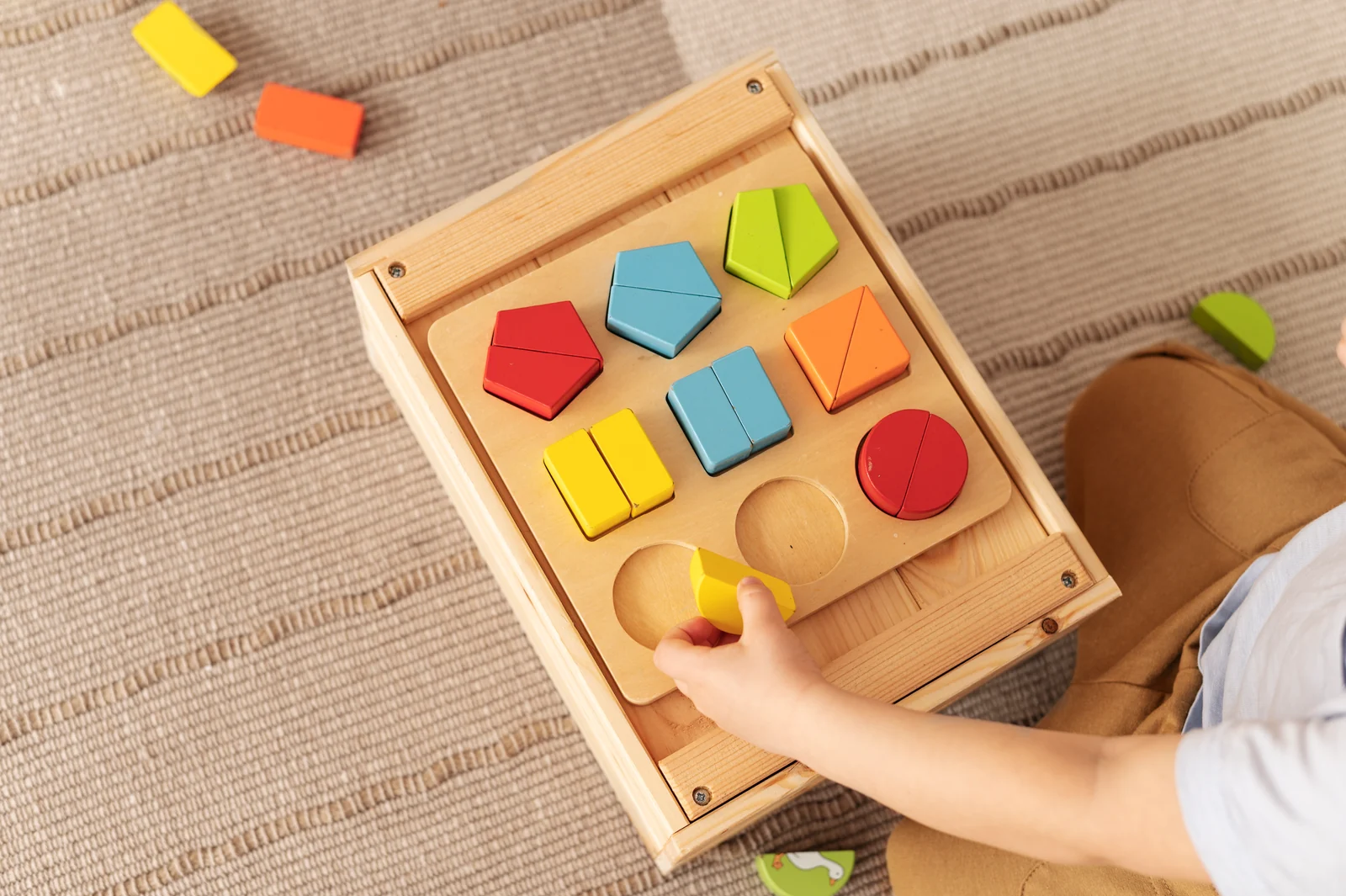
Close-ended toys (some people say closed-ended) work the other way around. The toy supplies the goal. A knob puzzle is done when every piece sits flat in its spot. A shape sorter is done when the shapes are inside. There’s one correct use, and a moment when it’s clearly finished.
Most toys land somewhere on a line between the two. Here’s a rough way to sort the wooden ones you’ll see most:
- Open-ended: wooden blocks, a play silk (a big square of light cloth), a cardboard box. Many uses, no wrong answer.
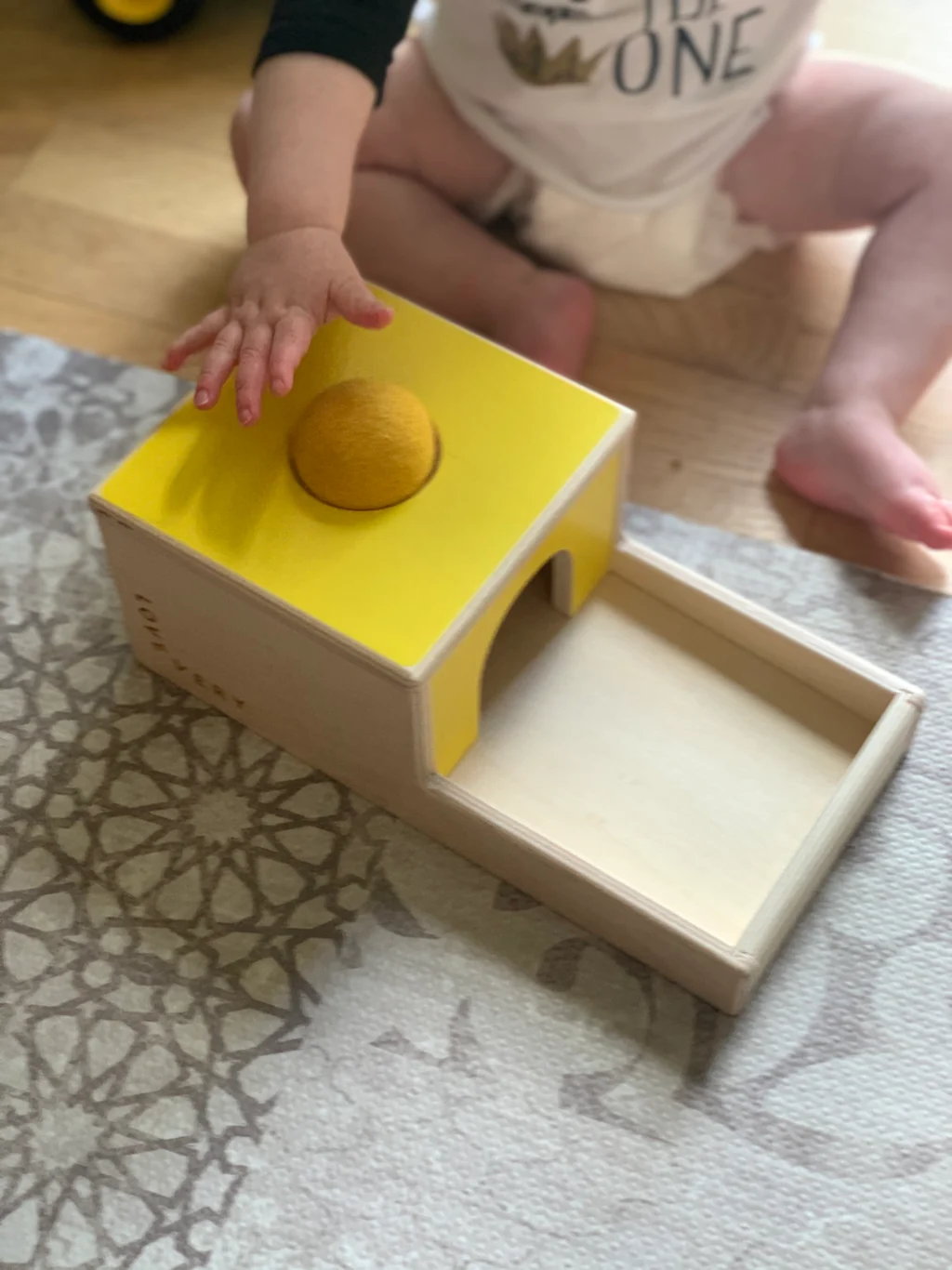
- Close-ended: a knob puzzle, a shape sorter, a box with a hole for a ball. One goal, and you can see when it’s reached.
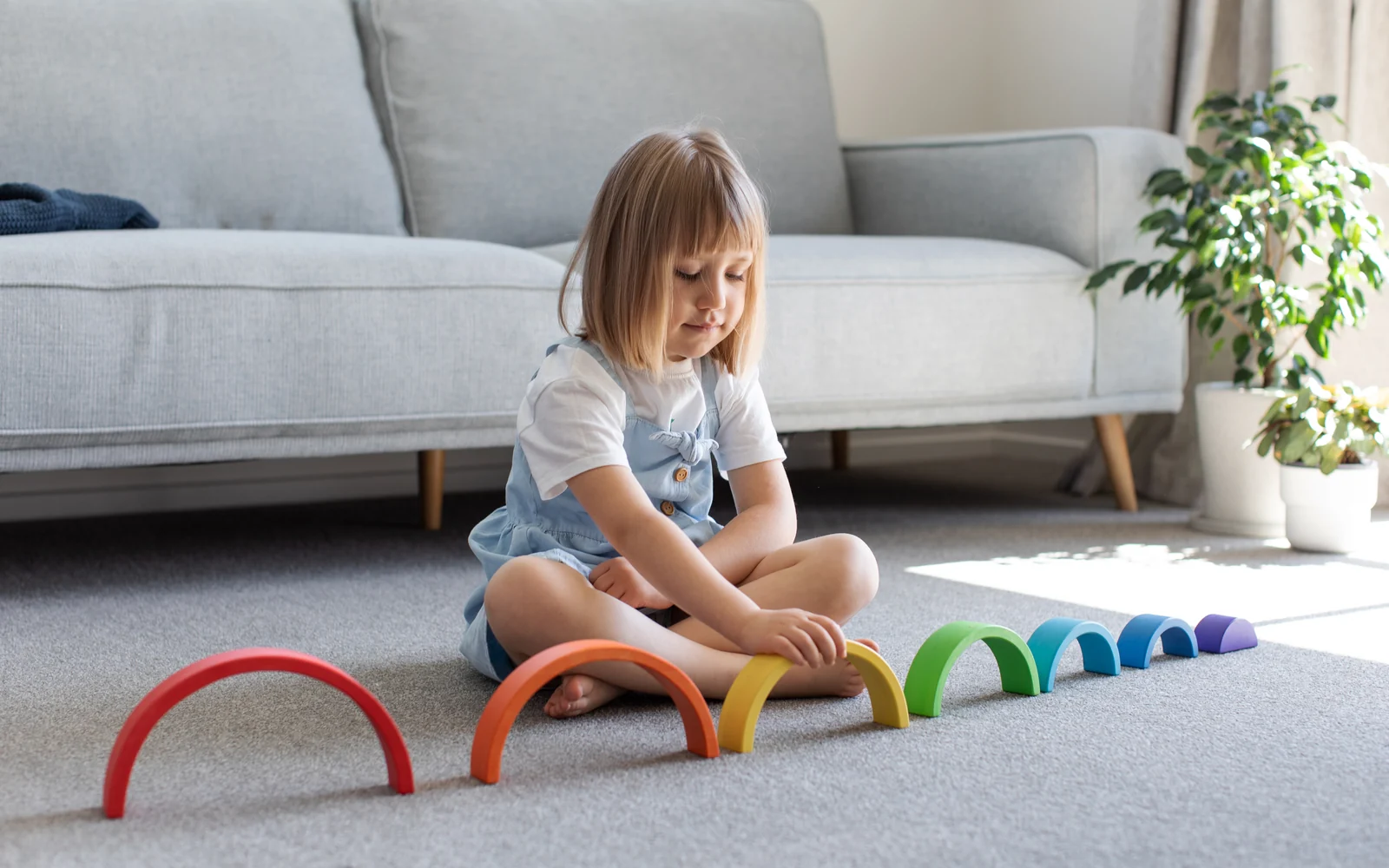
- Somewhere in between: the stacking rainbow. There’s a “right” way to nest the arches, and your toddler will also turn them into tunnels, a rocking cradle and a fence for a toy car.
Neither kind is the better kind. They ask your child different questions. A close-ended toy asks, “Can you do this?” An open-ended one asks, “What do you want to do?” Toddlers need to hear both.
 Save
SaveWhy Montessori shelves lean on close-ended toys
Montessori shelves lean on close-ended toys because a toy with one goal shows a child their own mistake, so they can fix it without anyone stepping in. Montessori calls that built-in feedback control of error.
The Association Montessori Internationale (AMI) defines control of error as a way of giving the learner instant feedback while they use a material, so they can correct their errors on their own. The definition is about learning materials, not toys, but many simple wooden toys work on the same idea.
Picture the knob puzzle again. Try the circle in the square spot and it just won’t sit flat. Your toddler can see that. Nobody has to say “No, not there,” and for a toddler who is deep in their own “no!” phase, that matters. The puzzle does the correcting, so you get to stay on their side.
There’s also the finish. When the last piece drops in, a lot of toddlers stop, look up at you and wait for you to notice. That small sense of accomplishment is part of the point, and so is the concentration it takes to get there.
The American Montessori Society (AMS) says Montessori materials and activities for the first six years reflect sensitive periods, the stretches when a child is especially ready to pick up one particular skill. The ones it lists include order, concentration and repetition. A toy with one clear job can give a child plenty of chances to practice all of that.
 Save
SaveThis is where I part ways with a lot of the open-ended advice online: a toy that only works one way can be exactly the right buy. What matters is whether it matches what your child is working on right now. If the puzzle got two minutes and the box got the morning, the puzzle may simply be early. Put it away for a few weeks and try again.
Why open-ended play still matters
Toddlers need room to invent, and open-ended toys hand them that room while leaving space for you to join in. The American Academy of Pediatrics (AAP) points to toys that draw caregivers into play.
In its report on selecting toys for young children, the AAP describes toys as a way to bring caregivers into play with their kids, play that’s “rich in language, pretending, problem-solving, and creativity.” The report isn’t about open versus closed toys, so I won’t pretend it is. But think about what happens when you sit down next to a pile of blocks.
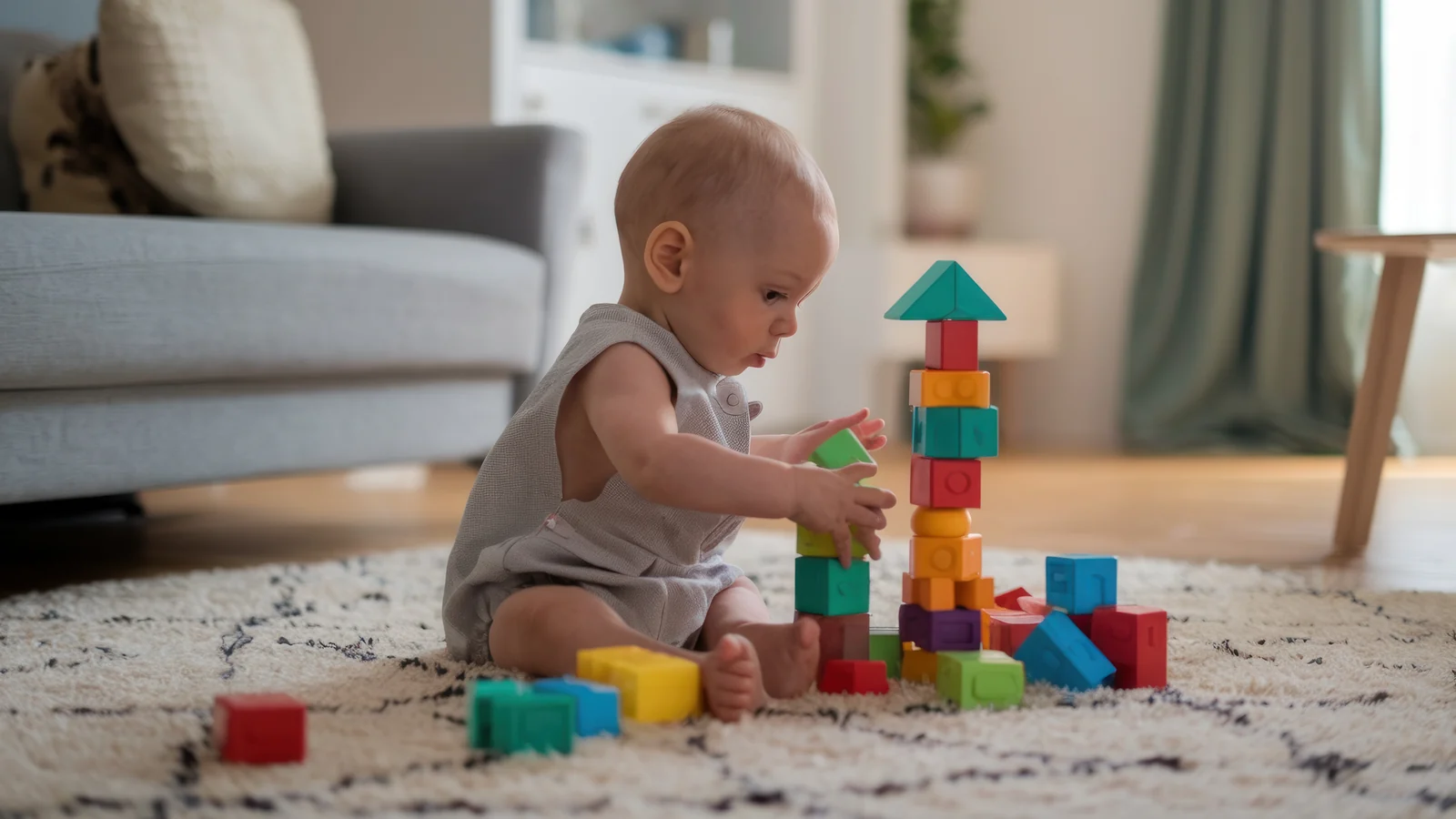
Your toddler stacks three. You say, “Ooh, how tall is it going to get?” It falls. They try a wider base. Now it’s a garage, and the toy horse needs somewhere to park. In five minutes you’ve had talking, a little pretending, a problem solved and an idea nobody planned. That’s what open-ended toys for toddlers are good at: they’re simple enough that the play comes from your child, and from you.
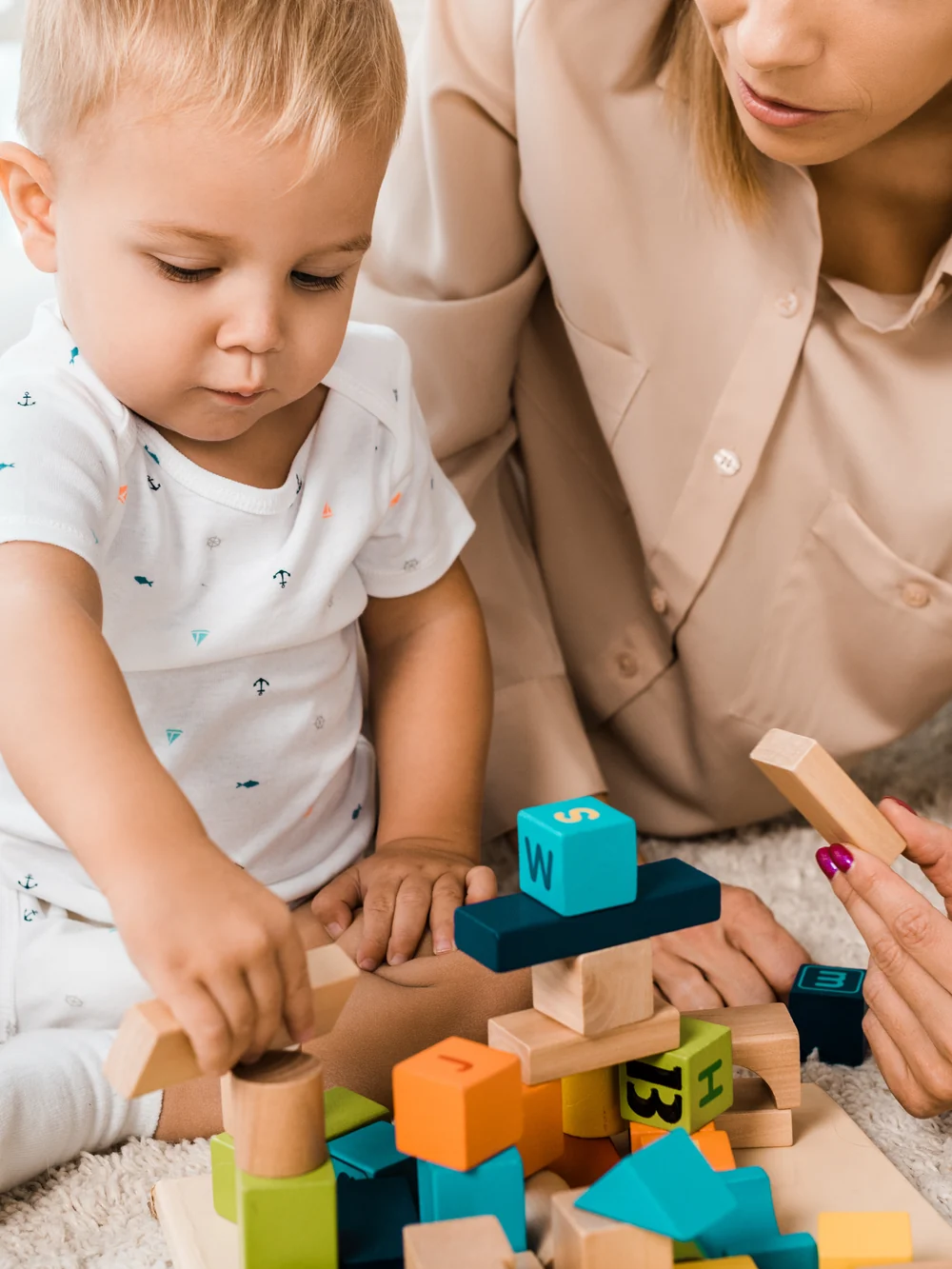
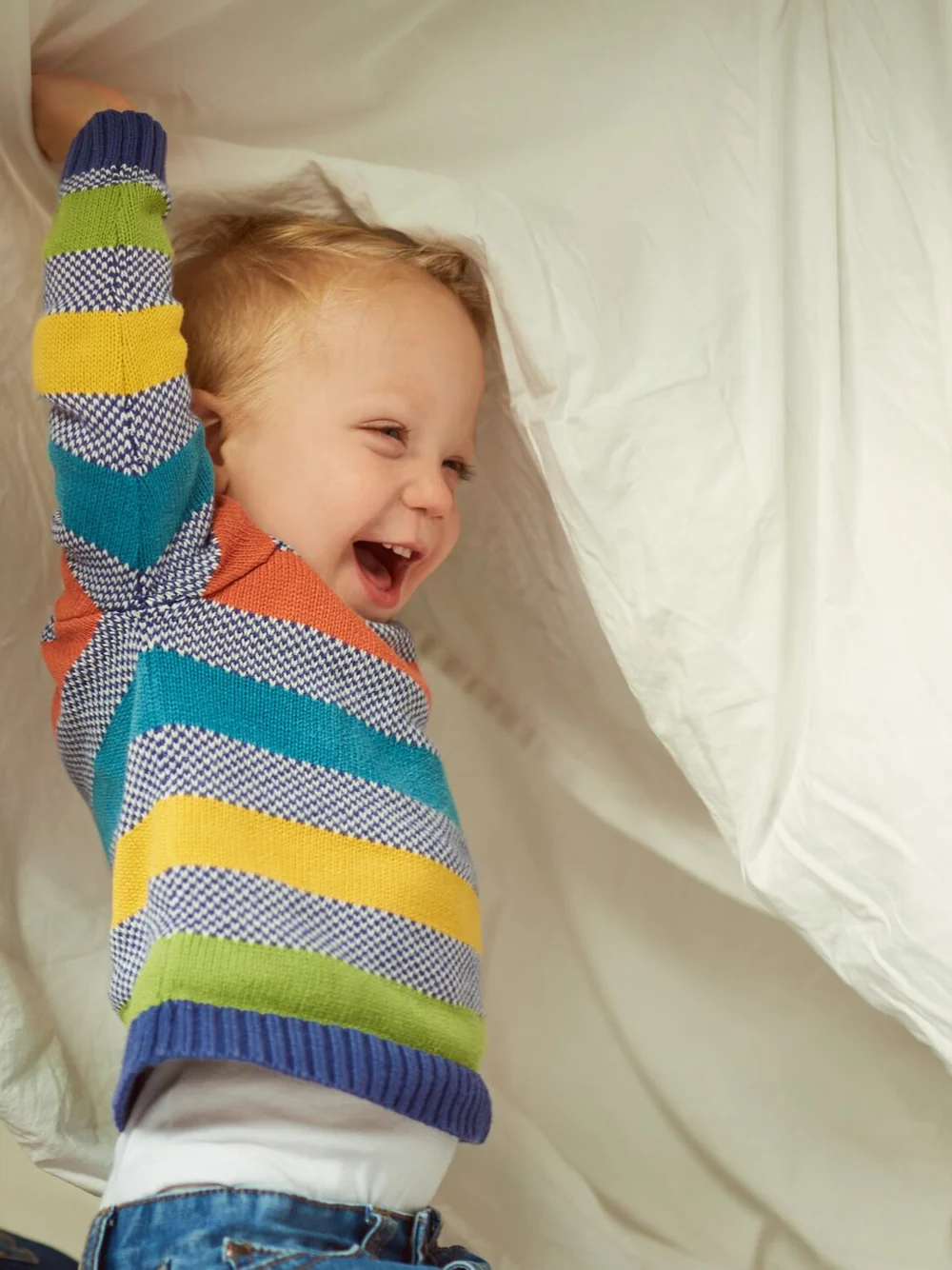
Sit down next to the blocks and ask one question. Then let them answer. A square of cloth can be a tent, a bear’s blanket or a game of peekaboo.
A play silk does the same trick in a softer way. It’s a blanket for a stuffed bear, a peekaboo curtain, a picnic for two, a river across the rug. Not sure who needs to hear this, but the cardboard box from Saturday morning counts too.
One caution on the silk. Health Canada says to make sure children don’t use items that could wrap around their neck, such as scarves and cords. Keep silk games clear of the neck, and put the cloth away when the game ends.
Hand a toddler a few blocks and an empty box, and you’ll find out what they’ve been thinking about all week.
Quiet toys also leave more room for your voice. In one small study of 26 parent and baby pairs, with babies 10 to 16 months old, parents said fewer words and had fewer back-and-forth exchanges while playing with electronic toys than with traditional toys or books. One small study can’t settle much, and nobody needs to toss the singing toy Grandma sent.
Where pretend play fits into Montessori, and how that compares with Waldorf, is a bigger conversation. It has its own page: Montessori vs. Waldorf.
Open-ended vs close-ended at a glance
Side by side, close-ended toys hand your child a goal and show them their mistakes, while open-ended toys let them make up the goal. A few of each kind, out at the same time, covers both jobs.
At Moje Montessori, we label each row by how much evidence stands behind it, so you can tell research from philosophy at a glance.
| What it’s for | Wooden examples by age | What your child practices | When to put it away | Evidence | |
|---|---|---|---|---|---|
| Close-ended toys | One goal, a clear finish | Late in year one: a ball-drop box · 12–24 months: a knob puzzle with a few big pieces, a simple shape sorter · 24–36 months: puzzles with more pieces | Spotting and fixing their own mistakes, because the toy shows the error | When they finish it easily every time, or stop choosing it | Montessori philosophy (not tested at home) |
| Open-ended toys | No single right use; your child decides | Year one: big wooden blocks to hold and bang · 12–24 months: a small set of chunky blocks, a play silk · 24–36 months: a bigger block set, a stacking rainbow | Talking, pretending, problem-solving and creativity, most of all when you play together | When it only gets dumped or thrown, or sits untouched for a week or two | Some research |
| Fewer toys out at once | Less to choose from, more to do with each | A handful of each kind on one low shelf | Longer stretches with a single toy, in more varied play | Swap a few out when interest drops | Some research |
“Backed by research” means studies with babies or toddlers support that piece. “Some research” means part of it is supported. “Montessori philosophy (not tested at home)” means there’s little or no research on it in family homes yet.
The ages in the table are my suggestion, based on how each kind of toy tends to get used. No study sets them, so your child’s play gets the final say.
How many of each? A shelf by age
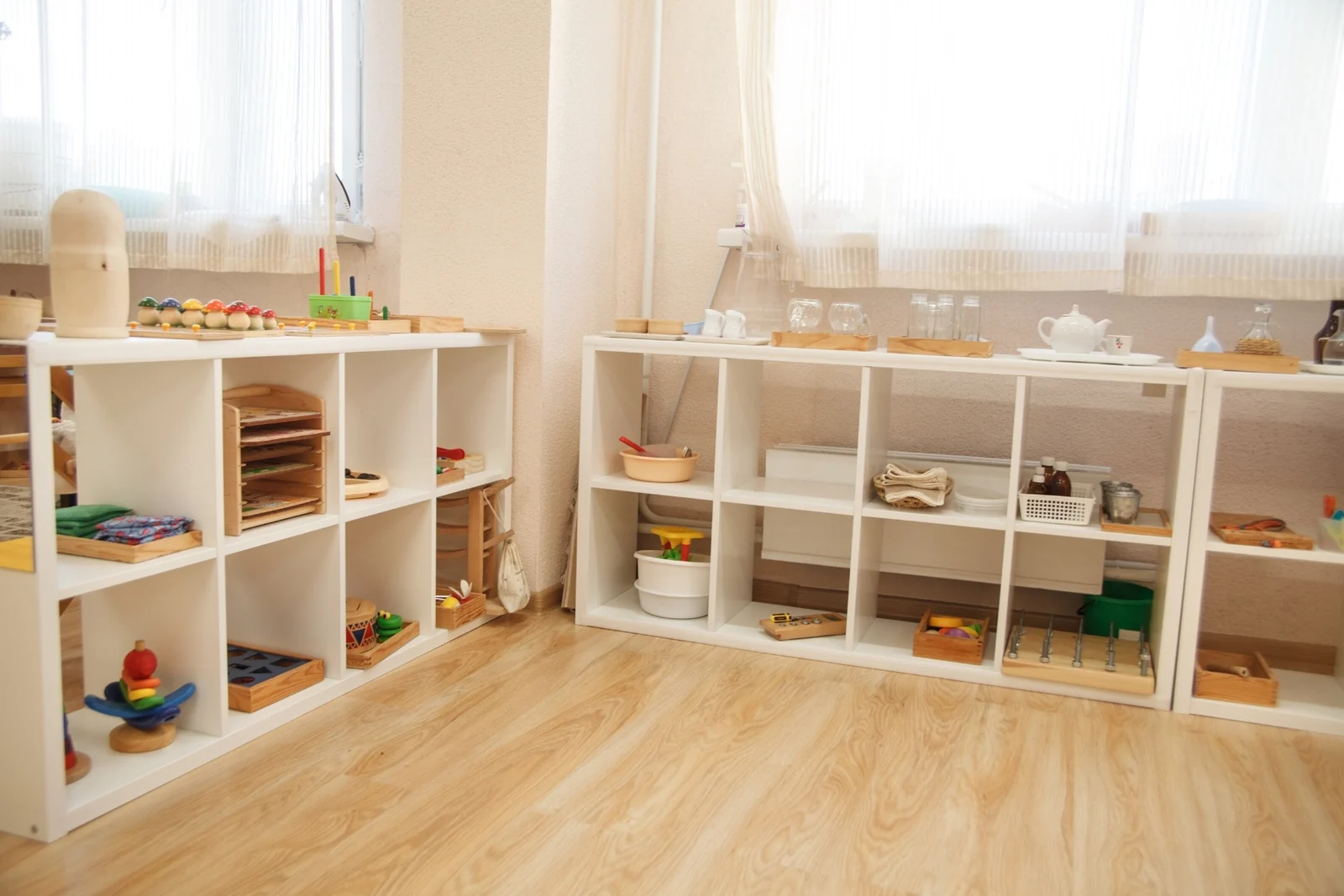
Start with what your child is doing this month, and keep the shelf small. In the first year the two kinds blur together; after that, think mostly one kind plus a couple of the other, and let the play decide which.
Think of what follows as a starting point, not a rule. No study has worked out the right mix, so watch the play and let it guide you.
Under 12 months. For a baby, nearly everything is open-ended. A wooden rattle gets shaken, mouthed, dropped and watched as it rolls away. Offer a few simple things to hold and bang. Late in the first year, one simple close-ended toy can join them, like a box where a big ball drops through a hole and disappears.
12 to 24 months. If your one-year-old is posting things through every gap in the house (the couch cushions, your boots, the mail slot), they’re telling you something. Lean mostly close-ended: a knob puzzle with a few big pieces, a simple shape sorter, that ball-drop box. Add a couple of open-ended things, like a small basket of chunky blocks and a play silk.
 Save
Save24 to 36 months. When your child starts building, lining things up and telling you what they made, give open-ended toys more of the shelf: a bigger block set, the stacking rainbow, something to drape and hide under. Keep a couple of harder close-ended toys too, like a puzzle with more pieces.
Whatever the mix, keep the total small. In one study of 36 toddlers, each child played in one session with 4 toys out and in another with 16. With 4, they spent longer stretches with a single toy and played in more varied ways. That’s twelve fewer toys on the floor, and more time with the ones they picked. It’s one study, and four isn’t a magic number, but it’s a good nudge toward a smaller shelf.
If I were setting up a shelf for a 15-month-old this weekend, I’d start with a knob puzzle, a simple shape sorter and a ball-drop box, plus a small basket of blocks and one play silk. Then I’d watch for a week before adding anything.
 Save
SaveWhen a toy stops getting picked, it can simply go in a closet for a few weeks while something else comes out. If you want a system for that, here’s how toy rotation works at each age.
Signs your toddler needs more of one kind
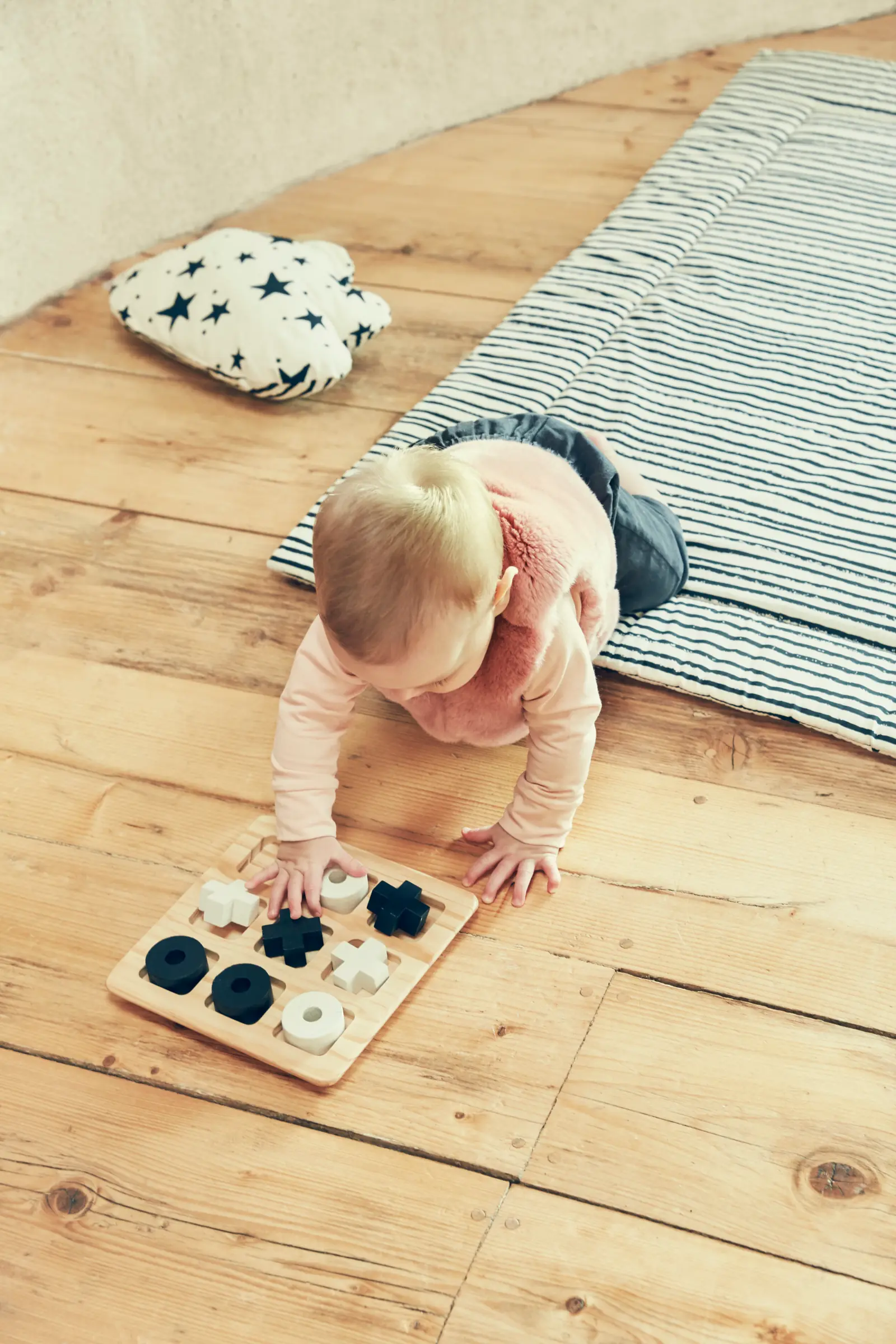
Your toddler’s hands will tell you. Quick quitting, frustrated throwing or a puzzle asked for again and again are all clues about whether a toy is too hard, too easy or exactly right for now.
None of these are tests. They’re patterns worth noticing over a week or so, and some of them point at the toy itself:
- They dump it and walk off after one try. The toy may be too easy now, or too hard. Try a version with more pieces, or fewer, or put it away for a while.
- They ask for the same puzzle again and again. Leave it out. Doing it over and over is how a toddler gets good at something, and it can go on for weeks.
- They get stuck, and it ends in a meltdown. That puzzle has a finish line they can’t reach yet. Put out an open-ended toy for a few days. Blocks can’t be done wrong.
Others point at the shelf as a whole:
- They throw the blocks instead of building. Throwing is a toddler job too. Offer something meant to be thrown, like a soft ball, and bring the blocks back later.
- They wander from toy to toy and finish nothing. The shelf may be too full. Take half of it away and see what happens.
- They start narrating (“This is a bus!”). Give open-ended toys a little more of the shelf.
 Save
SavePatterns are easier to spot when you write them down. A few lines a day in a Montessori observation journal is plenty. And if something about the way your child plays worries you, bring it up with your pediatrician. A toy swap can’t answer that kind of question.
 Save
SaveWhen “open-ended” is just a label
A toy earns the open-ended label when your child can use it several ways without your help, it suits their age, and it doesn’t come with a pile of extra pieces. The word on the box can’t promise any of that.
“Open-ended” shows up on plenty of product pages these days, a bit like “Montessori” does. Sometimes it fits. Sometimes it’s a set with more pieces than your toddler could ever use, most of which end up under the couch.
Before buying anything sold as open-ended, I’d ask four questions:
- Can my child use it more than one way right now, without me explaining?
- Does the age on the label fit my child?
- Will it get played with differently from what we already have? Blocks, a box and a cloth cover a lot of ground.
- How many pieces will I be picking up every night?
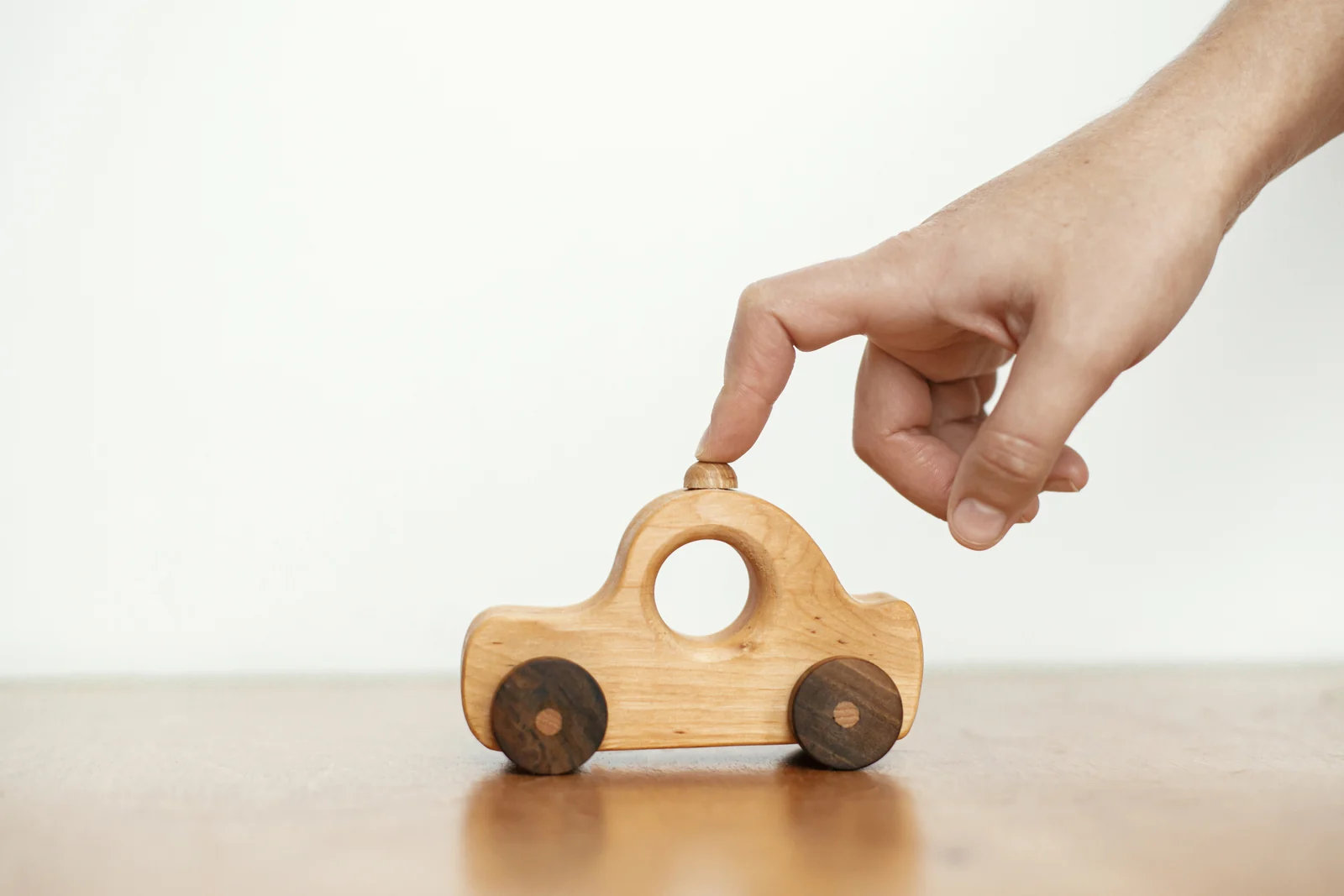
Wood is my favorite material for open-ended toys. A wooden block has real weight in a small hand, and a tower coming down makes that low, satisfying clunk. But wood doesn’t make a toy safe on its own. The finish, the design and the paperwork do.
 Save
SaveThe U.S. Consumer Product Safety Commission (CPSC) says a 2008 federal law made the ASTM F963 toy safety standard mandatory. Makers and importers also have to certify that their toys meet that standard by issuing a Children’s Product Certificate (CPC). Ask the seller for it. A good shop should be able to share it.
For a child under 3, every piece of every toy within reach has to be too big to choke on. Federal law bans toys intended for children under 3 that pose a choking, aspiration or ingestion hazard because of small parts.
Federal rules also look at how a toy is advertised and whether it’s commonly recognized as being for children under 3, so the label is only one clue. Toys made for older kids aren’t held to that ban and can include small pieces, and a “3+” label doesn’t change what your toddler can swallow. Read the age label, then look at the pieces yourself.
Checking a toy at home is still worth the two minutes, and the box below covers how. Just know that a home check and a certificate are two different things.
For the bigger checklist, label claims and all, see what actually makes a toy Montessori. And if part of your open-ended basket comes from the kitchen drawer, those things weren’t made as toys, so the toy rules don’t cover them. The guide to free Montessori activities covers how to check them.
Before any toy goes out, run your hands over it for splinters and rough edges, tug every knob and peg, and give it a shake for anything loose. If a knob wiggles or a piece cracks, take the toy away until it’s fixed or replaced.
Frequently Asked Questions
What are open-ended toys?
Open-ended toys are toys without a built-in finish line. Plain wooden blocks, a play silk or a cardboard box can become whatever your toddler needs that day, so the same toy keeps working as they grow. They’re at their best when you get down on the floor and play along now and then.
Are closed-ended toys Montessori?
Yes, closed-ended toys are a big part of Montessori. Many Montessori materials have one goal and show the child when something’s off, which AMI calls control of error. A wooden knob puzzle or shape sorter works the same way. Whether a specific toy fits Montessori also depends on its size, materials and age range.
Conclusion
You don’t have to pick a side. The knob puzzle and the cardboard box were never really competing; they do different jobs, on different days, for the same busy kid. Keep a small shelf with a few of each, notice what gets used, and put the rest away without any guilt. When the throwing starts (and it will), that’s information too.
Tonight, take one ignored toy off the shelf. Tomorrow, watch what your toddler reaches for instead. That’s your next clue, and you’re already good at noticing.
Miri
Montessori for ages 0–3
Further Reading & Resources
See all 9 sources
- Toys and play research: Selecting Appropriate Toys for Young Children in the Digital Era (Healey & Mendelsohn, American Academy of Pediatrics, Pediatrics, 2019) · Dauch et al., Infant Behavior and Development (2018) · Sosa, JAMA Pediatrics (2016)
- Montessori background: Control of Error (Association Montessori Internationale, AMI Montessori Archives glossary) · Planes of Development and Sensitive Periods: Foundations of the Montessori Multi-Age Classroom (American Montessori Society, 2024)
- Toy safety: 16 CFR 1501.1, small parts rule for children under 3 and 16 CFR 1501.2, scope: which toys count as intended for children under 3 (Cornell Law School Legal Information Institute) · Is Your Child Safe? Play Time (Health Canada) · Toy Safety business guidance (U.S. Consumer Product Safety Commission)