
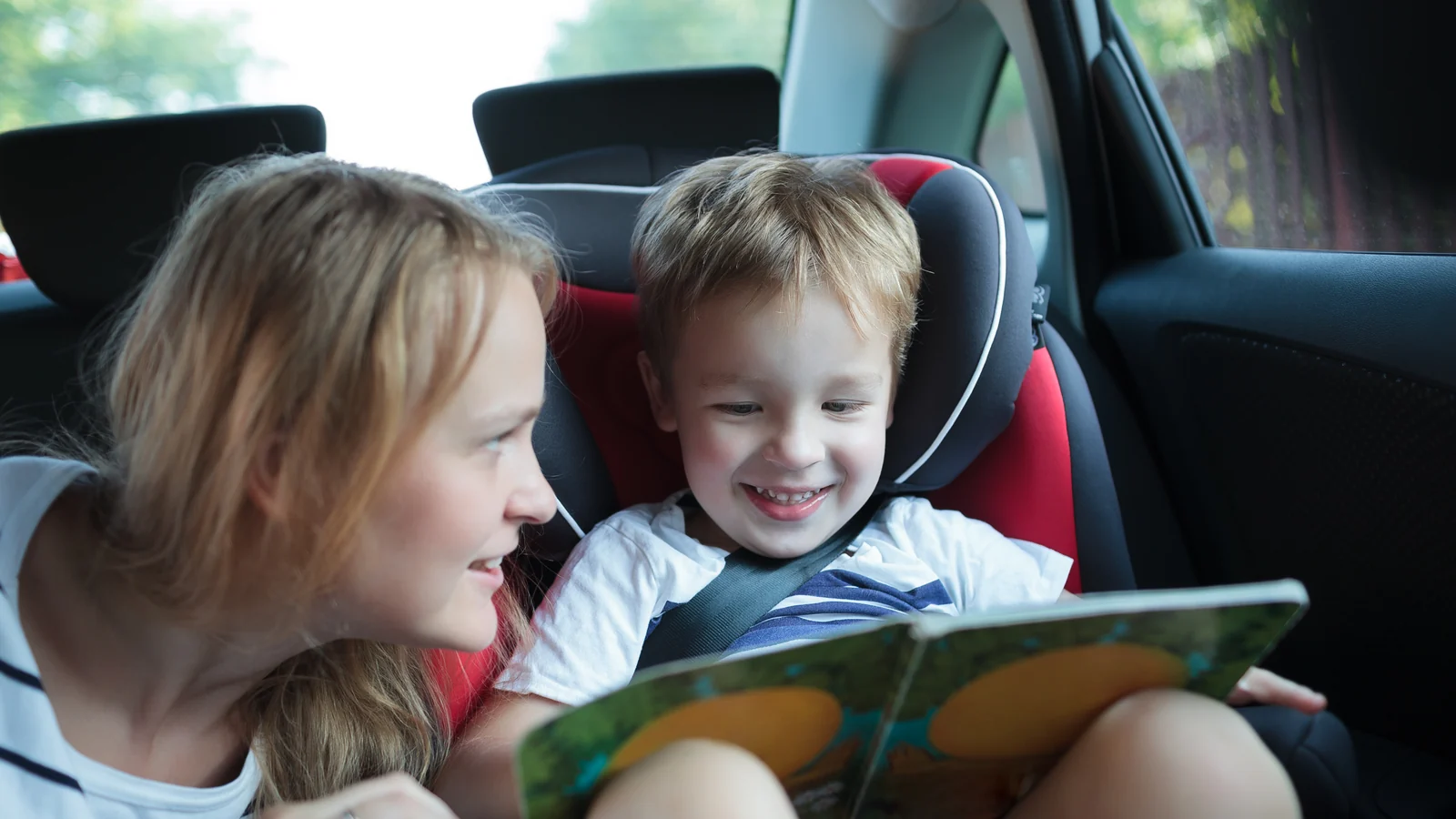
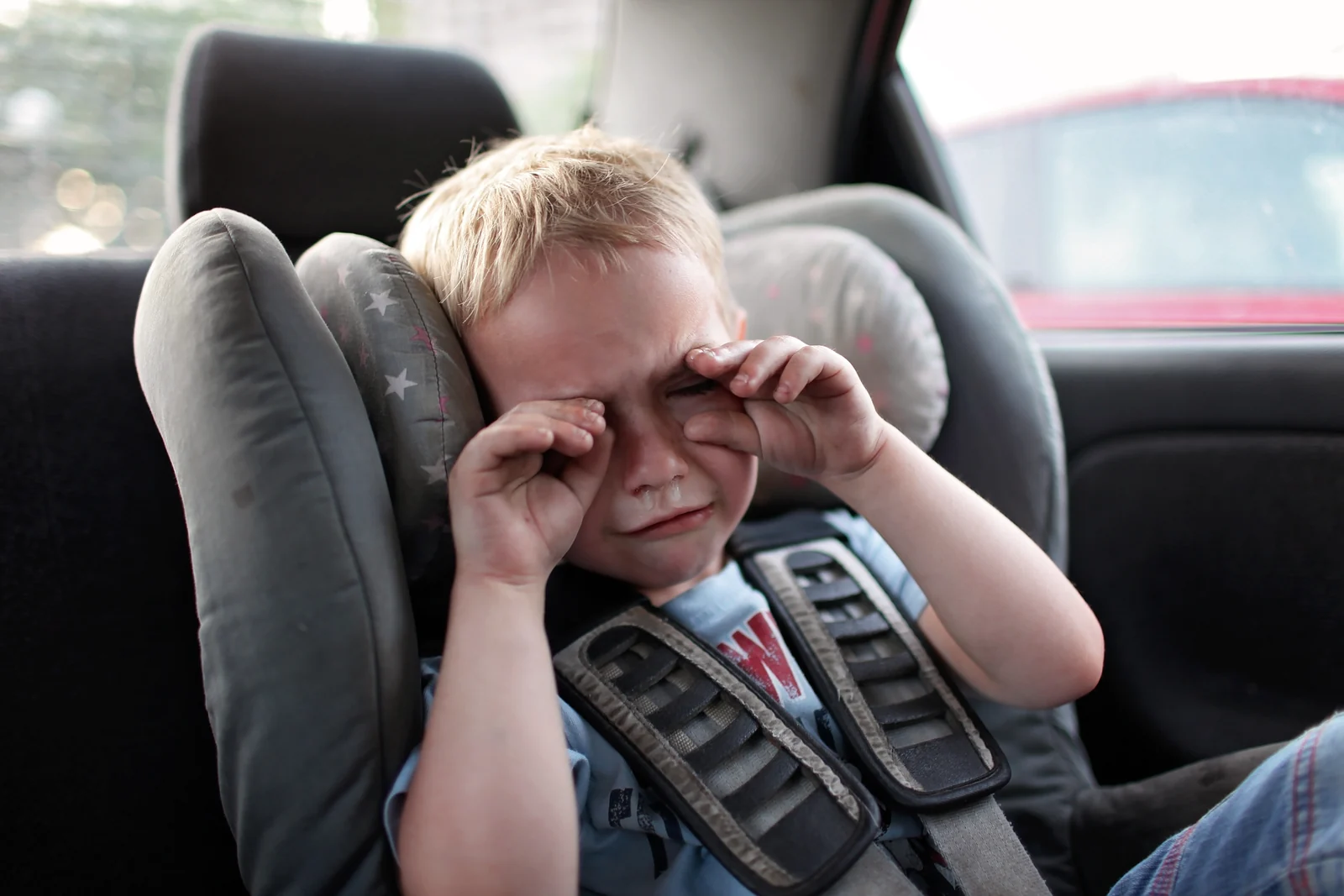
Forty minutes into the drive, it starts. A small sneaker thumps the back of your seat. Then again, harder. From behind you comes a whine that’s working its way up to a real cry, and there’s not much you can do about it, because you’re the one driving and the only other person in the car is buckled in where you can’t reach. The iPad is sitting on the passenger seat. You could hand it back at the next red light.
If that sounds like your car, you’re in good company.
Most of the advice out there assumes a grown-up is sitting in the back, handing out snacks and turning pages. On a weekday drive to daycare, or home from the grocery store on your own, that grown-up doesn’t exist. So this post sorts ideas by the one thing you already know before you leave: how long you’ll be on the road. A 20-minute errand and a five-hour trip to see family call for very different plans, and the short one needs almost nothing. For the rest of the day back home, my guide to Montessori activities at home picks up where this one leaves off.
 Save
Why do car rides get hard, and what helps before you leave?
Car rides get hard because your baby or toddler is buckled in, often facing backward, with nothing to do and no grown-up face to watch. The easiest fixes happen before you start the engine: timing, a full tummy and a few soft things within reach.
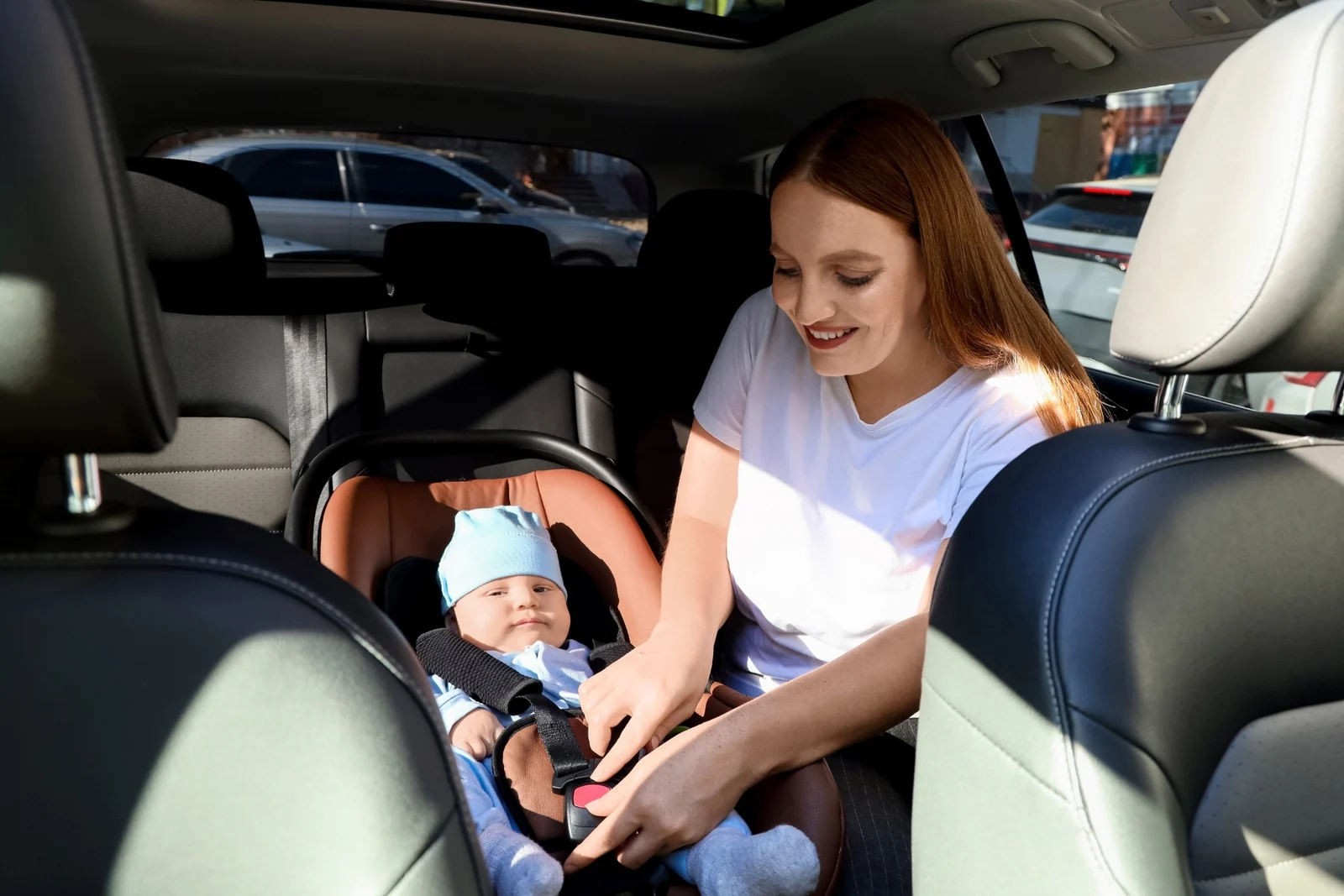
Start with where your child is sitting. The American Academy of Pediatrics (AAP) says babies and toddlers should keep riding rear-facing as long as possible, until they reach the highest weight or height their car seat’s manufacturer allows, and that most convertible seats let kids ride that way for 2 years or more. That advice comes first. It also means that for much of the 0–3 stretch, your child is looking at the back window while you look at the road. Whatever you hand back has to stay within their own reach, and it should be soft and light enough that it doesn’t matter where it ends up.
 Save
Then there’s the sitting itself. The World Health Organization (WHO) says in its 2019 guidelines that children under 5 shouldn’t be restrained for more than 1 hour at a time, and the examples it lists are strollers, high chairs and being strapped on a caregiver’s back. Car seats aren’t on that list, and a car seat is exactly where your child belongs while the car is moving. My own read is simple: a long drive is a long stretch of sitting still, so it needs a plan for the sitting, and the time you leave is the biggest part of that plan.
For our longest drive, I timed our departure to land right on Will’s nap and made sure he’d eaten a full meal before we buckled him in. He watched the pine trees go by for a while, then fell asleep for close to two hours, which covered about half the trip.
Miri’s Tip
Car ride activities by trip length
Start with how long you’ll be driving, then pack for that: one song and one soft thing for an errand, a few busy bag items and an audiobook for an hour, and a naptime departure plus planned stops for anything longer.
Most lists of car ride activities for kids are written for children who can read road signs and play I Spy. Under 3, the list gets shorter, which is good news when you’re the one packing. What really changes from one drive to the next is how much time there is to fill, so that’s how this table is sorted.
| Trip length | What helps most | What to pack | If you’re driving alone |
|---|---|---|---|
| Under 30 minutes | Songs you both know, and naming what you pass | One soft thing to hold | Sing. That’s the whole plan, and it’s enough |
| About 1 hour | Something new for their hands, plus music or an audiobook | Two or three soft busy bag items, like a cloth book or a washcloth to fold | Hand the items back and start the audio before you pull out |
| 2 to 3 hours | Leaving at naptime, then something new when they wake | A busy bag to swap from and a divided snack box | Feed them before you go; swap toys and hand out snacks at a stop |
| All day | Naptime, stops where they get out of the seat, and, for a child who’s 2 or older, a screen for one stretch if you use one | Everything above, plus a show downloaded ahead of time | Plan stops where your child comes all the way out of the seat |
The last column is the one I’d read first if you usually drive alone. Almost everything in it happens before you pull out or at a stop, because once the car is moving, your hands and eyes belong to the road.
 Save
For a baby, the top row is often all there is: your voice, a song, one soft thing to hold. If you’re looking for car ride activities for an 18-month-old, the middle rows fit well. Go for things they can hold and drop without a fuss, since a lot of what you hand back will end up on the floor.
Pick the one row that matches your next drive and pack only that. You’ll carry less, and you’ll know exactly what to reach for when the back seat starts to get loud.
What goes in a busy bag for car activities for toddlers?
Soft and light come first in a car busy bag: things your toddler can hold and drop without a fuss, like a cloth book or a washcloth. Sticky notes and pipe cleaners work too, with a grown-up sitting beside your child.
A busy bag is just a small bag of simple things for little hands, handed over one at a time. You probably have most of it in a kitchen drawer already. In the car, your toddler will drop things, fling things and lose things under the seat, and you can’t turn around to help. So I look for things that are soft and light, and that come with a small job built in: peel it, stick it, poke it through a hole. Those tend to hold attention longest. Hard or heavy toys, I’d leave at home or in the trunk.
The two things that did the most work on our long drive cost almost nothing:
- A pad of sticky notes. Will peeled them off one by one and stuck them all over the car window. They’re the cheapest window clings you’ll find, and they come right off afterward.
- Pipe cleaners and an empty plastic bottle. Will poked the pipe cleaners into the bottle’s opening, one at a time, and it took real concentration.
Both come with a caveat. Paper can end up in a mouth, and pipe cleaners have a thin wire inside whose cut ends can be sharp, so fold each end over before they go in the bag. I sat right beside Will the whole way, and I’d save both for drives when a grown-up is sitting next to your child, especially if yours still tastes everything.
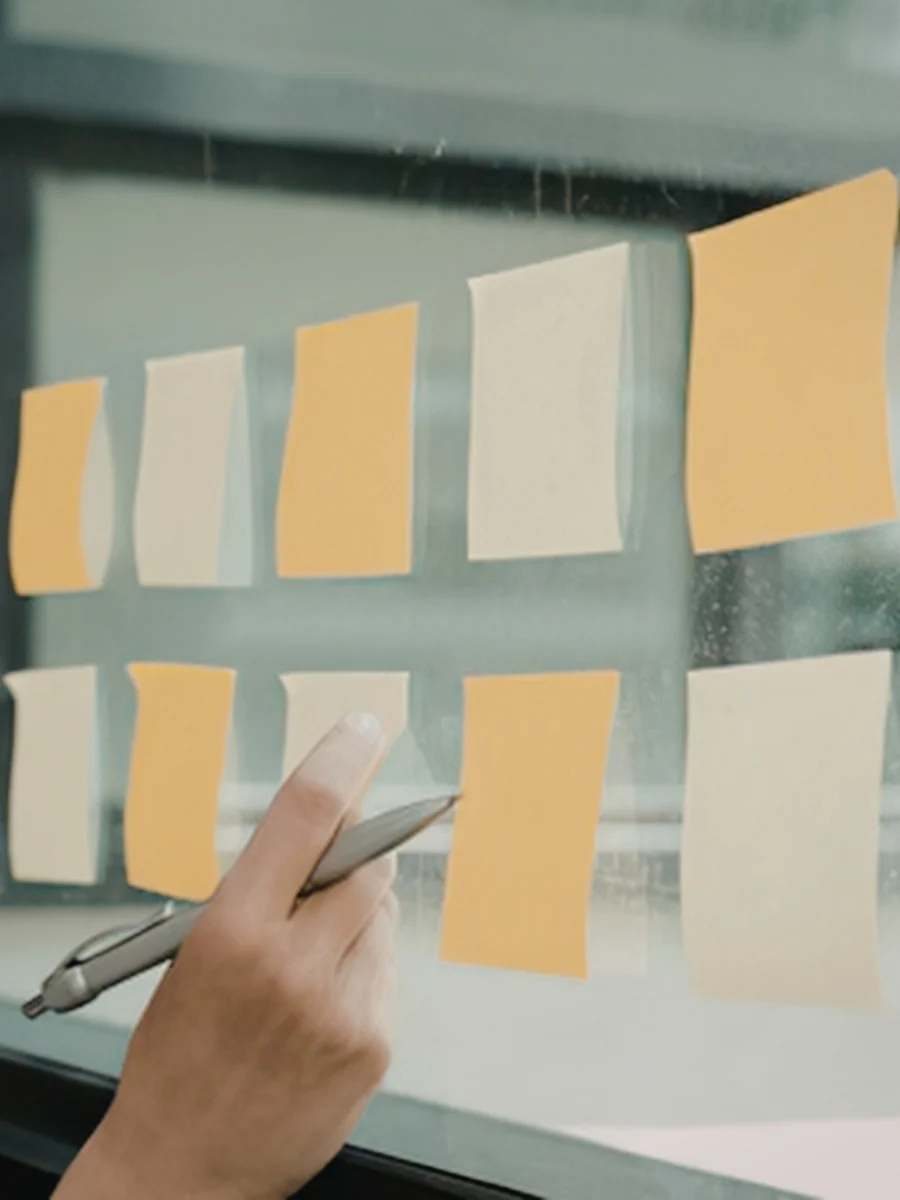
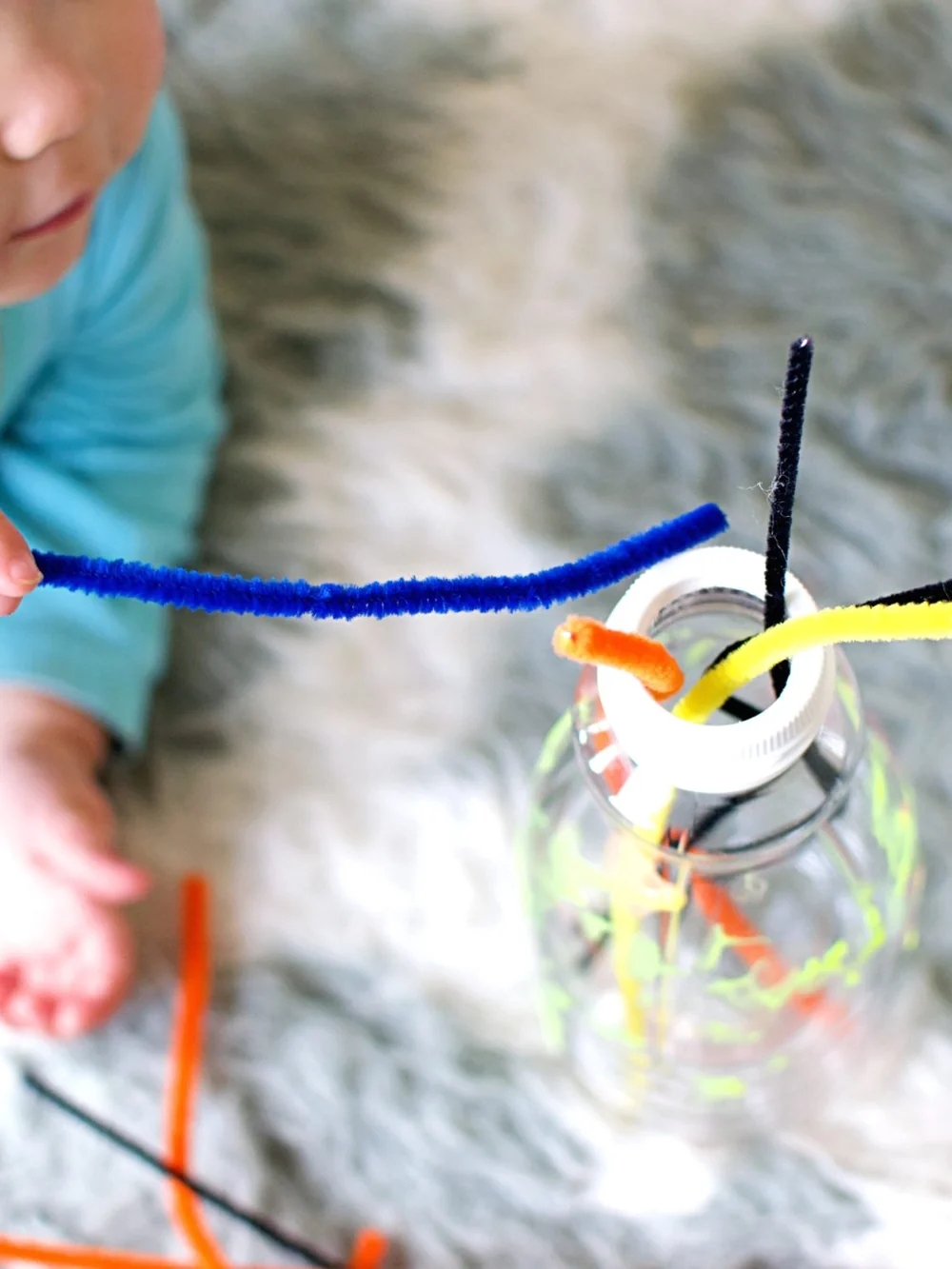
Peel, stick, peel again. Sticky notes come right off the glass afterward. Fold the wire ends over before pipe cleaners go in the bag, and stay right beside your child.
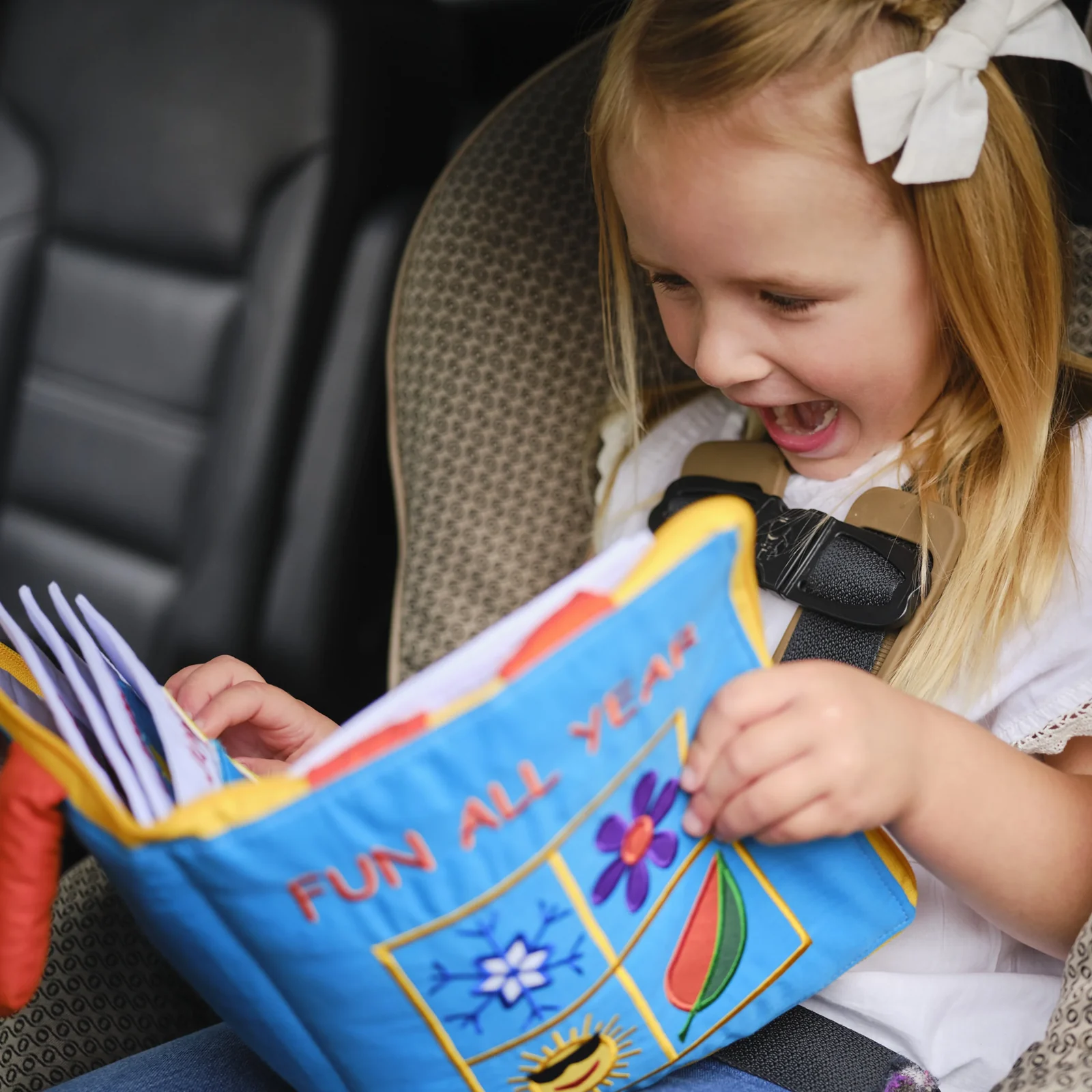
Beyond those two, think a cloth book or a small board book, a favorite stuffy, a washcloth to fold and unfold. Each one is light, quiet and easy to fish out from under the seat at the next stop. This is the Montessori side of a car trip: a small, real job for the hands, which your toddler gets to repeat as many times as they like.
 Save
Ready-made travel toys for toddlers are a topic of their own. You don’t need any of them for your first drive.
Road trip activities for toddlers on a long drive
Leave at naptime, save the busy bag for when your toddler wakes up, and keep snacks for the stops. On a long drive, getting the order right matters more than packing a lot.
The longer the drive, the longer the packing list tends to get. On our longest one, what made the difference was mostly timing, plus two of the cheapest activities for long car rides I know.
Case: our five-hour drive to see Will’s grandparents
Our longest road trip with Will was a drive up into the mountains to visit his grandparents: close to five hours of highway and winding mountain roads. My husband drove, and I sat in the back seat right next to Will. The plan had three parts:
- Step 1: Naptime first. We left right at naptime, after a full meal, and about half the trip was behind us before Will woke up.
- Step 2: The busy bag. When he woke, out came the sticky notes for the window and the pipe cleaners for the bottle. I was trying hard not to reach for my phone or the iPad, and those cheap little jobs kept his hands busy.
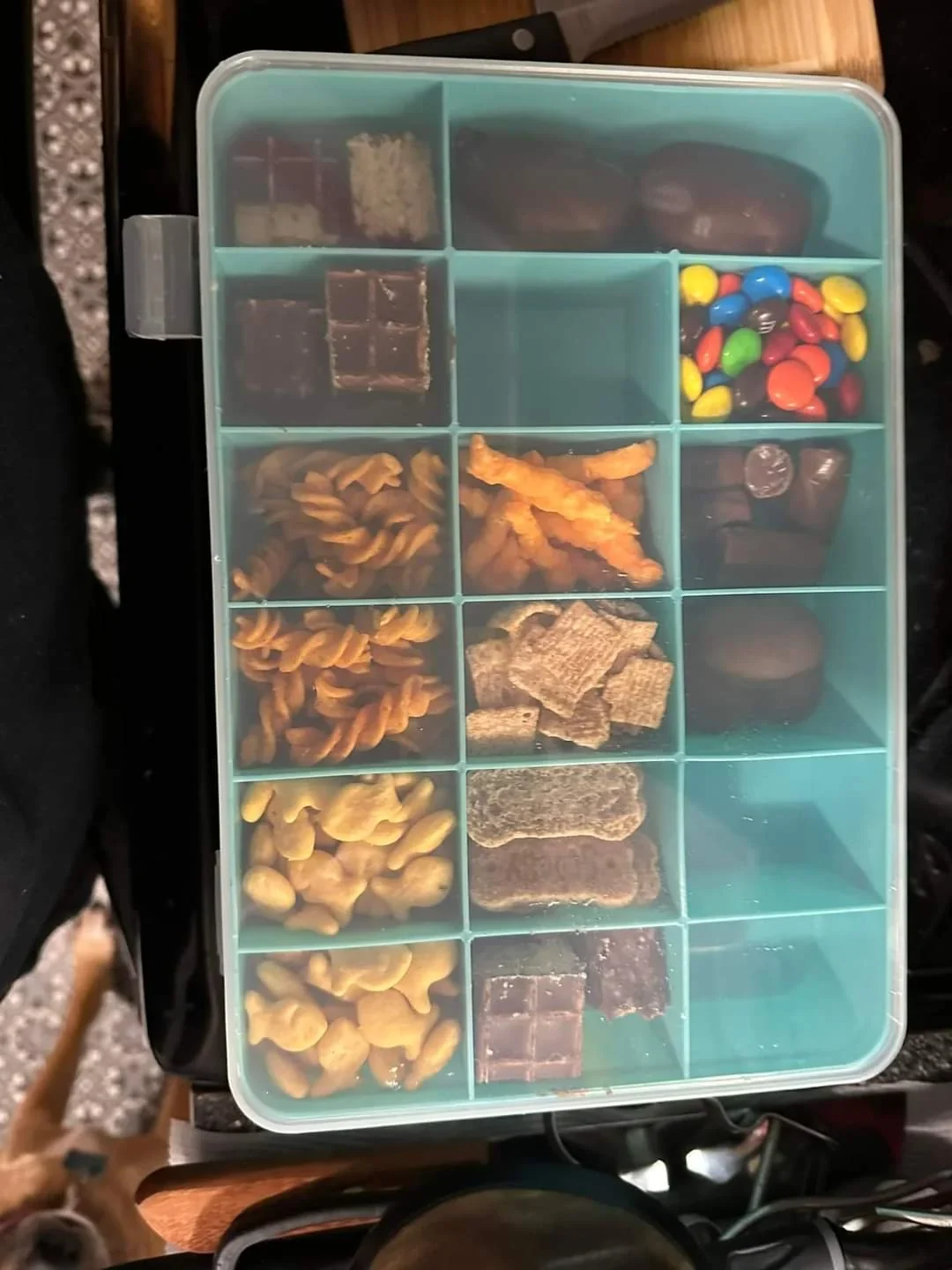
- Step 3: A divided snack box. I packed snacks in a box with lots of little compartments. The lesson I took from that trip is to save it for when we’ve pulled over and the car is stopped.
 Save
I know a second adult in the back is a luxury on most weekday drives. The solo version of each step lives in the last column of the table, and the order still holds: nap, then hands, then food at a stop.
On a long drive, a well-timed nap does more than anything you pack.
Songs, snacks and stops on long car rides
The same WHO guidelines say that when young children are sitting still, reading and storytelling with a caregiver is encouraged. They aren’t talking about cars, but a car is a lot of sitting still. An audiobook, a few car songs you all know by heart, or your own voice telling the story of where you’re going and who’ll be there are the closest things you’ve got when your hands are on the wheel.
Snacks deserve a plan of their own. The AAP’s choking prevention advice says children should sit down when they eat and that mealtimes for infants and young children should be supervised. It also says to cut food for young children into pieces no larger than one-half inch. A toddler in a car seat is sitting, but whoever is driving can’t watch a snack go down. That’s why I’d bring the snack box out at the stops, with someone looking right at the person eating.
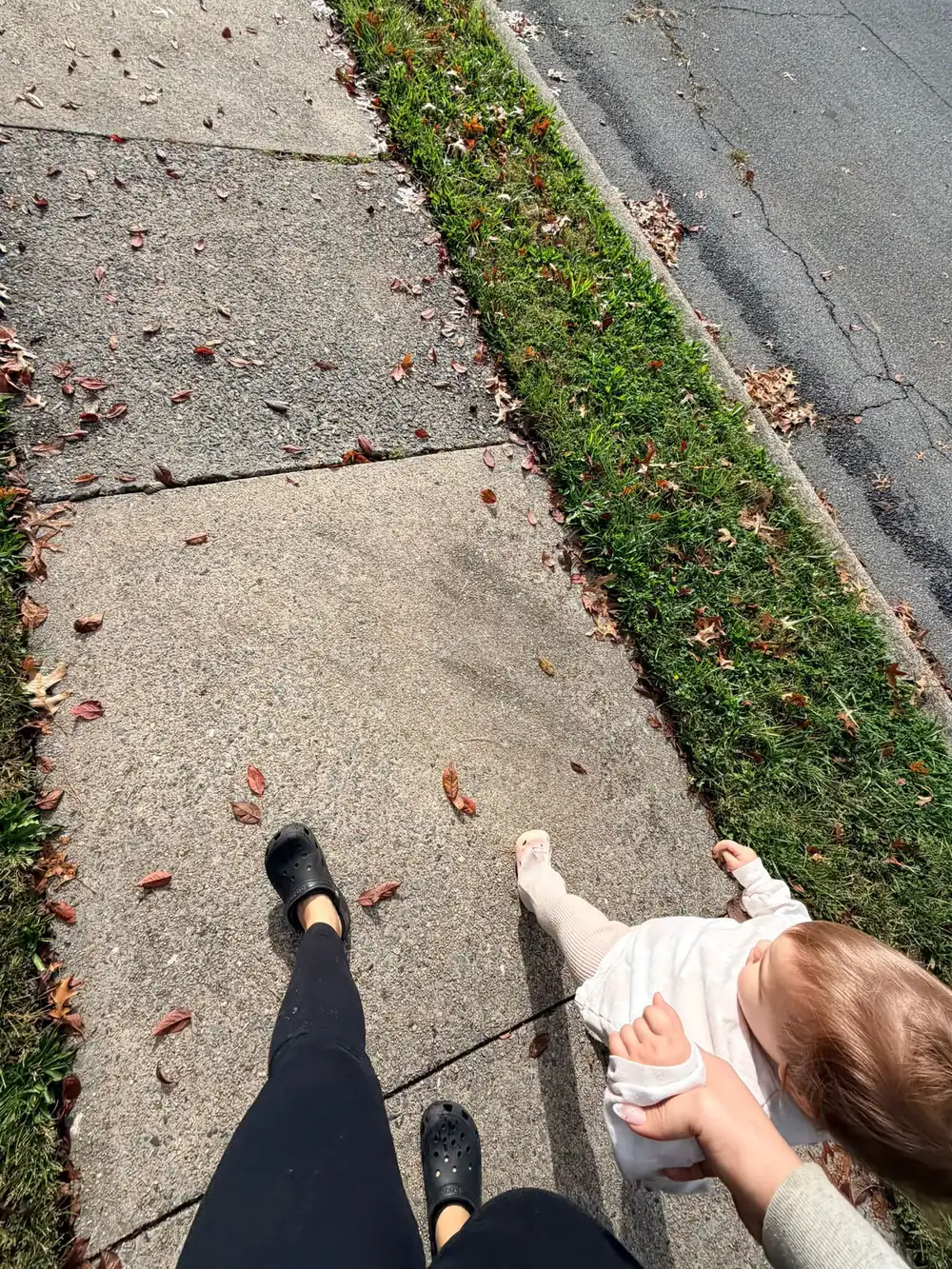
At a stop, get your child all the way out of the seat to walk and stretch, then sit them down for the snack. I haven’t found a trustworthy rule for how often to stop, so let the person in the back set the pace.
 Save
Are screens okay on a long car ride?
For children 2 and up, a long car ride is one of two times the AAP suggests keeping screens for, along with regular times of day. For younger children, the WHO’s advice is different.
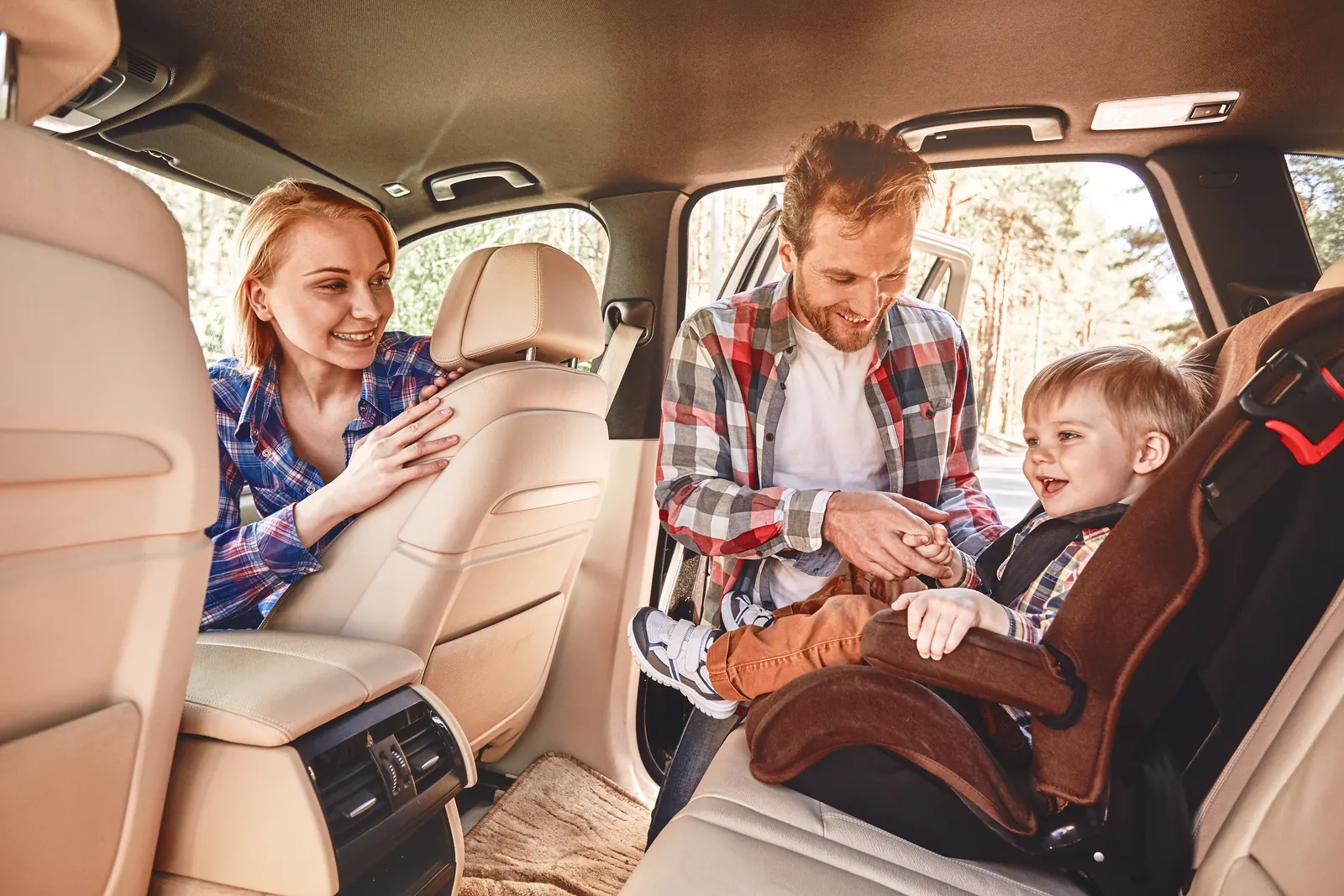
If your plan for hour four of an all-day drive with a toddler who’s 2 or older is a show you downloaded the night before, you’re not doing anything wrong. The AAP’s screen time page for ages 2 to 4 puts it plainly: keep screens for regular times of day or for when you’re on a long car, bus or plane ride.
The WHO has its own numbers, and they’re worth knowing separately. The WHO says screen time isn’t recommended for babies or for 1-year-olds, and that for 2-year-olds, sitting and watching screens should be no more than 1 hour, with less being better. If your child is under 2, or you’d just like the drive screen-free, the nap, the busy bag and the songs above are the whole toolkit.
 Save
On our five-hour drive, I tried hard to skip the phone and the iPad, and the nap and the busy bag were my plan for that. But I was sitting right next to Will. If you’re alone at the wheel with hours still to go, a show you set up before you pulled out is a reasonable call for a toddler who’s 2 or older, as one stretch of the drive rather than all of it. For screen-free ideas on regular days at home, I’ve gathered my favorites in indoor activities for toddlers.
Car seat safety: what’s safe to hand back?
The car seat’s own rules come first: don’t add products to it that didn’t come with the seat or aren’t approved by its manufacturer, and hand back only loose, light things. Never leave your child alone in the car, even for a minute.
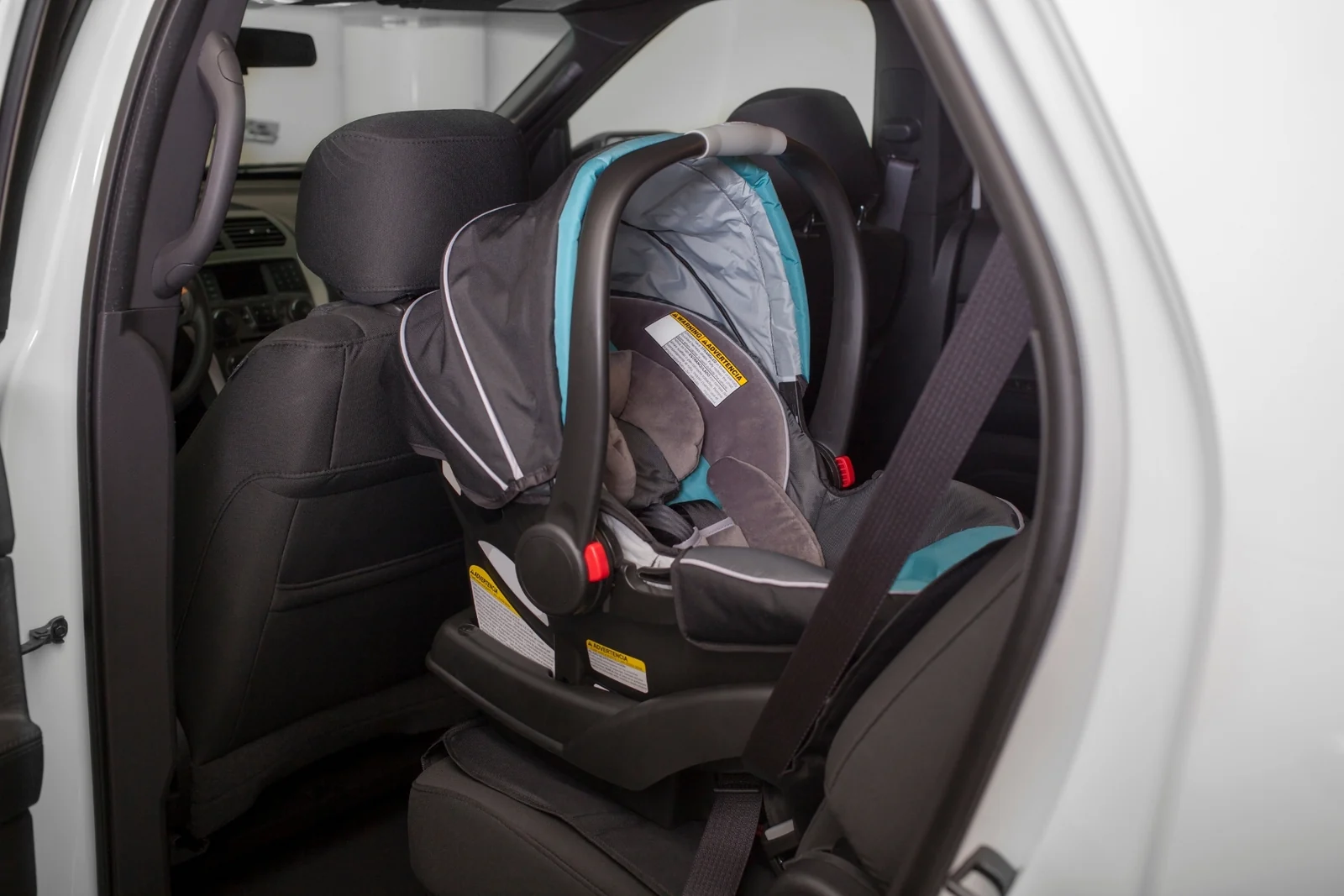
It’s tempting to make the back seat more fun by adding to the car seat itself. That’s the one place I’d hold back. I’d treat any toy that clips, straps or hangs onto the car seat as an add-on, which makes it a question for the seat’s manual before it’s a question for the toy aisle.
 Save
Skip add-on car seat products unless they came with the seat or its manufacturer approves them. The AAP notes they aren’t covered by any federal safety standards and doesn’t recommend them; a child in the right seat for their size shouldn’t need extra devices.
Never leave your child alone in or around the car, for any length of time, and lock it whenever it’s parked. Rolling the windows down or parking in the shade does little to change the temperature inside, and a child’s body temperature rises three to five times faster than an adult’s, the National Highway Traffic Safety Administration (NHTSA) warns. See a child alone in a locked car? Act immediately and call 911.
So the fun lives in your toddler’s hands and in your voice, and the seat stays the way it came. Toys made to attach to strollers and car seats are covered in my guide to stroller and car seat toys.
If mornings are already a scramble, pack the night before. Ten minutes is plenty: find your row in the table, drop two or three soft things in a bag by the door, fill the snack box and download the audiobook. Future you, at the first red light, will be glad you did.
Frequently Asked Questions
What should I do on a car ride with my toddler?
On a car ride with your toddler, match the plan to the length of the drive. For a short errand, sing and hand back one soft thing. For an hour or more, add a small busy bag of soft, light things and an audiobook. For a long trip, leave at naptime and save snacks for the stops.
Conclusion
You don’t need a system for the back seat, and you definitely don’t need to buy one. Before your next drive, check how long it’ll take, find that row in the table, and drop two soft things into a bag by the door. Some drives will still end with crying in the back, and that’s part of driving with a toddler. It usually takes a few trips to find your groove.
You’re the driver, the DJ and the snack manager, all at once. If the back seat stays quiet for even one song, call it a win.
Miri
Fewer toys, deeper play.
Further Reading & Resources
See all 5 sources
- Car safety: Car Seats: Information for Families (American Academy of Pediatrics, HealthyChildren.org) · Child Heatstroke Prevention: Prevent Hot Car Deaths (National Highway Traffic Safety Administration)
- Screens and sitting: Kids & Screen Time: 5 C’s Questions for Toddlers & Preschoolers (American Academy of Pediatrics, HealthyChildren.org) · Guidelines on physical activity, sedentary behaviour and sleep for children under 5 years of age (World Health Organization, 2019)
- Snacks: Choking Prevention for Babies & Children: What Every Parent Needs to Know (American Academy of Pediatrics, HealthyChildren.org)