
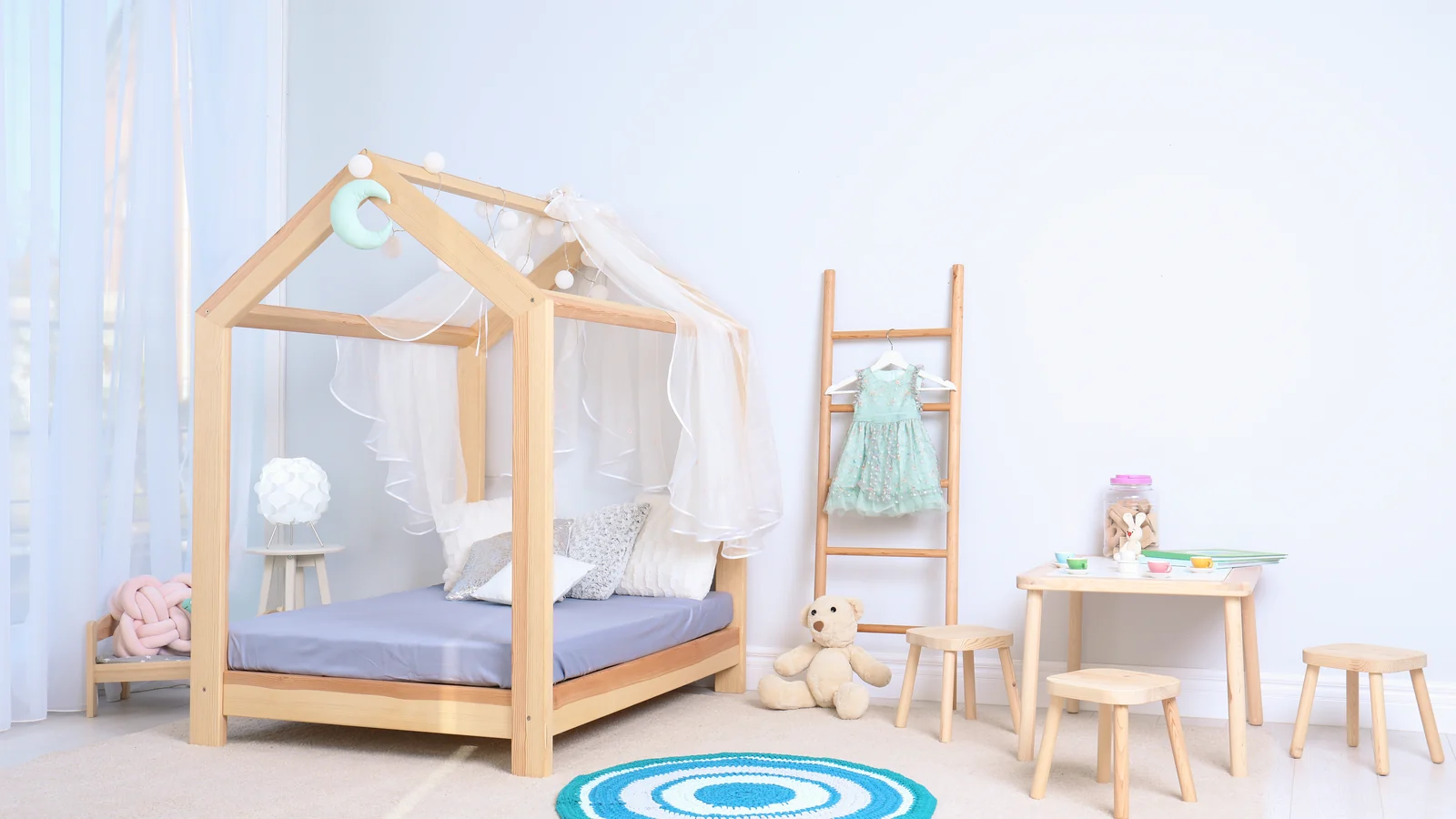
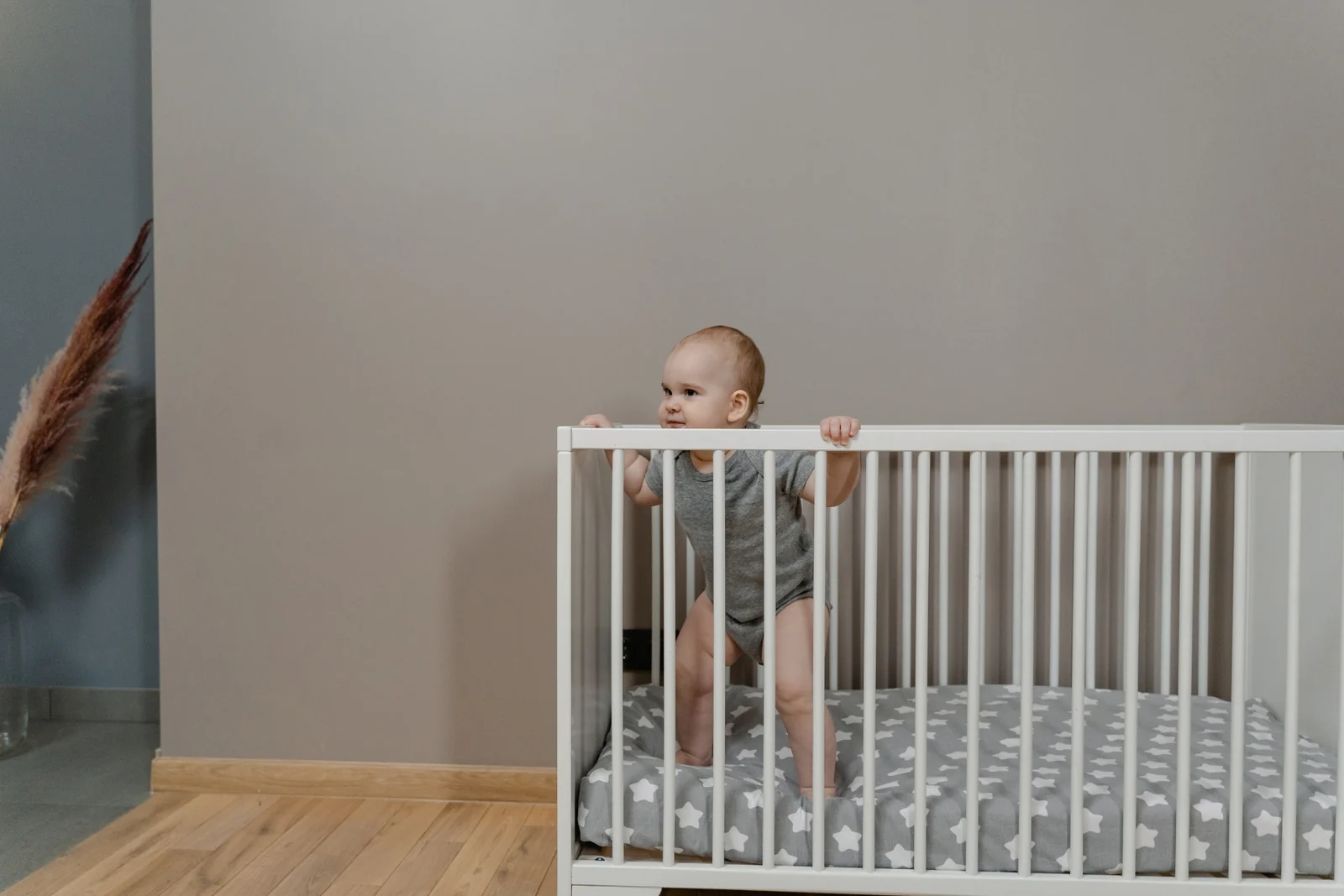
Every nap ends the same way now. Your baby has pulled up on the crib rail, both hands gripping the bars, and is yelling for you to come and get them. The Montessori bedrooms you keep seeing have no bars at all. Just a low mattress on the floor, a few books on a shelf, and a baby who can crawl out when they wake up.
Part of you wants that for your baby right now. Another part pictures them rolling off the edge, crawling to the door, or wandering around the room in the dark while you sleep. One expecting parent on r/MontessoriForHome asked the whole question in three words: “Skipping a crib?”
For the first year, the American Academy of Pediatrics (AAP) still points parents to a crib, bassinet, portable crib or play yard. After that, the floor bed question gets more interesting, and most of the work moves from the bed to the room around it. The floor bed is one corner of a Montessori home, and I walk through the rest of ours, room by room, in my guide to the Montessori playroom. So here’s my pick.
a crib, bassinet, portable crib or play yard that meets federal safety standards for the first year, then a floor bed after the first birthday in a room you’ve made safe from wall to wall — the AAP’s safe-sleep list for babies under 1 names those four, and a floor bed isn’t on it.
you can’t make the whole room safe yet (anchored furniture, no reachable blind cords, window guards, covered outlets), or your child can already open the bedroom door.
 Save
What is the point of a Montessori floor bed?
The point of a Montessori floor bed is freedom to move: your child can climb into bed when they’re tired and crawl out when they wake, without waiting for someone to lift them over a rail.
The idea, as I understand it, comes down to freedom of movement. A bed your child can get into and out of alone also hands them a little independence in a part of the day that usually belongs to the grown-ups. They wake up, look around a room they know, and crawl over to a shelf instead of standing at the bars and calling for you.
 Save
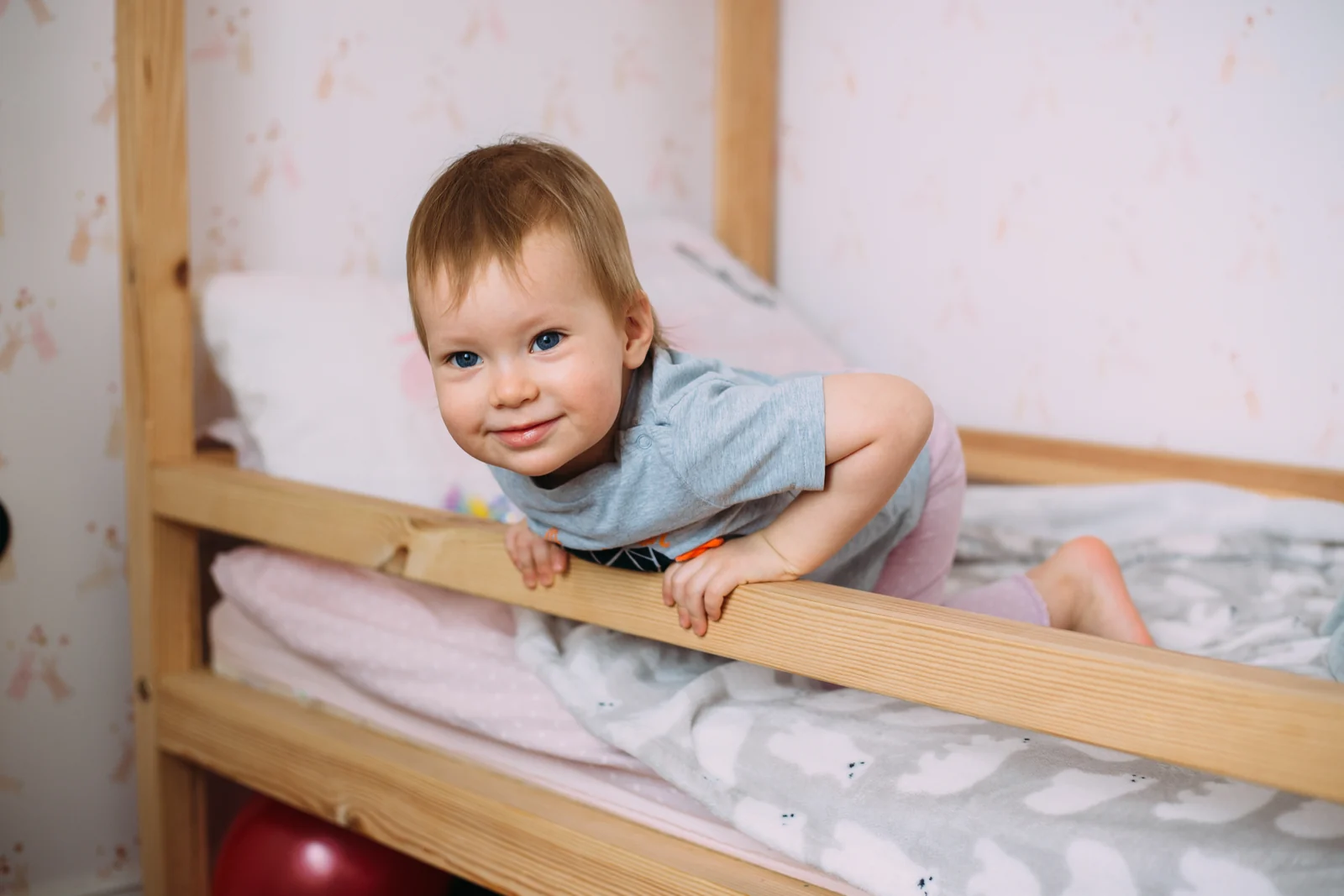
That was exactly where we were with Will at about 14 months. He hated being shut in, and he’d grip the crib rail and yell to be let out. In his room, the floor bed ended up sharing the space with a bookshelf he could reach on his own.
A Montessori-style floor bed asks one thing of you in return: a room that’s safe for a child who is awake and alone in it. That’s the part the photos don’t show.
Are Montessori floor beds safe for babies under 1?
For babies under 1, the AAP’s safe-sleep list comes before any Montessori idea. It names a crib, bassinet, portable crib or play yard, and a floor bed isn’t one of the four.
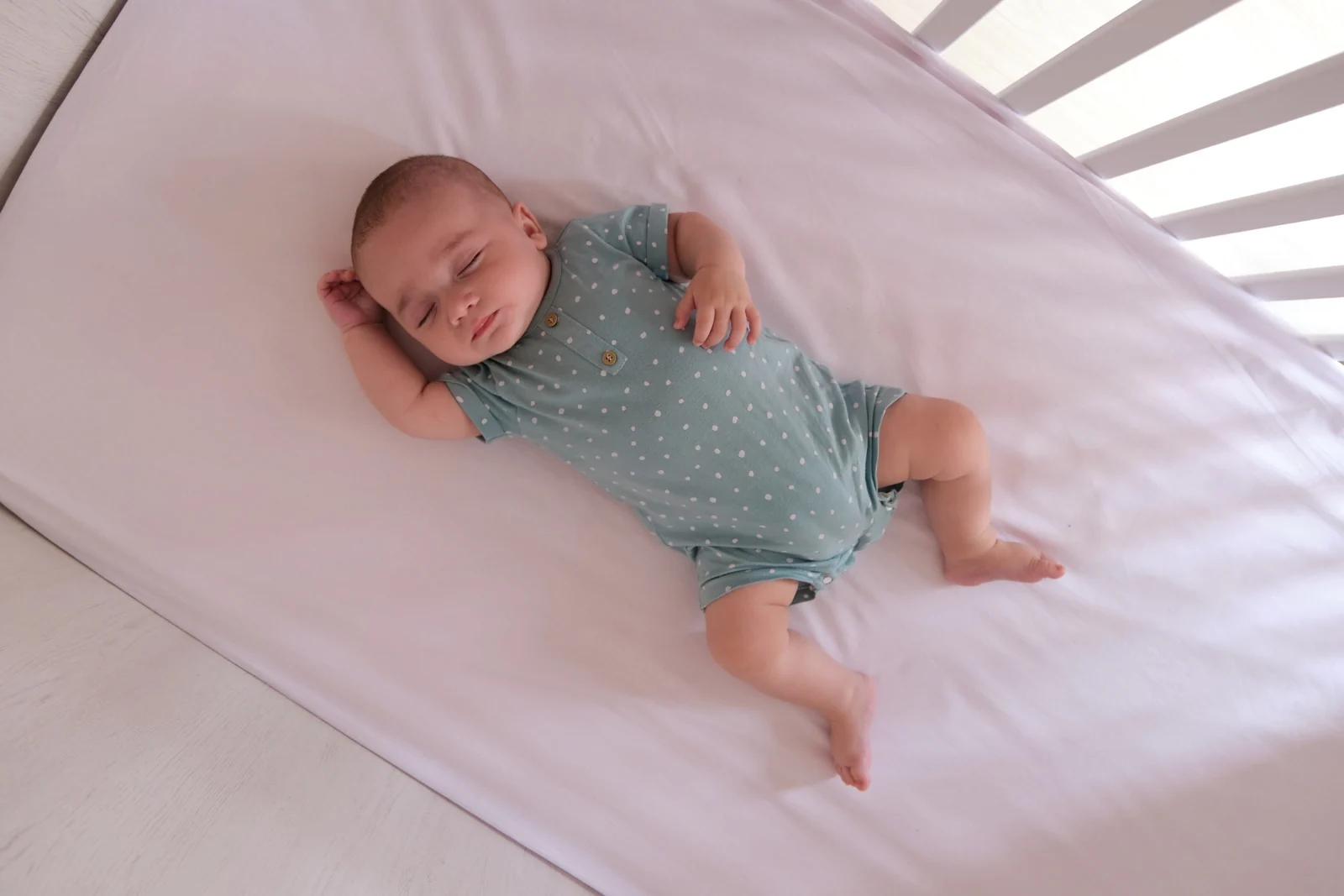
The AAP’s safe-sleep guidance for parents, last updated in September 2026, is short and specific. Babies go down on their backs for every nap and at night. The sleep surface should be firm and flat, meaning it doesn’t indent when your baby lies on it, and anything inclined more than 10 degrees isn’t safe for sleep. The place itself should be a crib, bassinet, portable crib or play yard that meets the safety standards of the U.S. Consumer Product Safety Commission (CPSC).
 Save
The guidance also covers other sleep products. They count as a safe option only if they comply with a June 2021 federal rule that requires infant sleep products to meet the existing standards for cribs, bassinets, portable cribs or play yards. If a product doesn’t meet federal safety standards, the AAP says not to use it. For cribs, it adds two checks: a mattress designed for that specific crib that fits tightly, and a look at the CPSC website to make sure the crib hasn’t been recalled, especially if it isn’t new.
The next place to look for floor beds is the federal rules themselves. The infant sleep products rule (16 CFR Part 1236) covers products meant for babies up to 5 months old, apart from cribs, bassinets, play yards and bedside sleepers, which have rules of their own. The crib mattress rule (16 CFR Part 1241) covers full-size and non-full-size crib mattresses, plus after-market mattresses for play yards and non-full-size cribs. As of October 2026, I couldn’t find a federal standard written for floor beds, and I didn’t see floor beds mentioned on the AAP’s page or in the text of these rules.
So I won’t call a floor bed safe or unsafe for a baby under 1. What I can tell you is what the guidance names, and that the AAP says its recommendations are for babies up to 1 year old unless it states otherwise. If you’re weighing a floor bed before then, take that question to your pediatrician, which is exactly what the AAP suggests whenever you have one.
One more part of the guidance shapes where that crib goes. The AAP recommends sharing a room with your baby, without sharing a bed, for at least the first 6 months, and says room sharing can decrease the risk of sudden infant death syndrome (SIDS) by as much as 50%. That’s why a separate room can wait at least that long, which I get into in my guide to the Montessori nursery.
Until your baby’s first birthday, put them down on their back for every nap and every night, on a firm, flat mattress in a crib, bassinet, portable crib or play yard that meets federal safety standards.
Keep that sleep space bare. The AAP says pillows and pillow-like toys, quilts, comforters, mattress toppers, non-fitted sheets, blankets, toys and bumper pads can increase the risk of entrapment, suffocation or strangulation.
Crib vs floor bed: what actually changes?
With a crib, the bars and a mattress made for that crib set the limits. With a floor bed, the room sets them, so your work moves from the bed to everything your child can reach after climbing off.
At Moje Montessori, we line the two up by what keeps your child in a safe space, because that’s the part that changes most.
| Crib, bassinet, portable crib or play yard | Floor bed | |
|---|---|---|
| On the AAP’s sleep list for babies under 1 | Yes | No |
| Federal safety standard | Must meet CPSC standards; crib mattresses have their own rule | None written for floor beds that I could find (as of October 2026) |
| Mattress | Designed for that specific crib, fits tightly, fitted sheet only | A firm, flat mattress straight on the floor (ours was about 4 inches thick) |
| What keeps your child in a safe space | The sides of the crib | The whole room |
| Getting in and out | You lift them | They climb on and off alone |
| Extra work for you | Check for recalls, especially on a used crib | Anchor furniture, deal with blind cords, guard windows, cover outlets, plan for the door |
Read down the two columns and you’ll notice who does the homework. In the crib column, a lot of it was done before the box reached your house: a federal standard, a mattress built to fit, a recall list you can check in a few minutes. In the floor bed column, almost all of it lands on you.
That’s fine once you know it. It just means a floor bed is less of a purchase and more of a project.
Floor bed age: when did we switch, and why not from birth?
Safe-sleep recommendations cover babies up to 1 year, and I haven’t found an AAP age for moving to a floor bed. We switched Will at about 14 months, and that’s our family’s story; your timing can look different.
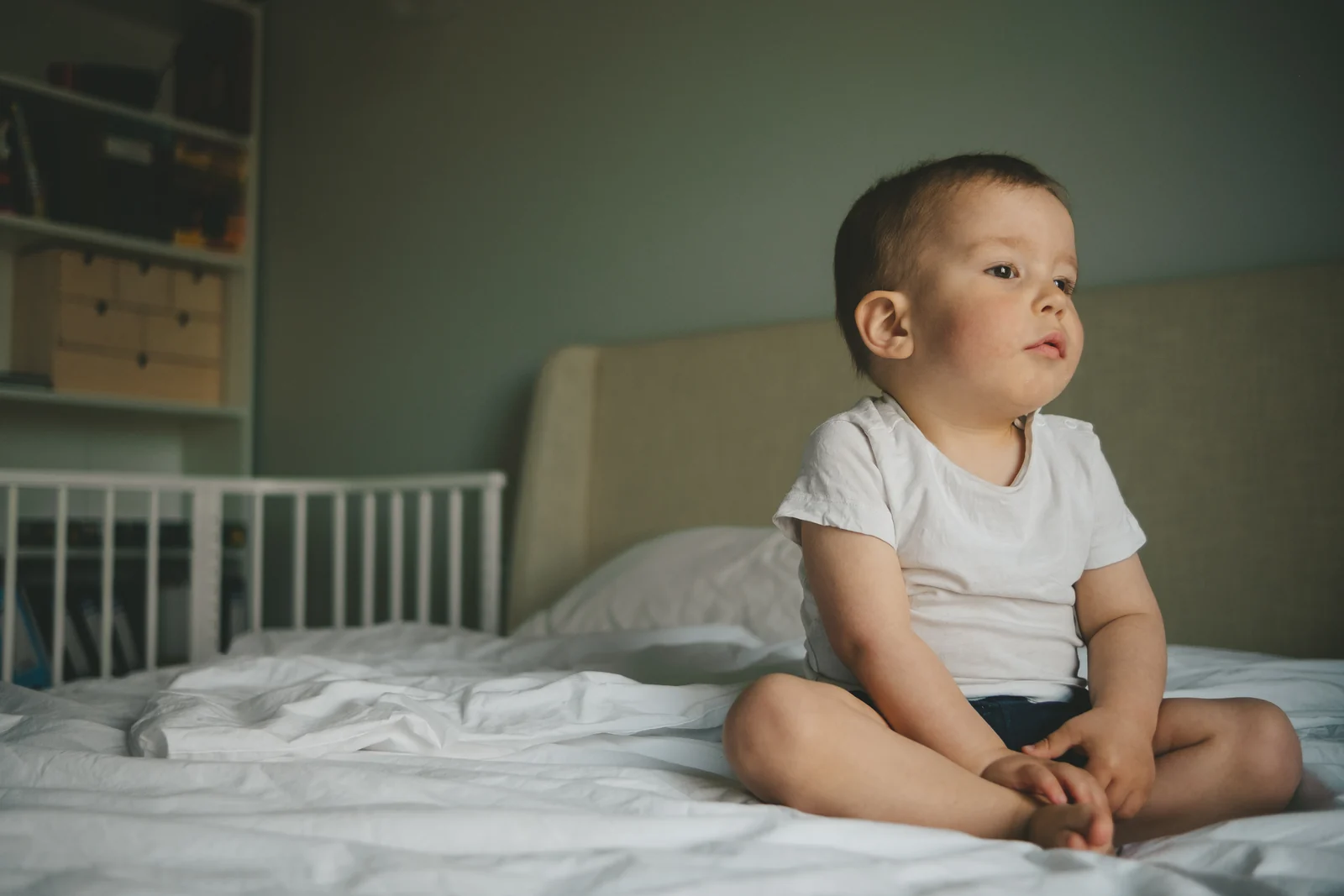
As a newborn, Will slept in a small bassinet right at the edge of our bed, which made cuddles and night feeds easy. Around 4 months, once he was rolling and scooting, he moved into his own crib, pushed right up against our bed. He stayed there until about 14 months, when the rail-gripping and yelling started, and that’s when we moved him to a floor bed.
A lot of what I read about Montessori put babies on a floor bed from the very start. I didn’t do it. I worried he’d get cold down there, that the floor would be dusty, that he’d roll onto his face on the rug. And honestly, my own sleep mattered more to me back then than following the book. Those were a tired new mom’s worries, straight from my gut. Today I’d simply point you to the safe-sleep list above.
 Save
For us, three things lined up: Will was past his first birthday, he had started fighting the crib, and the room was ready. I don’t have a month that fits every child, and I couldn’t find one in the guidance either.
If you’re in the thick of the stand-at-the-rail stage with a baby who isn’t 1 yet, I know how loud those wake-ups get. The checklist below is a good way to spend the waiting months, so the room is ready before your child is.
The whole room is the crib: a floor bed safety checklist
Before the first night on a floor bed, make every part of the room safe for a child who’s awake and alone in it: anchored furniture, covered outlets, cords out of reach, guarded windows and a plan for the door.
Parents who use floor beds tend to say the same thing in different words: the bed is the easy part, and the whole room becomes the crib.
That’s how my husband and I treated Will’s room. Before he spent a single night on the floor bed, we covered the outlets, hid the cables, drilled anchors to hold the furniture to the wall, and cleared out anything dangerous. In our heads, the room became one giant crib.
Work through these before the first nap on the new bed:
- Anchor every dresser, shelf and bookcase. The AAP’s tip-over guidance asks parents to anchor all furniture to the wall, using more anchors for heavier pieces, and suggests metal “L” brackets from known brands. It adds that this may mean moving a piece so the anchors can go into a stud. Keep toys, electronics and remotes off high surfaces too, since they tempt kids to climb. I go deeper into anchoring low furniture in my guide to choosing a Montessori shelf.
- Cover the outlets and hide the cords. Put safety plugs that aren’t a choking hazard in every unused outlet. If your child keeps going back to one, block it with furniture. Keep electrical cords out of reach and out of sight.
- Get blind and curtain cords out of reach. The AAP’s home safety tips say to avoid window coverings with cords. If your blinds or drapes aren’t cordless, attach the cords to floor mounts that hold them taut, and add safety stop devices.
- Guard the windows. A window screen isn’t strong enough to stop a fall. The AAP recommends window guards that only an adult or older child can open from the inside, and opening windows from the top when you can.
- Keep the bed bare if your child is under 1. Wherever a baby under 1 sleeps, the AAP’s advice to keep soft objects and loose bedding out of the sleep area applies: no pillows, blankets, quilts or stuffed toys on or around the mattress.
- Decide what happens at the door. Once your child can leave the bed alone, the doorway is the edge of their space. Some families put a gate across the doorway, and a child who can open doors needs a new plan. I cover gates in my guide to setting up a yes space.
Anchor every dresser, bookcase and shelf in the room to the wall before the first night, low pieces included, and keep toys and remotes off high surfaces so nothing invites a climb.
Corded blinds and curtains are a strangulation risk. Go cordless, or fix the cords taut to floor mounts and add safety stop devices.
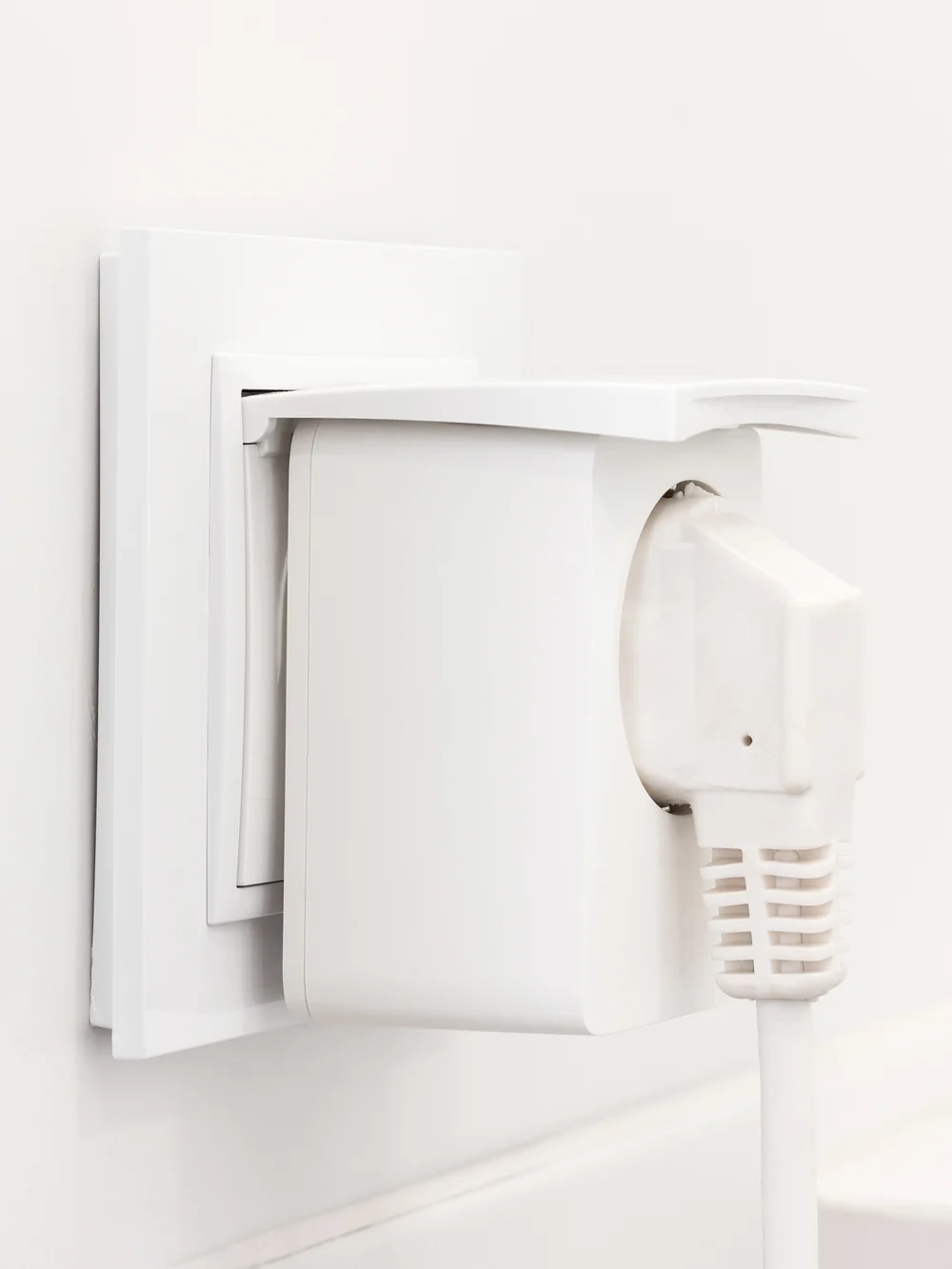
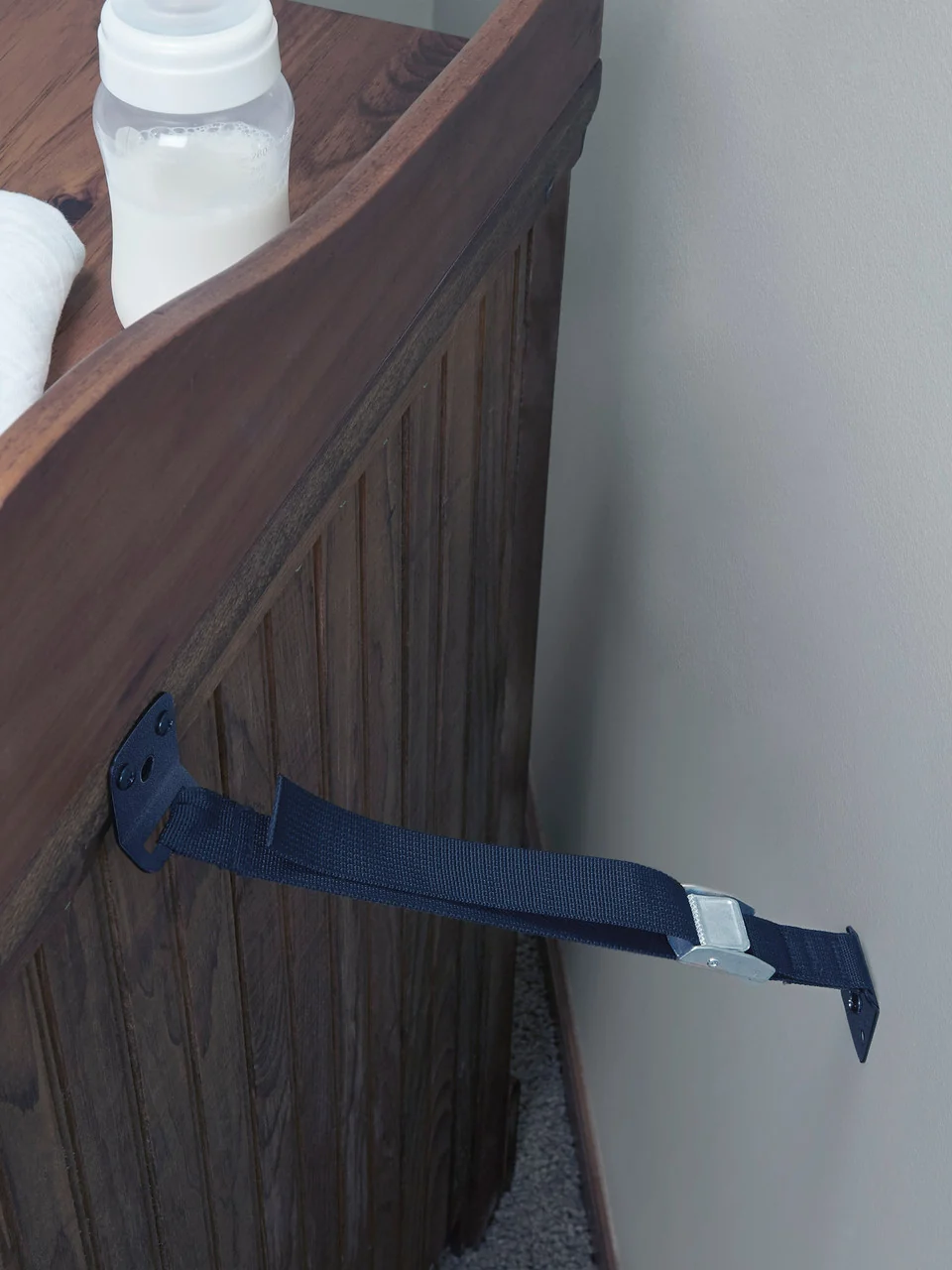
Choose outlet plugs that can’t become a choking hazard, and block an outlet with furniture if your toddler keeps going back to it. Anchor every dresser to the wall before the first night, low ones included.
The accountant in me likes this part of the list. The AAP’s tip-over page, last updated in 2021, puts anti-tip devices at $5 to $25 each, so anchoring a dresser and two shelves with one device each comes to roughly $15 to $75 at those prices. The same page says each one takes just minutes to install.
If the whole list feels like a lot, start with the furniture closest to where the mattress will go, then work outward from there.
How to make a Montessori floor bed (what we actually used)
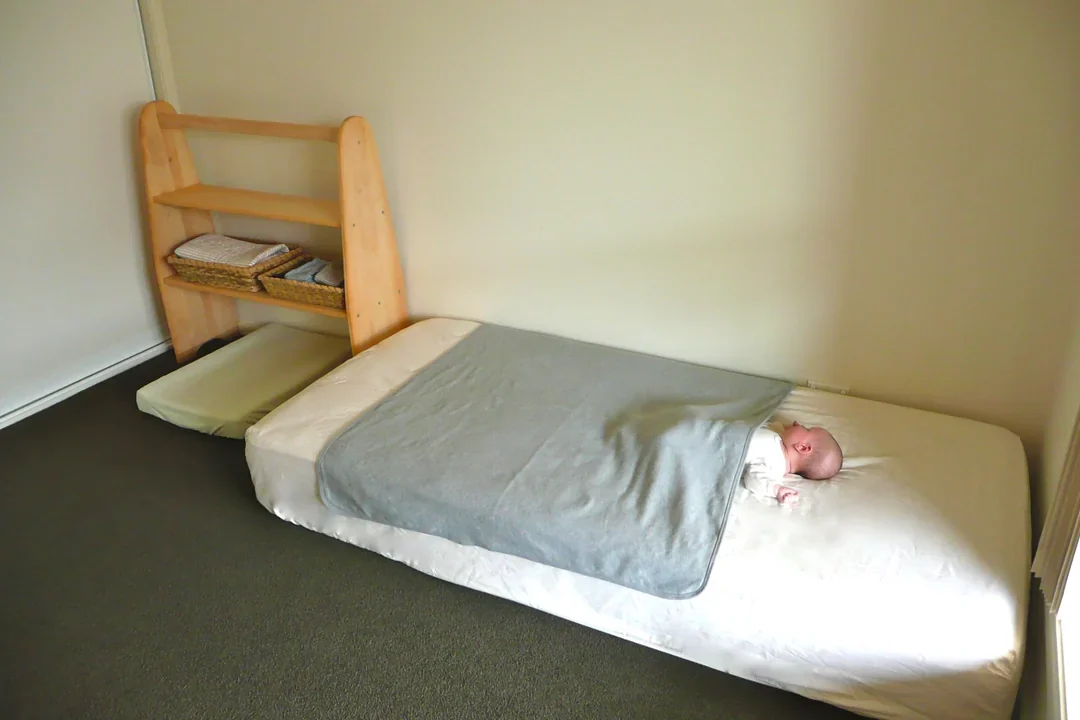
Start with a firm, flat mattress, set it straight on the floor, and put it in a room you’ve already made safe. You don’t need tools or a frame, because the room does the job the crib’s sides used to do.
Will’s floor bed was a firm, compressed-cotton mattress about 4 inches thick, laid straight on the floor. That was the whole build.
 Save
If you’re picking a mattress, the AAP’s description of a firm surface is a handy test to borrow: it shouldn’t indent when your child lies on it. That line was written for babies under 1, and I still like it as a quick check for a toddler’s bed.
For a wooden frame around the mattress, ask the maker what wood it is and what finish is on it. Those are the same two questions worth asking about any wooden toy.
Low toddler bed with a frame vs a true floor bed
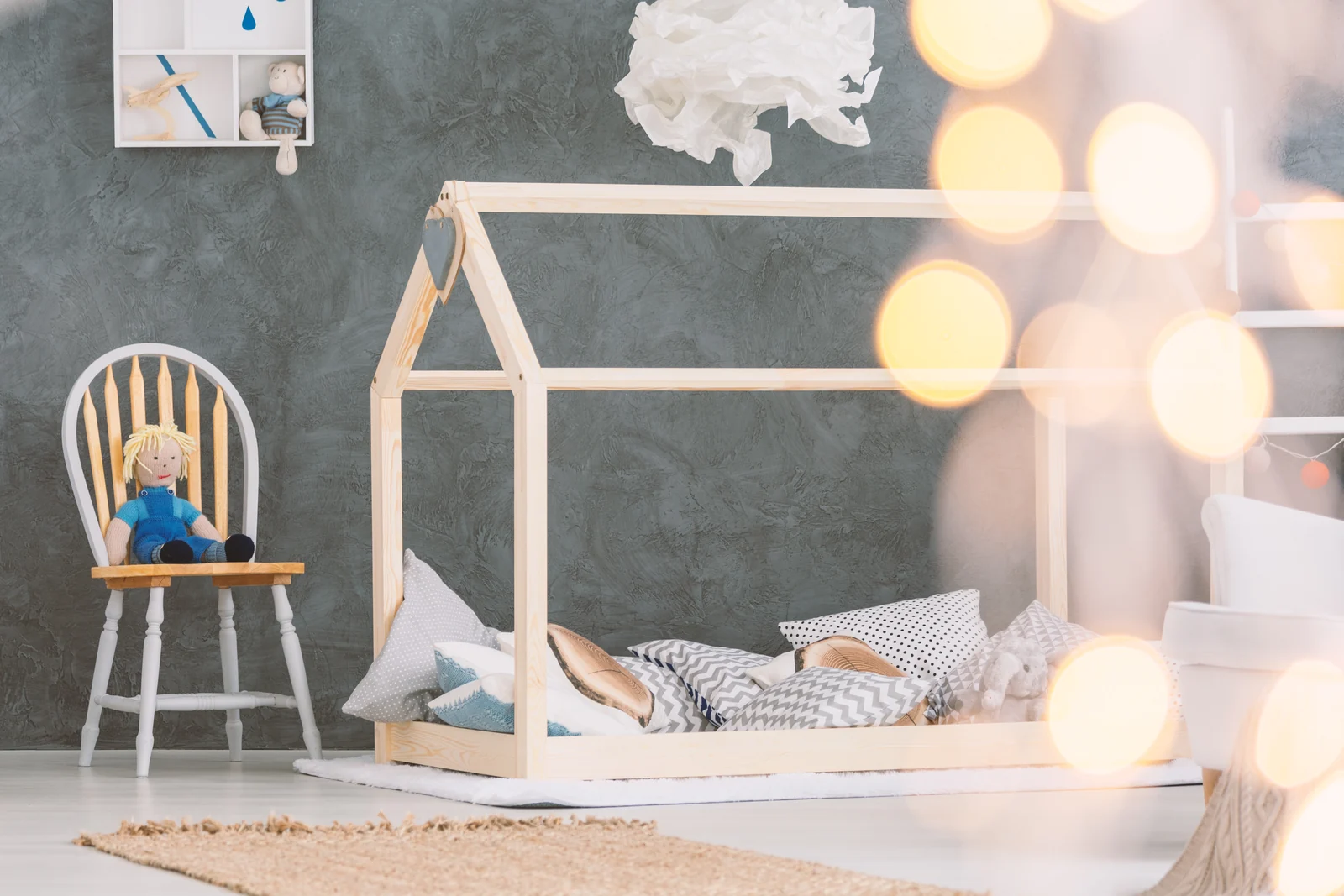
A parent on r/MontessoriForHome asked it about as plainly as it can be asked: a low toddler bed with a frame, or a true floor bed? It’s a fair question, especially once you start looking at house-shaped frames and add-on rails.
The federal rules give you something concrete to check. Under the federal toddler bed rule (16 CFR Part 1217), toddler beds made or imported on or after October 20, 2011 have to meet a safety standard called ASTM F1821; the current version is F1821-26, approved February 1, 2026. Portable bed rails made or imported on or after August 29, 2012 have their own rule (16 CFR Part 1224) and must meet ASTM F2085-19. What I couldn’t tell from the rules is whether the frames sold as Montessori beds count as toddler beds.
 Save
So if you’re looking at a Montessori floor bed with rails, or any frame at all, ask the seller which federal standard it was tested to, and keep looking if they can’t say. A true floor bed is just the mattress, so there’s no frame to ask about.
Our first week on the floor bed
Will’s first week on a floor bed was messy: he fell asleep in odd spots on the floor, got up once at 2 a.m. to play, and took about a week to start crawling onto the mattress on his own.
How Will settled into his floor bed
Will was about 14 months old, and he’d made it very clear he was done with the crib.
- Step 1: The room came first. All the prep I described above, from the outlets to the anchors, was done before the mattress went down.
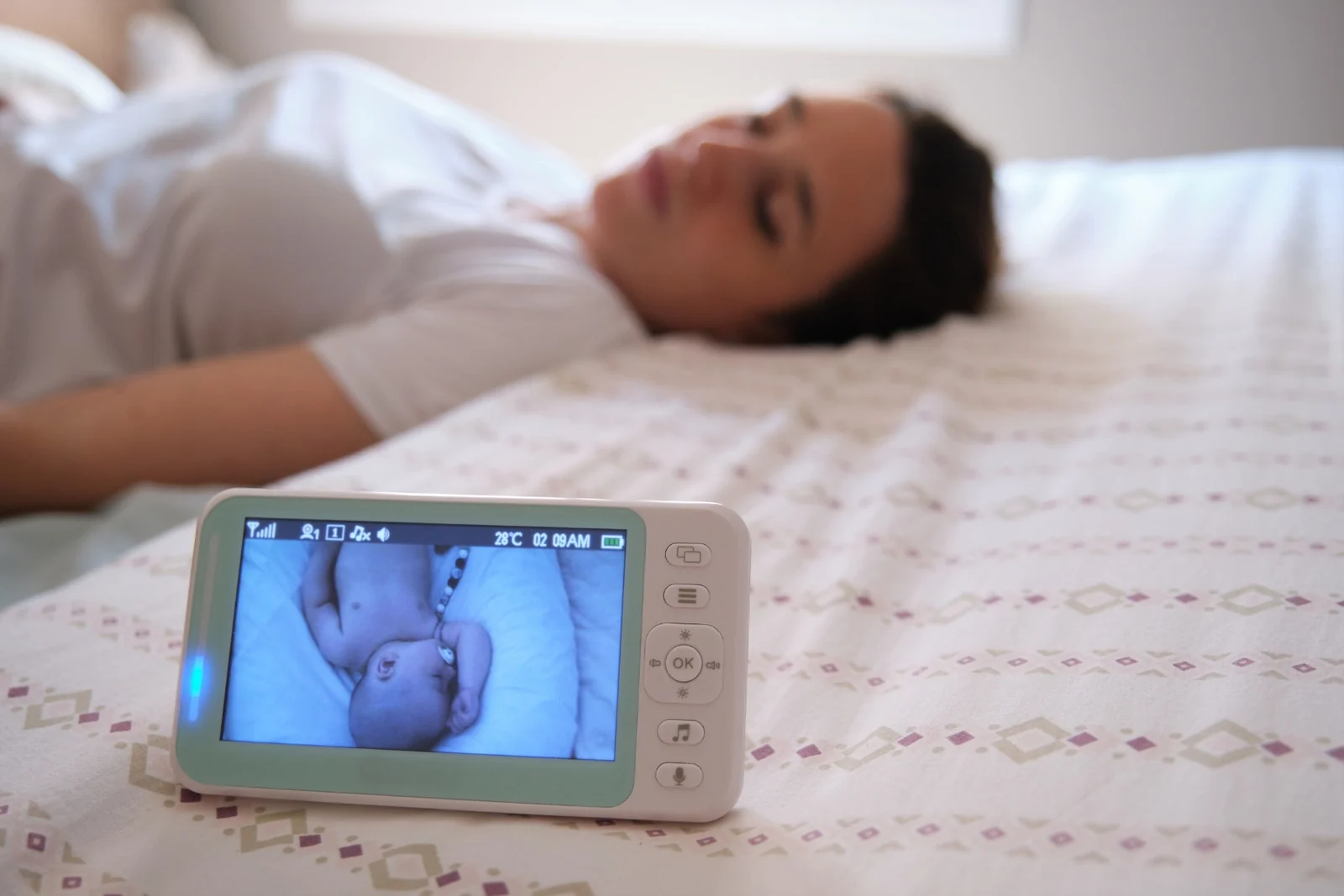
- Step 2: The first nights were the hard part, mostly for me. Every night that week, I’d check the camera and find Will asleep somewhere other than his bed: curled up in the middle of the floor, tucked into the corner by a cabinet, right up against the door. One night at 2 a.m., he got up, crawled to the bookshelf, pulled out some toys and sat there playing by himself. I lay in the next room watching the screen, wanting to run in and lift him back onto the mattress. I stayed put and watched.
- Step 3: After about a week, Will had it figured out. When he got sleepy, he crawled onto the mattress himself, and he slept through the night.
 Save
Those first nights are why the room matters more than the mattress. If your toddler can fall asleep anywhere in the room, every corner of it has to be a place you’d be fine finding them at 2 a.m.
On a floor bed, the mattress is where you hope they’ll start, and the whole room is where they might end up.
Floor bed bedtime routine
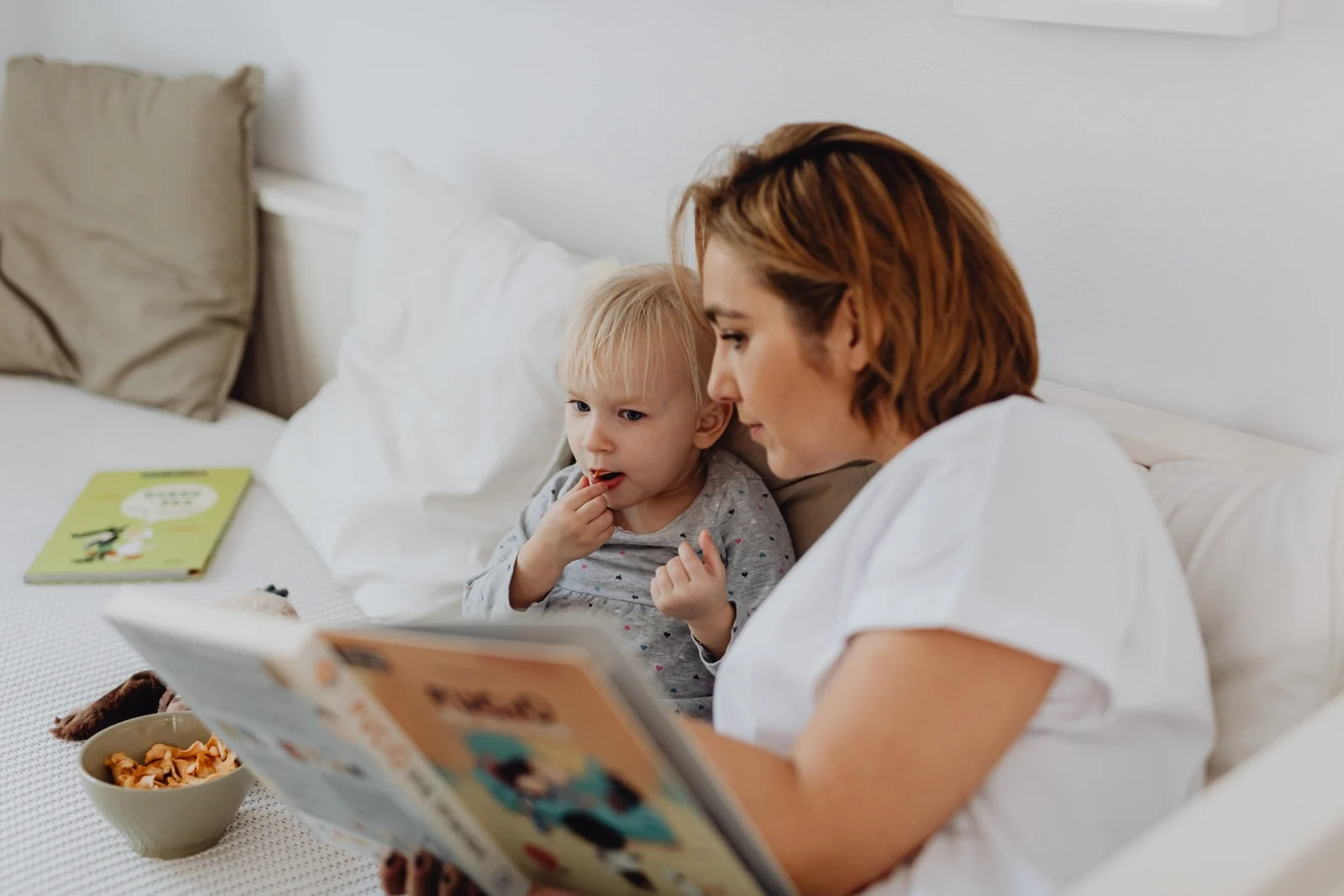
Keep the bedtime routine your child already knows, run it in the new room, and end it on the floor bed, so the only new thing that night is where they lie down.
A floor bed changes a lot at once: no bars, a new spot, sometimes a whole new room. If I were doing this again with Jimmy, I’d keep everything about bedtime as familiar as I could and change only the bed.
 Save
And if your child is still under 1, one more line from the safe-sleep guidance belongs in the routine. Overheating can increase the risk of SIDS, and the AAP says a baby only needs one more layer than you’d wear in the same room.
Nicole Kavanaugh, who shares stories and tips from her family’s Montessori home at The Kavanaugh Report, lists “Start with naps” among her tips in a 2022 post on moving to a floor bed at night. Her advice: put your child down for naps there for a while before the night switch, and spend time in the room during the day so they get comfortable in the space.
Miri’s Tip
Naps first, then nights, in a room you’ve already set up and walked through. That’s most of the plan.
Frequently Asked Questions
What should you look for in a Montessori bed?
In a Montessori bed, look for a firm, flat mattress that doesn’t dip when your child lies on it, and keep the bedding simple. If you’re buying a frame, ask the seller which federal safety standard it was tested to, and what wood and finish it uses. Those answers tell you more than the shape of the frame does.
How do you build a Montessori floor bed?
You can build a Montessori floor bed without building anything. A firm, flat mattress set straight on the floor of a room you’ve made safe is the whole bed; ours was about 4 inches thick. Frames and rails are optional, and if you buy one, check the federal standards covered in the section on frames above.
Conclusion
If your baby is standing at the crib rail right now, yelling for you, the crib is still doing its job. Use the months until that first birthday to get the room ready, a piece at a time: anchor the dresser this week, sort out the blind cords next. Waiting for the floor bed doesn’t put you behind on Montessori.
Wanting more freedom for your baby is a lovely instinct. Pour it into the room first, and the bed becomes the simple part.
Miri
Fewer toys, deeper play.
Further Reading & Resources
See all 10 sources
- Safe sleep: How to Keep Your Sleeping Baby Safe: AAP Policy Explained (American Academy of Pediatrics, HealthyChildren.org)
- Room safety: Home Safety: Tips for Families With Young Children and Preventing Furniture and TV Tip-Overs (American Academy of Pediatrics, HealthyChildren.org)
- Federal rules: Safety Standard for Toddler Beds (16 CFR Part 1217) · Safety Standard for Portable Bed Rails (16 CFR Part 1224) · Safety Standard for Infant Sleep Products (16 CFR Part 1236) · Safety Standard for Crib Mattresses (16 CFR Part 1241) (U.S. Consumer Product Safety Commission, via eCFR)
- Real parents: Transitioning to the Montessori Floor Bed at Night (Nicole Kavanaugh, The Kavanaugh Report, 2022) · “Skipping a crib?” and Low toddler bed with frame vs true floor bed (r/MontessoriForHome)