
It’s past ten. You’re on your side with a pillow wedged under your bump, scrolling with one thumb, and somewhere around week 30 Instagram decided you’re a Montessori person. Low wooden shelves with exactly four toys. A toddler pouring her own water. A lot of beige. Under almost every post: Montessori parenting. You love it, and you also wonder whether it’s a whole lifestyle you have to sign up for before the baby even arrives.
My own start was a scroll, too. While I was getting ready for my first baby, a friend’s posts about Montessori kept showing up in my Facebook feed, and I went digging into the books and the research. What I wish I’d heard on day one: it isn’t a package deal, and your home doesn’t have to be Instagram-worthy to count.
Below: what it actually is, eight concrete differences from a traditional approach, and how to begin. For the hands-on part, starting Montessori at home walks through a simple first week.
 Save
SaveWhat is the Montessori parenting style?
The Montessori parenting style takes Maria Montessori’s classroom ideas home: you treat your child as a capable person, set up your space so they can do things for themselves, and hold a few clear limits instead of many rules.
Montessori built her method in schools, and her 1912 book The Montessori Method describes classrooms for kids of about 3 to 6. Montessori style parenting carries those ideas home, often to babies and toddlers. The phrase “follow the child” echoes her 1946 London lectures, where she said her method was “achieved by following the child and his psychology.”
Simone Davies, an AMI Montessori educator and author of The Montessori Toddler, sums it up on The Montessori Notebook: “Montessori is not a brand. It is a philosophy, a way of seeing our children with a new lens.” A lens costs nothing.
The five core ideas behind it
There’s no official list, but five ideas come up again and again:
- Respect for the child. “The Montessori approach to educating is based on respect for the child,” says the American Montessori Society (AMS).
- The absorbent mind. Montessori’s phrase for the way young children soak up the world simply by living in it.
- Sensitive periods. Stretches when a child is intensely drawn to one kind of learning and practices it over and over.
- The prepared environment. A space where your child can reach, use and put back what they need.
- Learning by doing. Even with infants and toddlers, Montessori guides “seek to assist, not teach,” in the AMS’s words.
Is Montessori a parenting style at all?
Not in the research sense: Montessori is an educational method, while psychologists sort parenting into four styles. Of those, authoritative parenting, which pairs warmth with clear, consistent limits, is the one a 2018 Montessori study calls aligned with it.
Psychologists mean something specific by “parenting styles.” Baumrind’s work in the 1960s and early 1970s described three. In 1983, Maccoby and Martin crossed two questions, how much a parent expects and how warmly they respond, and got four, as a 2018 review lays out. Montessori isn’t on that grid.
The four parenting styles, in everyday toddler moments
Picture one dinner four ways. It’s an illustration, not a real family: a 2-year-old drops peas over the side of the high chair, one at a time, checking your face after each one.
- Authoritarian (high expectations, low warmth): “Stop it or you’re going to your room.” Clear rule, bruised relationship.
- Permissive, also called indulgent (warm, few expectations): a laugh, more peas, game on.
- Neglectful, also called uninvolved (low on both): nobody responds, so the peas keep falling.
- Authoritative (high on both): “Peas stay on the tray. If they go on the floor, I’ll know you’re finished.” Then you calmly follow through.
Authoritative parenting has been consistently linked with good outcomes as kids grow, mostly in studies of older children. And most of us visit more than one corner on a long day.
Where Montessori fits (and how it compares with gentle parenting)
A 2018 study in the Journal of Montessori Research says it directly: “Authoritative parenting is aligned with a Montessori education, balancing children’s needs for nurturance and guidance with opportunities for self-direction.” It’s a small, preliminary study of 30 parents at one private school.
Gentle parenting is the label you’ve probably seen online. A 2024 study in PLOS One, which calls itself the first systematic investigation of it, notes: “Despite the popularity of gentle parenting, it has received no empirical scrutiny.” There, gentle parenting meant high warmth and emotional regulation, with limits held in very different ways. Montessori shares the respect and the limits. Its own focus is the environment and your child’s independence.
Waldorf comes up in the same conversations, and how Montessori compares with Waldorf gets a post of its own.
Montessori vs. traditional parenting: 8 differences at a glance
Montessori vs. traditional parenting comes down to eight everyday differences, from how many toys are out to who handles a spill. Only some are backed by research, and almost all of them cost nothing to try.
“Traditional” isn’t one way of parenting, and many families already do several of these rows without calling it Montessori. At Moje Montessori, we rate each row on what a tired parent needs to know: how good the evidence is, and what it costs to try.
| Difference | Common at home | The Montessori way | What it looks like at 0–3 | Evidence | Cost & effort to try |
|---|---|---|---|---|---|
| 1. Toys | Lots out at once, often electronic or character toys | A few simple toys on a low shelf, rotated | A few toys out at a time; the rest put away | Backed by research | $0 · easy |
| 2. Space | Rooms sized for adults; kid things out of reach | Child-size, reachable furniture | A low hook at shoulder height; a shelf anchored to the wall | Montessori philosophy (not tested at home) | $0 to small purchase · medium |
| 3. The adult’s role | Adult directs, teaches, entertains | Observe, model slowly, “assist, not teach” | Watching for a few minutes before stepping in | Montessori philosophy (not tested at home) | $0 · takes practice |
| 4. Discipline | Rewards and punishments; sometimes yelling or spanking, which the AAP advises against | Freedom within limits: few rules, calm follow-through | Under 1: arrange the space, redirect. 1 to 3: limits plus choices | Some research | $0 · takes practice |
| 5. Praise & rewards | Stickers, treats, “Good job!” | No prizes; name what your child did | “You put every block back in the basket.” | Backed by research | $0 · medium |
| 6. Everyday tasks | Adults do it, because it’s faster | Real tasks: dressing, wiping, pouring, putting away | Around 18 months, many try a spoon and copy chores | Montessori philosophy (not tested at home) | $0 to small purchase · medium (time) |
| 7. Who picks the activity | Adult plans it, on the adult’s schedule | Child chooses from a few options, with time to finish | Letting them repeat; not interrupting deep focus | Montessori philosophy (not tested at home) | $0 · medium |
| 8. When your child struggles | Adult jumps in to fix it | Wait, help as little as needed; the adult still decides when time’s up | “It’s time to go now so I’ll help you finish.” | Montessori philosophy (not tested at home) | $0 · takes practice |
“Backed by research” means studies with babies or toddlers support that piece. “Some research” means part of it is supported. “Montessori philosophy (not tested at home)” means there’s little or no research on it in family homes yet.
Toys: fewer, simpler, within reach
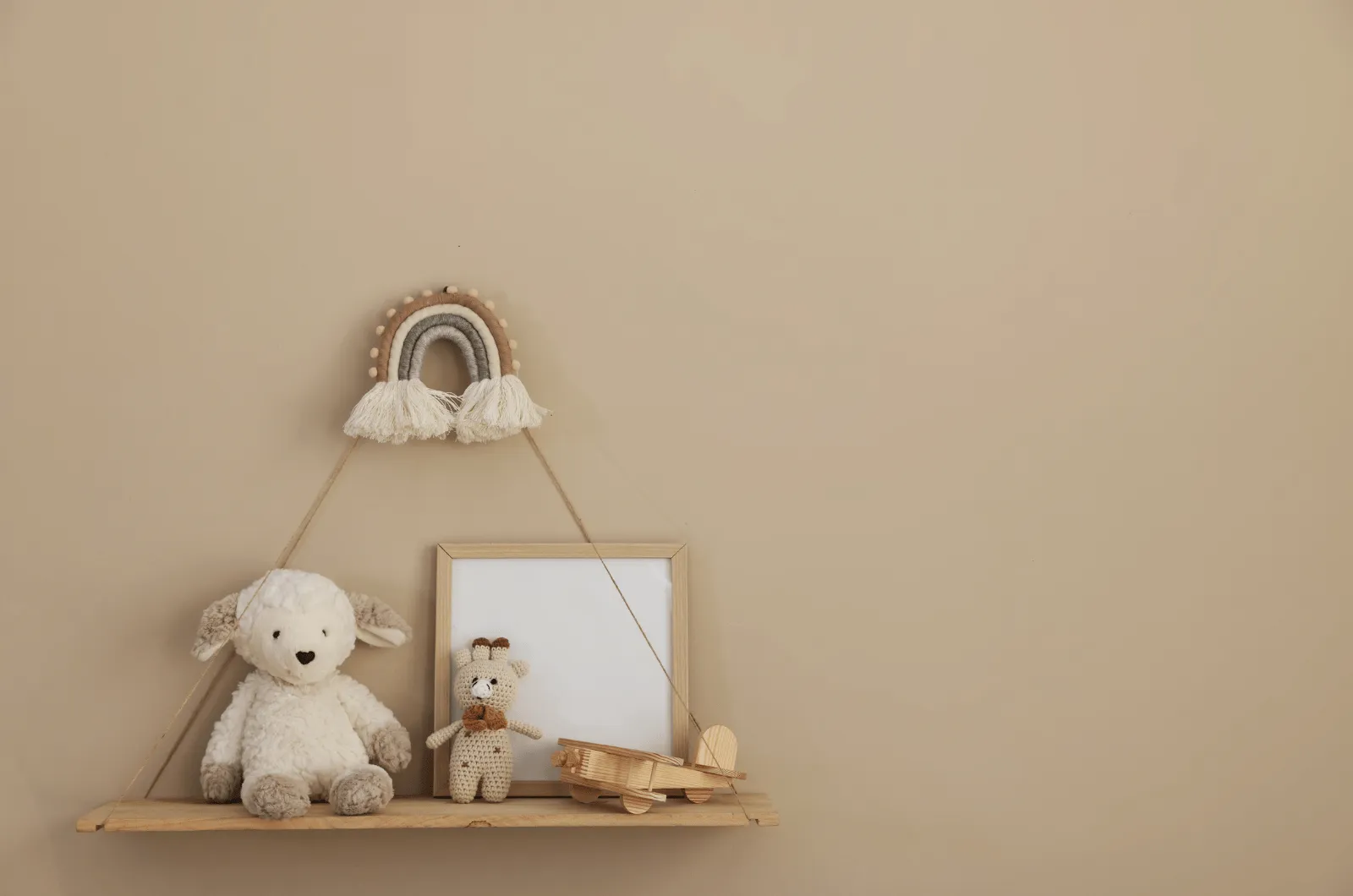
In a 2018 study, researchers compared how 36 toddlers played with 4 toys and with 16. With fewer toys, they played with each one longer and in more ways. Fewer toys, deeper play.
A small 2016 study of 26 families with babies 10 to 16 months old found that with electronic toys, parents said fewer words and had fewer back-and-forth exchanges than with traditional toys or books. The American Academy of Pediatrics (AAP) 2019 report on toys points the same way: the best ones get you playing together in ways “rich in language, pretending, problem-solving, and creativity.”
None of this is a case against plastic. The studies looked at how many toys were out and whether they were electronic, not what they were made of. For a first shelf, the guide to Montessori toys for newborns is a gentle place to start.
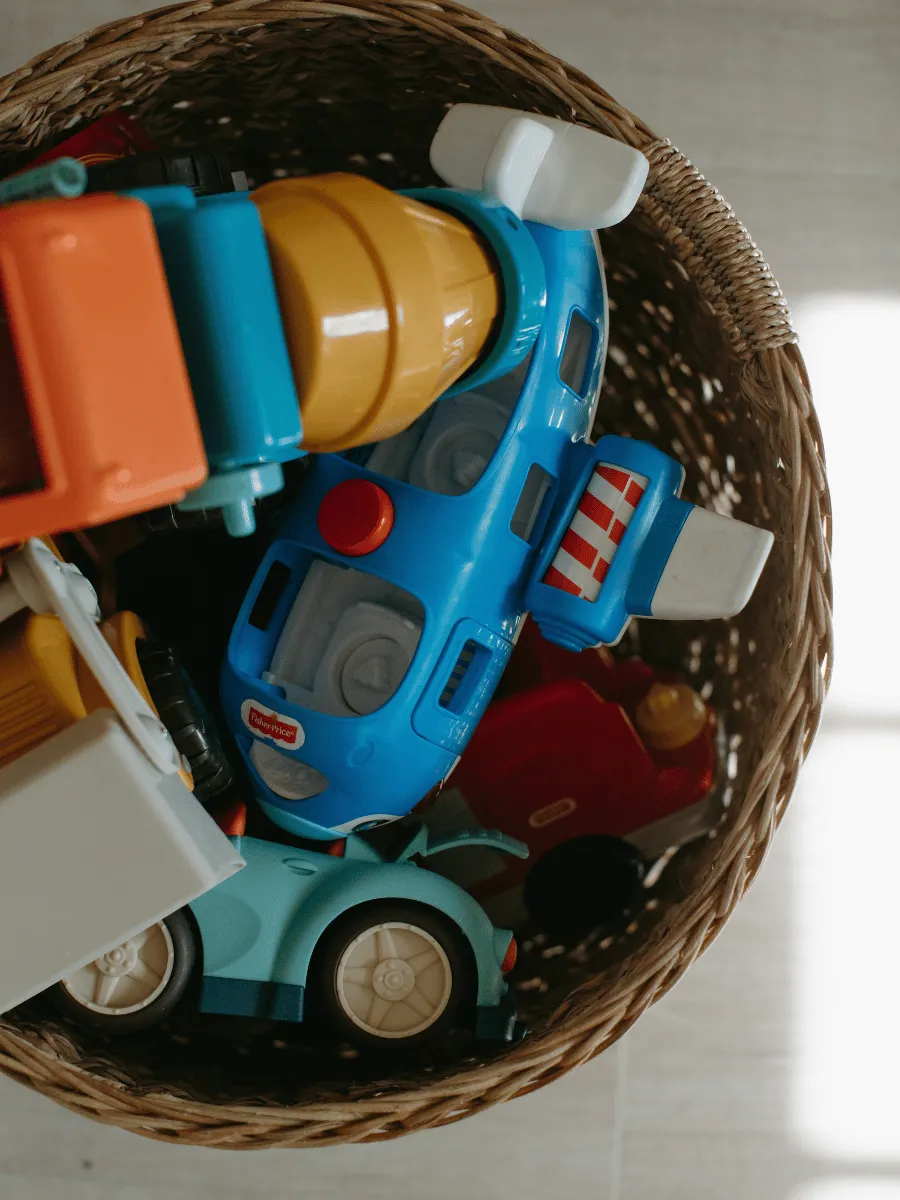
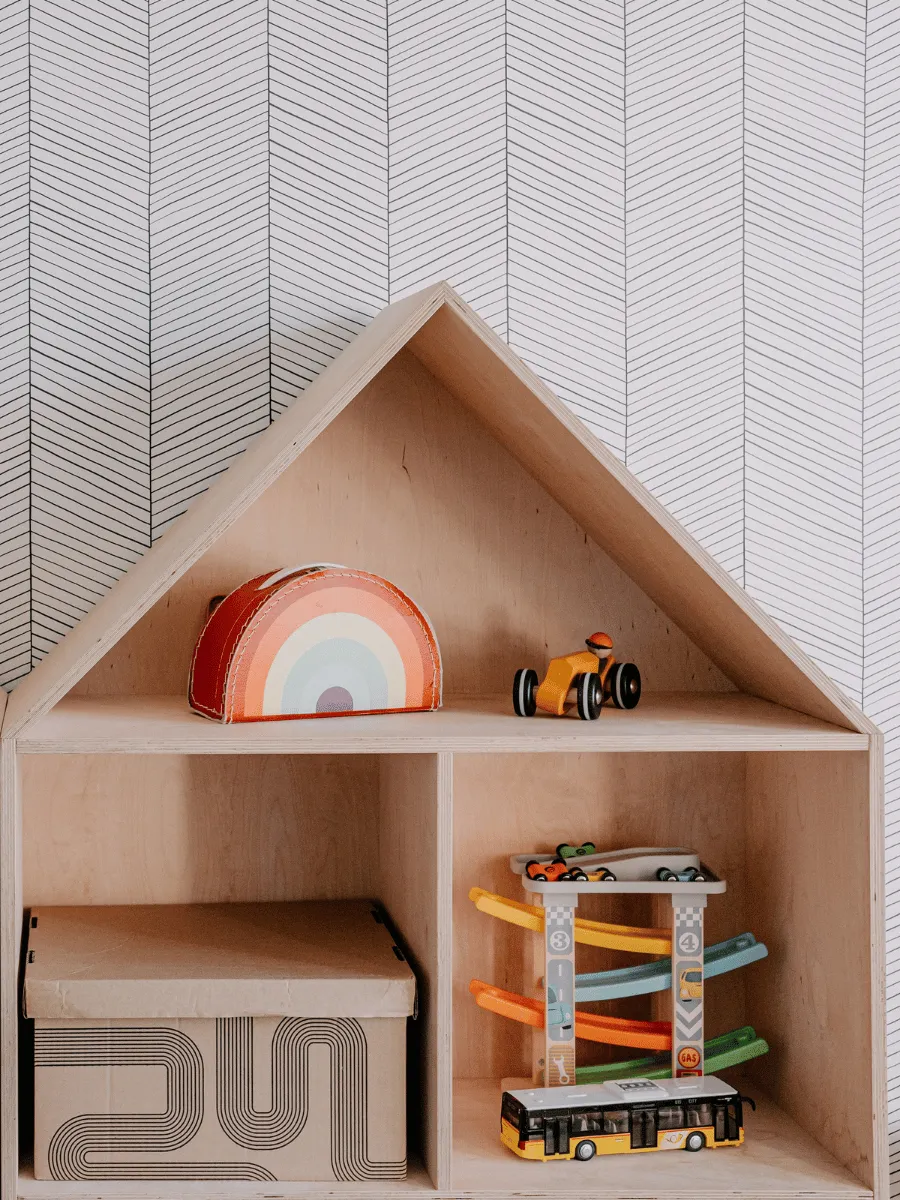
Before: a basket where every toy is out at once. After: the same corner with four toys on a low shelf.
Space: a home your child can reach
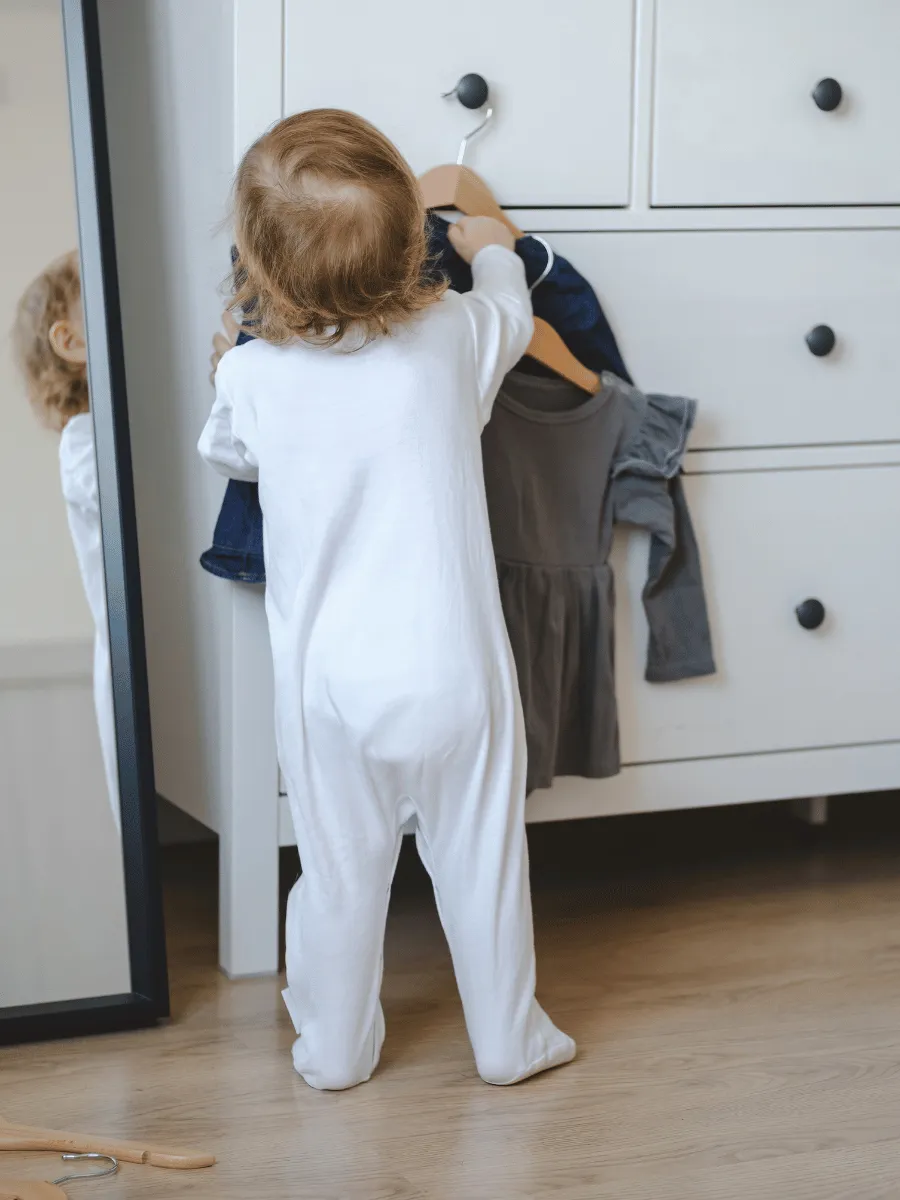
In Montessori infant and toddler classrooms, the AMS says, furniture is “child-size” and “everything needed to complete tasks and achieve success is accessible.” At home, that can start with one low hook at your toddler’s shoulder height. Setting up a Montessori-friendly home room by room is a bigger project.
 Save
SaveReachable also has to mean safe. Anchor every shelf and dresser to the wall. The CPSC’s Anchor It! campaign is plain about why: “Anchoring all furniture with drawers, doors, and shelves to the wall prevents tip-over injuries and deaths.” For a child under 3, nothing within reach should be small enough to choke on. Federal rules ban products made for children under 3 if their small parts are a choking hazard, but the dish of coins on your nightstand isn’t made for kids, so the small-parts rule doesn’t cover it. Check the room from your child’s height.
 Save
SaveThe adult’s role: guide, not entertainer
This section quietly covers two more rows from the table: who picks the activity, and what happens when your child gets stuck. Montessori asked teachers to be “a passive, much more than an active, influence.” The AMS says Montessori teachers of the youngest children educate “by showing and modeling, not by correcting,” and toddlers “are given the time they need to complete whatever they start.”
At home, that’s you on the floor, hands in your lap, while your baby works at getting a ball into a box. If they’re focused, wait. If they’re truly upset, show the move once, slowly, then hand it back. Jumping in is a loving reflex. The shift is to help a little later, and a little less.
 Save
SavePraise and rewards
The Montessori Method includes a section on the “abolition of prizes and of external forms of punishment,” and research mostly agrees. In a 2008 study, 20-month-olds given an object as a reward for helping later helped less than toddlers who got verbal praise or nothing. A 1999 analysis of 128 studies found that tangible, expected rewards undercut people’s own motivation, especially for kids: tangible rewards “tended to be more detrimental for children than college students.” Positive feedback raised interest overall, though verbal rewards “tended to be less enhancing for children than college students.”
So the goal isn’t zero praise. Montessori is wary of stickers and treats, and it leans toward naming what you actually saw:
- Instead of “Good job!”: “You put every block back in the basket.”
- Instead of “You’re so smart!”: “You kept trying until the lid fit.”
If “Good job!” slips out forty times a day, you haven’t broken anything.
Everyday tasks (practical life)
Practical life is Montessori’s name for real tasks: dressing, wiping, pouring, putting things away. In 1912 she wrote, “We habitually serve children; and this is not only an act of servility toward them, but it is dangerous, since it tends to suffocate their useful, spontaneous activity.” Strong words for a gentle idea. Doing things with them is how they practice.
By 18 months, the CDC’s milestones include copying chores like sweeping, trying to use a spoon, pushing an arm through a sleeve while you dress them, and drinking from a cup without a lid, with some spills. That’s what most children do by then, not a test. Keep a grown-up close while they practice. Even in Montessori infant rooms, the AMS says, babies are “allowed freedom, within limits, always in the presence of an adult.”
 Save
SaveHow does Montessori discipline work with a baby or toddler?
Montessori discipline is freedom within limits: a few clear rules, held calmly and consistently, without spanking, shaming or sticker charts, so your child slowly builds self-discipline. With babies, it’s mostly about the environment; with toddlers, it’s limits plus choices.
AMI, the Association Montessori Internationale, describes Montessori classrooms as an evolving framework: “freedom and limits” from birth to 3, then “freedom and self-discipline” from 3 to 6. Montessori wrote, “Discipline must come through liberty,” but that liberty had a boundary: “The liberty of the child should have as its limit the collective interest.” You can pour your own water. You can’t pour it on the couch.
The American Academy of Pediatrics agrees on the big things: parents “should not spank or hit children,” and yelling or shaming doesn’t work. Its toolkit includes “clear and consistent rules your children can follow,” consequences, redirection, catching kids being good, and time-outs. On that last one, the 2018 Montessori study is worth knowing about: it counted time-outs among the “active” discipline strategies it treated as consistent with Montessori.
A simple way to think about it by age:
- Under 1: mostly prevention. Arrange the room so there’s little to say no to, and redirect.
- From 1 to 3: a few clear limits plus small choices (“Do you want to walk to the car, or should I carry you?”), followed through kindly. Meltdowns still happen. That’s toddlerhood, not failure.
Simone Davies has a line for the mornings when the clock wins:
“If we need to leave, we don’t have to have infinite patience. We can say, ‘You’ve tried to get your shoes on by yourself. It’s time to go now so I’ll help you finish and you can try again tomorrow.'”
Simone DaviesAMI Montessori educator and author, The Montessori Notebook (2024)
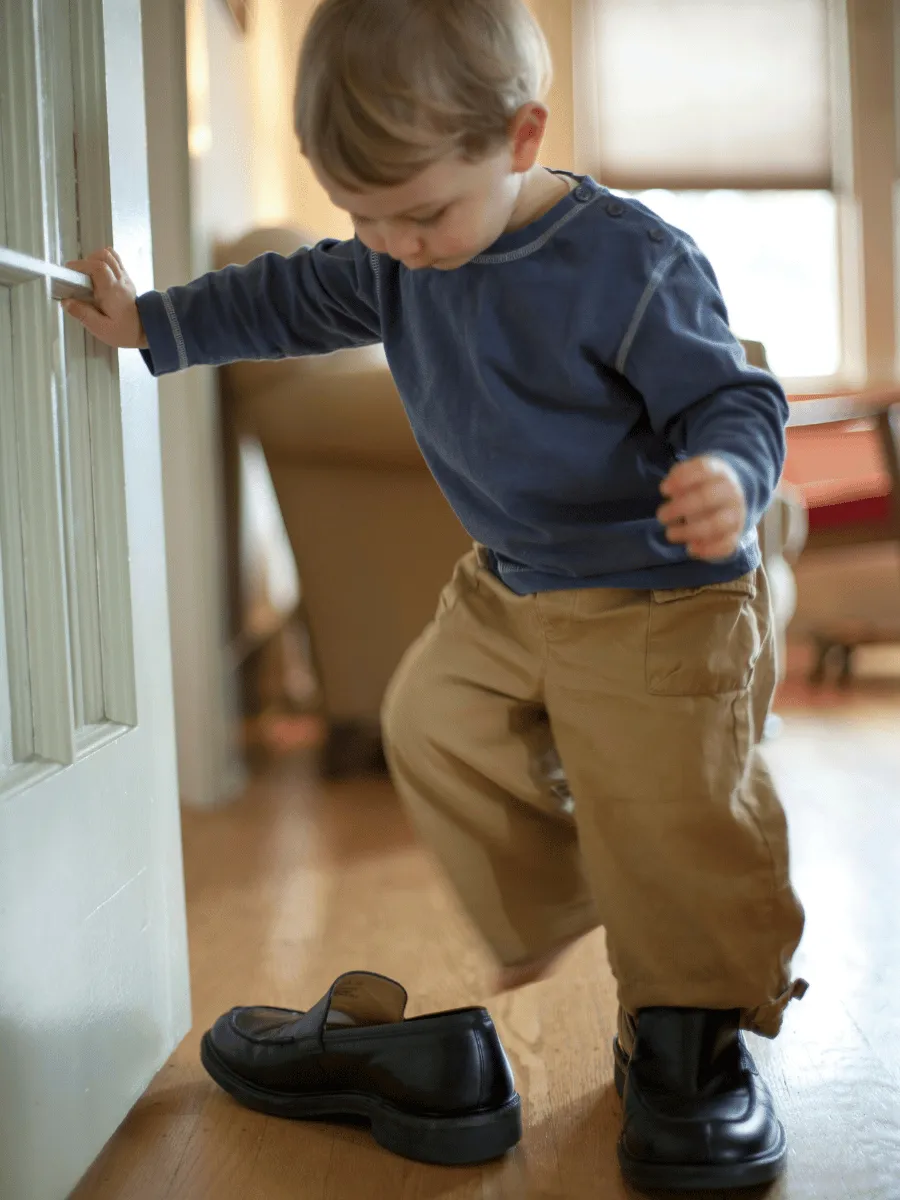
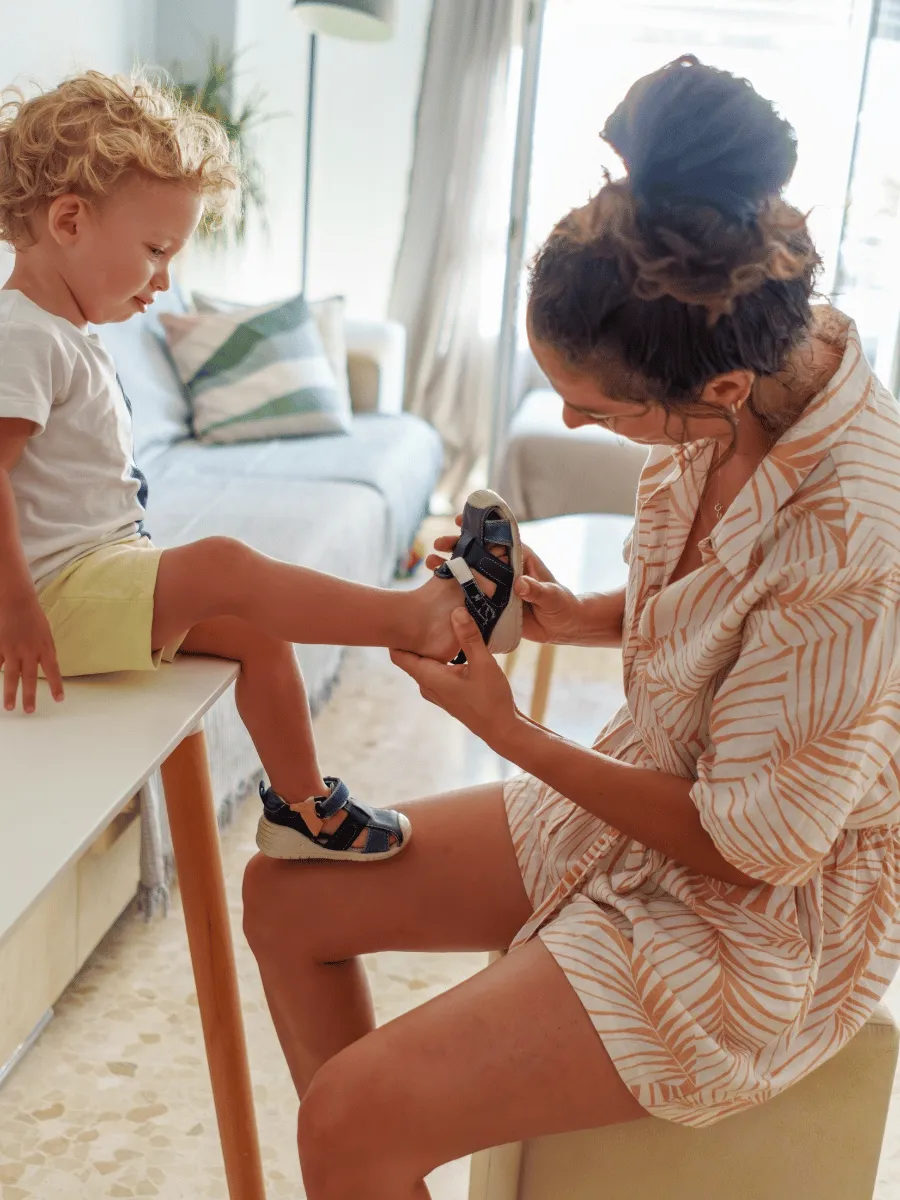
First, they try. Then, when it’s time to go, a grown-up helps finish.
What does research say about Montessori parenting?
Montessori schools have encouraging evidence behind them, but Montessori parenting at home has had very little published research of its own. What research does support are separate pieces of it: fewer toys, fewer tangible rewards, no harsh discipline, and warm, authoritative limits.
A 2023 systematic review of 32 studies found small-to-moderate advantages for Montessori students, academic and otherwise, with stronger evidence for language and math than for social skills. A 2017 study followed 141 children from age 3 for three years; about half had won a lottery spot at one of two public Montessori schools. They weren’t different at the start, but over time the Montessori group pulled ahead in academic achievement, social understanding and mastery orientation.
But those are classrooms. The 2018 home study is frank: “Few if any empirical studies have explicitly examined the home environments of Montessori-educated children.”
Let’s be real: a lot of what’s sold online as Montessori parenting is a shopping list. Davies again: “You do not need to buy anything to practice Montessori principles at home.” For the other side, the fair criticisms of Montessori are worth a read.
I’m not a trained Montessori guide, so when something here has no study behind it, I’d rather say so.
Start with one row, not the whole house
Start with one or two rows from the table, not a full makeover. Rearranging a shelf is much easier than rewriting your instincts about discipline, so begin with the easy rows and let the harder ones grow over time.
The 2018 study suggested the same: parents “may find it easier to alter the physical environment at home (e.g., by placing limited items on open shelving) than to alter their deeply rooted beliefs about child development and discipline.”
If you’re pregnant, three $0 moves are open to you now:
- Ask for fewer, simpler toys on the registry.
- Pick a corner for a low shelf and a floor mat later.
- Agree on two or three limits with your partner, like “food stays on the table.”
If nesting (that late-pregnancy urge to get everything ready) kicks in, aim it at this list.
Go one corner at a time, not one weekend. In a 2026 post on r/MontessoriForHome about turning a traditional home into a Montessori one, a parent put it simply: “not everything has to be done in one day.” Put toys away gradually rather than donating the whole bin at once.
Miri’s Tip
Montessori doesn’t have to be your only approach, either. In our home, it sits alongside the EASY routine (eat, activity, sleep, then time for you) and baby-led weaning, where your baby feeds themselves. Neither of those is Montessori. Take what works for your family. I’m expecting my second baby as I write this, so I’m in the before-baby stage again myself.
If your partner or family isn’t on the same page
Maybe your partner tenses up when a toddler dumps every block on the floor. Maybe a grandparent hears “Montessori” and assumes it means no rules.
Nobody has to rebuild their whole routine. The 2018 study suggested parents may benefit from ways of doing Montessori at home that “do not require abandonment of their current parenting practices and routines.” On the mess, a parent on r/MontessoriForHome noted that with a child younger than a preschooler, “it’s normal for everything to be just taken out of their shelves and ‘dumped’ on the floor.”
Agree on two or three shared limits and leave the rest open. That’s positive discipline in the everyday sense, and a shared “no” carries more weight than ten rules only one of you enforces.
 Save
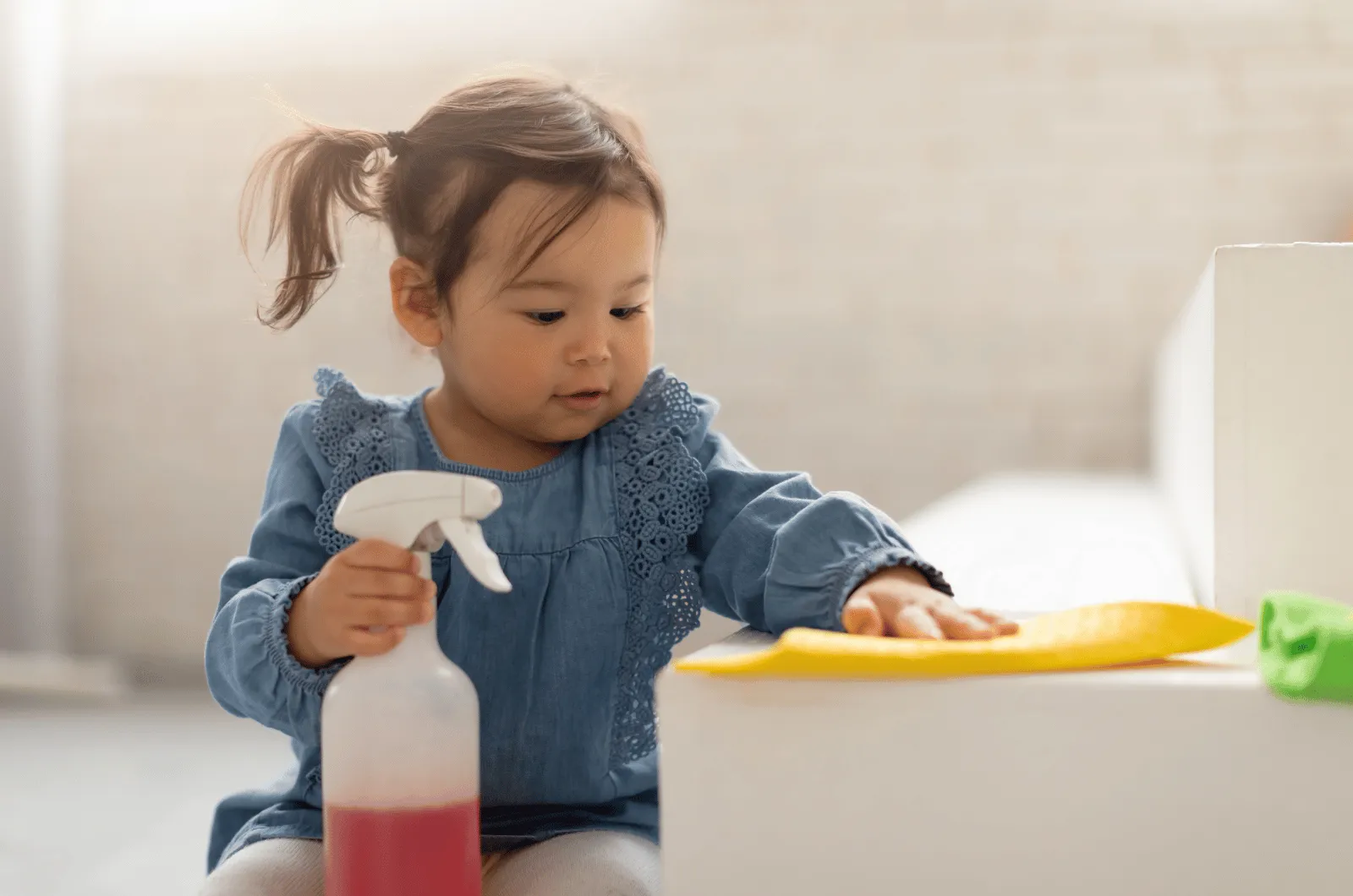
SaveShow the cleanup instead of saying “careful.” Keep a small spray bottle of water and a cloth within reach, and wipe alongside your toddler at first. In an r/Montessori thread about a partner uneasy with messy play, the parent who asked brought their 28-month-old a spray bottle of water and a rag for the table, and the toddler “happily cleaned.”
Miri’s Tip
Montessori parenting books to start with
A good Montessori parenting book shortlist: The Montessori Baby (birth to 1), The Montessori Toddler (ages 1 to 3), Tim Seldin’s guide (birth to 6), and Maria Montessori’s The Absorbent Mind. One is plenty before the birth.
A pregnant parent on r/Montessori asked which books to read before the birth, adding, “I want to do it the right way.” That’s a good instinct, and one book is enough to act on it.
- The Montessori Baby by Simone Davies and Junnifa Uzodike (Workman, 2021), birth to 1
- The Montessori Toddler by Simone Davies (Workman, 2019), ages 1 to 3
- How to Raise an Amazing Child the Montessori Way by Tim Seldin, president of the Montessori Foundation (DK, second edition 2017), birth to 6
- The Absorbent Mind by Maria Montessori
Not every tip fits every baby. In that thread, some parents found the idea of asking a newborn’s permission before picking them up or changing them unrealistic, and one called it “futile.” Keep what fits.
 Save
SaveConclusion
You don’t have to choose a parenting style tonight, or redo a whole house. Each row in that table stands on its own, and most cost nothing but a little patience. Before you fall asleep, write down two limits you’d want your home to keep, even on a hard day, and show them to your partner tomorrow. That’s a real start, and your baby isn’t even here yet.
Further Reading & Resources
- Montessori sources: The Montessori Method (Maria Montessori, 1912, Project Gutenberg) · Montessori Great Ideas and Glossary: Freedom (AMI Montessori Archives) · Montessori Infant and Toddler Programs (American Montessori Society) · Is Montessori parenting a fairy-tale? (Simone Davies, The Montessori Notebook)
- Parenting styles: Parenting Styles: A Closer Look at a Well-Known Concept (Kuppens & Ceulemans) · To What Extent Do Parents of Montessori-Educated Children “Do Montessori” at Home? (Walls, 2018) · Pezalla & Davidson, 2024 (PLOS One)
- Discipline and rewards: What’s the Best Way to Discipline My Child? (HealthyChildren.org, AAP) · Extrinsic rewards undermine altruistic tendencies in 20-month-olds (Warneken & Tomasello, 2008) · Deci, Koestner & Ryan, 1999 (Psychological Bulletin)
- Toys, home and safety: Dauch et al., 2018 · Sosa, 2016 (JAMA Pediatrics) · Selecting Appropriate Toys for Young Children in the Digital Era (AAP, 2019) · Anchor It! (CPSC) · Small Parts Ban and Choking Hazard Labeling (CPSC) · 16 CFR 1501.1 · Milestones by 18 Months (CDC)
- Montessori school research: Randolph et al., 2023 (Campbell Systematic Reviews) · Lillard et al., 2017 (Frontiers in Psychology)
- Real parents and books: Changing your home from a traditional home to a Montessori home and Children and messy playrooms after play (r/MontessoriForHome) · Husband repulsed/fearful by toddlers messy play, help! and What are the top two or three Montessori books I should read before my baby is born? (r/Montessori) · The Montessori Baby and The Montessori Toddler (Workman) · How to Raise an Amazing Child the Montessori Way, 2nd edition (DK)