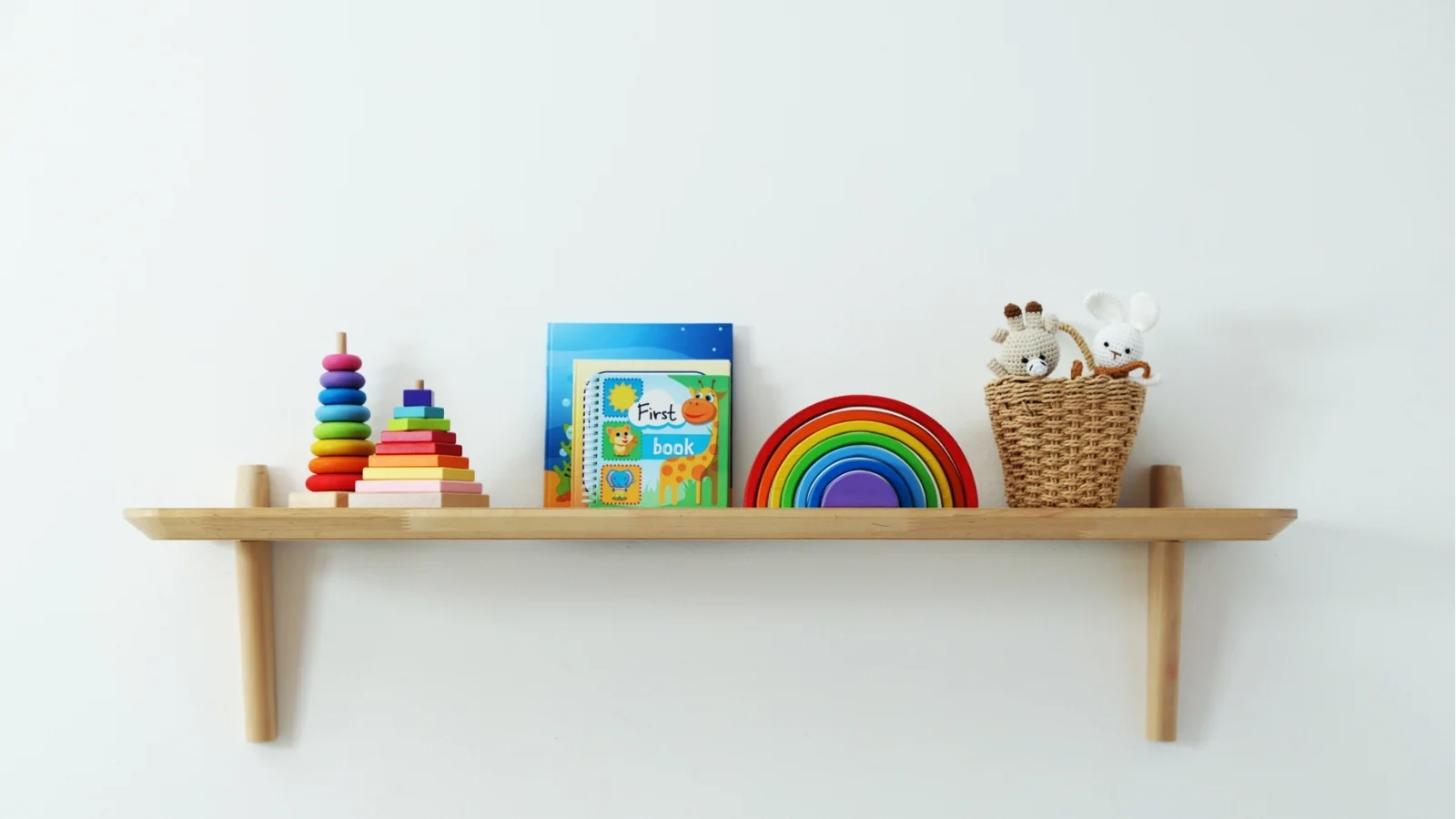
Picture this: it’s the wee hours, you’re seven months pregnant, and the baby registry is open in six tabs. One shows a low wooden shelf with a few real-looking things spaced out like a tiny museum. The next shows cloth dolls and a basket of rainbow play cloths, sold as Waldorf toys. Both look calm and natural. Then you scroll past a comment claiming Montessori doesn’t allow pretend play, and suddenly it feels like you’re supposed to pick a team before the baby is even here.
If that sounds like your evening, you’re in good company. And you don’t have to pick a team tonight.
Montessori and Waldorf agree on more than a registry makes it look. For a baby or toddler, the real differences come down to a few everyday choices: what goes on the shelf, how the day flows, what you do while your child plays, and how much room there is for make-believe.
New to all of this? Starting Montessori at home with a baby can be far smaller than any registry suggests.
 Save
SaveWhat’s the difference between Montessori and Waldorf?
The main difference between Montessori and Waldorf is where each one starts. Montessori starts with real, child-size tasks and an adult who steps back; Waldorf starts with imitation, a steady daily rhythm and room for imaginative play.
Montessori education, in the words of the American Montessori Society, a US Montessori organization, rests on respect for the child. In its infant and toddler programs, guides “assist, not teach,” working “by showing and modeling, not by correcting.” The Association Montessori Internationale, an international Montessori organization, describes the classroom as an environment prepared by the adult, with “all the essentials for optimal development but nothing superfluous.”
Waldorf education was established by Rudolf Steiner in 1919, according to the Association of Waldorf Schools of North America. On its What is Waldorf Education? page, the association calls Steiner a philosopher and activist and says Waldorf has its foundations in anthroposophy, which it explains in terms of spiritual development. More on that in the section on disadvantages below.
For the earliest years, the Waldorf Early Childhood Association of North America puts it plainly: “Young children learn most appropriately through imitation.” So in Waldorf, what the grown-ups do all day matters a great deal, because that’s what children copy.
 Save
SavePut side by side, the two share simple materials, unhurried play and an adult who models. The split is about where a small child’s attention goes first: toward the real world, or toward the worlds they make up.
Montessori vs Waldorf at a glance
Montessori vs Waldorf at a glance: the two agree on simple materials, protected playtime and an adult who models. Their real split is pretend play, with a smaller difference in how each talks about the shape of the day.
At Moje Montessori, we lined up what each approach’s own organizations say about five things you’ll actually decide at home: toys, space, your role, the day and pretend play. The last column is our suggestion for a baby or toddler, not an official rule from either side.
| Montessori | Waldorf | At home with a baby or toddler (0–3) | |
|---|---|---|---|
| Toys | Child-size materials within reach, often with a built-in “control of error” so a child can spot and fix a mistake alone | “The simpler the materials,” the better: a stone, a stick or a plain cloth can become anything | A few simple things in reach: one or two with a clear right way, plus something open, like blocks |
| Space | A prepared environment with everything needed and nothing extra; furniture and materials child-size and reachable | Space and time to play freely, with meaningful work nearby to imitate | One clear patch of floor and a low shelf, in a room where your child can see you work |
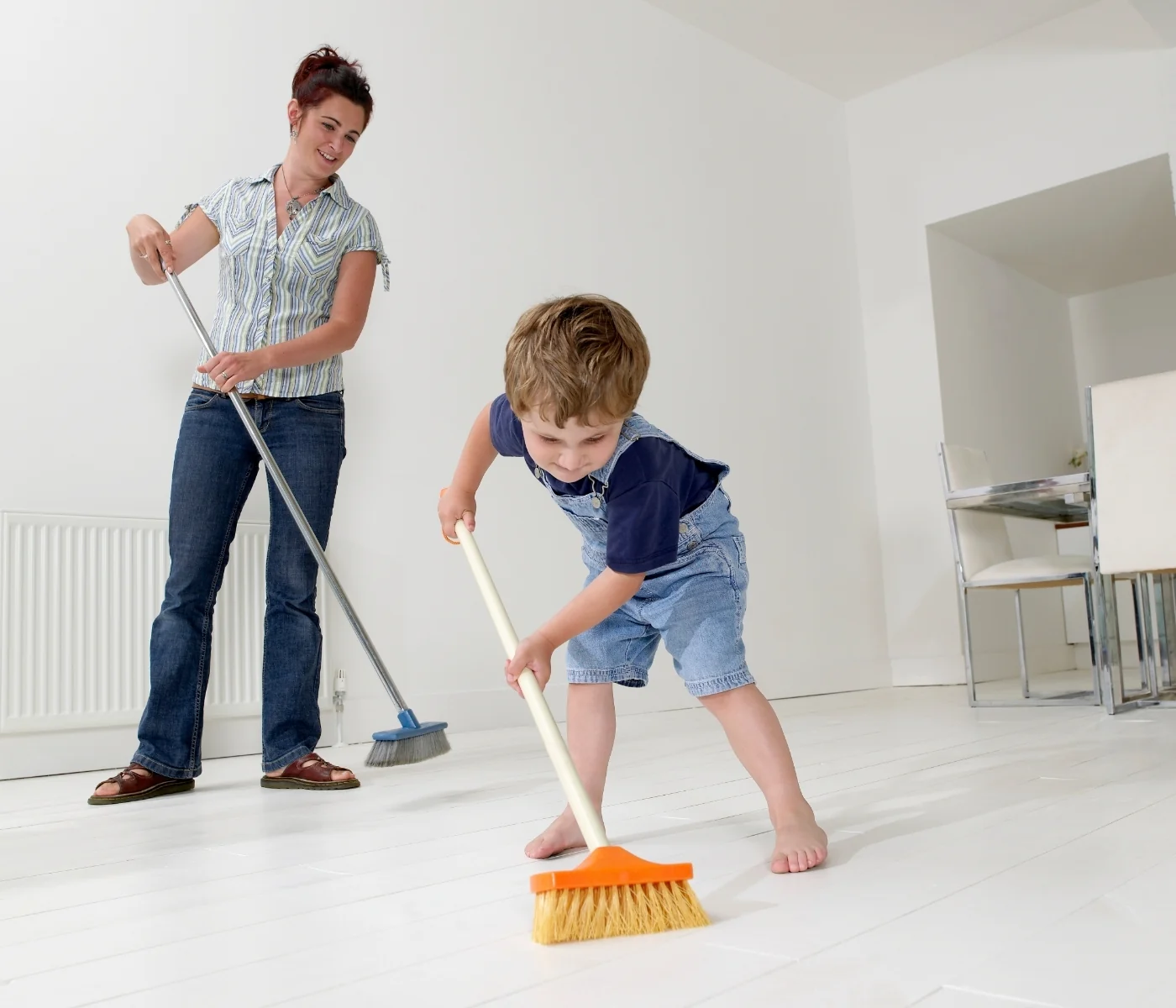
| Your role | “Assist, not teach”: show and model, then step back and observe | Be worth imitating, since young children learn so much through imitation | Show slowly, then sit back, and let them watch you do real jobs |
| The day | Time to finish whatever they start, with freedom inside limits and an adult present | A daily life and rhythm built to support the child, with uninterrupted play from infancy | A predictable rhythm, plus long stretches when nobody interrupts play |
| Pretend play | Reality first: as researchers describe it, Maria Montessori found pretend play less helpful than most people assume | Children given space and time make up scenes and try out many roles | Let real jobs and make-believe share the house, and follow what your child keeps returning to |
The “your role” row is where the two sound most alike. In The Montessori Method (1912), Maria Montessori wrote that the teacher should be “a passive, much more than an active, influence.” The Waldorf early-childhood association’s birth-to-three page says the young child “lives in imitation, as one main way of learning,” and that adults can consciously build a daily life and rhythm around the child. Both put the adult’s example ahead of instruction.
 Save
SaveThat row has more to it than a table cell can hold. A closer look at the Montessori parenting style gets into what stepping back looks like alongside limits and praise.
Waldorf vs Montessori toys: what you’ll see on the shelf
Waldorf vs Montessori toys can look alike on a registry, since both lean simple. Waldorf favors plain, open materials a child can turn into anything, while Montessori favors child-size things in reach, many built to show a child their own mistakes.
The Waldorf early-childhood association’s page on the child at work and play says it beautifully: “The simpler the materials at hand, the stronger the child’s own inner powers will become, as they transform a stone into a loaf of bread, a stick into a magic wand, or a plain cloth into a rainbow.” Notice what’s missing from that sentence: a brand, a price tag, a product list.
Search for Waldorf toys, though, and you’ll see a lot of Waldorf dolls and play silks: soft cloth dolls and lengths of light, colorful fabric, often sold under the Waldorf name. Those are store categories. The idea underneath is simplicity, and a plain cloth from your linen closet fits it just as well.
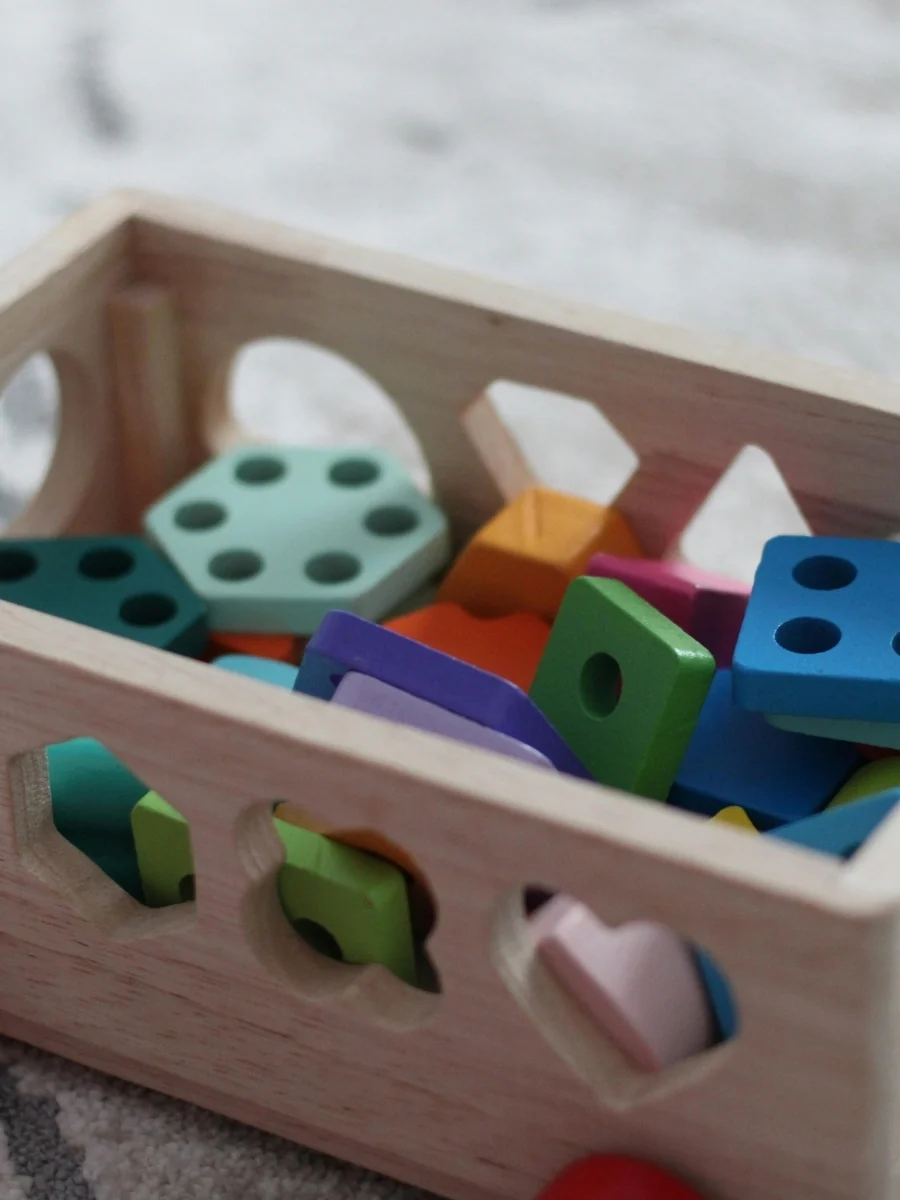
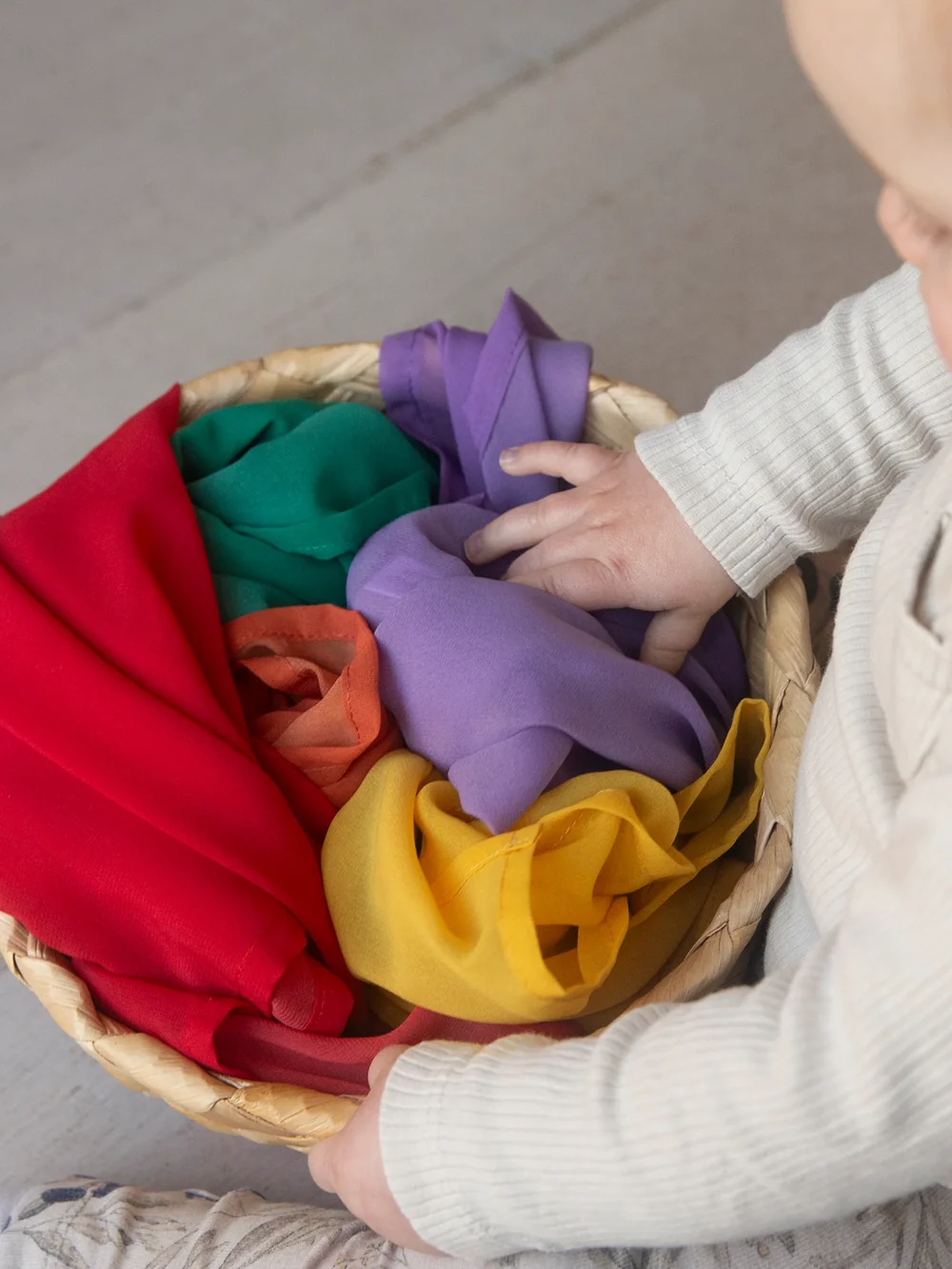
A shape that fits only its own hole: the toy, not you, points out the mistake. Play silks are a store category. A soft scarf from your closet does the same job.
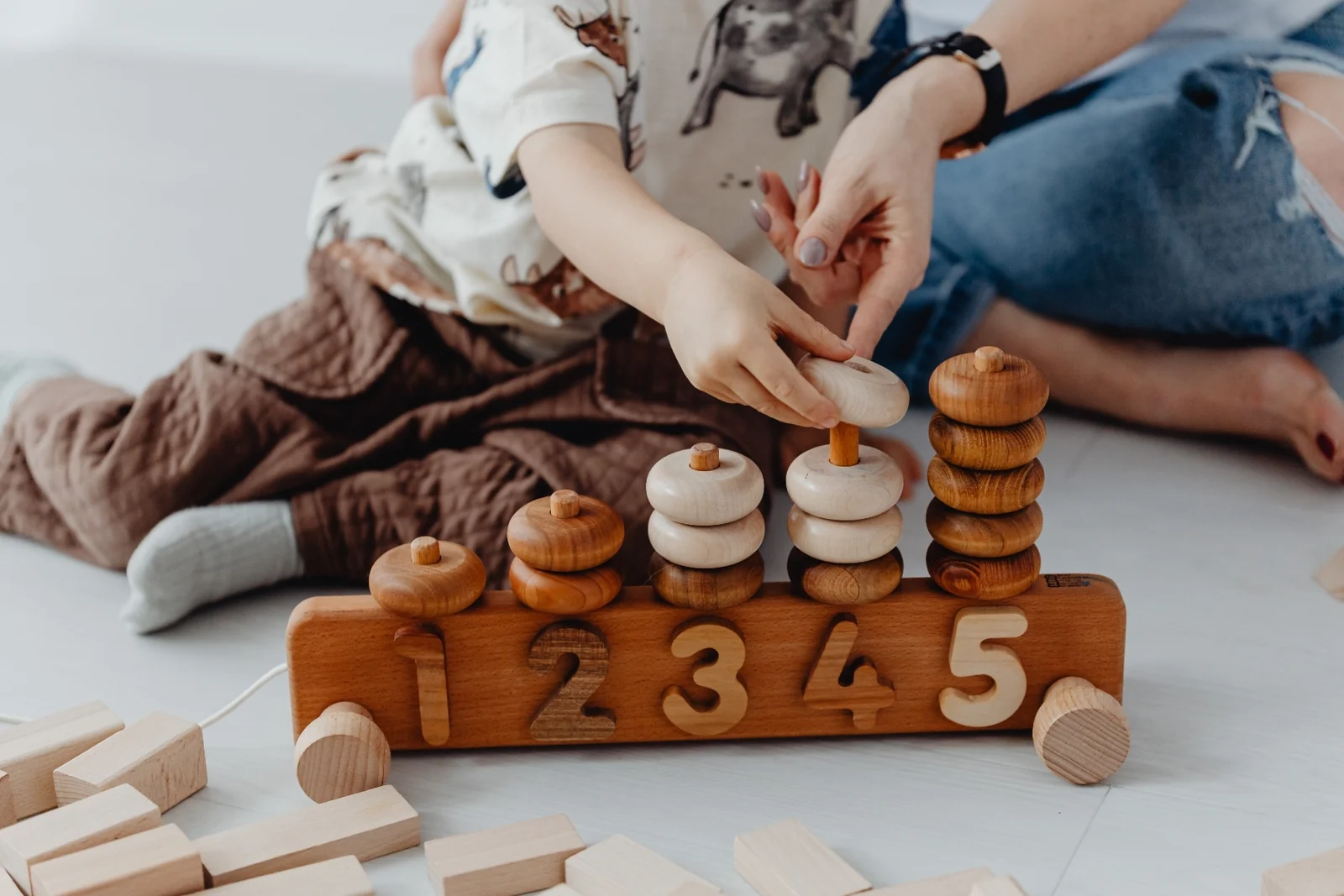
Montessori comes at toys from the other end. The Association Montessori Internationale’s glossary describes a control of error: a way for a material to give “instant feedback” so the learner “can correct his errors independently.” A shape that only fits its own hole does exactly that. Your toddler knows it’s wrong without you saying a word. Add child-size things your child can actually reach, and you have the classic Montessori shelf: a few items, each with a clear job.
So Waldorf vs Montessori toys isn’t really wood against wood. It’s open-ended materials against built-in feedback, and babies and toddlers can use both. The difference between open-ended toys and ones with a single right answer is worth a closer look before you fill in a registry.
Whichever style you lean toward, the same safety basics apply under age 3. Nothing within your child’s reach should be small enough to choke on, and that includes stones, acorns and other treasures from a nature basket. Play cloths and soft toys never go in your baby’s crib or sleep space.
A “Montessori” or “Waldorf” label describes a style, not a safety test. Look every toy over for loose or broken parts before it reaches your child.
Before you buy, what really makes a toy Montessori is worth a read, since the checks that matter go beyond the name on the box.
Where does pretend play fit?
Pretend play is the biggest real difference between Montessori and Waldorf. Montessori leans toward reality first, Waldorf makes plenty of room for make-believe, and pediatricians include pretending in the kind of play they encourage.
You’re not alone if this part confused you. A parent in a Montessori forum asked it straight out:
“Why isn’t pretend play a priority?”
A parent on Redditr/Montessori thread (2026)
The honest answer goes back to Maria Montessori. As researchers Lillard and Taggart describe it in a 2019 paper in Child Development Perspectives, she built her approach on close observation of children and concluded that pretend play and fantasy were not as helpful for development as the common view suggested. Then the authors ask a question instead of declaring a winner: what if she was right?
A view about what helps most isn’t a ban, and a question isn’t proof. This one is still open.
Waldorf sits at the other end. According to the Waldorf early-childhood association, children given space and time to play freely, with meaningful work to imitate, “spontaneously create the most varied scenarios and try out many roles.”
 Save
SaveAnd pediatricians? The American Academy of Pediatrics, the group that writes US pediatricians’ guidelines, says the best toys get adults and children playing together in ways “rich in language, pretending, problem-solving, and creativity.” Pretending made the list.
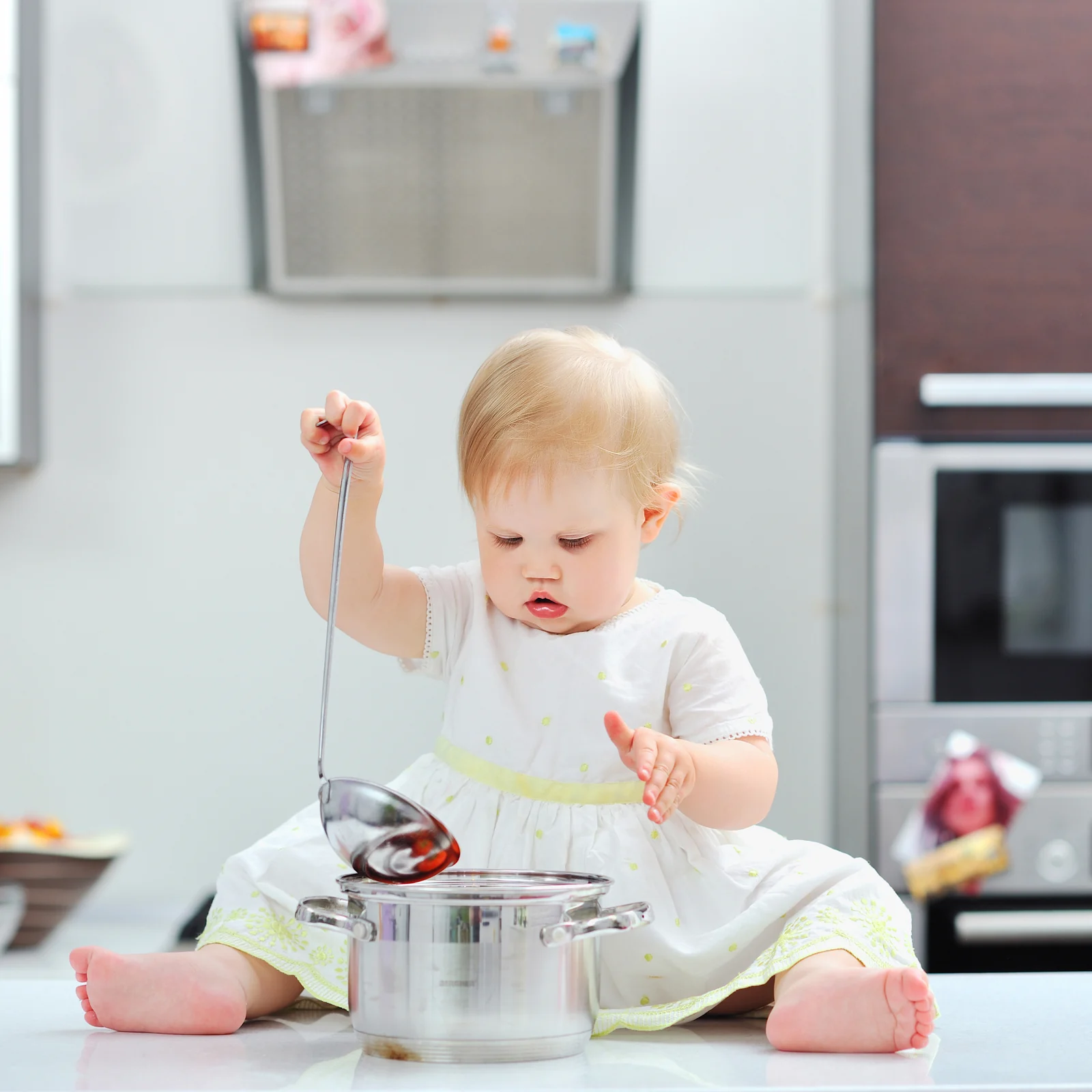
With a toddler, the line between real and pretend is blurrier than any debate makes it sound. Watch a toddler stir an empty pot with a wooden spoon, and you’re seeing both at once: make-believe soup, and a very real copy of what you do at the stove.
Real work and make-believe aren’t rivals. For a toddler, they often look exactly the same.
What about Reggio Emilia?
Reggio Emilia is a third approach that often comes up next to Montessori and Waldorf. It grew from the city-run infant-toddler centers and preschools of Reggio Emilia, Italy, where spaces are designed for children and adults to live and research together.
If you’ve been searching Reggio Emilia vs Montessori vs Waldorf, the short version starts with a building. The Reggio Children timeline records the people of Villa Cella building a school together in May 1945 because they wanted it “to be new and different for our children.” The Reggio Children site credits Loris Malaguzzi, together with the city, local officials and citizens (especially women), with helping that network of municipal infant-toddler centers and preschools come to life and grow. It calls his poem “No way. The Hundred is There” a manifesto of the approach.
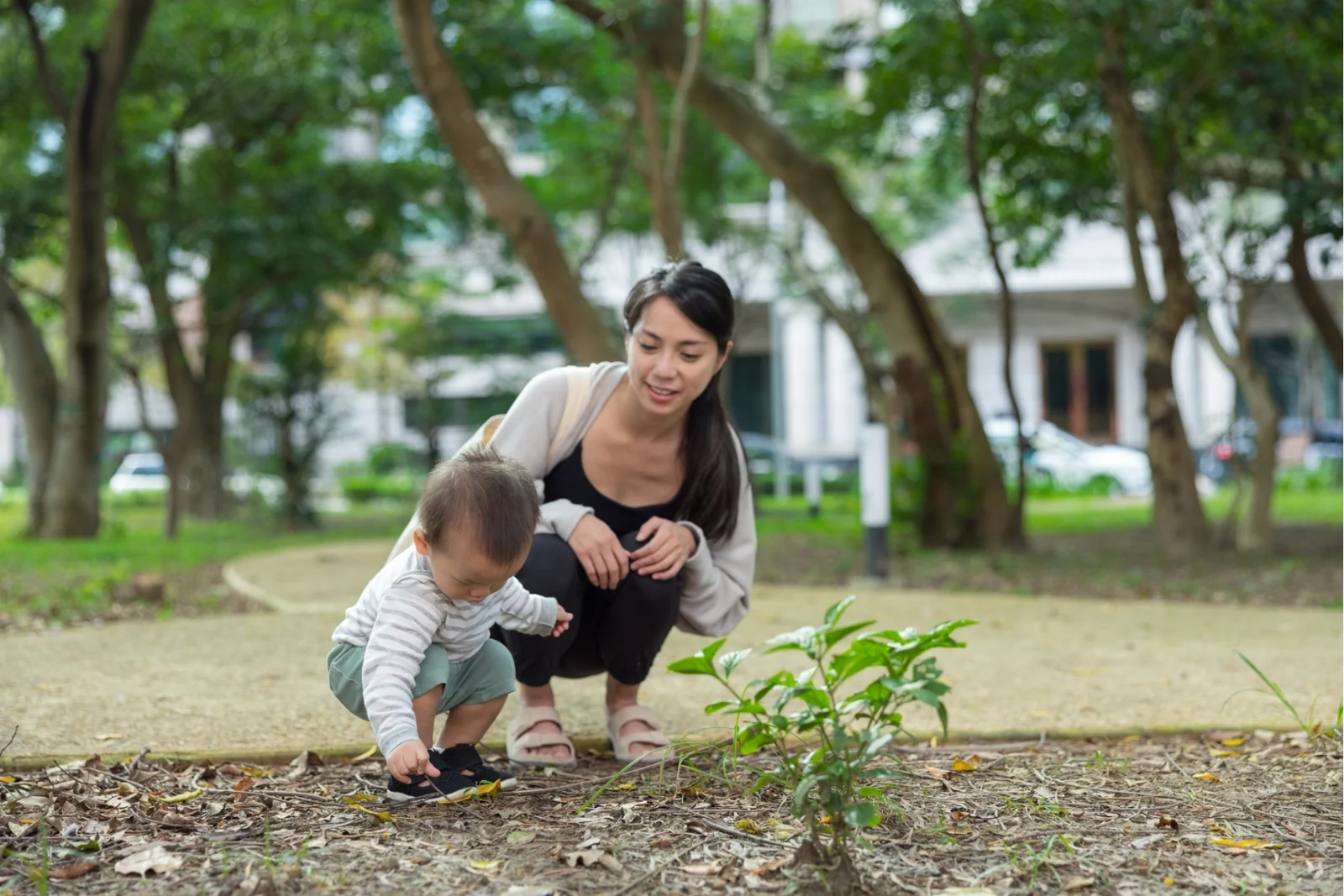
Space matters here, too. In Reggio Children’s description of its values, indoor and outdoor spaces are offered to children and adults as “places to live together and research.” That makes Reggio a cousin of both approaches rather than a referee between them. It stays out of the table above to keep the comparison simple.
 Save
SaveWhat does the research say about Waldorf and Montessori?
Research on Waldorf education vs Montessori is thin, and none of the studies behind this article compared the two with babies or toddlers. Nobody can honestly tell you either approach is proven better for a child under 3.
On the Waldorf side, a 2021 study from Austria used results from the 2015 PISA international student assessment to compare 149 Waldorf students with 1,107 matched students, all 15 years old. The Waldorf students reported more enjoyment of and interest in science, but they scored lower in science. The authors point out the small Waldorf sample, and that they couldn’t measure earlier achievement or why parents chose Waldorf.
For a parent of a newborn, that’s one subject, one country, teenagers and a small group. It says nothing about how a 10-month-old will do with a basket of cloths.
 Save
SaveOn the Montessori side, a 2018 paper noted that “few, if any, empirical studies” had looked at the home environments of Montessori-educated children. The school research is a separate story, and the pros and cons of Montessori goes through what it does and doesn’t show.
Next time someone tells you one approach is scientifically better for babies, it’s fair to ask which study they mean.
What are the disadvantages of the Waldorf curriculum?
The disadvantages of the Waldorf curriculum depend on what your family wants. Two things are worth asking any Waldorf school about: how its roots in anthroposophy show up day to day, and when and how it teaches reading.
It’s a fair question, and the most useful answers are things to ask, not verdicts.
Start with the roots. The Waldorf schools’ association says Waldorf education has its foundations in anthroposophy, and that at the heart of anthroposophy is the belief that humanity can transform itself and the world through its own spiritual development. How that sits with you is personal. What you can do is ask a school, plainly, how it shapes an ordinary day in the classroom.
Then reading. According to the same association, Waldorf teachers begin teaching reading in the first couple of months of first grade, through drawing, painting, movement and speech. For your baby, that’s years away. If you’re picturing a long road through Waldorf schools, though, it’s good to know early and weigh against what you want.
 Save
SaveAs for results, the Austrian study above looked at 15-year-olds and one subject, so it can’t settle this for your family either way.
None of this rules Waldorf out. It’s simply what’s worth knowing before you fall for a classroom photo.
Can you blend Waldorf and Montessori?
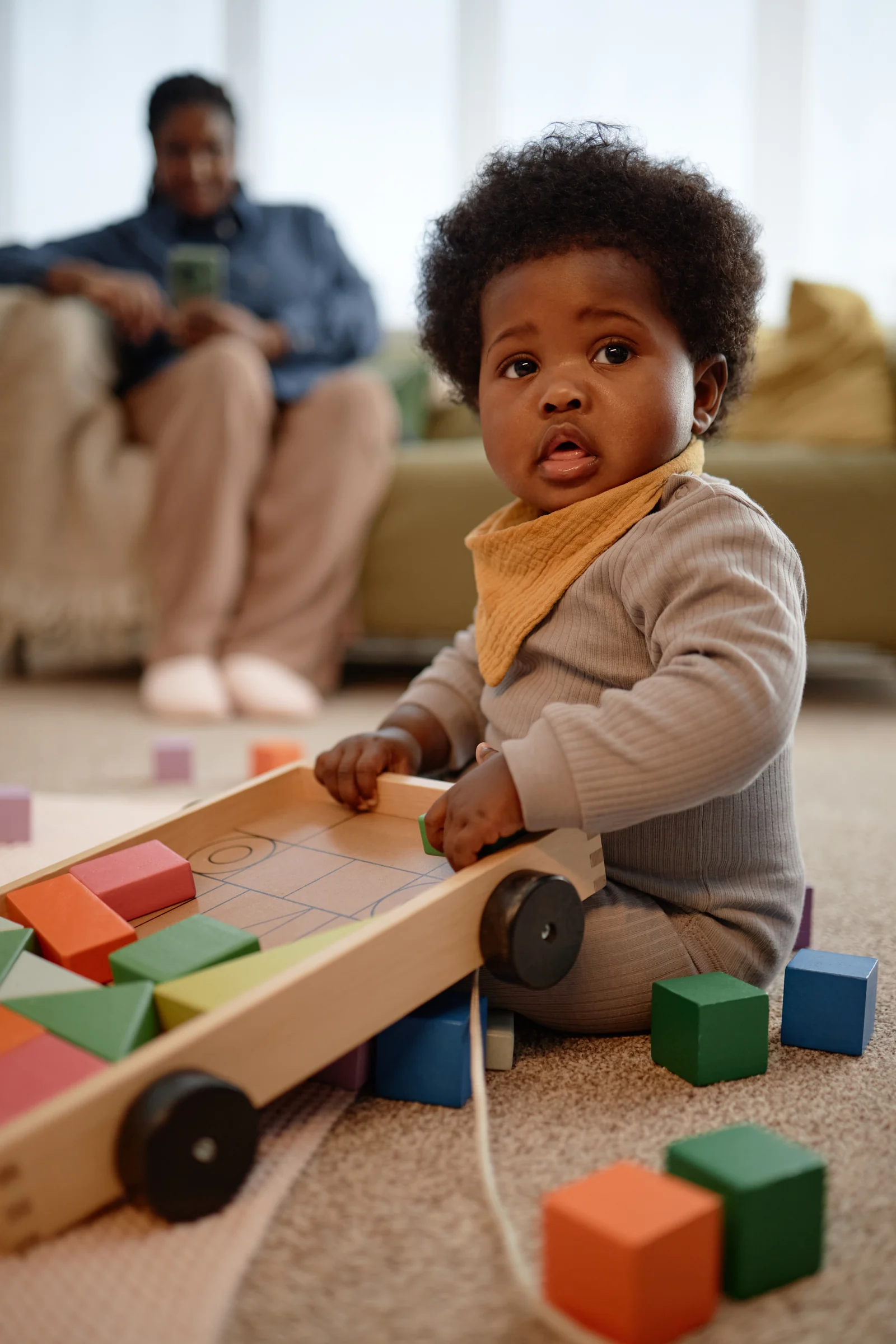
Yes, you can blend Waldorf and Montessori at home, and with a baby or toddler the overlap is large. Both value an adult who models real work and a child who gets time to play without interruption.
Montessori at home doesn’t have to be all or nothing. The 2018 paper mentioned above, a small, preliminary study, pointed to ways of doing Montessori at home that don’t require giving up the parenting practices and routines a family already has. A few Waldorf habits fit right into that.
One way to borrow from both, offered as a suggestion rather than a rule from either side:
- From Montessori: a low shelf with a few things your child can reach, a cup or cloth sized for small hands, and time to finish what they start.
- From Waldorf: a predictable rhythm to the day, plain materials like blocks or a cloth for open play, and real chores your child can watch and copy.
- From both: show slowly instead of correcting, then step back and let play run without interruption.
None of it needs to be Instagram-worthy. A low shelf, a basket and a dinner that lands at about the same time each night already cover a lot of common ground.
 Save
SaveFrequently Asked Questions
What type of child thrives in Montessori?
There isn’t one type of child who thrives in Montessori, and no approach can promise results for every child. For a baby or toddler, Montessori at home is mostly a setup: a few things within reach, time to finish, and an adult close by. Children of every temperament can use that. Watch what your child keeps coming back to.
Can you switch from Waldorf to Montessori?
Yes, you can switch from Waldorf to Montessori, and with a baby or toddler at home there’s very little to undo. Both value simple materials, an adult who models and long stretches of play. Add a low shelf and a few real tasks, and keep the rhythm you’ve built. Changing schools later? Ask each one how a typical day looks.
Conclusion
You don’t have to choose a side before your baby arrives, and you may never need to. Most of what both approaches ask of you costs nothing: a clear spot on the floor, a few simple things, a steady rhythm, and a grown-up who lets play run. If you want one thing to do this week, go back to the table and circle the row that felt most like your family. That’s your starting point, and the registry can wait for another night.
You’re asking good questions before your baby is even here. That care counts. Try one small thing, and let your child show you the rest.
Miri
Fewer toys, deeper play.
Further Reading & Resources
See all 18 sources
- Waldorf: What is Waldorf Education? and Waldorf FAQ (Association of Waldorf Schools of North America) · The Child at Work and Play and Birth to Three Care and Education (Waldorf Early Childhood Association of North America)
- Montessori: Prepared Environment and Control of Error (Association Montessori Internationale glossary) · Montessori Infant and Toddler Programs (American Montessori Society) · The Montessori Method (Maria Montessori, 1912, Project Gutenberg)
- Reggio Emilia: Reggio Emilia Approach, Timeline and Values (Reggio Children)
- Research: Pretend Play and Fantasy: What if Montessori Was Right? (Lillard & Taggart, Child Development Perspectives, 2019) · Explaining Waldorf students’ high motivation but moderate achievement in science (Salchegger, Wallner-Paschon & Bertsch, Large-scale Assessments in Education, 2021) · To What Extent Do Parents of Montessori-Educated Children “Do Montessori” at Home? (Walls, Journal of Montessori Research, 2018)
- Pediatric guidance & safety: Selecting Appropriate Toys for Young Children in the Digital Era (Healey & Mendelsohn, Pediatrics, 2019; American Academy of Pediatrics) · How to Keep Your Sleeping Baby Safe: AAP Policy Explained (HealthyChildren.org, American Academy of Pediatrics) · 16 CFR 1501.1, small parts rule for children under 3 (Code of Federal Regulations, Cornell LII)
- Real parents: Why isn’t pretend play a priority? (r/Montessori, 2026)